
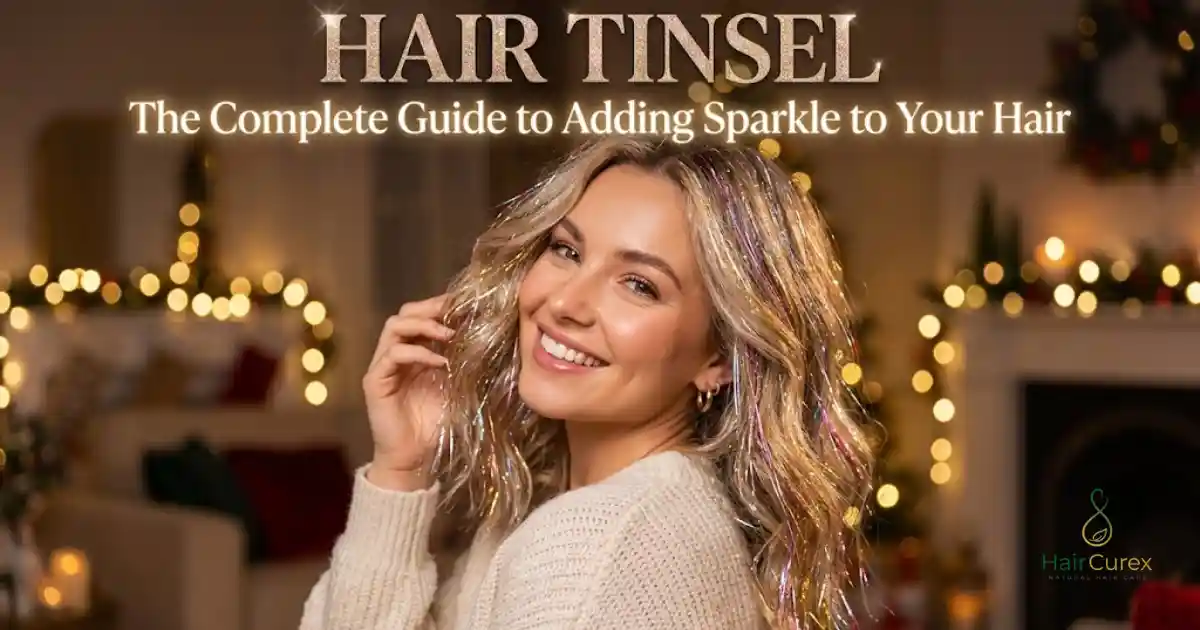
Hair tinsel is a hair trend. It uses thin, shiny strands. People add it to their hair for sparkle.
Picture walking into a room and having your hair light up under every lamp and camera flash. That’s the magic of tinsel hair, and it’s why this trend has taken over salons, festivals, and TikTok feeds across the country. You don’t need a dramatic haircut or a bold new color to stand out anymore.
This guide covers everything you need to know about hair tinsel, from installation to removal. You’ll learn how to choose the right shade, care for it properly, and rock it for any occasion. Let’s dive into the sparkly details.
What Is Hair Tinsel and How Does It Work?
Hair tinsel is a decorative hair accessory made from thin, silky or metallic strands, similar to the tinsel you’d hang on a Christmas tree, but designed specifically for hair. Also known as fairy hair or glitter hair, these strands are looped around a small section of your hair near the root and secured with a simple slip knot. No glue, no heat, and no chemicals are involved in the process, which makes hair extensions one of the gentlest ways to experiment with a new look.
Each strand is incredibly fine, often made from Mylar, a lightweight polyester film that reflects light beautifully without weighing your hair down. Because the material is so light, you can add dozens of strands throughout your hair and barely notice the difference in how it feels. The strands blend naturally with your natural hair, creating subtle shimmer when you move under sunlight or bold sparkle under stage lighting.
Stylists first popularized sparkling hair extensions at music festivals like Coachella, where guests wanted a bold, eye-catching look that didn’t require a full color transformation. Since then, hair shimmer techniques have spread into everyday styling, holiday parties, weddings, and even school events. Kids and adults alike enjoy the temporary hair tinsel trend because it’s affordable, low-commitment, and endlessly customizable.
Quick Facts About Hair Tinsel
| Feature | Detail |
|---|---|
| Material | Mylar (metallic polyester film) or silky synthetic fiber |
| Application method | Slip-knot loop, no heat or glue required |
| Average strand length | 18 to 40 inches |
| Typical wear time | Several weeks, depending on hair care and application Aur paragraph mein: |
| Heat resistant | Depends on the material; always follow the manufacturer’s heat-styling instructions |
| Best for | All hair types, colors, and lengths |
1. How to Put Hair Tinsel in Your Hair Step by Step
Learning how to put hair tinsel in your hair is easier than most people expect. You don’t need a professional stylist, though many salons now offer the service if you’d rather sit back and relax. For a DIY hair session at home, gather your tinsel strands, a rat-tail comb, and a pair of sharp scissors before you begin.
Start by sectioning a small piece of hair, about the width of a pencil, close to your scalp. Fold three to five tinsel strands in half so you create a loop at the center. Slide that loop behind your section of hair, then pull the loose ends of the tinsel through the loop and tighten it into a snug slip knot. This is the core technique behind nearly every hair tinsel tutorial you’ll find online, and once you get the hang of it, each strand takes only a few seconds to attach.
Repeat this process around your head, spacing the strands evenly for a natural, all-over sparkle. Most people use between 20 and 50 strands for a full look, though you can add fewer if you prefer something subtle. Once every strand is secured, trim the ends so they blend with your hair length, or leave them slightly longer for a cascading, ethereal effect.
Here’s a simple breakdown of the hair tinsel installation process:
- Section a small piece of hair near the root.
- Fold three to five tinsel strands in half to form a loop.
- Slide the loop behind the hair section.
- Pull the tinsel ends through the loop and tighten into a slip knot.
- Repeat around the head, spacing strands evenly.
- Trim the ends to your desired length.
If you’re wondering how to attach tinsel to hair without any prior experience, practice on a mannequin head or ask a friend to help with the back sections. Most people master the technique within their first ten strands.
2. How Long Does Hair Tinsel Last?
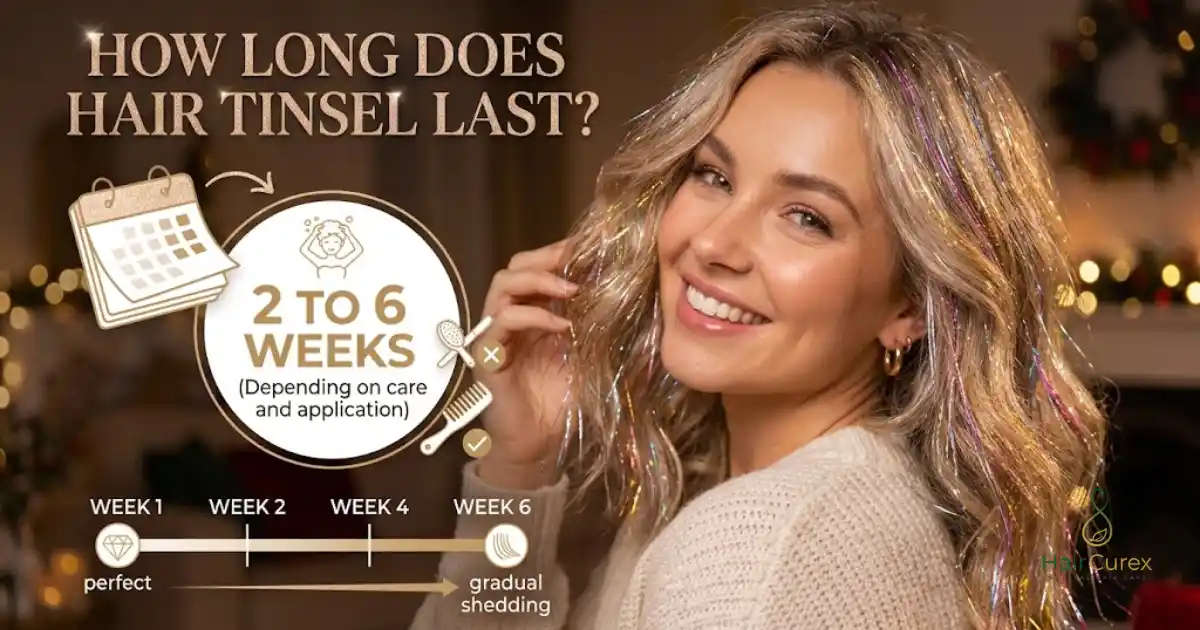
One of the most common questions people ask is how long does hair tinsel last once it’s installed. Hair tinsel can stay in place for several weeks, although how long it lasts depends on the application, hair type, washing routine, brushing, and natural hair shedding. Since the strands are tied rather than glued, they naturally loosen over time as your hair grows and sheds.
How often you wash your hair plays a big role in longevity. Frequent washing, brushing, or heat styling can cause strands to slip out sooner, while gentler hair care routines help the tinsel stay secure longer. Hair type matters too. Fine or slippery hair tends to lose tinsel strands faster than thick or textured hair, which grips the knots more firmly.
You’ll know it’s time to remove or refresh your hair tinsel extensions when you notice several strands falling out on their own, when the ends start to look frayed, or when new hair growth pushes the knots too far from your scalp. Many people simply add a fresh batch of strands every four to six weeks as part of their regular hair care with tinsel routine, treating it almost like a seasonal accessory refresh.
3. How to Choose the Best Hair Tinsel for Your Hair
Not all tinsel is created equal, and choosing the right type makes a real difference in how natural and long-lasting your look turns out. When shopping for hair tinsel, you’ll typically encounter two main materials: silky tinsel and holographic or metallic Mylar tinsel. Silky tinsel has a soft, subtle shine and blends more seamlessly with natural hair, while holographic hair tinsel reflects light in rainbow flashes for a bolder, more dramatic effect.
Length and thickness also matter. Standard hair tinsel extensions come in lengths ranging from 18 to 40 inches, so pick a length that matches or slightly exceeds your natural hair for the most seamless blend. Thinner strands look more delicate and work well for everyday wear, while thicker bundles create a more noticeable, festival-ready sparkle.
Budget is another consideration. A basic pack of tinsel strands for hair might cost between eight and fifteen dollars and can last through several applications, while premium salon-grade sets, often priced between twenty and forty dollars, tend to offer better heat resistance and a wider color selection. Whichever option you choose, always check that the product is heat-safe if you plan to style your hair with hot tools afterward.
4. Hair Tinsel for Different Hair Types and Textures
Hair tinsel works beautifully across nearly every hair type, but a few small adjustments help it look its best depending on your texture. Hair tinsel for straight hair tends to show off individual strands clearly, creating a sleek, glossy shimmer effect that catches light with every movement. Because straight hair has less grip, tying slightly tighter knots helps the strands stay secure for longer.
Hair tinsel for curly hair blends in a bit differently. The natural volume and texture of curls can hide some of the strands within the coils, so many people with curly or coily hair opt for thicker bundles or brighter colors to make sure the sparkle still shows through. Hair tinsel for wavy hair sits somewhere in between, often creating a soft, cascading shimmer that moves naturally with the waves.
Thickness matters just as much as texture. Hair tinsel for thick hair can handle more strands without looking overwhelming, since the volume of the hair balances out the sparkle. On the other hand, hair tinsel for fine hair usually looks best with fewer, more strategically placed strands, since too much tinsel can weigh down delicate hair or make it look cluttered rather than elegant.
Length changes the effect too. Hair tinsel for short hair creates a fun, playful look, especially near the face, while hair tinsel for long hair allows for cascading strands that flow all the way down, perfect for special occasions or festival looks.
5. The Best Hair Tinsel Colors for Every Hair Color
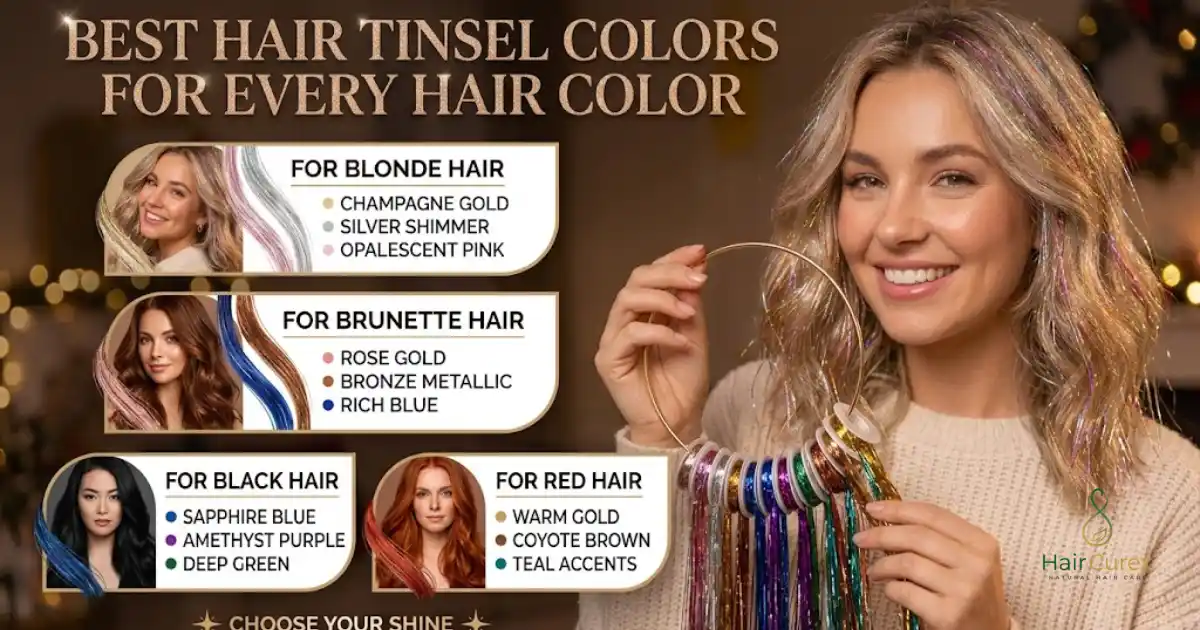
Choosing the right shade of colored hair tinsel can make your natural hair color pop even more. For hair tinsel for blonde hair, cool tones like silver hair tinsel or icy holographic strands create a striking contrast, while gold hair tinsel adds warmth and richness to golden or honey blonde shades.
Hair tinsel for brown hair pairs beautifully with copper, bronze, or gold tinsel, since these warm tones complement brunette shades without clashing. If you have hair tinsel for black hair, silver, gold, and multicolor hair tinsel all create striking contrast against the dark base, making the sparkle instantly noticeable.
For a fun, playful vibe, rainbow hair tinsel works on almost any hair color and adds a whimsical, festival-ready touch. Pink hair tinsel has become especially popular for parties, proms, and birthdays, offering a soft, romantic sparkle that photographs beautifully.
Color Pairing Guide
| Natural Hair Color | Recommended Tinsel Shades |
|---|---|
| Blonde | Silver, gold, holographic, pastel pink |
| Brunette | Copper, bronze, gold, multicolor |
| Black | Silver, gold, rainbow, holographic |
| Red | Gold, copper, bronze |
| Gray or Silver | Silver, holographic, pale gold |
There’s no strict rule here. Many people mix multicolor hair tinsel strands for a playful, layered effect, blending two or three shades for a personalized result that reflects their style.
6. How to Wash, Brush, and Style Hair With Tinsel
Knowing how to wash hair with tinsel properly keeps your strands looking fresh for weeks. Wash your hair as you normally would, but avoid scrubbing vigorously near the roots where the tinsel knots sit. A gentle, downward motion while shampooing helps prevent tangling and reduces the chance of strands slipping loose too early.
Brushing requires a bit more care as well. Start detangling from the ends of your hair and work your way up toward the roots, rather than starting at the scalp. This technique, often recommended in professional hair tinsel tutorials, prevents unnecessary pulling on the knots and keeps both your natural hair and the tinsel intact.
Styling with tinsel opens up plenty of creative options. Braids, ponytails, and half-up styles all showcase the sparkle beautifully, especially when strands are pulled slightly loose to catch the light. For an elegant evening look, try a low bun with a few tinsel strands left hanging near the face. For everyday wear, simply letting your hair down allows the shimmer to peek through naturally as you move throughout the day.
7. Can You Curl, Straighten, or Blow-Dry Hair Tinsel?
A common concern people have before installing hair tinsel extensions is whether their favorite hot tools will ruin the effect. The good news is that most Mylar-based tinsel can handle heat surprisingly well. Can you curl hair tinsel? Yes, in most cases, since quality Mylar strands are designed to withstand temperatures up to around 400°F without melting or losing their shine.
Can you straighten hair tinsel is another frequent question, and the answer is generally yes as well, provided you’re using a heat-resistant variety. That said, hair tinsel heat protection matters here. Always check the product packaging before applying direct heat, since cheaper or silkier tinsel varieties may not tolerate high temperatures as well as premium Mylar strands.
Blow-drying is typically the safest option, since the heat is more diffused and less concentrated than a flat iron or curling wand. If you do plan to use direct heat styling tools, keep the temperature moderate and avoid holding the iron on any single section for too long. When in doubt, a quick strand test on a small, hidden section can confirm whether your specific tinsel handles heat safely before you style your entire head.
8. Is Hair Tinsel Safe for Your Hair?
Is hair tinsel safe for your hair is one of the most important questions to ask before trying the trend, and thankfully, the answer is reassuring for most people. Because the strands are tied rather than glued or heat-fused, hair tinsel causes minimal stress on your natural hair compared to other temporary color methods like clip-ins or heat-applied extensions.
That said, safety depends largely on proper application and removal. If the knots are tied too tightly, or if too many strands are added to a single section, it can create tension on the scalp and lead to minor breakage over time. This is why spacing strands evenly and avoiding overloading one area is so important during hair tinsel installation.
People with extremely fine, chemically treated, or already damaged hair should proceed with a bit more caution, opting for fewer strands and gentler tension. Because tinsel does not require chemical processing, glue, or heat-based application, it can be a relatively low-commitment way to add color and shine. However, tying strands too tightly or removing them roughly can cause unnecessary pulling and breakage.” Following correct hair tinsel maintenance practices, including gentle washing and careful brushing, keeps your natural hair healthy throughout the process.
9. How to Remove Hair Tinsel Without Damaging Your Hair
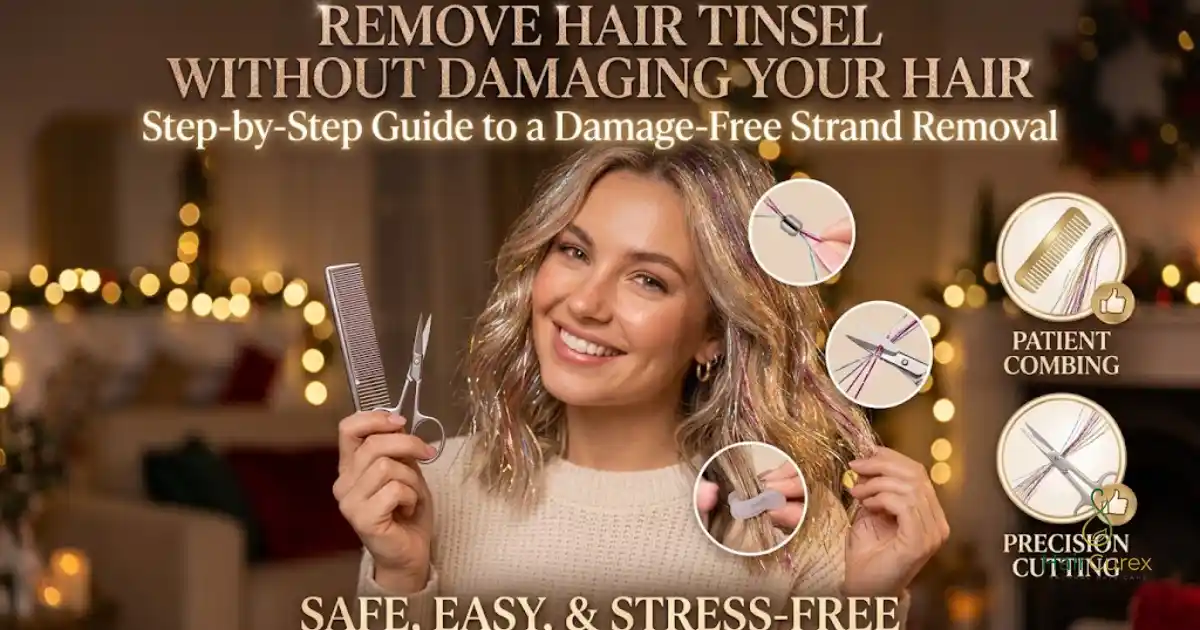
When it’s time to say goodbye to the sparkle, knowing how to remove hair tinsel properly protects your natural hair from unnecessary damage. Start by locating the small slip knot near the root of each strand. Gently loosen the knot using your fingers or the pointed end of a rat-tail comb, working slowly to avoid tugging on your natural hair.
If a knot feels particularly stubborn, avoid the temptation to yank it out. Instead, apply a small amount of conditioner or detangling spray to the area, which helps loosen the fibers and makes the knot easier to slide apart. Patience is key here. Rushing the removal process is the most common cause of hair tinsel without damage turning into a frustrating, painful experience.
Once all the strands are removed, run a wide-tooth comb through your hair to catch any leftover fragments. Follow up with a deep conditioning treatment to restore moisture and smoothness, especially if you wore the tinsel for several weeks. This simple aftercare step ensures your hair care with tinsel routine ends on a healthy note, leaving your natural hair just as strong as when you started.
10. Hair Tinsel Ideas for Festivals, Parties, and Everyday Looks
Hair tinsel ideas are practically endless, which is part of what makes this trend so appealing. For festival season, bold multicolor hair tinsel paired with braided crowns or space buns creates a show-stopping, bohemian look that photographs beautifully in natural sunlight. Many festival-goers combine rainbow hair tinsel with flower crowns or temporary face gems for a complete, whimsical outfit.
For parties and special events, a more elegant approach works well. Soft silver hair tinsel or holographic hair tinsel woven through a half-up style adds glamour without overwhelming your look, making it perfect for birthdays, proms, or New Year’s celebrations. These festival hair accessories have also become popular additions to wedding hairstyles, particularly for bridesmaids who want a touch of shimmer without a dramatic color change.
For everyday wear, subtlety is the name of the game. A handful of understated strands, matched closely to your natural hair color with just a hint of shine, offers a sophisticated glow that works for the office, school, or casual outings. Whether you’re chasing bold glitter hair ideas or a more toned-down shimmer, hair tinsel adapts effortlessly to whatever occasion you have in mind.
11. Hair Tinsel vs. Hair Extensions: What’s the Difference?
While both hair tinsel and traditional hair extensions add something extra to your natural hair, they serve very different purposes. Hair extensions are designed primarily to add length and volume, using methods like tape-ins, sew-ins, or clip-ins that involve either heat, glue, or braiding for attachment. Hair tinsel, by contrast, focuses purely on color and sparkle rather than length or thickness.
The application process differs significantly as well. Hair extensions often require professional installation, sometimes taking several hours in a salon chair, and can cost anywhere from one hundred to several hundred dollars depending on the quality and method. Hair tinsel installation, on the other hand, takes as little as thirty minutes and typically costs under fifty dollars for a full head, even at a professional salon.
Hair Tinsel vs. Hair Extensions
| Factor | Hair Tinsel | Hair Extensions |
|---|---|---|
| Purpose | Adds sparkle and color | Adds length and volume |
| Application time | 20 to 45 minutes | 1 to 4 hours |
| Attachment method | Slip-knot, no heat or glue | Tape, glue, sew-in, or clip |
| Average cost | $15 to $50 | $100 to $500+ |
| Wear time | 4 to 8 weeks | 6 to 12 weeks (or reusable) |
| Damage risk | Low | Moderate to high if misapplied |
If you’re simply looking for a fun, temporary way to add shine and personality to your look, hair tinsel extensions are the lighter, more affordable choice. If your goal is longer, fuller hair, traditional extensions remain the better option.
12. Conclusion
Hair tinsel offers a simple, affordable, and low-damage way to add sparkle, color, and personality to any hairstyle. From understanding what hair tinsel is and how it works, to learning proper installation, care, and removal, this guide has walked through everything you need to feel confident trying the trend yourself. Whether you’re drawn to bold rainbow hair tinsel for a festival or subtle silver strands for everyday elegance, there’s a version of this trend suited to your style and hair type.
Now that you know how to install hair tinsel at home, keep it healthy with proper washing techniques, and remove it safely when the time comes, there’s nothing stopping you from giving your hair that extra shimmer. Grab a few strands, experiment with color combinations, and enjoy watching your hair catch the light in a whole new way.
Frequently Asked Questions
Does hair tinsel damage your hair?
When applied and removed correctly, hair tinsel causes minimal damage to your natural hair. Since it’s tied rather than glued or heat-fused, it puts far less stress on your strands compared to other extension methods. Damage typically only occurs when knots are tied too tightly or removed carelessly.
Can you sleep with hair tinsel in?
Yes, most people sleep comfortably with hair tinsel in place. Loosely braiding your hair before bed or using a silk pillowcase can help reduce tangling and keep the strands secure overnight.
How much does hair tinsel cost?
A basic pack of hair tinsel strands usually costs between eight and fifteen dollars for DIY application at home. Professional salon installation typically ranges from twenty-five to fifty dollars for a full head of sparkle.
Can you swim or shower with hair tinsel?
Yes, hair tinsel can generally handle water exposure from swimming or showering, though chlorine and saltwater may cause strands to loosen a bit faster. Rinsing your hair with fresh water after swimming helps extend the tinsel’s lifespan.
Does hair tinsel work on short hair?
Absolutely. Hair tinsel for short hair creates a fun, playful sparkle, especially when strands are trimmed to blend seamlessly with your length or left slightly longer for a whimsical, face-framing effect.