
A Shark hair dryer is a hair tool made by Shark. It dries your hair fast. It uses strong airflow instead of very high heat. This helps protect your hair from damage.
This guide walks you through everything worth knowing before you buy one. We’ll cover the different Shark hair dryer models, the technology packed inside them, how each one performs on different hair types, and how the brand stacks up against Dyson. By the end, you’ll know exactly which Shark blow dryer — if any — deserves a spot on your bathroom counter.
1. What Is a Shark Hair Dryer and Why Is It So Popular?
A Shark hair dryer is a styling tool made by SharkNinja, the same company behind those wildly popular robot vacuums and air fryers. But don’t let the brand crossover confuse you. SharkNinja didn’t just slap its logo on a generic dryer. It built a dedicated line of hair tools designed to compete directly with high-end names like Dyson and BaByliss, using high-velocity airflow instead of blasting your hair with extreme heat.
That distinction matters more than most people realize. Traditional dryers rely heavily on heat to evaporate water quickly, and heat is exactly what damages your hair over time. Shark’s engineers took a different route. Instead of cranking the temperature, they focused on moving air faster and smarter. The result is a dryer that can style your hair in less time, at a lower average temperature, which is a big part of why the Shark hair dryer review scene online has been so overwhelmingly positive.
There’s also the price factor. A Dyson Supersonic can run you well over $400, while a Shark professional hair dryer typically lands somewhere between $60 and $200 depending on the model. For a lot of people, that gap is the whole story. You get comparable airflow technology, similar attachments, and legitimate frizz control, without needing to save up for months. It’s no surprise the brand has picked up a loyal following on TikTok and Instagram, where before-and-after clips of Shark blow dryer results rack up millions of views.
What Makes Shark Hair Dryers Different From Regular Dryers
Most drugstore dryers are built around one idea: get hot, get the water off your hair. Shark flips that priority. Its dryers use what the brand calls intelligent heat control, a system that monitors temperature constantly and adjusts it on the fly so your hair never sits under damaging heat for too long. Combine that with a lightweight body that won’t wear out your wrist during a long styling session, and you start to understand why so many reviewers describe switching to Shark as a genuine upgrade rather than a sidegrade.
2. Shark Hair Dryer Models: Which One Is Right for You?
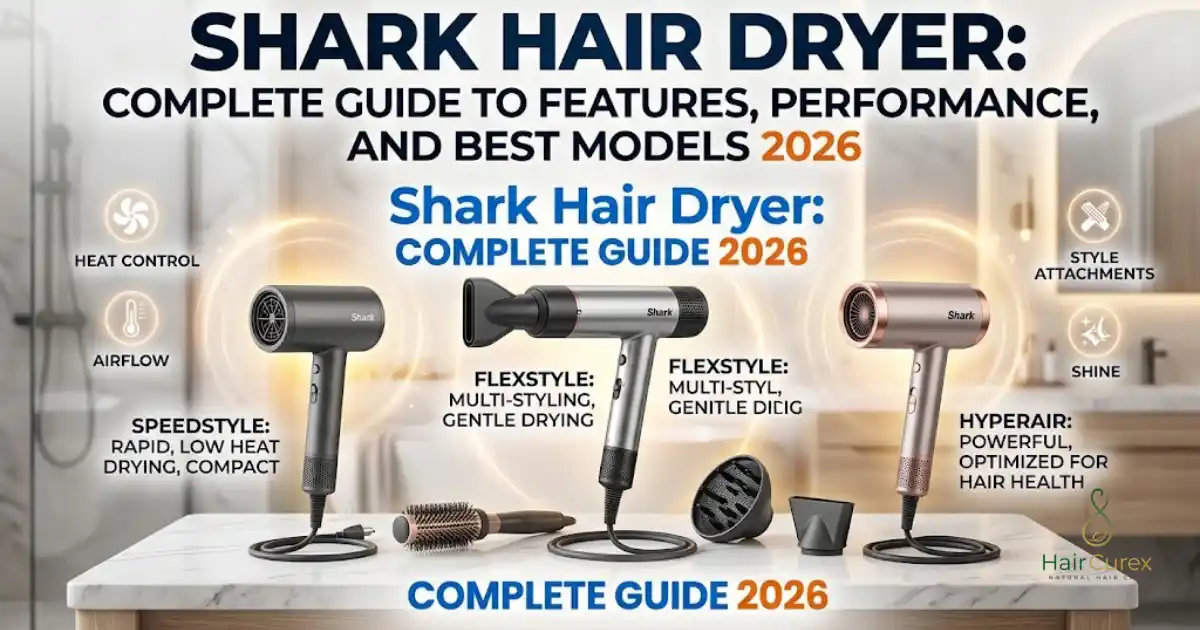
Here’s where things get interesting, because Shark hasn’t released just one dryer. The Shark hair dryer models span a few different families, each built for a slightly different kind of user. Knowing the differences up front will save you from buying the wrong one.
| Model | Best For | Approximate Price | Standout Feature |
|---|---|---|---|
| Shark SpeedStyle HD332 | Everyday styling, beginners | $70–$100 | Lightweight at 1.69 lbs, up to 100 mph airflow |
| Shark SpeedStyle Pro | Thick, curly, or coily hair | $130–$170 | 0–100 mph airflow in under a second, scalp-safe heat cap |
| Shark HyperAIR HD125CO | Fast everyday drying with styling extras | $90–$140 | HyperAIR technology, 2-in-1 concentrator, auto presets |
| Shark FlexStyle HD430 | Multi-stylers who want curls, waves, and smoothing | $180–$230 | Converts between dryer and multi-styler, auto-wrap curlers |
| Shark Smoothstyle | Quick blowouts and smoothing in one pass | $60–$90 | 2-in-1 hot air brush and smoothing comb |
The Shark SpeedStyle hair dryer line is where most first-time buyers land. It’s the closest thing Shark makes to a traditional dryer, just with far more power behind it. The Pro version in particular has earned a reputation for handling thick or textured hair that usually takes forever to dry, cutting drying time down noticeably compared to a standard drugstore model.
If styling versatility matters more to you than raw drying speed, the Shark FlexStyle hair dryer is worth a serious look. It rotates and swaps between a dryer and a full styling wand, letting you curl, smooth, or add volume without switching tools entirely. It’s more of an investment, but for anyone who currently owns three or four separate hot tools, consolidating into one FlexStyle system can genuinely simplify a morning routine.
3. Key Features of Shark Hair Dryers You Should Know
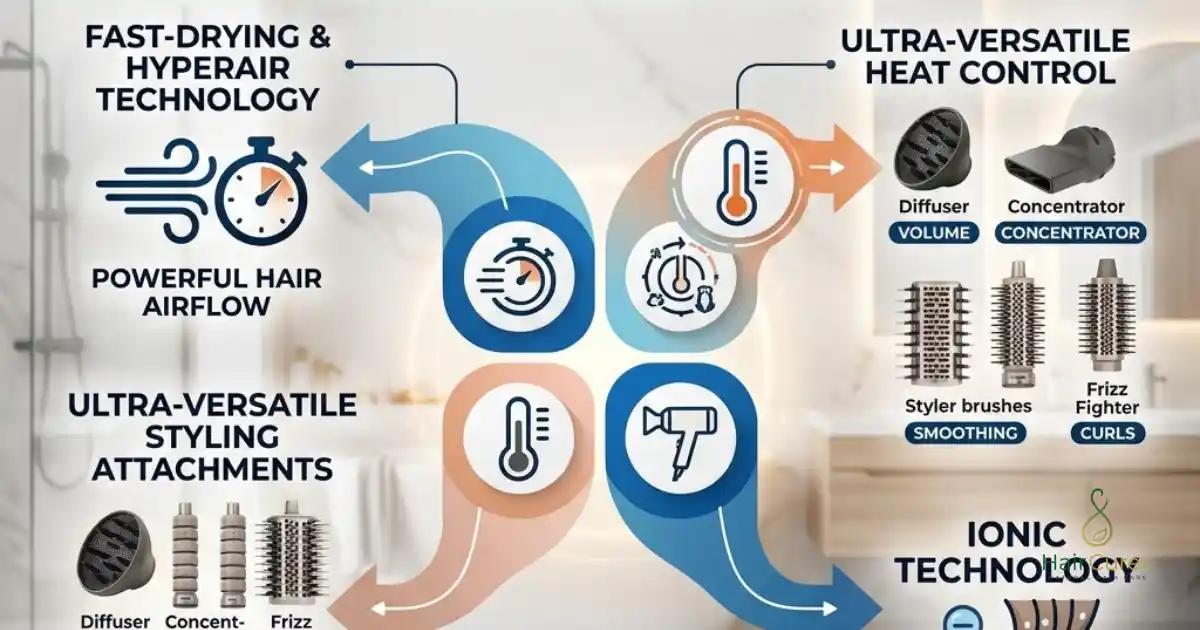
Every Shark dryer shares a handful of core technologies, even though the models look and function a bit differently. Understanding these features helps explain why the brand performs the way it does, and why it’s earned comparisons to dryers costing twice as much.
Airflow speed sits at the center of the Shark experience. Most models push air at up to 100 mph, which is genuinely fast for a consumer dryer. That speed does a lot of the heavy lifting that heat would normally handle, which is exactly the point. Alongside airflow, you’ll find ionic technology built into nearly every Shark model. Ionic dryers release negative ions that break down water droplets on your hair faster, which cuts frizz and adds noticeable shine, especially on hair that tends to puff up in humidity.
Temperature control is another area where Shark stands out. Rather than a single “hot” setting, these dryers use intelligent heat systems that adjust output many times per second, keeping your hair within a safer temperature range even when you’re using the highest airflow setting. Add in adjustable heat settings, multiple speed settings, and a cool shot button for locking in your style, and you’ve got a control panel that genuinely competes with premium brands.
Technology Behind the Airflow
The engine matters more than most shoppers assume. A weak motor might spin fast on paper but still fail to move real air volume, which is why Shark leans on brushless digital motors capable of sustaining high CFM (cubic feet per minute) output without overheating. Higher CFM, not higher heat, is what actually gets your hair dry faster, and it’s the main reason a Shark blow dryer can dry a full head of hair in roughly half the time a basic 1,000-watt dryer needs.
4. How Does a Shark Hair Dryer Perform on Different Hair Types?
Not every dryer works the same way on every head of hair, and Shark’s lineup was clearly built with that in mind. Here’s how it holds up across the most common hair types people search for.
For fine or thin hair, a hair dryer for fine hair needs to avoid two things: overheating the scalp and blowing hair into a tangled mess. Shark’s lower-heat, high-airflow approach handles this well, drying quickly without scorching delicate strands. Most reviewers with fine hair report less breakage over time compared to older dryers they’d used.
Thick hair is arguably where Shark shines brightest. A hair dryer for thick hair has to move a serious volume of air to get through dense sections, and this is exactly what the SpeedStyle Pro was built for. Users with thick, long hair consistently report cutting their drying time by ten minutes or more.
Curly and coily textures need a gentler touch, which is why the diffuser attachment matters so much here. A hair dryer for curly hair should distribute air evenly across curl clusters instead of blasting them straight, and Shark’s diffuser does exactly that, helping curls keep their shape instead of frizzing out. For anyone dealing with frizz-prone texture, a hair dryer for frizzy hair benefits from the combination of ionic technology and lower sustained heat, both of which Shark builds in as standard.
Color-treated hair calls for extra caution, since heat speeds up color fade. Shark’s heat-capping technology helps here too, keeping temperatures from spiking even on the highest airflow setting, which color-treated hair tends to appreciate.
5. Shark Hair Dryer vs Dyson: Which One Is Better?
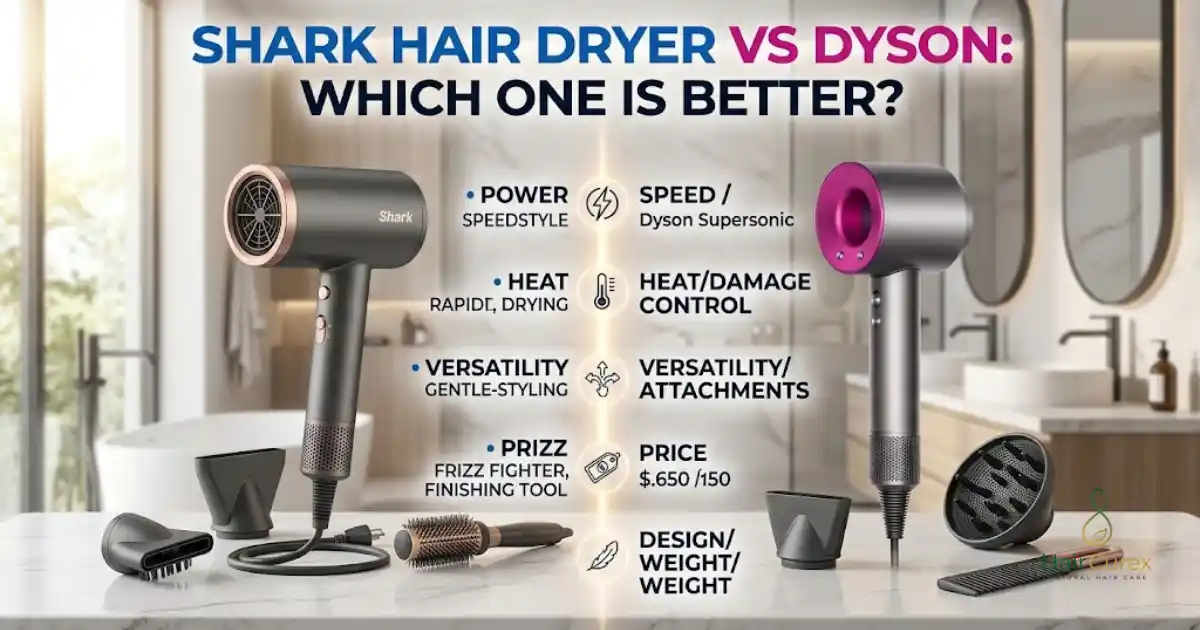
This is the comparison everyone actually wants answered. The Shark hair dryer vs Dyson Supersonic debate usually comes down to three things: price, power, and polish.
| Factor | Shark (SpeedStyle Pro / HyperAIR) | Dyson Supersonic |
|---|---|---|
| Price | $70–$230 | $400–$480 |
| Airflow | Up to 100 mph | Slightly higher raw airflow |
| Weight | Around 1.3–1.7 lbs | Around 1.4 lbs |
| Noise level | Moderate, noticeably louder at top speed | Quieter at comparable power |
| Attachments included | Concentrator, diffuser, styling nozzles | Concentrator, diffuser, smoothing nozzle |
| Warranty (US) | Typically 1–2 years | 2 years |
Independent testing throughout 2026 has generally found Dyson edges out Shark on raw airflow power and noise reduction, with Dyson’s engineering managing to stay quieter even at full speed. That’s a real advantage if you’re drying your hair early in the morning next to a sleeping partner. Dyson also tends to feel slightly more refined in hand, thanks to its lighter first-generation build and smart sensor technology.
But here’s the catch: Shark gets you roughly 80 to 90 percent of that performance for less than half the price. For most people, that trade-off is a no-brainer. Unless you’re a professional stylist running a dryer for eight hours a day, the gap between Shark and Dyson in everyday use is smaller than the price difference suggests.
Price and Value Comparison
Think of it this way: a Dyson Supersonic costs roughly four times what Shark’s budget models charge, yet delivers a fraction more performance rather than a fraction more value. If you’re chasing the absolute best hair dryer for the money, Shark wins that category outright. If money genuinely isn’t a factor and you want the quietest, most premium experience possible, Dyson still holds the crown.
6. Does the Shark Hair Dryer Reduce Frizz and Heat Damage?
Short answer: yes, meaningfully so, though results vary by hair type and how you use it. The frizz control comes primarily from two sources working together. First, the ionic technology breaks water molecules down into smaller droplets, which evaporate faster and smooth the hair cuticle as they go. Second, the lower sustained heat means your hair isn’t losing moisture as aggressively as it would under a traditional high-heat dryer.
Heat damage happens gradually, through repeated exposure rather than a single session. That’s why intelligent heat control matters so much here. By regulating temperature dozens or even hundreds of times per second, Shark’s dryers avoid the heat spikes that cause the most damage, even when you’re using the fastest airflow setting. Over weeks and months, that adds up to noticeably less breakage and split ends for regular users.
That said, technology can only do so much. Holding the dryer too close to your scalp, skipping heat protectant, or drying already-fragile hair aggressively will still cause damage no matter how smart the tool is. Pair your Shark dryer with a proper heat protectant spray, keep it at least six inches from your hair, and use the cool shot button to seal your cuticle at the end of each section for the best possible results.
7. Shark Hair Dryer Attachments: What Does Each One Do?
Attachments are where a lot of the real styling power comes from, and Shark includes a solid set across most of its models.
| Attachment | Purpose | Best For |
|---|---|---|
| Concentrator nozzle | Directs airflow into a focused stream | Precision styling, smoothing bangs, straightening |
| Diffuser attachment | Spreads airflow gently and evenly | Curly, coily, or wavy hair that needs frizz-free volume |
| Oval brush | Adds volume at the roots while drying | Fine to medium hair wanting lift |
| Paddle brush | Detangles and smooths in one pass | Long, thick, or unruly hair |
| Auto-wrap curler | Wraps hair automatically to create curls | Anyone wanting salon-style curls without a curling iron |
The concentrator nozzle is probably the most-used attachment across all Shark hair styling tools, since it lets you direct heat exactly where you want it instead of blasting your whole head at once. The diffuser, meanwhile, is the single most important accessory if you have curly or coily hair, since it prevents the direct airflow from breaking up your curl pattern and causing frizz.
For anyone who bought a FlexStyle system specifically, the paddle brush and auto-wrap curlers open up styling options that go well beyond simple drying, effectively replacing a curling iron and a smoothing brush in one device.
8. How Fast Does a Shark Hair Dryer Dry Your Hair?
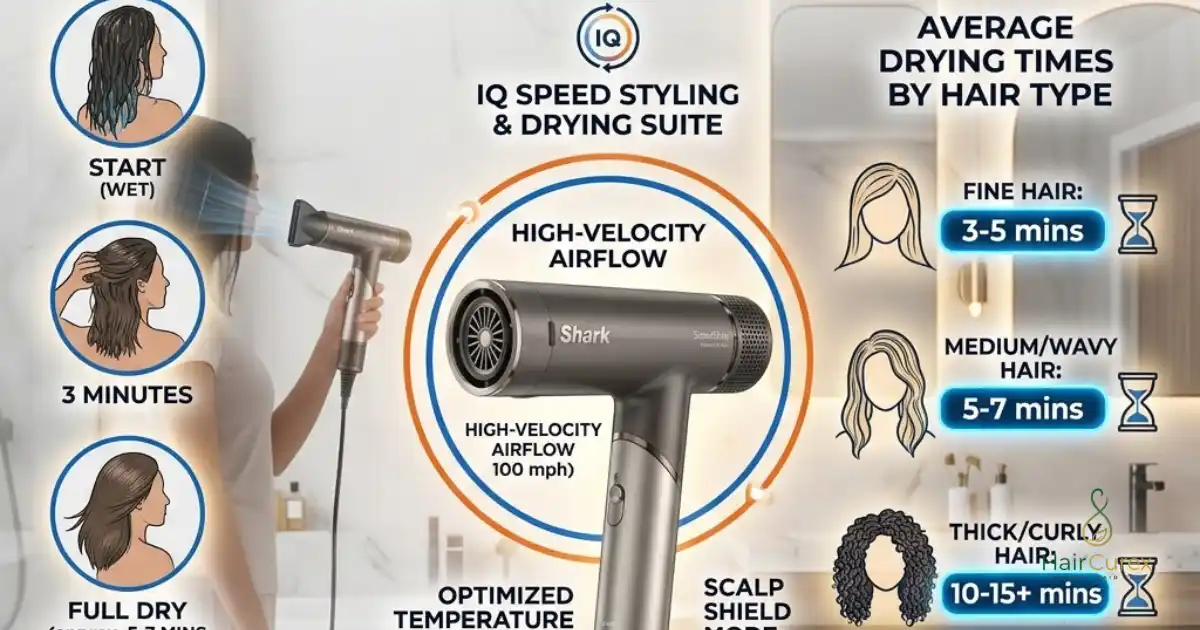
Drying speed is one of Shark’s biggest selling points, and the numbers back it up. On average, a fast drying hair dryer from Shark’s SpeedStyle or HyperAIR lines will dry medium-length hair in roughly 5 to 8 minutes, compared to 12 to 15 minutes for a typical budget dryer running around 1,000 watts.
| Hair Length | Standard Dryer | Shark SpeedStyle Pro |
|---|---|---|
| Short (chin length or above) | 4–6 minutes | 2–3 minutes |
| Medium (shoulder length) | 8–12 minutes | 4–6 minutes |
| Long (past shoulders) | 15–20 minutes | 8–12 minutes |
| Thick and long | 20–25 minutes | 10–15 minutes |
Speed depends on more than the dryer itself, though. Hair porosity, how much water you towel-dry out beforehand, and the attachment you’re using all shift these numbers. Using the concentrator on the highest speed setting will always dry faster than the diffuser, since diffused airflow spreads out and slows the drying process by design in exchange for gentler results.
9. Is a Shark Hair Dryer Worth the Money?
For most shoppers, yes. Here’s the honest breakdown. You’re paying $70 to $230 depending on the model, and in return you get high-velocity airflow, ionic frizz control, multiple attachments, and heat protection technology that used to be reserved for dryers costing three or four times as much. One long-time salon client put it well in a product review: “I switched from my old ceramic dryer to the SpeedStyle Pro, and I genuinely cut my morning routine in half.”
Where Shark starts to lose value is at the extreme ends. If you’re on a very tight budget, a $30 Conair or Revlon dryer will still get your hair dry, just slower and with more heat exposure. And if you’re a working stylist who needs the absolute quietest, most durable tool for daily professional use, Dyson or a true salon-grade dryer might justify the extra cost. For everyone in between, which is most people, a Shark professional hair dryer hits a sweet spot that’s hard to beat.
10. Pros and Cons of Using a Shark Hair Dryer
Pros: Fast drying thanks to high-velocity airflow, noticeably lighter than most premium competitors, reduced heat damage from intelligent temperature control, a solid set of included attachments, and a price point that undercuts luxury brands significantly.
Cons: Louder than Dyson at top speed, some models run a bit heavier than expected for extended use, availability can vary by retailer, and the attachment system takes a session or two to get used to if you’re new to multi-styling tools.
Weighed together, the pros clearly outnumber the cons for the average buyer, especially anyone coming from a basic drugstore dryer. The complaints that do show up tend to be minor annoyances rather than dealbreakers.
11. How to Choose the Best Shark Hair Dryer for Your Hair
Picking the right model comes down to matching the dryer to your actual hair, not just your budget. Start with texture and thickness. If your hair is thick or curly, prioritize the SpeedStyle Pro or a model with a strong diffuser attachment, since airflow volume matters most here. If your hair is fine or thin, almost any Shark model will work well, so you can lean toward whichever price point fits your budget.
Consider how you’ll actually use it day to day. Frequent travelers should look for the lighter SpeedStyle HD332, since a smaller, lighter dryer packs easier and causes less arm fatigue on the go. If you’re someone who curls, smooths, and volumizes regularly, the FlexStyle system will likely save you money in the long run by replacing several separate tools.
Finally, think about noise sensitivity and where you’ll be drying your hair. If you’re sharing a small apartment or drying early in the morning, know upfront that Shark runs a bit louder at full power than Dyson does. It’s a fair trade for the price difference, but worth knowing before you buy rather than after.
12. Shark Hair Dryer: Frequently Asked Questions
Is the Shark hair dryer good for curly hair?
Yes. The diffuser attachment spreads airflow gently across curls, helping maintain your natural curl pattern while cutting down on frizz.
How long does a Shark hair dryer last?
With normal use, most Shark dryers hold up well for two to four years before performance starts to decline, similar to other mid-range and premium dryers on the market.
Can I use a Shark hair dryer every day?
Yes, and the lower sustained heat actually makes daily use gentler on your hair than a traditional high-heat dryer would be, as long as you’re not holding it too close to your scalp.
Does the Shark hair dryer come with a warranty in the US?
Most models come with a limited warranty, typically one to two years depending on where you purchase it. Always check the specific listing or SharkNinja’s official site for current warranty terms before buying.
Where can I buy a Shark hair dryer in the USA?
Shark dryers are widely available through Amazon, Target, Best Buy, Walmart, and SharkNinja’s own website, with pricing that occasionally dips during major sales events.
How do I clean and maintain my Shark hair dryer?
Most models have a removable filter you can rinse or brush clean every few weeks. Keeping the filter free of hair and dust helps maintain airflow strength and extends the motor’s lifespan.
Final Thoughts
The Shark hair dryer lineup has earned its spotlight for a simple reason: it delivers most of what premium brands promise, at a price that doesn’t require a second mortgage. Whether you land on the budget-friendly SpeedStyle HD332, the powerhouse SpeedStyle Pro, or the do-it-all FlexStyle system, you’re getting genuine airflow technology, real frizz control, and attachments that actually make a difference. If you’ve been putting off replacing your old drugstore dryer, this is about as good a reason as you’ll find.