
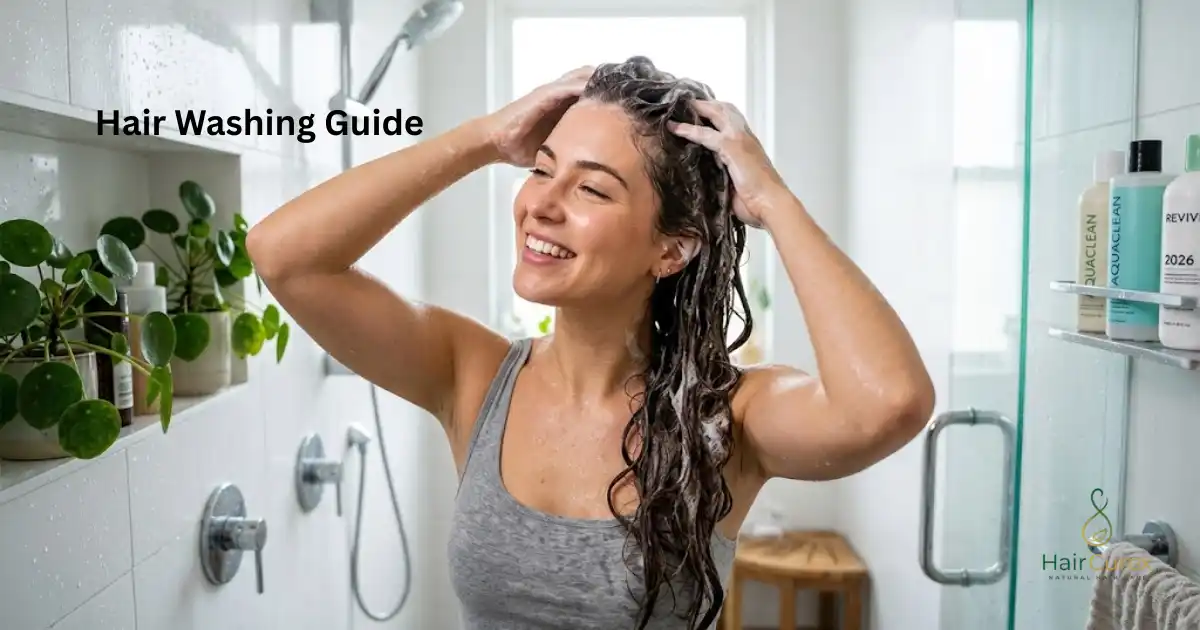
A hair washing guide is a simple set of steps for cleaning your hair. It explains how often to wash, which products to use, and how to do it right. Good habits keep your hair clean and healthy. Most of us have stood in the shower wondering if we’re doing it wrong. You lather up, rinse, and hope for the best. But here’s the truth: there’s a real difference between just wetting your hair and actually washing it the right way. This hair washing guide breaks down everything you need to know about proper hair washing, from water temperature to shampoo amount to drying technique.
Think of your scalp like soil and your hair like plants growing out of it. Healthy soil grows healthy plants. A clean, balanced scalp grows strong, shiny hair. Once you understand how to wash your hair correctly, you’ll notice less frizz, less oil buildup, and a scalp that actually feels comfortable instead of itchy or tight. Let’s walk through a complete hair washing routine that works for real people with real schedules.
What Does a Proper Hair Washing Routine Look Like?
A good hair care routine isn’t complicated once you strip away the marketing noise. At its core, it comes down to four things: how often you wash, what products you use, how you apply them, and how you dry your hair afterward. Beginners often make the mistake of buying five different products and using all of them at once. That’s not a routine, that’s chaos in a bottle.
Start simple. Pick a shampoo suited to your hair type, a conditioner that matches it, and figure out your ideal washing frequency. According to the American Academy of Dermatology, how often you should shampoo really depends on your hair type and how much oil your scalp produces. There’s no universal answer, and that’s actually good news. It means you get to build a routine around your own hair, not someone else’s Instagram post.
A solid beginner routine looks something like this: wash on a schedule that fits your scalp, apply shampoo to the roots and conditioner to the ends, rinse thoroughly, and dry gently instead of rubbing your hair like you’re scrubbing a pan. Once these basics feel automatic, you can start fine-tuning with treatments, masks, or specialty products. But the foundation always comes first.
How Often You Should Wash Your Hair
This is probably the most searched question in the entire hair care world, and for good reason. Wash too often, and you strip away the natural oils your scalp needs. Wash too rarely, and oil, sweat, and product residue pile up until your scalp starts to itch or your hair looks flat and greasy.
So how often to wash hair actually depends on a mix of factors: your scalp’s oil production, your hair texture, your activity level, and even the climate you live in. Someone who works out daily in humid Florida has very different needs than someone with dry, coily hair living in Colorado. Below is a quick reference table to help you find your starting point.
| Hair Type | Recommended Washing Frequency |
|---|---|
| Oily or fine hair | Every 1 to 2 days |
| Normal hair | Every 2 to 3 days |
| Dry or curly hair | Every 3 to 5 days |
| Thick or coarse hair | Every 4 to 7 days |
| Color-treated hair | Every 3 to 5 days, with sulfate-free shampoo |
These numbers aren’t set in stone. They’re a starting point. Pay attention to how your scalp actually feels. If it’s itchy and your roots look shiny with oil by day two, that’s your body telling you to wash sooner. If your ends feel dry and brittle no matter what, you’re probably overdoing it. A healthy hair washing routine adapts to your body’s signals rather than following a rigid calendar.
How to Wash Your Hair Properly Step by Step
Here’s where most people go wrong. They think washing hair means dumping shampoo on their head and hoping gravity does the rest. Proper hair washing is actually a sequence, and each step matters more than you’d expect.
First, brush your hair before you even step into the shower. This loosens tangles and distributes natural oils, which makes the whole process smoother. Once you’re in the shower, wet your hair completely with warm water for about a minute. Hair that isn’t fully saturated won’t lather properly, and you’ll end up using more product than necessary just to compensate.
Next comes the shampoo application, and this is the step people mess up the most. Apply shampoo directly to your scalp, not the length of your hair. Massage it in with your fingertips, never your nails, using small circular motions. This lifts dirt, oil, and product buildup away from the scalp while stimulating blood flow to your hair follicles. The suds that run down the rest of your hair while you rinse are enough to clean the strands themselves; you don’t need to lather your ends separately.
Rinse thoroughly until the water runs clear, which usually takes longer than people expect. Leftover shampoo residue is one of the sneakiest causes of dull, weighed-down hair. After rinsing, apply conditioner from mid-length to the ends, avoiding the scalp entirely. Leave it on for two to three minutes, then rinse with slightly cooler water to help seal the hair cuticle. That final cool rinse is a small step that makes a noticeable difference in shine.
How to Choose the Best Shampoo for Your Hair Type

Walking down the shampoo aisle can feel overwhelming, and honestly, marketing labels don’t always help. Choosing the best shampoo for your hair type starts with understanding what your hair actually needs rather than chasing whatever influencer trend is popular this month.
Clarifying shampoos work well for oily scalps or heavy product buildup, but they shouldn’t be used daily since they can be drying. Moisturizing shampoos suit dry or curly hair, replenishing hydration that these hair types lose more easily. Volumizing shampoos are formulated for fine or thin hair, adding lift without weighing strands down. Sulfate-free shampoos are gentler and ideal for color-treated or chemically processed hair, since traditional sulfates can strip dye faster than you’d like.
When you’re scanning ingredient labels, look for gentle cleansers, hydrating agents like glycerin, and protective ingredients such as panthenol. Steer clear of shampoos loaded with alcohol-based ingredients near the top of the list if your hair leans dry, since these can accelerate moisture loss. The right shampoo isn’t the most expensive one on the shelf. It’s the one formulated for your specific scalp and strand type.
How Much Shampoo Should You Use?
This sounds like a minor detail, but it genuinely affects your results. Using too much shampoo means you’ll need excessive rinsing, which can leave your scalp overly stripped. Using too little means your hair won’t get properly cleansed, leaving oil and buildup behind.
For short hair, a dime-sized amount usually does the job. Medium-length hair typically needs a quarter-sized dollop, while long or thick hair might require a bit more, roughly the size of a silver dollar coin. Thick, coarse, or coily hair textures often need slightly more product simply because there’s more surface area to cover. As a general rule, it’s better to start with less and add more if needed rather than dumping in a huge amount from the start.
Should You Shampoo Twice When Washing Your Hair?
Double shampooing sounds excessive, but it’s actually a legitimate technique used by hairstylists for specific situations. The first wash removes surface-level dirt, sweat, and light product residue. The second wash, once your hair is already clean, actually gets to work on your scalp itself, producing a richer lather and a deeper clean.
Shampooing twice makes the most sense for people with oily scalps, heavy exercise routines, or those who use a lot of styling products like dry shampoo, gel, or hairspray. Athletes and people living in hot, humid climates often benefit from this approach too. On the flip side, if you have dry or color-treated hair, shampooing twice can be too harsh, stripping away moisture and fading color faster than necessary. As dermatologist Dr. Whitney Bowe once put it in an interview, the goal of shampooing is “cleaning the scalp without over-cleansing the hair strand itself,” and that principle applies directly to whether double shampooing makes sense for you.
How to Use Conditioner the Right Way
Conditioner gets misunderstood constantly. Many people apply it the exact same way they apply shampoo, which is actually the opposite of correct technique. Conditioner belongs on the mid-lengths and ends of your hair, the oldest and most damage-prone sections, never on your scalp.
Applying conditioner to your scalp can clog hair follicles and weigh down your roots, leading to that flat, greasy look people often blame on their shampoo. Instead, focus the product where your hair actually needs moisture the most: the ends, which are the oldest, driest, and most exposed to heat and friction over time.
Leave-in conditioners work well for people with dry or curly hair who need extra all-day hydration, while rinse-out conditioners suit those who want a lighter, more controlled level of moisture. Either way, give the product a few minutes to actually absorb before rinsing. Rinsing immediately defeats the purpose entirely, since the conditioning ingredients haven’t had time to penetrate the hair shaft.
What Water Temperature Is Best for Washing Hair?
Water temperature plays a bigger role in hair health than most people realize. Hot water feels amazing in the shower, but it opens up the hair cuticle aggressively, which can lead to moisture loss and frizz over time. It also strips natural oils from your scalp faster than necessary, sometimes triggering your scalp to overproduce oil in response.
Lukewarm water is the sweet spot for the shampoo phase, since it’s warm enough to open the cuticle just enough to cleanse effectively without causing damage. For the final rinse, especially after conditioner, switch to cooler water. This helps seal the cuticle back down, locking in moisture and creating that smooth, shiny look people spend a fortune trying to achieve with products. It’s a small adjustment, but it genuinely changes how your hair looks and feels once it dries.
How to Wash Hair for Different Hair Types
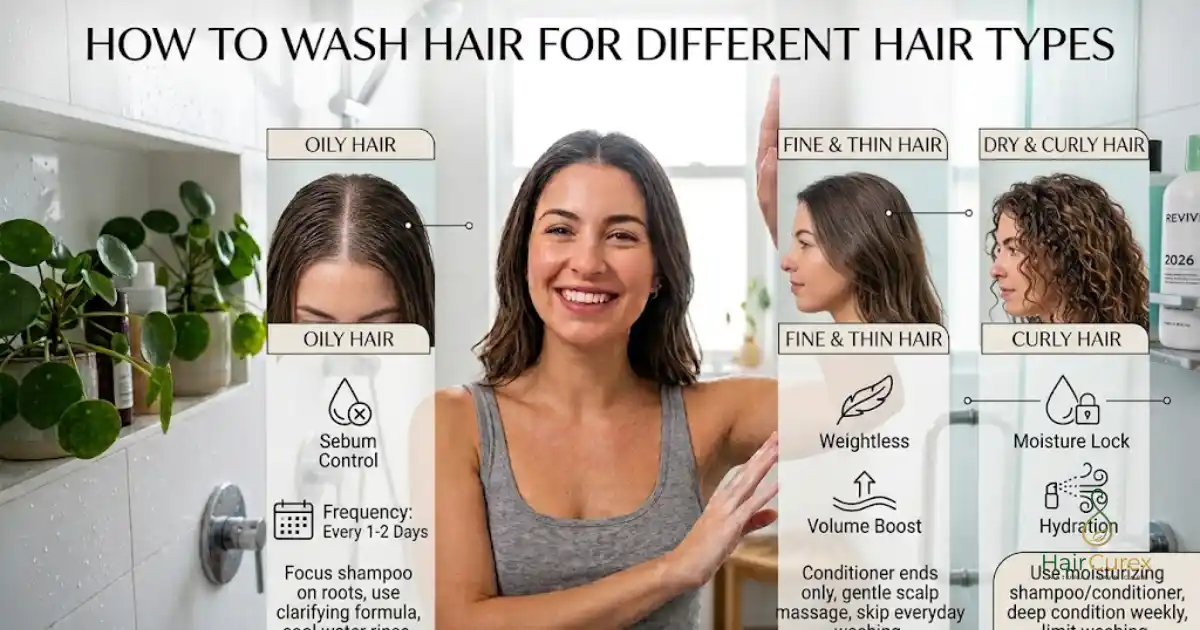
Not all hair behaves the same way, so washing techniques shouldn’t either. Here’s a breakdown of how washing oily hair, washing dry hair, washing curly hair, and other textures differ from one another.
| Hair Type | Washing Tips |
|---|---|
| Oily hair | Wash more frequently with a clarifying or balancing shampoo; focus shampoo on the scalp only |
| Dry hair | Wash less often with a moisturizing shampoo; use conditioner generously on the ends |
| Curly hair | Use the “co-washing” method occasionally (conditioner-only washing) to preserve natural curl oils |
| Straight hair | Oil travels down the hair shaft quickly, so scalp-focused washing keeps roots fresher longer |
| Fine hair | Use lightweight, volumizing shampoo; avoid heavy conditioners that weigh hair down |
| Thick hair | Section hair while washing to ensure the shampoo reaches the scalp evenly |
| Damaged hair | Use sulfate-free, protein-infused shampoo and avoid excessive heat afterward |
| Color-treated hair | Wash with cool water and color-safe, sulfate-free products to protect pigment |
Washing curly hair, in particular, deserves special attention because curls are naturally drier than straight hair due to how oil travels along the twists and turns of the strand. Meanwhile, washing fine hair requires a lighter touch, since fine strands are more prone to looking limp when overloaded with heavy products.
Common Hair Washing Mistakes to Avoid
Even people who wash their hair every single day can be doing it wrong without realizing it. One of the most frequent hair washing mistakes is using water that’s far too hot, which damages the cuticle over time. Another common mistake is scrubbing the scalp too aggressively with fingernails instead of fingertips, which can cause micro-tears and irritation.
Applying conditioner to the scalp instead of just the ends is another frequent misstep, along with skipping the scalp massage altogether, which reduces circulation benefits. Not rinsing thoroughly enough leaves shampoo and conditioner residue behind, contributing to scalp buildup and dull-looking strands. And finally, washing hair daily out of habit rather than necessity often does more harm than good, especially for dry or curly hair types that thrive with more time between washes.
How to Dry Your Hair After Washing
What you do after washing matters just as much as the wash itself. Wet hair is at its most fragile state, so how to dry hair after washing deserves real attention rather than a rushed towel rub.
Start by gently blotting your hair with a towel instead of rubbing it vigorously, which causes friction and can lead to frizz or breakage. A microfiber towel or even an old cotton t-shirt works better than a traditional terrycloth towel, since the smoother texture reduces friction significantly. Air drying is the gentlest option when time allows, letting your hair dry naturally without added heat stress.
If you’re using a blow dryer, always apply a heat protectant spray first and keep the dryer on a low or medium setting rather than blasting full heat directly onto your scalp. Holding the dryer at least six inches away from your hair also helps minimize heat damage over time. Whichever method you choose, patience pays off far more than speed when it comes to protecting your hair’s overall health.
Can Washing Your Hair Too Often Cause Hair Damage?
Yes, overwashing hair is a real issue, and it happens more often than people expect. Every time you shampoo, you strip away some of your scalp’s natural oils, which are actually there to protect and moisturize your hair. Wash too frequently, and your scalp can’t keep up with oil production, leading to dryness, irritation, and in some cases, increased hair breakage.
Signs of overwashing include a scalp that feels tight or itchy shortly after washing, hair that looks dry and straw-like despite regular conditioning, and increased frizz that wasn’t a problem before. On the other end of the spectrum, underwashing causes its own issues too, including scalp buildup, clogged follicles, and hair that looks weighed down and greasy no matter how much product you use.
The goal is balance. Your scalp has a natural rhythm, and once you find your ideal washing frequency, both dryness and greasiness tend to resolve on their own. If you’re unsure where you stand, dermatologists generally recommend starting in the middle, around every two to three days, and adjusting from there based on how your scalp responds.
Best Hair Washing Routine for Healthy Hair
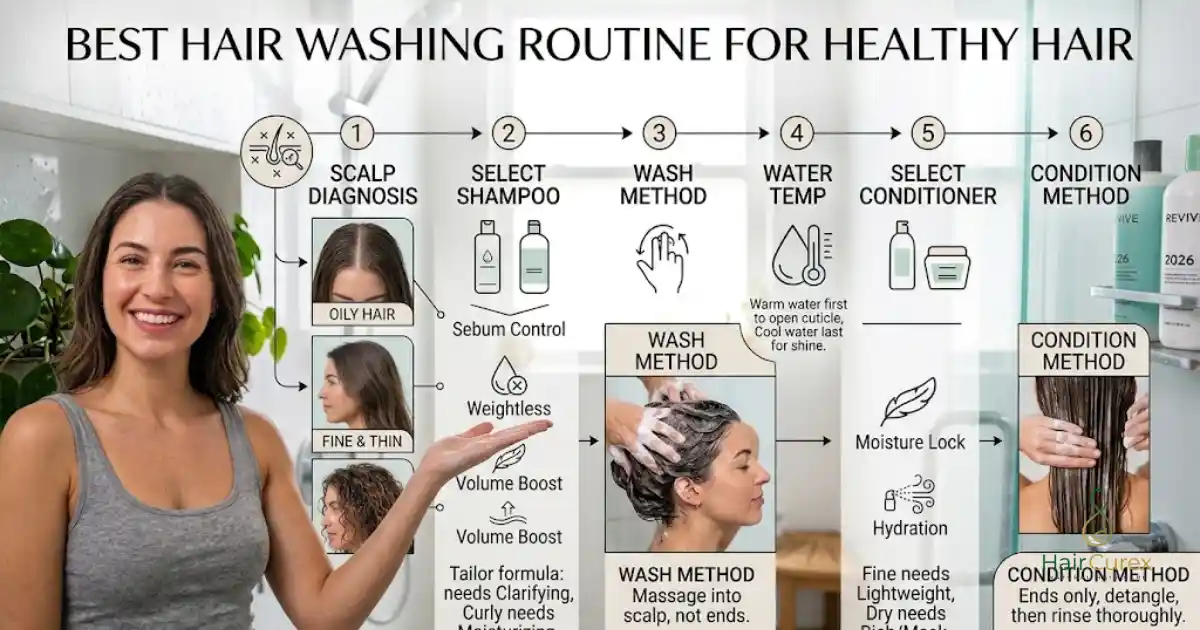
Pulling everything together, here’s what a genuinely healthy hair washing routine looks like in practice. Wash your hair based on your specific hair type and scalp needs rather than an arbitrary daily habit. Use lukewarm water for shampooing and a cooler rinse for the final step. Apply shampoo directly to the scalp with gentle circular motions, and save the conditioner exclusively for your mid-lengths and ends.
On non-wash days, dry shampoo or a light scalp brush can help manage oil without a full wash, extending the time between showers while keeping your scalp comfortable. Once a week or every other week, consider a deeper treatment like a hydrating hair mask or a gentle exfoliating scalp scrub to remove buildup that regular shampoo might miss. Over time, this rhythm becomes second nature, and you’ll likely notice stronger, shinier, more manageable hair as a result.
Conclusion
Washing your hair properly isn’t about following a rigid rulebook. It’s about understanding your own hair type, listening to what your scalp is telling you, and applying a few key techniques consistently. From choosing the right shampoo to nailing your water temperature to drying with a gentle hand, every small step in this hair washing guide adds up to noticeably healthier hair over time.
Give your new routine a few weeks before judging the results, since hair and scalp health take time to rebalance. Once you find your rhythm, washing your hair stops feeling like a chore and starts feeling like something your hair actually thanks you for.
FAQs
1. How do you wash your hair properly?
To wash your hair properly, wet it thoroughly, massage shampoo into your scalp, rinse well, and apply conditioner to the lengths and ends.
2. How often should you wash your hair properly?
There is no fixed schedule. Wash your hair based on your scalp type, hair texture, oiliness, and activity level.
3. Should you shampoo twice when washing your hair properly?
Not always. Double shampooing can help remove heavy buildup or excess oil, but one wash is usually enough.
4. What water temperature is best to wash your hair properly?
Use lukewarm water when washing your hair properly, and avoid very hot water that may dry or irritate the scalp.
5. How should you dry your hair after washing?
After washing your hair properly, gently blot it with a soft towel or microfiber towel instead of rubbing it.