
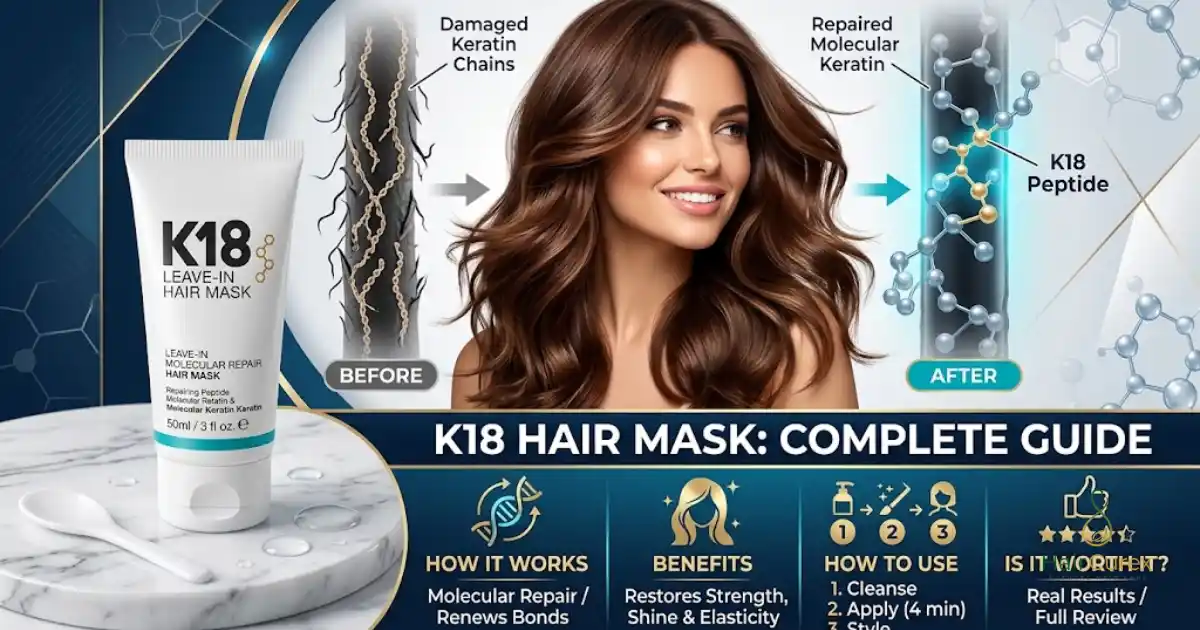
K18 hair mask is a special hair treatment. It repairs damage deep inside the hair. It works fast and needs only a few minutes.
Damaged hair has a way of showing up right when you need it least. Maybe it’s a bad bleach job before a wedding, or maybe years of heat styling finally caught up with you. Either way, you’ve probably heard whispers about a little product called the K18 hair mask, and you’re wondering if it’s the real deal or just another overhyped bottle on a salon shelf.
Here’s the short answer: this isn’t your average conditioning treatment. The K18 hair mask works at a molecular level, targeting damage most products can’t even touch. In this guide, we’ll walk through exactly how K18 molecular repair works, what results you can realistically expect, how to use it the right way, and how it stacks up against Olaplex — one of its biggest rivals in the bond repair world.
By the end, you’ll know whether the K18 hair mask deserves a spot in your routine or whether your money’s better spent elsewhere.
What Is the K18 Hair Mask and How Does It Work?
The K18 Leave-In Molecular Repair Hair Mask is a lightweight, leave-in treatment built around a single, patented ingredient: K18Peptide. Unlike most hair repair masks, which coat the hair shaft with silicones and oils to fake smoothness, this one goes underneath the surface. It’s not trying to trick your hair into looking healthy for a day. It is designed to repair and strengthen damaged hair fibers at the molecular level.
So how does the science work? Every strand of hair contains keratin chains, and damage — whether from bleach, heat, or chemical processing — breaks those chains apart.Damage to these structures can weaken the hair fiber, reducing its strength and resilience. That’s where K18 molecular repair comes in. The peptide is designed to mimic a naturally occurring sequence in human hair, helping reconnect disrupted keratin chains and improve the strength and resilience of damaged hair. Think of it less like a bandage and more like a repair crew rebuilding a bridge from the support beams up, not just painting over the cracks.
This distinguishes the K18 hair treatment from ordinary deep conditioners. A regular mask smooths the cuticle temporarily. A K18 hair repair treatment rebuilds the internal architecture of the strand, which is why results tend to hold up wash after wash instead of disappearing the moment you rinse.
The brand behind it, K18 Biomimetic Hairscience, developed the peptide using biotech research rather than traditional cosmetic formulation. That’s a meaningful distinction. Most hair care brands work with what’s already available in the beauty aisle. K18 built something new from scratch, and that’s part of why it earned so much attention so quickly.
K18 Hair Mask Benefits for Damaged Hair
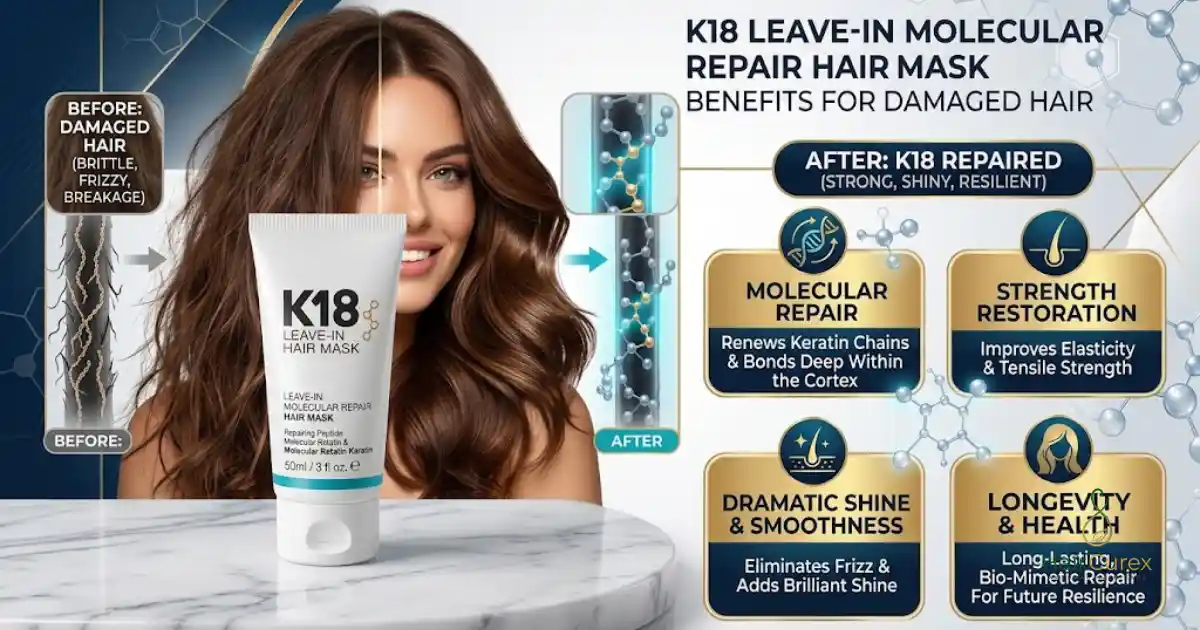
If your hair feels like straw, snaps when you brush it, or just doesn’t bounce back the way it used to, you’re dealing with structural damage — not just dryness. And structural damage needs more than a moisturizing rinse. Here’s where the K18 hair mask benefits really start to add up.
First, there’s strength. Hair that’s been through bleach, color, or heat styling loses tensile strength, meaning it stretches and breaks more easily. Clinical testing commissioned by K18 reported measurable improvements in strand strength after just one application, with continued gains after repeated use. Second, there’s elasticity. Healthy hair should stretch slightly and spring back. Damaged hair, on the other hand, tends to stretch and simply stay stretched, or snap outright. Restoring hair elasticity is one of the clearest signs that molecular hair repair is actually happening beneath the surface.
Then there’s the visible stuff — the part you actually see in the mirror. Users consistently report smoother hair, stronger-feeling strands, and a noticeable drop in frizz and flyaways. Shine improves too, not because of a coating effect, but because a smoother, more intact hair cuticle reflects light more evenly. And because the treatment is designed to address structural damage rather than simply coating the hair, many people notice a real reduction in split ends and overall hair breakage over time.
| Benefit | What It Addresses |
|---|---|
| Increased strand strength | Brittle, breakage-prone hair |
| Improved elasticity | Hair that snaps instead of stretching |
| Reduced frizz | Damaged, raised cuticle layers |
| Enhanced shine | Uneven, rough hair surface |
| Reduced breakage | Weakened and fragile hair |
| Better manageability | Tangled, hard-to-style damaged hair |
One more thing worth mentioning: Its lightweight formula is designed to minimize the heavy or greasy feel that some repair treatments can leave behind. A lot of repair-focused products trade damage control for greasiness. This one is formulated to absorb quickly, which matters if you’re dealing with fine or oily hair alongside the damage.
How to Use K18 Hair Mask Correctly
Using this product isn’t complicated, but getting the technique right does make a difference in your results. The general K18 hair mask routine goes like this: shampoo your hair as usual, then towel-dry it until it’s damp but not dripping wet. Excess water dilutes the formula and reduces how effectively the peptide can penetrate the strand.
Once your hair is damp, Apply a small amount of K18 evenly from mid-lengths to ends, adding more only if needed to cover the hair, focusing extra product on the areas that feel most damaged — usually the mid-lengths and tips for most people. A little goes a long way here. For shoulder-length hair, that typically means around four pumps, while longer or thicker hair might need six to eight. Comb it through evenly with a wide-tooth comb so every strand gets coated, not just the surface layer.
Here’s where people often get confused: should you use K18 before shampoo or K18 after shampoo? The official instructions call for it after shampoo, applied to damp hair, and left in — you don’t rinse it out. This makes it different from a traditional mask that sits for twenty minutes and then washes away down the drain. K18 is designed to keep working even after you’ve styled your hair and gone about your day.
Tips for First-Time Users
If this is your first time trying it, do a quick patch test on a small section of hair or skin, especially if you have known sensitivities to hair care ingredients. It’s also worth pairing the mask with K18’s peptide-infused shampoo and conditioner, since the brand designed the whole system to work together, though the mask alone still delivers strong results on its own. And don’t skip styling afterward — Many people use it after conditioning as an additional leave-in step. It won’t interfere with your regular routine.
How Long Should You Leave K18 Hair Mask On?
This is one of the most searched questions about the product, and for good reason — leave-in timing affects results. The standard, brand-recommended time is just four minutes. That’s it. Apply it, let it sit for four minutes while the peptide bonds to the damaged sites, then move on with styling. You don’t rinse it out afterward.
Some people wonder if leaving it on longer boosts the results. According to K18’s own research, four minutes is the sweet spot where the peptide fully binds to the hair. Leaving it on longer than that doesn’t appear to meaningfully increase repair, though it won’t damage your hair either. Overnight use is technically possible and some users do it for severely damaged hair, but it isn’t necessary for most people and the brand doesn’t specifically recommend it as a routine practice.
For severely damaged hair — think bleached-to-platinum or heavily chemically processed strands — sticking to the four-minute window consistently, rather than trying to rush the process with one long overnight session, tends to produce steadier, more reliable results over several weeks.
K18 Hair Mask Before and After: What Results Can You Expect?
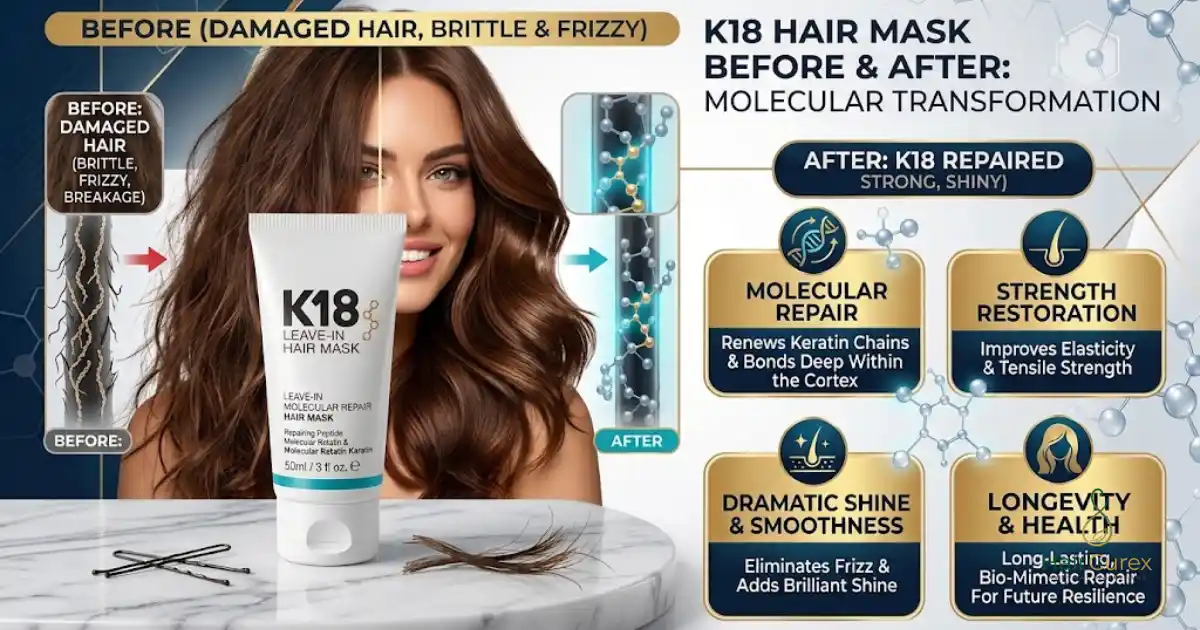
Let’s talk about the K18 hair mask before and after transformation, because this is usually what convinces people to try it in the first place. After just one application, most users notice softer texture and reduced frizz almost immediately. That first result is real, but it’s the smaller part of the story.
The bigger transformation happens with consistent use over four to eight weeks. This is when people report their hair holding curls better, tangling less, and generally behaving in a way it hasn’t since before the damage occurred. One user, a colorist based in Los Angeles, described the shift this way in an online review: “My client’s hair went from crunchy and see-through at the ends to actually having body again after six weeks of weekly treatments.”
That said, it’s worth setting realistic expectations. K18 is not going to turn severely over-processed, chemically fried hair into virgin, undamaged strands in one wash. It repairs the internal structure of hair that still has integrity to rebuild. If large sections of hair are essentially destroyed, no leave-in treatment — K18 included — can fully reverse that. A trim alongside continued treatment often produces the best combined outcome in cases like this.
Is K18 Hair Mask Good for Bleached, Colored, or Chemically Treated Hair?
Bleach is brutal on hair. It breaks disulfide bonds to lift color, and in the process, it weakens the entire strand structure. This is exactly the kind of damage K18 was built to address, which explains why so many colorists and salons have adopted it as a go-to treatment for bleach damaged hair.
For color treated hair specifically, K18 offers a nice side benefit: because it repairs the strand without stripping or altering pigment, it helps color stay vibrant for longer. Damaged hair cuticles don’t hold color well — they let it fade and wash out faster. A smoother, more repaired cuticle locks color in more effectively, which is part of why K18 has become such a popular add-on service at color-focused salons across the country.
What about other chemical processes, like keratin treatments, perms, or relaxers? Generally, K18 is considered safe to use alongside these, and many stylists incorporate it specifically to offset the damage those treatments cause. That said, if you’ve just had a chemical service done, it’s smart to wait until your stylist gives the go-ahead before layering on additional treatments, just to avoid any unexpected interactions with the specific chemicals used.
K18 Hair Mask vs. Olaplex: Which One Is Better?
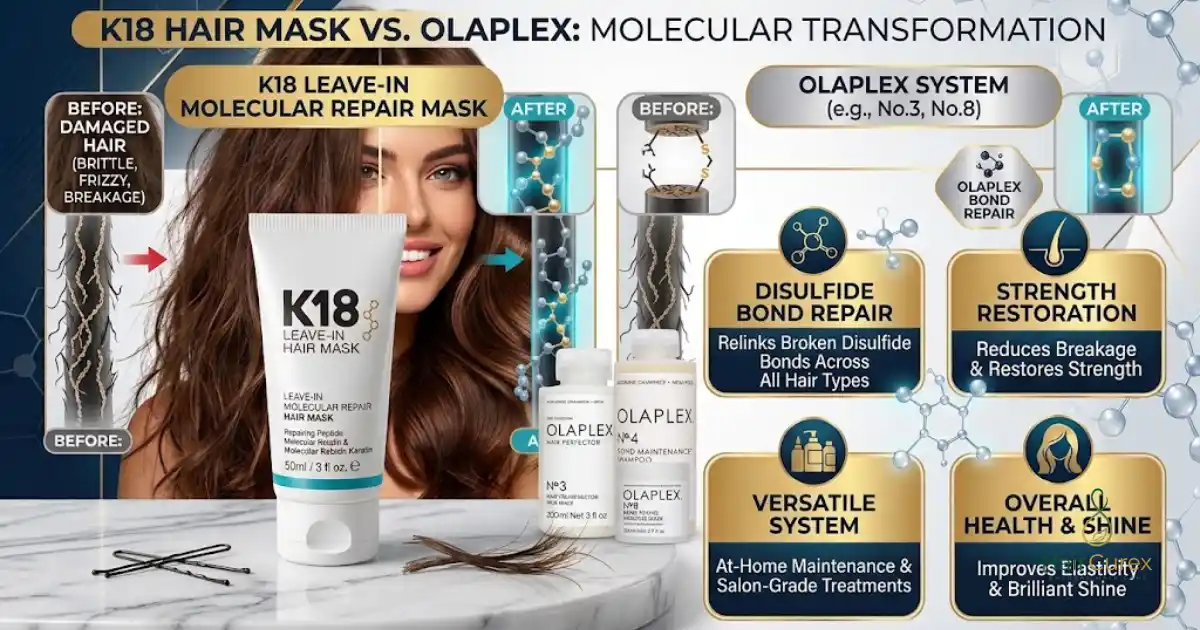
This comparison comes up constantly, and honestly, it doesn’t have a one-size-fits-all answer. Both are considered among the best bond repair treatment options on the market, but they work differently.
Olaplex’s signature product, Bond Multiplier No. 3, repairs disulfide bonds — the same bonds bleach breaks apart. K18, by contrast, targets keratin chains using its peptide technology, addressing a slightly different type of structural damage. In practice, this means K18 tends to work faster (four minutes versus twenty for Olaplex’s leave-on time) and is applied to damp, unrinsed hair rather than rinsed out like Olaplex No. 3.
| Feature | K18 Hair Mask | Olaplex No. 3 |
|---|---|---|
| Technology | K18Peptide, molecular keratin repair | Bis-Aminopropyl Diglycol Dimaleate, bond repair |
| Application time | 4 minutes | 10–20 minutes |
| Rinse required | No, leave-in | Yes |
| Best for | Bleach, heat, and chemical damage | Bleach and chemical damage specifically |
| Price range (USA) | Around $75 for 5 oz | Around $30 for 3.3 oz |
| Texture | Lightweight, absorbs fast | Slightly heavier, oil-like |
So, K18 or Olaplex? If speed and convenience matter most to you, K18 wins easily — a four-minute leave-in fits into any routine. If budget is the deciding factor, Olaplex is the more affordable choice and still delivers solid results for bleach and chemical damage. Some stylists actually recommend using both in rotation, since they approach repair from slightly different angles. Neither is objectively “better” across the board; it depends on your hair’s specific damage type and your routine preferences.
How Often Should You Use K18 Hair Mask?
For hair that’s dealing with real damage, the brand recommends using the mask weekly for the first four to six weeks. This consistent K18 treatment routine gives the peptide repeated opportunities to bind to damaged sites and rebuild strength progressively.
Once your hair reaches a healthier baseline, you can shift to a maintenance schedule of roughly once every two to four weeks. Signs that you should dial usage back up include renewed brittleness, increased breakage, or a return of that dry, straw-like texture — often triggered by a new color service or a stretch of heavy heat styling. On the flip side, if your hair starts feeling consistently strong and smooth, you likely don’t need to use it more than once a month to maintain those results.
Long-term, there’s no evidence suggesting the product loses effectiveness with continued use, and it’s generally considered safe as an ongoing part of a hair care routine rather than a short-term fix.
Can You Use K18 Hair Mask on All Hair Types?
Yes, and this is actually one of its bigger selling points. Whether you’ve got fine, thick, curly, straight, or coily hair, the K18 hair mask works because it targets keratin at the molecular level — and keratin is a structural component present in every hair type, regardless of texture.
That said, application can be adjusted slightly depending on your hair’s needs. Fine hair usually needs less product to avoid any weightiness, while thick or coarse hair often benefits from a slightly heavier application to make sure every strand gets coated. Curly and coily hair types, which tend to be more prone to dryness and breakage due to their natural structure, often see some of the most noticeable transformations, since these hair types are frequently more damage-prone to begin with.
Hair porosity matters too. High-porosity hair, which absorbs and loses moisture quickly, tends to soak up the treatment fast and may benefit from more frequent applications. Low-porosity hair, on the other hand, can be more resistant to absorption, so making sure hair is properly damp (not soaking wet) before application becomes especially important for the treatment to actually penetrate.
Common Mistakes to Avoid When Using K18 Hair Mask
A surprising number of disappointing results trace back to small application errors rather than the product itself. Using far too much or far too little is one of the most common issues; too little means the peptide can’t coat and treat all your strands, while too much simply wastes product without boosting the outcome — it doesn’t work like “more equals better” once you’ve reached the recommended amount.
Skipping a patch test is another mistake, particularly for anyone with a history of product sensitivities, since a small precaution up front can prevent a much bigger headache later. Applying the mask to soaking wet hair rather than towel-dried, damp hair dilutes the peptide concentration and reduces how well it can bind. Similarly, rushing past the four-minute wait time or rinsing it out (when it’s meant to be left in) undermines the entire mechanism the product relies on.
Expecting instant miracle results after a single use is a mindset mistake as much as a technical one. Real transformation, especially for severely damaged hair, builds over several weeks of consistent use — not overnight. Finally, improper storage, like leaving the bottle somewhere hot or humid, can affect the peptide’s stability over time, so keeping it in a cool, dry place preserves its effectiveness for longer.
K18 Hair Mask Side Effects: Is It Safe for Your Hair?
Generally speaking, the K18 hair mask has a strong safety profile and is considered gentle enough for regular use. It’s formulated without sulfates, parabens, and phthalates, which are common irritants in many mainstream hair products, and it’s been tested extensively by the brand as part of its development process.
That said, no product is entirely without risk for every single person. Scalp sensitivity or mild allergic reactions are possible, particularly for those with known sensitivities to specific botanical or peptide-based ingredients. If you notice redness, itching, or irritation after application, discontinue use and consult a dermatologist. Pregnant individuals or those with underlying scalp conditions may also want to check with a doctor before introducing any new hair treatment, simply as a general precaution rather than because of any specific known risk tied to this product.
For the vast majority of users, though, the K18 hair mask is regarded as one of the safer options in the professional hair repair mask category, largely because its mechanism works with the hair’s existing structure rather than introducing harsh chemical alterations.
Is K18 Hair Mask Worth It? Final Verdict
So, is K18 hair mask worth it? For anyone dealing with genuinely damaged hair — bleach damage, heat damage, chemically damaged hair, or just years of wear and tear — the answer leans strongly toward yes. It’s backed by real biotech research rather than marketing buzzwords, it’s fast to apply, and the results tend to build meaningfully over time rather than fading after one wash like so many “quick fix” products do.
Where it makes less sense is for hair that’s already healthy. If you’re not dealing with breakage, brittleness, or noticeable damage, you’re essentially paying premium prices for a treatment your hair doesn’t structurally need. In that case, a good moisturizing conditioner will probably serve you just as well for a fraction of the cost.
For everyone else — especially those managing color treated hair, recovering from a bleach session gone rough, or just trying to restore hair health after months of heat styling — the K18 hair mask earns its reputation as one of the best hair repair treatment options currently available in the USA market.
FAQs
Can K18 hair mask repair severely damaged hair?
It can meaningfully improve severely damaged hair by rebuilding keratin structure at the strand level, but it can’t fully reverse hair that’s structurally beyond repair. In those cases, combining treatment with regular trims produces the best outcome.
Is K18 hair mask safe to use every wash day?
It’s generally safe, but the brand recommends weekly use during the initial repair phase, tapering to a maintenance schedule afterward. Daily use isn’t necessary and won’t necessarily speed up results.
Does K18 hair mask replace conditioner?
No. It’s designed to work alongside your regular conditioner, not instead of it. Many people use it after conditioning as an additional leave-in step.
Can men use K18 hair mask?
Absolutely. The formula isn’t gender-specific, and anyone dealing with damaged, brittle, or weak hair — regardless of length or style — can benefit from it.
Where can you buy authentic K18 hair mask in the USA?
Authentic K18 products are sold through the official K18hair.com website, participating salons, and authorized retailers like Ulta and Sephora. Buying from unauthorized third-party sellers carries a higher risk of counterfeit products.