
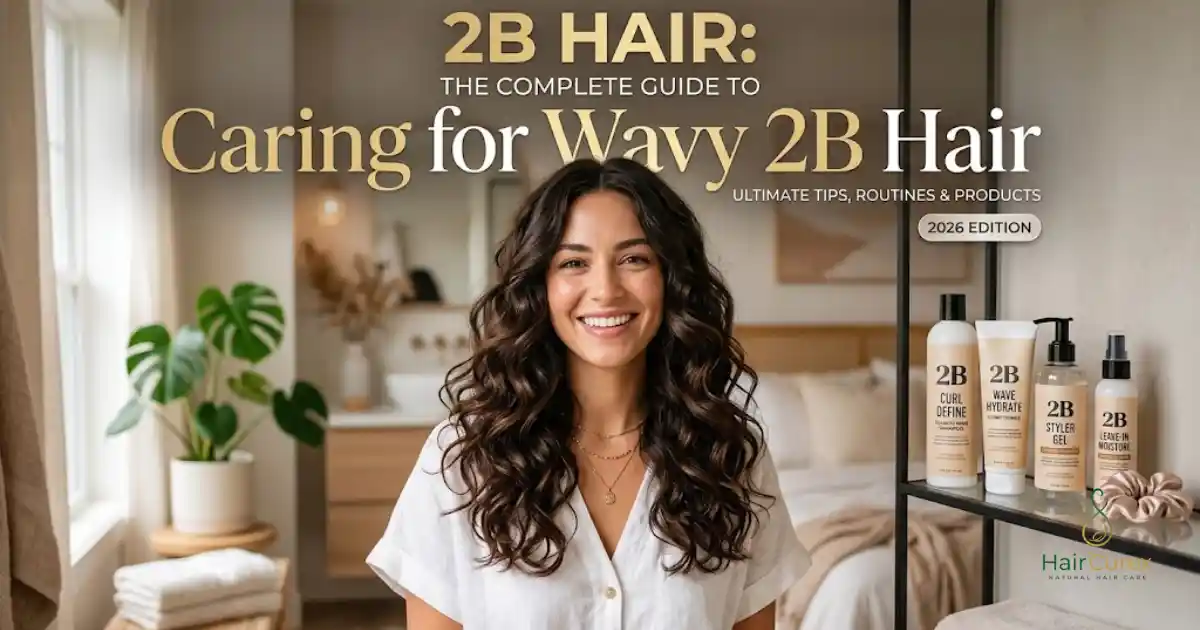
2B hair is a wavy hair type. It sits between straight and curly hair. The waves form loose S-shapes, mostly starting from the mid-length of the hair.
If you’ve ever stared in the mirror wondering whether your hair is “curly enough” to call curly or “straight enough” to call straight, you’re not alone. Millions of people in the U.S. fall into that in-between zone, and there’s actually a name for it: 2B hair. This wave pattern sits right in the sweet spot between soft, barely-there waves and full-on ringlets, and once you understand how it behaves, it becomes so much easier to manage.
In this guide, we’ll walk through everything about the 2B hair type, from what it looks like to how you should wash it, style it, and keep it healthy for the long run. Think of this as your one-stop resource for finally making peace with your waves.
What Is 2B Hair? Understanding the 2B Hair Type
2B hair belongs to the wavy hair family, which sits in the middle of the famous Andre Walker Hair Typing System. This system was created by hairstylist Andre Walker in the 1990s, and it splits hair into four broad categories: straight (type 1), wavy (type 2), curly (type 3), and coily (type 4). Within the wavy category, there are three subtypes — 2A, 2B, and 2C — and each one describes a different level of wave definition, thickness, and frizz tendency. Type 2B hair is the middle child of this trio, and it’s often described as having more “oomph” than 2A but less spiral than 2C.
What makes 2B wavy hair so distinct is the shape of its waves. Instead of gentle bends that barely register, 2B waves form a clear S-shape, usually starting somewhere around the middle of the hair shaft rather than right at the root. This means the top of the head can look fairly flat or straight, while the ends curve and bend with noticeable rhythm. People with natural 2B hair often say their hair looks straight when it’s wet and pulled taut, but the moment it starts to dry, the wave pattern reveals itself. It’s a texture that rewards patience, because the real shape only shows up once the hair is left alone to do its thing.
Understanding your 2B hair pattern is the first step toward building a routine that actually works, instead of fighting against your natural texture with products or techniques meant for straight or curly hair. Once you know what you’re working with, everything from shampoo selection to styling technique starts to make a lot more sense.
What Does 2B Hair Look Like? Key Characteristics
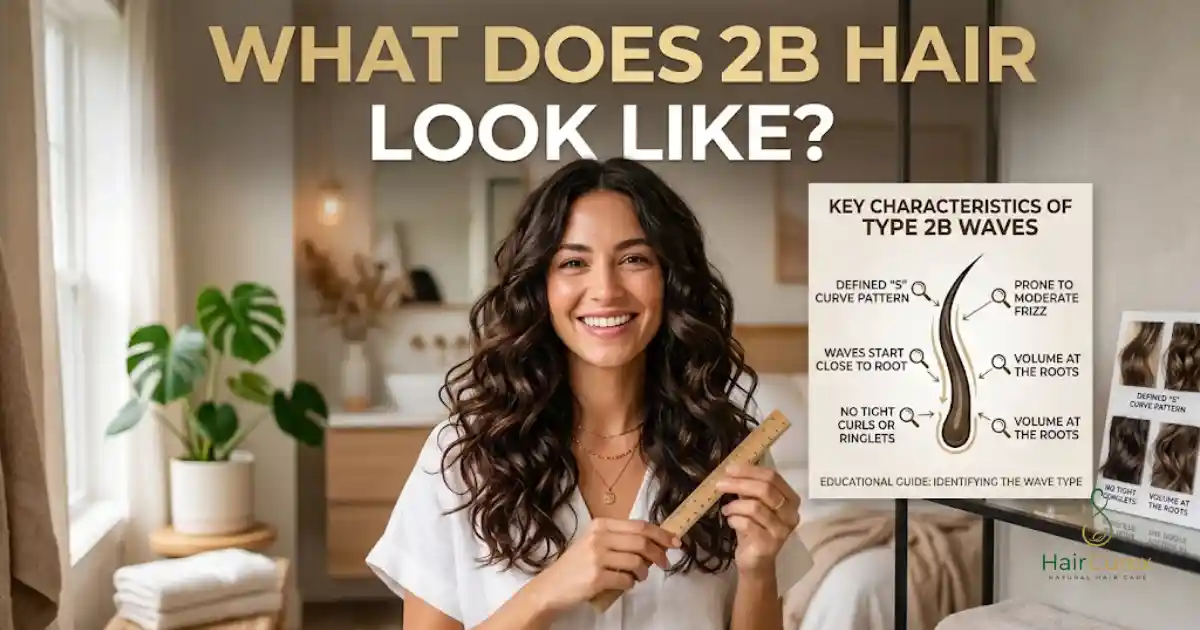
People with 2B hair texture usually notice a few telltale signs when they really look closely at their strands. The waves tend to start around ear level or a bit lower, leaving the roots looking smoother and flatter than the rest of the hair. As the eye travels down the length, the S-shaped bends become more visible, and by the time you reach the ends, the wave often loosens again, giving the hair a relaxed, effortless-looking finish. This root-to-tip journey — flat, then wavy, then soft — is one of the clearest signs of true 2B waves.
Texture-wise, 2B hair usually falls into the medium category, not as fine as type 1 straight hair but not as coarse as tightly coiled type 4 hair. It tends to have decent volume, especially at the crown, and it can hold styles reasonably well once it’s properly hydrated. On the flip side, 2B strands are prone to frizz, particularly in humid weather, because the wave pattern creates more surface area for moisture in the air to latch onto. Many people also describe their 2B waves as having a “S” or “loose zigzag” shape rather than a perfect spiral, which is a helpful way to visually tell it apart from tighter curl types.
Here’s a quick breakdown of how 2B hair typically behaves at different points along the strand:
| Hair Section | Typical Appearance in 2B Hair |
|---|---|
| Roots | Fairly flat or straight, minimal wave |
| Mid-Length | Clear S-shaped bends begin to form |
| Ends | Waves often loosen and soften |
| Overall Texture | Medium thickness with moderate frizz potential |
| Volume | Noticeable at the crown, especially when dry |
How to Tell If You Have 2B Hair
A simple way to figure out whether you actually have 2B hair is the classic air-dry test. Wash your hair as you normally would, skip the brush entirely, and let it dry without touching it, using a diffuser, or applying heavy product. Once it’s fully dry, take a good look in natural light. If you see clear S-shaped waves starting from around the middle of your hair, with a flatter root area and slightly loosened ends, there’s a strong chance you’re dealing with wavy hair type 2B.
It also helps to compare your hair’s behavior to its neighboring types. If your waves are barely visible and your hair looks almost straight even after air-drying, you likely have 2A hair instead. On the other hand, if your waves spiral tightly and clump together into defined ringlets on their own, without much manipulation, you’re probably looking at 2C or even a light 3A pattern. 2B hair sits comfortably in the middle — wavy enough to have real texture, but not so tight that it forms distinct curls without help.
One more clue worth mentioning: how your hair reacts to humidity and touch. Frizzy 2B hair is extremely common, and if you notice your waves puffing up or losing shape the moment you step outside on a muggy day, that’s another strong sign you’re dealing with this particular texture. Many people with 2B waves also notice that running their fingers through dry hair disrupts the pattern almost instantly, which is a texture-specific quirk worth remembering when we get to styling tips later on.
2A vs 2B vs 2C Hair: What’s the Difference?
Because these three wave types often get lumped together under the umbrella term “wavy hair,” it’s worth breaking down exactly how they differ. Knowing where you land on this spectrum changes almost everything about your routine, from the products you choose to how often you wash.
| Feature | 2A Hair | 2B Hair | 2C Hair |
|---|---|---|---|
| Wave Shape | Loose, barely-there bends | Clear S-shaped waves | Defined, spiral-like waves |
| Where Waves Start | Mid-shaft to ends | Mid-shaft | Often close to the roots |
| Frizz Level | Low to moderate | Moderate to high | High |
| Volume | Minimal | Moderate | High |
| Best Suited Products | Lightweight, minimal styling needed | Lightweight to medium hold products | Medium to heavy, curl-defining products |
The comparison above shows why 2A vs 2B hair debates come up so often online — the two types can look similar at first glance, especially on second-day hair, but 2A tends to fall flatter and needs far less product to maintain its shape. Meanwhile, the 2B vs 2C hair comparison highlights the opposite issue: 2C hair usually needs richer, heavier products to stay defined, while using those same heavy products on 2B waves can weigh them down and make them look greasy or limp.
It’s also completely normal to have a mix of wave patterns across your head. Many people have 2B waves through most of their hair with a few 2C ringlets underneath, or 2A texture near the crown that transitions into 2B further down. This is one of the reasons the hair typing system should be treated as a helpful guide rather than a strict rulebook — your hair doesn’t need to fit perfectly into one box to benefit from 2B-specific care tips.
The Best Hair Care Routine for 2B Hair
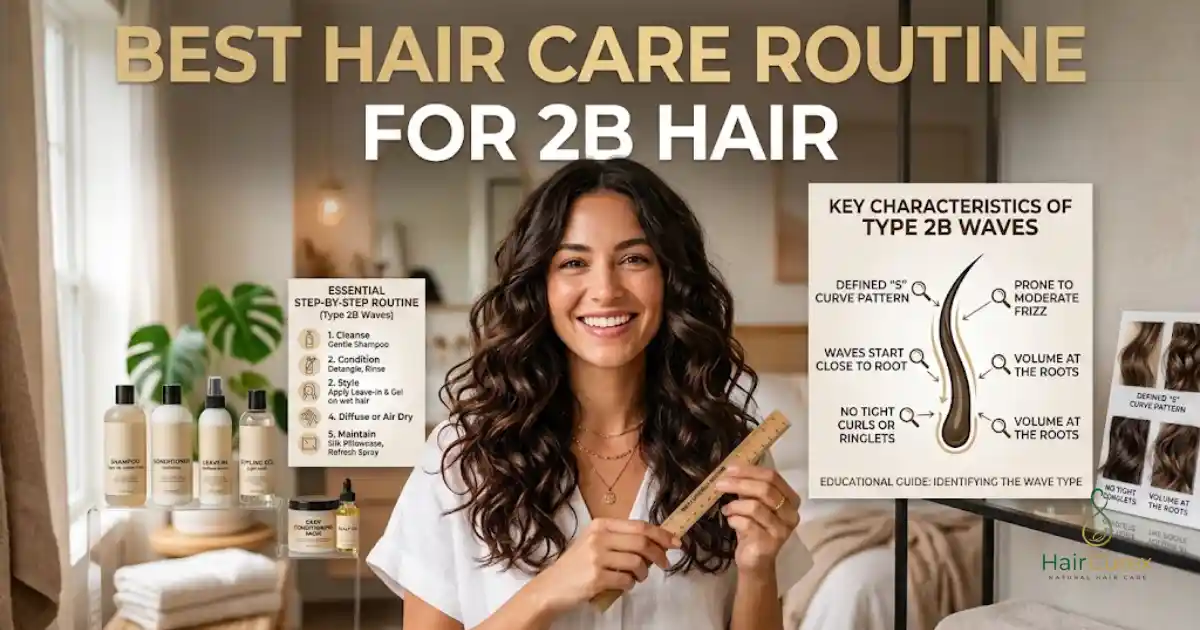
Building a solid 2B hair care routine doesn’t have to be complicated, but it does require a bit of intentionality. Unlike straight hair, which can often handle daily washing and minimal product, 2B waves thrive on a more balanced approach — enough hydration to keep frizz in check, but not so much product that the waves collapse under the weight. Most people with this texture find that washing two to three times a week strikes the right balance, giving natural oils enough time to travel down the hair shaft without letting the scalp get overly oily.
A typical week might include one full wash day with shampoo and conditioner, one or two “refresh” days using just water or a light leave-in spray, and a weekly deep conditioning treatment to keep moisture levels topped up. This kind of rhythm respects how 2B hair texture naturally works: it needs hydration to define the waves, but too much heavy product traffic can flatten them just as easily as too little moisture can leave them frizzy and dry.
How to Wash 2B Hair Without Losing Your Natural Waves
Washing technique matters just as much as product choice when it comes to 2B hair. Start by wetting your hair thoroughly with lukewarm water, since water that’s too hot can strip natural oils and leave your waves parched and prone to frizz. Apply a sulfate-free shampoo primarily to the scalp, massaging gently with your fingertips rather than scrubbing aggressively. The lather that runs down through the lengths as you rinse is usually enough to clean the rest of the hair without over-stripping the mid-lengths and ends.
When it comes to conditioner, apply it generously from the mid-shaft down to the ends, since this is where 2B waves tend to be driest. While the conditioner is still in your hair, gently scrunch upward toward the scalp — this simple motion helps encourage the S-shaped pattern to form rather than letting the hair hang limp. Finish with a cool water rinse, which helps seal the hair cuticle and can noticeably cut down on frizz later in the day.
For anyone who finds their hair gets weighed down easily, co-washing (using conditioner only, without shampoo) once or twice between full wash days can be a game changer. It keeps the 2B hair pattern hydrated without the stripping effect that frequent shampooing can sometimes cause. As one longtime hairstylist put it during a curl-care workshop, “Wavy hair doesn’t need to be washed constantly — it needs to be washed smartly.” That single shift in mindset is often what separates frustrated waves from happy, defined ones.
Best Products for 2B Hair: Shampoo, Conditioner & Styling Products
Choosing the right 2B hair products comes down to one main principle: lightweight, hydrating, and free of heavy silicones or sulfates that can build up over time. A good shampoo for 2B hair should cleanse without over-drying, which usually means looking for sulfate-free formulas that still manage to remove product buildup and excess oil from the scalp. Ingredients like aloe vera, glycerin, and mild botanical extracts tend to work well because they clean gently while adding a bit of moisture back into the mix.
The right conditioner for 2B hair should focus on hydration without heaviness. Rich, buttery conditioners meant for tightly coiled hair often overwhelm 2B strands, leaving them greasy-looking by midday. Instead, look for conditioners labeled as lightweight or specifically formulated for wavy hair, since these tend to hydrate the mid-lengths and ends without collapsing the wave pattern near the roots.
A good leave-in conditioner for 2B hair is arguably one of the most important products in the entire routine. Applied to damp hair after washing, a leave-in helps lock in moisture throughout the day and acts as a protective base layer before styling products go on top. From there, styling products for 2B hair typically fall into a few categories: lightweight mousses for volume and hold, curl creams for definition without crunch, and light-hold gels that can be scrunched out later for a soft, natural finish.
| Product Type | Purpose | What to Look For |
|---|---|---|
| Shampoo | Cleanses scalp and hair | Sulfate-free, gentle surfactants |
| Conditioner | Hydrates mid-lengths and ends | Lightweight, non-greasy formulas |
| Leave-In Conditioner | Locks in moisture all day | Water-based, silicone-light |
| Curl Cream | Defines and softens waves | Lightweight, non-crunchy hold |
| Light-Hold Gel | Adds hold without stiffness | Flexible, scrunch-out friendly |
Choosing lightweight products for wavy hair across the board — rather than reaching for whatever is on the curly hair shelf — tends to be the single biggest factor in whether 2B waves look bouncy and defined or flat and greasy by the end of the day.
How to Style 2B Hair for Defined, Frizz-Free Waves
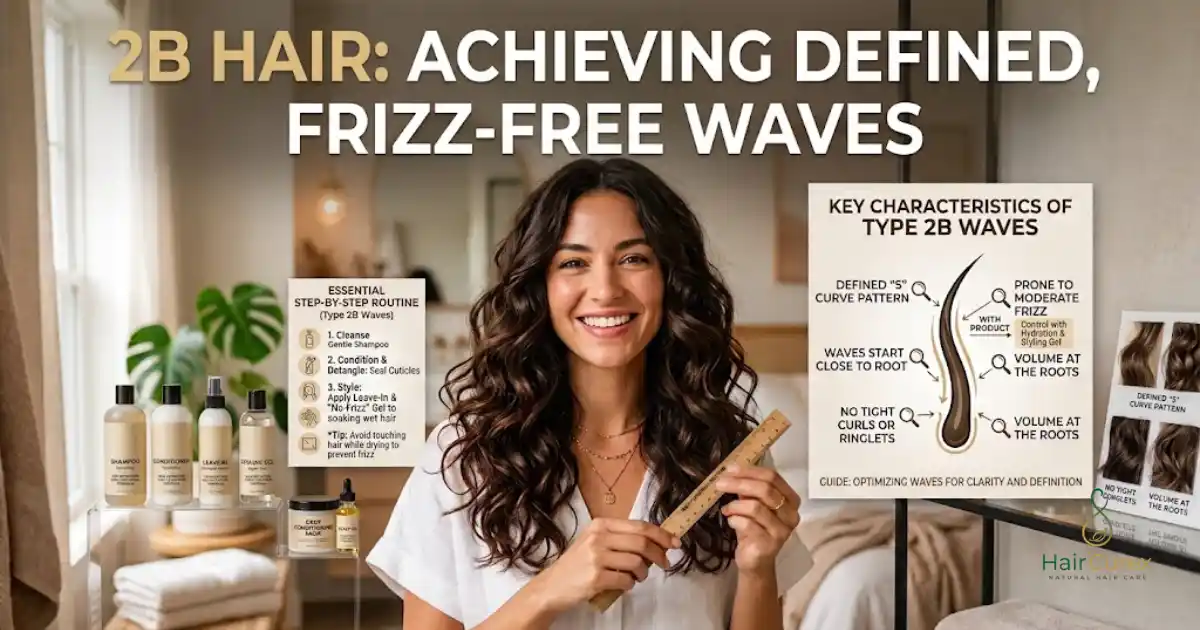
Once your hair is washed and prepped with the right products, styling becomes the step that really brings 2B hair to life. One of the most reliable techniques is scrunching, which involves gently squeezing sections of damp hair upward toward the scalp using a cupped hand. This motion encourages the natural S-shape to form and clump together, rather than letting individual strands dry separately and frizz out. Scrunching 2B hair works especially well right after applying a leave-in conditioner and curl cream, while the hair is still quite wet.
Plopping is another popular method worth trying, particularly for anyone whose waves tend to lose shape while air-drying. This involves flipping your head forward and wrapping your damp hair up into a T-shirt or microfiber towel, securing it gently on top of your head for ten to twenty minutes. The technique reduces frizz by minimizing friction during the drying process, and it also encourages the waves to clump together naturally rather than separating into flyaways.
For those who prefer a faster routine, diffusing wavy hair with a blow dryer attachment can speed things up significantly while still preserving wave definition — as long as it’s done on a low heat, low airflow setting. Cup sections of hair in the diffuser bowl and gently press upward toward the scalp, moving slowly around the head rather than blasting heat directly at the roots. This method works particularly well for people short on time but who still want soft, bouncy 2B hair hairstyles without sacrificing texture.
If you’d rather skip heat altogether, there are plenty of solid heatless hairstyles for 2B hair that still deliver great definition. Braiding damp hair loosely overnight, twisting sections into buns, or simply letting hair air dry 2B hair style while wrapped in a plopping towel can all produce beautiful waves by morning, with zero heat damage involved.
How to Reduce Frizz and Prevent 2B Hair From Getting Flat
Frizz is easily one of the most common complaints among people with 2B hair, and it usually comes down to a handful of predictable causes. Humidity is the biggest culprit, since the moisture in the air interacts with the hair’s outer cuticle layer and causes strands to swell and separate from their wave pattern. Wavy hair humidity struggles are especially noticeable in the summer months across much of the U.S., which is why sealing in moisture with the right products becomes even more important during warmer seasons.
Another major cause of dry 2B hair and resulting frizz is over-washing, since stripping natural oils too frequently leaves the hair thirsty and more prone to grabbing moisture from the surrounding air in an uneven, frizzy way. On the flip side, some people run into the opposite issue — oily 2B hair near the roots combined with dryness at the ends — which usually happens when conditioner is applied too close to the scalp or when dry shampoo isn’t used strategically between washes.
To reduce frizz, drying technique makes a bigger difference than most people expect. Rubbing hair with a regular terrycloth towel roughs up the hair cuticle and creates frizz almost instantly, so switching to a microfiber towel or even an old cotton T-shirt for drying can noticeably calm things down. Applying an anti-frizz serum or a few drops of lightweight oil to the ends once hair is mostly dry also helps smooth the cuticle layer without weighing down the roots.
Flat 2B hair, meanwhile, is often the result of using products that are simply too heavy for this texture, or from constantly touching and restyling the hair once it’s dried, which disrupts the clumping pattern that gives waves their bounce. To keep roots from collapsing, try flipping your head upside down while drying to encourage volume, or use a lightweight root-lifting spray applied only at the base of the hair before styling.
Styling, Mistakes, and Long-Term Hair Health for 2B Hair
Beyond the day-to-day washing and styling routine, there are bigger-picture choices — like haircuts, common habits, and long-term care — that shape how healthy and defined 2B hair looks over time. This section covers the finer details that often get overlooked but make a real difference in the long run.
Best Haircuts and Hairstyles for 2B Hair
The right haircut can make an enormous difference in how well 2B waves show off their natural pattern. Long layers tend to work beautifully for this hair type because they remove excess weight that would otherwise pull the waves straight, allowing the S-shape to bounce and move more freely. Shoulder-length cuts with soft layering are another popular choice, striking a balance between manageable length and enough movement for the waves to look full rather than stringy.
Curtain bangs have also become a favorite among people with 2B curly hair tendencies, since the face-framing pieces tend to blend naturally into the wave pattern rather than sticking out or requiring separate styling. On the other hand, blunt, one-length cuts without any layering can sometimes weigh 2B waves down entirely, making them look flatter and less defined than they naturally are.
When it comes to everyday 2B haircuts and go-to hairstyles, half-up styles are particularly popular because they showcase the waves at the crown while keeping hair out of the face. Low, loose buns and soft waves left down with minimal manipulation also tend to photograph well and hold up throughout a full day, making them practical choices for busy schedules.
Common 2B Hair Mistakes to Avoid
There are a handful of habits that consistently work against people trying to embrace their natural 2B hair pattern, and most of them are easy to fix once you know what to look for. Brushing dry hair is probably the single biggest offender, since it breaks apart the natural wave clumps and creates a frizzy, undefined mess almost instantly. Detangling should always happen while hair is wet and coated in conditioner, using fingers or a wide-tooth comb instead.
Using overly heavy products marketed toward tighter curl patterns is another frequent misstep, since these formulas are often designed for coarser, drier hair types and end up making 2B waves look greasy rather than defined. Similarly, both over-washing and under-washing can throw off the natural balance of oils, leading to either dry, tangled wavy hair or limp, weighed-down strands depending on which direction the imbalance leans.
Skipping heat protectant before using a diffuser or blow dryer is a mistake that might not show damage immediately but adds up significantly over months and years of styling. Towel-drying with a regular bath towel instead of a microfiber cloth or T-shirt is another small but impactful mistake, since the rough texture of standard towels creates unnecessary friction and frizz. Making even a few small swaps in this area tends to produce noticeably better results within just a couple of wash cycles.
How to Keep 2B Hair Healthy, Defined, and Hydrated
Long-term hair health comes down to consistency more than any single miracle product. Regular trims, roughly every eight to twelve weeks, help prevent split ends from traveling further up the hair shaft and keep 2B hair texture looking fresh and well-defined rather than scraggly at the tips. A weekly deep conditioning treatment or hair mask also goes a long way toward moisturizing 2B hair, replenishing hydration that daily styling and environmental exposure naturally strip away.
Protective habits matter just as much as the products themselves. Switching to a silk or satin pillowcase reduces friction while sleeping, which means fewer tangles and less frizz to deal with come morning. Loosely braiding hair or wrapping it in a silk scarf overnight can preserve wave definition for a second or even third day, cutting down on how often you need to fully re-wash and restyle.
Diet and hydration play a supporting role too, since hair health is closely tied to overall wellness, though this is more of a gradual, long-term factor rather than something with instant results. Seasonal adjustments also make sense for anyone serious about maintaining beautiful 2B waves — leaning into lighter, more hydrating products during humid summer months, and switching to slightly richer formulas during dry winter conditions when the air itself holds far less moisture.
Conclusion
2B hair is a genuinely unique texture — wavy enough to have real personality, but not so tight that it behaves like classic curly hair. Getting to know your specific wavy hair type 2B means understanding how it looks at the roots versus the ends, learning which products actually work with your texture instead of against it, and building simple habits like scrunching, cool-water rinsing, and using a microfiber towel into your routine. None of this requires an expensive overhaul of your bathroom shelf; it just requires a bit of trial and error paired with genuine patience.
The beauty of natural 2B hair is that it rewards a gentle, consistent approach far more than aggressive styling or heavy products ever could. Try picking just one tip from this guide — maybe switching your regular towel for a T-shirt, or adding a weekly deep conditioning treatment — and give it a couple of wash cycles to see how your waves respond. Chances are, you’ll notice a difference faster than you expect.
FAQs
What is 2B hair exactly?
2B hair is a wavy hair type that falls between 2A and 2C on the hair typing system. It’s known for S-shaped waves that typically begin around the mid-length of the hair, with a flatter root area and moderate frizz potential.
How do I know if I have 2B or 2C hair?
The easiest way to tell is by air-drying your hair without touching it. If your waves form clear S-shapes but don’t spiral tightly on their own, you likely have 2B hair. If the waves are tighter, spring back more, and start closer to the roots, you’re probably dealing with 2C hair instead.
What products should I avoid with 2B hair?
Heavy, butter-based products and formulas loaded with thick silicones tend to weigh down 2B waves, making them look flat and greasy. It’s best to stick with lightweight, water-based products designed specifically for wavy rather than curly hair.
How often should I wash 2B hair?
Most people with 2B hair find that washing two to three times a week works best, allowing natural oils enough time to nourish the hair without letting the scalp become overly oily or the strands become excessively dry.
Can 2B hair become curlier over time?
Wave patterns can shift somewhat due to hormonal changes, hair health, and even changes in your care routine, but true hair type is largely determined by genetics. That said, proper hydration and the right techniques can absolutely help 2B hair reach its fullest, most defined potential.