
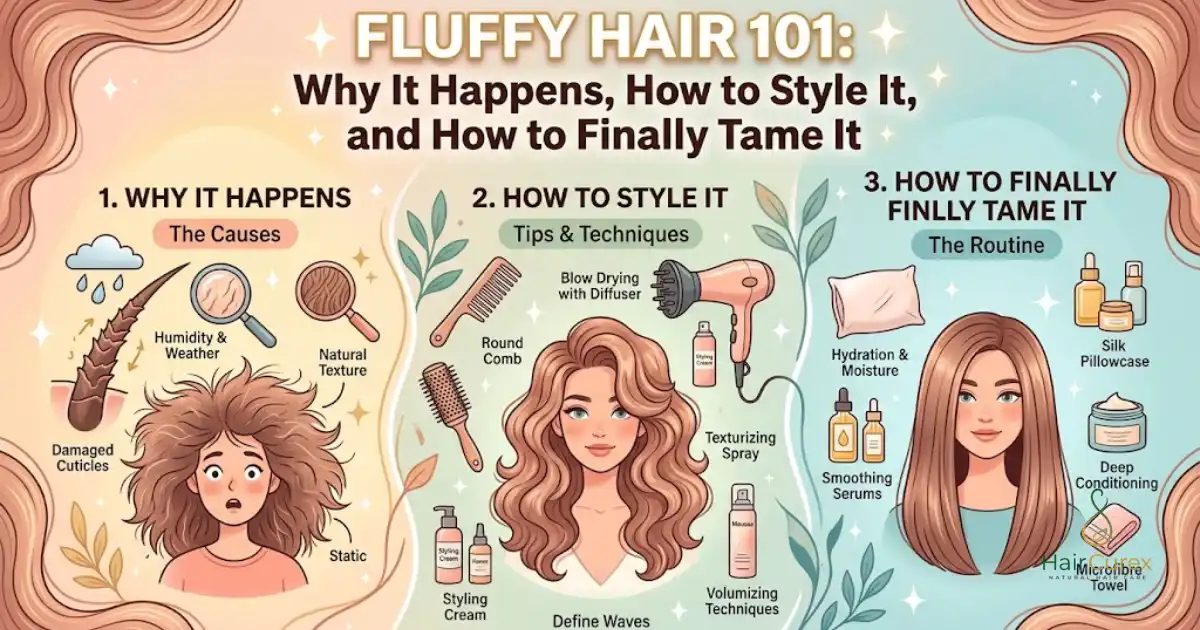
Fluffy hair means soft, light hair with lots of volume. It looks full and airy, not flat or heavy. Many people love this style because it looks natural and youthful.
Have you ever stepped out of the shower with hair that looked perfectly normal, only to watch it puff up into a cloud an hour later? You’re not imagining things, and you’re definitely not alone. Fluffy hair is one of the most common hair complaints among Americans, and it shows up across every hair type, from pin-straight strands to tight curls. This guide walks you through the real fluffy hair meaning, the science behind why it happens, and — most importantly — exactly what you can do about it. By the end, you’ll understand your hair texture better than most stylists explain it in a salon chair, and you’ll walk away with a game plan you can start using tonight.
What Is Fluffy Hair? Understanding Its Texture and Appearance
So, what is fluffy hair, exactly? In simple terms, fluffy hair refers to a hair texture that appears light, airy, and full of volume, almost like the strands are standing away from your scalp rather than lying flat. It isn’t necessarily damaged or unhealthy. In fact, fluffy hair often signals strong, springy strands with a lower natural weight, which causes them to lift instead of fall. Think of it like the difference between a heavy wool blanket and a fluffy down comforter: both are blankets, but one holds its shape close to the body while the other puffs outward.
Fluffy hair types vary quite a bit. Some people have fine, fluffy hair that looks thin yet somehow takes up a ton of space. Others have thick, coarse strands that fluff out because there’s simply more hair fighting for room. And then there’s the wavy or curly crowd, whose natural bend creates built-in volume that can tip into fluffiness without the right care. Understanding your specific fluffy hair texture is the first step toward managing it, because a routine that works for fine fluffy hair won’t necessarily work for thick, coarse fluffy hair.
Dermatologists often point to hair porosity and strand diameter as the two biggest factors behind this texture. According to the American Academy of Dermatology, hair health starts at the follicle level, and factors like genetics, hydration, and scalp condition all influence how a strand behaves once it grows out (aad.org). In other words, fluffy hair isn’t a flaw. It’s a texture, just like straight or curly, and it comes with its own set of care needs.
What Causes Fluffy Hair? Common Reasons to Know
If you’ve ever asked yourself, “why is my hair fluffy,” the answer usually comes down to a mix of genetics and environment working together. Let’s break down the most common causes of fluffy hair one by one, because pinpointing your specific trigger makes it so much easier to fix.
Genetics plays the starring role here. Your natural hair type, the shape of your hair follicles, and even the thickness of each strand are largely inherited traits. Oval-shaped follicles tend to produce wavy or curly hair, which naturally has more lift and volume than hair grown from round follicles. If your parents or grandparents had voluminous, fluffy hair, there’s a good chance you inherited that same tendency.
Dry hair and fluffiness go hand in hand more often than people realize. When hair lacks moisture, the outer layer, called the cuticle, lifts and roughens instead of lying flat. This rough texture catches more air and light, which makes hair look and feel puffier. Humidity and fluffy hair also share a well-documented relationship: on humid days, hair absorbs moisture from the air unevenly, causing strands to swell and separate. That’s why so many people notice their hair getting bigger the moment they step outside on a muggy summer afternoon.
Hair damage and fluffiness are also closely linked, particularly when it comes to heat damage from flat irons, curling wands, and blow dryers used without protection. Over-washing hair strips away natural oils that would otherwise weigh strands down, while hair breakage from harsh brushing or tight hairstyles roughens the cuticle layer even further. Static hair, especially common during dry winter months, adds another layer of frustration by causing individual strands to repel each other and stick straight out.
Here’s a quick reference table summarizing the most common causes:
| Cause | What Happens | Best Fix |
|---|---|---|
| Genetics and hair type | Follicle shape creates natural volume | Work with your texture, don’t fight it |
| Humidity | Hair absorbs moisture unevenly and swells | Anti-humidity spray or serum |
| Dryness and low porosity | Cuticle roughens, catches light and air | Deep conditioning treatment |
| Heat damage | Cuticle becomes rough and porous | Heat protectant, lower styling temps |
| Overwashing | Strips natural oils, hair loses weight | Wash less frequently |
| Static | Strands repel each other | Leave-in conditioner, dryer sheets on brush |
Fluffy Hair vs. Frizzy Hair: What Is the Difference?
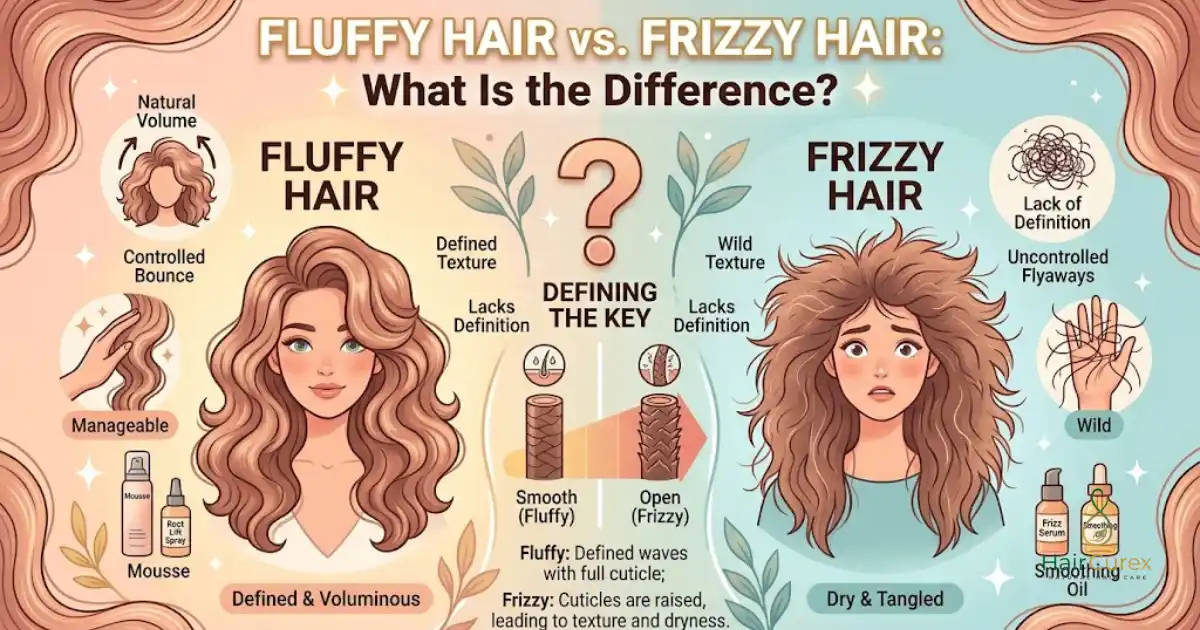
People mix these two up constantly, but fluffy hair vs frizzy hair are actually different problems with different root causes. Fluffy hair is about volume. It looks full, rounded, and often soft to the touch, even if it feels a little unruly. Frizzy hair, on the other hand, is about texture disruption. It shows up as flyaway strands, a rough surface, and an uneven, staticky appearance that often looks dry no matter how much product you apply.
As celebrity hairstylist Andrew Fitzsimons once put it in an interview about hair texture, “Volume is a gift; frizz is a cry for moisture.” That distinction matters because the fixes are different. Fluffy hair typically responds well to weight and smoothing techniques, while frizzy hair needs deep hydration and cuticle-sealing ingredients first.
Here’s a side-by-side comparison to make the difference crystal clear:
| Feature | Fluffy Hair | Frizzy Hair |
|---|---|---|
| Appearance | Full, rounded, voluminous | Rough, uneven, flyaway strands |
| Feel | Soft, light, airy | Dry, coarse, wiry |
| Main Cause | Hair structure and lack of weight | Moisture imbalance and cuticle damage |
| Reaction to Humidity | Expands and lifts | Frizzes and separates unevenly |
| Best Fix Focus | Weighing down, smoothing serums | Hydrating masks, sealing oils |
Knowing where you fall on this spectrum will save you money and time, because you’ll stop buying random products and start choosing ones that actually target your issue.
How to Make Fluffy Hair Smooth and Manageable
Now for the part you’ve been waiting for: how to make fluffy hair smooth without losing its natural bounce. The good news is that taming fluffy hair doesn’t require a complete personality change for your strands. It just requires a smarter approach.
Start with hydration, since dry strands are far more prone to lifting and separating. A hydrating hair mask used once or twice a week can dramatically improve how your hair lies. Look for masks containing shea butter, argan oil, or hyaluronic acid, since these ingredients penetrate the strand rather than just coating the surface. Follow that up with a lightweight hair oil applied to the mid-lengths and ends, avoiding the roots where oil can make hair look greasy rather than sleek.
Brushing technique matters more than people think. Using a boar bristle brush helps distribute natural scalp oils down the length of the hair, which naturally weighs strands down over time. Brushing hair while it’s dry, rather than wet, also reduces breakage and keeps the cuticle smoother. If you’re wondering how to reduce hair fluffiness specifically after washing, try the “plopping” method: wrap damp hair gently in a microfiber towel or cotton t-shirt for ten to fifteen minutes before styling. This removes excess water without roughing up the cuticle the way a regular towel does.
For an at-home case study, consider Sarah, a 32-year-old from Austin, Texas, who struggled with fine, fluffy hair for years. After switching to a weekly hydrating mask, swapping her cotton pillowcase for silk, and cutting her wash frequency from daily to every other day, she reported noticeably smoother, calmer hair within three weeks. Her experience reflects what most trichologists recommend: consistency in a routine beats any single miracle product.
Best Hair Care Routine for Fluffy Hair
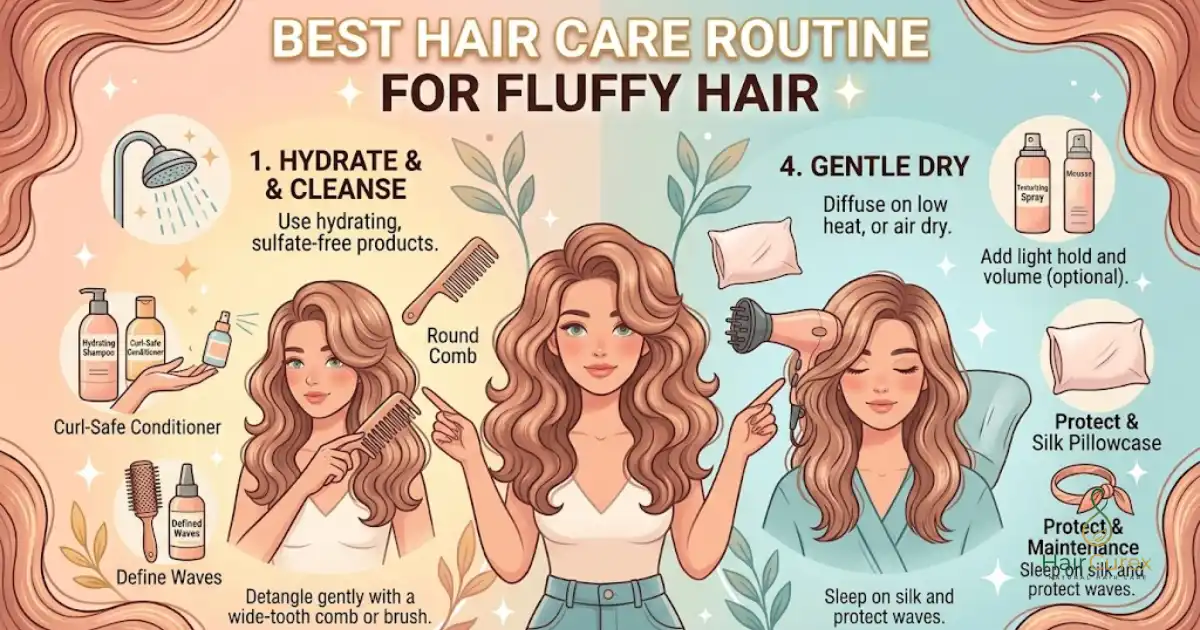
A solid hair care routine for fluffy hair doesn’t need to be complicated, but it does need to be consistent. Mornings should focus on light styling and moisture-locking, while evenings should prioritize protection and repair.
In the morning, apply a small amount of leave-in conditioner or lightweight hair oil to damp or dry hair before styling. This step alone can reduce how much your hair puffs up throughout the day. At night, consider a satin or silk bonnet, or simply switch your pillowcase to silk. Cotton fibers absorb moisture from your hair and create friction that roughens the cuticle overnight, which is a major reason people wake up with even fluffier hair than when they went to bed.
On a weekly basis, incorporate a deep conditioning treatment to replenish moisture that daily styling and environmental exposure strip away. Every six to eight weeks, get a trim to remove split ends, since split, damaged ends tend to flare outward and contribute significantly to that puffy, uneven look. Below is a simple weekly framework you can follow:
| Day | Routine Step |
|---|---|
| Monday | Leave-in conditioner, light styling |
| Wednesday | Deep conditioning treatment |
| Friday | Wash day with sulfate-free shampoo |
| Daily | Silk pillowcase, minimal heat styling |
| Every 6-8 weeks | Trim to remove split ends |
How to Wash Fluffy Hair Without Making It Dry
Washing might seem like the simplest part of hair care, but it’s often where people unintentionally make fluffy hair worse. Hot water feels amazing, but it strips natural oils from your scalp and hair, leaving strands drier and more prone to lifting. Lukewarm or even cool water helps seal the cuticle and lock in whatever moisture you’re trying to preserve.
Overwashing hair is another common mistake. Washing daily removes the natural oils, called sebum, that would otherwise help weigh hair down and keep it smooth. Most people with fluffy hair do better washing every two to three days, adjusting based on scalp oiliness and activity level. When you do wash, focus shampoo primarily on the scalp, where oil and buildup accumulate, and let the suds rinse naturally through the lengths rather than scrubbing shampoo into already-dry ends.
Conditioner application matters just as much as shampoo choice. Apply conditioner from the mid-lengths to the ends, since this is where hair is oldest, driest, and most in need of moisture. For those with very fine or fluffy hair, co-washing, which means skipping shampoo and using only conditioner on non-wash days, can help maintain moisture without weighing hair down with heavy products.
Best Shampoos and Conditioners for Fluffy Hair
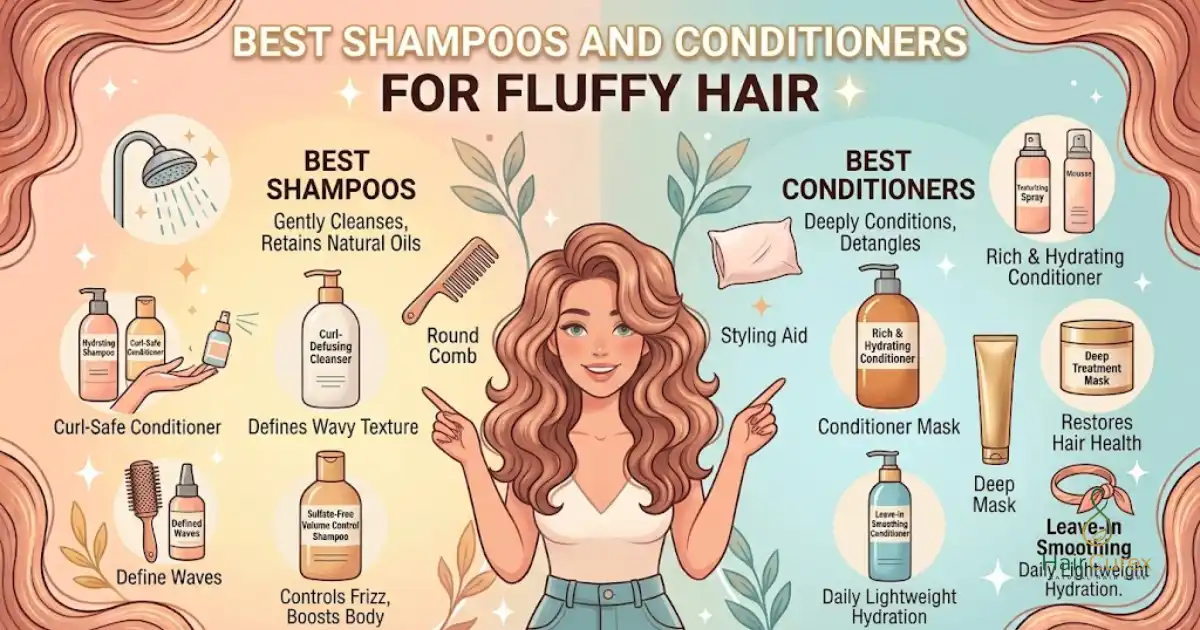
Choosing the best shampoo for fluffy hair and the best conditioner for fluffy hair comes down to reading ingredient labels carefully. You want moisturizing hair products that hydrate without adding unnecessary heaviness or buildup. Look for ingredients like glycerin, aloe vera, coconut oil, and panthenol, all of which draw and hold moisture in the hair shaft without leaving a greasy residue.
On the flip side, steer clear of shampoos loaded with sulfates, which are harsh detergents that strip natural oils and leave hair rough and more prone to fluffing. Heavy silicones, often listed as dimethicone on labels, can also cause buildup over time that weighs hair down temporarily but ultimately leads to dullness and dryness underneath.
For best results, pair a moisturizing, sulfate-free shampoo with a lightweight, hydrating conditioner. Budget-friendly drugstore lines have made major improvements in recent years, often rivaling salon brands in terms of ingredient quality. If you have thicker or coarser fluffy hair, a slightly richer conditioner formula with shea or mango butter can provide the extra weight and smoothness you need, while finer hair types should stick to lighter, water-based formulas to avoid limpness.
How to Dry Fluffy Hair Without Creating More Volume
Drying technique might be the single most underrated factor in managing fluffy hair. Rubbing hair vigorously with a regular terry cloth towel roughens the cuticle almost instantly, which is why so many people notice their hair getting fluffier specifically after towel-drying. Switching to a microfiber towel or an old cotton t-shirt and gently squeezing, rather than rubbing, makes an enormous difference.
If you use a blow dryer, attach a diffuser and keep the airflow pointed downward along the hair shaft rather than blasting it in all directions. This encourages the cuticle to lie flat instead of lifting. Using the cool shot button toward the end of your drying session helps seal everything in place, locking down whatever smoothness you’ve achieved. Air-drying is another excellent option for many fluffy hair types, particularly when paired with a smoothing cream or lightweight gel applied to damp hair beforehand.
One important note: never rush the drying process by scrunching aggressively or flipping your hair upside down repeatedly, since both actions encourage strands to separate and lift, undoing all your careful washing and product work.
Best Hairstyles for Fluffy Hair
When it comes to the best hairstyles for fluffy hair, working with your natural volume rather than against it usually produces the best results. Sleek low buns and ponytails are excellent choices because pulling hair back and securing it reduces the surface area available to puff up. Braids, whether a simple three-strand braid or a more intricate fishtail, also compress hair strands together, minimizing fluffiness while looking polished and intentional.
Fluffy hair for men often works beautifully with textured crops or slightly longer styles on top that use the natural lift to create shape rather than fighting it with heavy product. Fluffy hair for women opens up even more options, from soft layered lobs to long layers that redistribute weight throughout the hair, reducing the puffball effect that can happen with one-length cuts.
If you’re considering a fluffy hair haircut, layers are almost always your best friend. Fluffy hair with layers allows volume to flow more naturally down the length of the hair rather than concentrating in one puffy mass at the crown or ends. Short fluffy hairstyles, like textured bobs or pixie cuts, tend to look intentional and chic when paired with a light styling cream, while long fluffy hairstyles benefit from face-framing layers that soften and redirect volume.
For those with fluffy wavy hair or fluffy curly hair specifically, embracing your natural pattern with curl-defining creams rather than trying to force straightness usually produces smoother, less puffy results. Fighting your natural texture with a flat iron, only to have it puff back up within hours, wastes time and often causes more heat damage in the long run.
How to Control Fluffy Hair in Humid Weather
Humidity and fluffy hair are basically old rivals, and if you live in a humid U.S. region like Florida, Louisiana, or coastal Texas, you already know the struggle. When the air holds excess moisture, hair strands absorb it unevenly, causing the cuticle to swell and lift, which translates directly into extra fluffiness and volume you didn’t ask for.
Anti-frizz hair products designed specifically for humidity work by creating a lightweight barrier on the hair shaft that blocks excess moisture from penetrating unevenly. A hair serum for fluffy hair, applied sparingly to damp strands before styling, can provide this protective layer without weighing hair down. Anti-humidity sprays, often overlooked, are worth keeping in your bag for quick touch-ups throughout the day, especially during summer months.
Protective hairstyles also become your best friend in humid weather. Braids, buns, and twists all minimize the surface area exposed to moisture in the air, which directly reduces how much your hair can puff up. As one Southern hairstylist quoted in a regional lifestyle magazine noted, “In humidity, less exposed hair means less frizz and fluff, period.” Keeping a small travel-size anti-frizz product on hand for midday touch-ups can save your style through even the muggiest afternoon.
Best Hair Products to Reduce Fluffiness
The market for anti-fluff and anti-frizz products has exploded in recent years, which is great for options but overwhelming when you’re trying to choose. Breaking products down by category makes shopping much simpler.
Hair serums for fluffy hair typically use silicone alternatives or natural oils to smooth the cuticle and add shine without heaviness. Lightweight hair oils, like argan, jojoba, or grapeseed oil, work well for daily use on the mid-lengths and ends, providing just enough weight to reduce lift without making hair look greasy. Styling creams offer a middle ground between oils and gels, providing moisture along with light hold, making them ideal for fluffy wavy hair or fluffy curly hair that needs definition alongside smoothness.
For those needing stronger hold, a lightweight styling gel applied to damp hair can help train strands to lie in a specific direction as they dry, which is particularly useful for fluffy hair with layers that tends to separate unpredictably. Whatever product category you choose, applying it to damp rather than fully dry hair generally produces better, longer-lasting results, since damp hair absorbs product more evenly.
Frequently Asked Questions About Fluffy Hair
1. Is fluffy hair the same as frizzy hair?
No, they’re related but different. Fluffy hair is about volume and lift, while frizzy hair involves rough, uneven texture and flyaways caused by moisture imbalance.
2. What causes hair to suddenly become fluffy?
Sudden fluffiness is often triggered by a change in humidity, a new styling product, overwashing, or even a change in season that affects your scalp’s natural oil production.
3. Can fluffy hair be a sign of damage?
Sometimes, yes. If fluffiness is paired with rough texture, split ends, or breakage, heat damage or chemical damage could be contributing factors worth addressing with a deep conditioning treatment.
4. How do I stop my hair from getting fluffy overnight?
Switch to a silk or satin pillowcase, apply a leave-in conditioner before bed, and consider loosely braiding your hair to reduce friction while you sleep.
5. Are there hairstyles specifically made for fluffy hair?
Yes, styles like sleek buns, braids, and layered cuts work particularly well because they either compress volume or redistribute it evenly throughout the hair.
6. How to make fluffy hair smooth naturally, without heat tools?
Focus on hydration through masks and oils, use a boar bristle brush to distribute natural oils, and try air-drying with a smoothing cream instead of heat styling.
7. Why does my hair get fluffy after drying?
This usually happens because the cuticle lifts during the drying process, especially if you’re using a rough towel or high heat without a diffuser or cool shot setting.
Conclusion
Fluffy hair isn’t something to fear or fight against constantly. Once you understand the fluffy hair meaning behind your specific texture, whether it’s genetics, humidity, dryness, or a combination of all three, managing it becomes far less overwhelming. A thoughtful hair care routine for fluffy hair, built around gentle washing, proper hydration, smart drying techniques, and the right products, can transform frustration into confidence. And when you choose hairstyles that work with your natural volume instead of against it, fluffy hair stops being a problem and starts becoming your signature look. Give your strands a little patience and consistency, and you might just find that the hair you were trying to tame all along was worth celebrating.