
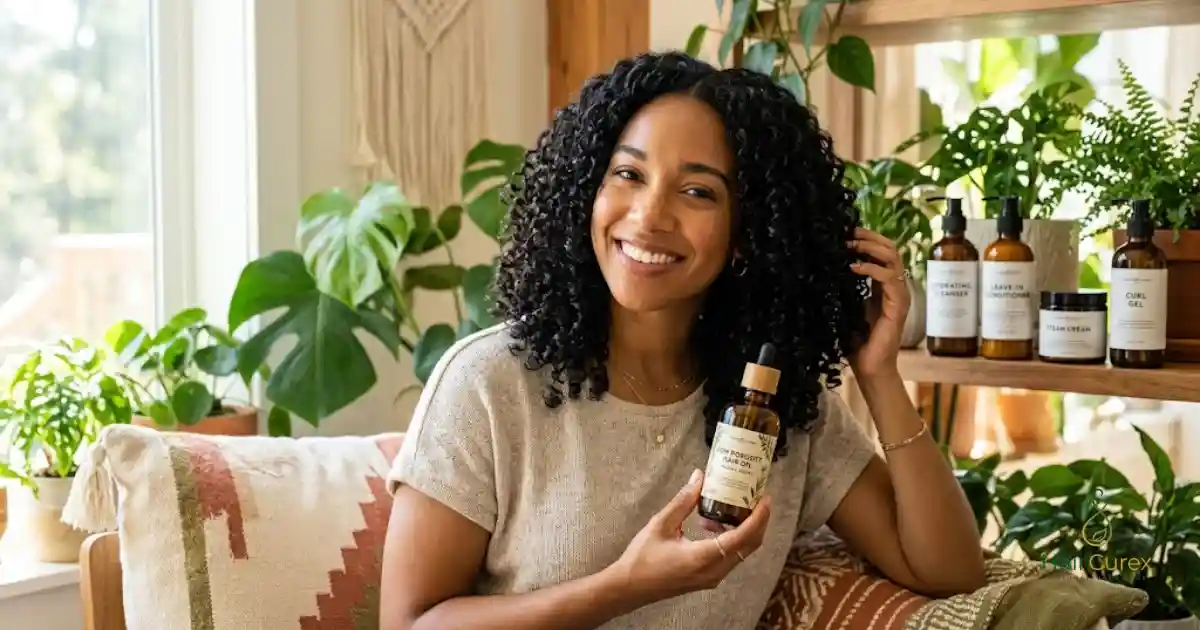
Low porosity hair has a tight cuticle layer. The strands lie flat and close together, almost like shingles on a roof that overlap with barely a gap between them. Moisture and products struggle to get inside, which is exactly why so many people with this hair type feel stuck no matter what they try.
Do you feel like your hair repels every product you put on it? You spray, you apply, you wait, and still nothing seems to soak in. There’s a reason for that, and once you understand it, the frustration starts to make a lot more sense.
This guide breaks down everything about low porosity hair care, from spotting the signs to building a routine that actually works. We’ll cover the best low porosity hair products, the ingredients to avoid, and the small habits that make a surprisingly big difference over time.
What Is Low Porosity Hair and How Does It Differ From Other Hair Types?
Hair porosity simply describes how easily your hair absorbs and holds onto moisture. Think of each strand as a tiny tube covered in overlapping scales, called the cuticle. In low porosity hair, those scales sit flat and closed, almost sealed shut. That tight structure makes it hard for water, oils, and conditioners to get past the surface and into the cortex, which is the inner layer where real hydration happens.
Compare that to medium porosity hair, where the cuticle sits slightly raised, letting moisture in and out at a steady, balanced pace. High porosity hair takes this even further. Its cuticle has gaps and lifted scales, often from years of heat styling, coloring, or chemical treatments, so it absorbs moisture fast but loses it just as quickly. If low porosity hair is a house with the windows painted shut, high porosity hair is one with the windows left wide open all winter.
So why does this matter so much? Because your hair porosity determines almost everything about how you should treat your hair. The shampoo that works wonders for your friend’s high porosity curls might sit on top of your low porosity strands and do nothing at all. Understanding your low porosity hair type is the foundation everything else in this guide builds on, so let’s look at how to actually spot it.
What Are the Signs of Low Porosity Hair?
People with low porosity natural hair, low porosity curly hair, low porosity wavy hair, and even low porosity straight hair tend to share a specific set of frustrations, even though their curl patterns look nothing alike. The clearest sign is that water beads up on the hair instead of soaking in right away, almost like rain rolling off a freshly waxed car. You’ll also notice that products seem to sit on top of the strands rather than absorbing, leaving a filmy or greasy feeling even with lightweight formulas.
Slow drying time is another giveaway. Because the cuticle resists letting water in, it also resists letting water out, so wash day can stretch on for hours as your hair air dries at a crawl. Many people also deal with low porosity hair buildup, where products accumulate on the hair shaft over days or weeks since nothing is actually penetrating the strand. This buildup often shows up as dullness, a waxy texture, or hair that feels coated no matter how often it’s washed.
There’s also a resistance to chemical processes worth mentioning. Color treatments, relaxers, and perms tend to take longer to process on low porosity hair, and sometimes the results come out patchy or underwhelming, since the color or chemical struggles to penetrate the tightly sealed cuticle in the first place. If several of these signs sound familiar, there’s a good chance you’re dealing with low porosity hair, and a home test can confirm it in minutes.
How to Test Your Hair Porosity at Home
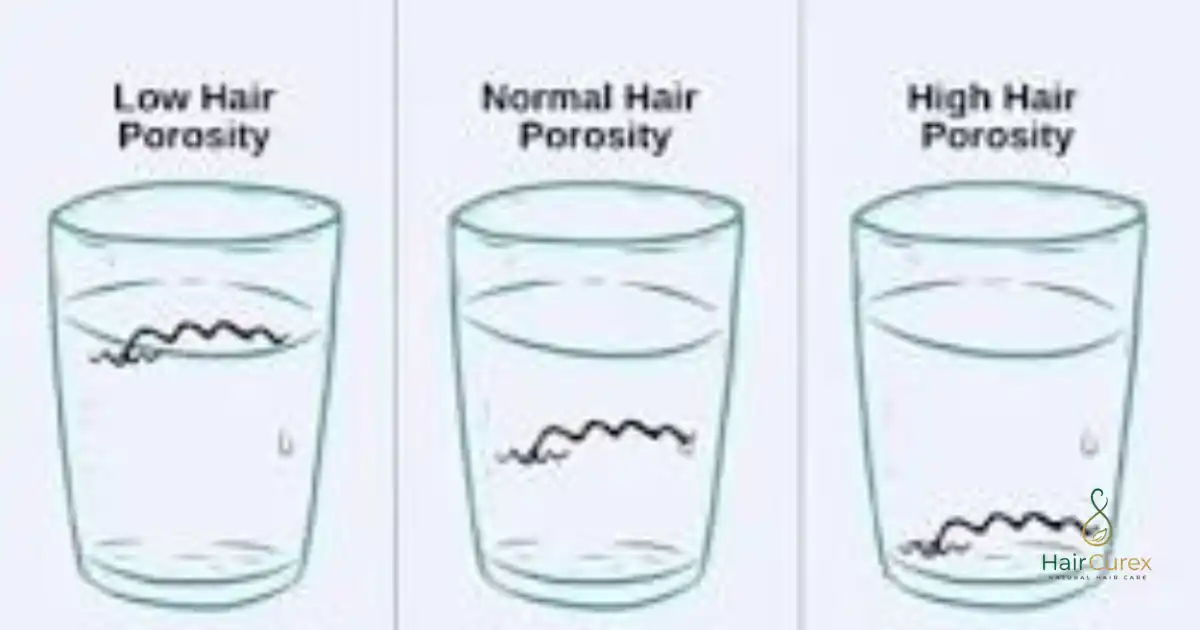
You don’t need a lab or a stylist to figure out your porosity. A simple hair porosity test can be done right in your kitchen with things you already own. The most popular method is the float test. Take a clean strand of hair, one that’s fallen out naturally rather than one you’ve pulled, and drop it into a glass of room-temperature water. Watch what happens over the next two to four minutes. Many people use the float test as a quick way to estimate hair porosity, but it isn’t a scientifically reliable way to determine porosity. Product residue and other factors can affect how a strand behaves in water. It’s better to consider several signs together rather than relying on this test alone, since the tightly closed cuticle is resisting water absorption. Hair that sinks quickly usually points to high porosity, and hair that floats in the middle for a while before slowly sinking often signals medium porosity.
A second option is the slip test, sometimes called the strand test. Take a strand of clean, dry hair and slide your fingers along it from the tip toward the scalp. If it feels smooth the entire way with little resistance, your cuticle is likely lying flat and closed, again pointing toward low porosity. If you feel bumps or roughness, that usually means the cuticle is raised, which lines up with higher porosity.
| Test | What to Do | What It Suggests |
|---|---|---|
| Float Test | Drop a strand of hair in room-temp water, wait 2-4 minutes | Floats = low porosity; sinks fast = high porosity |
| Slip Test | Run fingers from tip to root on a dry strand | Smooth = low porosity; bumpy = higher porosity |
| Spray Test | Mist water onto dry hair and observe | Water beads and sits on hair = low porosity |
It’s worth being honest here: none of these home tests are perfectly scientific, and factors like product residue or humidity in the room can throw off results slightly. Still, when you combine the results of a low hair porosity test with the signs we covered earlier, you’ll have more than enough evidence to move forward with a routine tailored to your hair.
What Causes Low Porosity Hair?
Genetics play the leading role here. The tightness of your cuticle layer is largely inherited, which is why low porosity hair often runs in families and shows up consistently across certain ethnic backgrounds, textures, and curl patterns. Some people are simply born with a denser, more compact cuticle structure than others, and there isn’t much you can do to change that underlying biology.
That said, porosity isn’t always fixed for life. Interestingly, damage from heat styling, chemical processing, or harsh brushing can sometimes push naturally low porosity hair toward behaving like high porosity hair in certain sections, especially at the ends. This creates a confusing situation where your roots grow in low porosity while your damaged mid-lengths and ends act high porosity, soaking up product fast and losing it just as quickly. If your hair feels inconsistent from root to tip, this mismatch is very likely the reason, and it’s something to keep in mind as you build your routine.
The Complete Care Routine: Washing, Ingredients, Products, and Deep Conditioning for Low Porosity Hair
Building an effective low porosity hair routine comes down to one central idea: you need to help moisture get past that stubborn cuticle, and then you need to seal it in before it evaporates. This means rethinking the temperature of your water, the weight of your products, and even the order you apply things in. Cold water and heavy butters, which work beautifully for other hair types, tend to backfire here, so we’re going to walk through exactly what to do instead, one piece at a time.
How should you wash low porosity hair?
Warm water is your best friend on wash day. Heat gently helps lift the cuticle just enough to let cleanser and conditioner do their job, whereas Warm water can help loosen surface buildup and make cleansing and conditioning more comfortable, while extremely hot water can dry and irritate the hair and scalp before you’ve even started. A sulfate-free shampoo is generally the safer everyday choice since it cleanses without stripping too aggressively, but don’t be afraid of an occasional clarifying shampoo session. Because product buildup is such a common issue with this hair type, a proper clarifying wash every two to four weeks removes the residue that regular shampoo leaves behind, giving your next round of products a clean surface to actually absorb into.
As for the rest of the low porosity hair care routine, consistency matters more than complexity. A realistic weekly rhythm looks something like the table below, and it’s a great starting point you can adjust based on how your hair responds over the first month.
| Day | Focus | What to Do |
|---|---|---|
| Wash Day | Cleanse and hydrate | Warm water wash, deep condition with heat |
| Day 2-3 | Refresh | Light water-based mist, scrunch in leave-in |
| Day 4-5 | Maintain moisture | Seal ends with a lightweight oil |
| Day 6-7 | Protect | Satin bonnet or pillowcase overnight |
| Weekly/Bi-weekly | Reset | Clarify to remove buildup before next wash day |
What Ingredients Are Best for Low Porosity Hair?
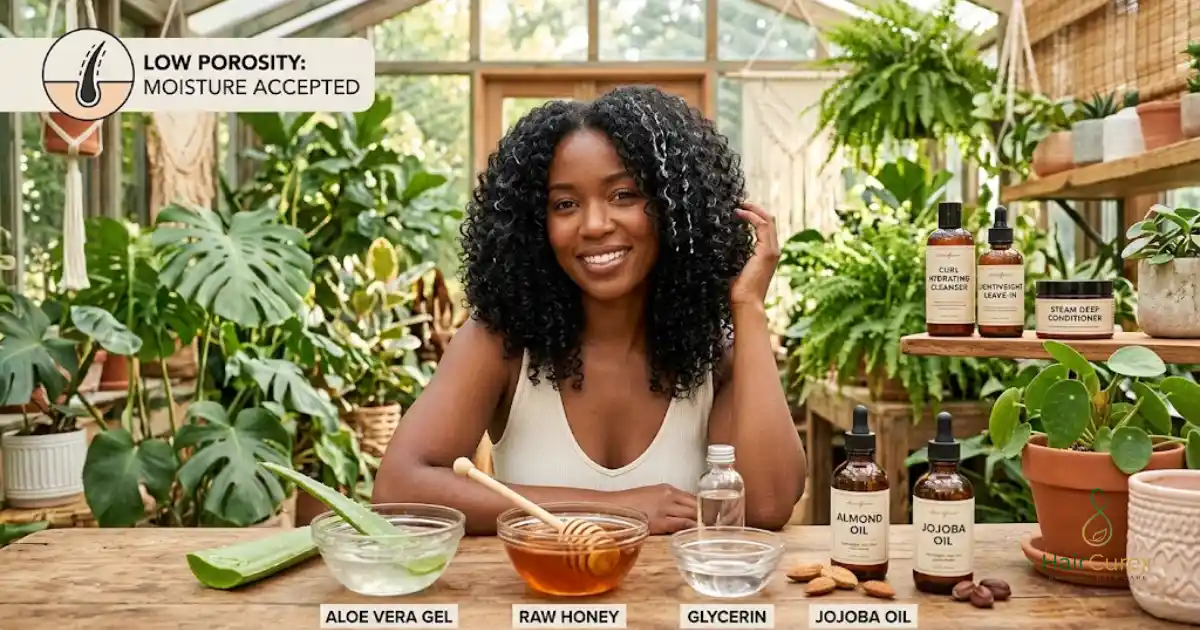
Ingredients make or break a low porosity hair treatment, and the general rule is simple: light and water-loving beats thick and heavy every single time. Humectants for low porosity hair are especially valuable because they actively pull moisture toward the hair rather than just sitting on top of it. Glycerin for low porosity hair is one of the most effective examples, drawing water from the surrounding air into the strand, though in very dry or very humid climates it can behave unpredictably, so it’s worth testing in small amounts first. Aloe vera for hair is another gentle humectant that hydrates without weighing hair down, and it has the added bonus of soothing the scalp.
When it comes to oils, weight is everything. Lightweight hair oils absorb rather than coat, which matters enormously for a hair type that already struggles to let anything in. Jojoba oil is often praised because its molecular structure closely resembles the natural sebum your scalp produces, so it tends to absorb rather than sit on the surface. Argan oil offers a similar lightweight profile while adding shine, and grapeseed oil is one of the thinnest oils available, making it a favorite for sealing in moisture without any greasy residue. These are consistently ranked among the best oils for low porosity hair by stylists and curl specialists alike.
On the flip side, protein-free hair products are often recommended for this hair type, and here’s why: low porosity hair is naturally strong and tightly bonded already, so adding more protein through treatments can push things too far, leading to stiffness and unexpected breakage. This is where the concept of protein moisture balance becomes essential. As celebrity hairstylist Vernon François has put it in past interviews about textured hair care, “the goal is never one extreme or the other, it’s finding what your specific strands are asking for.” Most people with low porosity hair need far more moisture-focused products than protein-focused ones, and reading your hair’s reaction over a few weeks will tell you exactly where that balance sits for you.
Best Moisturizers, Oils, and Conditioners for Low Porosity Hair
Water-based hair products should sit at the very top of your shopping list, and this is genuinely one of the simplest rules to remember. Check the ingredient label on anything you buy, and if water, aqua, or a water-based aloe vera juice isn’t listed within the first three ingredients, the product is probably too heavy for your strands to absorb properly. A good lightweight leave-in conditioner built on this principle can transform a routine overnight, since it delivers hydration in a form your cuticle can actually accept instead of just sliding off.
A lightweight conditioner used during every wash also plays a huge role in daily moisturizing low porosity hair. Look for formulas that list glycerin, aloe, or panthenol near the top, and avoid anything advertising heavy shea butter or thick silicones as a main selling point, since those tend to create the greasy, coated feeling so many people with this hair type already struggle with. When it comes to a lightweight hair moisturizer for daily use, cream-to-water ratios matter more than brand names, so don’t be afraid to mix your own blend of a water-based leave-in with a few drops of a thin oil if store-bought options keep letting you down.
How to Deep Condition Low Porosity Hair for Better Moisture
Deep conditioning low porosity hair is where heat earns its reputation as a game-changer. Because the cuticle resists opening at room temperature, adding gentle heat through a steamer, a heating cap, or even a warm towel wrapped around your head helps coax those scales apart just enough to let moisture actually penetrate the strand instead of evaporating on the surface. This single change is often the difference between a deep conditioner that does nothing and one that leaves your curls noticeably softer for days.
Aim to deep condition once a week, or once every two weeks if your hair tends to hold moisture a bit longer than average. Apply the conditioner to damp, freshly washed hair, then add your heat source for twenty to thirty minutes before rinsing with cool water to help seal the cuticle back down and lock the moisture inside. This closing step matters just as much as the opening one, since it’s what actually supports long-term moisture retention rather than a temporary softness that fades by the next morning. Over time, this steady rhythm of opening the cuticle with heat and closing it with cool water becomes the backbone of real hydration for low porosity hair.
A quick real-world example makes this easier to picture. A curly-hair blogger who documented her routine over three months found that switching her weekly deep conditioning session from a cold, no-heat method to a fifteen-minute steaming session made the single biggest difference in her curl definition, more than any product swap she tried. Her hair had always felt like it absorbed nothing, and the missing ingredient the entire time wasn’t a new product at all, it was heat.
Common Mistakes to Avoid With Low Porosity Hair
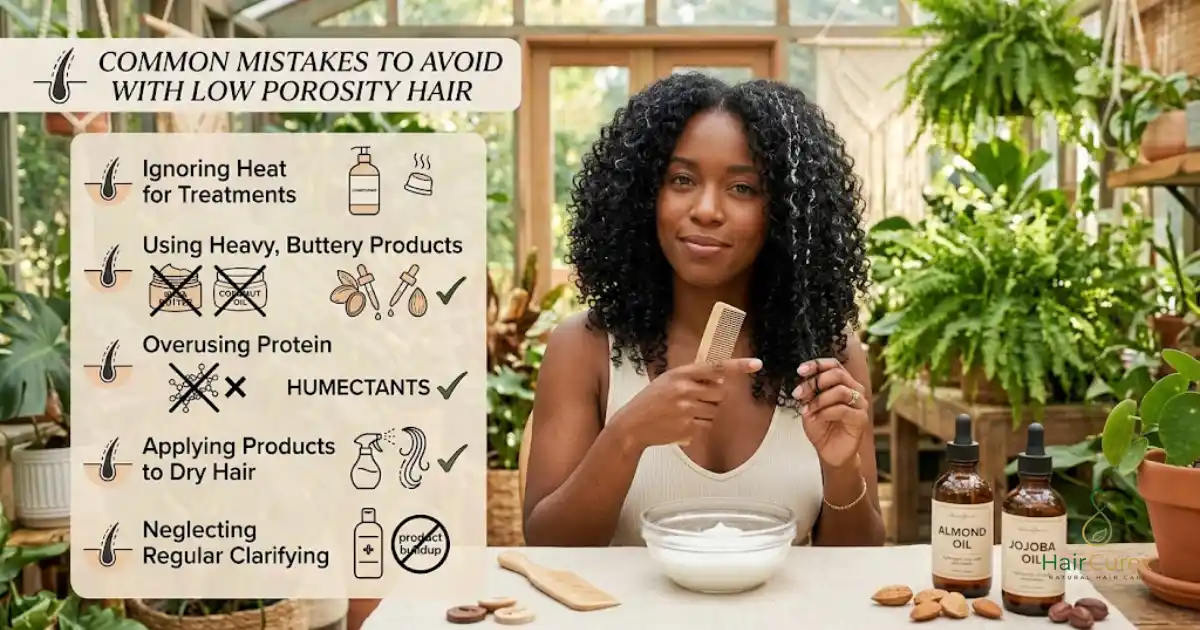
Even with good intentions, it’s incredibly easy to fall into habits that work against low porosity strands rather than for them. Reaching for heavy butters and rich creams is probably the most common mistake, since these products feel luxurious and nourishing on paper but end up sitting on the surface of hair that simply can’t absorb them, creating the exact greasy buildup so many people are trying to avoid. Skipping heat during deep conditioning is another frequent misstep, because without it, even the best conditioner on the market struggles to get past a tightly sealed cuticle.
Overdoing protein treatments is a mistake that often goes unnoticed until real damage shows up. Because low porosity hair is naturally strong, it rarely needs the frequent protein boosts recommended for more damaged or high porosity hair, and piling on protein anyway can leave strands feeling stiff, straw-like, and more prone to snapping. Washing exclusively with cold water is another trap people fall into after reading generic hair care advice online, not realizing that this particular rule doesn’t apply well to their specific porosity.
Finally, not clarifying often enough allows low porosity hair buildup to quietly accumulate week after week until moisture simply can’t get through at all, no matter how good the routine otherwise looks. If your hair feels increasingly dull, heavy, or resistant to product despite following all the right steps, buildup is very often the hidden culprit, and a proper clarifying wash usually resets everything within a single session.
How to Choose the Best Products for Low Porosity Hair
Reading an ingredient label the right way will save you more money and frustration than almost anything else in this guide. Start by checking what sits in the first three to five ingredients, since that’s roughly where the bulk of the formula lives. Water, aloe vera juice, or glycerin near the top is a strong green flag, while heavy oils, shea butter, or thick silicones in that same early position usually mean the product will sit on your strands rather than sink into them.
Texture tells you a lot before you even read the label. A product that pours easily, feels light between your fingers, and absorbs within a minute or two of application is far more likely to work with your hair than one that feels rich, dense, or slow to sink in. This single instinct, learned through a bit of trial and error, often becomes more reliable over time than any list of approved ingredients, since formulations vary so much between brands.
When you’re searching for the best shampoo for low porosity hair, the best conditioner for low porosity hair, or the best deep conditioner for low porosity hair, prioritize brands that specifically market toward low porosity or fine, textured hair, since they’re already formulating with your exact challenges in mind. It’s a bit like shopping for shoes built for your actual foot shape rather than a generic average, the fit, and the results, tend to be dramatically better.
Conclusion
Low porosity hair isn’t difficult to manage once you understand what’s actually happening beneath the surface. That tightly closed cuticle isn’t working against you out of nowhere, it’s simply asking for a different approach than the one most generic hair advice assumes. Warm water instead of cold, lightweight water-based products instead of heavy butters, heat during deep conditioning, and regular clarifying to clear out buildup: these small shifts add up to a routine that finally works with your hair instead of against it.
Give any new low porosity hair care routine at least four to six weeks before judging the results, since hair often needs time to recover from months or years of the wrong products before you’ll see its true texture and shine. Pay attention to how your strands respond, adjust as you go, and remember that the goal was never to fight your hair type, it was simply to finally understand it.
Low Porosity Hair FAQs
Is low porosity hair rare?
Not particularly. It’s common among people with coily, curly, and fine wavy hair textures, and it also shows up in some straight hair types, though it tends to get less attention in mainstream hair care marketing.
Can low porosity hair become high porosity?
Yes, though usually only in damaged sections. Heat styling, coloring, or chemical treatments can lift the cuticle in specific areas, most often at the ends, creating a mismatch between your naturally low porosity roots and higher porosity, damaged lengths.
Do I need a protein treatment if I have low porosity hair?
Generally, no, or at least not often. Since this hair type is already structurally strong, most people do better focusing on moisture rather than protein, and only reaching for a light protein treatment occasionally if breakage becomes noticeable.
What’s the best way to moisturize low porosity hair overnight?
Apply a lightweight, water-based leave-in to damp hair, seal with a thin oil like grapeseed or jojoba, then sleep with a satin bonnet or on a satin pillowcase to prevent moisture from being absorbed by cotton fibers overnight.
Can low porosity hair grow long?
Absolutely. Length retention actually tends to be easier for this hair type once moisture is properly locked in, since the same tight cuticle that makes absorption harder also helps protect against certain types of damage and breakage.
Is rice water good for low porosity hair?
It can help in small amounts, but it’s worth using cautiously. Rice water contains natural proteins, and since low porosity hair rarely needs extra protein, overusing it may lead to the same stiffness and breakage that comes from too many protein treatments.
How often should I wash low porosity hair?
Once a week works well for most people, with a proper clarifying wash every two to four weeks to prevent product buildup from building up between regular washes.