
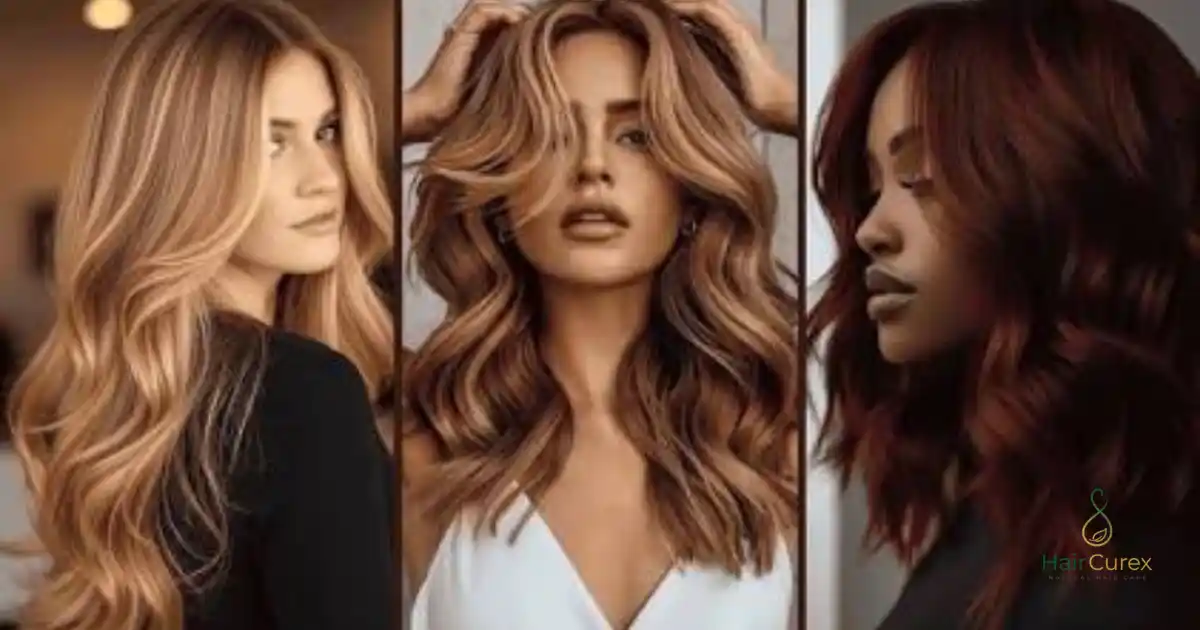
Wavy hair is a hair type between straight and curly. It forms loose S-shaped waves. It sits between two other hair types on the hair chart.
Here’s the good news. Once you understand your wavy hair pattern, everything gets easier. You’ll stop fighting your texture and start working with it. This guide walks you through everything, from figuring out your wave type to building a routine that actually works.
By the end, you’ll know exactly how to wash, moisturize, style, and care for your natural wavy hair. No guesswork. Just real answers you can use starting today.
What Is Wavy Hair and How Is It Different From Straight or Curly Hair?
Wavy hair forms an S-shaped pattern as it grows from the scalp. It’s neither perfectly straight nor tightly coiled. Instead, it bends gently, creating soft waves that can range from barely-there ripples to bold, beachy bends. This wavy hair texture happens because of the shape of the hair follicle. Straight hair grows from round follicles, while wavy and curly hair grows from oval or asymmetrical follicles that cause the strand to bend as it grows.
So what actually separates wavy hair from its straight and curly cousins? Straight hair reflects light evenly along its length, which is why it often looks shiny and smooth. Wavy hair, on the other hand, has bends that catch and scatter light differently, giving it a more textured, lived-in look. Curly hair takes this even further, forming tight spirals or coils that shrink up significantly compared to their stretched length.
Think of it this way: if straight hair is a straight highway and curly hair is a winding mountain road full of switchbacks, wavy hair is somewhere in between, a road with gentle curves. This is exactly why wavy hair care routines differ so much from routines built for straight or curly hair. Wavy strands need enough moisture to define the wave pattern, but not so much product that the wave collapses under the weight.
| Hair Type | Follicle Shape | Pattern | Light Reflection | Common Concerns |
|---|---|---|---|---|
| Straight | Round | No bend | High shine | Oily roots, flatness |
| Wavy | Oval | S-shaped waves | Moderate shine | Frizz, flatness, undefined waves |
| Curly | Asymmetrical | Spiral coils | Low shine | Dryness, shrinkage, tangling |
Understanding this difference matters because it changes how you approach everything else, from the shampoo you pick to how you dry your hair after a shower.
What Are the Different Types of Wavy Hair? (2A, 2B & 2C)
Not all wavy hair looks the same, and that’s where the hair typing system comes in. Stylist Andre Walker created a chart back in the 1990s that’s still used today to classify hair texture. Under this system, wavy hair falls under “type 2” hair, and it’s broken down further into three subcategories: 2A, 2B, and 2C. Knowing which type 2 hair category you fall into makes a huge difference when choosing products and building a routine.
Breaking Down 2A, 2B, and 2C Wavy Hair Types
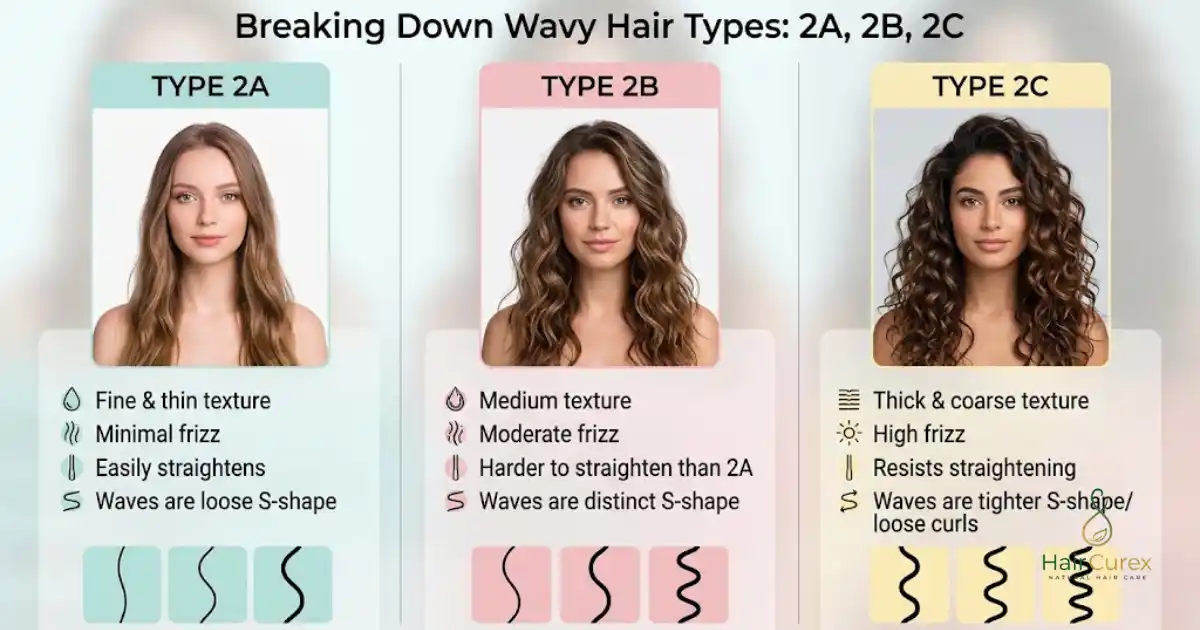
2A wavy hair is the finest and loosest of the bunch. It often looks almost straight at the roots, then forms loose waves toward the ends. Fine wavy hair like this tends to be thin in diameter, and it can get weighed down easily by heavy products. If you have 2A hair, you’ve probably noticed that oils and rich creams make your hair look greasy rather than defined.
2B wavy hair has more shape and body. The waves start closer to the mid-shaft and form a more defined S-pattern. This medium wave texture is thicker than 2A but still lighter than 2C. People with 2B hair often deal with frizz around the crown and need a bit more styling product to keep waves looking crisp rather than fuzzy.
2C wavy hair is the thickest and most defined of the three. These strong waves start right at the root and can almost look curly in certain lighting. Thick wavy hair in this category is prone to frizz, especially in humid weather, because the strands are coarser and often more porous. This type usually benefits the most from heavier, moisture-rich products.
| Wave Type | Texture | Where Waves Start | Frizz Risk | Best Product Weight |
|---|---|---|---|---|
| 2A | Fine, thin | Mid-shaft to ends | Low | Lightweight |
| 2B | Medium | Mid-shaft | Moderate | Medium |
| 2C | Thick, coarse | Root | High | Heavier, richer |
A quick note here: hair typing isn’t an exact science. Plenty of people have a mix of types on their head, maybe 2A near the front and 2C underneath. That’s completely normal, and it just means your wavy hair care routine might need a bit of customizing.
How to Tell What Type of Wavy Hair You Have
Figuring out your exact wave pattern doesn’t require a trip to the salon. There’s a simple test you can do at home. Wash your hair with a gentle, sulfate-free shampoo, apply a lightweight leave-in conditioner, and let it air dry completely without touching it, brushing it, or using any styling tools. Once it’s fully dry, take a good look in natural light.
If your hair looks nearly straight with just a slight bend at the ends, you’re likely dealing with 2A wavy hair. If you see clear S-shaped waves throughout most of the length with a bit of frizz around the crown, that’s a strong sign of 2B. And if your hair forms defined, springy waves starting from the roots and has a noticeably coarser feel, you’re probably working with 2C.
One common mix-up happens between wavy and curly hair. Here’s a simple way to tell them apart: wavy hair forms loose “S” shapes, while curly hair forms tighter loops or spirals that look more like a spring. If you can wrap a single strand around a pencil and it holds a tight coil shape, that’s curly hair, not wavy. Another clue is shrinkage. Curly hair often shrinks 30 to 75 percent from its stretched length, while wavy hair barely shrinks at all.
Knowing your specific texture matters because it directly affects your wavy hair styling routine. Using curly-girl products designed for tight coils on fine 2A waves, for example, often leads to weighed-down, greasy-looking hair.
How to Build the Best Wavy Hair Care Routine
A solid wavy hair routine isn’t complicated, but it does need a few key steps done in the right order. Think of your routine as having four main pillars: cleansing, conditioning, styling, and protecting. Skip one of these, and your waves might end up flat, frizzy, or tangled by midday.
Start with cleansing using a shampoo that won’t strip your natural oils. Wavy hair, especially 2A and 2B types, produces enough natural oil to travel down the hair shaft, so harsh, sulfate-heavy shampoos can leave your waves dry and prone to frizz. After cleansing, condition thoroughly, focusing the product on the mid-lengths and ends rather than the scalp. This step restores moisture that shampoo can strip away.
Styling comes next, and this is where most of the “magic” happens. Applying styling products to soaking wet hair, right after you step out of the shower, helps lock in the wave pattern before frizz has a chance to form. Finally, protecting your waves means thinking about how you sleep, how you handle heat styling, and how you refresh your hair on non-wash days.
Morning and nighttime routines look pretty different too. In the morning, you might just need a quick refresh spray and a scrunch to bring waves back to life. At night, protecting your hair with a silk pillowcase or a loose pineapple bun (gathering hair loosely on top of your head) keeps waves from getting smashed while you sleep.
If you have 2A hair, your routine should stay light and simple, focusing on moisture without weight. If you have 2C hair, your routine will likely include richer conditioners, deep conditioning treatments, and heavier styling creams to combat dryness and define those strong waves.
How Often Should You Wash Wavy Hair?

This is one of the most common questions people ask, and the honest answer is: it depends on your specific wavy hair texture and scalp oil production. That said, most people with wavy hair do best washing two to three times a week rather than daily.
Washing wavy hair too often strips away the natural oils that travel down the hair shaft to keep waves moisturized and defined. Over time, this leads to dry, frizzy, and dull-looking waves. On the flip side, washing too infrequently can cause product buildup, an itchy scalp, and hair that looks flat and greasy at the roots.
For those with fine 2A hair, washing every two to three days usually works well since oil travels down the strand fairly quickly. For 2B and 2C hair types, stretching washes to every three to five days is often ideal, especially with the help of co-washing (washing with conditioner only) on the days in between.
Signs you’re overwashing include hair that feels dry and straw-like, waves that lose their shape quickly, and a scalp that feels tight or itchy. Signs you’re underwashing include visible buildup, a greasy feeling at the roots, and waves that look weighed down rather than bouncy.
A wavy hair wash routine that works for many people looks something like this: wash and deep condition once a week, co-wash mid-week, and use dry shampoo or a refresh spray on the days in between. As one longtime curl specialist put it, “Your wash schedule should work around your hair’s needs, not a calendar.”
How to Moisturize Wavy Hair Without Weighing It Down
Moisture is the backbone of healthy wavy hair, but there’s a fine balance between hydrating your waves and drowning them in product. Too little moisture leads to frizzy, dry, tangled hair. Too much, especially with heavy oils or butters, can flatten your wave pattern completely.
The key lies in understanding hair porosity, which refers to how well your hair absorbs and retains moisture. Low porosity hair has tightly packed cuticles that make it harder for moisture to get in, so it often needs lighter, water-based products applied to damp hair. High porosity hair has gaps in the cuticle that let moisture in easily but also let it escape quickly, so it usually benefits from heavier creams and oils that seal moisture in.
A popular method for wavy hair hydration is the LOC method, which stands for Liquid, Oil, Cream, applied in that order to soaking wet hair. Some people with finer waves prefer the LCO method instead, swapping the order of oil and cream since heavier creams can weigh down fine strands if applied too early. Lightweight hair products, like water-based leave-in conditioners and light gels, tend to work best for 2A and 2B hair, while 2C hair often needs the extra richness of creamier formulas.
Ingredients matter here too. Look for glycerin, aloe vera, and hyaluronic acid, all known for drawing moisture into the hair shaft without adding heaviness. Avoid heavy silicones and mineral oil if your hair tends to get weighed down easily, since these can coat the strand and block moisture from getting in over time.
A common mistake is skipping deep conditioning altogether. Even fine wavy hair benefits from a weekly deep conditioning treatment, which penetrates the hair shaft more thoroughly than a regular rinse-out conditioner and helps maintain long-term moisture balance.
The Best Products for Wavy Hair: Shampoo, Conditioner & Styling Products
Picking the right shampoo for wavy hair starts with avoiding sulfates, which strip natural oils and leave waves dry and frizzy. Instead, look for gentle, moisturizing cleansers formulated specifically for textured hair. A good conditioner for wavy hair should focus on hydration without heaviness, and a leave-in conditioner is nearly non-negotiable if you want soft, manageable waves throughout the day.
When it comes to styling, three products tend to dominate the wavy hair world: mousse, gel, and curl cream. Mousse for wavy hair adds lightweight volume and hold, making it a favorite among people with fine 2A or 2B hair who want lift without weight. Styling gel for waves offers stronger hold and helps lock in the wave pattern, especially useful for 2C hair that tends to lose definition throughout the day. Curl cream for wavy hair provides moisture and light hold, often used as a base layer before applying gel for extra definition.
| Product Type | Best For | Main Benefit | Application Tip |
|---|---|---|---|
| Sulfate-free shampoo | All wave types | Gentle cleansing | Use 2-3 times weekly |
| Leave-in conditioner | All wave types | Daily moisture | Apply to soaking wet hair |
| Mousse | 2A, 2B | Volume without weight | Scrunch through damp hair |
| Curl cream | 2B, 2C | Moisture and definition | Apply before gel |
| Styling gel | 2B, 2C | Strong hold, frizz control | Apply last, scrunch in |
There’s no single “best” product that works for everyone, since so much depends on your specific wave type, porosity, and thickness. That said, a general rule of thumb applies: the finer your hair, the lighter your products should be, and the thicker or curlier your waves, the more richness and hold you can afford to use.
How to Style Wavy Hair for Defined, Frizz-Free Waves
Learning how to style wavy hair properly can genuinely transform how your waves look day to day. The single most important rule is to apply styling products to soaking wet hair, not damp or towel-dried hair. Water helps distribute product evenly and gives the wave pattern a chance to form clumps before frizz sets in.
Two techniques come up again and again in any wavy hair styling routine: scrunching and plopping. Scrunching wavy hair means gently squeezing sections of hair upward toward the scalp, which encourages the natural wave pattern to clump together rather than separate into frizzy strands. Plopping wavy hair involves wrapping soaking wet, product-covered hair in a microfiber towel or soft cotton t-shirt for 10 to 20 minutes, which absorbs excess water while helping waves set into shape without disturbing their pattern.
After plopping, you’ve got two main drying options. Air drying wavy hair is the gentler choice and works well for those who have time to let hair dry naturally, usually over one to two hours. A diffuser for wavy hair, attached to a blow dryer, speeds up the process while still preserving wave definition, since it distributes airflow evenly rather than blasting hair with direct heat that causes frizz.
The order of product application also matters quite a bit. A typical routine goes: leave-in conditioner first, then a lightweight cream, followed by gel or mousse for hold. Once fully dry, “scrunching out the crunch” (gently scrunching dried, stiff hair with your hands to break up any gel cast) reveals soft, touchable waves underneath.
How to Get More Volume and Definition in Wavy Hair
Flat waves are one of the most common complaints among people with wavy hair, especially those with finer 2A or 2B textures. Thankfully, there are several reliable ways to enhance natural waves and bring back lost volume.
Root-lifting techniques make a big difference here. Clipping your roots up while your hair dries, using small root-clips positioned at the crown, lifts hair away from the scalp and prevents that flat, pancaked look. Another trick involves flipping your head upside down while diffusing, which naturally lifts roots and adds fullness without any extra product.
Your haircut plays a bigger role in volume and wave definition than most people realize. Long layers cut throughout the hair remove excess weight that can drag waves down flat, while shorter layers near the face can add movement and bounce. A skilled stylist familiar with textured hair cuts can shape your hair specifically to enhance your natural wave pattern rather than fight against it.
Volumizing products, like lightweight mousses or root-lifting sprays, applied specifically at the roots before diffusing, also add noticeable lift. Just be careful not to overdo product application, since buildup is one of the sneakiest causes of flat, weighed-down waves. If you notice your hair looking greasy or your waves losing shape by midday despite using the right products, a clarifying shampoo used once every week or two can remove buildup and restore volume.
How to Prevent Frizz, Dryness and Flat Waves
Frizzy wavy hair, dry wavy hair, and flat wavy hair often share the same root causes: lack of moisture, environmental damage, and improper handling. Tackling these three issues together tends to solve most wavy hair struggles at once.
Humidity and wavy hair have a notoriously rocky relationship. When the air holds excess moisture, hair absorbs it unevenly, causing the cuticle to lift and strands to frizz. Combatting this means sealing the hair shaft with anti-frizz products containing ingredients like shea butter, glycerin (in moderate humidity), or lightweight silicones that create a protective barrier. On especially humid days, using a stronger-hold gel helps waves stay defined rather than puffing up.
Nighttime habits matter just as much as daytime styling when it comes to preventing frizz and preserving wave shape. Sleeping on a silk or satin pillowcase reduces friction that causes tangling and frizz, unlike cotton, which absorbs moisture and roughs up the hair cuticle. The “pineapple method,” where you gather hair loosely at the top of your head with a soft scrunchie before bed, protects wave definition overnight and makes for an easier morning refresh.
Overbrushing and dry combing are two of the biggest frizz triggers people don’t realize they’re doing. Brushing dry wavy hair breaks up wave clumps and creates a frizzy halo effect. Instead, detangle only when hair is wet and coated in conditioner, using a wide-tooth comb or your fingers to gently work through knots from the ends upward.
Best Hairstyles for Wavy Hair for Short, Medium and Long Lengths
Wavy hair looks great at basically every length, but certain cuts and styles bring out natural texture better than others.
Short, Medium, and Long Wavy Hairstyle Ideas
Short wavy hairstyles, like a textured lob (long bob) or a wavy pixie cut, work beautifully because shorter lengths naturally encourage more bounce and movement. These cuts tend to suit 2B and 2C hair especially well, since the reduced weight allows waves to spring up rather than get pulled down straight.
Medium-length wavy hairstyles open up a lot of options, including shag cuts with lots of face-framing layers, or a simple layered cut that lets waves flow naturally without much styling effort. This length hits a sweet spot for many wavy hair types, offering enough weight for definition without sacrificing volume.
Long wavy hairstyles are where classic “beach waves” really shine, often achieved naturally without heat styling at all if the right products and drying method are used. Half-up styles also work wonderfully with longer wavy hair, pulling some hair back while letting the rest cascade down in soft waves, giving a polished yet effortless look that’s incredibly popular across the USA right now.
Wavy Hair Mistakes to Avoid for Healthier, More Defined Waves
Even with the best intentions, a few common mistakes quietly sabotage healthy wavy hair. Overbrushing dry strands tops the list, breaking apart wave clumps and creating unnecessary frizz. Using heavy, rich products meant for curly or coily hair on finer wavy textures is another frequent misstep, one that leaves waves looking greasy and flat rather than defined.
Skipping heat protectant before using a diffuser or any heat tool is a mistake that causes long-term damage, even if the effects aren’t visible right away. Over time, heat damage weakens the hair shaft, leading to hair that struggles to hold its natural wave pattern at all. Rough towel-drying is another sneaky culprit; rubbing hair vigorously with a regular bath towel roughs up the cuticle and causes frizz, whereas gently squeezing water out with a microfiber towel or soft t-shirt protects wave definition instead.
Lastly, many people give up on a new routine too quickly. Hair, especially wavy hair transitioning away from heat styling or heavy products, often goes through an adjustment period lasting a few weeks before waves start looking consistently defined. Patience really does pay off here.
Conclusion
Wavy hair is beautifully unique, sitting right in that in-between space of straight and curly. Once you understand your specific wave pattern, whether that’s fine 2A waves, medium 2B waves, or thick, strong 2C waves, everything else falls into place. The right wash routine, the right moisture balance, and the right styling techniques can turn frizzy, flat, or undefined waves into soft, bouncy, healthy-looking hair.
There’s no need to fight your natural texture anymore. With a bit of patience and the right approach, your wavy hair can look effortlessly gorgeous every single day.
FAQs
Can wavy hair become curly over time?
Hair texture can shift slightly due to hormonal changes, aging, or damage, but wavy hair generally stays wavy throughout life. Sudden, dramatic texture changes are usually linked to health or hormonal factors rather than styling habits.
What’s the best haircut for wavy hair?
Long layers tend to work well for most wavy hair types since they remove excess weight and let natural waves show through, though the best cut always depends on your specific hair thickness and wave pattern.
How do I sleep with wavy hair without ruining my waves?
Using a silk or satin pillowcase, along with the loose pineapple method, protects your wave pattern overnight and reduces frizz-causing friction.
How can I style wavy hair without heat?
Applying leave-in conditioner and styling cream to soaking wet hair, then scrunching and air drying or plopping with a microfiber towel, creates defined waves without any heat tools at all.
How often should I deep condition wavy hair?
Once a week works well for most wavy hair types, though thicker or drier 2C hair may benefit from deep conditioning twice weekly.
Why does my wavy hair look different every day?
Factors like humidity, product buildup, sleeping position, and even water quality can all affect how your waves look from one day to the next. Building a consistent routine helps minimize this unpredictability over time.