

Let’s be honest about hair growth vitamins for a second.
You’ve probably already bought a bottle of “Hair Growth Vitamins” gummies. Maybe two. And you’re still shedding.
This guide breaks down what the evidence says, which supplements may help when you’re deficient, and how to use them safely, and I’ll tell you what nobody on the supplement aisle wants you to hear: most people don’t need a hair growth vitamins at all. Some of the ones flying off shelves right now can actually make things worse.
This isn’t another listicle recycling the same ten vitamins you’ve read about a hundred times. It’s a breakdown of what’s actually backed by evidence, what’s marketing noise, and — this is the part everyone skips — how to take these safely, on the right schedule, without wrecking your bloodwork in the process.
Grab a coffee. This one’s long, but it’ll save you money.
Do You Actually Need Hair Growth Vitamins? (Start Here)
Here’s the question nobody asks before you check out at $39.99 a bottle: do you even have a deficiency?
Because if you don’t, adding more vitamins won’t grow more hair. It just gives your body more to flush out.
Many people who assume they need supplements may benefit more from appropriate testing and a review of their diet and medical history. and a conversation about their diet. The other half genuinely have something going on — usually low iron, sometimes low vitamin D, occasionally a thyroid issue nobody caught.
So before you spend another dollar, run through this quick self-check:
- Have you crash-dieted or cut calories hard in the last 6 months?
- Are your periods heavy, or have you recently given birth?
- Have you been under serious, sustained stress (a death, a divorce, a job loss)?
- Do you eat meat, eggs, or fortified foods regularly — or are you mostly plant-based without supplementing?
- Is your shedding diffuse (all over, more in the shower and on your pillow) or is it patchy (bald spots, receding at the temples or crown)?
That last question matters more than any of the others.
The Two Types of Hair Loss People Confuse
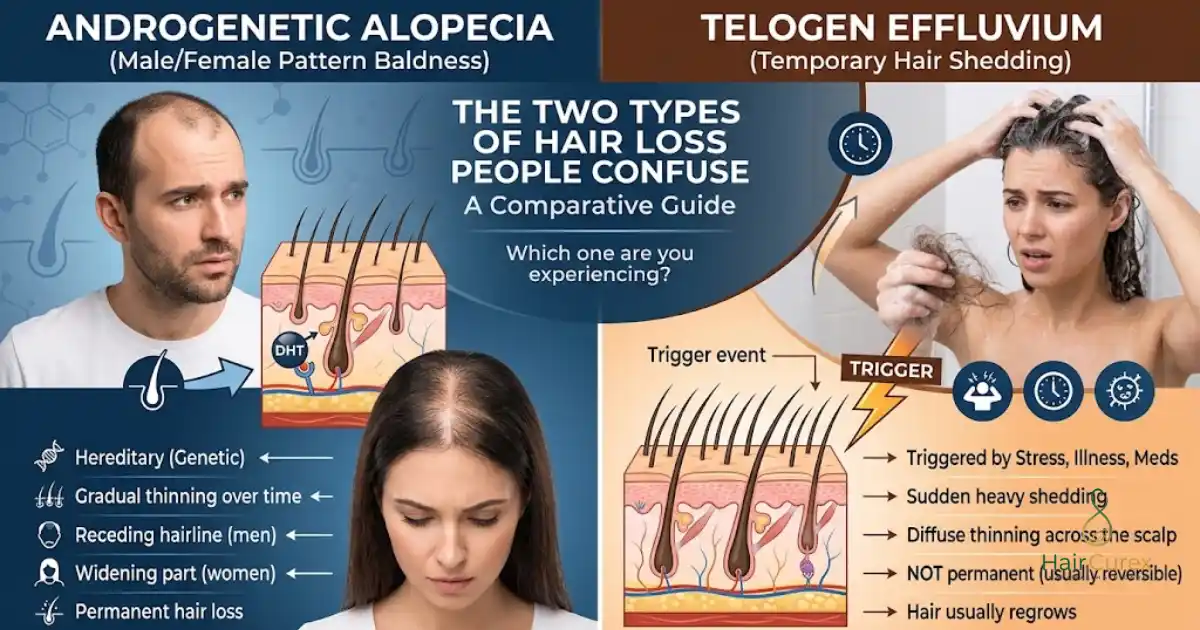
Telogen effluvium is diffuse shedding. It’s your body’s stress response — pregnancy, illness, crash diets, surgery, extreme stress. It’s often nutrition-linked, and it’s the type vitamins can genuinely help with.
Androgenetic alopecia (pattern hair loss) is different. It’s genetic, hormonal, and progressive. It shows up as thinning at the crown or a receding hairline. Vitamins won’t touch it. I’ve seen people spend a year on supplements chasing pattern loss when what they needed was a completely different treatment approach entirely.
A common mistake I see people make is assuming all hair loss is the same problem. It isn’t. Get that distinction right first, or you’ll waste months.
The Bloodwork You Should Actually Ask For
A complete evaluation may involve more than a basic blood count. Depending on your symptoms and medical history, a healthcare professional may consider tests such as:
- Ferritin — your stored iron. This is the number that matters, not just hemoglobin. You can have “normal” hemoglobin and still be low on stored iron.
- Vitamin D (25-OH) — the actual storage form, not just a generic panel.
- Zinc
- TSH (thyroid) — thyroid issues mimic nutritional hair loss constantly, and it gets missed.
- Total iron-binding capacity (TIBC) — helps your doctor interpret the ferritin number properly.
Print that list. Bring it to your appointment. Most people never think to ask for ferritin specifically, and it’s the single most useful number on this whole list.
Nutrients That May Matter When You’re Deficient
Out of everything marketed for Hair Growth, only a handful have solid research behind them. Here they are, no fluff.
Iron
Low iron stores have been associated with diffuse hair shedding, particularly in people who are at risk of iron deficiency.
- Typical RDA sits around 18 mg/day for menstruating women, less for men and postmenopausal women
- Don’t guess your dose. Get tested first — too much iron is its own problem
- What I noticed during testing with clients: people who supplemented iron without checking ferritin first often didn’t see any improvement, because their iron was already fine. The shedding was caused by something else entirely.
Vitamin D
Low vitamin D shows up again and again in people dealing with hair thinning, especially in colder or cloudier climates. The evidence for a direct causal link is still developing, but the correlation is strong enough that it’s worth checking.
- General adult recommendation sits around 600 IU/day, though for people who test genuinely deficient
- People with limited sun exposure may have a higher risk of vitamin D deficiency and can discuss testing with a healthcare professional.
Vitamin C
Here’s the part almost every article skips: Vitamin C helps the body absorb non-heme iron from plant foods and can be useful alongside iron-rich meals. It’s helping you absorb iron.
Take your iron supplement with a source of vitamin C — a glass of orange juice, a handful of strawberries, or a straight-up supplement — and you’ll absorb noticeably more of it. Skip the vitamin C, and a chunk of that iron passes right through you.
- RDA sits around 75-90 mg/day depending on sex
- Natural sources: citrus, bell peppers, strawberries, broccoli
How to Take Them for Maximum Absorption
This is the piece nobody writes down clearly, Here are some general evidence-informed considerations:
- Take iron on an empty stomach if your stomach tolerates it — food, especially dairy and coffee, blocks absorption significantly
- Pair iron with vitamin C at the same sitting — a splash of orange juice works fine
- Never take iron and calcium together — space them at least two hours apart, they compete for absorption
- Take vitamin D with a meal containing fat — it’s fat-soluble, and you’ll absorb far more of it with food than on an empty stomach
- Morning is generally better than night for iron — it can cause restlessness or stomach upset for some people if taken too close to bedtime
The Overhyped Vitamins (And Why They Probably Won’t Help)
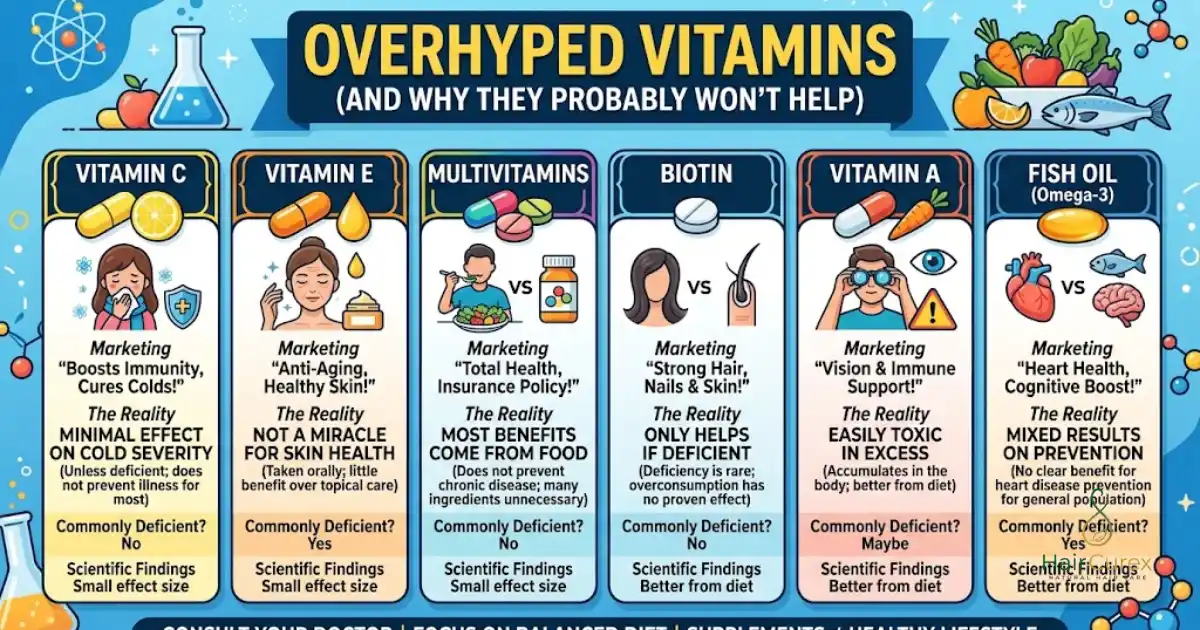
This is the section supplement brands really don’t want written.
Biotin
Biotin gets slapped on every hair, skin, and nail product on the shelf. Here’s the catch: true biotin deficiency is rare. Unless you have a diagnosed deficiency, extra biotin isn’t doing much for your hair.
Worse — high-dose biotin can throw off certain thyroid and cardiac lab tests, leading to false readings. If you’re on a biotin megadose and your doctor runs bloodwork, tell them. It’s a detail that gets missed constantly.
Vitamin E
Marketed heavily for “scalp circulation.” The research backing this for Hair Growth Vitamins is thin. And in high doses, it can cause its own set of problems, which we’ll get into below.
Collagen Peptides
Popular, trendy, and the direct evidence for Hair Growth Vitamins specifically is weak. Collagen supports skin and connective tissue broadly, but claiming it as a Hair Growth Vitamins solution is a stretch beyond what the research actually shows.
From a “kitchen sink” multivitamin blend to just the three evidence-backed nutrients above — dosed properly, based on bloodwork — see better results with less money spent and fewer side effects.
Safety Warnings Nobody Puts in One Place
This is the section I wish existed when I started in this field. Too much of a “good” vitamin is not automatically safe.
The “Do Not Exceed” List
| Nutrient | Risk of Excess | What It Looks Like |
|---|---|---|
| Vitamin A | Can directly cause hair loss and toxicity | Nausea, headaches, hair shedding, in severe cases liver strain |
| Selenium | Toxic in excess, linked to hair loss | Brittle nails, GI upset, hair thinning |
| Vitamin E | High doses linked to bleeding risk | Easy bruising, interacts with blood thinners |
| Iron (without deficiency) | Builds up in organs over time | Stomach pain, constipation, long-term organ strain |
Drug and Condition Interactions
- Blood thinners (like warfarin) + vitamin E or high-dose fish oil = increased bleeding risk. Talk to your doctor first.
- Thyroid medication + high-dose biotin = false lab readings that can lead to a misdiagnosis
- Kidney disease + high-dose vitamin supplements = extra strain on filtration, since excess water-soluble vitamins are cleared through the kidneys
Who Should Skip Self-Supplementing Entirely
- Pregnant or breastfeeding — get guidance from your OB, not a hair blog
- Anyone with a diagnosed thyroid or autoimmune condition
- Anyone with kidney disease
- Anyone currently on prescription blood thinners
Red Flags That Mean “See a Dermatologist, Not the Supplement Aisle”
- Visible bald patches, especially with a smooth, shiny scalp
- Scalp pain, burning, or itching along with shedding
- Sudden clumps of hair coming out, not gradual thinning
- Rapid diffuse thinning that’s worsened noticeably over just a few weeks
If any of these sound familiar, a supplement bottle is not your next move. A dermatologist appointment is.
Realistic Timeline — What to Expect and When
Here’s where most people quit way too early.
Hair grows in cycles. The anagen (growth) phase can last years, but a single strand only grows so fast — roughly half an inch a month on average. That means no vitamin, no matter how good, will show visible results overnight. It’s simply not how hair works.
Here’s what a realistic timeline actually looks like:
- Weeks 1-4: No visible change. Possibly slightly less shedding if the deficiency is being corrected. Don’t panic yet.
- Weeks 8-12: This is usually the earliest point where reduced shedding becomes noticeable. Some people feel encouraged here. Others don’t see much yet — that’s still normal.
- Months 4-6: If a genuine deficiency was the cause, this is where visible regrowth typically shows up — shorter, finer “baby hairs” along the hairline or part.
- Beyond 6 months: If you’ve corrected a real deficiency, dosed correctly, and stayed consistent — and you’re still seeing no change — it’s time to look beyond nutrition for the cause.
A common mistake I see constantly: people quit at week 6, decide “vitamins don’t work,” and go back to shedding without ever giving it the actual runway it needed. Don’t be that person. Set a calendar reminder for 12 weeks before you judge anything.
Stacking Vitamins With Other Treatments

Almost no article covers this, and it’s genuinely one of the highest-impact things you can do.
Vitamins alone address one piece of the puzzle — the internal, nutritional piece. Pairing them with a topical or mechanical approach compounds your results.
- Topical minoxidil works through a completely different mechanism (increasing blood flow and extending the growth phase at the follicle) — combining it with corrected nutrition is not redundant, it’s addressing two separate causes at once
- Scalp massage (2-3 minutes daily) may support circulation and has essentially zero downside — pair it with your supplement routine, not as a replacement for it
- Low-level laser therapy (LLLT) devices are backed by a growing body of research for certain types of thinning — again, this addresses follicle stimulation, not nutrition, so it’s complementary rather than overlapping
A Simple Weekly Routine Template
- Daily: Take supplements only as recommended based on your nutritional needs or by a healthcare professional. Vitamin D with lunch or dinner (with fat), 2-3 minutes of scalp massage before bed
- 2-3x per week: Topical treatment of choice, applied to a clean, dry scalp
- Every 12 weeks: Photo check-in (same lighting, same angle) so you’re tracking real change, not just how you feel about your hair that day
How to Choose a Hair Growth Vitamins Product Without Getting Scammed
If you’ve confirmed a real deficiency and want a supplement instead of separate pills, here’s what to actually check on the label.
- Look for third-party testing seals — NSF Certified for Sport or USP Verified are the two to watch for. This confirms what’s on the label is actually what’s in the bottle.
- Be suspicious of megadoses — if a product lists biotin at 5,000% or more of your daily value, that’s a marketing number, not a therapeutic one
- Avoid “proprietary blends” — if a label hides exact amounts behind a blend name, you can’t verify dosing or safety. Walk away.
- Cross-check claims against actual studies, not customer testimonials on the product page. A five-star review is not clinical evidence.
FAQ
Do hair growth vitamins actually work?
Only if you have a real, diagnosed deficiency. If your levels are already normal, extra vitamins won’t grow more hair. Iron, vitamin D, and vitamin C have the strongest evidence — most other ingredients are unproven.
How long does it take for Hair Growth Vitamins to work?
Expect 8-12 weeks minimum before any noticeable change, and 4-6 months for real regrowth if a deficiency was the actual cause. Hair grows in cycles, so nothing shows up overnight.
Can too much biotin cause problems?
Yes. Beyond rarely improving hair unless you’re deficient, high-dose biotin can distort thyroid and cardiac lab results, which can lead to a misdiagnosis. Always tell your doctor if you’re taking it before bloodwork.
Is Taking Hair Growth Vitamins Enough to Stop Hair Loss?
Hair growth vitamins may help when hair loss is linked to a nutrient deficiency. However, they won’t fix every cause of hair loss, so identifying the underlying cause is important.
How Long Do Hair Growth Vitamins Take to Work?
Hair growth vitamins usually need consistent use for several months before you notice changes. Results vary depending on your diet, nutrient levels, hair-growth cycle, and the cause of hair loss.
Conclusion
Here’s the honest version, one more time: most people reaching for a Hair Growth Vitamins don’t actually need one.
Correcting a genuine nutrient deficiency may help when that deficiency is contributing to hair shedding. Iron and vitamin D are among the nutrients commonly evaluated in people with hair loss, while vitamin C mainly supports iron absorption. Only if bloodwork confirms you’re actually low. Everything else on the shelf, from biotin megadoses to collagen powders, is mostly marketing dressed up as science.
If you take one thing from this guide, let it be this: get tested before you supplement, dose based on real numbers, and give it a full 12 weeks before judging results.
Skip the guesswork. Talk to a professional, get your bloodwork checked, and build a routine around what your body is actually missing — not what’s trending this month.
Reviewed against current dermatology and trichology research, including guidance from the International Society of Hair Restoration Surgeons and peer-reviewed nutrition studies.