
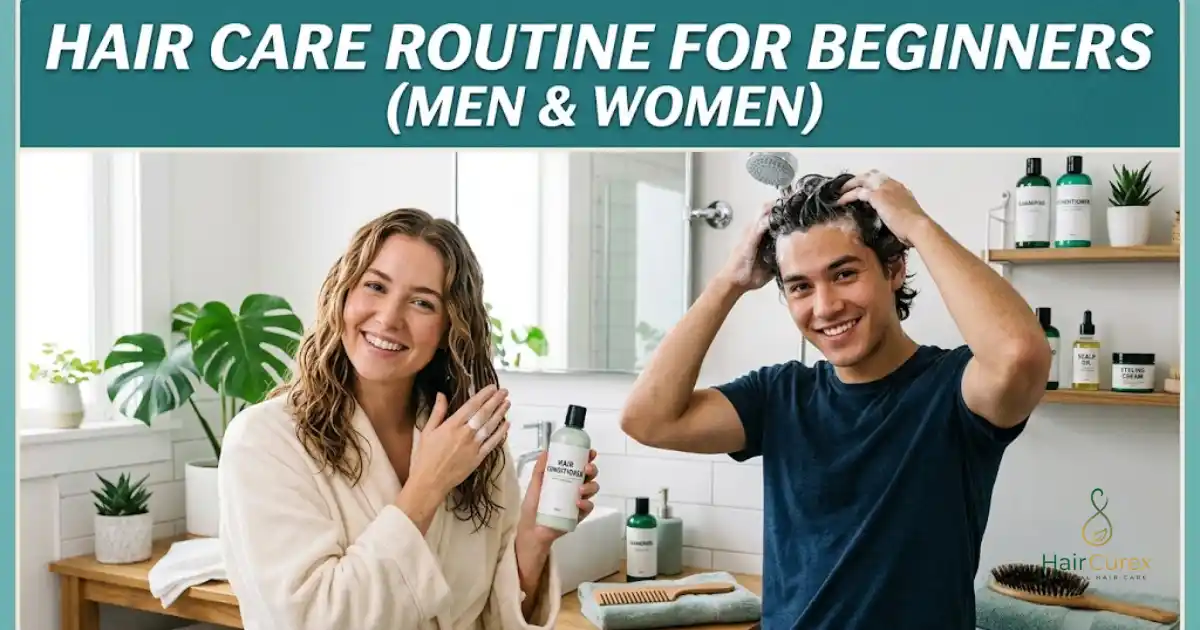
This is a complete hair care routine for beginners, built for both men and women, written in plain English, with zero fluff. By the end, you’ll understand exactly what your hair needs, how often it needs it, and how to build a routine you’ll actually stick with.
Good hair days don’t happen by accident. They happen because someone, somewhere, figured out a routine that actually works for their hair. If you’ve ever stood in the shampoo aisle feeling completely lost, or wondered why your hair looks great one day and frizzy the next, you’re not alone. Millions of people never learned the basics of hair care growing up, and that’s exactly why this guide exists.
What Is a Good Hair Care Routine for Beginners?
A beginner hair care routine is simply a consistent set of habits that keep your hair clean, hydrated, and protected. It’s not complicated. It doesn’t require twelve products or a chemistry degree. At its core, a solid healthy hair care routine rests on four pillars: cleansing, conditioning, treating, and protecting. Miss one of these steps consistently, and you’ll eventually see the consequences, whether that’s dullness, breakage, or an itchy, flaky scalp.
Here’s the thing most beginners get wrong: they think more products mean better results. Actually, the opposite is often true. A simple daily hair care routine done consistently will outperform an expensive, complicated one done sporadically. Think of it like brushing your teeth. Nobody needs seven toothpaste brands. They need one good one, used correctly, every single day.
The 4 Pillars of Any Beginner Hair Care Routine
| Pillar | What It Does | How Often |
|---|---|---|
| Cleanse | Removes dirt, oil, and product buildup | 2–4 times per week (varies by hair type) |
| Condition | Restores moisture and softness | Every time you shampoo |
| Treat | Nourishes scalp and strands | 1–3 times per week |
| Protect | Shields hair from heat, sun, and friction | Daily, especially before styling |
Once these four pillars become second nature, everything else, whether it’s picking a shampoo or figuring out your hair type, gets a lot easier.
How to Identify Your Hair Type and Scalp Type
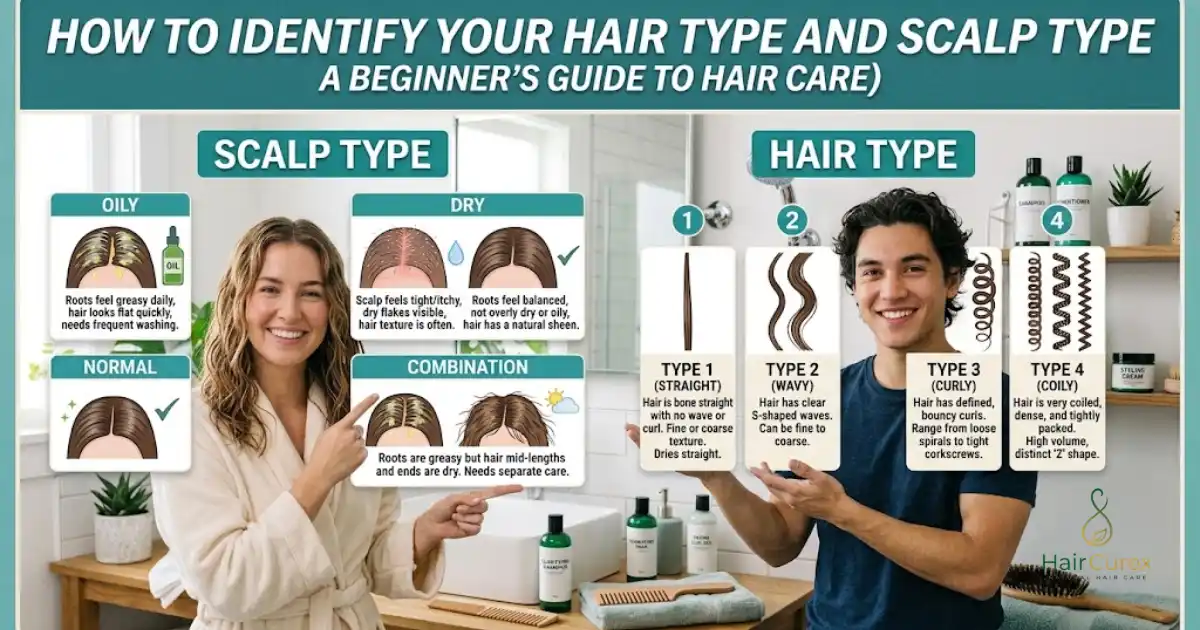
Before you buy a single product, you need to know what you’re working with. Hair typically falls into four broad categories: straight, wavy, curly, and coily. Dermatologists often use a numbered system (1 through 4, with subcategories A, B, and C) to get more specific, but for a beginner, the broad categories work just fine.
Your scalp type matters just as much as your hair type, yet almost nobody talks about it. An oily scalp produces excess sebum, which can weigh hair down and cause it to look greasy within a day or two of washing. A dry scalp, on the other hand, often feels tight, itchy, or flaky. Then there’s the combination scalp, oily near the roots but drier at the ends, which is actually the most common scalp type among adults.
Here’s a quick test you can try tonight. Wash your hair, then leave it alone for 24 hours without touching any styling products. If it looks shiny or greasy by the next morning, you likely have an oily scalp. If it feels tight or shows flakes, you’re probably dealing with dryness. Somewhere in between? You’ve got a combination scalp, and that’s completely normal.
Knowing your healthy scalp baseline is the foundation for everything that follows. Every product recommendation in this guide, from shampoo to oiling, depends on getting this step right.
Step 1: Choose the Right Shampoo
Shampoo does one job: it cleanses. But not all shampoos are created equal, and choosing the wrong one is probably the single most common mistake beginners make. For most beginners, a sulfate-free formula is the safer starting point, especially if you have dry, curly, or color-treated hair. Oily scalps can often tolerate slightly stronger cleansing shampoos without issue. Meanwhile, clarifying shampoos, which deep-clean buildup from styling products, should only be used occasionally, maybe once every one or two weeks, since overuse can dry out even an oily scalp.
| Hair/Scalp Type | Best Shampoo Type | Avoid |
|---|---|---|
| Oily scalp | Balancing or clarifying shampoo | Heavy, moisturizing formulas |
| Dry hair | Sulfate-free, moisturizing shampoo | Harsh clarifying shampoos (overuse) |
| Curly/coily hair | Creamy, sulfate-free, co-wash options | Alcohol-heavy formulas |
| Fine hair | Volumizing, lightweight shampoo | Heavy oils and butters |
| Color-treated hair | Color-safe, sulfate-free shampoo | Sulfates and clarifying shampoos |
Read the ingredient label before you read the marketing claims on the front of the bottle. A product that says “moisturizing” but lists sulfates near the top of the ingredient list isn’t telling the whole story.
How Often Should You Wash Your Hair?
This question sparks more debate than almost any other topic in hair care, and honestly, the answer depends entirely on your scalp type, activity level, and even the climate you live in. There’s no universal number that works for everyone, no matter what a shampoo bottle’s instructions might suggest.
As a general rule, oily scalps benefit from washing every other day, or even daily if sebum production is particularly high. Dry or curly hair, however, often does better with washing just once or twice a week, since natural oils take longer to travel down the hair shaft and washing too often strips away much-needed moisture. If you’re active, hitting the gym daily or sweating heavily in the summer heat, you may need to adjust your hair washing frequency upward regardless of hair type, since sweat and product buildup accumulate quickly.
Overwashing shows up as dryness, frizz, and a scalp that feels tight or irritated. Underwashing, meanwhile, tends to look like flat, greasy roots and a scalp that itches from buildup. If you’re experiencing either extreme, that’s your body telling you to adjust the schedule.
Step 2: Use Conditioner the Right Way
Conditioner isn’t optional, no matter how short your hair is or how “low maintenance” you consider yourself. It replenishes moisture that shampoo strips away, smooths the hair cuticle, and reduces friction that leads to breakage. Skipping this step is one of the fastest ways to end up with split ends and rough, unmanageable strands.
Here’s where most beginners go wrong, though: they apply conditioner to their scalp. Don’t. Conditioner should go on the mid-lengths and ends of your hair, the parts that are oldest and most prone to dryness, not the roots, which already get plenty of natural oil from the scalp. Leave it in for two to three minutes before rinsing thoroughly. For those with very dry or damaged hair, a leave-in conditioner can provide an extra layer of protection throughout the day without needing to be rinsed out at all.
A proper shampoo and conditioner routine works like a one-two punch. Shampoo removes what shouldn’t be there. Conditioner replaces what your hair actually needs. Skip either one, and the balance falls apart.
Step 3: Add a Hair Oil or Scalp Treatment
Once cleansing and conditioning become habits, it’s time to level up with a hair oiling routine. Oils like argan, coconut, jojoba, and castor each offer slightly different benefits, but they all share one core purpose: locking in moisture and nourishing the hair shaft from root to tip.
Coconut oil, for example, has a unique molecular structure that allows it to penetrate the hair shaft rather than just sitting on the surface, which makes it especially effective for dry hair care. Argan oil, often called “liquid gold,” is lighter and works well as a leave-in treatment for frizz control. Castor oil is thicker and may help condition the hair and scalp.
You can apply oil two different ways. A pre-wash treatment involves massaging oil into your scalp and hair an hour (or even overnight) before shampooing, which helps protect strands from the stripping effects of cleansing. A post-wash treatment, by contrast, involves applying a small amount of oil to damp or dry hair after washing to seal in moisture and add shine. Both men dealing with early thinning and women battling dryness or frizz can benefit from a consistent oiling habit, just in different amounts and frequencies based on hair length and density.
Step 4: Protect Your Hair From Heat and Sun
Heat styling tools, flat irons, curling wands, and blow dryers, can transform your hair in minutes. They can also destroy it just as quickly if you’re not careful. Every time you apply direct heat without protection, you risk weakening the protein bonds that give hair its strength, which eventually leads to hair breakage and irreversible damage.
A heat protectant spray or serum, applied before any hot tool touches your hair, creates a barrier that reduces moisture loss and cuticle damage. This single step, often skipped by beginners in a rush, can be the difference between hair that stays healthy for years and hair that needs constant trims to manage split ends.
Sun exposure deserves attention too, something that’s often overlooked entirely. UV rays can break down hair’s protein structure and fade color-treated hair faster than you’d expect, especially during long, sunny summers across much of the United States. Wearing a hat during peak sun hours or using a UV-protectant hair spray can go a long way toward hair damage prevention, particularly if you spend a lot of time outdoors.
The Best Hair Care Routine for Men
Men’s hair care doesn’t need to be complicated, but it does need to be consistent. A solid hair care routine for men typically starts with a scalp-focused shampoo, since many men experience oil buildup or early thinning that benefits from targeted scalp care. Washing three to four times a week, using lukewarm rather than hot water, keeps the scalp balanced without stripping it.
After shampooing, a lightweight conditioner applied briefly to the ends prevents dryness without weighing hair down, which matters most for shorter styles. From there, a small amount of styling product, paired with a leave-in treatment or light oil for those with thicker or curlier textures, rounds out the routine. Men noticing thinning or excessive shedding should also consider scalp massages and consult a dermatologist early, since early intervention tends to produce far better outcomes than waiting.
The Best Hair Care Routine for Women
A hair care routine for women often involves a few more steps, particularly for those with longer or color-treated hair. Starting with a sulfate-free shampoo suited to your specific hair type, followed by conditioner focused on mid-lengths and ends, forms the foundation. From there, a weekly deep conditioning mask adds an extra layer of hair nourishment, especially important for hair that’s been through coloring, heat styling, or chemical treatments.
Detangling matters more here too. Using a wide-tooth comb on wet hair, always starting from the ends and working upward, prevents unnecessary breakage. Adding a leave-in conditioner or lightweight oil before styling helps seal in hair hydration throughout the day, and sleeping on a silk or satin pillowcase reduces friction that would otherwise cause frizz and split ends overnight.
Morning vs. Night Hair Care Routine
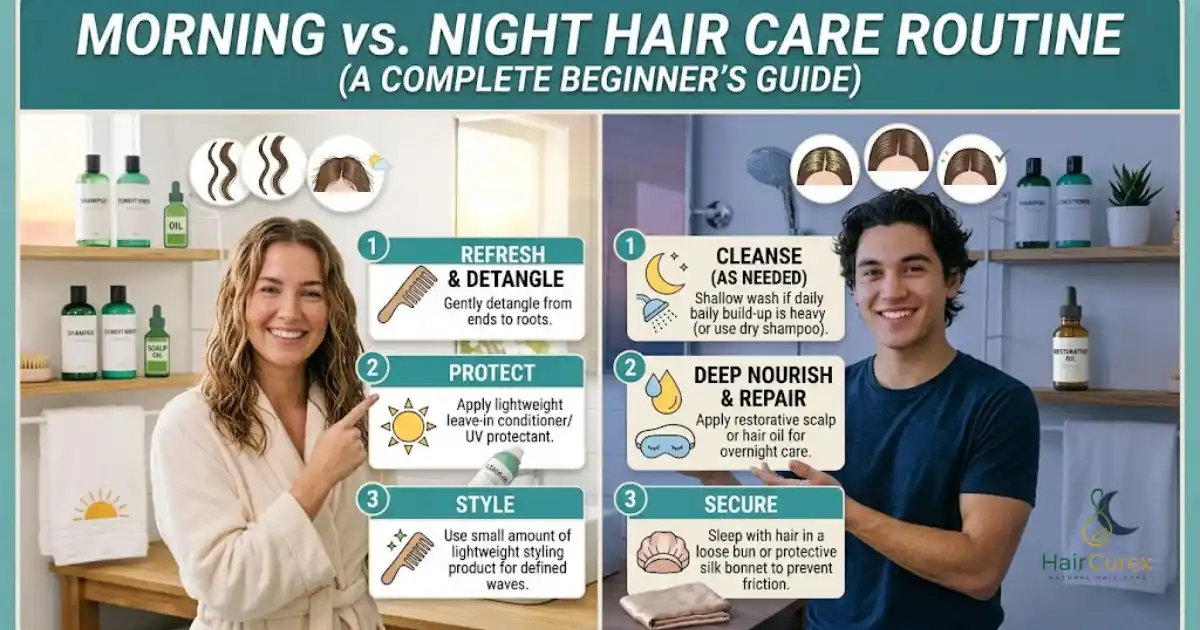
Your hair doesn’t need attention only on wash days. Building small morning and night habits creates compounding benefits over time.
| Time | What to Do |
|---|---|
| Morning | Light refresh with water or dry shampoo, apply heat protectant before styling, use a small amount of leave-in product for frizz control |
| Night | Gently brush or detangle, apply a light oil or scalp serum if needed, switch to a silk pillowcase or loose braid to reduce friction |
Mornings are about preparation and protection before the day’s wear and tear begins. Nights are about repair, giving your hair a chance to recover from heat, sun, and friction accumulated throughout the day. Neither routine needs to take more than a few minutes, yet both make a noticeable difference within just a few weeks.
Hair Care Routine for Dry and Frizzy Hair
Dryness and frizz usually share the same root cause: a lack of moisture retention. This can stem from overwashing, excessive heat styling, harsh weather, or simply a hair type that’s naturally more porous and prone to losing moisture.
Frizzy hair care starts with switching to a sulfate-free shampoo and a rich, moisturizing conditioner. Deep conditioning masks, used once or twice weekly, restore moisture at a deeper level than daily conditioner alone can achieve. Rinsing with cool or lukewarm water instead of hot water also helps seal the hair cuticle, locking moisture in rather than letting it escape. Swapping a regular towel for a microfiber one or even an old cotton t-shirt reduces friction during drying, which cuts down on frizz significantly. Leave-in conditioners and lightweight oils, applied to damp hair, provide an additional barrier against humidity throughout the day.
Case in point: many people with naturally curly or coily hair report a dramatic improvement in frizz simply by switching from a cotton towel to a microfiber one and adding a weekly deep conditioning treatment. It’s a small change, but the cumulative effect over a month is often significant enough to notice in photos.
Hair Care Routine for Oily Scalp
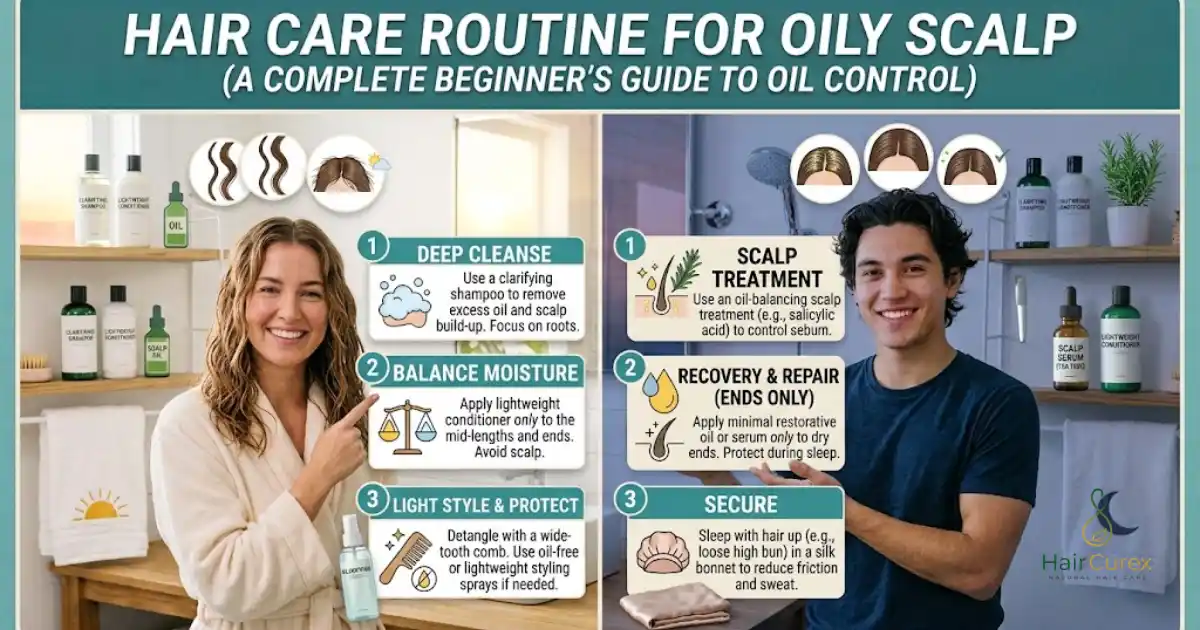
An oily scalp treatment approach looks almost the opposite of dry hair care. Here, the goal is balance, not aggressive stripping, since over-cleansing an oily scalp often triggers even more oil production as the scalp tries to compensate.
Washing every other day with a lightweight, balancing shampoo typically works best. Conditioner should still be used, but only on the mid-lengths and ends, never near the roots, where it can weigh hair down further. Clarifying shampoos, used once every one to two weeks, help remove buildup from oils, sweat, and styling products without over-drying the scalp. Avoid touching your hair throughout the day, since the natural oils on your fingertips transfer easily and accelerate greasiness. Diet plays a role here too; foods high in sugar and refined carbohydrates have been linked to increased oil production in some studies, so moderating those can support scalp balance over time.
Common Hair Care Mistakes Beginners Should Avoid
Even with the best intentions, beginners often fall into a handful of predictable traps. Washing hair with water that’s too hot strips natural oils and irritates the scalp, even though it might feel relaxing in the moment. Skipping conditioner entirely, particularly among men who assume it’s unnecessary for shorter hair, leads to dryness and breakage over time. Rubbing hair vigorously with a regular towel creates friction that roughens the hair cuticle and contributes directly to frizz and split ends.
Using too much heat without any protectant spray is another frequent culprit behind long-term damage, one that often goes unnoticed until the damage is already visible. Ignoring the scalp entirely, focusing only on the visible strands, overlooks the fact that healthy hair actually starts at the follicle. And finally, picking products based on trends or advertising rather than actual hair and scalp type wastes money and, in many cases, causes more harm than good. Avoiding these mistakes alone can meaningfully improve results within just a few weeks.
How Diet and Lifestyle Affect Hair Health
Hair care isn’t just about what you put on your hair; it’s also about what you put into your body. Protein deficiency, for instance, directly affects hair strength, since hair itself is made almost entirely of a protein called keratin. Biotin, iron, zinc, and omega-3 fatty acids all play documented roles in supporting healthy hair growth and reducing shedding.
A dermatologist once put it simply: “You can’t out-condition a poor diet.” Hydration matters just as much, since dehydrated hair becomes brittle and more prone to breakage regardless of how many topical products you apply. Sleep and stress management deserve mention too; chronic stress has been linked to increased shedding through a condition called telogen effluvium, which can appear months after a stressful period even though the connection isn’t always obvious at first. Combining a nutrient-rich diet, consistent hydration, and stress management with your topical routine creates a far more complete approach to natural hair care than products alone could ever achieve.
How Long Does It Take to See Results From a Hair Care Routine?
Patience matters more than most beginners expect. Hair grows in cycles, moving through an active growth phase called anagen, a transitional phase called catagen, and a resting phase called telogen, before eventually shedding and starting over. This entire cycle can take anywhere from two to six years, depending on genetics, meaning visible changes from a new routine won’t show up overnight.
That said, some improvements happen faster than others. Scalp health and reduced oiliness or dryness can improve within one to two weeks of consistent care. Softness, shine, and reduced frizz often become noticeable within three to four weeks. Meaningful changes in hair growth or reduced shedding, however, typically take two to three months to become visible, since that’s roughly how long it takes for new, healthier hair to grow out and replace what was previously damaged. Sticking with a routine for at least 90 days before judging its effectiveness gives your hair a fair chance to show what it can really do.
Conclusion
Building a hair care routine for beginners doesn’t require dozens of products or hours of your time. It requires consistency, a basic understanding of your hair and scalp type, and a willingness to stick with simple habits long enough to see results. Cleanse, condition, treat, and protect, that’s the entire foundation, whether you’re a man managing a short, practical style or a woman caring for long, color-treated hair.
Start small if the whole routine feels overwhelming. Pick just two steps this week, maybe switching to a sulfate-free shampoo and adding a weekly oil treatment, and build from there. Your hair, much like the rest of your body, responds to care given consistently over time, not perfection achieved overnight.
FAQs
1. How often should I wash my hair?
Most people should wash their hair 2–4 times a week, depending on scalp type and hair texture.
2. Is conditioner necessary for men?
Yes. Conditioner helps keep hair soft, smooth, and less prone to breakage.
3. Should I oil my hair before shampooing?
Yes, you can apply oil before shampooing to help condition and protect dry hair.
4. How long does a hair care routine take to work?
You may notice softer, healthier-looking hair within a few weeks. Hair growth changes take longer.
5. When should I see a dermatologist for hair loss?
See a dermatologist if you experience sudden, excessive, or persistent hair loss or noticeable bald patches.