
A hair growth serum is a special liquid treatment. It is made to help hair grow faster. You apply it directly to your scalp.
Let’s be honest — watching clumps of hair collect in your brush or shower drain is unsettling. You’re not alone if you’ve started Googling solutions at 11 p.m., desperate for something that actually works. That’s exactly where a hair growth serum comes in. It’s become one of the most talked-about products in the hair care world, and for good reason. Millions of people across the US are turning to these lightweight treatments to fight thinning strands, boost density, and bring back their confidence. In this guide, we’ll break down everything you need to know — from how these serums work to the best ingredients, application tips, and realistic results you can expect.
What Is Hair Growth Serum and How Does It Work?
A hair growth serum is a concentrated liquid or gel-like treatment designed to nourish your scalp and stimulate hair follicles. Unlike shampoos that simply cleanse, or conditioners that soften strands, a serum for hair growth goes deeper. It targets the root of the problem — quite literally. Most formulas contain active compounds that penetrate the scalp, improve blood circulation, and create a healthier environment for hair to grow.
Think of your scalp like soil and your hair follicles like seeds. If the soil is dry, clogged, or lacking nutrients, seeds struggle to sprout. A hair regrowth serum works by feeding that soil — delivering vitamins, peptides, and other nutrients directly where they’re needed most. Some serums also block DHT, a hormone linked to hair thinning and pattern baldness, while others focus purely on strengthening existing strands so they don’t snap or fall out prematurely.
The science behind these products isn’t just marketing fluff, either. Dermatologists often point to ingredients like minoxidil, caffeine, and biotin as having real, clinically backed effects on hair density. That said, not every hair serum for hair growth works the same way, and understanding the mechanism helps you pick one suited to your specific hair concerns, whether that’s thinning, shedding, or slow growth.
Benefits of Using Hair Growth Serum for Thicker Hair
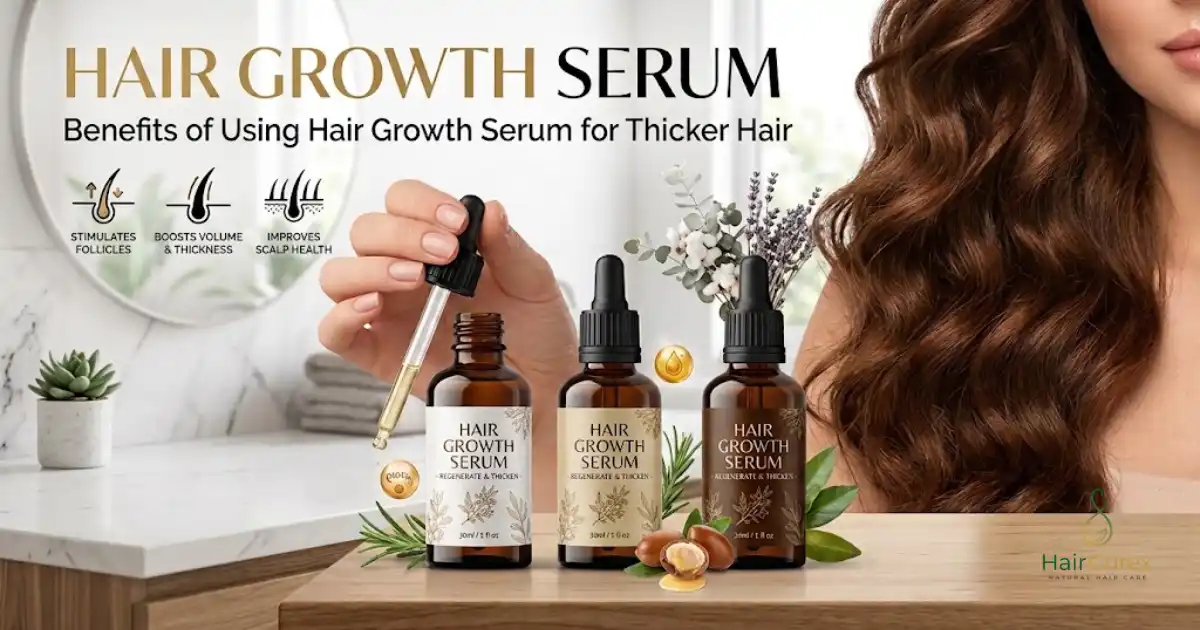
So why has this product category exploded in popularity? Because the benefits go beyond just “growing hair.” A quality serum for thicker hair can transform not just how your hair looks, but how your scalp feels and functions overall.
For starters, consistent use often leads to noticeably fuller-looking strands. Hair that once looked flat and thin can start to regain body and volume within a few months. Beyond thickness, many users report a significant drop in daily hair fall — those alarming handfuls of hair in the shower start to shrink to a normal amount. A healthier scalp is another underrated perk. Since most serums include soothing and hydrating ingredients, they can calm irritation, reduce flakiness, and create better conditions for hair to thrive.
There’s also a confidence factor that’s hard to quantify but easy to feel. When your hairline looks fuller or your ponytail feels thicker, it changes how you show up in the world. As one dermatologist put it, “Hair isn’t just cosmetic — it’s deeply tied to how people feel about themselves.” That emotional boost, paired with visible physical improvement, is why so many people stick with their hair serum for stronger hair routine long-term.
| Benefit | How It Helps |
|---|---|
| Thicker-looking hair | Strengthens strands and reduces breakage over time |
| Less hair fall | Nourishes follicles to reduce shedding |
| Healthier scalp | Hydrates and soothes irritation or dryness |
| Boosted confidence | Visible improvement supports self-esteem |
| Faster follicle activity | Stimulates blood flow to the scalp |
Best Ingredients to Look for in a Hair Growth Serum
Not all serums are created equal, and the ingredient list tells you almost everything you need to know. If you’re shopping for the best hair growth serum, understanding what’s actually inside the bottle can save you both money and disappointment.
Minoxidil remains the gold standard, largely because it’s the only FDA-approved topical ingredient specifically for hair regrowth. It works by widening blood vessels in the scalp, allowing more oxygen and nutrients to reach hair follicles. Biotin hair serum formulas are another popular choice, since biotin supports keratin production — the protein that makes up the structure of your hair. Then there’s caffeine hair serum, which has gained traction for its ability to stimulate follicles and counteract the effects of DHT, the hormone responsible for shrinking hair follicles over time.
Peptide hair serum products are newer to the scene but increasingly popular among people looking for gentler, non-drug alternatives. Peptides work by signaling to the skin and follicles to behave more like they did in their younger, healthier state. Niacinamide for hair growth has also become a buzzworthy ingredient, thanks to its ability to improve scalp barrier function and reduce inflammation. Meanwhile, hyaluronic acid hair serum formulas hydrate the scalp deeply, which matters more than people realize — a dry, tight scalp isn’t a great place for hair to grow.
For those who prefer plant-based options, rosemary oil hair serum has become something of a viral sensation, with some studies suggesting it performs comparably to low-dose minoxidil for certain users. Other natural hair growth ingredients worth watching for include castor oil, saw palmetto, and green tea extract — all of which contribute to hair-strengthening ingredients lists without harsh chemicals.
| Ingredient | Primary Function |
|---|---|
| Minoxidil | FDA-approved, boosts blood flow to follicles |
| Biotin | Supports keratin and strand structure |
| Caffeine | Stimulates follicles, blocks DHT effects |
| Peptides | Signals healthier follicle behavior |
| Niacinamide | Reduces scalp inflammation |
| Hyaluronic Acid | Deeply hydrates the scalp |
| Rosemary Oil | Natural alternative with proven results |
How to Choose the Best Hair Growth Serum for Your Hair Type
Picking the right formula isn’t a one-size-fits-all decision. Your hair type, scalp condition, and specific concerns all play a role in determining which product will actually deliver results for you.
If you have fine or thin hair, lightweight, water-based serums tend to work best since heavier oils can weigh strands down and make hair look greasy rather than full. On the other hand, thicker or coarser hair types often tolerate — and even benefit from — richer, oil-based serums that provide extra moisture and shine. Your scalp type matters just as much as your hair texture. An oily scalp usually does better with gel-based or alcohol-free formulas that won’t add extra grease, while a dry scalp benefits from serums rich in hydrating agents like hyaluronic acid or glycerin.
Color-treated or chemically processed hair requires a bit more caution, too. Some active ingredients can interact poorly with hair dye or relaxers, so look for gentle, sulfate-free formulas labeled safe for treated hair. And if you have a sensitive scalp prone to redness or itching, steer clear of heavily fragranced products and instead choose fragrance-free, dermatologist-tested options. Ultimately, the best approach is trial and patience — introduce one new serum at a time and give it several weeks before judging its effectiveness.
Hair Growth Serum for Hair Thinning and Hair Fall
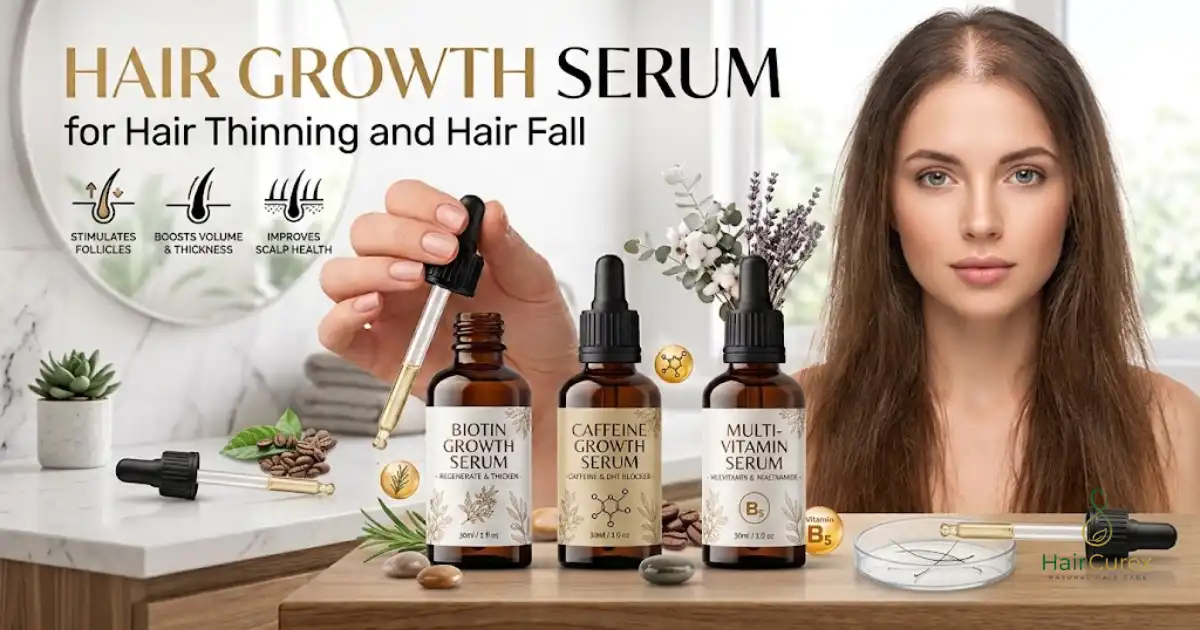
Thinning hair and excessive hair shedding are two of the most common reasons people search for solutions in the first place. In the US, these issues affect people of all ages, often triggered by stress, genetics, hormonal shifts, poor diet, or even seasonal changes.
A hair growth serum for thinning hair typically targets specific problem areas, like the crown or hairline, where follicles tend to shrink first due to genetic sensitivity to DHT. For women dealing with thinning edges, gentler formulas with peptides or biotin are often recommended, since these areas tend to be more fragile and prone to breakage. Meanwhile, a hair growth serum for hair fall focuses more broadly on strengthening the entire scalp to reduce the volume of hair lost daily.
It’s worth noting that some shedding is completely normal — most people lose between 50 and 100 hairs a day. However, if you’re noticing wider partings, visible scalp, or hair loss that seems sudden or dramatic, that’s a sign to consult a dermatologist rather than relying solely on over-the-counter products. Conditions like postpartum shedding, thyroid imbalances, or genetic pattern baldness may need more targeted treatment alongside serum use.
How to Use Hair Growth Serum for Better Results
Knowing how to use hair growth serum correctly makes a massive difference in whether you see results or not. Application technique matters just as much as the product itself.
Start with a clean, dry or slightly damp scalp — most experts recommend applying serum after shampooing rather than on unwashed hair, since buildup can block absorption. Part your hair into small sections so the serum reaches your scalp directly rather than just coating the strands. Using the dropper or applicator tip, apply a few drops to each section, then gently massage the product in using your fingertips for one to two minutes. This massage step isn’t optional fluff — it genuinely boosts blood circulation and helps active ingredients penetrate deeper.
As for when to apply hair growth serum, nighttime tends to work best for most formulas, since it gives the product hours to absorb without interference from styling products, sweat, or sun exposure. That said, some lightweight, non-greasy serums are designed for morning use under styling products. Regarding how often to use hair serum, daily application is standard for most brands, though some stronger formulas (especially those containing minoxidil) may recommend twice-daily use. Always check the label, since overuse can sometimes cause irritation rather than better results.
| Step | What to Do |
|---|---|
| 1 | Wash and slightly dry your hair |
| 2 | Part hair into small sections |
| 3 | Apply a few drops to the scalp |
| 4 | Massage gently for 1-2 minutes |
| 5 | Avoid rinsing; let it absorb fully |
Hair Growth Serum vs. Hair Growth Oil: Which Is Better?
This is one of the most common debates in the hair care world, and the honest answer is: it depends on your goals. Both hair growth serum vs hair oil options have distinct strengths, and understanding the difference helps you choose — or combine — them effectively.
Serums are typically lightweight, fast-absorbing, and formulated with concentrated active ingredients like peptides or minoxidil. They’re designed to penetrate the scalp quickly without leaving a greasy residue, which makes them ideal for daily use, especially for people with oily scalps or fine hair. Oils, on the other hand, tend to be thicker and richer, providing deep conditioning and shine but sitting more on the surface of the strands rather than penetrating deeply into the scalp.
| Feature | Hair Growth Serum | Hair Growth Oil |
|---|---|---|
| Absorption | Fast, lightweight | Slower, heavier |
| Best For | Oily scalp, fine hair | Dry scalp, thick hair |
| Texture | Water or gel-based | Oil-based, richer |
| Ingredient Potency | Often higher concentration | Milder, more nourishing |
| Ideal Use | Daily, under other products | Overnight or weekly treatment |
Many hair care experts actually recommend using both — a serum for active treatment and an oil for occasional deep conditioning. As one hairstylist explained, “Think of serum as your daily medicine and oil as your weekly spa treatment.” Together, they can address both scalp health and strand nourishment.
Can Hair Growth Serum Help Regrow Lost Hair?
This question comes up constantly, and it deserves an honest, no-hype answer. Does hair growth serum work for actually regrowing hair that’s been lost? In many cases, yes — but with important caveats.
Serums tend to work best for people experiencing early-stage thinning, where follicles are shrinking but still alive. In these cases, active ingredients can reactivate dormant follicles and encourage new growth. However, if an area has been bald for years or follicles have scarred over completely — common in advanced pattern baldness — serums alone typically can’t reverse that. Realistically, most people should expect serums to improve density, reduce shedding, and strengthen existing hair rather than perform miracles on fully bald patches.
Consistency plays a massive role here. Hair growth is a slow biological process, and quitting after a few weeks because you don’t see instant results is one of the biggest reasons people feel serums “don’t work.” If you’ve been using a product consistently for several months without any improvement, or if you’re dealing with sudden, severe hair loss, that’s the point where seeing a dermatologist becomes essential rather than optional.
How Long Does Hair Growth Serum Take to Work?
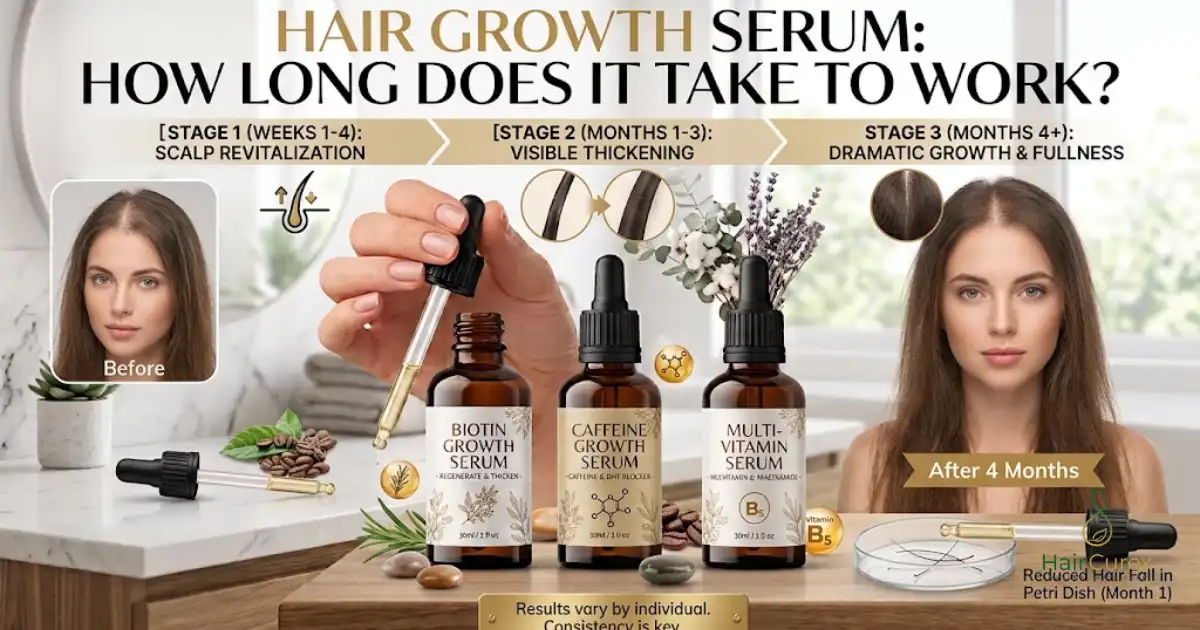
Patience is genuinely the hardest part of any hair growth journey. So, how long does hair growth serum take to work? Most dermatologists agree that early signs — like reduced shedding — can appear within four to six weeks. However, visible thickness and noticeable regrowth usually take three to six months of consistent use.
Several factors influence this timeline. Genetics play a significant role, as some people’s follicles simply respond faster to treatment than others. The severity of hair loss matters too — early-stage thinning tends to respond quicker than long-term, advanced hair loss. Consistency is arguably the biggest factor of all; skipping days or stopping and starting repeatedly resets your progress and delays results significantly.
It helps to think of hair growth serum results the way you’d think about fitness progress. You won’t see six-pack abs after one week at the gym, and you won’t see a full head of new hair after one week of serum use either. Tracking progress with monthly photos, rather than checking daily in the mirror, gives a much more accurate — and encouraging — picture of your hair growth serum before and after transformation.
Possible Side Effects of Hair Growth Serums
Like any active treatment, hair growth serums aren’t entirely without risk. Understanding potential hair growth serum side effects helps you use these products safely and know when something’s actually wrong versus a normal adjustment phase.
Mild scalp irritation, redness, or itching is fairly common, especially when first introducing a new active ingredient like minoxidil. Some people also experience what’s called a “shedding phase” during the first few weeks of use — this can feel alarming, but it’s often a sign that old, weak hairs are falling out to make room for stronger, new growth. Allergic reactions, while less common, can occur with certain botanical extracts or fragrances, so patch-testing on a small area of skin before full application is always a smart move.
If irritation persists beyond a couple of weeks, or if you notice swelling, severe redness, or hives, discontinue use immediately and consult a dermatologist. It’s also worth noting that pregnant or breastfeeding individuals should check with a doctor before using serums containing minoxidil or other potent active ingredients, since safety data for these situations is limited.
Common Mistakes to Avoid When Using Hair Growth Serum
Even the best product won’t deliver results if it’s being used incorrectly. Some of the most frequent errors include applying way too much product at once, assuming more equals faster results — when in reality, excess product often just sits on the scalp and causes buildup or irritation.
Skipping the scalp massage step is another missed opportunity, since massage significantly boosts absorption and circulation. Inconsistent use is perhaps the single biggest mistake of all; hair growth is a marathon, not a sprint, and sporadic application simply won’t produce the same results as a steady, daily routine. Mixing incompatible products — like layering multiple active ingredients without understanding how they interact — can also backfire, sometimes causing irritation or reduced effectiveness.
Lastly, unrealistic expectations trip up more people than any ingredient ever could. Expecting dramatic regrowth within days sets you up for disappointment and often leads to giving up right before real results would have appeared. Treating your serum routine like a long-term commitment, rather than a quick fix, is really the secret to success.
Frequently Asked Questions About Hair Growth Serum
Does hair growth serum really work?
For most people dealing with early to moderate thinning, yes. Clinical studies back several key ingredients, though results vary based on genetics and consistency.
Can men and women both use the same serum?
In many cases, yes. Both hair growth serum for men and hair growth serum for women formulas often share similar active ingredients, though some products are marketed specifically for hormonal differences between the sexes.
Is it safe to use every day?
Most formulas are designed for daily use, though it’s important to follow label instructions closely, especially with stronger ingredients like minoxidil.
Can I use it with other hair products?
Generally yes, though it’s best to apply serum first, allow it to absorb, and then layer other styling products afterward.
Does it work for all hair types, including curly or textured hair?
Absolutely. Curly, coily, and textured hair can benefit just as much, though application technique may need slight adjustments to reach the scalp through denser hair.
Conclusion
A good hair growth serum isn’t a magic overnight fix, but it is a legitimately powerful tool when used correctly and consistently. From boosting scalp health to reducing shedding and improving density, the right formula — paired with realistic expectations and proper technique — can make a genuine difference in how your hair looks and feels. Whether you’re dealing with thinning edges, weak hair roots, or just want a serum for thicker hair as part of your routine, the key is patience, consistency, and choosing a product suited to your specific hair type and concerns. If you’re serious about long-term results, consider consulting a dermatologist who can recommend the best hair growth serum for hair fall or thinning based on your individual needs — because everyone’s hair journey looks a little different.