
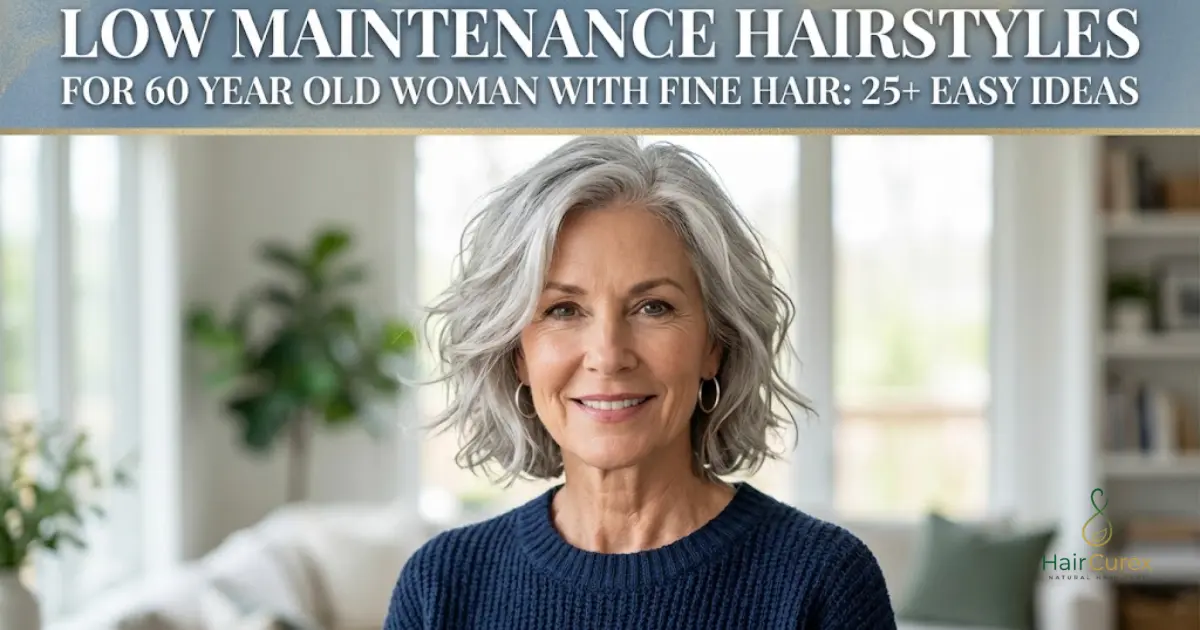
Low maintenance hairstyles for a 60 year old woman with fine hair are simple cuts that need little daily work. They save time in the morning. They still look neat and stylish.
Your hair changes as you move through your sixties, and honestly, most mornings shouldn’t feel like a battle against it. Fine hair thins out, loses some of its natural body, and sometimes just refuses to cooperate no matter how much product you throw at it. That’s where low maintenance hairstyles for women over 60 with fine hair come in. These cuts are built to work with what you’ve got instead of fighting it. In this guide, you’ll find more than 25 easy hairstyle ideas, real styling tips, and honest advice on what actually helps fine hair look fuller, younger, and easier to manage every single day.
What Are the Best Low Maintenance Hairstyles for Fine Hair After 60?
Fine hair behaves differently than thick hair, and it needs a different game plan. The best low maintenance hairstyles for women over 60 share a few things in common: shorter to medium length, strategic layers, and a cut that holds its shape even after you skip a day of styling. A skilled stylist once told a client, “Fine hair doesn’t need more product. It needs a better cut.” That single idea sums up the whole philosophy behind this list. Instead of piling on mousse and spray, you choose a shape that already looks good the moment it dries.
Several factors matter more than trend when picking a cut at this stage of life. Length plays a huge role because hair that’s too long often drags fine strands flat against the scalp. Layering matters too, since the right layers create lift without sacrificing the little density you have. And finally, texture treatments like a soft point-cut or razored ends can trick the eye into seeing more hair than what’s actually there. Together, these three elements form the backbone of every easy hairstyle for older women featured in this article.
How Fine Hair Changes After 60 (and Why That Matters for Your Cut)
Hair follicles shrink gradually with age, and estrogen decline after menopause speeds up the process. The result is often thinner individual strands, slower growth, and a scalp that shows through more than it used to. This isn’t something to be alarmed about; it’s simply biology. However, it does mean that a hairstyle that worked beautifully at 40 might not do your hair any favors at 65.
Many women make the mistake of holding onto long, one-length hair well past the point where it flatters them. Long layers can work, but only when they’re cut with enough movement to avoid weighing hair down. Others make the opposite mistake, going too short without considering face shape or hair texture, which can sometimes look severe rather than soft. The sweet spot usually lives somewhere between chin length and shoulder length, paired with layers that lift rather than drag. Understanding this shift is the first step toward choosing one of the best hairstyles for fine thinning hair rather than fighting against your hair’s natural direction.
Short Pixie Cuts for Women Over 60 With Fine Hair
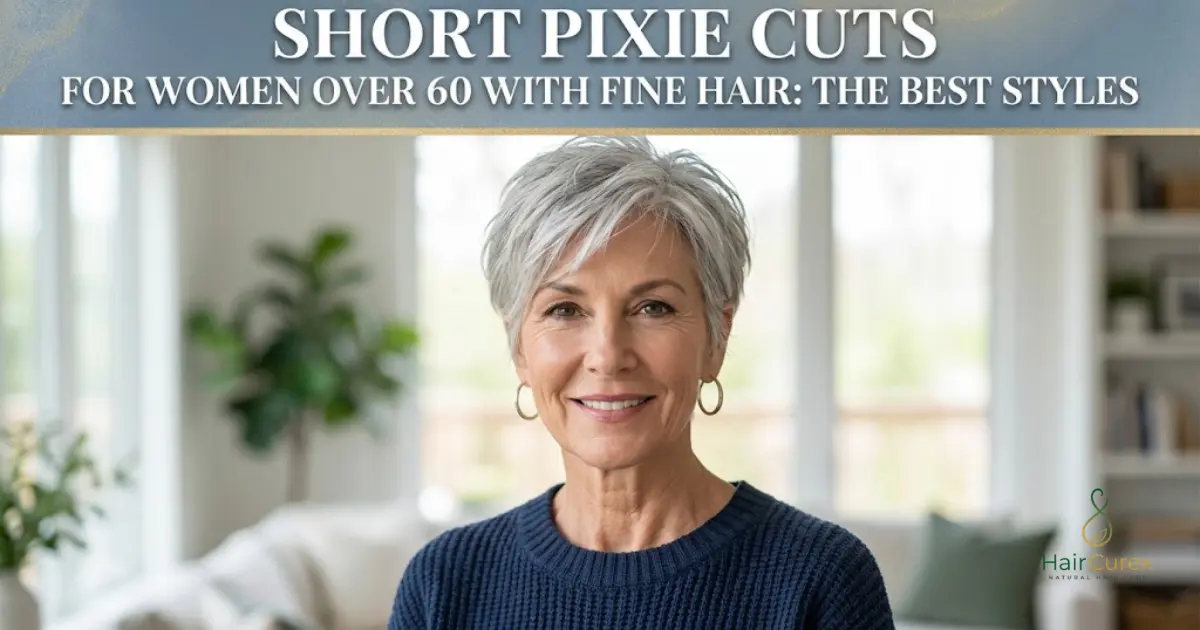
A well-cut pixie remains one of the most popular short haircuts for older women, and for good reason. Short hair simply looks thicker because there’s less weight pulling each strand down. A textured pixie cut for older women uses choppy, uneven layers on top to create the illusion of volume, while the sides and back stay close to the head for an easy, wash-and-go feel.
There’s more than one way to wear a pixie. A classic pixie keeps things neat and polished, perfect for women who like a put-together look without any fuss. A textured or piecey pixie adds a bit of edge and works wonderfully for fine hair because the choppy ends create movement that a blunt cut can’t. Then there’s the longer pixie, sometimes called a pixie-bob hybrid, which offers a bit more versatility for those who aren’t ready to go super short. Styling any pixie usually takes under five minutes: a dab of texturizing paste worked through damp hair, followed by air-drying or a quick blast with a diffuser, and you’re done.
Pixies tend to suit oval, heart, and diamond face shapes especially well, though a skilled stylist can adjust the cut to flatter rounder or squarer faces too. If you’ve been hesitant about going short, know this: pixie cuts for fine hair are often described by women as the most freeing haircut decision they’ve ever made.
Layered Bob Hairstyles for Thin or Fine Hair
The layered bob for fine hair might be the single most requested cut among women over 60, and it earns that popularity honestly. Layers remove bulk from the bottom while adding lift near the crown, which gives fine hair the appearance of thickness it wouldn’t otherwise have. A long layered bob, often called a lob, hits somewhere between the chin and the shoulders and offers a nice balance of style and manageability.
What makes this cut so effective is the way layers are placed. Rather than cutting layers evenly throughout, a good stylist will concentrate shorter layers near the crown to build height right where fine hair tends to fall flat. The ends stay slightly longer and heavier, which creates a subtle, rounded silhouette instead of a wispy, thin-looking finish. This is one of the reasons the short layered haircut for thin hair consistently ranks as a top choice among hairstylists who specialize in mature clients.
Styling a layered bob doesn’t require much. A round brush and a blow-dryer can add extra bounce, but plenty of women simply let it air-dry and finger-comb through a lightweight mousse. Either way, you get a polished look with minimal daily effort, which is exactly the point of a low maintenance short haircut.
Chin-Length Bob for a Fuller-Looking Hairstyle
If you want maximum fullness with minimum effort, a chin length bob for older women is hard to beat. This length sits right at the point where fine hair naturally has the most bounce before gravity starts pulling it down. A blunt chin-length cut, where all the ends line up evenly, creates the thickest possible appearance because the hair isn’t tapered away at the bottom.
Some women prefer a slightly angled version, where the front is a touch longer than the back. This creates a face-framing effect that draws the eye upward and softens the jawline, something many women appreciate as their face shape shifts with age. Others add subtle layering just at the crown to prevent the classic “helmet” look that can happen with an all-one-length bob on very fine hair.
Maintenance for this style is refreshingly simple. Because the cut is precise, it holds its shape well between salon visits, though a trim every six to eight weeks keeps the blunt line looking crisp. Most women find they can wash it, apply a small amount of root-lifting spray, and let it dry naturally without ever picking up a flat iron.
Short Hairstyles With Side-Swept Bangs
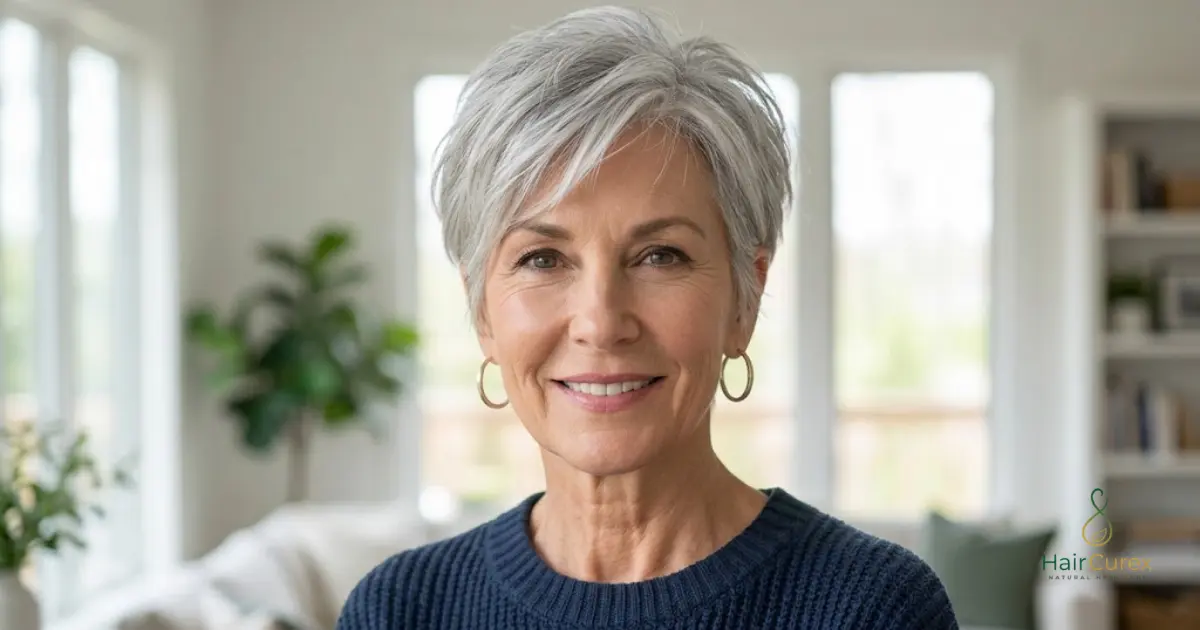
Side-swept bangs for fine hair solve two problems at once. First, they soften features that can look more angular with age. Second, they cleverly hide thinning right at the crown and hairline, an area that tends to show the most wear on fine hair. Unlike blunt, straight-across bangs, side-swept bangs blend into the rest of the style rather than standing apart as a separate section.
Styling them is refreshingly quick. After washing, you simply sweep the bangs to one side while they’re still damp and let them dry that way, either naturally or with a quick pass of a round brush. There’s no need for precise cutting lines or heavy product, which makes this one of the more forgiving easy hairstyles for thin hair on this list.
Side-swept bangs pair beautifully with both pixies and bobs. On a pixie, they add softness to an otherwise short, structured cut. On a bob, they create a face-framing effect that works especially well for square or rectangular face shapes.
Wash-and-Wear Hairstyles for Women Over 60
The phrase “wash-and-wear” gets thrown around a lot, but it has a specific meaning here: a cut that looks intentional and finished the moment it air-dries, without any blow-drying, curling, or flat-ironing required. Easy wash and wear hairstyles rely heavily on precision cutting rather than styling tricks, since the cut itself does most of the work.
Textured pixies, soft layered bobs, and shag-inspired cuts with lots of internal layering all fall into this category. The common thread is movement built directly into the haircut, so hair naturally falls into place rather than needing to be coaxed there. A light sea-salt spray or texturizing cream applied to damp hair is often the only product needed before letting it air-dry.
Wash and wear haircuts for seniors have become especially popular for women who travel often or simply want more time in the morning for coffee instead of a hair dryer. The table below breaks down a few popular wash-and-wear options and roughly how much daily styling time each one requires.
| Hairstyle | Daily Styling Time | Best For |
|---|---|---|
| Textured pixie | 3–5 minutes | Very fine, thinning hair |
| Long layered bob | 5–7 minutes | Medium fine hair, active lifestyles |
| Chin-length bob | 5 minutes | Straight, fine hair |
| Shag with layers | 5–8 minutes | Fine hair with slight wave |
Low Maintenance Hairstyles for Fine Hair Without Much Styling
Beyond the specific cuts already mentioned, there’s a broader category worth discussing: no fuss hairstyles for fine hair designed to hold their shape between salon appointments without daily intervention. These styles are usually cut with a slightly shorter length up top and softer, blended layers throughout, so regrowth doesn’t immediately throw off the silhouette.
One underrated trick many stylists use is cutting hair slightly drier than usual so they can see exactly how it falls naturally, rather than cutting it wet and guessing at the result. This approach tends to produce a shape that behaves consistently day after day, which is the whole point of an easy-care hairstyle for mature women. Regular trims, roughly every six weeks, also matter more for low maintenance styles than people expect, since even a small amount of overgrowth can throw off the balance of a precisely cut shape.
Skipping heat tools altogether is another smart move. Repeated blow-drying and flat-ironing weakens fine hair over time, making it more prone to breakage. Choosing a cut that looks good without heat protects your hair’s health while also saving you time.
Shoulder-Length Hairstyles for Women Over 60
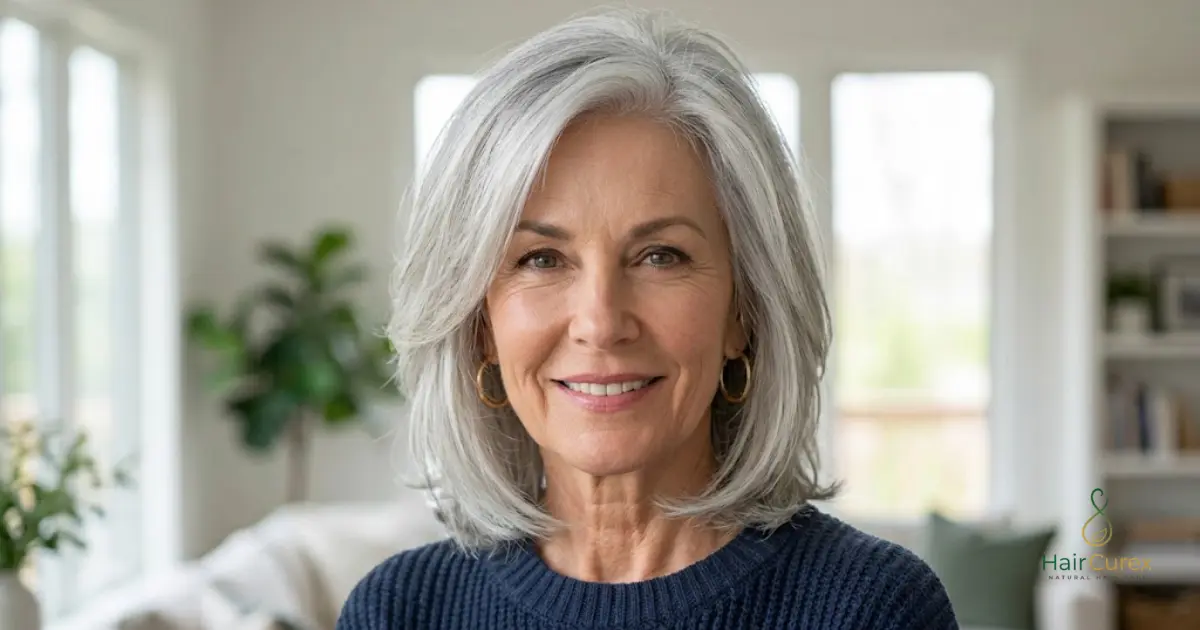
Plenty of women over 60 still love the versatility of longer hair, and the good news is that shoulder length hairstyles for fine hair can absolutely stay low maintenance when cut correctly. The key lies in long layers that start around the cheekbone and continue down, removing excess weight while keeping enough length to pull hair back when needed.
This length works particularly well for women who like styling options. You can wear it straight and sleek, add loose waves with a curling wand for special occasions, or simply tuck it behind your ears for a quick, effortless look. Compared to shorter cuts, shoulder-length hair does require slightly more daily attention, since there’s more hair to manage, but the trade-off is added flexibility for different occasions.
One consideration worth noting: hair this length can look thin if it’s cut too evenly. Asking your stylist for face-framing layers around the front, combined with subtle layers throughout the back, helps maintain the appearance of fullness that shorter cuts achieve more easily.
Easy Hairstyles for Fine Hair That Add Volume
Volume is often the biggest concern for women with fine hair, and thankfully, several haircuts that add volume to fine hair exist specifically to address it. Root-lifting cuts, where layers are cut short right at the crown, create built-in height that doesn’t rely on backcombing or heavy products. This technique alone can make hair look significantly thicker without changing the overall length much at all.
Blunt cutting is another volumizing tool that surprises a lot of people. While layering can thin out ends, a blunt cut leaves more hair at the perimeter, which creates a denser-looking edge. Many stylists combine both approaches: shorter layers up top for lift, blunt ends at the bottom for density. It’s a technique frequently used in volumizing hairstyles for mature women because it addresses thinning from two different angles at once.
A few product habits help too. Applying a lightweight volumizing mousse to roots while hair is damp, then flipping your head upside down while blow-drying for just a minute or two, can add noticeable lift. Dry shampoo isn’t only for greasy hair; a light dusting at the roots on day one also absorbs oil and adds texture, which fine hair often lacks on its own.
Best Low Maintenance Hairstyles for Gray or Silver Fine Hair
Gray and silver hair often has a different texture than hair did in its pigmented years, sometimes coarser, sometimes wirier, which changes how certain cuts behave. Gray hair hairstyles for women over 60 tend to look their best in shapes that let the natural color shine rather than fighting against the hair’s new texture.
Silver haircuts for fine hair often benefit from slightly longer layers than an all-over pixie, since gray hair can sometimes look flat under very short, uniform cuts. A soft, textured bob or a longer pixie with movement allows silver strands to catch the light beautifully. Purple-toned shampoos also play a supporting role here, keeping brassiness at bay and helping silver hair look bright rather than dull.
One stylist put it simply: “Gray hair isn’t something to hide. The right cut makes it look like a deliberate, stylish choice.” That mindset shift, paired with a cut suited to gray hair’s unique texture, often gives women more confidence in a color that used to feel like something to cover up.
How to Make Fine Hair Look Thicker and Fuller
Making hairstyles that make fine hair look thicker requires a combination of cutting technique and smart product use, and neither alone tells the whole story. On the cutting side, blunt ends, strategic layering near the crown, and avoiding overly thinned-out ends all contribute to a fuller appearance. Razor cutting, when used sparingly, can add soft texture, but overusing it on fine hair often backfires by making ends look wispy instead of textured.
Products matter just as much as the cut itself. Thickening sprays applied to damp roots coat each strand slightly, adding perceived width without weighing hair down. Texturizing powder, dusted lightly at the roots, absorbs oil while also creating grip that helps hair hold volume throughout the day. Dry conditioner, an often-overlooked product, keeps ends from looking brittle without the heaviness of traditional leave-in conditioners.
Styling habits round out the picture. Blow-drying with your head tipped upside down for the first few minutes lifts roots naturally. Using a round brush on the top section while leaving the rest to air-dry saves time while still targeting the area that needs volume most. Together, these techniques form a simple but effective routine for anyone chasing hairstyles for naturally thinning hair that still look full and healthy.
How to Choose the Right Hairstyle for Your Face Shape and Fine Hair
Face shape plays just as important a role as hair texture when selecting a cut. A style that looks stunning on an oval face might overwhelm a round one, and vice versa. The table below offers general guidance, though a good stylist will always adjust recommendations based on your specific features and hair density.
| Face Shape | Recommended Styles | Styles to Approach Carefully |
|---|---|---|
| Round | Angled bob, longer pixie with height on top | Blunt chin-length bob without layers |
| Square | Side-swept bangs, soft layered bob | Very short, blunt pixie |
| Oval | Almost any style works, including classic pixies | Few restrictions |
| Heart | Chin-length bob, textured pixie | Styles that add width at the jaw |
| Long | Shoulder-length with layers, side bangs | Very short pixies without volume on the sides |
Beyond face shape, consider your hair’s natural growth pattern too. Some women have a strong cowlick or naturally straight hair that resists certain styles, and a stylist familiar with fine, mature hair will factor this in before making cutting decisions. Bringing photos of styles you like to your appointment, along with an honest conversation about how much time you want to spend styling each morning, usually leads to the best outcome.
Frequently Asked Questions
How often should I trim fine hair over 60?
Most low maintenance cuts hold their shape best with a trim every six to eight weeks. Fine hair shows overgrowth more obviously than thick hair, so sticking close to this schedule keeps your style looking sharp.
What’s the best haircut for very thin, fine hair?
A textured pixie or a chin-length bob with blunt ends tends to work best, since both styles rely on shorter length and precise cutting to maximize the appearance of density.
Do short haircuts make you look older?
Not at all. In fact, well-cut short styles often look more youthful than long, thin hair that’s lost its shape, since short cuts appear fuller and more polished.
What products work best for fine hair volume?
Lightweight volumizing mousse, root-lifting spray, and dry shampoo all help without weighing hair down. Heavy oils and thick creams should generally be avoided.
Should I avoid layers if I have fine hair?
Not necessarily. The key is strategic layering, shorter layers near the crown for lift, combined with a blunter perimeter for density, rather than avoiding layers altogether.
How do I keep gray fine hair from looking flat?
Choose a cut with some movement rather than a completely uniform length, and use a purple-toned shampoo occasionally to keep silver tones bright and vibrant.
Conclusion
Low maintenance doesn’t mean giving up on style, and that’s really the heart of everything covered here. Whether you gravitate toward a textured pixie, a chin-length bob, or a soft shoulder-length cut with face-framing layers, the right choice comes down to matching the cut to your hair’s natural texture and your own daily routine. Fine hair after 60 has its own kind of beauty, and with the right haircut, it can look thick, healthy, and effortlessly put-together every single day. Pick one or two styles from this list, bring them to your next salon appointment, and give yourself permission to enjoy hair that finally works with you instead of against you.