
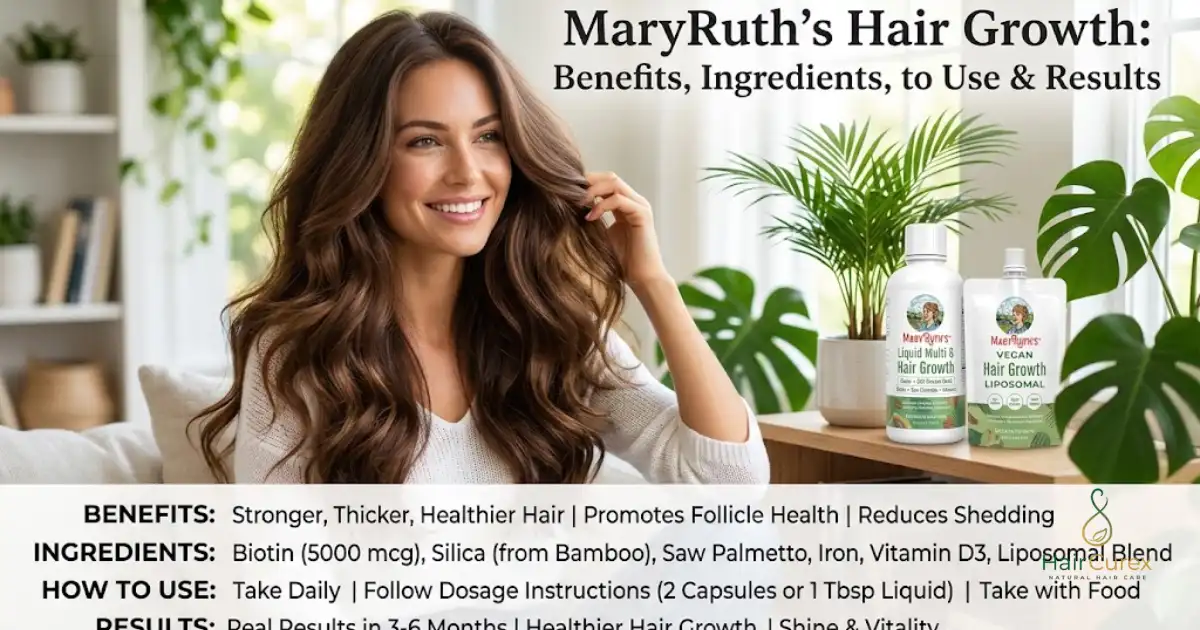
MaryRuth Hair Growth is a supplement made to support healthy hair. It often comes as gummies, drops, or vitamins. Many people use it to help hair grow stronger and thicker. Do you dream of long, healthy hair? Thinning hair can feel frustrating. MaryRuth Hair Growth might be the answer you need.
Hair loss and thinning hair affect millions of people across the USA every single year. Some notice it in the shower drain. Others spot it in old photos, wondering where all that thickness went. Whatever the reason, one product keeps popping up in conversations about hair health: MaryRuth hair growth supplements. This guide breaks down everything you need to know, from ingredients to real results, so you can decide if it deserves a spot in your daily routine.
What Is MaryRuth Hair Growth?
MaryRuth Organics hair growth products are a line of supplements designed to nourish hair from the inside out. Unlike shampoos or serums that work on the surface, these supplements target your body’s internal nutrient levels. The brand offers its hair support in a few different forms, including gummies, liquid drops, and capsules, so people can pick whatever fits their lifestyle best.
MaryRuth’s Organics built its reputation on clean-label wellness products. The company avoids artificial dyes, common allergens, and unnecessary fillers in most of its formulas. That commitment to transparency is exactly why so many people trust MaryRuth hair vitamins over other, less transparent brands on the market. When you’re putting something into your body every day, knowing what’s actually inside matters.
Hair thinning rarely has one single cause. Stress, poor nutrition, hormonal shifts, and aging can all play a role. That’s precisely the gap MaryRuth hair supplement products try to fill: giving your body the raw materials it needs to produce healthy, resilient strands, rather than promising some kind of overnight miracle.
How Does MaryRuth Hair Growth Work?
Here’s something a lot of people don’t realize: hair is basically dead tissue by the time it grows out of your scalp. The real action happens underground, inside the hair follicle, where new cells divide and push older strands upward. If your follicles don’t get enough of the right nutrients, hair growth slows down, and strands come out thinner or weaker than they should be.
MaryRuth hair growth vitamins work by feeding that follicle activity from within. Think of your hair follicle like a tiny factory. It needs raw materials, energy, and proper “machinery” (enzymes and proteins) to keep production running smoothly. Biotin, zinc, and B-vitamins all act as fuel or building blocks for that factory. Without them, production slows, quality drops, and you start seeing the effects on your scalp.
This is different from topical treatments like minoxidil, which work directly on the scalp’s surface. Internal supplementation instead addresses nutritional gaps that might be holding your hair back in the first place. For someone whose diet is missing key vitamins and minerals for hair, this approach can make a noticeable difference. For someone who already eats a nutrient-rich diet, the effect may be more subtle, since their body isn’t lacking much to begin with.
Key Ingredients in MaryRuth Hair Growth Supplements
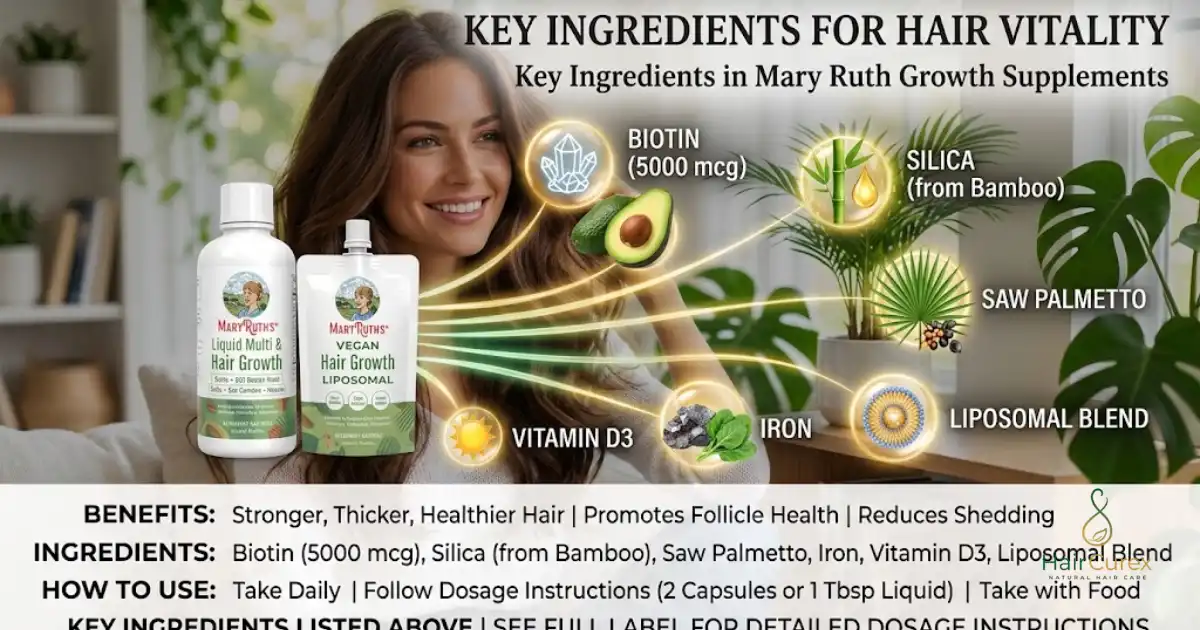
Ingredients make or break any hair supplement, so let’s dig into what actually goes into these formulas. MaryRuth hair growth supplements typically combine several well-researched nutrients rather than relying on a single “hero” ingredient.
Biotin for hair growth shows up in nearly every formula, and for good reason. Biotin, also called vitamin B7, plays a direct role in producing keratin, the protein that makes up your hair strands. A biotin deficiency has been linked to hair thinning and brittle nails in multiple studies, which is why it’s become something of a gold-standard ingredient in this category.
Vitamin B12 for hair supports red blood cell production, and those cells carry oxygen to your scalp and follicles. Without enough oxygen delivery, follicles simply can’t perform at their best.
Vitamin D for hair health is another major player. Research has connected low vitamin D levels to certain types of hair loss, including alopecia areata. Since a huge percentage of Americans are vitamin D deficient, especially during winter months, this ingredient alone could explain some visible improvement for many users.
Zinc for healthy hair helps repair hair tissue and keeps the oil glands around your follicles working properly. Zinc deficiency has been directly tied to hair shedding in clinical research, making it a smart addition to any formula focused on hair-supporting nutrients.
Folate and hair growth go hand in hand as well, since folate assists in cell division, a process your follicles rely on constantly to produce new hair.
Collagen for hair rounds out many formulas by supplying amino acids that support the structural protein network inside each strand.
| Ingredient | Primary Function | Hair Benefit |
|---|---|---|
| Biotin | Supports keratin production | Stronger, less brittle strands |
| Vitamin B12 | Boosts oxygen delivery via red blood cells | Nourished, active follicles |
| Vitamin D | Regulates follicle cycling | May reduce shedding |
| Zinc | Repairs tissue, balances scalp oils | Healthier scalp environment |
| Folate | Supports cell division | Faster follicle renewal |
| Collagen | Supplies structural amino acids | Improved strand strength |
Together, these essential vitamins for hair create a formula that addresses multiple angles of hair health at once, rather than betting everything on a single nutrient.
Benefits of MaryRuth Hair Growth
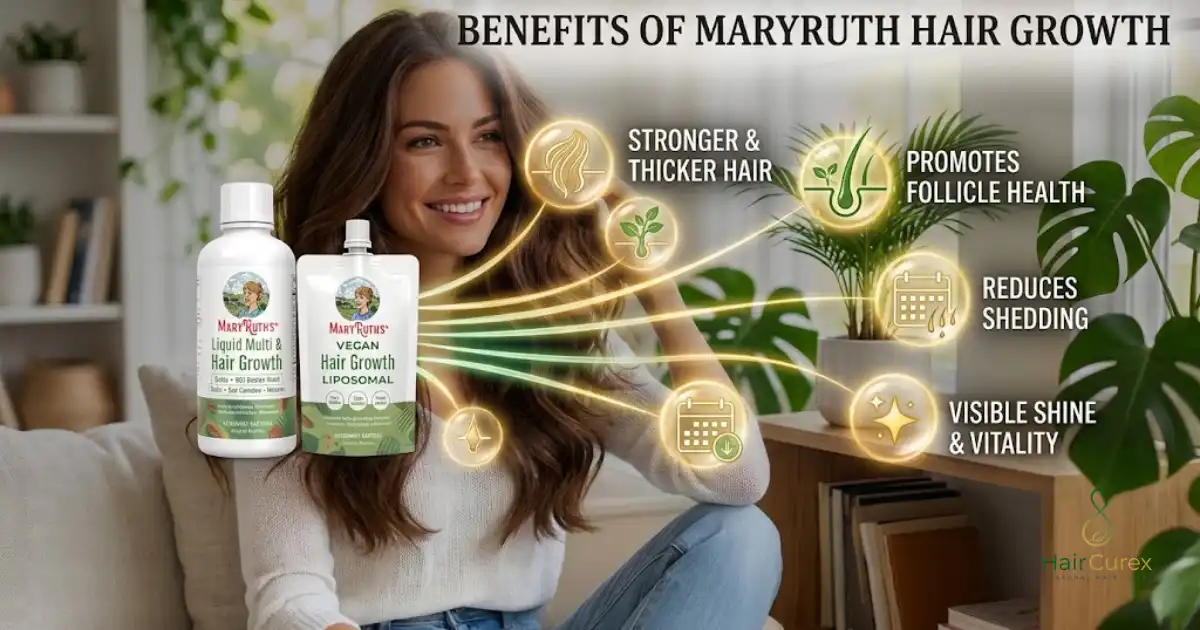
So, what can you actually expect from consistent use? The benefits of MaryRuth hair growth center around long-term nourishment rather than quick fixes.
Many users report stronger hair that snaps and breaks less during brushing or styling. Because biotin and collagen both contribute to strand structure, this makes sense from a science standpoint. Others notice their hair simply looks healthier and shinier over time, which often comes down to improved nutrient delivery to the scalp.
Scalp health tends to improve too, since ingredients like zinc help balance oil production. A well-balanced scalp creates a better environment for follicles to thrive, which supports thinning hair recovery over the long run. And because the supplements typically come in easy formats like gummies or drops, sticking with a routine becomes far less of a hassle than remembering to apply topical treatments twice a day.
There’s also a mental health angle worth mentioning. Hair loss can hit self-esteem hard. Taking a proactive step, even a small one like adding a daily hair supplement for growth, can genuinely help people feel more in control of a frustrating situation.
Does MaryRuth Hair Growth Really Work?
This is the question everyone actually wants answered: does MaryRuth hair growth work, or is it just clever marketing? The honest answer sits somewhere in the middle.
Supplements work best when they’re correcting an actual deficiency. If your body already gets plenty of biotin, zinc, and vitamin D through your diet, adding more probably won’t produce dramatic results. But if you’re running low on any of those nutrients, which is incredibly common in the average American diet, then a targeted formula like this one could genuinely move the needle.
MaryRuth hair growth reviews online tend to reflect that mixed reality. Some customers rave about thicker, fuller-looking hair after a few months. Others say they noticed only minor changes. One reviewer put it simply: “It’s not magic, but my hair definitely feels stronger than before.” That kind of realistic feedback tells you more than the five-star gushing reviews ever could.
MaryRuth hair growth results depend heavily on consistency, underlying health conditions, genetics, and overall diet. A supplement can support the process, but it can’t override genetics or fix an unrelated medical condition causing hair loss. If shedding is severe or sudden, a conversation with a doctor should always come before (or alongside) any supplement routine.
How to Use MaryRuth Hair Growth
Getting the most out of any supplement comes down to using it correctly and sticking with it. So how to use MaryRuth hair vitamins the right way?
Most formulas recommend taking the product once daily, ideally with food to improve absorption and reduce the chance of an upset stomach. Gummies are usually chewed, while liquid drops can go straight under the tongue or mixed into a drink. Always check the label on your specific product, since MaryRuth hair growth dosage can vary slightly between formulations.
Consistency matters more than timing. Taking it at breakfast every day works just as well as taking it at night, as long as you actually remember to take it. Pairing the habit with something you already do daily, like brushing your teeth or making coffee, makes it far easier to stay on track.
Pregnant or nursing individuals, along with anyone managing a medical condition, should talk to a healthcare provider before starting. This isn’t just a legal disclaimer; certain vitamins in high doses can interact with medications or existing health issues.
How Long Does MaryRuth Hair Growth Take to Work?
Patience is the name of the game here. So, how long does hair growth supplements take to show results in general? Hair grows through cycles, and each strand spends months in a resting phase before it even starts growing again. Because of this natural rhythm, visible change rarely happens overnight.
Most users start noticing subtle differences, like less shedding or slightly stronger strands, around the two to three month mark. More noticeable thickness or length usually takes four to six months of consistent use. This timeline lines up with the natural hair growth cycle, which typically spans two to three months just for the resting phase alone before regrowth kicks in.
| Timeframe | What You Might Notice |
|---|---|
| 1 month | Minimal visible change; nutrients are still building up |
| 2–3 months | Reduced shedding, slightly stronger texture |
| 4–6 months | Noticeable thickness or improved shine |
| 6+ months | Fuller results, assuming consistent daily use |
Diet, stress levels, sleep quality, and genetics all influence this timeline. Someone eating a nutrient-poor diet before starting the supplement might see faster, more dramatic change than someone who was already covering their nutritional bases.
MaryRuth Hair Growth Side Effects and Safety
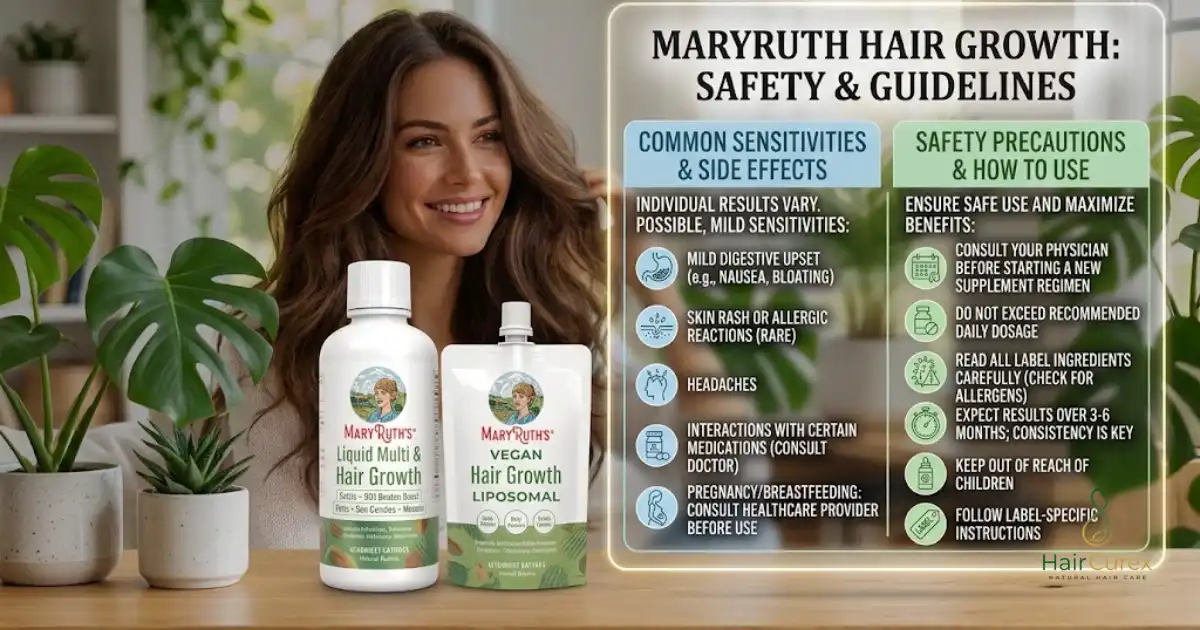
No conversation about supplements is complete without addressing safety. MaryRuth hair vitamins side effects are generally mild when the product is used as directed. Some people report minor digestive discomfort, especially when taking supplements on an empty stomach. Others notice nothing at all beyond the intended hair benefits.
High doses of biotin, in particular, deserve a mention. Biotin can interfere with certain lab tests, including thyroid panels and heart-related bloodwork, leading to inaccurate results. If you’re due for bloodwork, it’s smart to mention any biotin supplementation to your doctor ahead of time.
Anyone with known allergies should always review the ingredient label carefully, even though MaryRuth’s Organics markets many of its products as free from common allergens like gluten, dairy, and soy. As with any supplement, more isn’t automatically better; sticking to the recommended dosage keeps things safe and effective.
Who Should Try MaryRuth Hair Growth?
MaryRuth hair support products tend to work best for people dealing with diet-related nutrient gaps, mild thinning hair, postpartum shedding, or general hair health maintenance. If you’ve noticed weak hair, brittle hair, or dry, damaged strands that seem to be getting worse rather than better, a nutrient-focused approach like this one could genuinely help fill in the missing pieces.
That said, this isn’t the right fit for everyone. Someone experiencing sudden, severe, or patchy hair loss should see a dermatologist first, since that pattern often points to an underlying medical condition rather than a simple nutrient deficiency. Supplements work best as a support system, not a replacement for proper medical diagnosis when something more serious is going on.
MaryRuth Hair Growth vs. Other Hair Growth Supplements
The best MaryRuth supplement for hair stands out in a crowded market, but how does it actually stack up against competitors? Let’s compare it against a couple of well-known alternatives.
| Feature | MaryRuth Hair Growth | Nutrafol | Viviscal |
|---|---|---|---|
| Format | Gummies, liquid drops, capsules | Capsules | Capsules |
| Key Ingredients | Biotin, B12, vitamin D, zinc, collagen | Saw palmetto, ashwagandha, biotin | Marine complex, biotin, vitamin C |
| Allergen-Friendly | Mostly gluten-free, dairy-free, soy-free | Contains some allergens | Contains shellfish-derived ingredients |
| Price Range | Moderate | Higher | Moderate to higher |
| Vegan Options | Yes, several products | Limited | No |
MaryRuth’s edge really comes down to accessibility and formulation transparency. Vegan-friendly options and multiple product formats mean more people can find something that fits their needs, whether they hate swallowing pills or need to avoid animal-derived ingredients entirely. Competitors like Nutrafol lean more heavily into adaptogens and hormone-support ingredients, which might appeal to someone whose hair loss is linked to stress or hormonal shifts specifically.
Tips to Support Healthy Hair Growth Naturally
Supplements work best as one piece of a bigger puzzle, so let’s talk about what else supports stronger, healthier hair alongside a supplement routine.
Diet plays a massive role. Protein-rich foods, healthy fats, and plenty of leafy greens give your body the raw materials it needs beyond what any pill can provide. Staying hydrated keeps your scalp from becoming dry and flaky, which can otherwise disrupt healthy follicle function.
Scalp care deserves attention too. Gentle massage increases blood flow to hair follicles, and using a sulfate-free shampoo helps preserve natural oils instead of stripping them away. Reducing heat styling, or at least using a heat protectant, prevents unnecessary damage to strands that are already trying to recover.
Sleep and stress management matter more than most people realize. Chronic stress has been directly linked to a type of temporary hair shedding called telogen effluvium. Prioritizing seven to eight hours of sleep, along with stress-reduction habits like exercise or meditation, supports hair health from a completely different angle than any supplement ever could.
Frequently Asked Questions About MaryRuth Hair Growth
Is MaryRuth Hair Growth safe for daily use?
Yes, when taken as directed on the label. Most formulas are designed for daily, long-term use, though anyone with underlying health conditions should check with a doctor first.
Can men use MaryRuth Hair Growth products?
Absolutely. While marketing sometimes leans toward a female audience, the ingredients themselves support hair health in anyone, regardless of gender.
Is MaryRuth Hair Growth vegan and gluten-free?
Many products in the lineup are vegan, gluten-free, and free from common allergens, though it’s always worth double-checking the specific product label since formulations can vary.
How does MaryRuth compare to prescription hair loss treatments?
Supplements address nutritional gaps and support overall hair health, while prescription treatments like minoxidil or finasteride target hair loss through different biological pathways. They can sometimes be used together, but that decision should involve a doctor.
Where can I buy MaryRuth Hair Growth?
Products are available directly through MaryRuth’s Organics website, along with major retailers like Amazon, Target, and Walmart.
Conclusion
MaryRuth hair growth supplements offer a nutrient-focused approach to supporting stronger, healthier hair from the inside out. With ingredients like biotin, vitamin B12, vitamin D, zinc, and collagen, the formula targets several of the most common nutritional gaps linked to thinning hair and hair shedding. Results won’t happen overnight, and genetics still plays a role no supplement can override, but for many people dealing with diet-related deficiencies, consistent use over several months can lead to noticeably stronger, fuller-looking hair.
Pair it with a healthy diet, good scalp care, and stress management, and you’re giving your hair the best possible shot at thriving. As always, check with a healthcare provider before starting any new supplement, especially if you’re pregnant, nursing, or managing an existing health condition.