
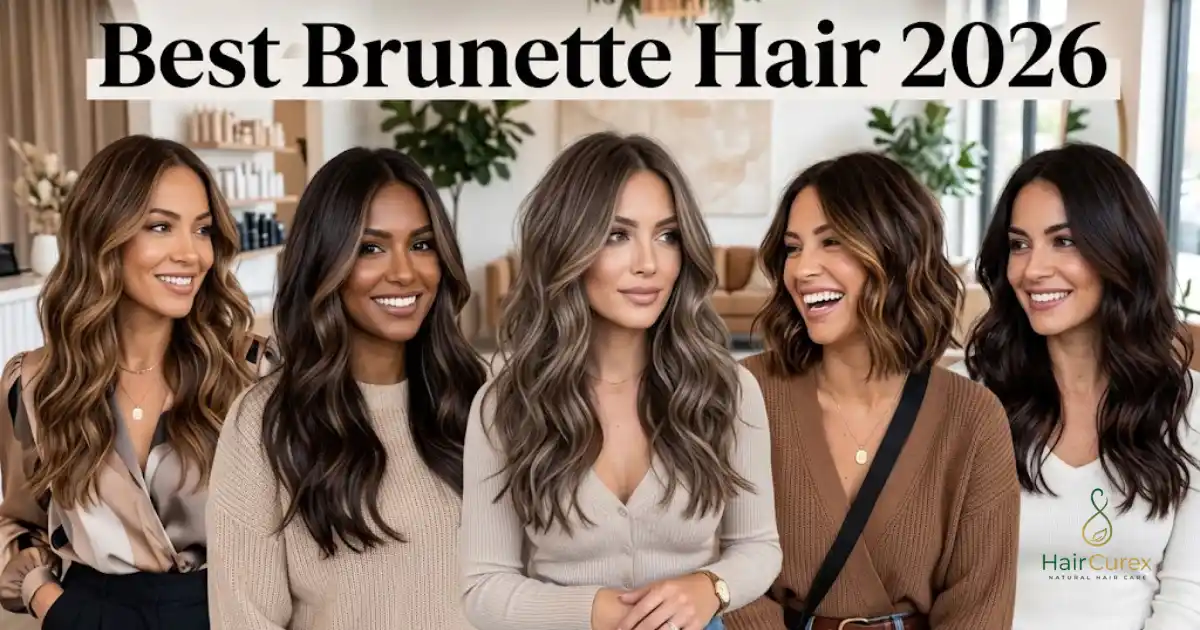
Brunette hair means hair that is brown in color. It can be light brown or dark brown. Many people around the world have this natural hair color. Do you dream of rich, beautiful brown hair? Brunette hair can make you look elegant and warm. It might be the perfect choice for your next look.
Walk into any salon in America and ask for “something brunette,” and you’ll watch the stylist’s eyes light up. Why? Because brunette hair isn’t just one color. It’s a whole universe of shades, tones, and finishes that can be tailored to almost anyone. Whether you’re chasing a rich espresso, a soft caramel glow, or a cool ash finish, brunette hair color has a way of looking both natural and put-together at the same time. That’s rare in the beauty world.
This guide breaks down everything you need to know about brunette hair: the shades, the trends, the maintenance routine, and how to pick the right one for your skin tone. No fluff, no filler. Just the real information you came here for.
What Is Brunette Hair?
Brunette hair’s, at its core, is brown hair. But calling it “just brown” sells it short. The word comes from the French brun, meaning brown, and it’s been used in English since the 1700s to describe hair (and sometimes eyes) with a brown hue. Natural brunette hair ranges from a light, honeyed brown all the way down to a deep, almost-black shade that catches golden light in the sun.
Here’s where it gets interesting. Brunette isn’t a single note on the color wheel. It’s more like a chord, made up of multiple tones layered together. A single head of natural brunette hair might contain strands of chestnut, mocha, and even a few golden highlights, all blending into what looks like one uniform color from a distance. That’s part of why brunette hair color feels so lived-in and effortless compared to flatter, single-process colors.
Compared to blonde hair, brunette carries more pigment and tends to look richer under most lighting. Compared to black hair, brunette has more warmth and dimension, since black hair absorbs light rather than reflecting it. In the United States, brunette remains one of the most common natural hair colors, and it’s consistently one of the most requested colors at salons nationwide. There’s a reason for that: rich brunette hair photographs beautifully, ages gracefully, and rarely goes out of style.
What Are the Different Shades of Brunette Hair?
If you think brunette hair shades start and end with “light” and “dark,” think again. Colorists work with a whole spectrum, and knowing the names helps you communicate exactly what you want in your next appointment.
| Brunette Shade | Description | Best For |
|---|---|---|
| Chestnut brunette hair | A reddish-brown shade with warm, nutty undertones | Warm skin tones, fall and winter looks |
| Chocolate brunette hair | Deep, glossy brown with a smooth, candy-like finish | Most skin tones, especially medium and olive |
| Espresso brunette hair | Nearly black with a brown base, very rich and intense | Cool or deep skin tones |
| Caramel brunette hair | Warm brown with golden, honey-like streaks | Fair to medium skin with warm undertones |
| Ash brunette hair | Cool-toned brown with gray or smoky undertones | Cool skin tones, fair complexions |
| Golden brunette hair | Brown with sunny, yellow-gold undertones | Warm and olive skin tones |
| Mocha brunette hair | A blend of chocolate and caramel, warm but muted | Medium skin tones |
| Mushroom brunette hair | Cool, ashy brown with a slight taupe or gray cast | Cool or neutral skin tones |
| Honey brunette hair | Light brown with amber and gold flecks | Fair to medium, warm undertones |
Each of these brunette hair shades has its own personality. Chestnut leans fiery and warm. Ash brunette hair feels moody and modern. Mushroom brunette hair, a newer trend, has become popular for its soft, almost pastel-adjacent quality despite technically being a brown shade. The beauty of this range is that there’s a brunette shade for nearly every skin tone, eye color, and personal style.
Best Brunette Hair Color Ideas to Try
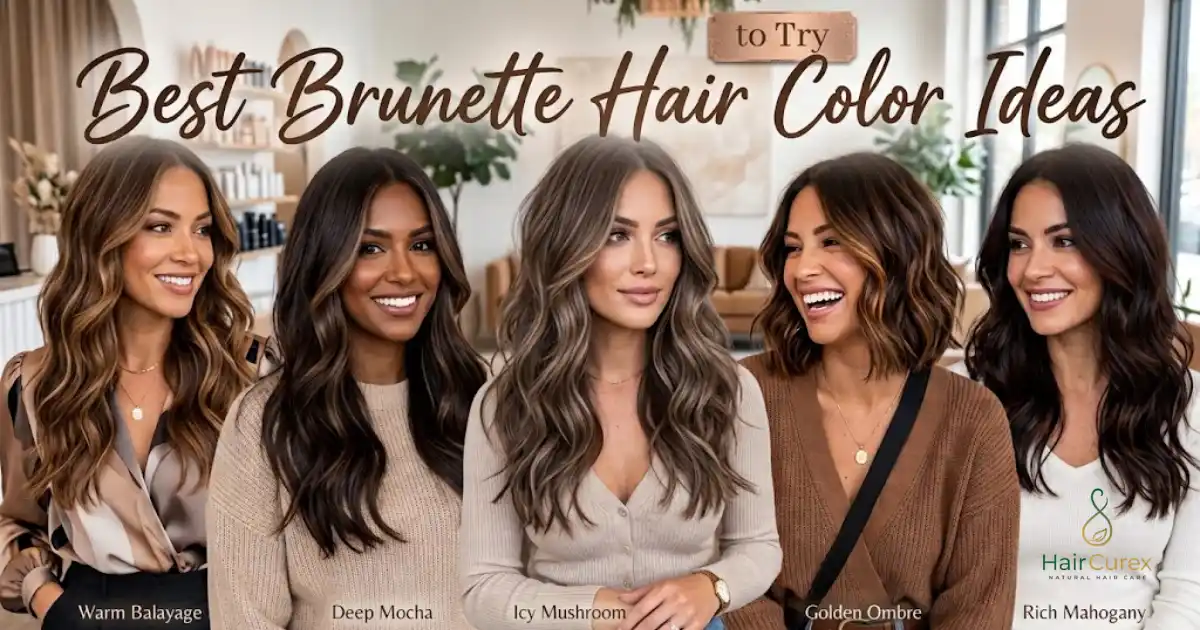
So you’ve decided brunette is the way to go. Now comes the fun part: choosing how to wear it. Brunette hair color ideas have evolved way beyond a flat, single shade applied root to tip. Today’s most requested looks build in dimension, movement, and light.
Brunette balayage has become the go-to technique for anyone wanting natural-looking depth. Unlike traditional foils, balayage is hand-painted, which creates a soft, sun-kissed gradient instead of harsh lines. It’s especially popular paired with a chocolate brunette base and caramel brunette hair accents woven through the mid-lengths and ends.
Brunette highlights offer a slightly bolder statement. Face-framing highlights in caramel or golden brunette hair tones can brighten your complexion and draw attention to your features, while all-over highlights add texture and shine to otherwise flat brown hair.
Brunette ombre takes things a step further with a deliberate, graduated shift from dark roots to lighter ends. A classic version starts with espresso brunette hair at the crown and fades into honey or caramel brunette hair by the tips.
Then there’s the “money piece,” a face-framing highlight technique that’s become one of the most requested brunette hair color ideas among younger clients. It concentrates lighter, brighter color right around the face, creating an instant brightening effect without touching the rest of the hair.
As one veteran colorist put it, “Dimension is everything. Flat color reads as artificial, but when you build in three or four tones, it looks like the sun did the work.” That’s the secret behind why dimensional brunette hair consistently outperforms flat, one-note color in terms of longevity and natural appearance.
Light Brunette vs. Dark Brunette Hair
Choosing between light brunette hair and dark brunette hair comes down to more than just personal taste. It affects your maintenance schedule, how your skin tone reads, and even how your hair behaves day to day.
| Factor | Light Brunette Hair | Dark Brunette Hair |
|---|---|---|
| Typical shades | Honey, caramel, golden brown | Espresso, chocolate, near-black brown |
| Maintenance level | Higher, roots and fading show faster | Lower, regrowth blends more easily |
| Best skin tones | Fair to medium, warm undertones | Medium to deep, cool or neutral undertones |
| Styling versatility | Bright, easy to add highlights | Sleek, dramatic, glossy finish |
| Sun fading risk | Moderate to high | Lower, but can turn brassy |
Light brunette hair tends to soften facial features and works beautifully for spring and summer. It also pairs well with lighter eye colors like hazel or green. Dark brunette hair, on the other hand, creates striking contrast against fair skin and blends seamlessly on deeper skin tones. It also photographs incredibly well in artificial lighting, which is part of why so many people request it for special events.
Neither is objectively “better.” It really depends on your lifestyle. If you don’t want to visit the salon every four to six weeks, dark brunette hair is the lower-maintenance route since root regrowth is far less noticeable. If you love experimenting and don’t mind more frequent touch-ups, light brunette hair gives you more room to play.
Warm, Cool, and Neutral Brunette Hair Tones
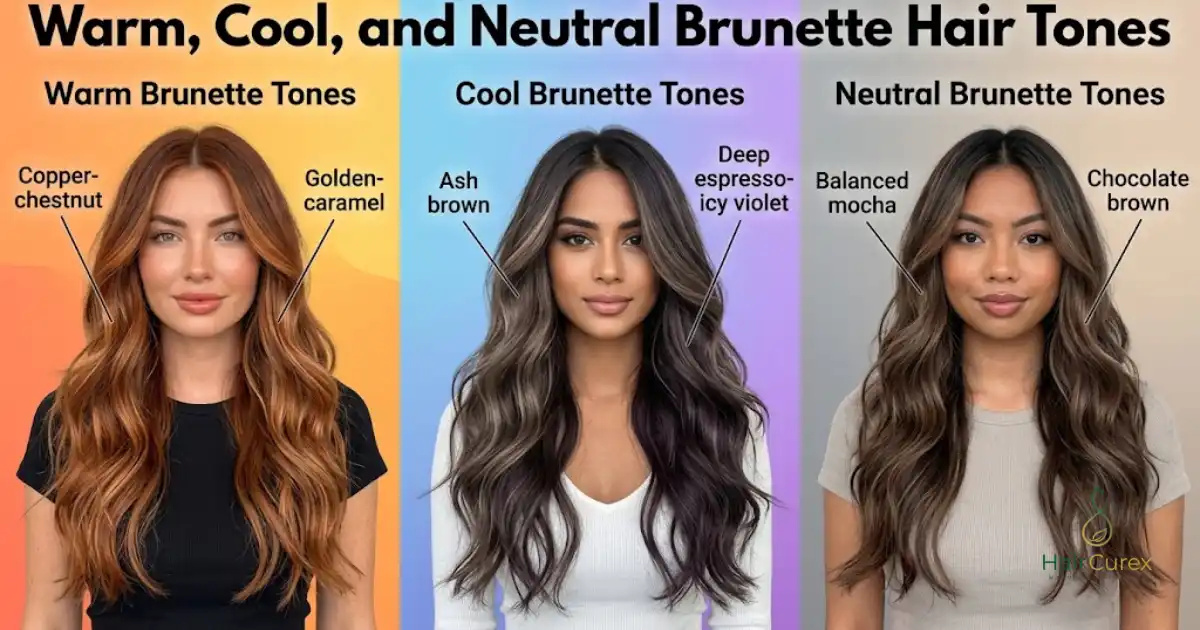
Undertone matters just as much as the shade itself. This is where a lot of people get tripped up when picking brunette hair color, so let’s break it down simply.
Warm brunette hair carries gold, red, or copper undertones. Think caramel brunette hair, chestnut brunette hair, or golden brunette hair. These shades bring out a sun-kissed glow and tend to flatter warmer skin tones with yellow or golden undertones.
Cool brunette hair leans toward ash, blue, or violet undertones. Ash brunette hair and mushroom brunette hair fall into this category. These shades neutralize any unwanted redness or brassiness and suit cooler skin tones with pink or blue undertones.
Neutral brunette hair sits right in the middle, balancing warm and cool in equal measure. Mocha brunette hair is a great example since it blends golden warmth with a muted, grounded base. Neutral tones tend to be the most universally flattering, which is why they’re often recommended for first-time brunettes.
To figure out your natural undertone at home, check the veins on your wrist. If they look blue or purple, you likely have cool undertones. If they look green, you’re probably warm. If you genuinely can’t tell, you likely fall into the neutral category, and honestly, that’s good news since it means nearly every brunette shade will work for you.
How to Choose the Best Brunette Shade for Your Skin Tone
Picking the best brunette hair color for your skin tone isn’t complicated once you understand the basic matching principles that colorists use every day.
Brunette hair color for fair skin tends to work best in lighter, warmer shades like honey brunette hair or caramel brunette hair. Going too dark or too ashy can wash out a fair complexion, making it look flat instead of glowing.
Brunette hair color for medium skin has the most flexibility of any skin tone. Medium brunette hair in shades like mocha, chestnut, or chocolate tends to look especially rich and balanced against olive or golden-medium complexions.
Brunette hair color for dark skin looks stunning in deep, glossy tones like espresso brunette hair or rich chocolate brown hair. These darker shades create a beautiful, high-contrast shine that really pops against deeper skin.
Brunette hair color for warm skin tones should lean into golden, caramel, or chestnut territory to complement natural yellow or peachy undertones. Brunette hair color for cool skin tones, meanwhile, looks best in ash brunette hair or mushroom brunette hair, since these tones counteract any pink or red undertones in the skin rather than clashing with them.
A simple trick many stylists use: hold a piece of gold jewelry and a piece of silver jewelry up to your face. If gold makes your skin glow, you’re warm-toned and should lean toward golden or caramel brunette hair. If silver looks better, you’re cool-toned and ash or mushroom brunette hair will suit you more. If both look equally good, you’re neutral, and almost any brunette shade will work beautifully.
Brunette Hair Ideas for Different Hair Types
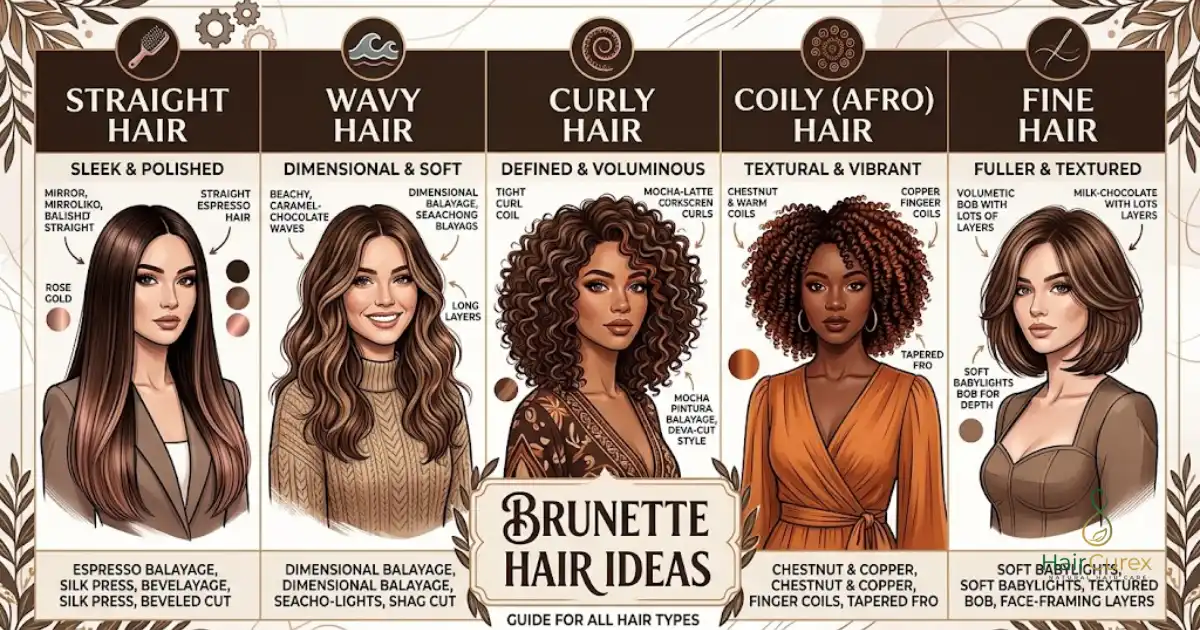
Brunette hair color doesn’t look the same on every head, and that’s actually a good thing. The way light bounces off straight strands versus curly coils changes how a color reads.
On straight hair, brunette hair color tends to look sleek and glossy, since light travels evenly down the hair shaft. Glossy brunette hair with subtle dimension, like a chocolate base with soft caramel brunette hair pieces, looks especially luxurious on straight textures.
On wavy hair, brunette balayage really shines because the natural bends in the hair catch the lighter pieces beautifully, creating movement without needing much styling effort.
On curly hair, brunette highlights placed strategically can define individual curls and add depth that might otherwise get lost in the texture. Warm brunette hair tones, like golden or honey brunette hair, tend to look especially vibrant against curly patterns since the curls create natural light and shadow play.
For fine hair, sticking to fewer, more subtle tonal variations helps avoid looking patchy, since fine strands show less color separation. For thick hair, you can go bolder with brunette ombre or heavier highlights, since there’s more surface area to showcase the transition.
How to Get Brunette Hair at Home or in a Salon
Once you’ve settled on your dream shade, the next question is where to actually get it done. Both paths, home and salon, have real trade-offs worth knowing about before you commit.
At-home brunette hair dye kits have improved a lot in recent years. They’re budget-friendly, convenient, and fine for simple, single-process color, especially if you’re going darker or staying close to your natural shade. Look for a kit that specifically states the shade name you want, whether that’s chocolate brunette, ash brunette hair, or chestnut brunette hair, and always do a strand test first. The biggest risk with DIY coloring is uneven application or unexpected brassiness, particularly if you’re trying to lighten your hair rather than darken it.
Salon coloring is the better choice for anything involving lightening, balayage, ombre, or highlights, since these techniques require precision that’s genuinely hard to replicate at home. A professional colorist can also custom-mix your exact shade, factoring in your natural hair color, previous treatments, and skin tone, something a boxed dye simply can’t do.
| Method | Average Cost (USA) | Best For | Risk Level |
|---|---|---|---|
| At-home dye kit | $10–$25 | Simple all-over color, root touch-ups | Moderate, especially for lightening |
| Salon single-process | $70–$150 | Precise, even color with expert blending | Low |
| Salon balayage/highlights | $150–$350 | Dimensional, natural-looking brunette hair | Low |
If you’re brand new to brunette hair or making a dramatic change from a very different natural color, a salon consultation is worth the investment. Colorists can also spot potential issues, like previous chemical treatments that might react unpredictably with new dye, before they become expensive mistakes.
How to Maintain Brunette Hair Color
Getting the shade is only half the job. Keeping brunette hair color looking fresh and glossy takes a little bit of ongoing care, but nothing overly complicated.
Start with a color-safe shampoo and conditioner. Regular shampoos can strip color molecules faster than you’d expect, leaving brunette hair looking dull within weeks. Sulfate-free formulas are gentler and help lock in color for longer. Washing brunette hair two to three times a week, rather than daily, also helps preserve the color, since over-washing accelerates fading no matter how expensive your dye job was.
Sun exposure is one of the sneakiest culprits behind color fade. UV rays can lighten and even turn brunette hair color brassy over time, especially on warmer shades like caramel brunette hair or golden brunette hair. A leave-in product with UV protection, or simply a hat on sunny days, goes a long way.
Color-depositing conditioners and glosses are another underrated tool. These products refresh the pigment between salon visits, keeping rich brunette hair looking vibrant instead of gradually fading toward a washed-out, mousy brown. Glossing treatments in particular are popular for maintaining that glossy brunette hair shine that makes color look freshly done.
A few common mistakes speed up fading faster than anything else: washing hair in extremely hot water, skipping heat protectant before styling, and using clarifying shampoos too often. Avoid these, and your brunette hair color maintenance routine becomes fairly simple.
How Long Does Brunette Hair Color Last?
This depends heavily on the type of color used. Permanent brunette hair color, which is the most common choice for covering gray or making a long-term change, typically lasts until new growth becomes noticeable, usually around four to eight weeks before a root touch-up is needed. Semi-permanent brunette hair color fades gradually over roughly four to six weeks, since it doesn’t penetrate the hair shaft as deeply. Demi-permanent color sits somewhere in between, lasting around six to eight weeks with a gentler, more natural fade.
Several factors influence how long your brunette hair color actually holds up. Hair porosity plays a huge role, since more porous hair (often from previous coloring or heat damage) absorbs and releases pigment faster than healthy, less porous hair. Wash frequency matters too, as does sun exposure, water temperature, and the products used at home.
Signs it’s time for a touch-up usually show up gradually: visible root regrowth, color that’s turned duller or slightly brassy, or a loss of the original dimension you had right after your appointment. Most people find that scheduling a root touch-up every four to six weeks, paired with a gloss treatment in between, keeps brunette hair looking consistently rich and camera-ready.
Brunette Hair vs. Brown Hair: What’s the Difference?
Here’s a question that trips up more people than you’d think: is brunette hair just a fancier word for brown hair, or is there an actual difference?
Technically speaking, brunette specifically refers to hair (traditionally on people with lighter skin, though the term has broadened significantly), while “brown hair” is a more general, universal descriptor that applies to any brown shade regardless of context. In everyday American usage, though, the two terms are used almost interchangeably. If you tell a colorist you want “brunette hair” or “brown hair color,” you’ll likely get the same conversation about shades, tones, and undertones either way.
The term “brunette” does carry a slightly more polished, salon-friendly connotation. It’s the word you’ll see used in beauty magazines, color charts, and professional consultations, while “brown hair” tends to show up more in casual, everyday conversation. Functionally, though, there’s no meaningful technical difference between the two when it comes to actually choosing and achieving your color.
Frequently Asked Questions About Brunette Hair
Is brunette hair natural or dyed?
Both. Brunette is a naturally occurring hair color, one of the most common in the world, but it’s also one of the most frequently requested dye colors, since it’s so versatile and low-maintenance compared to blonde.
What’s the most popular brunette shade in the USA?
Chocolate brunette hair and chestnut brunette hair consistently rank among the most requested shades at American salons, thanks to their warm, universally flattering tones.
Does brunette hair suit every skin tone?
Yes, largely because there’s such a wide range of brunette hair shades. With options spanning warm, cool, and neutral tones, there’s almost always a brunette shade that complements any given skin tone.
Can brunette hair turn blonde without damage?
Going from brunette to blonde typically requires lightening, which does involve some level of chemical processing. A skilled colorist can minimize damage using techniques like balayage and deep-conditioning treatments, but some degree of care and recovery time is usually needed.
How do I keep brunette hair from looking dull?
Regular gloss treatments, color-safe shampoo, and limiting hot tool damage all help maintain that glossy brunette hair finish. UV protection also prevents the dullness that comes from sun-related fading.
Is brunette hair high or low maintenance?
It depends on the shade. Dark brunette hair is generally low maintenance since regrowth blends naturally. Light brunette hair color, especially with highlights, tends to require more frequent salon visits.
What’s the difference between brunette and dark brown?
Dark brown is simply one shade within the broader brunette hair category. Brunette covers everything from light honey tones to the deepest espresso, while “dark brown” refers to just the deeper end of that spectrum.
Conclusion
Brunette hair earns its reputation as one of the most timeless, adaptable hair colors out there, and it’s easy to see why. From soft honey brunette hair to deep espresso brunette hair, there’s a shade suited to nearly every skin tone, hair type, and lifestyle. The key is understanding your undertone, choosing a shade that complements it, and committing to a simple maintenance routine that keeps the color looking rich and glossy between salon visits.
Whether you’re considering a subtle brunette balayage, bold brunette highlights, or a full brunette hair transformation, there’s no wrong way to explore this color family. If you’re ready to make a change, book a consultation with a trusted colorist, bring along a few reference photos of your favorite brunette hair color ideas, and let a professional help you find the exact shade that feels like the best version of you.