


The wolf cut is usually shown on curly hair, but wavy hair might be its most natural match. The cut’s choppy layers and shaggy fringe are built to move, and waves already have the bend and texture the style needs. If your hair sits somewhere between straight and curly, a wolf cut for wavy hair gives you volume at the crown, movement through the ends, and a style that looks better slightly messy than perfectly neat.
Quick answer: Yes, the wolf cut works very well on wavy hair (types 2A to 2C). Ask for heavy layering through the crown, a textured fringe, and length kept at the back. Wavy wolf cuts need less daily styling than curly ones: scrunch in a light mousse or sea-salt spray on damp hair and air-dry, and refresh with water on day two.
What Is a Wolf Cut, and Why Does It Suit Waves?
The wolf cut mixes two retro cuts: the volume and layers of a shag haircut on top, and the longer, tapered length of a mullet at the back. On wavy hair, the short crown layers lift the roots where waves usually fall flat, while the longer back sections let your natural S-pattern show. Because the shape comes from the cut rather than from styling, it is one of the lowest-effort ways to make wavy hair look deliberately styled. If your hair leans curlier, see our wolf cut for curly hair guide instead.

Wolf Cut for Wavy Hair by Wave Type
- 2A (loose waves): Your pattern is the easiest to flatten, so ask for shorter, more dramatic crown layers and keep the overall length shorter (collarbone or above). Texture spray is your best friend for keeping the shape from falling by noon.
- 2B (defined waves): The sweet spot for this cut. Medium layers keep your S-waves bouncy without creating a triangle shape. Our 2B hair guide covers the routine side in more depth.
- 2C (deep waves): Your waves are almost curls, so ask for weight removal at the ends and layers that start lower, or the top can puff out. A light cream instead of mousse usually controls frizz better for you.
Not sure where you fall? Our curl type chart shows how to identify your pattern in a few minutes.
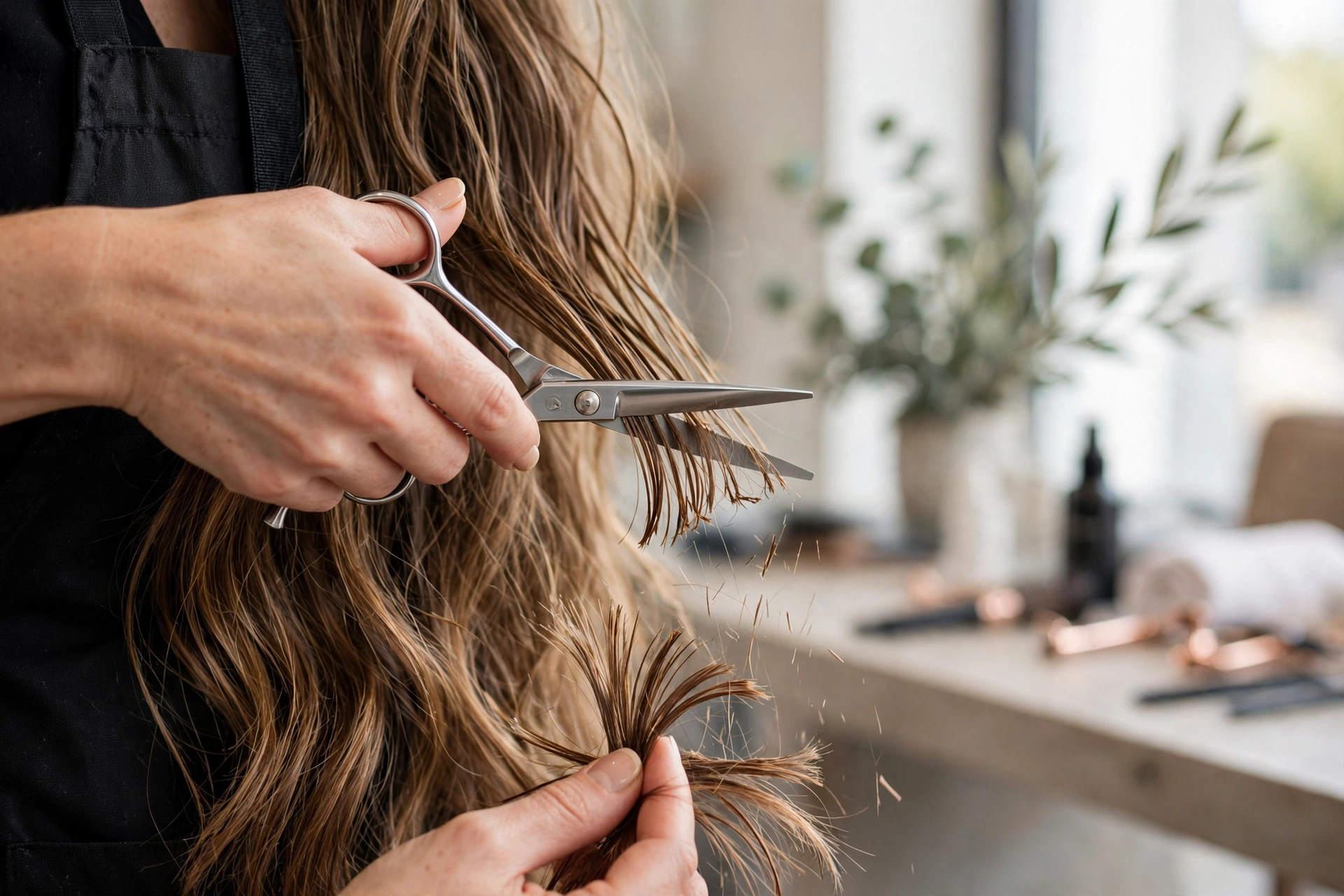
How to Ask Your Stylist for a Wavy Wolf Cut
- Bring photos of wolf cuts on wavy hair, not curly hair. The same cut name looks very different across textures.
- Ask for short, blended layers at the crown and longer length through the back: that contrast is what makes it a wolf cut rather than a standard layered cut.
- Choose your fringe. Curtain bangs are the classic pairing and grow out gracefully; a wispy full fringe gives more of the edgy look but needs trimming every few weeks.
- Ask for texture on the ends (point-cutting or a razor finish) so the layers look piecey rather than blunt.
- Discuss your part. Wolf cuts are usually styled with a center or slightly off-center part. If you always wear a deep side part, tell your stylist so the layers fall correctly.

How to Style a Wolf Cut for Wavy Hair
- Start on damp, detangled hair. Work a coin-sized amount of lightweight mousse or a few spritzes of sea-salt spray through the mid-lengths and ends. Heavy oils and butters weigh waves down, a point we also make in our wavy hair guide.
- Scrunch upward in sections to encourage the wave pattern.
- Flip your head and gently scrunch the crown layers with almost no product: they need lift, not weight.
- Air-dry if you can, and keep your hands off while it dries. If you diffuse, use low heat and low airflow, hovering at the roots first.
- Once fully dry, break up any crunch with dry hands and shake the roots for volume.
On day two and three, mist the hair with water, re-scrunch the flattened sections, and let it dry again. The layers usually spring back without a full restyle.

Wavy Wolf Cut Maintenance and Grow-Out
- Trims: every 6 to 8 weeks to keep the crown layers from growing into the back length and losing the wolf shape.
- Fringe trims: every 3 to 4 weeks if you wear a full fringe; curtain bangs can go longer.
- Clarify monthly: texture sprays and salt sprays build up fast. A monthly wash with a detox shampoo keeps waves from going limp; our detox shampoo guide explains how to pick one.
- Grow-out: this is one of the most forgiving cuts to grow out, because the layers blend into a shag and then into a normal layered cut. Nothing needs urgent fixing if you miss a trim.
Wolf Cut vs Shag vs Butterfly Cut: The Quick Comparison
| Cut | Where the layers sit | Length at the back | Best for | Upkeep |
|---|---|---|---|---|
| Wolf cut | Short and heavy at the crown, blending down | Kept long, tapered | Maximum crown volume and an edgy finish on waves | Trim every 6-8 weeks |
| Shag | Layers distributed all over | Medium, more even with the top | A softer, rock-inspired texture all round | Trim every 8-10 weeks |
| Butterfly cut | Long layers with face-framing pieces | Almost all length kept | Faking a shorter look without losing length | Trim every 10-12 weeks |
In short, a wolf cut for wavy hair keeps the shag’s movement but adds more crown volume and a bolder fringe.
Wolf Cut Ideas for Wavy Hair by Length
Short (chin to jaw length): the boldest version. Crown layers do most of the work, the back stays short and piecey, and the whole cut reads like a modern shag-bob. Best on 2B and 2C waves, which have enough pattern to hold the shape without daily heat styling.
Medium (shoulder to collarbone): the most requested length, and the most forgiving. You get the full wolf silhouette, enough back length for the tapered finish, and the option to tie it up. If you are nervous about the cut, start here: it grows into an ordinary layered cut gracefully.
Long (below the shoulders): the softest take. The contrast between crown and back is gentler, the waves get room to form large S-shapes, and the fringe choice decides whether it reads edgy or romantic. Long versions need the most weight removal from the mid-lengths, or the top can look flat while the ends do all the waving.
How Much Does a Wavy Wolf Cut Cost?
Pricing for a wolf cut for wavy hair depends on your city and your stylist’s experience level. In most US salons expect roughly the price of a standard women’s haircut, and more at texture specialists in major cities. The appointment usually runs 45 to 75 minutes, because the layering is done in sections and often finished dry so the stylist can see how your waves actually fall. Budget for the fringe trims between full appointments too; many salons offer them free or cheap for existing clients, which makes the 6-to-8-week full trim cycle easier to keep.
Who Should Probably Skip a Wolf Cut
Three honest cases. First, very fine, low-density wavy hair: heavy crown layering can make the ends look sparse, and a softer layered cut usually flatters more. Second, anyone who wears their hair in a tight, sleek ponytail every day for work: the short crown layers will escape every time, and the fringe will not stay back. Third, anyone who hates trims: no cut punishes skipped maintenance faster, because the whole silhouette depends on the crown-to-back contrast that growth erases first. If one of these sounds like you, the butterfly cut in the table above gives a similar face-framing effect with far less commitment.
Frequently Asked Questions
Does a wolf cut for wavy hair work well?
Yes, wavy hair is one of the best textures for it. The cut’s short crown layers add lift where waves tend to fall flat, and the longer back sections show off the natural S-pattern. Types 2A to 2C can all wear it with small adjustments to layer length and product weight.
Will a wolf cut make my wavy hair look thinner?
It can if too much length is razored out of the ends, especially on fine 2A hair. Ask your stylist to keep the perimeter fuller and put the texture mainly in the crown layers. On medium and thick wavy hair, thinning is rarely an issue.
How do I style a wolf cut for wavy hair every day?
Most days need two minutes: mist flattened sections with water, scrunch, and let them dry. On wash days, scrunch a light mousse or salt spray into damp hair and air-dry. Avoid heavy oils and daily heat, which pull the wave out and fight the cut’s shape.
What face shapes suit a wolf cut for wavy hair?
Most of them. The crown volume balances round and heart-shaped faces, the fringe softens longer faces, and curtain bangs keep square jawlines from looking too sharp. The fringe choice matters more than the cut itself, so discuss it with your stylist.
How fast does a wolf cut grow out?
Hair grows about half an inch a month on average, so the strong wolf shape softens after roughly 6 to 8 weeks without a trim. The good news: it grows into a shag-like layered cut rather than an awkward in-between stage, which is why many people keep it for years with light maintenance.
Can I get a wolf cut if my waves are only at the ends?
Yes, and the cut can help: removing weight from the mid-lengths often lets waves form higher up the strand. Ask for layers that start around cheekbone level, and style with scrunching and a diffuser to coax the pattern upward.

Final Thoughts
A wolf cut for wavy hair works because it agrees with your texture instead of fighting it: lift where waves go flat, length where they want to flow, and a shape that survives bedhead. Get the layer placement right for your wave type, keep products light, and this is one of the easiest statement cuts you can maintain. For more wavy-hair care basics, start with our complete wavy hair guide.