


Quick answer: coconut oil for hair can be a useful, low-cost treatment for dry, coarse, damaged or frizzy hair, mainly as a pre-wash treatment or a small amount smoothed over the ends. It is not a cure for hair loss, and it is not right for everyone: very fine, easily weighed-down or very oily hair, acne-prone skin and protein-sensitive hair may react badly. Used in the right amount, washed out well and no more than a few times a week, it can leave hair softer, smoother and less prone to breakage from combing and washing.
Coconut oil has been used on hair for generations, long before it became a social-media staple. That history is useful, but it does not mean every claim about it is true. This guide separates what the evidence supports from what is only marketing: how coconut oil interacts with hair, which hair types tend to benefit, how to apply it step by step, how much to use, and when to skip it or choose a lighter oil instead.
How Coconut Oil for Hair Works
Coconut oil is rich in lauric acid, a medium-chain fatty acid with a small molecular size. That matters because, unlike many heavier oils that mainly sit on the surface, coconut oil can penetrate the hair shaft to some degree. Once inside, it can reduce the amount of water hair absorbs and loses during washing, which helps limit swelling, cuticle lifting and the repeated stress that leads to breakage.
The best-known research on coconut oil for hair, published in the Journal of Cosmetic Science, compared coconut oil with mineral oil and sunflower oil. The researchers found that coconut oil was the only one of the three that notably reduced protein loss from both undamaged and damaged hair when used as a pre-wash and post-wash grooming product.
That finding should be read carefully: reduced protein loss in a laboratory setting is not the same as regrowing hair, repairing split ends or curing damage that has already happened. No oil can glue a split end back together; at most, it can protect the remaining length and make hair easier to manage while you trim damage away gradually. For a clear, general overview, see Healthline’s guide to coconut oil and hair, and for the original research, see the study on coconut oil and prevention of hair damage (PubMed).
Coconut oil also works as an occlusive: it coats the outer cuticle, smooths raised scales and reduces friction between strands. That is why hair often looks shinier and feels softer after an oil treatment, and why detangling can become easier. The trade-off is build-up. Because coconut oil is solid at room temperature and fairly heavy, too much of it, or too frequent use without proper washing, can leave hair limp, dull and coated rather than nourished.
Benefits of Coconut Oil for Hair by Hair Type
Dry and coarse hair. This is where coconut oil for hair most often earns its reputation. Coarse, thick or high-porosity hair tends to lose moisture quickly and can absorb a moderate amount of oil without looking greasy. A pre-wash treatment or an overnight treatment, followed by a thorough wash, can leave this hair type noticeably softer and less frizzy.
Curly and coily hair. Curls are more fragile at their bends and often drier at the ends, because natural scalp oils travel less easily down a curved shaft. Coconut oil can help seal in moisture after washing and reduce friction between curls. Use it mainly from mid-length to ends, and keep scalp application light unless your scalp is also dry.
Damaged, coloured or heat-styled hair. Bleaching, colouring, frequent heat styling and rough brushing all raise the cuticle and increase breakage. A pre-wash coconut oil treatment can reduce some of the protein loss and swelling associated with washing, which may help damaged hair feel stronger over time. It will not reverse chemical damage, but it can be a useful part of a gentler routine alongside less heat, wider-toothed combing and regular trims. If split ends are your main concern, read our related guidance in the hair oil guide.
Fine hair. Fine hair can benefit in very small amounts, but it is also the easiest to weigh down. A pea-sized amount warmed between the palms and smoothed over the very ends is often enough. Avoid the roots and scalp unless you plan a thorough double wash, and skip overnight treatments if your hair already goes flat quickly.
Oily hair and oily scalps. Adding more oil to an already oily scalp rarely helps. If your scalp becomes greasy within a day of washing, use coconut oil only on the lengths and ends, if at all, and wash it out completely. A lighter approach, or a different product altogether, is usually a better fit.
How to Use Coconut Oil for Hair, Step by Step
Start with clean, dry or slightly damp hair and a small amount of oil. Coconut oil is solid below about 24 degrees Celsius, so warm it first: scoop a little into your palm and rub your hands together, or place the jar briefly in warm water. It should feel like a light liquid oil, not hot. Always patch-test a new product on a small area of skin first, especially if you have sensitive skin or a history of allergy.
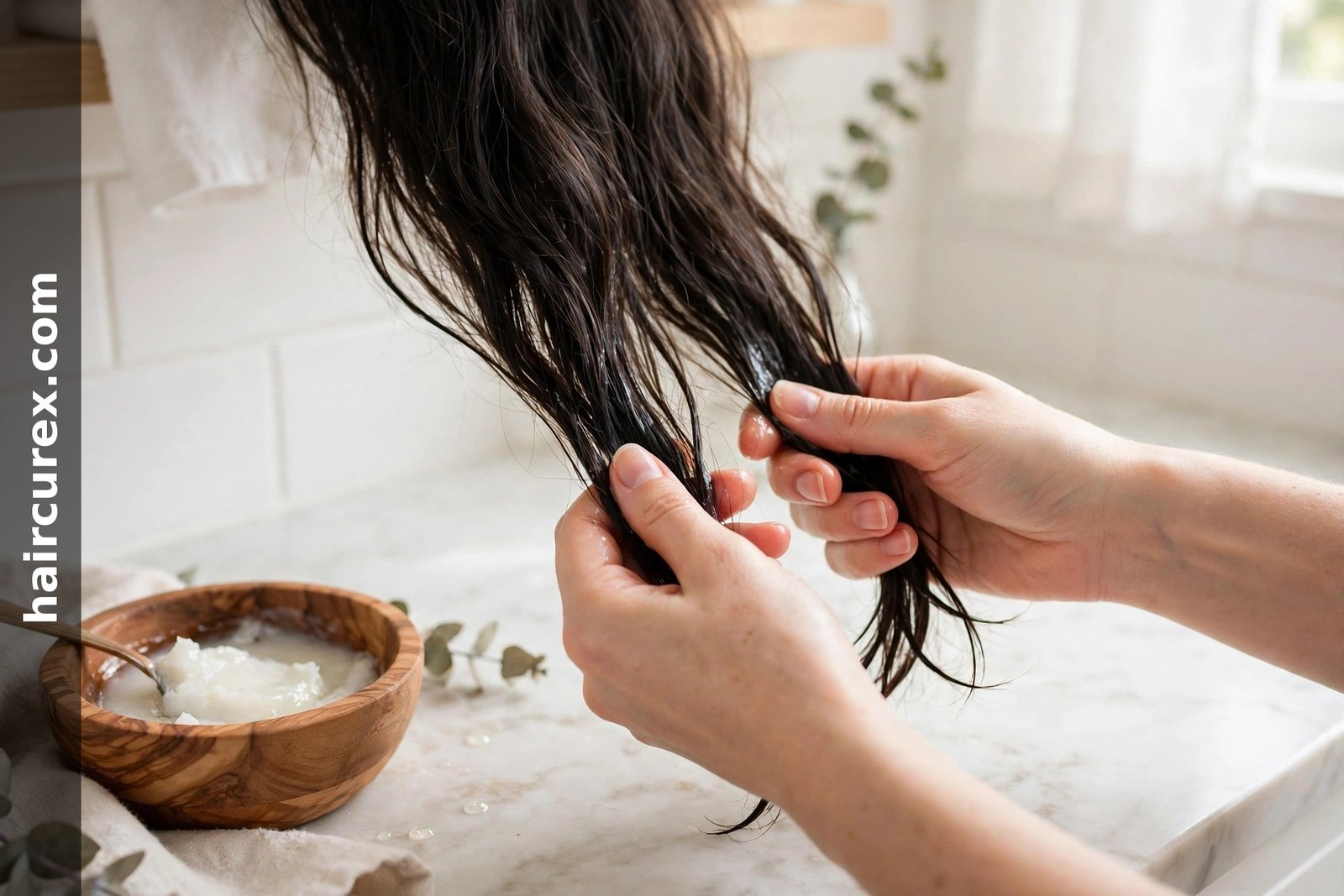
1. Pre-wash treatment (the best starting point)
- Warm 1 to 2 teaspoons for short or fine hair, or 1 to 2 tablespoons for long or thick hair.
- Work it through the lengths and ends, where hair is oldest and driest.
- Comb through gently with a wide-toothed comb to spread it evenly.
- Leave it for at least 30 minutes, or up to 2 hours, before washing.
- Shampoo as described in the washing section below.
2. Scalp massage
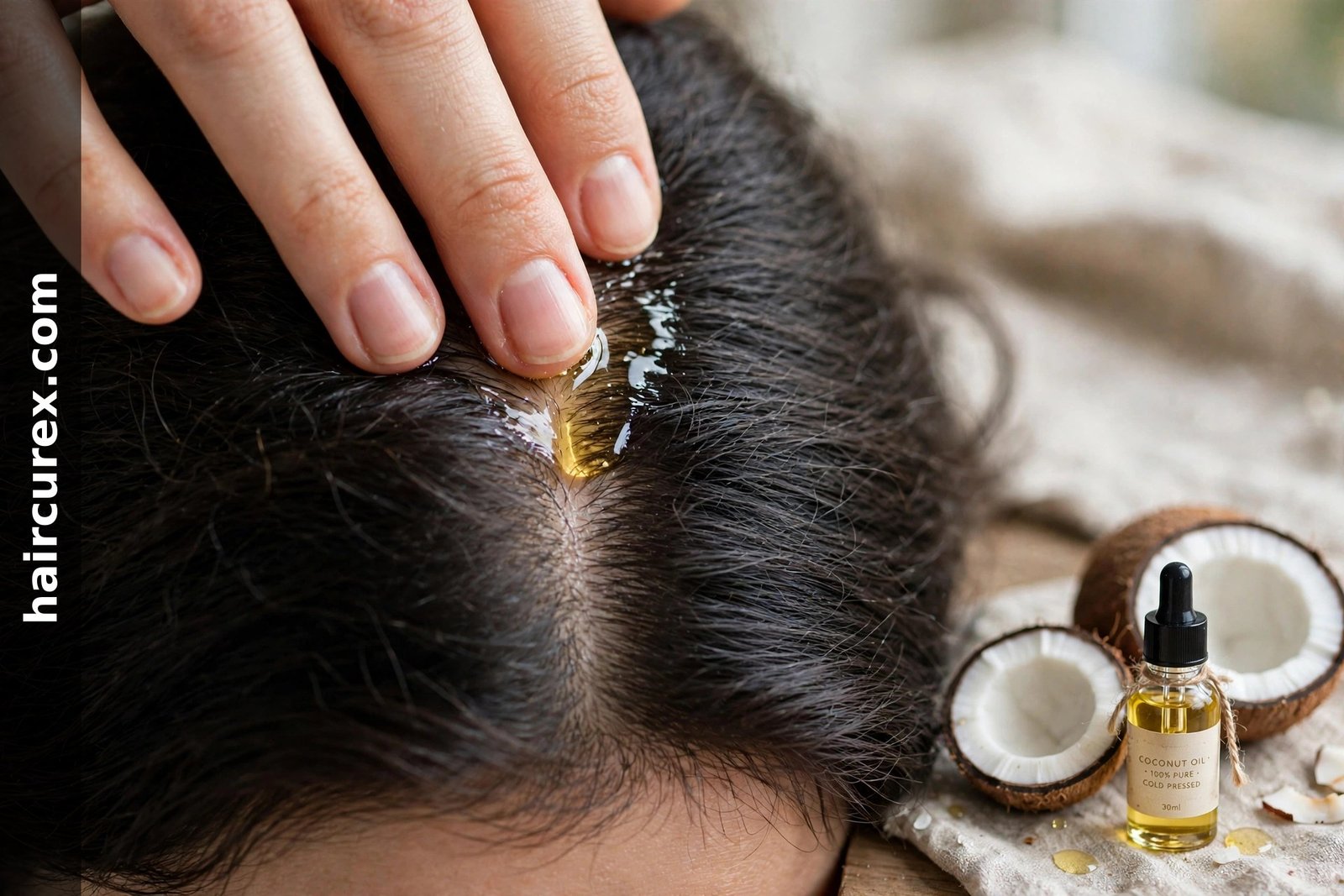
Scalp massage can feel relaxing and helps distribute oil, but it is not a proven treatment for hair growth, and it should be kept light if your scalp is oily or acne-prone. Warm a teaspoon of oil, apply it with your fingertips rather than your nails, and massage in small circles for 3 to 5 minutes. Focus on the scalp itself, not on piling oil onto the roots. Leave it for 30 to 60 minutes, then wash thoroughly. If you notice itching, flaking, redness or breakouts along the hairline, stop scalp application and use oil on the ends only.
3. Overnight treatment
An overnight treatment gives the oil more time to penetrate, and it suits dry, coarse or very damaged hair best. Apply it to the lengths and ends, and only lightly to the scalp if your scalp tolerates oil well. Braid your hair loosely, cover your pillow with an old towel or wear a silk or satin cap, and wash it out in the morning. Do not sleep with a plastic shower cap pulled tightly over your head if it feels uncomfortable or traps heat, and do not use an overnight treatment the night before an important event until you know how your hair responds.

4. Leave-in on the ends only
For daily smoothing, less is more. Warm a pea-sized amount, or a rice-grain amount for fine hair, between your palms until it disappears, then smooth it over the last few centimetres of hair only. This can tame frizz and reduce the rough, dry feeling at the ends between washes. If your hair starts to look stringy or feels coated, you have used too much; a light wash, or simply waiting until your next wash, will reset it. Avoid applying leave-in oil to the roots, where it will make hair look unwashed within hours.
How Much Coconut Oil for Hair to Use and How Often
There is no single correct amount, because hair length, thickness and porosity change the answer. Use the smallest amount that makes your hair feel softer without leaving a visible film, then adjust by a little at a time. As a starting guide, try coconut oil for hair once a week for dry or damaged hair, and once every two weeks for normal hair. Fine or oily hair may need only an ends-only treatment every two to three weeks, while very dry, coarse or curly hair may tolerate a weekly treatment, including an occasional overnight one.
| Hair type | Suggested frequency | Notes |
|---|---|---|
| Fine hair | Every 2 to 3 weeks | Ends only; pea-sized amount |
| Normal hair | Every 1 to 2 weeks | Pre-wash treatment on lengths and ends |
| Dry or coarse hair | Weekly | Pre-wash or overnight treatment |
| Curly or coily hair | Weekly | Mid-length to ends; light scalp use only if tolerated |
| Oily hair or scalp | Rarely, if at all | Ends only; wash out completely |
If you are also exploring other oils, our guide to the best hair growth oils for hair fall explains how different oils compare, and why no single oil suits every scalp. Remember that increased shedding, a sore scalp or sudden breakage should be checked by a clinician or dermatologist rather than treated with more oil.
Refined vs Unrefined Coconut Oil for Hair
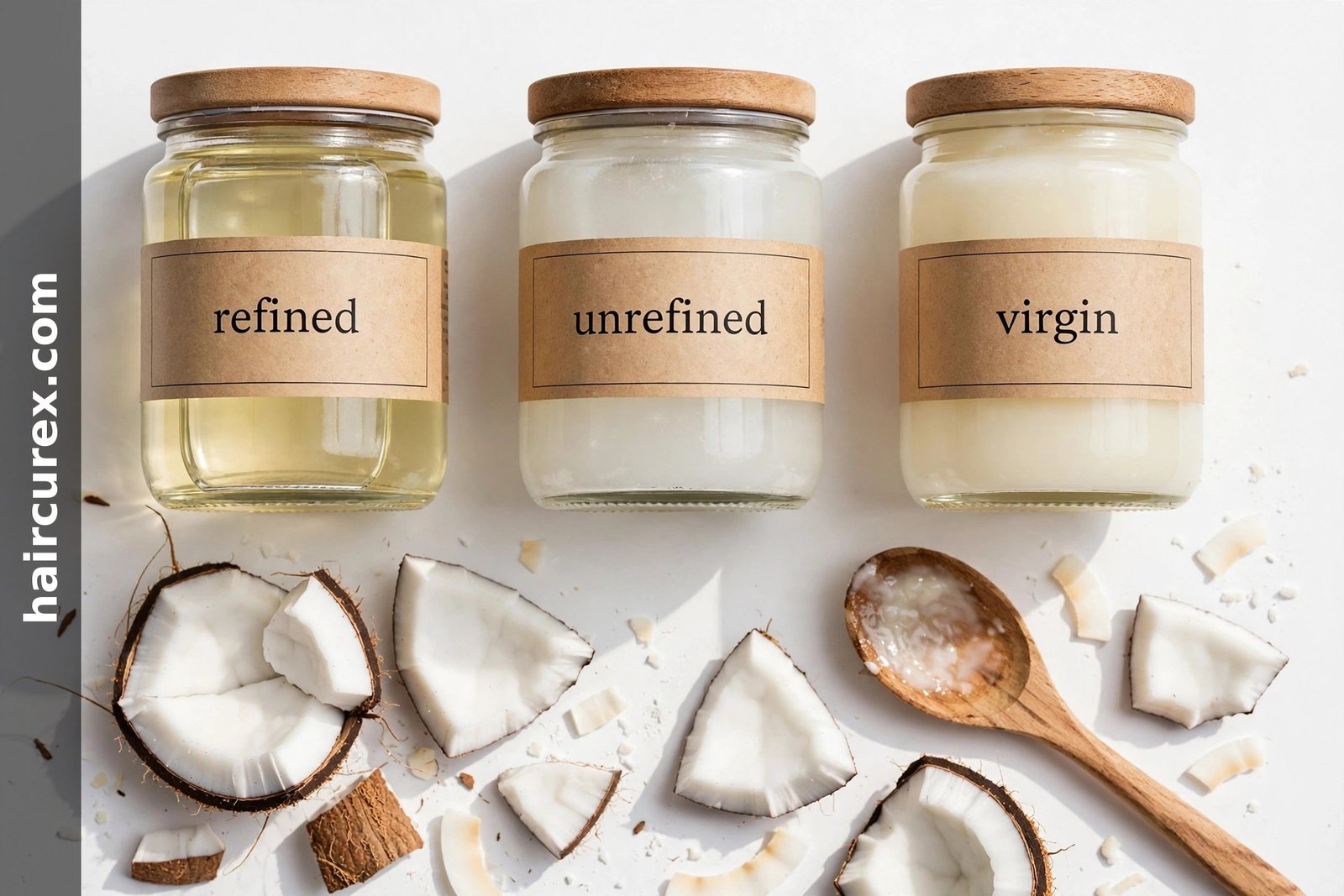
The label matters less than marketing suggests, but there are real differences. Unrefined, or virgin, coconut oil is extracted from fresh coconut meat without high-heat refining or chemical bleaching, so it keeps a clear coconut scent and flavour. Refined coconut oil is made from dried coconut meat, known as copra, and is usually neutral in scent and flavour, with a higher smoke point, which matters more for cooking than for hair.
For coconut oil for hair, unrefined oil is a good default if you like the scent and want the least-processed option. Refined oil is a practical choice if you dislike coconut scent, if you are sensitive to fragrance, or if you want an oil that will not add scent to other products. Fractionated coconut oil, which stays liquid at room temperature, is lighter and less likely to solidify in cold weather, but it has had some fatty acids removed, so it is not identical to whole coconut oil. Choose a plain, food-grade product without added fragrance, silicones or other oils if you want to judge how your hair responds to coconut oil itself.
| Oil type | Best for | Notes |
|---|---|---|
| Unrefined or virgin | Most hair treatments | Natural coconut scent; least processed |
| Refined | Scent-sensitive users | Neutral scent; still a heavy oil |
| Fractionated | Light, liquid leave-in use | Stays liquid; different fatty-acid profile |
Who Should Avoid Coconut Oil for Hair or Use Caution
Very fine or oily hair. Coconut oil can flatten fine hair and make oily hair look greasy faster. If you try it, use the smallest amount, on the ends only, and wash it out fully.
Acne-prone or breakout-prone skin. Coconut oil is comedogenic for many people, meaning it can clog pores. Keep it away from the forehead, hairline and back if you are prone to spots, wash pillowcases after overnight treatments, and stop scalp use if breakouts increase.
Protein-sensitive hair. Some people find that coconut oil, because it can reduce protein loss and may make hair feel stiffer, leaves their hair feeling dry, brittle or straw-like rather than soft. This response is individual and not fully predictable. If your hair feels worse after two careful, well-washed treatments, coconut oil may not suit you, and a lighter oil such as argan or a water-based conditioner may be a better choice. Our mongongo oil for hair guide discusses another oil option for dry hair.
Allergies and sensitive scalps. True coconut allergy is uncommon but possible. Patch-test on the inner forearm or behind the ear, wait 24 hours, and do not use it if you develop redness, itching or swelling. Avoid applying oil to broken, irritated or infected scalp skin, and seek medical advice for persistent scalp pain, crusting, swelling or patchy hair loss rather than trying to treat it at home.
Common Mistakes
- Using far too much. A visible coating is not extra nourishment; it is build-up waiting to be washed out.
- Applying it to the roots every day. Daily root application suits very few people and often leads to limp hair and a greasy scalp.
- Expecting growth. Coconut oil may protect existing hair from breakage, which can help length retention, but it does not create new hair follicles or reverse medical hair loss.
- Skipping a proper wash. Oil left behind can attract dust, dull shine and irritate the scalp.
- Using it on dirty, product-heavy hair and expecting a deep treatment. Oil cannot penetrate well through heavy build-up, so clarify or wash first if your hair is coated with styling products.
- Heating the oil until it is hot. Warm is enough; hot oil can burn the scalp and damage the cuticle.
How to Wash Out Coconut Oil for Hair
Washing out is where many treatments go wrong. Wet your hair with warm water, then apply shampoo mainly to the scalp and roots, massaging gently to break down the oil. Rinse, then shampoo a second time if your hair still feels slippery or coated.
Let the second lather run down the lengths as you rinse; you do not need to scrub the ends aggressively. Follow with conditioner on the lengths and ends only, rinse with cool or lukewarm water, and dry gently. If your hair still feels heavy after two washes, use a clarifying shampoo once, then return to your usual shampoo, because frequent clarifying can dry hair out. For help choosing a wash-out product, see our detox shampoo guide.

Coconut Oil for Hair: Frequently Asked Questions
Does coconut oil help hair growth?
There is no reliable evidence that coconut oil makes hair grow faster or creates new hair. It may help existing hair break less, which can support length retention, but it does not treat medical hair loss.
How often should I use coconut oil on my hair?
Once a week is a good starting point for dry or damaged hair, and once every one to two weeks suits normal hair. Fine or oily hair usually needs it less often, and only on the ends.
Can I leave coconut oil on my hair overnight?
Yes, if your hair is dry, coarse or damaged and your scalp tolerates oil. Apply it mainly to the lengths and ends, protect your pillow, and wash it out thoroughly in the morning.
Does coconut oil work for all hair types?
No. It tends to work best for dry, coarse, curly or damaged hair. Very fine, oily or protein-sensitive hair may become limp, greasy or stiff, so start with a tiny amount on the ends only.
Should I use refined or unrefined coconut oil for hair?
Unrefined or virgin coconut oil is a good default because it is less processed and has a natural coconut scent. Refined coconut oil is better if you prefer no scent or are sensitive to fragrance.
Will coconut oil cause hair fall?
Coconut oil itself is not a proven cause of hair fall, but heavy use, poor washing, scalp irritation or clogged pores can make shedding and breakage seem worse. Stop scalp use if shedding, itching or breakouts increase, and seek medical advice for sudden or patchy hair loss.