


Quick answer: Split ends are frayed or divided hair tips that happen when the protective outer layer of a hair strand wears down and the inner fibers separate. You cannot glue or repair split ends back together permanently, but you can cut them off, stop them from travelling further up the strand, and greatly reduce how often they return with gentler washing, conditioning, detangling, heat habits, and regular trims.
If you have ever held a single strand up to the light and noticed that its tip forks into two, you have seen split ends in their most familiar form. They are one of the most common hair complaints, and also one of the most misunderstood. Many products promise to “repair” them, many routines promise to prevent them forever, and many people feel frustrated when the same rough, tangled tips keep coming back. The truth is more practical, and more encouraging, than either extreme: split ends are normal wear and tear, they are manageable, and a few consistent habits make a real difference over time.
This guide explains what split ends actually are, what they look like, what causes them, and what genuinely helps. It also separates what can be fixed from what can only be smoothed temporarily, so you can spend your time and money on the steps that matter instead of chasing a permanent repair that does not exist.
What Are Split Ends?
Split ends have a technical name: trichoptilosis. That word simply describes a hair shaft that has split lengthwise, usually at the tip. Hair itself is not alive in the way skin is. Once a strand leaves the follicle, it cannot heal itself, grow new cells, or knit a split closed. That is why prevention matters so much, and why trimming remains the only reliable way to remove damage that is already there.
What Do Split Ends Look Like?
The classic sign is a tip that divides into two strands, forming a shape like the letter Y. But split ends do not always look exactly like that. Some strands split into three or more fine fibers, like a tiny feather. Others look like a small tree branch, with splits branching off the main strand at different points. Some ends are not visibly forked at all, yet feel rough, catch on each other, and refuse to lie smooth.

A simple check works well in good light. Take a small section of hair, hold it against a plain background, and look closely at the last inch or two. You can also gently slide your fingers down a strand: smooth, healthy-feeling hair glides fairly evenly, while damaged ends may feel rough, bumpy, or catch slightly. Avoid pulling hard or tugging the strand to “test” it. A gentle visual check is enough, and rough handling only adds more stress to already fragile tips.
What Causes Split Ends?
Most split ends come from a combination of causes rather than one mistake. The common thread is repeated stress on the cuticle over time. Heat, chemicals, friction, dryness, and rough handling all chip away at that protective layer in slightly different ways, and once the damage accumulates, the tip gives way.
Heat styling
Flat irons, curling irons, and high-heat blow-drying are among the most common contributors. Heat drives moisture out of the strand and can change the structure of its proteins, leaving hair drier and more brittle. Daily high-heat styling, passing an iron slowly over the same section several times, or using a tool on hair that is still damp all raise the risk. The American Academy of Dermatology advises using low or medium heat settings and a heat-protectant product when you do use hot tools, and limiting blow-drying where possible.
Chemical treatments
Bleach, permanent color, perms, relaxers, and repeated overlapping treatments can weaken the cuticle and cortex. Color-treated hair is not automatically damaged beyond repair, but each chemical process adds wear, especially when treatments are done close together or without enough conditioning and recovery time in between. Hair that has been lightened several levels, for example, is often more porous and more prone to splitting than virgin hair, and it usually needs more moisture and gentler handling.
Mechanical damage and friction
Everyday friction adds up. Aggressive brushing, especially through tangles from the roots downward, rough towel-drying, tight elastics, and styles that pull constantly on the same sections can all stress the ends. Wet hair deserves extra care because it stretches more easily and breaks more readily than dry hair. Dermatologists recommend detangling wet hair with a wide-tooth comb, starting at the ends and working upward, rather than dragging a brush through from the top.
Dryness and environment
Dry hair is more fragile hair. Low humidity, indoor heating, sun exposure, wind, chlorine, and salt water can all dry the strand and roughen the cuticle. Fine hair and curly or coily hair can be especially vulnerable: fine strands have less material to withstand wear, while curls and coils bend at many points and their natural oils travel less easily down the length, leaving ends drier. That does not mean these hair types are “bad” or destined for damage. It means moisture and low-friction habits matter even more for them.
Time, length, and old damage
| Cause | How it damages the ends | What helps most |
|---|---|---|
| High or frequent heat | Dries the strand and weakens keratin | Lower heat, fewer passes, heat protectant, air-drying sometimes |
| Bleach, color, perms, relaxers | Lifts and wears the cuticle | Space treatments apart, deep condition, professional application |
| Rough brushing and towel-drying | Snaps fibers and roughens the cuticle | Wide-tooth comb, ends-first detangling, gentle blotting |
| Tight styles and friction | Repeated stress on the same sections | Looser styles, soft scrunchies, silk or satin pillowcase |
| Sun, wind, chlorine, dry air | Strips moisture and roughens the surface | Conditioning, protective styles, rinsing after swimming |
| Very long gaps between trims | Small splits travel further up the strand | Small trims every 8 to 12 weeks, sooner if ends look frayed |
Can You Repair Split Ends?
Here is the honest answer: no product can permanently repair split ends. Because hair is dead tissue, a split fiber cannot fuse back into a single healthy strand. Some conditioners, oils, and “split-end menders” can temporarily smooth the appearance of frayed tips by coating them, reducing friction, and making them lie flatter. That cosmetic effect can be genuinely useful before an event or while you are growing hair out, but it is not a cure. Once the coating washes out, the split is still there.
Be skeptical of claims that promise to seal, bond, or heal split ends for good. Bonding treatments used in salons can improve the feel and strength of chemically treated hair overall, and they have a place in a broader damage-care routine, but they do not turn a split tip back into undamaged hair. If a product sounds too good to be true, check what it actually promises: “reduces the appearance of” is very different from “repairs.” The first is plausible. The second, for split ends, is not.
How to Get Rid of Split Ends
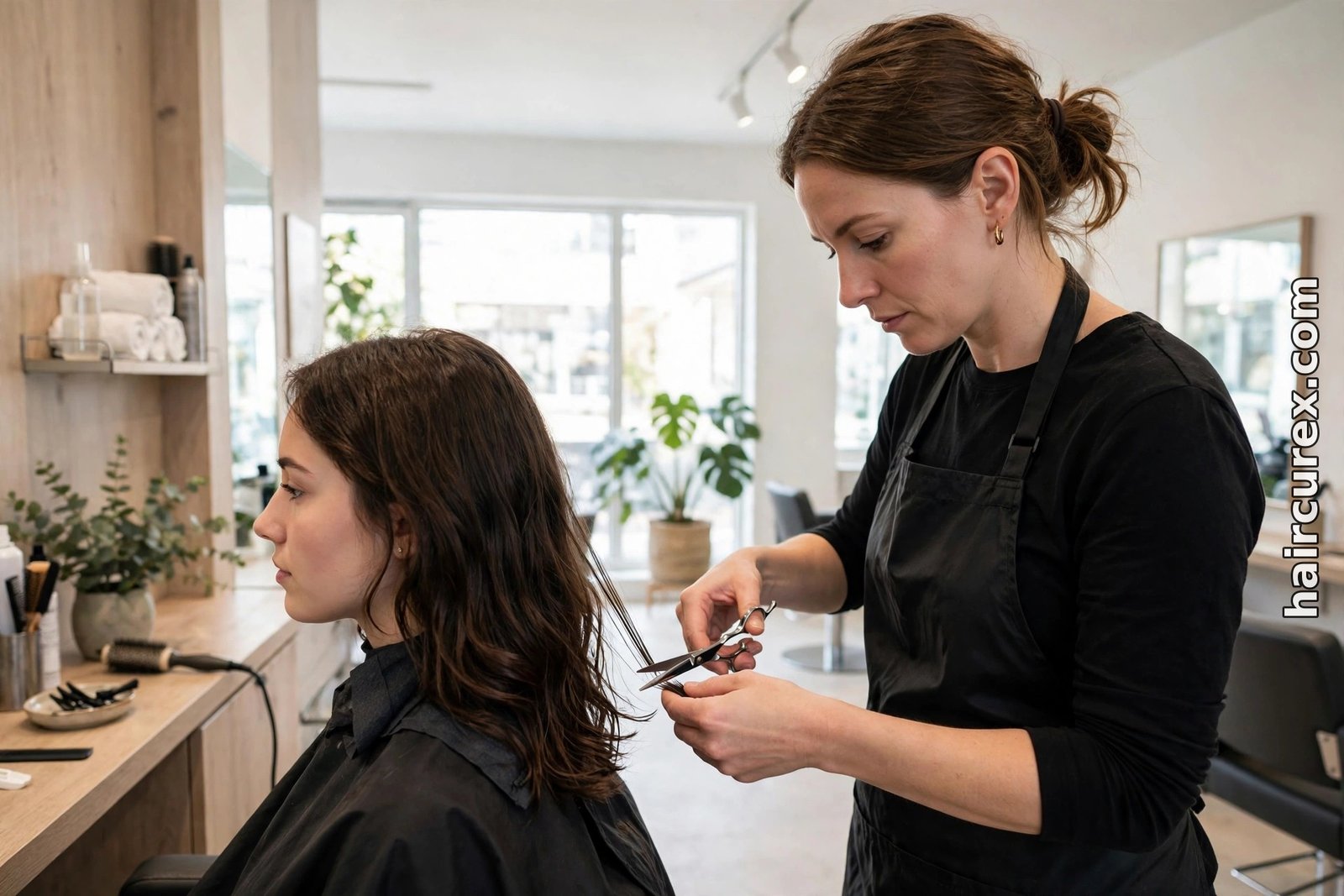
Trimming is the only reliable removal method. How much you need to cut depends on how far the damage has travelled. If only the very tips are forked, a small dusting — trimming a quarter inch or less — may be enough. If splits have travelled an inch or more up the strand, your stylist may need to take off more to reach healthy hair. Cutting just below the highest split, rather than just snipping the forked tip, gives the cleanest result.
Many people ask how often to trim. A common guideline is every 8 to 12 weeks, but the right interval depends on your hair, your styling habits, and your goals. If you heat-style daily, color often, or wear your hair long, you may benefit from trims closer to every 8 weeks. If your hair is short, rarely heat-styled, and shows little fraying, you may comfortably go longer. Use what you see as your guide: when ends start to look thin, tangly, or visibly split despite good care, it is time for a trim, even if the calendar says otherwise.
How to Prevent Split Ends: The Habits That Actually Help
Prevention is less about one miracle product and more about reducing daily wear. The steps below are simple, but together they protect the cuticle day after day.
1. Wash gently and condition the ends
Shampoo is mainly for the scalp. Concentrating shampoo there, and letting the lather rinse down the lengths, cleans without over-stripping the older, drier ends. Follow every wash with conditioner, focusing it on the mid-lengths and ends where hair is oldest and driest. If your hair is fine, keep conditioner off the roots to avoid a weighed-down look; if it is dry, thick, or curly, conditioning the full length may suit you better. A weekly deep-conditioning mask can add extra moisture for dry or chemically treated hair, but more is not always better — follow the product directions and watch how your hair responds.
Your wash frequency should suit your scalp and hair type rather than a rigid rule. Very oily scalps may need frequent washing, while dry or textured hair may do better with longer gaps between washes. What matters for split ends is not washing as rarely as possible, but washing without stripping and always replacing moisture with conditioner. For a fuller washing routine, see our hair washing guide and our beginner hair care routine.
2. Detangle with patience
Detangle from the ends upward, in small sections, and never force a comb through a knot. For wet hair, a wide-tooth comb is usually gentler than a brush. For curly hair, detangling in the shower with conditioner in the hair often works best. If you hit a tangle, hold the hair above it so you are not pulling on the roots, and work the knot apart gently with your fingers or the comb. This single habit prevents a surprising amount of breakage, because most mechanical damage happens during rushed detangling, not during styling itself.
3. Use heat wisely
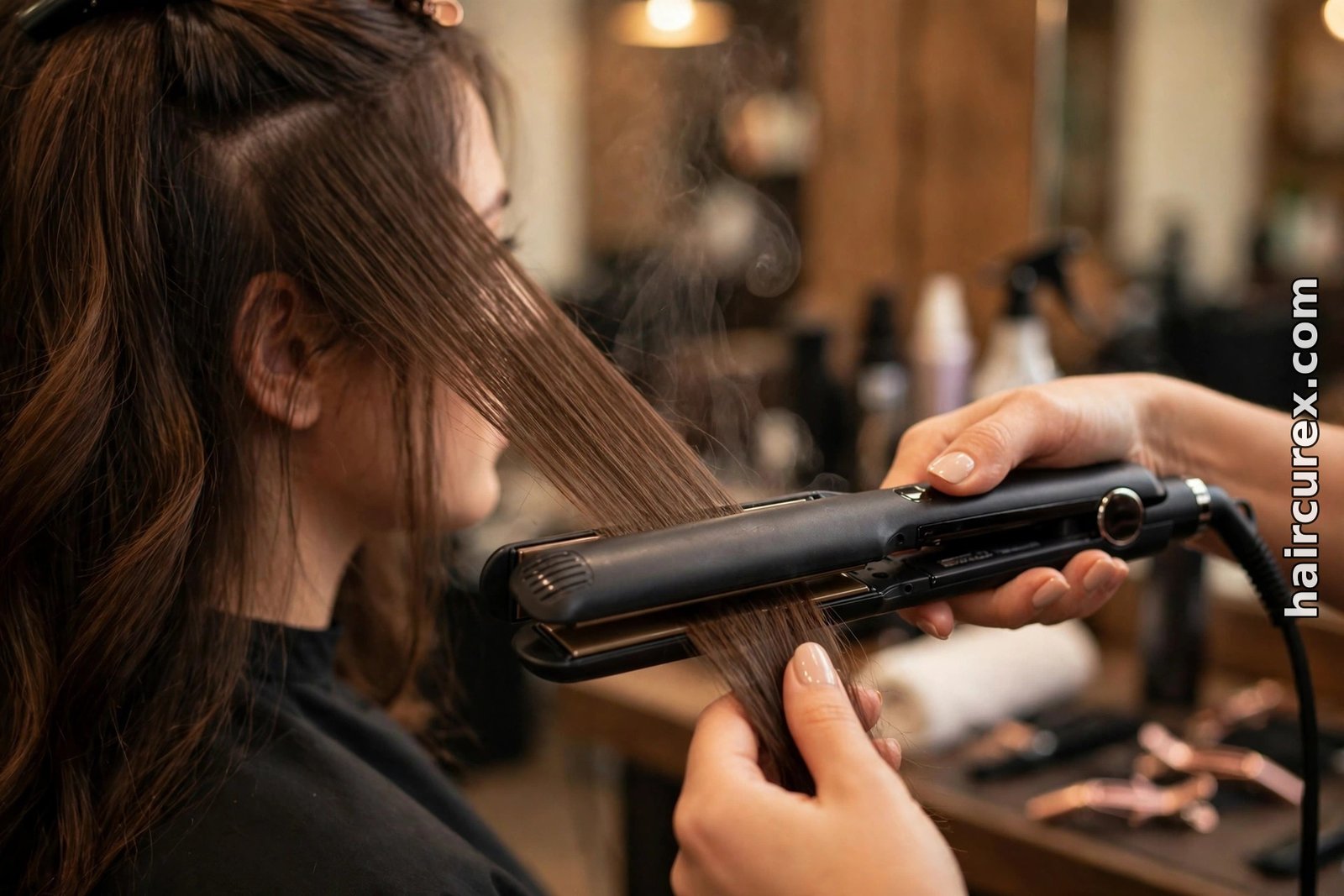
Air-dry when you can. When you do use heat, choose low or medium settings, apply a heat protectant first, and make a single steady pass rather than going over the same section repeatedly. Letting hair dry naturally on some days, and keeping high-heat styling occasional, gives the ends time to recover instead of accumulating damage wash after wash.
4. Space out chemical treatments
Give hair recovery time between bleach, color, perms, and relaxers, and avoid overlapping a new treatment onto already processed lengths when possible. If you color at home, follow the timing exactly and do a strand test. If you lighten significantly, consider professional help, since uneven or over-processed lightening is a fast route to breakage. After any chemical service, extra conditioning and gentler styling for the following weeks help protect the newly weakened cuticle.
5. Reduce friction day and night
Blot with a soft towel, use snag-free ties, vary tight styles, and try a loose night braid or silk pillowcase.
6. Protect hair outdoors and in water
Wear a hat in strong sun or wind, wet and condition hair before swimming, and rinse and condition afterwards.
Split Ends by Hair Type
Prevention looks slightly different depending on your hair. Fine, straight hair shows split ends easily because each strand is thin, and heavy products can weigh it down, so light conditioners applied mainly to the ends and low-heat styling usually work best. Wavy and curly hair often needs more moisture, because bends in the strand make it harder for natural oils to reach the tips; leave-in conditioner, gentle detangling with conditioner in, and protective styles can help. Our curly hair routine covers that approach in detail.
Coily and tightly textured hair benefits from even more emphasis on moisture and low manipulation: wash-day detangling, deep conditioning, and styles that keep the ends tucked away for periods can reduce breakage. Chemically treated hair of any type needs the same principles with extra conditioning and longer gaps between processes. If you are unsure about your hair’s porosity — how readily it absorbs and loses moisture — our hair porosity test guide can help you choose products more sensibly, rather than guessing.

What Products Help — and What They Cannot Do
Conditioners and masks help split ends mainly by improving moisture, smoothness, and manageability, which reduces friction and further breakage. Leave-in conditioners and light oils can smooth the look of frayed tips and make detangling easier. Applied to damp ends, a small amount of oil can also reduce tangling between washes. None of this repairs a split, but it does protect the hair around it and make ends look and feel better while you wait for your next trim.
Split Ends, Breakage, and Hair Growth: Clearing Up Confusion
Split ends do not stop hair from growing out of the scalp. Growth happens at the root, regardless of what the tips look like. What split ends do affect is length retention: if tips keep breaking off, hair may seem stuck at the same length even though new growth continues. That is why trims can paradoxically help you “grow” longer hair — they preserve the length you already have by stopping breakage from eating away at it.
For readers dealing with shedding as well as damaged ends, our guides on haircuts that suit different hair needs and general hair care can help you separate a styling problem from a health question, and act on each appropriately.
A Simple Weekly Routine to Keep Split Ends Away
Consistency beats intensity. A routine you can actually keep is better than a perfect routine you abandon after a week. Here is a straightforward pattern to adapt to your hair type:
- Wash days: Shampoo the scalp, condition mid-lengths and ends, detangle gently from the ends upward, and blot dry instead of rubbing.
- Styling days: Air-dry when possible; if you use heat, use low or medium settings, a heat protectant, and a single steady pass.
- Weekly: Deep condition if hair feels dry, especially after color, swimming, or a week of heat styling.
- Daily: Use soft ties, vary tight styles, protect hair from harsh wind and sun, and brush only as much as needed.
- Every 8 to 12 weeks: Check your ends in good light and book a small trim if you see fraying, thinning tips, or extra tangling.

When to Get Help
Most split ends are a routine care issue, not a medical one. See a stylist if damage is widespread, if you need to remove a lot of length, or if you are unsure how much to cut. See a dermatologist if you have scalp symptoms, unusual shedding, patchy loss, or breakage that is severe and sudden without an obvious styling cause. Bring a brief history: when the problem started, what treatments and styling you use, and any medications or health changes. That context helps a clinician distinguish everyday wear from something that needs investigation.
Frequently Asked Questions About Split Ends
Can split ends be repaired?
No. Split ends cannot be permanently repaired because hair is dead tissue and a split fiber cannot fuse back together. Products can temporarily smooth their appearance, but trimming is the only way to remove them.
How often should I trim to prevent split ends?
Every 8 to 12 weeks works for many people, with more frequent small trims if you heat-style daily, color often, or wear your hair long. Check your ends in good light and trim sooner if you see fraying or extra tangling.
Do split ends cause hair loss?
Split ends do not cause hair loss from the scalp, but they can cause breakage along the strand, which makes ends look thinner and can limit length retention. Shedding, thinning at the scalp, or patchy loss are different issues and should be checked separately.
Can I cut split ends at home?
You can dust off tiny amounts at home with sharp, dedicated hair shears, cutting just above the split in good light. Avoid kitchen scissors, which can crush the fiber, and see a stylist for a major cut or widespread damage.
Does heat protectant completely prevent split ends?
No, but it helps. A heat protectant can reduce heat damage when combined with lower temperatures, fewer passes, and less frequent heat styling. It does not make daily high-heat styling harmless.
Are split ends worse for curly hair?
Curly and coily hair can be more prone to dry ends because natural oils travel less easily down a curved strand, and bends in the strand create stress points. Extra moisture, gentle detangling with conditioner, and protective styles help, but split ends can affect every hair type.
Will not trimming my hair make it grow longer faster?
Skipping trims does not speed up growth from the scalp, and it can cost you length in the long run if splits travel upward and force a bigger cut later. Small regular trims usually preserve more length over time.
For further dermatologist-backed hair care guidance, see the American Academy of Dermatology’s tips for healthier hair and eMediHealth’s overview of trichoptilosis, the technical term for split ends.