

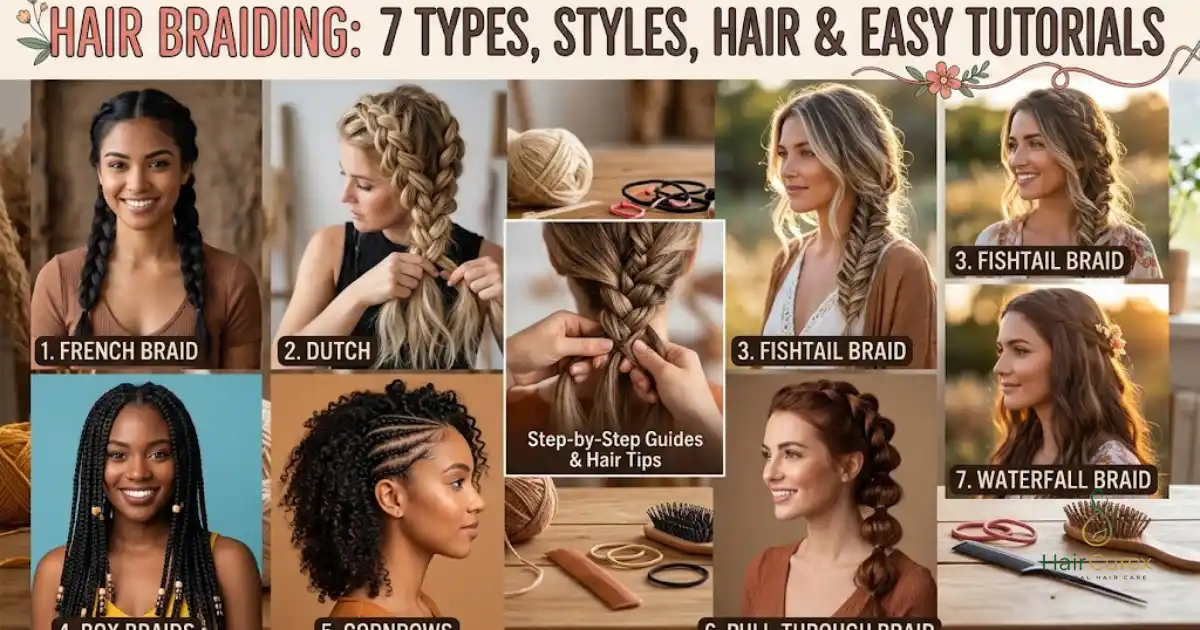
Hair braiding is a way of styling hair by weaving strands together. People have done it for thousands of years. It works on almost any hair type or length.
Ever wondered why braids never go out of style? They mix beauty with strength and hold. Once you try one, you will want more. Braiding can be simple or very detailed. Popular styles include French braids, box braids, and cornrows. It protects hair and looks great too.
Hair braiding isn’t just a trend. It’s one of the oldest and most trusted ways to style, protect, and celebrate hair. Whether you’re chasing a sleek French braid for work or booking a full set of knotless braids for summer, this guide walks you through everything worth knowing. We’ll cover the most popular braided hairstyles, the best hair extensions for braiding, step-by-step tutorials, and how to keep your braids looking fresh for weeks. Let’s get into it.
What Is Hair Braiding and Why Is It So Popular?
At its core, hair braiding means weaving three or more sections of hair over and under each other to create a woven pattern. That’s the simple version. In practice, braiding is an art form with roots stretching back thousands of years, especially within African communities, where braid patterns once signaled everything from age to social status to tribal identity. Today, hair braiding still carries that cultural weight, and it’s also become one of the most requested protective hairstyles in the United States.
So why won’t braids go out of style? A few reasons stand out. First, braided hairstyles protect natural hair from daily manipulation, heat damage, and breakage, which matters a lot for textured hair, curly hair, and coily hair types that tend to be more fragile. Second, braids are incredibly versatile. You can go tiny with micro braids, oversized with jumbo braids, sleek with a classic French braid, or bohemian with loose, curly boho braids.
Third, social media has turned braiding into a creative outlet. Platforms like TikTok and Pinterest are flooded with braid patterns, hair braid designs, and tutorials that make trying a new look feel low-risk and high-reward.
Braids aren’t just a hairstyle, they’re a form of self-expression that’s been passed down for generations,” says one longtime braiding stylist in Atlanta. That sentiment shows up again and again in salons across the country, where clients ask for styles that feel personal, not just trendy.
Popular Hair Braiding Styles to Try
There isn’t just one way to braid hair, and that’s exactly what makes this style category so exciting. Below are seven of the most popular braiding styles worth trying, each with its own personality, install time, and maintenance level.
Box braids remain a go-to for their clean, geometric parts and long-lasting hold. Knotless braids offer that same box-braid look but with a gentler start at the root, which many people find far more comfortable. Cornrows hug the scalp in neat rows and work beautifully as a standalone style or as a base for wigs and sew-ins. French braids cross over the top, blending in extra hair as you go, making them ideal for everyday wear and quick updos. Dutch braids flip that technique inside out, so the braid sits raised above the hair rather than flat against it.
Fishtail braids use only two sections instead of three, creating a delicate, woven look that’s popular for weddings and special occasions. Goddess braids are thicker, more dramatic cornrows, often styled with curly ends for a romantic, boho braids feel.
| Style | Best For | Typical Install Time | Maintenance Level |
|---|---|---|---|
| Box Braids | Long-term protective styling | 4–7 hours | Medium |
| Knotless Braids | Scalp comfort, natural look | 5–8 hours | Medium |
| Cornrows | Low-maintenance, sleek styling | 1–3 hours | Low |
| French Braids | Everyday wear, DIY styling | 10–20 minutes | Low |
| Dutch Braids | Textured, dimensional looks | 15–25 minutes | Low |
| Fishtail Braids | Events, delicate styling | 20–30 minutes | Low |
| Goddess Braids | Bold, statement styling | 2–4 hours | Medium |
Box Braids vs. Knotless Braids: What’s the Difference?
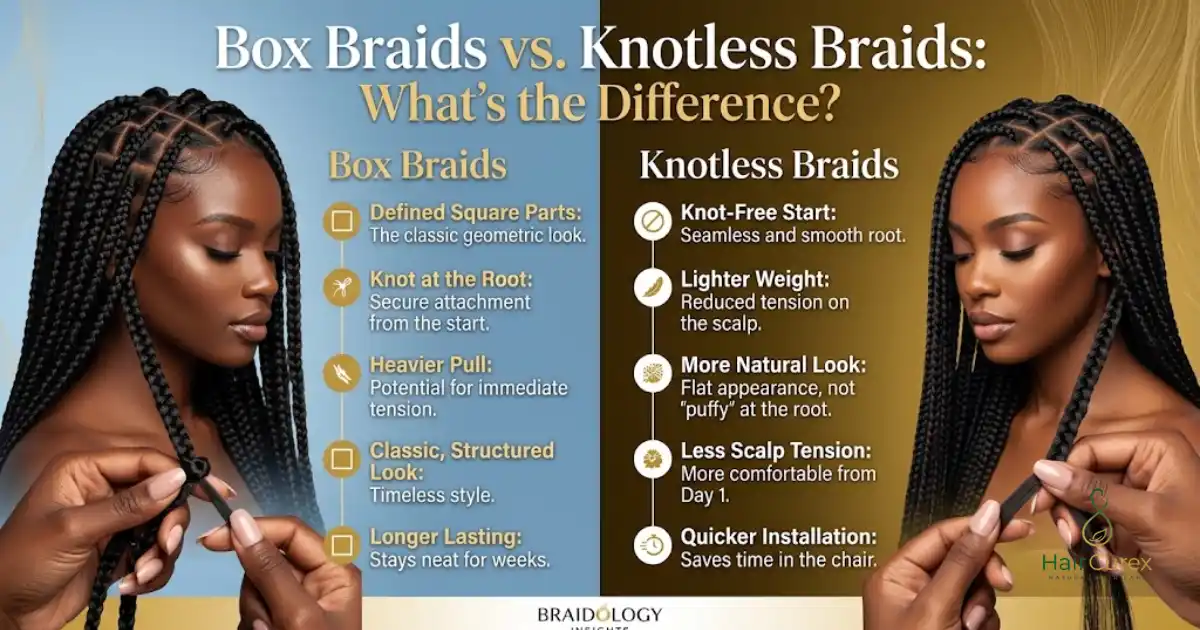
Box braids and knotless braids often get lumped together, but they’re technically quite different in how they’re installed. With traditional box braids, the stylist starts by knotting the braiding hair extensions to your natural hair at the root, then braids downward. That knot gives the style extra hold, but it can also create tension right where your scalp is most sensitive.
Knotless braids skip that step entirely. The stylist feeds small amounts of braiding hair in gradually as they braid, starting with just your natural hair and building up thickness as they go. The result feels lighter, lies flatter against the head, and puts far less strain on the scalp. If you’ve ever taken out a set of braids and noticed tiny bumps or soreness along your hairline, knotless braids are usually the more scalp-friendly choice.
There’s a longevity trade-off, though. Traditional box braids tend to hold their shape a little longer because of that secure knot, while knotless braids may need a touch-up sooner, particularly around the hairline. Neither option is objectively better. It really comes down to how sensitive your scalp is and how long you want the style to last.
African Hair Braiding: Popular Styles and Techniques
African hair braiding is the foundation almost every modern braid style builds on. The techniques used today, from underhand three-strand weaving to the feed-in method, trace directly back to braiding traditions practiced across West, East, and Southern Africa for centuries.
A few standout styles deserve special mention here. Feed-in braids gradually add extension hair as the braid progresses down the head, creating a natural taper that blends seamlessly with your own hairline. Fulani braids, named after the Fulani people of West Africa, combine cornrows along the center part with braids left loose or beaded on the sides, often finished with a statement middle braid decorated with beads or rings. Senegalese twists aren’t technically braids but often sit in the same style family, using a two-strand twisting motion instead of a three-strand weave. Ghana braids, sometimes called banana braids, use the underhand technique to create thick, raised rows that fan outward in striking patterns.
These styles matter beyond aesthetics, too. For many, choosing African hair braiding styles is a way to connect with heritage and honor a craft that’s been refined and passed down through generations of braiders. If you’re new to these styles, it’s worth seeking out a braider who specializes specifically in African hair braiding, since the tension, sectioning, and finishing techniques differ from more generic braiding training.
French Braid: How to Braid Your Own Hair
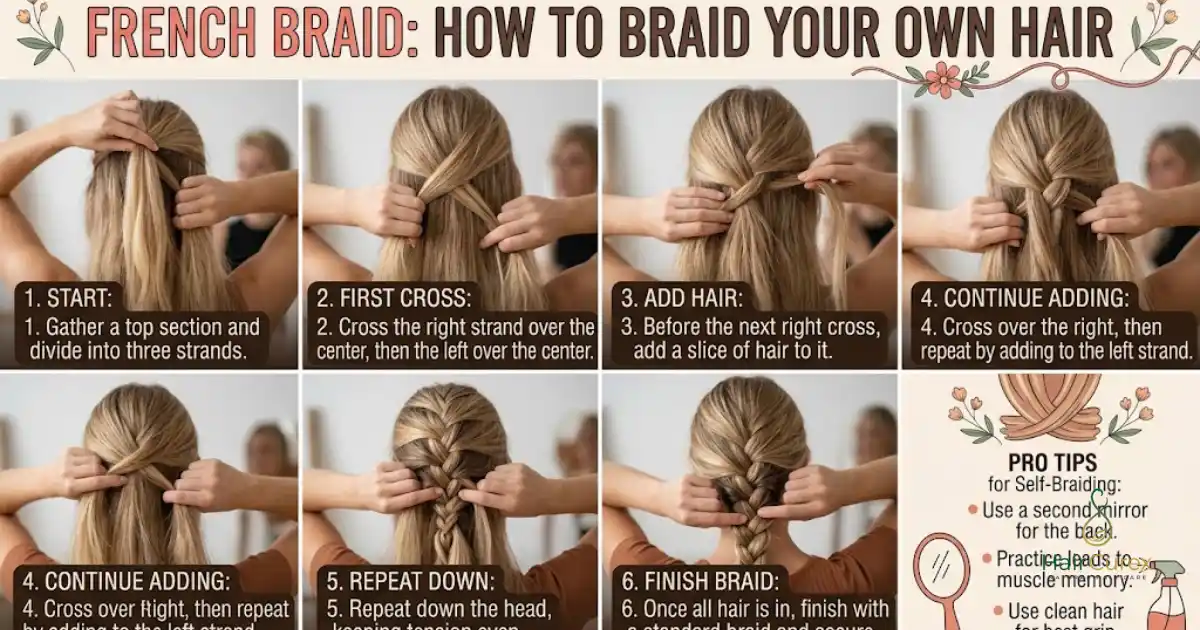
The French braid might be the single most searched braiding tutorial online, and for good reason. It looks polished, works on damp or dry hair, and once you get the hang of it, takes less than fifteen minutes.
Learning how to French braid your own hair does take a bit of practice, mostly because you’re braiding at an angle you can’t fully see. Start by brushing your hair smooth and sectioning a triangle piece at your crown. Split that section into three even strands, then cross the right strand over the middle, followed by the left strand over the new middle. Here’s where the French technique kicks in: before each crossover, gather a small piece of loose hair from the side and add it into the strand before crossing. Keep repeating this pattern, alternating sides, working your way down toward the nape of your neck. Once you run out of hair to add, finish with a regular three-strand braid and secure the end with a hair tie.
A few common mistakes trip up beginners. Uneven sections create a lopsided braid, so take a moment to check your parting in a mirror before you start. Adding too much hair too quickly makes the braid bulky and uneven, so keep each addition small and consistent. And pulling too tight near the scalp can leave you with a headache by the end of the day, so aim for snug, not white-knuckle tight.
How to Braid Hair: Step-by-Step Beginner Guide
Every braided hairstyle, from a simple ponytail braid to elaborate hair braid designs, builds on the same foundational skill: the three-strand braid. Master this first, and every other style becomes far more approachable.
Begin with clean, detangled hair. Gather the section you want to braid and split it evenly into three parts. Cross the right section over the center section, then cross the left section over the new center. Repeat this over-and-under pattern, alternating right and left, keeping consistent tension the whole way down. Secure the end with a hair tie once you reach the bottom, or add a few drops of edge control or light oil to smooth any flyaways along the way.
Hair texture changes how this plays out in practice. On straight hair, sections tend to slip easily, so a little texturizing spray can add grip. On wavy or curly hair, work in small sections and use a leave-in conditioner or curl cream to reduce frizz as you go. Coily and textured hair often braids best when slightly damp with a moisturizing product, since fully dry coily hair can be harder to smooth into place.
Once the basic three-strand braid feels natural, move on to the French braid, then the Dutch braid, and eventually try your hand at simplified box braids on a mannequin head or a willing friend. Building skills in that order makes the learning curve far less frustrating.
Best Hair for Braiding: Human vs. Synthetic Hair
Choosing the best hair extensions for braiding matters just as much as choosing the style itself. The wrong hair type can mean excessive tangling, a stiff unnatural texture, or a set of braids that simply doesn’t hold up. The two main categories are human hair extensions for braids and synthetic braiding extensions, and each comes with its own strengths.
| Factor | Human Hair | Synthetic Hair | Pre-Stretched Hair |
|---|---|---|---|
| Cost | Higher | Budget-friendly | Mid-range |
| Look & Feel | Most natural | Can look glossy or coarse | Natural, smooth |
| Heat Styling | Yes, can curl or straighten | Limited (unless heat-resistant) | Depends on brand |
| Reusability | Yes, multiple installs | Usually single-use | Usually single-use |
| Best For | Sew-ins, versatile styling | Box braids, budget styling | Quick, tangle-free installs |
What Is Pre-Stretched Braiding Hair?
Pre-stretched braiding hair extensions come already smoothed and separated, so you skip the tedious step of pulling apart tangled bundles before you start. This small difference saves a surprising amount of installation time and results in a noticeably smoother, more uniform braid pattern. Pre-stretched hair extensions work especially well for knotless braids and box braids, where a clean, tangle-free base makes the whole set look more polished. Many braiders now consider pre-stretched packs their default choice simply because they cut hours off a long braiding session.
Human Braiding Hair: Benefits, Types & Uses

Human hair extensions for braids offer the most natural movement, shine, and blend with your own texture. Within this category, you’ll typically find Remy hair, where the cuticles all run in the same direction to reduce tangling, and virgin hair, which hasn’t been chemically processed at all. Because human hair behaves just like the hair growing from your scalp, it can be curled, straightened, and restyled throughout the life of your braids, and often reused for a second or even third install if it’s cared for properly.
Human braiding hair tends to suit styles meant to last longer or look especially polished, such as sew-in extensions, feed-in braids styled with soft curly ends, or looks where heat styling is part of the plan. The trade-off is price. Human hair extensions for braids usually cost significantly more than synthetic options, so many people reserve them for special occasions or styles they plan to keep in for an extended stretch.
Synthetic Braiding Extensions: Pros, Cons & Best Uses
Synthetic braiding extensions, most commonly kanekalon braiding hair or Toyokalon, dominate the market for one simple reason: affordability. A full head of box braids using synthetic hair typically costs a fraction of what human hair would run, and it comes in nearly unlimited colors, from natural black to bold pastels.
The downsides are worth knowing before you commit. Standard synthetic hair reacts poorly to heat, which means dipping the ends in hot water to seal them is often the only heat-safe option. Some people also find synthetic hair feels coarser against the scalp, occasionally causing itching during the first few days after installation. Heat-resistant braiding hair has helped close that gap somewhat, allowing for light curling with low-heat tools, but it’s still not as flexible as human hair.
Where synthetic hair truly shines is in styles like box braids, cornrow extensions, and playful color looks that would be prohibitively expensive in human hair. If budget is a real factor, and for most people it is, quality synthetic braiding extensions remain a completely solid choice.
Bulk Hair for Braiding: When Should You Use It?

Bulk braiding hair refers to hair sold loose, without wefts or pre-attached tracks, making it purely raw material for hand-braiding. Unlike pre-packaged braiding bundles, bulk hair for braiding gives stylists total control over length, thickness, and how naturally it blends with your own hair.
This option tends to suit more experienced braiders or salon settings where a fully custom look matters, such as matching an unusual natural hair color or creating a very specific braid thickness. If you’re new to braiding or buying extensions for the first time, pre-packaged braiding hair packs are usually easier to work with, since they come pre-measured and ready to use straight out of the bag.
How to Find Hair Braiding Near Me
Searching “hair braiding near me” pulls up dozens of options, which can honestly feel overwhelming. Narrowing that list down starts with a bit of research. Google Maps reviews often reveal a lot, especially when you read past the star rating and into the actual comments about wait times, pricing, and how gentle the braider was during installation. Instagram and TikTok have also become unofficial portfolios for local braiders, letting you scroll through real client photos before ever booking an appointment.
Local Facebook groups and community forums are another underused resource, particularly for finding a braider who specializes in African hair braiding or a specific style like knotless braids near me. Word of mouth still carries serious weight here too. A recommendation from someone whose braids you personally admired is often more reliable than any online review.
Choosing a Professional Hair Braiding Salon
Not every hair braiding salon offers the same quality, speed, or hygiene standards, so a little vetting goes a long way. Before booking, it’s worth asking a professional braider how they sanitize their tools between clients, since braiding involves close contact with the scalp for hours at a time. Pricing transparency matters too. A trustworthy braiding salon near me should be able to quote a clear price range based on style, hair length, and braid size before you ever sit in the chair.
A few warning signs are worth watching for. If a salon refuses to show past client work or portfolio photos, that’s often a red flag. Extremely rushed appointments can also signal corners being cut, which sometimes shows up later as uneven tension or sloppy parting. On the flip side, a professional braiding salon that takes time to ask about your hair texture, scalp sensitivity, and desired braid thickness is usually a good sign you’re in capable hands.
Going professional versus DIY really depends on the complexity of the style. A simple French braid or basic three-strand braid is very doable at home. Intricate styles like Fulani braids, full sets of box braids, or anything involving precise braid patterns are usually best left to trained hands, both for the finished look and for your scalp’s comfort.
How to Maintain Braided Hair for Longer
Getting braids installed is only half the job. How you care for braided hair afterward determines whether your style looks fresh for six weeks or starts unraveling after ten days. Braid maintenance starts at night. Wrapping your hair in a satin or silk scarf, or sleeping on a satin pillowcase, cuts down on friction that leads to frizz and loose baby hairs. Many people also use the “pineapple method,” gathering braids loosely at the top of the head before bed to prevent flattening.
Scalp care with braids matters more than people often expect. A lightweight, water-based moisturizing spray applied directly to the scalp every few days prevents dryness and itching without leaving a greasy residue on the braids themselves. Washing braided hair is possible too, contrary to popular belief, as long as it’s done carefully. Diluting shampoo in a spray bottle and focusing on the scalp, rather than scrubbing the full length of the braid, keeps things clean without causing frizz or unraveling.
How long braids last depends heavily on the style and how well they’re maintained. Cornrows and smaller braids like micro braids often hold up for six to eight weeks, while larger styles like jumbo braids may need a refresh closer to the four-week mark since their weight puts more strain on the roots. Knowing when to take braids out matters for scalp health too. Significant new growth at the root, persistent itching that won’t calm down, or visible thinning along the hairline are all signals it’s time to remove them, ideally with the help of a professional to avoid unnecessary breakage.
Latest Hair Braiding Styles and Protective Trends
Braiding trends shift every season, but a few styles have held steady as favorites heading through 2026. Bubble braids, made by sectioning a ponytail with small elastics to create rounded bubble shapes, have become a low-effort, high-impact look for everyday wear. Lemonade braids, side-swept cornrows popularized by Beyoncé years ago, remain a staple request in salons nationwide.
Tribal braids, featuring bold geometric parts and thick sections, continue trending for their striking visual impact. Stitch braids, which use a raised, defined part between each row, have become especially popular for their clean, sculptural finish. Passion twists, a softer, more textured cousin of Senegalese twists, offer a bohemian look that pairs beautifully with curly, romantic styling.
Beyond aesthetics, protective hairstyles like these continue trending because they genuinely support hair health. Keeping natural hair braided and tucked away reduces daily manipulation, shields ends from friction against clothing, and gives strands a real break from heat styling tools. For anyone working on hair growth or recovering from damage, a well-installed, well-maintained braided style remains one of the most effective, low-maintenance tools available.
FAQs
How long does hair braiding last?
Most braided hairstyles last four to eight weeks, depending on the style, braid size, and how well you maintain them at home.
Does hair braiding damage your hair?
Braiding itself is generally safe, but braids installed too tightly can cause tension and, over time, traction alopecia. A skilled braider will always leave enough slack at the root.
How much does professional hair braiding cost in the USA?
Prices vary widely by region and style, typically ranging from $80 for simple cornrows to $250 or more for a full, detailed set of knotless or box braids.
Can I braid my hair myself at home?
Absolutely, especially for simpler styles like French braids, Dutch braids, or basic three-strand braids. More intricate styles usually benefit from a second pair of hands.
What’s the best hair type for beginners to practice on?
A mannequin head with synthetic hair is ideal for practicing braid patterns and tension without any risk to real hair while you build confidence.
How do I stop my scalp from hurting after braiding?
Gentle scalp massages, a cool compress, and lightweight moisturizing oil can ease soreness. If pain is severe or persistent, the braids may be installed too tight and should be loosened.
Conclusion
Hair braiding offers something genuinely rare: a style that’s both deeply rooted in history and endlessly adaptable to modern trends. Whether you’re drawn to the protective benefits of box braids, the everyday simplicity of a French braid, or the cultural richness of African hair braiding techniques, there’s a style here worth trying. Start small if you’re new to braiding, practice the basics, and don’t be afraid to book a professional braider for the more intricate looks. Your hair, and your scalp, will thank you for it.