

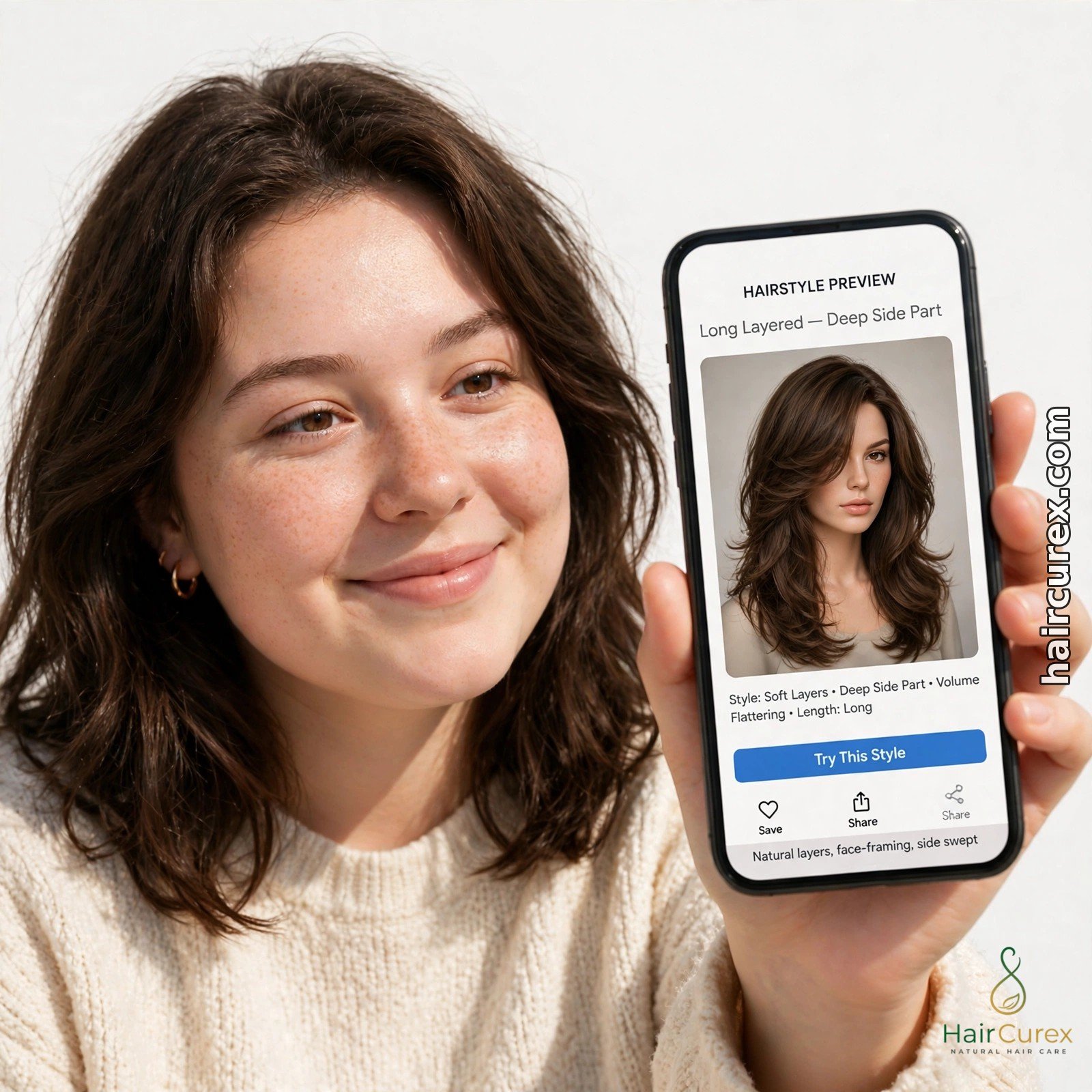
An AI hairstyle for a round face is a free or freemium try-on tool that places a new hairstyle onto your own photo, so you can see whether long layers, a deep side part, a textured pixie or a collarbone lob actually flatters your face before you book a haircut. Upload one clear, front-facing photo, pick a style, and the tool rebuilds the hair in the picture in seconds.
The best free starting points are YouCam Makeup for the most natural-looking results, FaceApp for the widest range, and Photo AI Studio for a quick browser-based preview with no app install. None guarantees a salon result: they are previews, not promises. Your texture, thickness and growth patterns still decide the real look. Use them to shortlist two or three looks, then take those previews to your stylist.
How an AI Hairstyle for a Round Face Try-On Works
A photo-based try-on differs from a live camera filter: a filter overlays a style on your moving face in real time, while a try-on works on a still photo, finding your face and hairline, covering your existing hair, and drawing the chosen style in its place. That is why try-ons usually look more realistic, especially for big changes such as going from long hair to a pixie.
Most tools follow the same three steps: upload a photo, browse a library of styles grouped by length, texture and occasion, then save or share the result. Free tiers differ: some give a handful of previews with a watermark, some give unlimited basic previews with no watermark, and some lock their most realistic styles behind a subscription. Our general AI hairstyle changer guide explains how photo tools handle face shape and texture.
A round face is about as wide as it is long, with the cheekbones as the widest point, so styles that add height and vertical lines flatter it, while width at ear level or a hard line at the chin do the opposite.
7 Styles That Flatter a Round Face
Here are the seven styles worth previewing first. For real-life inspiration beyond the previews, ApoHair’s guide to 37 hairstyles for round faces shows each style on real women, a useful second opinion next to an AI render.
| Style | Why it flatters a round face | Best length | Watch out for |
|---|---|---|---|
| Long layers | Layers below the chin draw the eye down without adding cheek width | Collarbone or longer | Layers starting at cheek level add width where you least want it. |
| Deep side part | The off-centre parting creates a diagonal that breaks the face’s symmetry | Any length | A part that is only slightly off-centre does almost nothing; commit to a deep part. |
| Textured pixie | Volume at the crown adds height and length to the outline | Short, with lift on top | A flat pixie with volume at the sides widens the face. |
| Collarbone lob | Length falls below the jaw, creating a long vertical line | Ends below the chin, ideally at the collarbone | A blunt lob ending exactly at the chin adds a horizontal line at the widest point. |
| Side-swept bangs | A diagonal fringe breaks up the forehead’s width | Works with most lengths | A straight-across blunt fringe shortens the face and adds width. |
| Curtain bangs | The parted fringe sweeps past the cheekbones in two diagonals | Long or medium hair | Very short curtain pieces can sit at cheek level and widen the face. |
| Long shag | Choppy layers below the jaw move texture away from the cheeks | Long, with layers starting below the jaw | A shag layered at the cheek adds bulk at the widest point. |
Long Layers, Pixies and Lobs: The Styles to Test First
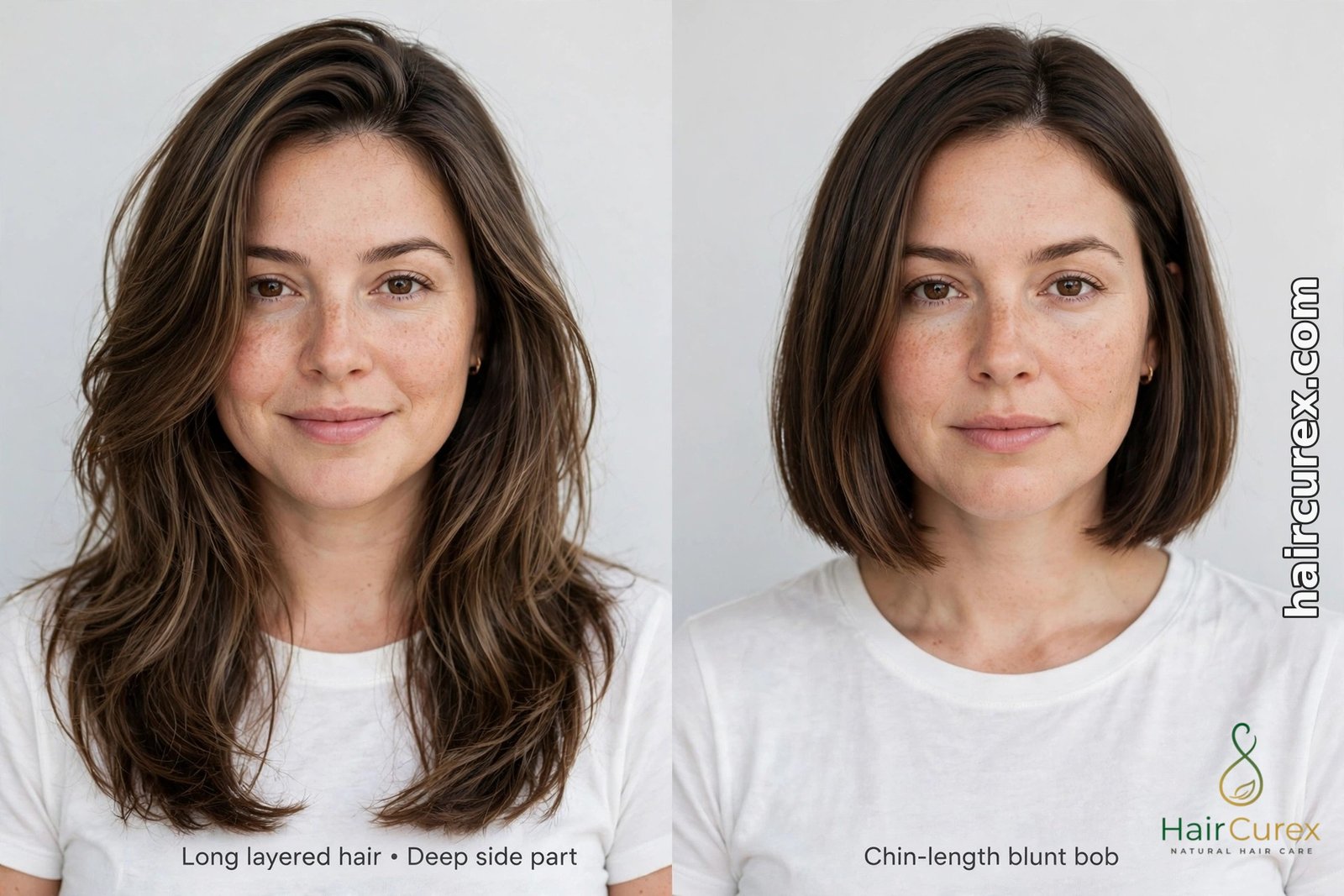
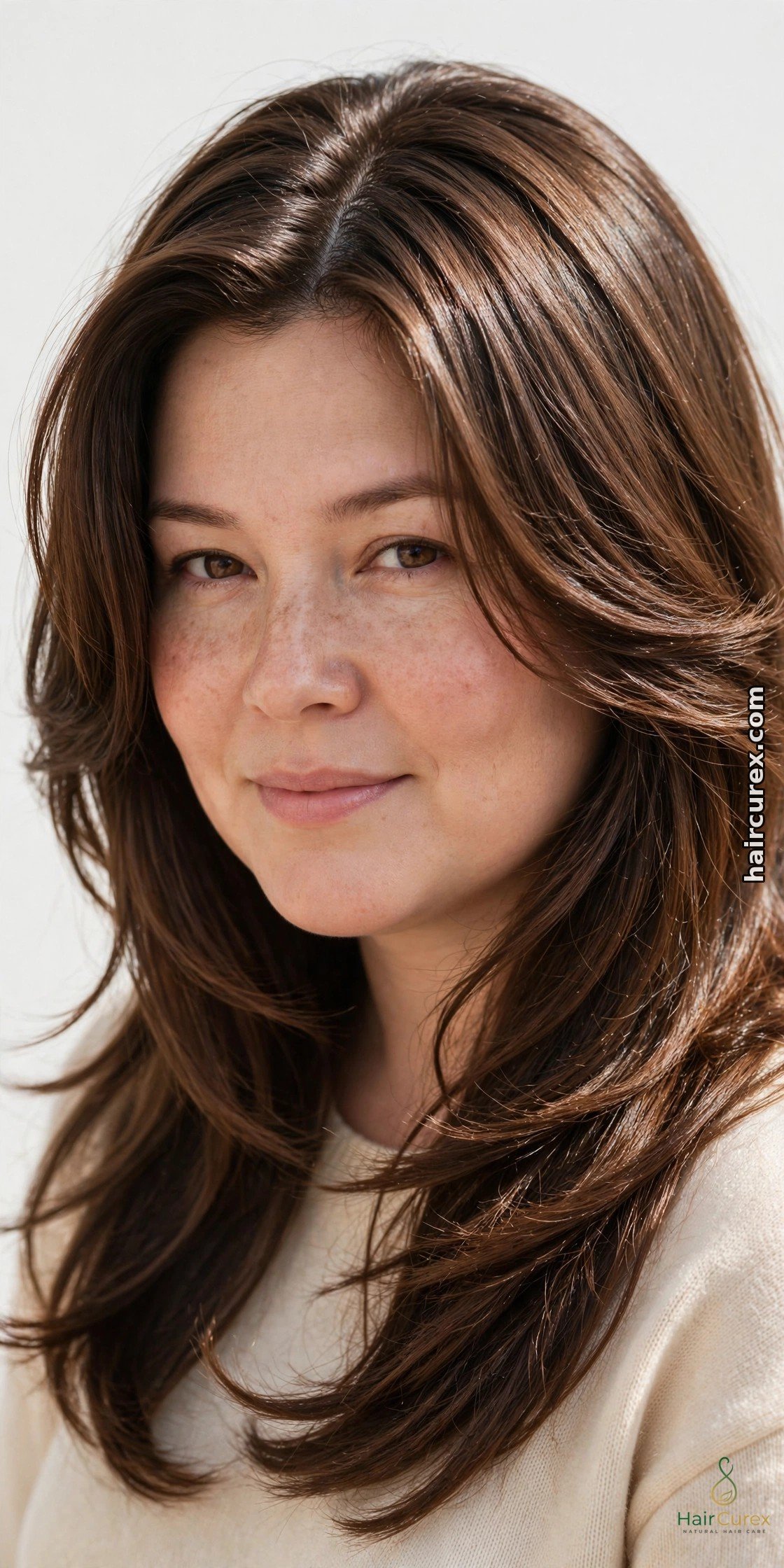
Long layers are the safest first test for a round face. Ask the tool for layers that start below the chin, not at the cheekbone, so the hair falls close to the face at its widest point. In the preview, judge the silhouette: does the outline run downward, or bulge at the ears? The deep side part is the cheapest change of all, because it needs no cut: sweep the hair hard to one side from a part set well off-centre, creating a diagonal across the top of the head, the one direction a round face has none of.
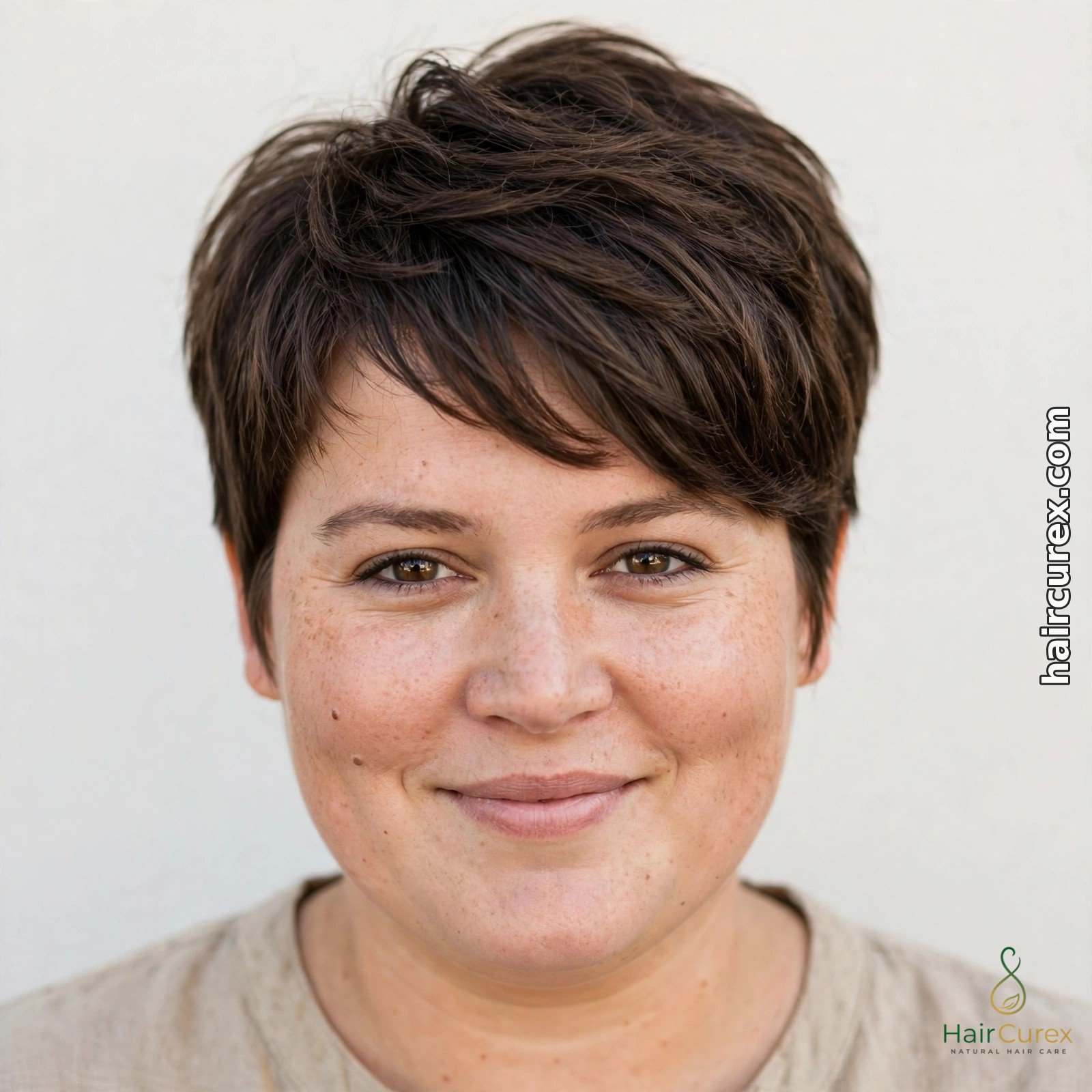
Short hair can flatter a round face, but only when the volume sits in the right place. A textured pixie works when the crown has lift and the sides stay close to the head. A lob works when it ends below the jaw, ideally at the collarbone, angled slightly longer at the front. A blunt lob ending exactly at the chin is the classic round-face mistake: the horizontal line sits at the widest point.
Bangs on a Round Face: Side-Swept, Curtain and Wispy
Side-swept bangs are the most reliable fringe for a round face: the fringe sweeps to one side, softening the cheek line and adding a diagonal. Test both sweep directions, because a fringe swept against your natural parting fights you every morning. Curtain bangs are the second-best test: parted in the middle, they frame both sides of the face and grow out into face-framing layers.
Wispy bangs are the low-commitment option for fine hair. If you can see forehead through the fringe at full size, that is realistic, not a flaw. Avoid a heavy blunt fringe cut straight across the forehead: it shortens the face and adds width. Our AI bangs try-on guide covers fringe previews in detail, including curly bangs and grow-out.
Tool by Tool: The Best Free Options for Round-Face Previews
YouCam Makeup is the strongest all-round pick. In an independent 2026 test of twelve hairstyle try-on apps, it came out on top for free, realistic results, with 60-plus styles on iOS and Android, 150-plus hair colour filters and a face analyser that suggests styles for your face shape. Its free tier is limited and free exports carry a watermark, but its realism is hard to beat.
FaceApp is the best-known name and the best for variety, with many cuts and colours plus makeup edits in the same app, and it works offline once downloaded, though free exports carry a watermark and many premium styles are locked behind a subscription. Photo AI Studio is the best no-fuss option: web-based, no sign-up, unlimited basic uploads, exports without a watermark, though the style library is more generic.
MyEdit suits you if you like to customise, with 40-plus styles and text-prompt fine-tuning, while Fotor swaps your face onto a model photo. Our AI hairstyle changer for women guide compares the same tools from the women’s-styles angle, and the Perfect Corp test of twelve hairstyle apps is a useful independent check on which free tier does what.
Getting a Realistic Preview: Your Photo Matters More Than the App
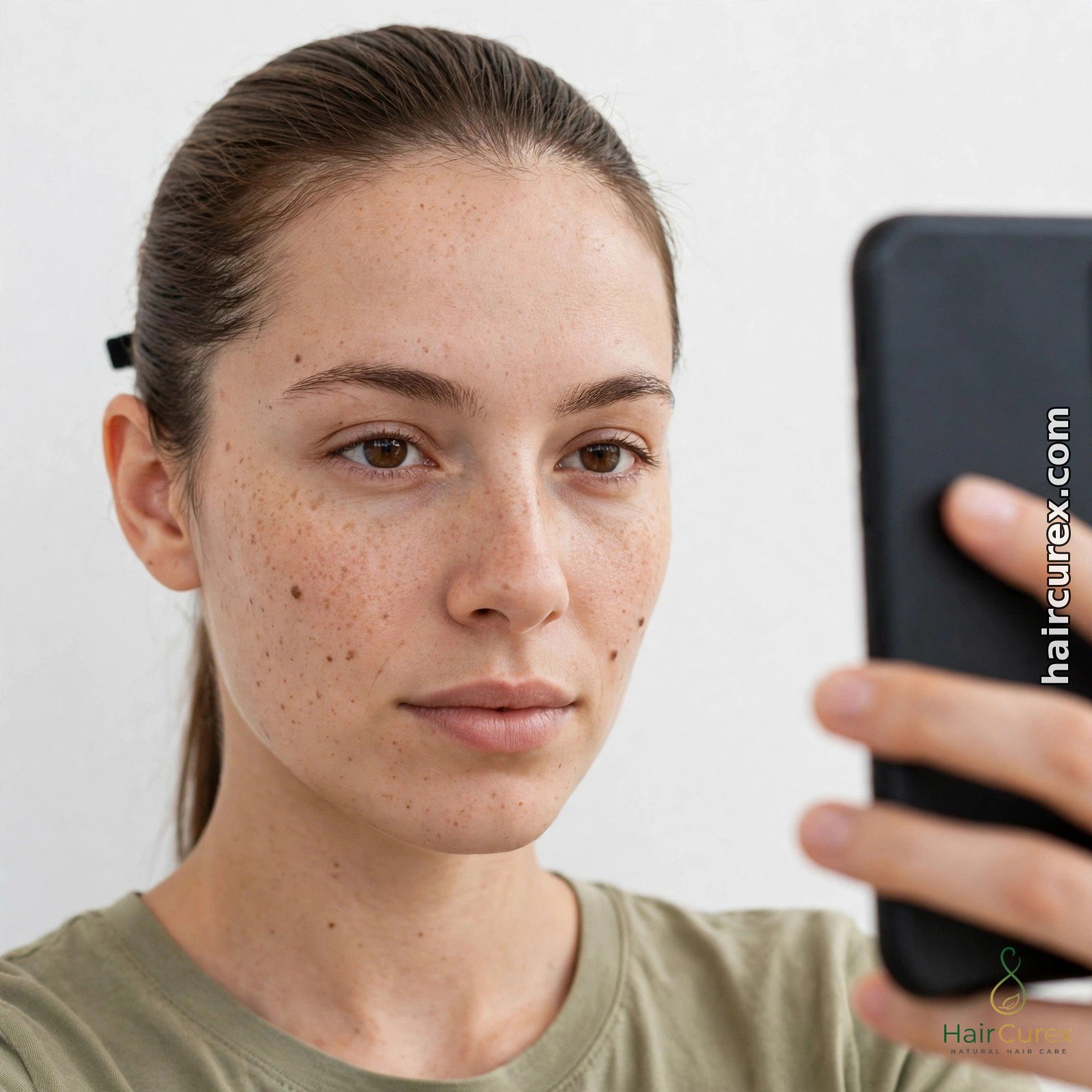
A try-on can only work with the photo you give it, and most disappointing results start with a bad photo, not a bad app. Use a clear, front-facing photo in bright, even daylight, facing a window, phone at eye level, hair pulled back so the tool can see your hairline and face shape. Avoid sunglasses, hats, heavy filters and beauty modes, which change your face shape and mislead the result. Take the photo against a plain background with your whole head in frame.
Use the same photo across every tool you test, and test each shortlisted style on a second photo too: a style that only works on one perfect photo is a warning sign.
Choosing by Face Shape, Hair Type and Parting
Face shape is a useful filter, not a rule: oval faces suit most lengths, while square and heart-shaped faces have their own flattering cuts. If you are unsure of yours, our free hairstyle finder quiz narrows the field before you spend time in a try-on app.
Hair type matters at least as much as face shape. Fine hair will not hold the same crown volume a pixie preview shows on thick hair, and a preview that gives every texture the same smooth finish is smoothing over reality. Curly hair changes volume with humidity and parting, so test styles close to your natural texture first. A preview showing long waves on a pixie-length photo is showing you a wig, not a style your stylist can build without extensions.
What to Avoid: The Styles That Fight a Round Face
The blunt chin-length bob is the first style to test and reject: a hard line ending exactly at the chin sits at the face’s widest point. Heavy, straight-across blunt bangs are the second: they shorten the forehead and add width. Big curls that flip outward at ear level are the third: volume at the cheeks repeats the face’s widest point. None is a ban. A bob can work if angled longer at the front and ending below the jaw, bangs can work if side-swept or curtain-style, and curls can work if the volume starts below the jaw and the roots stay flat.
Free vs Paid: What the Free Tier Usually Leaves Out
An AI hairstyle for a round face tool on a free tier is genuinely useful, but it has predictable limits: few free previews per day, a watermark on saved images, lower export resolution, and the trendiest styles held for subscribers. A handful of careful previews on one good photo is still enough to shortlist a look.
Be careful with “free trial” wording: a tool that asks for card details before your first preview is not the same as a free tool, so check when a trial converts to a paid subscription and how to cancel it. Prefer tools that let you preview without an account for your first test. Our best free AI hairstyle changer apps guide compares the same tools from the free-tier angle.
Privacy: What Happens to Your Photo?
Your selfie is personal data, so check three things before uploading it to an AI hairstyle for a round face tool: how long the company stores your photos, whether uploads train its models, and whether you can delete your photos and account. Prefer tools with easy deletion and a clear privacy policy. A try-on needs the photo you choose, not your contacts or location history, so decline permissions it does not need. Never upload someone else’s photo without permission, avoid uploading photos of children, and delete your uploads once you have saved the previews.
Taking Your Previews to Your Stylist
Take two or three saved previews to your appointment, not twenty. Show your stylist the winning style and one close alternative, and say what you like about each: the length, the layering, the parting, the crown volume. Ask whether your hair type can hold that shape, how it will grow out, and how much daily styling it will need. Mention what a preview cannot see: a cowlick, a strong natural parting, thinning at the crown, or previous colour in your lengths.
Bring reference photos of real people too: a real photo shows how a cut behaves on hair like yours. If your stylist suggests a slightly longer or softer version of your preview, listen: a cut made a little long can be shortened, but a cut made too short cannot be undone.

The Limits of an AI Round-Face Preview
Try-ons are weakest exactly where real hair is most individual. Texture is the biggest gap: many tools smooth curly or coily hair into a generic wave. Volume is another: a tool cannot feel your roots’ lift, so a voluminous pixie may fall flat. Colour is approximate too, because screens and lighting shift a shade. Growth is invisible: no preview shows how a cut grows out over six weeks, or how it looks unstyled on a rushed morning.
Face-shape advice itself has limits: it comes from stylists’ experience, not controlled experiments. There are no trials of haircuts by face shape. Treat every rule as a hypothesis worth testing on your own photo, then check it with your stylist. Used honestly, an AI hairstyle for a round face try-on is one of the cheapest, lowest-risk ways to avoid a haircut you regret. The preview narrows the choice; the stylist makes the decision.
Frequently Asked Questions About AI Hairstyle for a Round Face
Q: What is the best hairstyle for a round face?
A: Long layers starting below the chin, a deep side part, a collarbone lob and a textured pixie with crown volume are the most reliable choices, because they add length and height without width at the cheeks.
Q: Can AI really show me what I will look like with a new hairstyle?
A: It can show a realistic preview of the shape and length on your own face, enough to shortlist two or three styles. It cannot guarantee the salon result, because texture, volume and your hair’s real behaviour still decide the final look.
Q: What is the best free AI hairstyle try-on for a round face?
A: YouCam Makeup gives the most natural-looking previews in independent 2026 testing, FaceApp offers the widest style range, and Photo AI Studio is the fastest browser-based option with no app install.
Q: Which bangs suit a round face?
A: Side-swept, curtain and longer wispy bangs usually suit round faces best, because they add diagonal lines and length rather than width. Avoid a heavy blunt fringe cut straight across the forehead.
Q: Should I get a bob if I have a round face?
A: A blunt bob ending exactly at the chin usually widens a round face, but an angled lob ending below the jaw, longer at the front, can flatter it. Preview both on the same photo.
Q: Should I show an AI preview to my hairstylist?
A: Yes. Take two or three saved previews, say what you like about each, bring real reference photos too, and ask whether your hair type can hold the shape, how it will grow out, and how much styling it will need.