
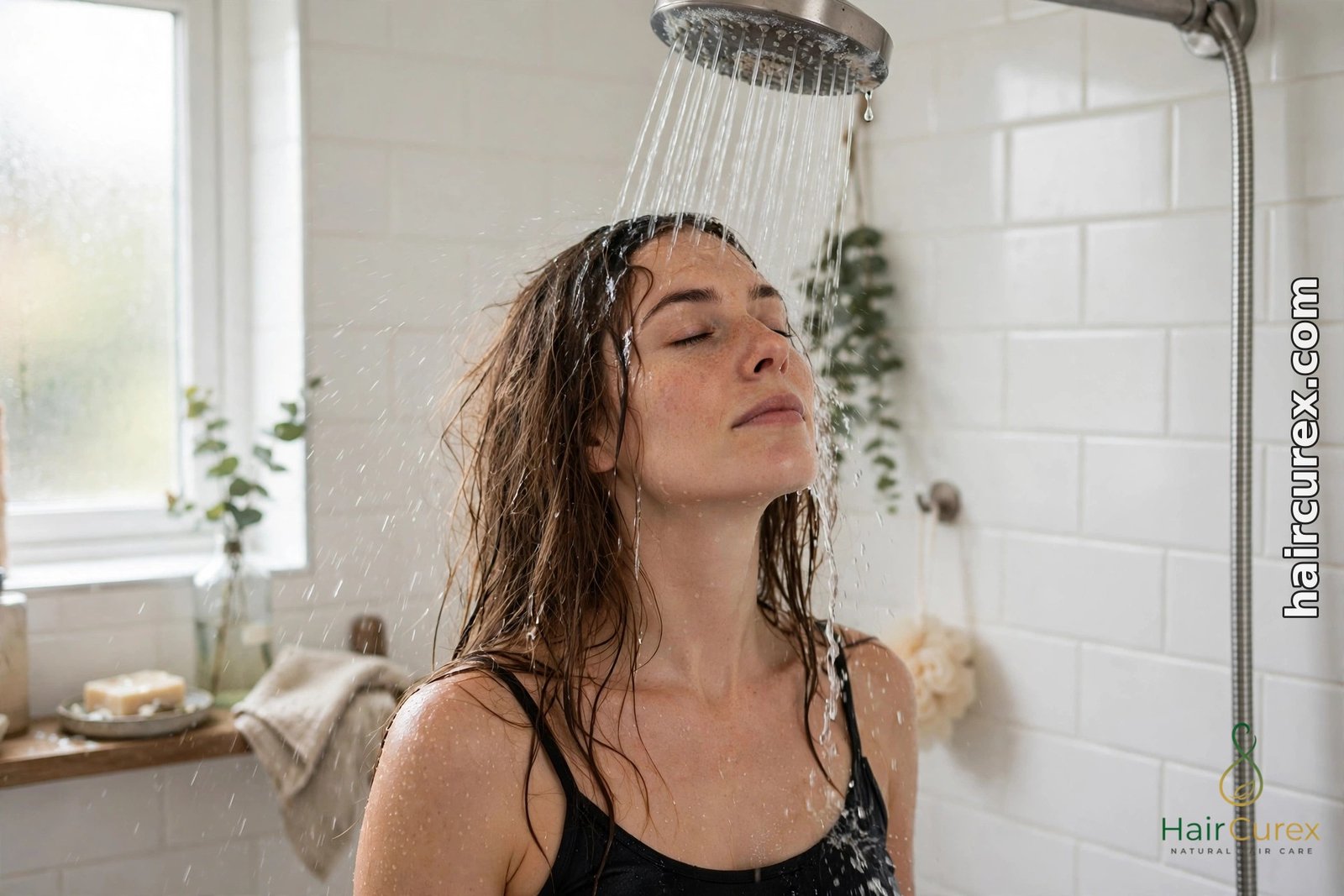
Hard water and your hair are a bad combination, and if your hair feels dry, dull and rough no matter how good your products are, your tap water may be the reason. Hard water is water with high levels of dissolved calcium and magnesium, and every wash leaves a thin mineral film on each strand. That film blocks moisture from getting in, stops conditioner from working properly, fades colour, flattens curls and makes hair brittle enough to snap. The good news is that the damage is fixable: a chelating shampoo used every one to two weeks strips the mineral buildup away, an acidic rinse helps close the cuticle, and a shower filter or water softener reduces future exposure. This guide covers the seven signs that your water is damaging your hair, three ways to test your water at home, and the fixes that actually work — including the honest limits of shower filters.
Hard Water and Your Hair: What Hard Water Actually Is
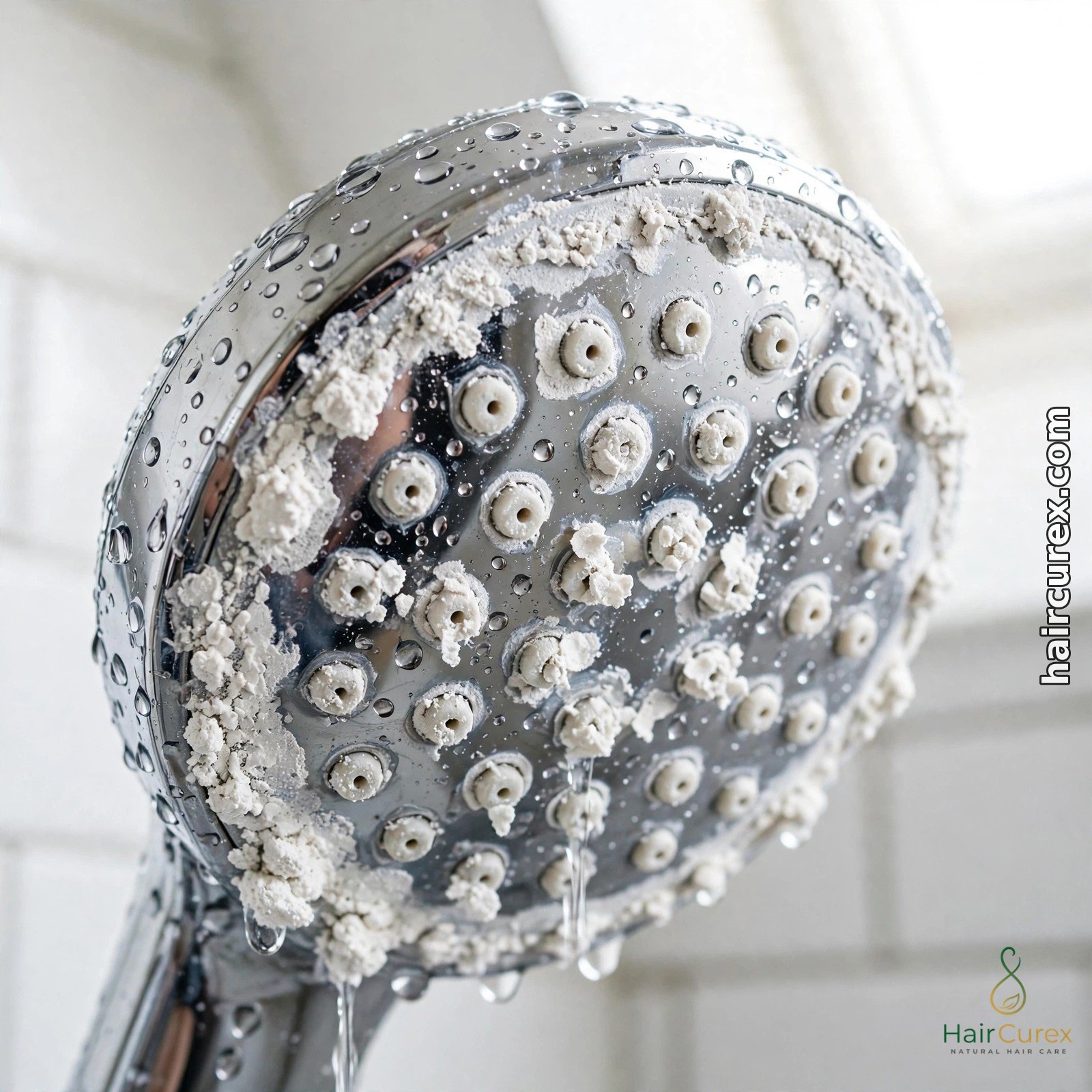
Hard water is simply water that contains a high concentration of dissolved minerals, mainly calcium and magnesium. It forms when rainwater filters through limestone, chalk and other mineral-rich rock on its way to underground aquifers and wells, dissolving minerals as it goes. The U.S. Geological Survey defines the scale clearly: water measuring 0 to 60 mg/L of calcium carbonate is soft, 61 to 120 mg/L is moderately hard, 121 to 180 mg/L is hard, and anything above 180 mg/L is very hard. Hard water is common across much of the United States, and many people live with it without ever knowing — because you cannot see, smell or taste hardness in a glass of water. What you can see is what it leaves behind: white chalky scale on showerheads and taps, cloudy spots on glassware, soap scum on tiles, and a filmy feeling on your hands after washing. The same deposits form on your hair, wash after wash, and that is where the trouble starts.
Your hair shaft carries a slight negative charge, and calcium and magnesium ions carry a positive charge, so they are naturally attracted to the hair surface and bond to it easily. Once attached, they form a scale-like mineral film that sits on the cuticle and between the cuticle scales, and the layer grows thicker with every wash. Because the film is a physical barrier, it stops water and conditioner molecules from reaching the hair itself — so even a rich deep conditioner sits on top of the mineral coating instead of moisturising the strand. Research backs this up: a study published in the Indian Journal of Dermatology, Venereology and Leprology found significantly higher magnesium deposits on hair exposed to hard water for three weeks compared with soft-water controls, even before any visible surface damage appeared. A separate study in the International Journal of Trichology found that after 30 days of hard-water washing, hair fibres became rougher and more prone to breakage. The damage is cumulative, which is why hair that seemed fine in your first month in a new home can feel straw-like six months later.
How Hard Water Damages Your Hair
Hard water damages hair in several connected ways, and understanding them helps you recognise the signs and choose the right fix. First, the mineral film props the cuticle scales open instead of letting them lie flat. A raised cuticle cannot reflect light evenly, so hair looks dull and matte instead of shiny, and the rough surface creates friction between strands, which leads to tangling, knots and frizz. Second, the film makes hair stiff and less pliable, so it loses bounce, will not hold a style, and feels coated and heavy at the same time. Third, hard water reacts with the surfactants in shampoo to form insoluble soap curd — the same scum you see on tiles — which means your shampoo lathers poorly, cleanses less effectively, and leaves sebum and product residue behind on the scalp. Fourth, the minerals interfere with colour: calcium deposits can displace dye molecules, so colour fades faster, and iron in hard water can push blonde or lightened hair toward brassy, orange or even greenish tones.
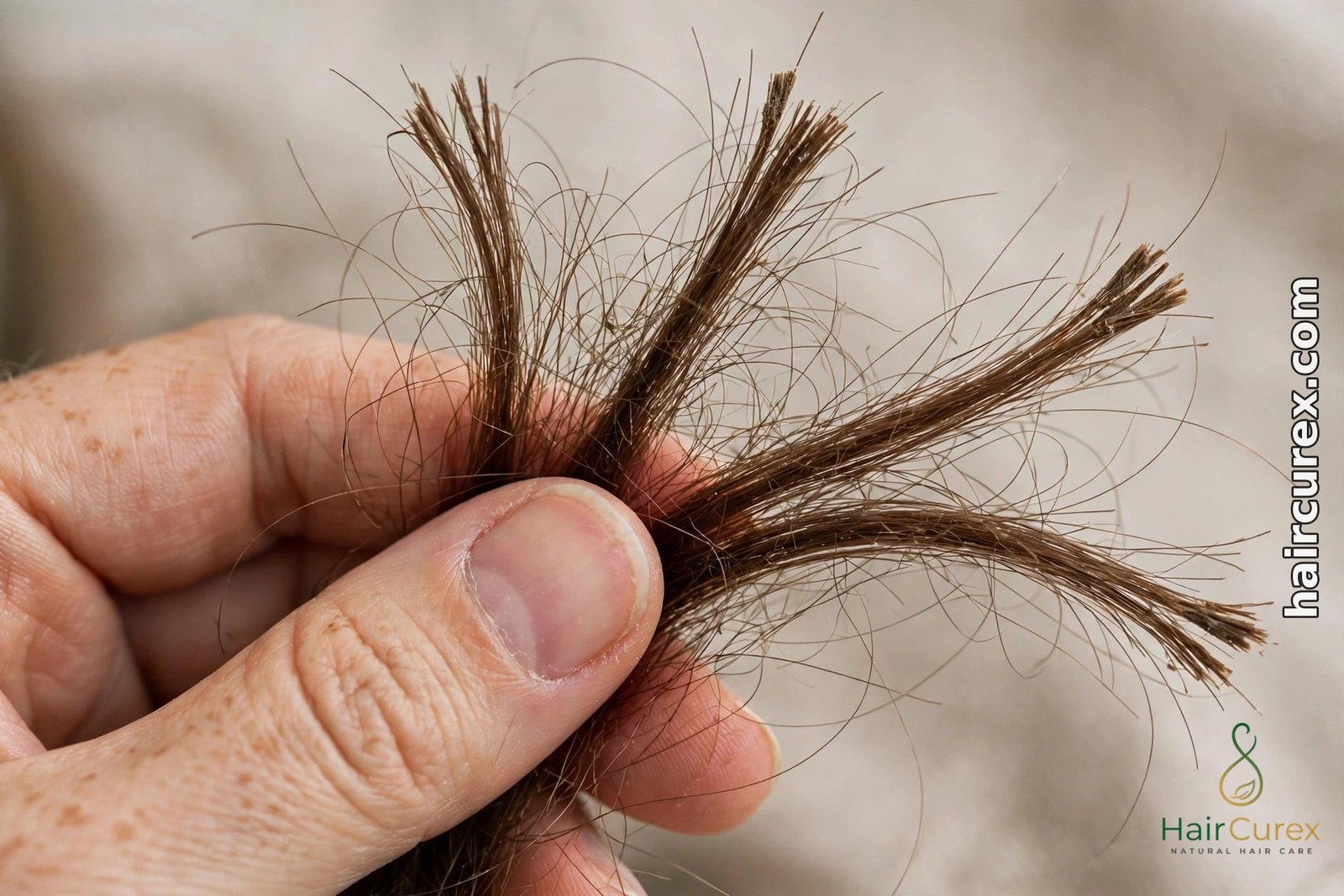
One important fact to be clear about: hard water does not cause medical hair loss. It does not damage the follicle, stop hair from growing, or cause pattern baldness. What it does cause is breakage along the shaft, and that breakage is very often mistaken for thinning or shedding. The difference is easy to check: a naturally shed hair is full-length with a small white bulb at the root end, while a broken hair is a short piece with a blunt or uneven end and no bulb. If the short pieces on your sink and shoulders have no bulb, the problem is breakage — and hard water is a prime suspect.
7 Signs Your Water Is Damaging Your Hair
If three or more of these signs sound familiar, your water deserves a proper test before you buy another product.
First, your hair feels dry and rough despite conditioning. Mineral deposits block moisture from entering the shaft, so if your ends feel straw-like 24 hours after washing and even a deep-conditioning mask does not help, the conditioner is probably sitting on a mineral film rather than reaching your hair.
Second, your shampoo will not lather properly. Calcium and magnesium react with shampoo surfactants to form soap curd, so you need two or three pumps to get any foam at all. Less foam means less effective cleansing, which leaves residue on the scalp.
Third, your hair tangles easily. The raised cuticle and mineral film increase friction between strands, so hair catches and knots, especially at the nape of the neck and at the ends.
Fourth, your colour fades faster or turns brassy. Iron and calcium accelerate colour oxidation and displace dye molecules, so blonde hair goes orange or yellow within weeks of colouring and dark hair takes on a flat, ashy cast.
Fifth, you have lost curl definition. Mineral deposits weigh curls down and fill the spaces between cuticle scales that help curls hold their shape. If your spirals have gone flat, your waves have lost bounce, or detangling has become much harder, hard water is a common culprit — curly and coily hair is affected more than straight hair.
Sixth, your scalp feels itchy or flaky. Hard water is alkaline, with a pH of 7 or above, while a healthy scalp sits between pH 4.5 and 5.5. That shift can dry the scalp, trigger itching and flaking that looks like dandruff, and leave a film that blocks follicle openings.
Seventh, you see split ends and short broken hairs. The dried-out cuticle becomes brittle, splits up the shaft, and snaps during brushing or styling. Persistent split ends that return quickly after a trim are a classic hard-water sign.
Hard Water vs Soft Water: What Is in Your Tap?
| Water type | Hardness (mg/L as calcium carbonate) | What it means for your hair |
|---|---|---|
| Soft | 0–60 | Rinses clean, shampoo lathers well, conditioner absorbs normally. |
| Moderately hard | 61–120 | Mild buildup over time; occasional clarifying wash helps. |
| Hard | 121–180 | Noticeable dullness, tangling and colour fade; chelating shampoo needed. |
| Very hard | Over 180 | Heavy mineral film, dryness, breakage and brassiness; chelating routine plus softener or filter recommended. |
How to Test Your Water at Home
Before you spend money on filters or new products, confirm how hard your water actually is. Three practical methods work well.
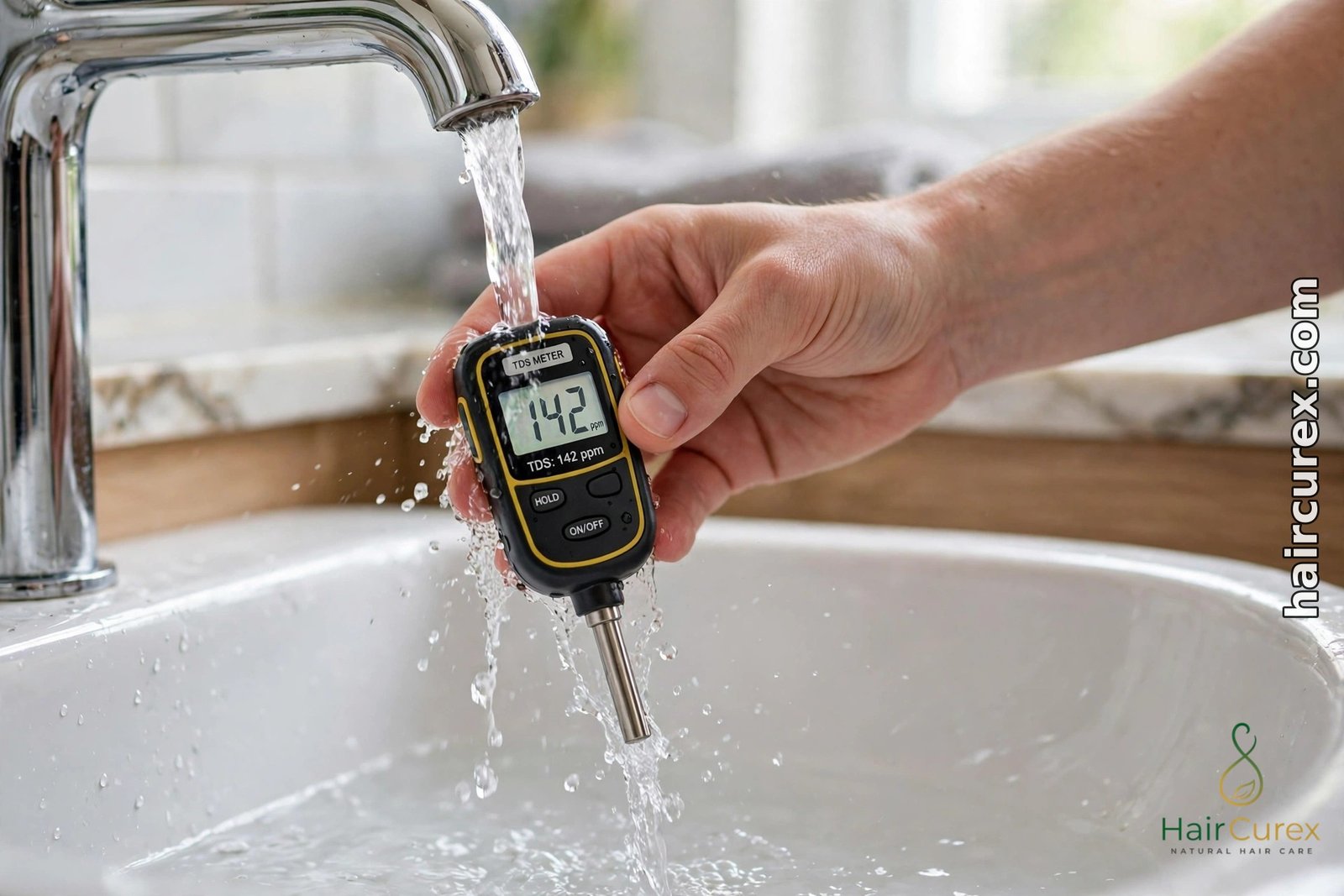
The easiest is a TDS meter. A total dissolved solids meter costs around $10–15, reads mineral concentration in parts per million, and takes ten seconds: hold it under running water and read the number. Below 60 ppm is soft, 60–120 ppm is moderately hard, 121–180 ppm is hard, and above 180 ppm is very hard. At 200 ppm or more, you will usually notice visible effects on your hair within weeks.
The second method is your municipal water report. In the U.S., public water systems must publish an annual water quality report, called a Consumer Confidence Report. Search for your city name plus “water quality report” or check your water utility’s website. The report lists hardness in mg/L or grains per gallon — anything above 10.5 grains per gallon (180 mg/L) is very hard.
The third method is the soap lather test, which costs nothing. Add a few drops of pure liquid soap (not detergent-based body wash) to a clear bottle filled with tap water and shake vigorously for ten seconds. Soft water produces plenty of clear, bubbly foam. Hard water gives little foam and the water looks milky or cloudy instead — that cloudiness is soap curd forming with the minerals. Also look around your home: white chalky residue on the showerhead, brown or reddish stains near drains, and cloudy glassware all point the same way.
Fix 1 — Use a Chelating Shampoo Every 1–2 Weeks
A chelating shampoo is the only product that actually removes mineral deposits from the hair shaft, and it is the single most important fix. Regular clarifying shampoos strip product buildup and excess oil, but they cannot break the ionic bond between calcium and magnesium ions and the hair shaft, so the mineral film largely survives a clarifying wash. Chelating shampoos contain binding agents that grab onto mineral ions and lift them off the strand so they rinse away. Look for disodium EDTA or tetrasodium EDTA near the top of the ingredient list — that is the most studied and effective agent for calcium and magnesium removal. Citric acid is a gentler, naturally derived chelating agent that works well on mild to moderate buildup and suits sensitive scalps. Our best detox shampoo guide explains what a detox wash does, who needs one and how to use it, and the same principles apply here: a detox shampoo with chelating agents is the right tool for mineral buildup, while an ordinary clarifying shampoo is not enough on its own.
Use a chelating shampoo once every one to two weeks rather than daily. In very hard water areas (over 200 ppm), weekly use during the first month clears the existing buildup faster, then shift to maintenance frequency. Chelating shampoos are more stripping than regular shampoo, so always follow with a deep conditioner or hair mask to restore moisture. Overusing them dehydrates the cuticle and creates the very dryness you are trying to fix, so more is not better. If your hair feels rough again two or three weeks after a chelating wash, that is simply the mineral film rebuilding — the wash worked, and the next one is due.
Fix 2 — Rinse Acidic, Then Deep Condition
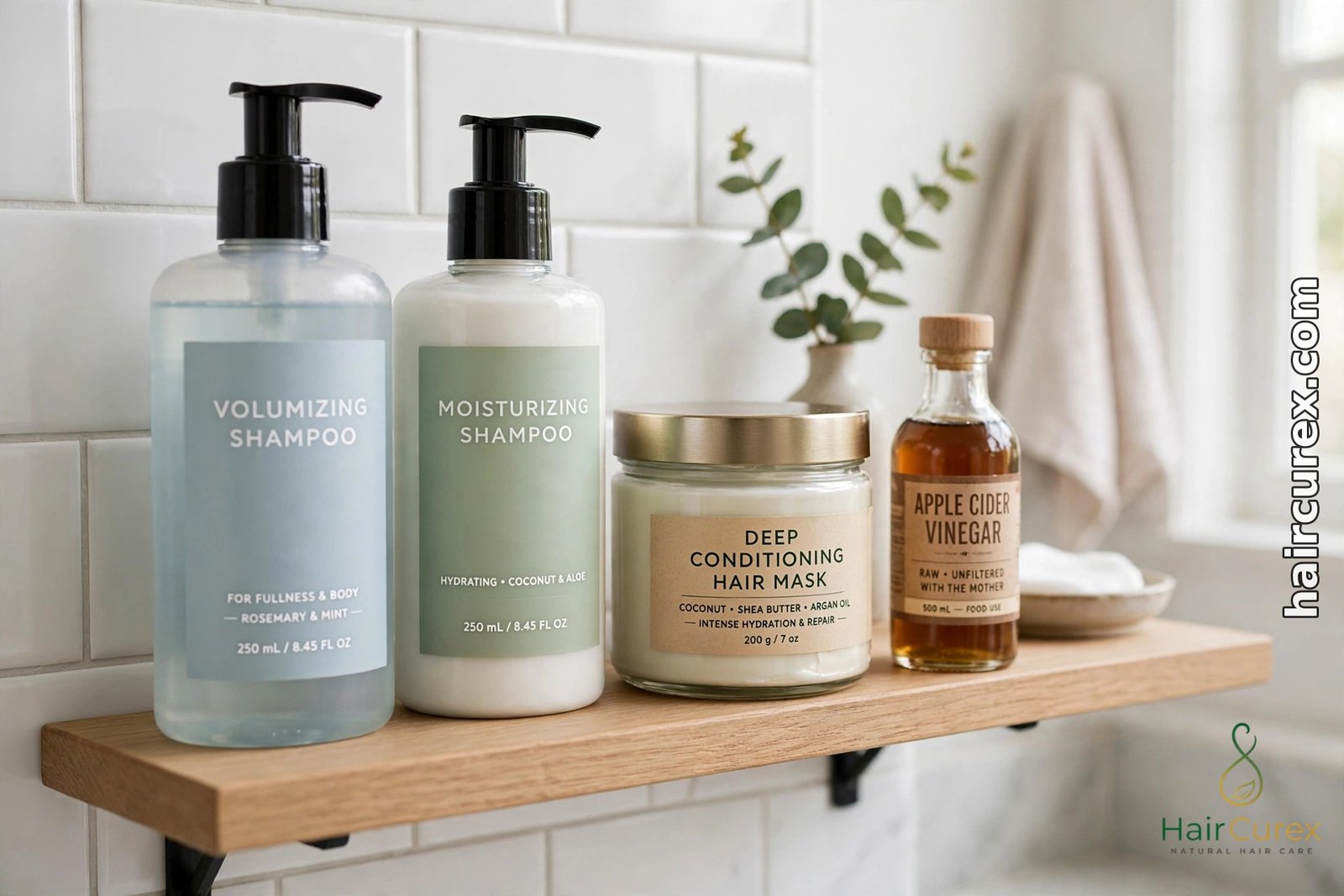
Hard water is alkaline, and an acidic rinse helps bring the hair back toward its natural pH of around 4.5 to 5.5, which lets the cuticle lie flat again and restores shine. The classic home version is an apple cider vinegar rinse: mix one tablespoon of apple cider vinegar into one cup of water, pour it through your hair after shampooing, leave it for a minute or two, and rinse out. It will not remove heavy mineral deposits on its own — that is the chelating shampoo’s job — but it helps close the cuticle, reduce frizz and remove light surface residue between chelating washes (our guide on how to get rid of frizzy hair explains the full routine). Formulated cosmetic acid rinses do the same job in a more controlled way if you prefer a ready-made product. Do not use undiluted vinegar, and skip the rinse if your scalp is irritated or broken, because acid on broken skin stings and makes irritation worse.
After any chelating wash, deep condition. A moisturising mask will not remove mineral buildup, but it repairs the dryness and weakness that buildup caused, and it works far better once the mineral film is gone. Apply the mask evenly, leave it for at least 20 minutes, and choose the formula for your hair type. Our coconut oil for hair guide covers one of the most popular deep-conditioning ingredients: a small amount of coconut oil as a pre-wash treatment for about 15 minutes can add moisture and reduce protein loss, though it suits some hair types better than others and must always be washed out thoroughly. The order matters: chelate first, then condition. Conditioning before removing the mineral film is like moisturising through a raincoat — the product never reaches the hair.
Fix 3 — Shower Filters and Water Softeners (Honest Limits)
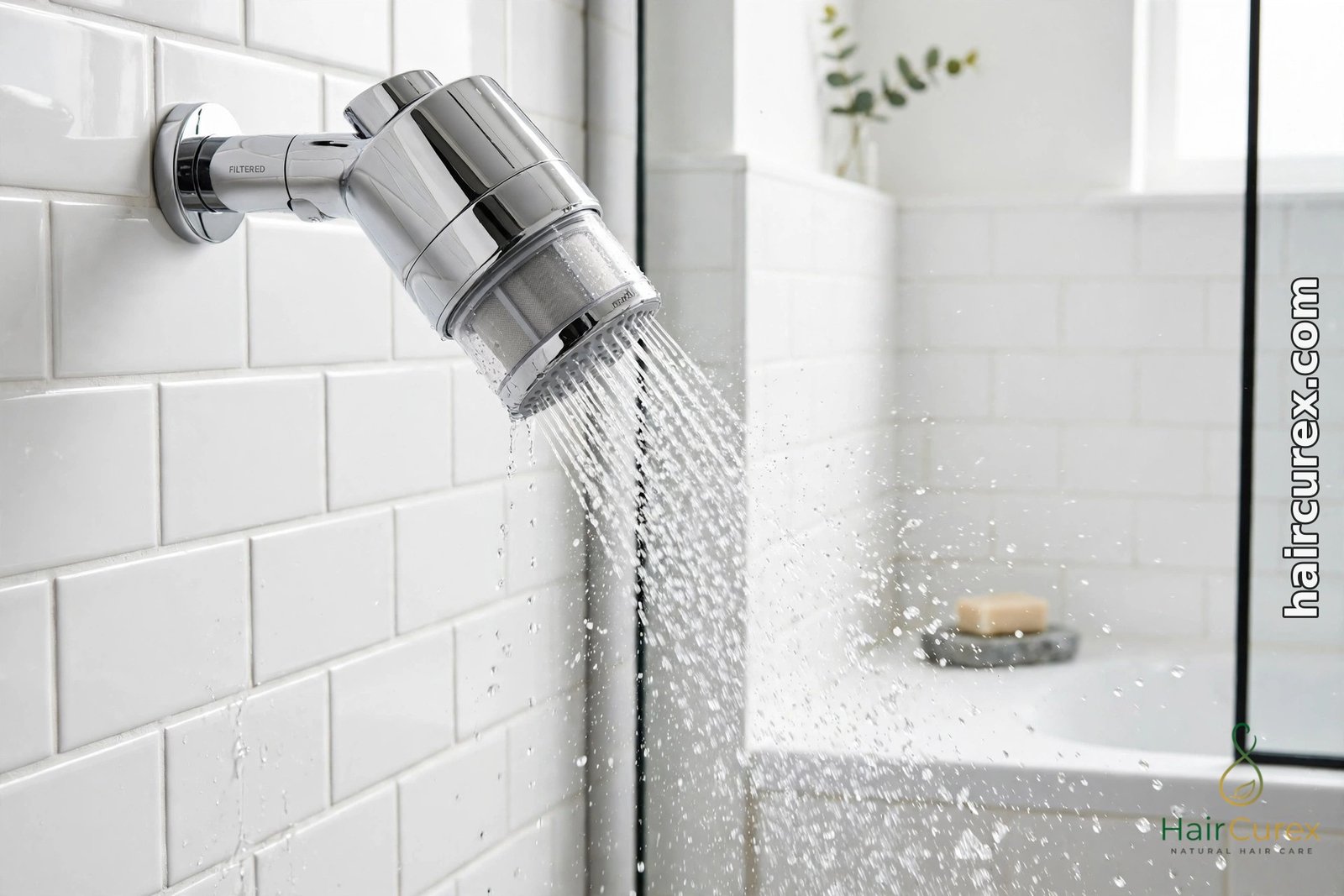
This is the fix where honest expectations matter most, because shower filter marketing is often misleading. A shower filter can remove chlorine and chloramine, filter out sediment, rust, iron, lead and copper, and reduce the chemical load that compounds dryness and colour fade. Chlorine is genuinely damaging to hair — it strips the natural lipid layer from the cuticle and accelerates colour oxidation — so reducing it is a real improvement. But a shower filter cannot remove calcium and magnesium, the minerals that define hard water, and it cannot soften water. Shower-head cartridges simply do not have the capacity for ion exchange, the only mechanism that removes hard water minerals at scale.
If you want full mineral removal, you need a water softener. A whole-house softener uses ion exchange to replace calcium and magnesium with sodium or potassium, and typically costs $500–2,500 installed. A shower-mounted ion-exchange softener is a smaller, cheaper middle option at roughly $100–300. A standard shower filter, by contrast, typically costs $35–150 plus replacement cartridges. So the practical rule is simple: a chelating shampoo is non-negotiable for the mineral side of the problem, a shower filter is a worthwhile extra for chlorine, and a softener is the complete fix if your water is very hard and the budget allows. Do not buy a filter expecting it to solve hard water on its own — it will not, and you will conclude wrongly that nothing works.
Fix 4 — Change How You Wash
Small changes in washing technique help a lot while the bigger fixes take effect. Focus shampoo on the scalp, massaging gently, rather than scrubbing the lengths — the lengths only need the rinse running through them, and extra scrubbing creates friction on already-roughened cuticles. Rinse with cool or lukewarm water instead of hot, because hot water opens the cuticle further and lets more mineral deposit form, while a cooler final rinse helps the cuticle lie flat. Wash less often if you can: every wash in hard water adds another layer of mineral film, so stretching washes to every second or third day slows the buildup, and dry shampoo on the in-between days keeps the roots fresh. Our gentle shampoo guide explains how to choose a wash-day formula that cleans without stripping, which matters here because hair dealing with hard water is already dry and does not need a harsh cleanser on top. Finally, detangle gently with a wide-tooth comb on conditioned hair, starting from the ends, because mineral-roughened hair snaps far more easily under a brush.
Hard Water and Different Hair Types
Hard water does not affect every head of hair equally, and knowing where you stand helps you set the right routine. Colour-treated and bleached hair is the most vulnerable: porous, chemically treated hair lets minerals in more easily, colour fades faster, and brassiness appears within weeks. If you colour your hair, chelating washes and a softener matter more for you than for anyone else. Curly and coily hair is next: mineral deposits weigh curls down, fill the spaces between cuticle scales, and flatten definition, and because curly hair is naturally drier, the moisture-blocking film hits it harder. Our high-porosity hair guide explains why porous hair absorbs minerals quickly and loses moisture quickly — and hard water makes both problems worse, so porous curls need the most consistent chelating routine. Fine hair goes limp and flat under mineral weight and looks thinner than it is, though the hair itself is not thinning — it is coated. Thick, straight, uncoloured hair usually shows the fewest symptoms and may only need a chelating wash once a month. Whatever your type, the test is the same: if a chelating wash makes your hair suddenly feel like itself again — softer, shinier, lighter — your water was the problem.
5 Mistakes That Make Hard Water Damage Worse
First, buying a shower filter and expecting it to fix everything. It removes chlorine, not calcium and magnesium, so the mineral film keeps building and you blame the wrong product. Second, using a chelating shampoo every day. It strips the mineral film, but daily use also strips natural oils and leaves the cuticle drier than before — once every one to two weeks is the right rhythm. Third, deep conditioning without removing the buildup first. The mask sits on the mineral film and never reaches the hair, so you conclude the mask does not work when the real problem is the order. Fourth, washing with very hot water. Hot water opens the cuticle and lets more mineral in, and it dries the scalp further. Fifth, ignoring the signs and changing products instead. If three shampoos in a row have all “stopped working”, the shampoo was never the problem — the water was, and no new bottle will fix a water problem.
When to See a Dermatologist
Hard water damage itself never needs a doctor — it is a cosmetic problem with a cosmetic fix. But some scalp and hair changes do deserve a professional look. See a dermatologist if you have persistent itching, redness, soreness, flaking or hair loss in patches, because those can be scalp conditions that no shampoo or filter will fix. The same applies if shedding suddenly increases, if hair is breaking off in short pieces all over despite a chelating routine, or if a new product causes itching, redness or swelling — stop the product, rinse it out, and do not push through a reaction. A dermatologist can also help if your hair has suddenly lost its curl pattern or elasticity, or if thinning does not match your usual pattern. Patch-test a new chelating shampoo on your inner forearm or behind your ear for 24 to 48 hours before a full application to catch most reactions early.
The Bottom Line on Hard Water and Your Hair
Hard water and your hair do not have to be enemies for life. The mineral film that makes your hair dry, dull, frizzy and breakable is removable, and the routine that removes it is simple: test your water so you know what you are dealing with, use a chelating shampoo every one to two weeks to strip the buildup, follow with a deep conditioner, use an acidic rinse to help the cuticle close, and add a shower filter for chlorine — or a softener if your water is very hard and the budget allows. Do it in that order, and give it a month: most people notice softer, shinier, easier hair after the very first chelating wash, and the full improvement shows once the routine has had a few cycles. If your hair suddenly feels like itself again after a chelating wash, you have your answer — it was never your shampoo, your conditioner or your hair. It was the water, and now you know how to fix it.
Frequently Asked Questions About Hard Water and Your Hair
Q: How do I know if I have hard water?
A: Look for white chalky scale on showerheads and taps, cloudy glassware, and shampoo that barely lathers. To confirm, use a TDS meter ($10–15) — above 180 ppm is very hard — check your city’s annual water quality report, or do the soap lather test: little foam and milky water means hard water.
Q: Can hard water cause hair loss?
A: No. Hard water does not damage hair follicles, stop hair from growing, or cause pattern baldness. It causes mineral buildup that weakens the hair shaft, so hair breaks along its length — and that breakage is often mistaken for thinning or shedding. Broken hairs are short with blunt ends and no root bulb; shed hairs are full-length with a small white bulb.
Q: Does a shower filter remove hard water?
A: No. Standard shower filters remove chlorine, chloramine, sediment and heavy metals, but they cannot remove calcium and magnesium, the minerals that make water hard. Only an ion-exchange water softener removes hard water minerals. A filter is still worthwhile for chlorine, but a chelating shampoo is essential for the mineral side.
Q: How often should I use a chelating shampoo for hard water?
A: Once every one to two weeks is right for most people. In very hard water areas (over 200 ppm), use it weekly for the first month to clear existing buildup, then shift to maintenance frequency. Always follow with a deep conditioner, because chelating shampoos are more stripping than regular shampoo.
Q: Will apple cider vinegar fix hard water hair damage?
A: Partly. A diluted apple cider vinegar rinse (one tablespoon per cup of water) helps close the cuticle, reduce frizz and remove light surface residue, but it cannot dissolve heavy mineral deposits. Use it as a maintenance step between chelating washes, not as a replacement for them.
Q: Can hard water damage colour-treated hair?
A: Yes, more than any other hair type. Calcium deposits displace dye molecules so colour fades faster, and iron in hard water pushes blonde or lightened hair toward brassy, orange or greenish tones. Colour-treated hair benefits most from a chelating routine and, where possible, a water softener.