
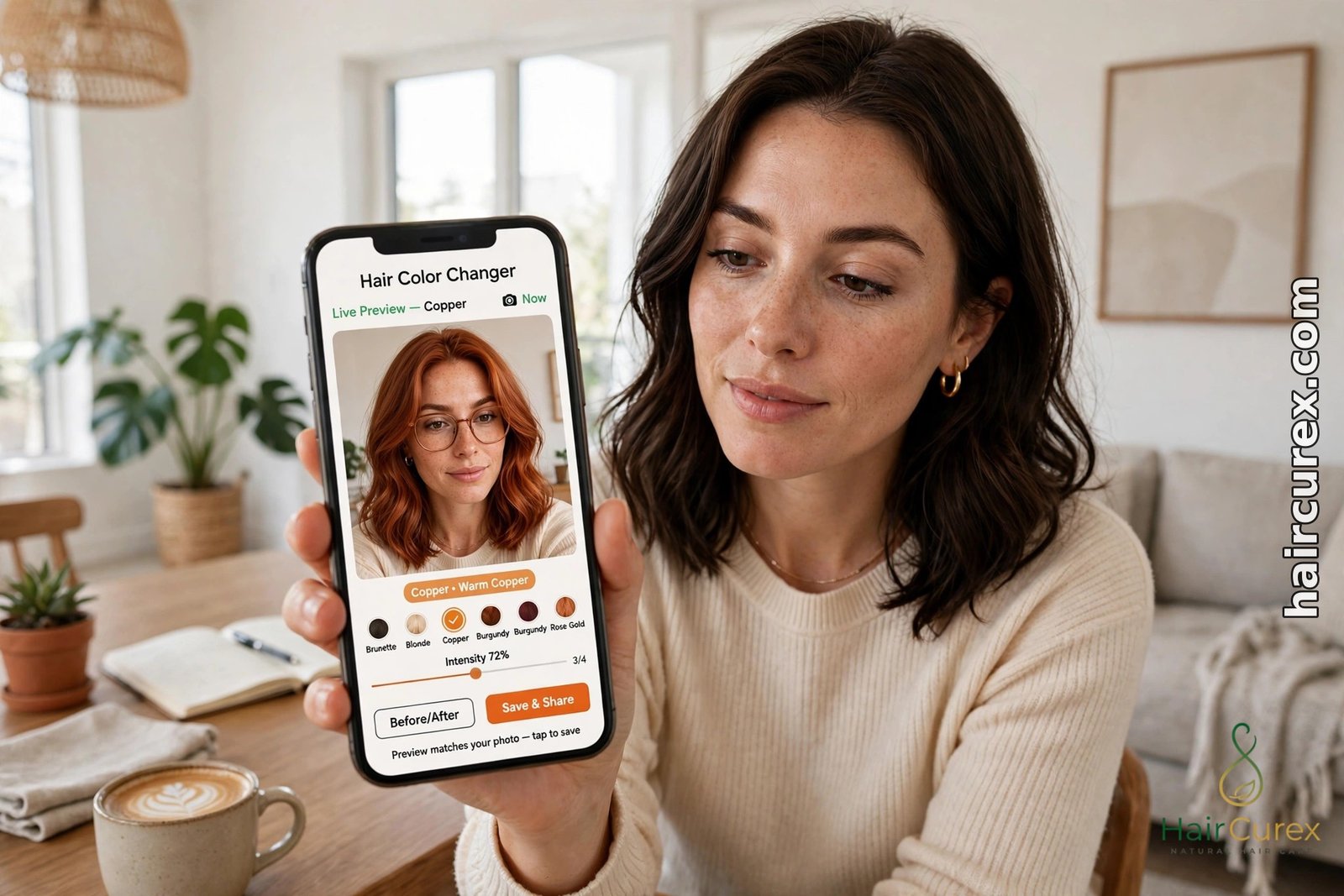
The best AI hair color changer apps let you try blonde, copper, balayage, red and bold shades on your own photo before you commit to dye — and the strongest all-round picks are YouCam Makeup for the most realistic colour rendering, Fotor for a quick colour-only try-on, and BasedLabs for unlimited shade experiments with custom colours. Upload a clear, front-facing photo, pick a shade, and the app recolours your hair in seconds. But treat every preview as a rough guide, not a promise: your current colour, previous dye, hair type and the lighting in your photo all change how a shade will actually look, and no app can tell you how a colour will lift, fade or grow out. Use the apps to shortlist two or three shades, then take those previews to your colourist.
How an AI Hair Color Changer Works
A hair color changer is different from a full hairstyle changer. A hairstyle changer rebuilds the shape of your hair; a colour changer keeps your cut exactly as it is and only changes the shade. The tool finds your hair in the photo, separates it from your face, skin and background, and then recolours it — adjusting the tone to follow the light and shadow already in the picture, so roots, ends and strands keep their depth instead of becoming one flat block of colour.
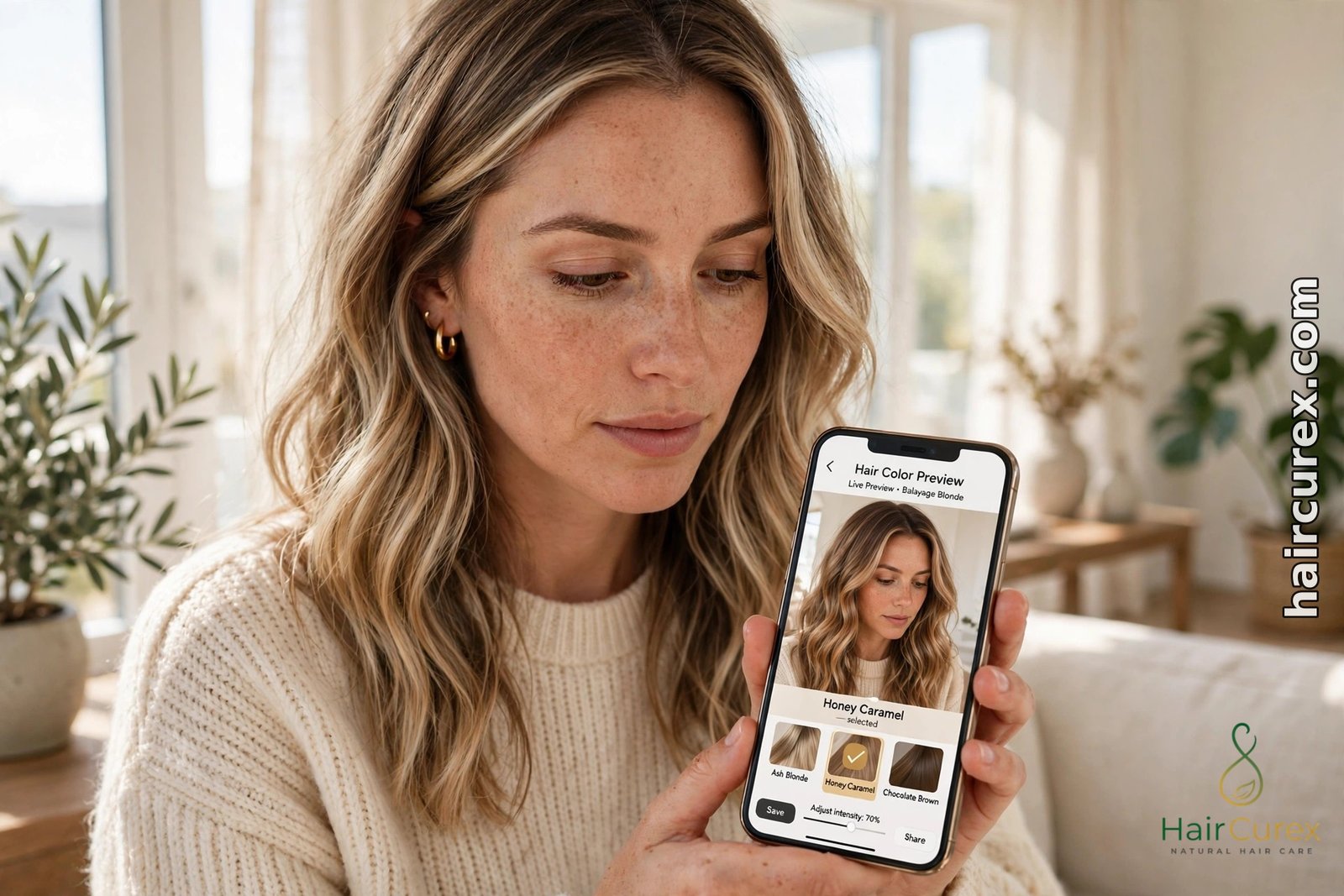
Most tools follow the same three steps. First, you upload a photo or take a selfie inside the app. Second, you choose a shade from a library of presets — natural blondes, browns and reds, plus balayage, ombre, pastels and vivid fashion colours — or you enter a custom shade. Third, you adjust the intensity, save the result, and compare it with other shades. Some tools also let you change the colour of only part of the hair, such as the ends for an ombre effect, or add highlights and lowlights. The free tier is where the differences appear: some tools give you unlimited colour try-ons with a watermark, some limit you to a few shades a day, and some lock their most realistic shades behind a subscription. Read the free limits before you invest time in a tool, not after.
The 7 Best AI Hair Color Changer Apps Compared
The table below summarises the colour features and free tier of each app as described in published 2026 comparisons. Free limits change often, so treat this as a starting shortlist and check the current free offer inside the app before you commit to one tool.
| App | Colour features | Free offer | Watermark | Sign-up | Best for |
|---|---|---|---|---|---|
| YouCam Makeup | Large shade library, live AR colour try-on, face analyser | Some free shades, live camera | Yes on free exports | No for basic use | Most realistic colour rendering. |
| FaceApp | Many colours plus full style changes | Many colours, limited free filters | Yes on free exports | No for basic use | Colour plus a new cut in one app. |
| Fotor Hair Color Changer | Colour-only try-on, intensity slider, face-swap styles | Basic shades free | Varies | Account for full use | Fastest colour-only preview. |
| Photo AI Studio AI Hair Changer | Basic styles with colour options | Basic styles, unlimited uploads | No | No | Quickest no-sign-up colour check. |
| MyEdit Hairstyle Simulators | 40+ styles with colour customisation and text prompts | Some free styles | Varies | Account for full use | Customising a shade with text prompts. |
| BasedLabs | Unlimited colour try-ons, preset shades and custom hex colours | Unlimited colour try-ons | Varies | Account for full use | Testing many shades back to back. |
| L’Oréal Style My Hair (Modiface) | Brand-accurate colour simulation | Basic colour changes free | No | No for basic use | Colour accuracy tied to real dye shades. |
Tool by Tool: What Each App Does Best
YouCam Makeup is the strongest all-round pick for colour. In an independent test of seven online AI hairstyle tools, it delivered the most natural-looking virtual try-on, with 117 styles in total, and its live AR mode lets you see a shade move with your head in real time rather than on a still photo. Its free tier is limited and free exports carry a watermark, but for judging whether a shade suits your face, its realism is hard to beat. Try it first if you want one careful colour preview rather than dozens of rough ones.
FaceApp is the best-known name and the best for a combined change. It offers many colours alongside cuts, bangs and other photo edits in the same app, so you can test a new colour on a new length at the same time — useful, but test one change at a time first (see below) so you know which change you actually liked. The trade-off is the watermark on free exports and many premium shades locked behind a subscription. Use it when you want to cycle through lots of ideas quickly and do not mind a watermark on the saved preview.
Fotor takes the colour-only route. Its hair color changer detects your hair automatically, lets you pick a shade and adjust the intensity with a slider, and is built for exactly this job: one photo, one colour, seconds. It also offers face-swap style previews if you want to see a colour on a different cut. The free tier covers basic shades, with more realistic or trendy shades held for paying users. Use it for a first, fast colour check before you spend time in a more detailed tool.
Photo AI Studio is the best no-fuss option. Its hair changer is web-based, needs no sign-up, allows unlimited basic uploads, and exports without a watermark. The shade library is more generic than YouCam or Fotor, and you get less control over fine details such as exact depth or tone. Use it when you want a quick answer to one question — does blonde suit me at all — before you refine the shade elsewhere.
MyEdit suits you if you like to customise. Its hairstyle simulator offers 40-plus styles and lets you fine-tune a look with text prompts, which is useful when the preset library does not have quite the shade you want — a softer copper, a cooler ash blonde, a deeper chocolate brown. BasedLabs is the shade specialist: unlimited colour try-ons with preset shades and custom hex colour input, ideal when you want to test twenty shades back to back and compare them side by side. L’Oréal Style My Hair, built on Modiface technology, is the accuracy specialist: its colour simulation is tied to real dye shades, so the preview is closer to what a salon product would actually produce, though its style options are limited. Our separate AI hair color changer guide covers colour previews in more depth, and an independent test of seven AI hairstyle tools rated YouCam the most natural-looking overall.
Getting a Realistic Preview: Your Photo Matters More Than the App
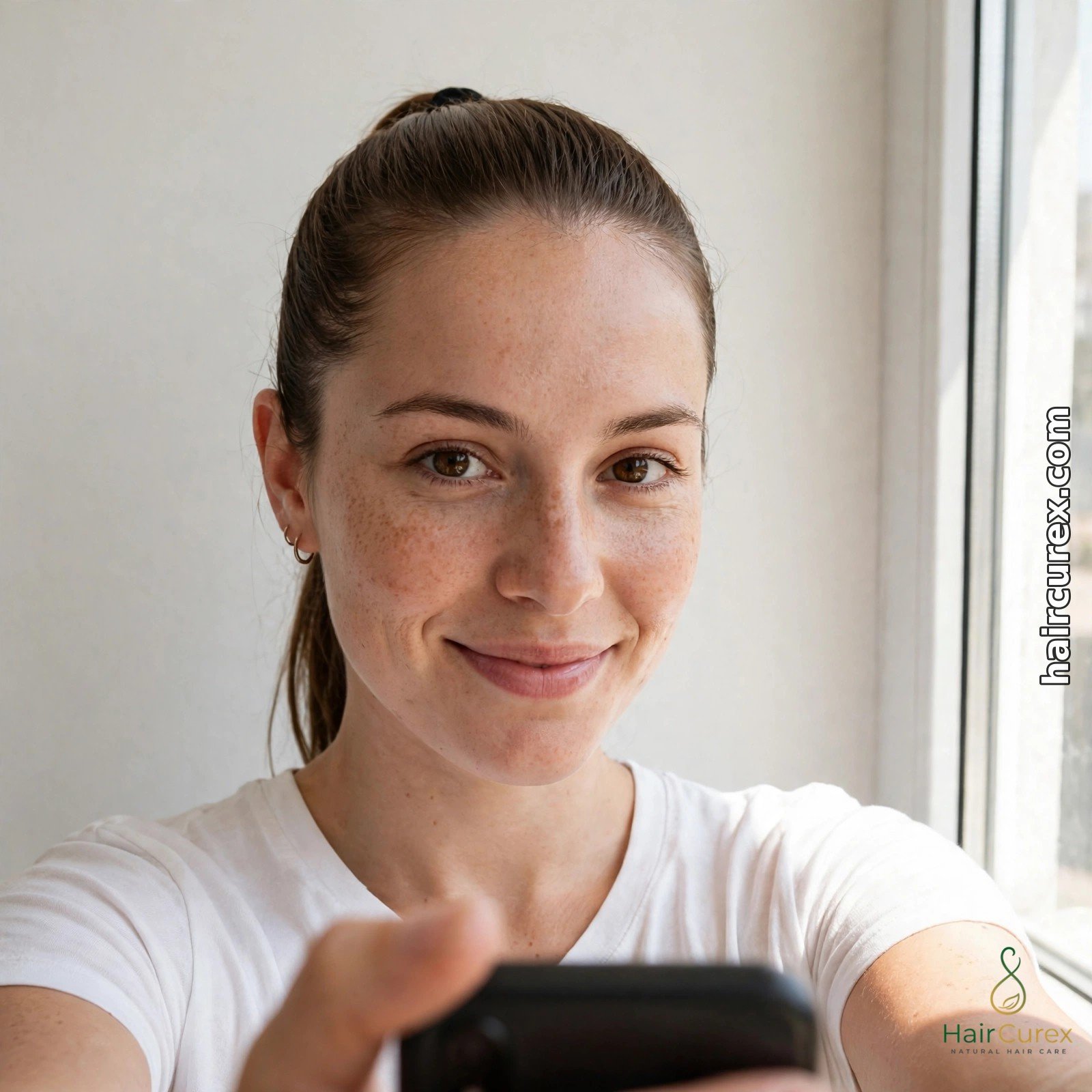
A colour changer can only work with the photo you give it, and most disappointing previews start with a bad photo, not a bad app. Use a clear, front-facing photo in bright, even daylight, facing a window, with the phone at eye level and your hair down and visible so the tool can see your full colour and length. Avoid sunglasses, hats, heavy filters and beauty modes, which change your skin tone and mislead the colour result. Take the photo against a plain background with your whole head in frame.
Use the same photo across every app you test. If one app gets a bright daylight photo and another gets a dim mirror selfie, you are comparing photos, not apps. Test one change at a time: settle the shade before you also change the cut, or you will not know which change you actually liked. Once you have a shortlist, test each winning shade on a second photo too — a slightly different angle, or a photo taken indoors under the light you actually live in — because a shade that only works in perfect daylight is a warning sign. Save the original photo as well as the previews, so your colourist can see what you started from.
Choosing a Shade for Your Skin Tone, Your Current Colour and Your Previous Dye
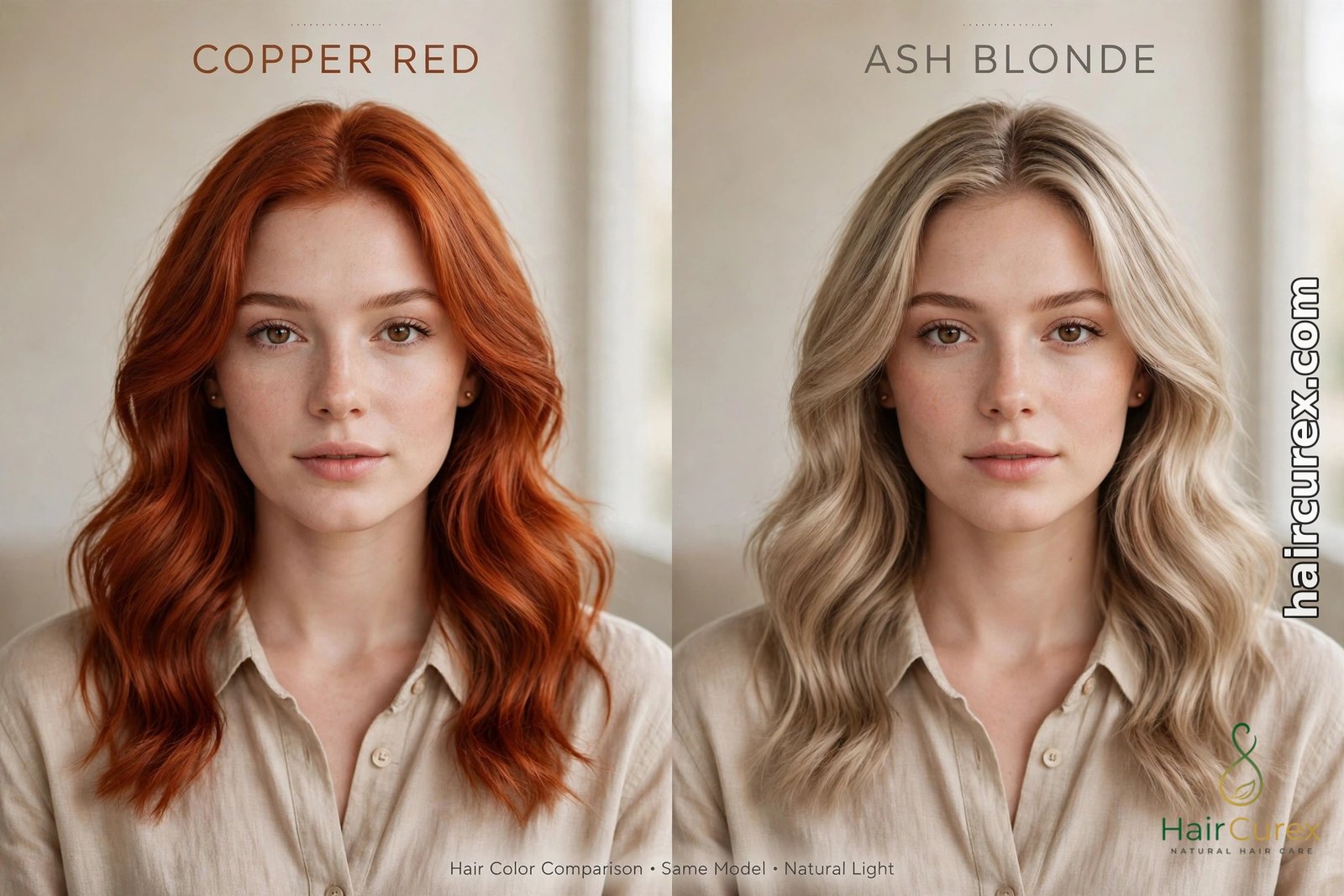
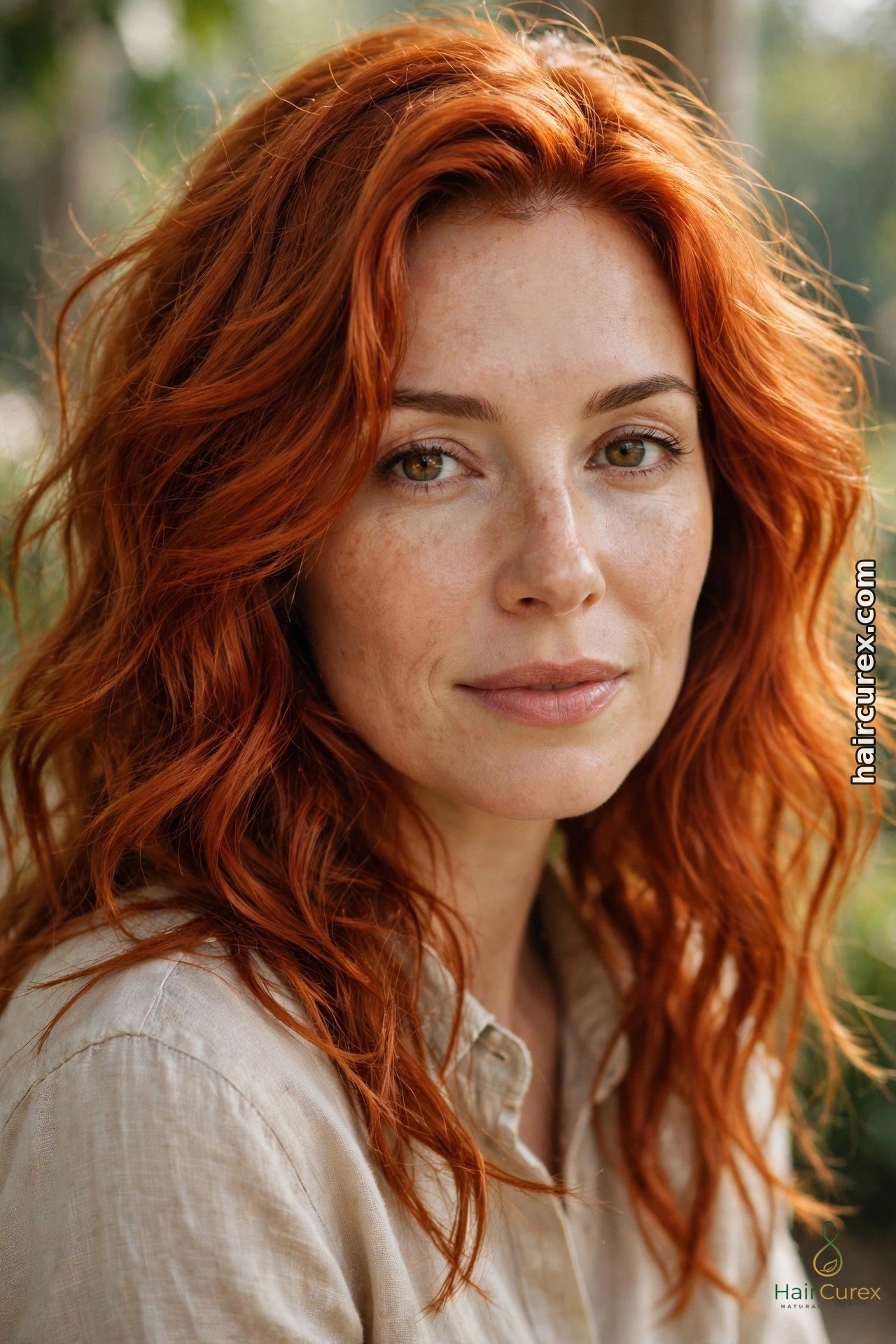
Skin tone is the first filter. Warm skin, with golden or peachy undertones, usually pairs well with warm shades: copper, golden blonde, honey brown and warm reds. Cool skin, with pink or blue undertones, usually pairs well with cool shades: ash blonde, cool brown, blue-black and silver. Neutral skin can carry both, so the question becomes depth rather than temperature: how light or dark do you want to go. If you are unsure of your undertone, look at the veins on the inside of your wrist in daylight — greenish veins usually mean warm, bluish veins usually mean cool — and test one warm and one cool version of the same shade before you decide.
Your current colour matters at least as much. Going darker is straightforward in a preview and in real life: a dark shade covers a light base predictably. Going lighter is where previews mislead, because a changer simply recolours the pixels, while real lightening has to lift your existing pigment first — and the result depends on how dark you are starting from. A preview of platinum on dark brown hair is a fantasy unless you are prepared for bleach, multiple sessions and the upkeep that follows. If you have previous dye in your lengths, say so before you trust a preview: dye does not lift dye, so a shade that looks even in the app can come out patchy in real life, with roots lifting differently from dyed ends. Our AI hairstyle changer for women guide explains how photo tools handle face shape and texture, and the general AI hairstyle changer guide covers the photo basics that apply to colour previews too.
Free vs Paid: What the Free Tier Usually Leaves Out
Free tiers are genuinely useful, but they have predictable limits. Expect a small number of free previews per day, a watermark on saved images, lower export resolution, and the most realistic or trendiest shades held for subscribers. Some tools also limit you to one photo, or to a few shades per session, and show ads between previews. None of that makes a free tool useless: a handful of careful previews on one good photo is enough to shortlist a shade.
Be careful with “free trial” wording. A tool that asks for card details before your first preview is not the same as a free tool, and you should check when a trial converts to a paid subscription and how to cancel it. Prefer tools that let you preview without an account for your first test, and only create an account once you know the tool is worth it. If a tool cannot explain its free limits in plain language before you upload a photo, that is itself useful information.
Privacy: What Happens to Your Photo?
Your selfie is personal data, so check three things before uploading: how long the company stores your photos, whether uploads are used to train its models, and whether you can delete your photos and account. Prefer tools with easy deletion and a clear privacy policy, and avoid tools with no policy or no deletion option. A colour changer needs the photo you choose to upload, not your contacts, location history or whole photo library, so decline permissions it does not need.
Never upload someone else’s photo without their permission, and avoid uploading photos of children. Once you have saved the previews you need, delete the uploads where the tool allows it, and remove saved shades you no longer use. If you are comparing tools, use the same test photo and delete it from each tool afterwards, rather than leaving copies scattered across several apps.
Taking Your Previews to Your Colourist
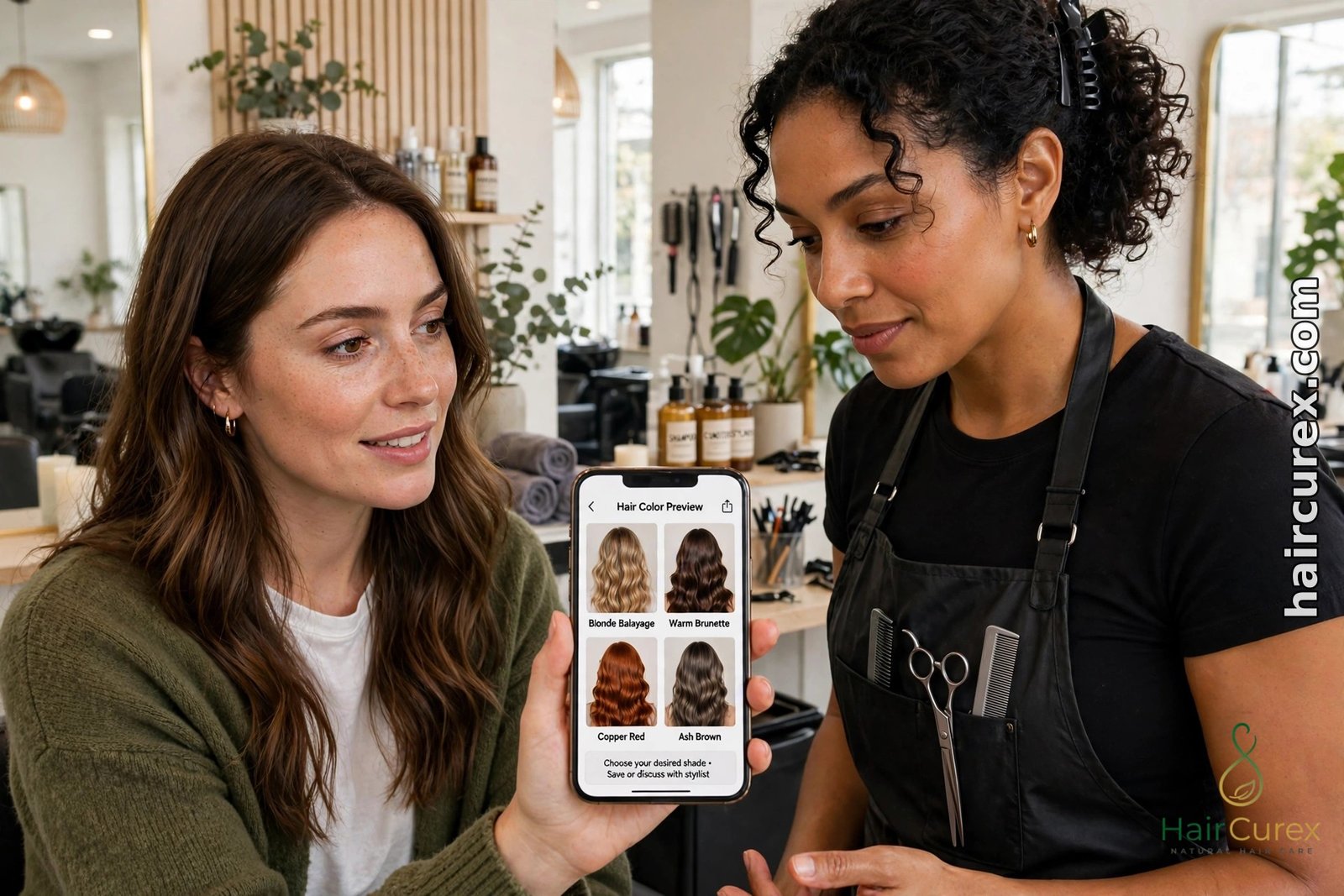
Take two or three saved previews to your appointment, not twenty. Show your colourist the winning shade and one close alternative, and say what you like about each: the depth, the warmth, the way it frames your face. Ask directly whether your current colour and previous dye will allow that shade, how many sessions it will take, and how it will fade and grow out. Mention the things a preview cannot see: previous colour still in your lengths, grey coverage needs, or damage that limits how much lifting your hair can take. Those details change which version of a preview is actually achievable. Our best free AI hairstyle changer apps guide compares the same tools from the free-tier angle if you want a second opinion before choosing, and the hairstyle finder quiz narrows the field before you spend time in a changer.
The Limits of a Colour Preview
Colour previews are weakest exactly where real colour is most individual. Lighting is the biggest gap: a shade that looks rich in a bright preview can read darker indoors, and warm shades shift most under artificial light. Depth is another: a tool cannot show how a colour will look after two weeks of washing, or how it will fade. Texture is approximate too, because phone screens and the tool’s own colour grading all shift a shade, and curly or coily hair catches light differently from straight hair, which changes how a colour reads. Growth is invisible: no preview shows roots coming through after four weeks, or how a bold shade looks when it starts to wash out. Used honestly — as a shortlist tool plus a colourist’s second opinion — a colour changer is one of the cheapest, lowest-risk ways to avoid a dye job you regret.
Frequently Asked Questions About the Best AI Hair Color Changer Apps
What is the best AI hair color changer app?
YouCam Makeup gives the most realistic colour rendering in independent 2026 testing, Fotor is the fastest colour-only try-on, and BasedLabs lets you test unlimited shades with custom colours. The best choice depends on whether you value realism, speed or variety.
Are AI hair color changer apps really free?
Most are free to try with limits: a few free previews, a watermark on saved images, or premium shades locked behind a subscription. Photo AI Studio’s basic changer is free with unlimited uploads and no watermark, while other tools limit free use more tightly.
How accurate are AI hair color previews?
They are realistic for judging a shade family on a good photo, and less reliable for exact tone, depth and how the colour will lift or fade. Previous dye, lighting and hair type all change the real result, so treat previews as a shortlist, not a guarantee.
Can an AI app show me blonde if my hair is dark brown?
It can show the colour, but it cannot show the bleaching, sessions and upkeep needed to get there. A preview of platinum on dark hair is a fantasy unless you are prepared for lightening, so ask your colourist what the shade would actually take.
What photo should I upload for the best colour preview?
A clear, front-facing photo in bright, even daylight, phone at eye level, hair down and fully visible, no sunglasses, hat, filters or beauty mode, with your whole head in frame against a plain background.
Should I show an AI colour preview to my colourist?
Yes. Take two or three saved previews, say what you like about each shade, and ask whether your current colour and previous dye allow it, how many sessions it will take, and how it will fade and grow out.