
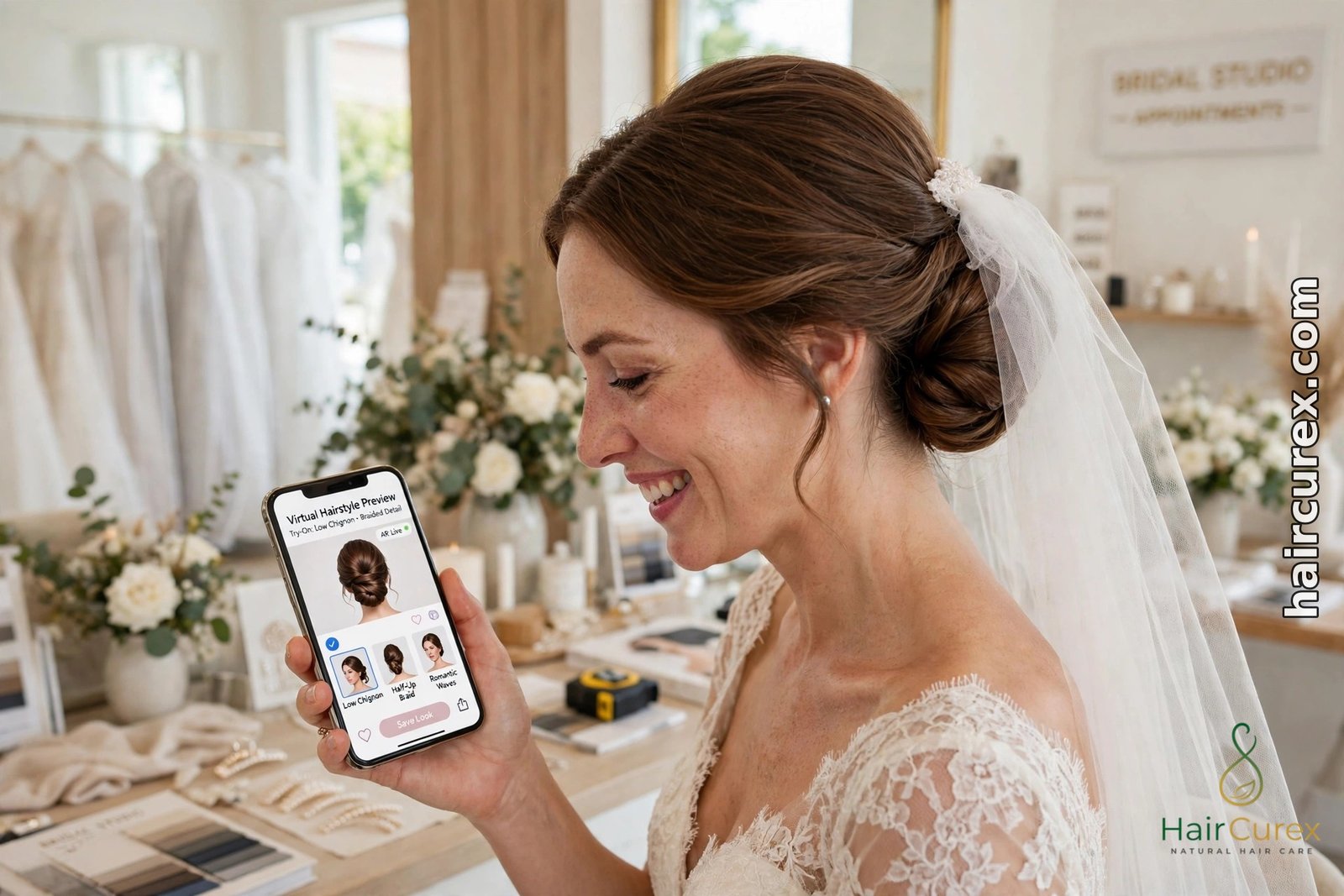
An AI wedding hairstyle try-on is a free or freemium tool that places a bridal hairstyle onto your own photo, so you can see a romantic updo, loose waves, a half-up style or a sleek low bun on your own face — with or without a veil — before your hair trial. Upload one clear, front-facing photo, pick a bridal style, and the tool rebuilds the hair in the picture in seconds. The best free starting points are YouCam Makeup for the most natural-looking results, FaceApp for the widest range of styles, and Fotor or Photo AI Studio for a quick browser-based preview with no app install. None of them guarantees a salon result: they are previews, not promises, and your hair’s texture, thickness, length and growth patterns still decide how a style looks in real life — so use them to shortlist two or three bridal looks, then take those previews to your hair trial.
How an AI Wedding Hairstyle Try-On Works
A photo-based try-on is different from a live camera filter. A filter overlays a style on your moving face in real time, which is fast and fun but simple; a try-on works on a still photo. It finds your face, hairline and shoulders, removes or covers your existing hair, and draws the chosen bridal style in its place, matching the lighting and angle of your photo as closely as it can. That extra processing is why try-on results usually look more realistic than filters, especially for big changes such as going from long hair to a pinned-up bridal style, or from straight hair to Hollywood waves.
Most tools follow the same three steps. First, you upload a photo or take a selfie inside the app. Second, you browse a library of styles, often grouped by length, texture and occasion, and sometimes filtered by face shape. Third, you save or share the result. Some tools also offer live camera modes, veil overlays, colour-only changes, and bangs-only previews. The free tier is where the differences appear: some tools give you a handful of free previews with a watermark, some give unlimited basic previews with no watermark, and some lock their most realistic bridal styles behind a subscription. Read the free limits before you invest time in a tool, not after. Our general AI hairstyle changer guide explains how photo tools handle face shape and texture in more depth.
6 Bridal Hairstyles to Try On First
Before you open an app, it helps to know the six bridal styles worth previewing. The table below compares them on the things that matter on a wedding day: the look, who it suits best, how it pairs with a veil, and how much upkeep it needs through a long day of photos, dinner and dancing. For real-bride inspiration beyond the previews, The Knot’s roundup of 60 wedding hairstyles shows how each of these styles looks on real brides, which is a useful second opinion next to an AI render.
| Style | Look | Best for | Veil pairing | Upkeep |
|---|---|---|---|---|
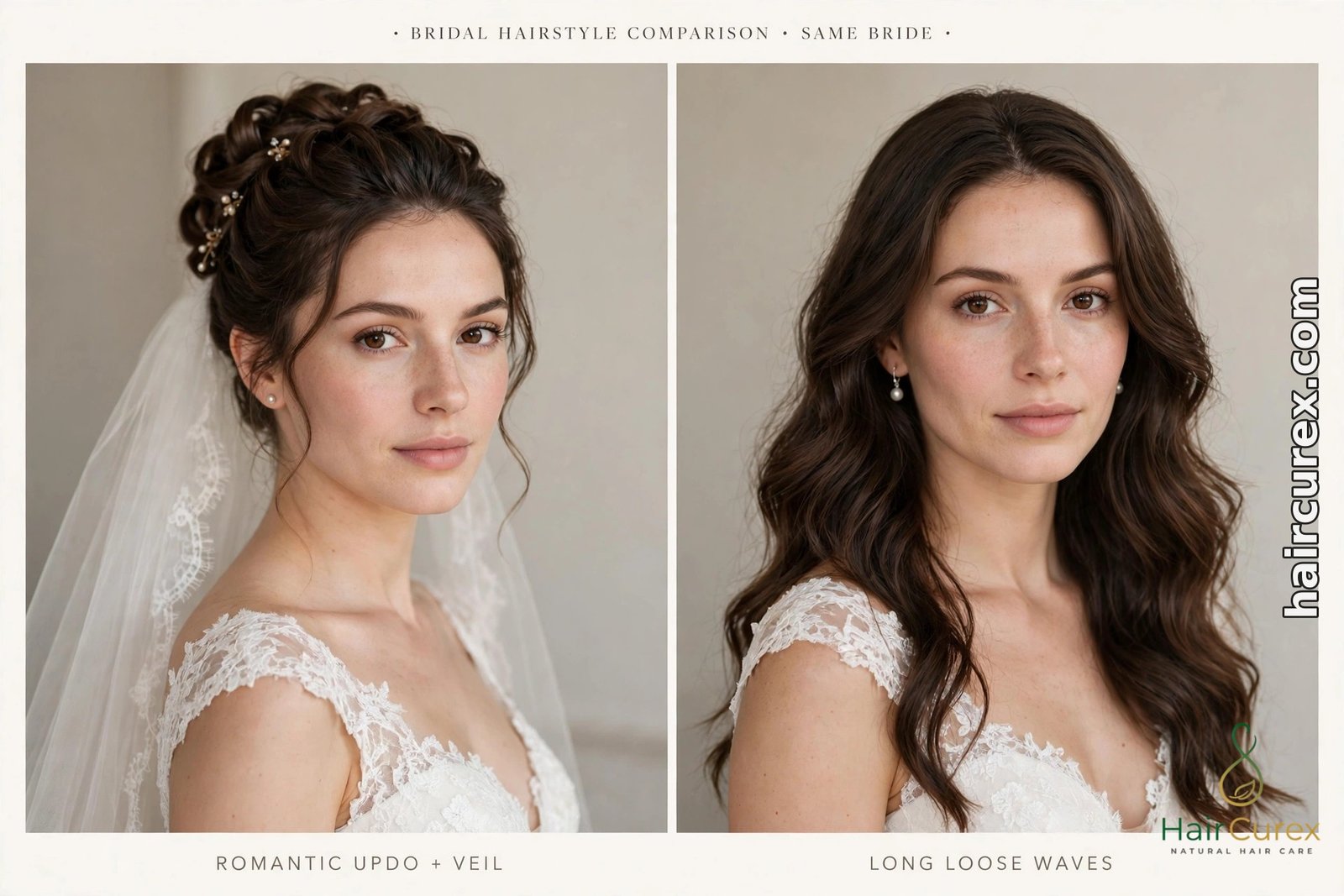
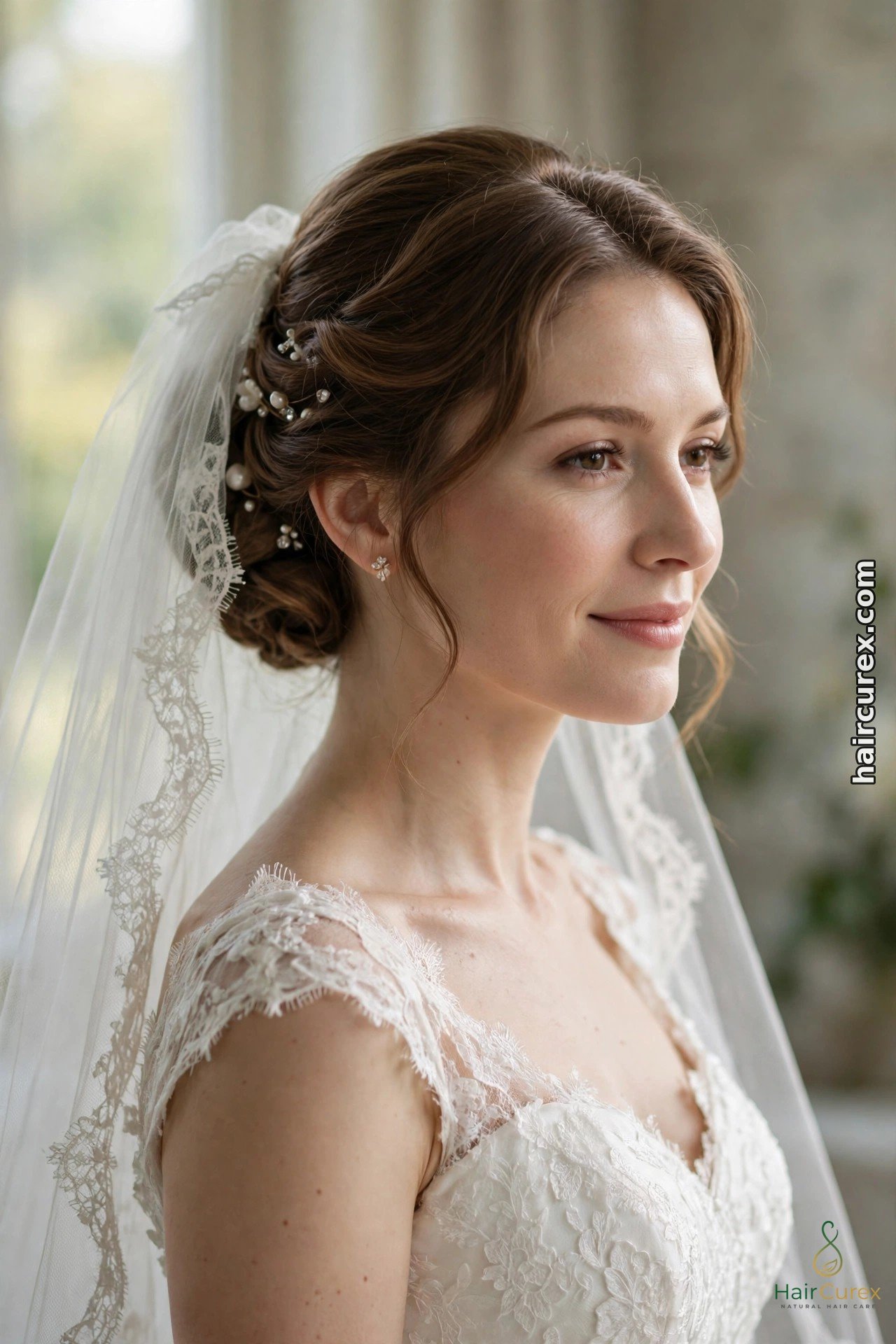
| Romantic updo | Soft, pinned-up volume with face-framing strands | Brides who want their neckline and jewellery on show; works on medium to long hair | Best veil match: a long veil anchored under the bun, or a fingertip veil | Low once pinned; check pins after dancing. |
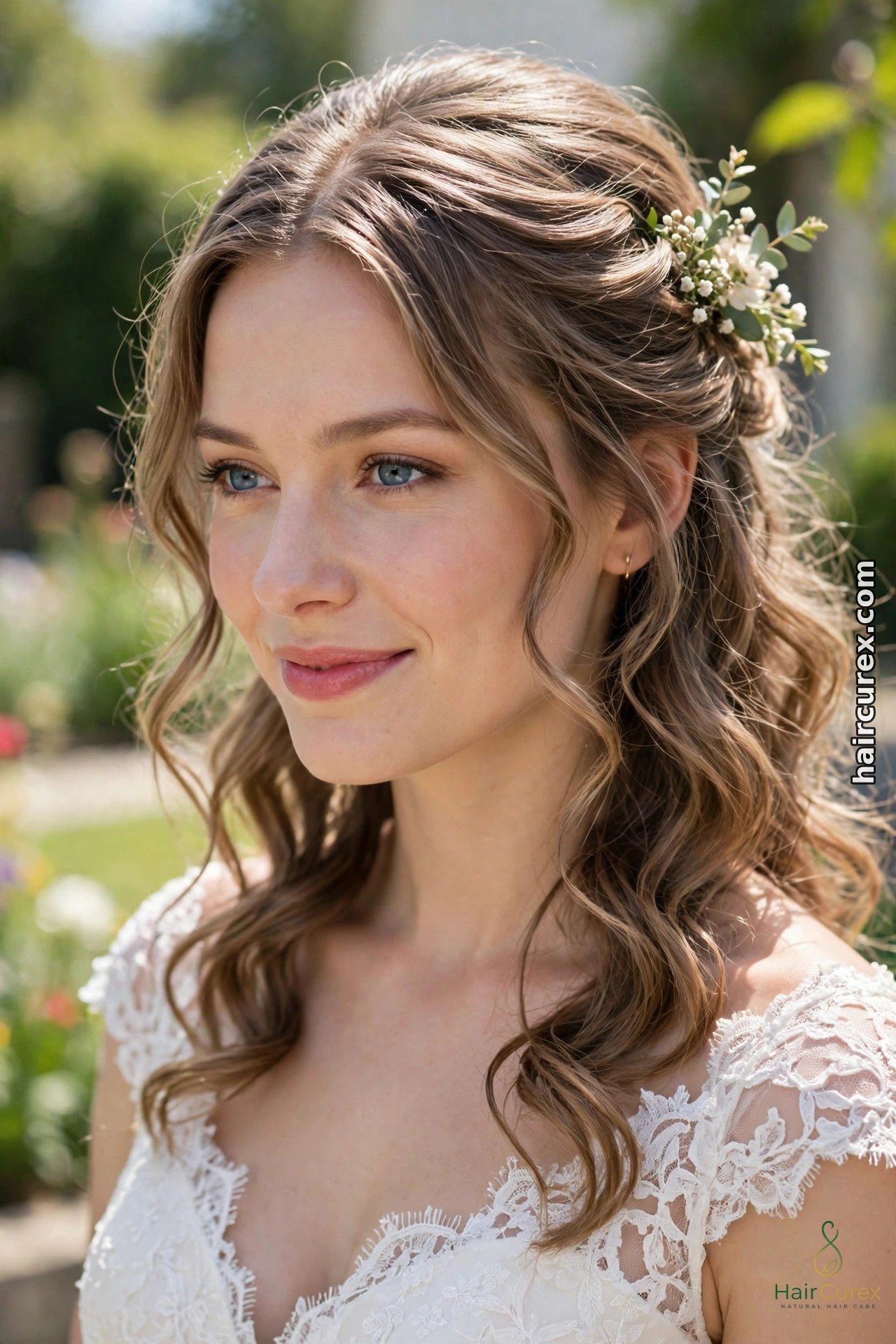
| Loose waves | Long, soft waves worn down over the shoulders | Brides with long hair who want a relaxed, romantic feel | Cathedral or chapel veil worn high on the crown so waves stay visible | Medium: waves can drop in humidity; keep a small styling kit handy. |
| Half-up half-down | Crown pinned back, the rest worn down in soft curls | Brides torn between up and down; suits most lengths | Works with almost any veil; a blusher veil sits neatly over the pinned section | Medium: the pinned section holds, the loose section needs the odd touch-up. |
| Braided | Crown braid, fishtail or braided bun | Outdoor, garden or boho weddings; keeps hair secure | Best with a short veil or none; long veils can hide the braidwork | Low: braids hold their shape for hours. |
| Sleek low bun | Smooth, polished bun at the nape | Classic, black-tie and minimalist weddings; shows off earrings | Excellent: a veil anchors cleanly above or below the bun | Low: the most secure style on this list. |
| Hollywood waves | Deep, uniform, glossy waves brushed to one side | Glamorous evening weddings; brides who want a red-carpet look | Best with a veil worn high and back, or skipped for the reception | High: needs strong hold products and a stylist’s finishing touch. |
Tool by Tool: The Best Free Options for Bridal Previews
YouCam Makeup is the strongest all-round pick for bridal previews. In an independent 2026 test of twelve hairstyle try-on apps, it came out on top for free, realistic results, with 60-plus men’s and women’s styles on iOS and Android, plus more than 150 hair colour filters and a face analyser that suggests styles for your face shape. Its free tier is limited and free exports carry a watermark, but for judging whether an updo or a wave suits your face, its realism is hard to beat.
FaceApp is the best-known name and the best for variety. It offers many cuts and colours, plus makeup and other photo edits in the same app, and it works offline once downloaded. The trade-off is the watermark on free exports and many premium styles locked behind a subscription. Use it when you want to cycle through lots of bridal ideas quickly and do not mind a watermark on the saved preview. Photo AI Studio is the best no-fuss option: its hair changer is web-based, needs no sign-up, allows unlimited basic uploads, and exports without a watermark. The style library is more generic than YouCam or FaceApp, and you get less control over fine details such as exact length or texture. Use it for a first, fast check: does an updo suit me at all, before you spend time in a more detailed tool.
MyEdit suits you if you like to customise. Its hairstyle simulator offers 40-plus styles and lets you fine-tune a look with text prompts, which is useful when the preset library does not have quite the version you want — a softer updo, a longer wave, a looser braid. Fotor takes a different route, swapping your face onto a model photo with the hairstyle, which works well when you already have a reference photo you love. If you are also testing colour for the wedding, our AI hairstyle changer for women guide compares the same tools from the women’s-styles angle, and the Perfect Corp test of twelve hairstyle apps is a useful independent check on which free tier does what.
Getting a Realistic Preview: Your Photo Matters More Than the App
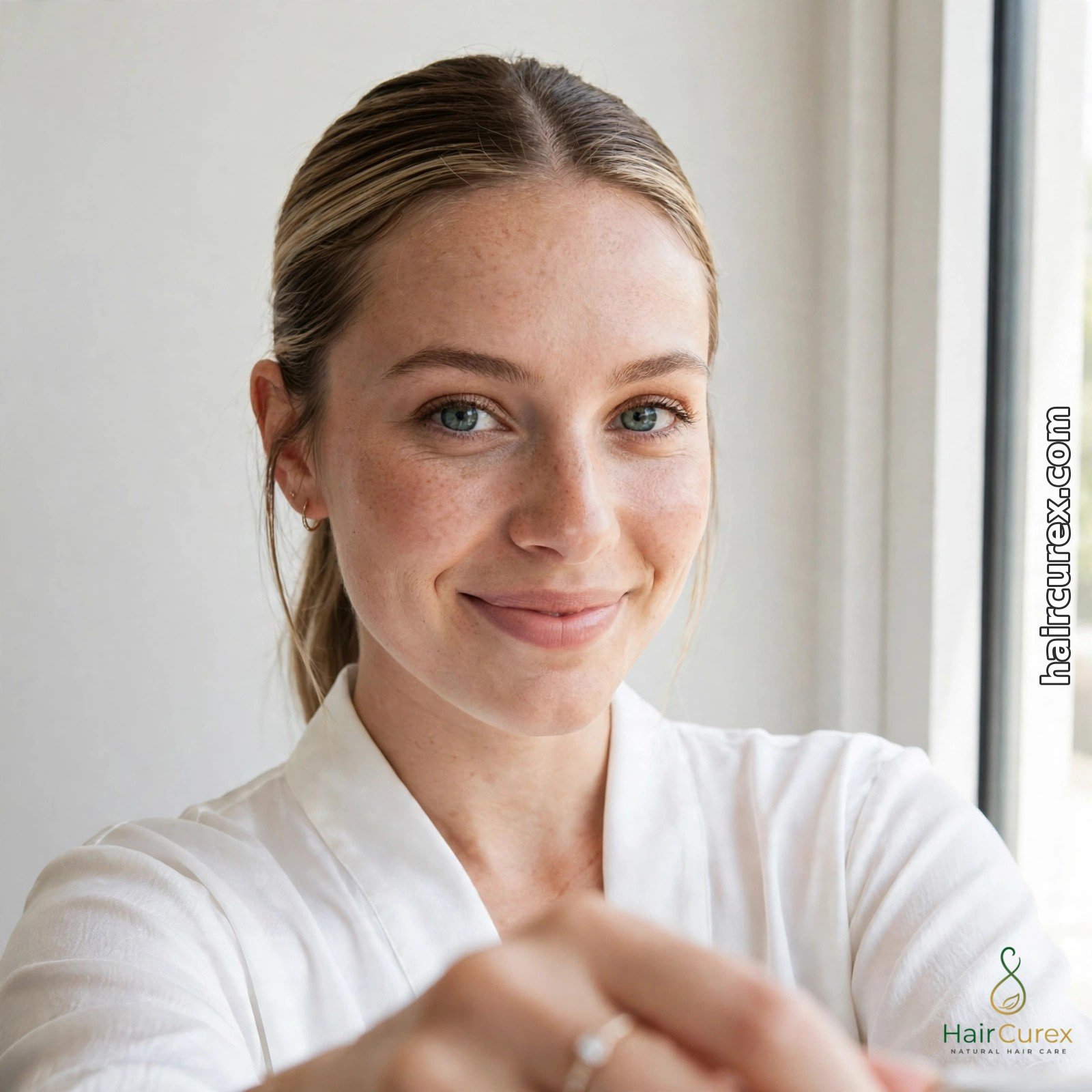
A try-on can only work with the photo you give it, and most disappointing results start with a bad photo, not a bad app. Use a clear, front-facing photo in bright, even daylight, facing a window, with the phone at eye level and your hair pulled back from your forehead so the tool can see your hairline and face shape. Avoid sunglasses, hats, heavy filters and beauty modes, which change your face shape and skin tone and mislead the result. Take the photo against a plain background with your whole head in frame.
Use the same photo across every tool you test. If one tool gets a studio-style headshot and another gets a dim mirror selfie, you are comparing photos, not tools. Test each shortlisted style on a second photo too — a slightly different angle, or a photo with your natural hair texture visible — because a style that only works on one perfect photo is a warning sign.
Choosing by Face Shape, Hair Type and Veil
Face shape is a useful filter, not a rule. Oval faces suit most bridal lengths, so the question is usually texture and maintenance rather than shape. Round faces tend to look balanced with updos that add height at the crown, half-up styles, and loose waves that fall past the chin rather than width at the cheeks. Square faces soften with romantic updos that have loose, face-framing strands and with side-swept waves rather than severe, slicked-back lines. Heart-shaped faces pair well with low buns and Hollywood waves that add fullness below the chin and balance a narrower jaw. If you are unsure of your face shape, our free hairstyle finder quiz narrows the field before you spend time in a try-on app.
Hair type matters at least as much. Fine hair will not hold the same volume a preview shows on thick hair, and a preview that gives every texture the same smooth finish is smoothing over reality. Curly and coily hair changes volume with humidity, drying method and parting, so test styles close to your natural texture first and ask whether the preview’s curl pattern is realistic for you. Short hair has its own limits: a preview that shows long, flowing waves on a pixie-length photo is showing you a wig, not a style your stylist can build without extensions, so ask about extensions honestly at the trial.
Choose the veil before you finalise the style, not after. A heavy cathedral veil needs a secure anchor — a low bun or a braided updo gives it one — while a light blusher veil sits happily over a half-up style. If you plan to remove the veil for the reception, preview the style with and without it, because a style built around a veil can look unfinished once the veil comes off. Bangs deserve their own test too: try a fringe on your current length before you combine new bangs with a new bridal style. Our AI bangs try-on guide covers fringe previews in detail.
Free vs Paid: What the Free Tier Usually Leaves Out
Free tiers are genuinely useful, but they have predictable limits. Expect a small number of free previews per day, a watermark on saved images, lower export resolution, and the trendiest or most realistic styles held for subscribers. Some tools also limit you to one photo, or to a few styles per session, and show ads between previews. None of that makes a free tool useless: a handful of careful previews on one good photo is enough to shortlist a bridal look.
Be careful with “free trial” wording. A tool that asks for card details before your first preview is not the same as a free tool, and you should check when a trial converts to a paid subscription and how to cancel it. Prefer tools that let you preview without an account for your first test, and only create an account once you know the tool is worth it. Our best free AI hairstyle changer apps guide compares the same tools from the free-tier angle if you want a second opinion before choosing.
Privacy: What Happens to Your Photo?
Your selfie is personal data, so check three things before uploading: how long the company stores your photos, whether uploads are used to train its models, and whether you can delete your photos and account. Prefer tools with easy deletion and a clear privacy policy, and avoid tools with no policy or no deletion option. A try-on needs the photo you choose to upload, not your contacts, location history or whole photo library, so decline permissions it does not need.
Never upload someone else’s photo without their permission, and avoid uploading photos of children — including flower girls and junior bridesmaids. Once you have saved the previews you need, delete the uploads where the tool allows it. If you are comparing tools, use the same test photo and delete it from each tool afterwards, rather than leaving copies scattered across several apps.
Taking Your Previews to Your Stylist and Hair Trial
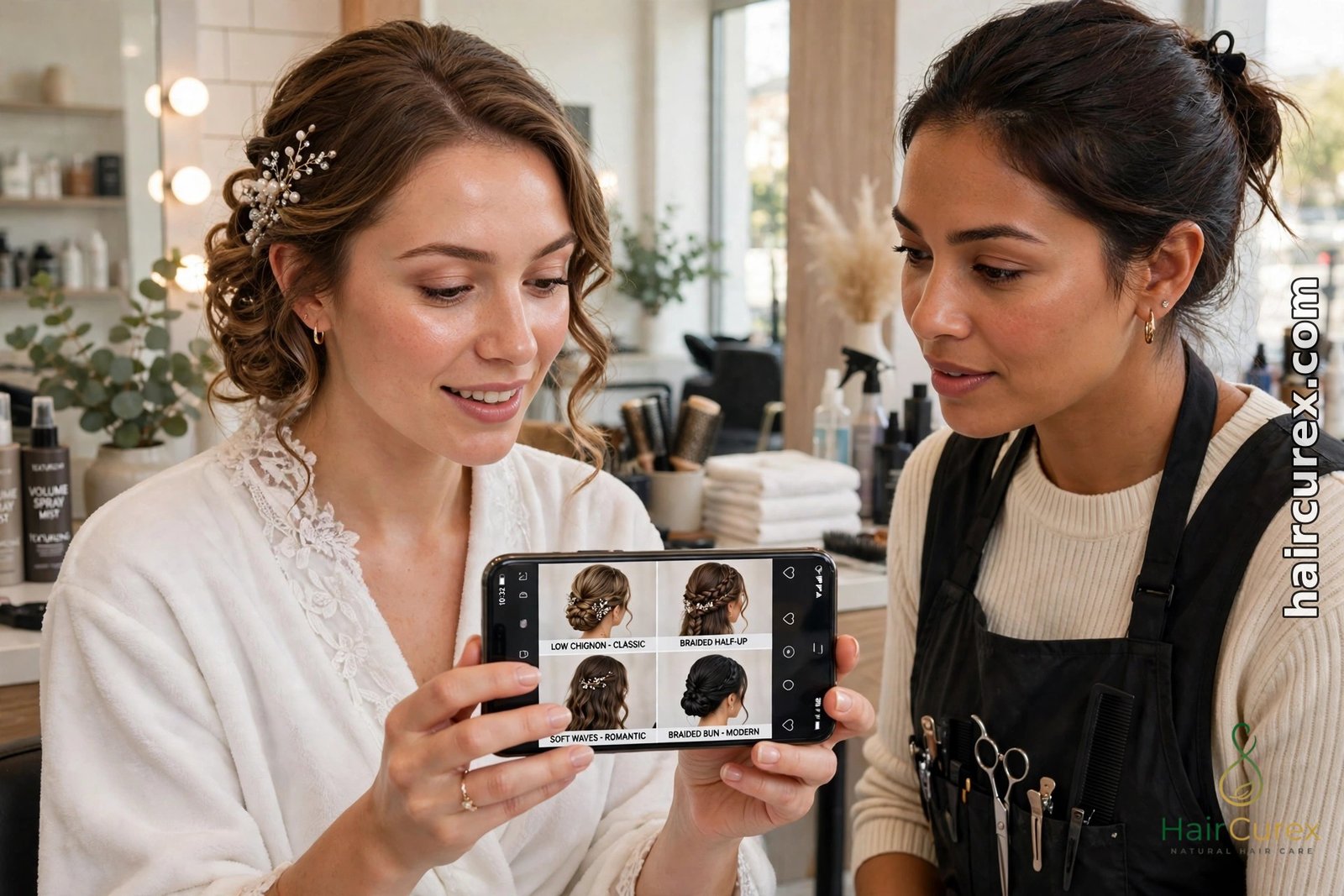
Take two or three saved previews to your hair trial, not twenty. Show your stylist the winning style and one close alternative, and say what you like about each: the height of the updo, the softness of the waves, the way the veil sits, the parting. Ask directly whether your hair type and thickness can hold that shape, how it will survive a full day of photos and dancing, and how much styling it will need on the morning. Mention the things a preview cannot see: a cowlick, a strong natural parting, thinning at the crown, or previous colour still in your lengths. Those details change which version of a preview is actually achievable.
Book the trial four to six weeks before the wedding, and bring the veil and any hair accessories you plan to wear. A style that looks perfect in a preview can change completely once a heavy veil or a statement hairpiece is added, and your stylist needs to see the whole picture. Take photos of the trial from the front, side and back, and ask your stylist to note exactly which products and pins were used, so the wedding-day version can be recreated.
The Limits of an AI Wedding Hairstyle Preview
Try-ons are weakest exactly where real hair is most individual. Texture is the biggest gap: many tools smooth curly or coily hair into a generic wave. Volume is another: a tool cannot feel your roots’ natural lift, so a voluminous style may fall flat in real life and a sleek style may puff up on a humid day. Colour is approximate too, because phone screens, indoor lighting and the tool’s own colour grading all shift a shade. Veils are often rendered as a flat overlay rather than real fabric, so a preview cannot show how a veil will drape, catch the light, or pull on an updo over several hours. Used honestly — as a shortlist tool plus a stylist’s second opinion at a real hair trial — an AI wedding hairstyle try-on is one of the cheapest, lowest-risk ways to avoid a wedding-day hair regret. The preview narrows the choice; the trial makes the decision.
Frequently Asked Questions About AI Wedding Hairstyle Try-On
Can AI really show me what I will look like with a bridal hairstyle?
It can show a realistic preview of the shape, length and overall look on your own face, which is enough to shortlist two or three styles. It cannot guarantee the salon result, because texture, volume, veil weight and your hair’s real behaviour still decide the final look.
What is the best free AI wedding hairstyle try-on?
YouCam Makeup gives the most natural-looking bridal previews in independent 2026 testing, FaceApp offers the widest style range, and Fotor or Photo AI Studio are the fastest browser-based options with no app install. The best choice depends on whether you value realism, variety or speed.
Can I try on a wedding hairstyle with a veil?
Some tools offer veil overlays, and you can also preview the hairstyle first and then imagine the veil placement from reference photos. A veil preview is a rough guide only: real fabric drapes and pulls differently, so confirm the veil pairing at your hair trial.
What photo should I upload for the best bridal preview?
A clear, front-facing photo in bright, even daylight, phone at eye level, hair pulled back from your forehead, no sunglasses, hat, filters or beauty mode, with your whole head in frame against a plain background.
Will an AI preview work on short or curly hair?
It works best when the previewed style is close to your real length and texture. Long flowing styles previewed on short hair are showing you a wig, not a style your stylist can build without extensions, and curl patterns in previews are usually smoother than real curls.
Should I show an AI preview to my hairstylist?
Yes. Take two or three saved previews to your hair trial, say what you like about each, bring your veil and accessories, and ask whether your hair type can hold the shape and how it will last through the day.