

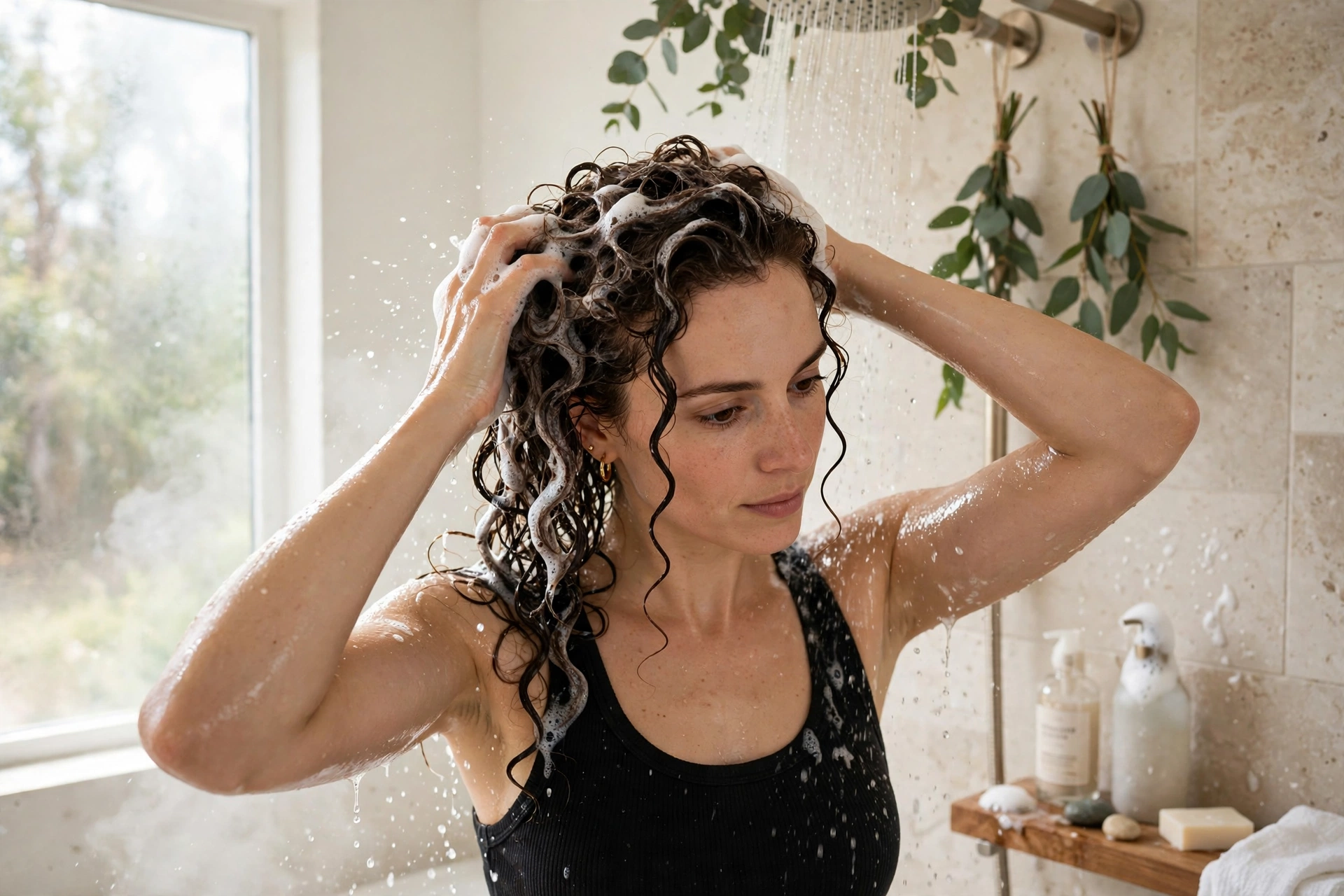
Co-washing sounds like a trend, but it started as a simple observation: curly hair is dry by nature, and shampooing it every wash makes it drier. Washing with a cleansing conditioner instead removes sweat and surface dirt while leaving the hair’s moisture mostly intact. Done right, co-washing gives softer, calmer curls. Done wrong, it gives you an itchy scalp and limp, coated hair. This guide covers both sides, plus the cleansing conditioners that actually work.
Quick answer: Co-washing means washing with a cleansing conditioner instead of shampoo. It suits wavy, curly and coily hair that feels dry, roughly types 2B to 4C. Use a purpose-made cleansing conditioner (not a regular conditioner), massage the scalp properly, and still clarify with a real shampoo or detox wash every 2 to 4 weeks so buildup never wins.
What Is Co-Washing, Exactly?
A cleansing conditioner is a conditioner with mild cleansing agents added: enough to lift sweat, dust and light product from the scalp, but without the strong detergents that strip natural oils. That is the important distinction. Washing with a plain conditioner is not co-washing; regular conditioners contain ingredients that coat the hair and scalp, and using them to “wash” is how people end up with buildup and irritation. The American Academy of Dermatology makes the related point that how you wash matters as much as what you wash with: gentle handling and the right product for your hair type protect the hair you have.
Who Should Co-Wash, and Who Should Not
- Great candidates: curly and coily hair (3A-4C) that is chronically dry; color-treated curls that fade fast; anyone whose hair feels straw-like after every shampoo.
- Proceed carefully: wavy hair (2A-2C) and fine hair can co-wash once or twice a week but usually still need shampoo in the rotation, because their scalps get oily faster and their strands flatten easily. Our 2B hair guide shows a balanced rhythm.
- Skip it: if you have an active scalp condition such as seborrheic dermatitis or heavy dandruff, medicated shampoo comes first. Co-washing over an irritated, flaky scalp usually makes things worse. Persistent scalp problems deserve a dermatologist, not a new conditioner.
Best Cleansing Conditioners for Curly Hair
We evaluated these the way we evaluate everything: ingredient lists, brand specs, and consistent patterns in verified buyer feedback, not miracle claims.
- As I Am Coconut CoWash: the long-standing benchmark. Creamy, spreads easily, and genuinely cleans light product days. Best for 3A-4C hair and anyone new to co-washing who wants the classic version done well.
- Eden BodyWorks Coconut Shea Cleansing CoWash: a lighter, budget-friendly option that rinses cleaner than most, which makes it the friendliest pick for wavy and fine curly hair.
- Mielle Organics and similar cream cleansers: richer formulas aimed at dry, coily hair; excellent moisture, but use a clarifying wash more often alongside them.
- What to look for on any label: a mild cleansing agent (such as behentrimonium chloride or cocamidopropyl betaine) high in the list, and no heavy silicones that will coat the hair between washes. Pairing them with water-soluble stylers, like the ones in our MopTop review, keeps the whole system buildup-free.
Co-Wash vs Shampoo vs Detox Wash: What Is the Difference?
The three washes are not rivals; they are different tools. Problems start when one is asked to do another’s job, like expecting a co-wash to remove a month of silicone buildup, or using a detox shampoo every wash and wondering why your curls feel like straw.
| Wash type | Cleansing strength | Removes | Best for | How often |
|---|---|---|---|---|
| Co-wash (cleansing conditioner) | Gentle | Sweat, dust, light daily product | Dry, curly and coily hair between shampoos | Most wash days |
| Gentle sulfate-free shampoo | Medium | Oil, regular styling product, scalp buildup | All hair types as the regular deep clean | Every 1-2 weeks in a co-wash routine |
| Detox / clarifying shampoo | Strong | Silicones, hard-water minerals, chlorine, heavy buildup | Reset days, swimmers, hard-water areas | Every 2-4 weeks, or monthly |
If you only remember one row, make it this one: co-washing replaces your everyday wash, not your clarifying wash. Keep all three in the cabinet and textured hair gets much easier to manage.
How to Co-Wash Step by Step
- Soak the hair completely. Most “co-washing doesn’t clean” complaints start with hair that never got wet enough.
- Apply a generous amount of cleansing conditioner directly to the scalp in sections. You need more than you think: this is your cleanser, not a finishing touch.
- Massage with your fingertips (never nails) for a full 60 seconds. The friction does the cleaning.
- Add a splash of water, massage again briefly, then work the product down the lengths.
- Rinse thoroughly, longer than feels necessary. Residue left behind is tomorrow’s buildup.
- Follow with your normal conditioner if your ends need it, then style as usual. Our curly hair routine shows where co-wash day fits in a full week.

Co-Washing by Curl Pattern: 2B to 4C
The tighter and drier the pattern, the more co-washing helps, but the details change by type:
- 2B-2C waves: co-wash as your second wash of the week only, keep the product on the scalp rather than the lengths, and use the lightest cleansing conditioner you can find. Your enemy is flat roots, not dryness.
- 3A-3B curls: the classic co-wash candidates. Most washes can be co-washes, with a gentle shampoo every week or two depending on how much product you use.
- 3C-4A curls: co-wash freely, and pay attention to moisture afterwards: these patterns often want a leave-in on top of the rinse-out conditioner because co-washing alone does not add enough back.
- 4B-4C coils: co-washing in sections is the difference between a calm wash day and a detangling marathon. Work in four to six twists or clips, cleanse one section at a time, and never pile all the hair on top of your head.
Porosity matters as much as pattern here. Low-porosity hair builds up faster and needs the clarifying row of the schedule below more often; our porosity guide explains how to tell which one you have.
How Often to Co-Wash, and When to Clarify
Most co-washers land on this rhythm: co-wash for most washes, and a real cleanse every 2 to 4 weeks with a gentle shampoo or a detox shampoo. Signs you have waited too long: curls that feel coated or waxy, products that suddenly “stop working,” an itchy scalp, or roots that look greasy an hour after drying. When those show up, do not add more product; clarify. Our detox shampoo guide walks through picking one that will not wreck your moisture balance.
A Sample Co-Washing Schedule by Hair Type
Use this as a starting template, then adjust by how your scalp actually feels after two or three weeks. Feel beats theory: an itchy scalp always moves the shampoo day earlier.
| Hair type | Co-wash days | Gentle shampoo | Detox / clarify |
|---|---|---|---|
| Wavy 2A-2C, fine | 1x per week | 1-2x per week | Every 3-4 weeks |
| Curly 3A-3B | 2-3x per week | Every 1-2 weeks | Monthly |
| Curly-coily 3C-4A | 1-2x per week | Every 2 weeks | Monthly |
| Coily 4B-4C | 1x per week | Every 2-3 weeks | Every 4-6 weeks |
| Low porosity, any type | As per type | More often than your type row | Every 2-3 weeks |
Common Co-Washing Mistakes
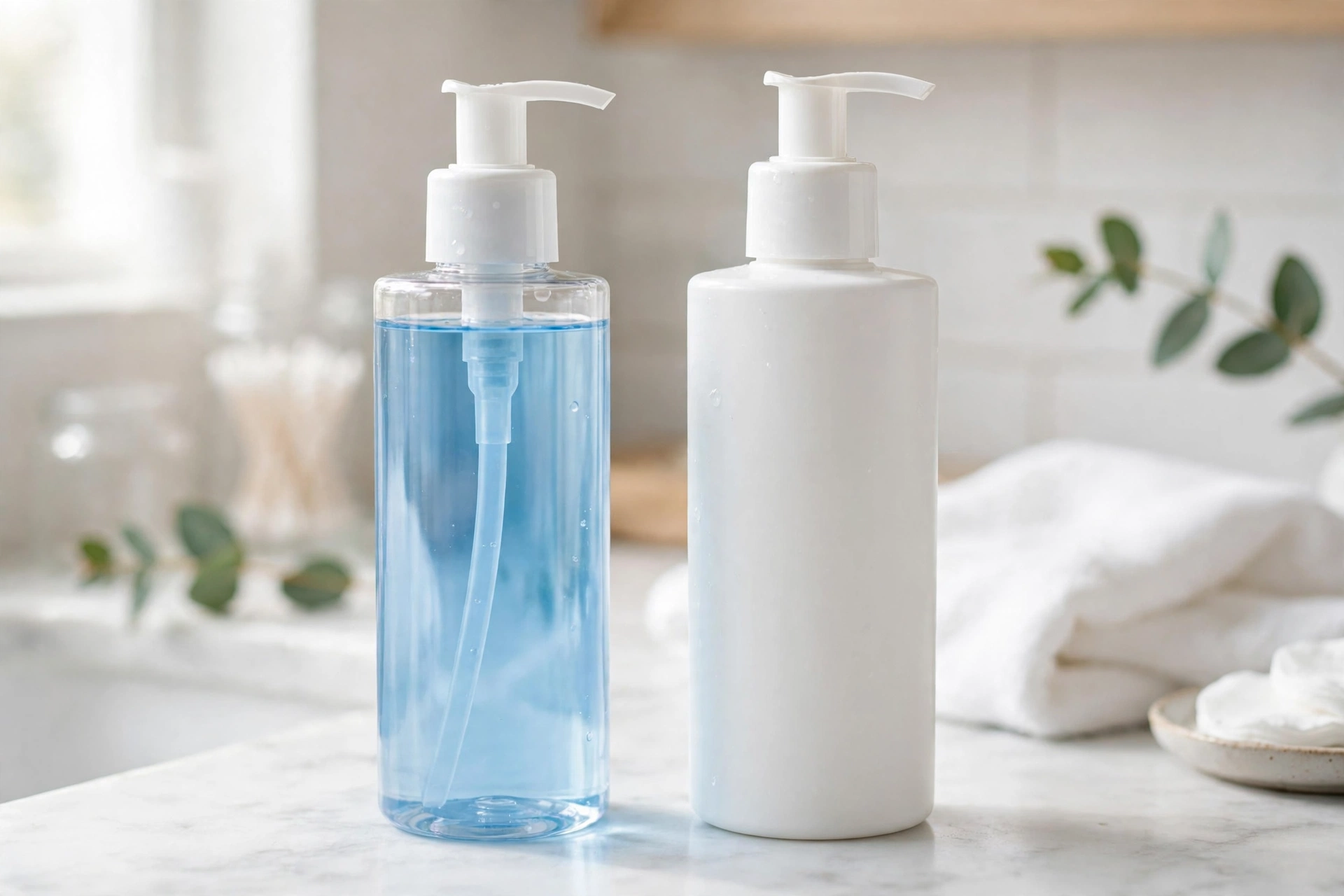
- Using a regular conditioner as a cleanser. No cleansing agents, guaranteed buildup.
- Skipping the scalp massage. The product alone does almost nothing; the mechanical work does the cleaning.
- Never clarifying. Co-washing manages buildup; it does not eliminate it. Even the cleanest routines need a reset.
- Co-washing every single day. Constant wetting and manipulation can stress fragile curls. Two to four washes a week is plenty for most people.
- Judging it after one wash. Hair transitioning from daily shampoo often looks odd for two or three weeks. Give it a fair month, with clarifying in the schedule, before you decide.
Can Co-Washing Replace Shampoo Completely?
For a small group of people with very dry, coarse, coily hair and healthy scalps, nearly yes: some go months between shampoos and thrive, clarifying only when the hair feels coated. For most people, though, complete replacement is where routines quietly go wrong. Scalps produce sebum, shed skin cells, and collect whatever your stylers leave behind, and a cleansing conditioner is designed to be mild, which means it is also designed to leave some of that behind. The honest middle ground is the rhythm this guide keeps returning to: co-wash as the default, shampoo as the regular reset, detox as the deep reset. That combination keeps the moisture benefit that made you try co-washing in the first place, without trading it for an unhappy scalp three months later. If you ever notice shedding increasing noticeably after switching, do not blame the method or the product on instinct; check the clarifying schedule first, and if heavy shedding continues, get the scalp looked at in person.
Signs Your Co-Wash Routine Is Working (and Signs It Is Not)
Give the routine a fair month before judging it. Working looks like this: curls stay moisturized past day two, wash days feel faster, breakage in the brush or shower decreases, and your scalp feels calm between washes. Not working looks like this: a persistent itch, flakes that were not there before, roots that never feel clean, or hair that looks duller week by week. Those are buildup symptoms, and the fix is almost never a richer conditioner; it is the clarifying wash you have been postponing, followed by returning to the schedule above.

Frequently Asked Questions
Is co-washing good for hair?
For dry, curly and coily hair, usually yes: it cleans gently without stripping the oils textured hair struggles to produce enough of. The benefit disappears if you never clarify or use the wrong product, which is why the rhythm matters more than the single product choice.
Can I co-wash with regular conditioner?
It is not recommended as your cleanser. Regular conditioners are built to coat and soften, not to lift dirt and oil from the scalp, so washing with them leads to buildup, limp roots and sometimes scalp irritation. A cleansing conditioner contains mild cleansing ingredients that make the difference.
How often should you co-wash curly hair?
Most people do well washing 2 to 4 times a week total, with co-wash covering most of those and a shampoo or detox wash every 2 to 4 weeks. Fine or wavy hair usually needs shampoo more often than thick coily hair does.
Does co-washing cause hair loss?
Co-washing itself does not cause hair loss. What can happen is that heavy buildup and an unhealthy scalp make shedding more noticeable and hair look thinner at the root. Keeping the scalp clean with regular clarifying, and seeing a doctor for heavy shedding, matters more than the wash method.
Can wavy hair co-wash?
Yes, but selectively. Wavy hair gets weighed down faster, so choose a light cleansing conditioner, keep it mostly to the scalp, and keep a gentle shampoo in weekly rotation. Many wavies do best co-washing only as their second wash of the week.
What is the difference between co-washing and a cleansing conditioner?
Co-washing is the method: washing with conditioner instead of shampoo. A cleansing conditioner is the product designed for that method, with mild cleansing agents added to a conditioner base. The terms are often used interchangeably, but the product distinction is what makes the method work.
Final Thoughts
Co-washing is not a religion and it is not a shortcut; it is a gentler default wash for hair that shampoo leaves too dry. Pick a true cleansing conditioner, massage like you mean it, and keep a clarifying wash on the calendar. With those three pieces in place, most curly heads notice softer hair within a month, and the routine stays simple enough to actually keep.