

If your hair never seems to behave, no matter which product you buy, the problem may not be the product at all. It may be your hair’s porosity. A simple hair porosity test can tell you whether your strands drink up moisture too fast, too slowly, or just right, and that one piece of information can change how you choose shampoo, conditioner, oils, and styling products.
Quick answer: Hair porosity is how easily your hair absorbs and holds moisture, and it comes in three levels: low, medium, and high. No single home test is perfect, so combine two or three tests on clean hair with no product buildup for a reliable answer.
In this guide you will learn what hair porosity is, five easy at-home tests (with their strengths and weaknesses), how to read your results, and what your hair needs once you know your porosity level.
Quick answer:
- Hair porosity is how easily your hair absorbs and holds moisture.
- There are three levels: low, medium (normal), and high.
- No single home test is perfect. Combine two or three for a reliable answer.
- Always test on clean hair with no product buildup.
What Is Hair Porosity?
Hair porosity describes how well your hair absorbs water and products and how well it keeps that moisture inside. It depends on the outer layer of each strand, called the cuticle. Picture the cuticle as roof shingles laid over the hair shaft:
- Tightly packed shingles keep water out and make absorption slow.
- Slightly raised shingles allow the right amount of moisture in and out.
- Chipped or gapped shingles let moisture rush in and escape just as fast.
Porosity is not a measure of how healthy your hair is. Low, medium, and high porosity are simply different behaviors, and each needs a different kind of care. For background on how the hair shaft and cuticle are built, see the overview of hair structure on Wikipedia and the hair problems guide on MedlinePlus.
Why Knowing Your Hair Porosity Matters
Many hair frustrations come from using the right product for the wrong porosity. A heavy butter that is perfect for high porosity hair may sit on top of low porosity hair and feel greasy. A light spray may disappear on high porosity hair that needs more sealing. Knowing your level helps you:
- Stop wasting money on products that do not suit your strands
- Reduce dryness, frizz, and breakage
- Choose the right deep conditioner, leave-in, and oil
- Understand why color, heat, or chemical treatments affect your hair differently
Before You Test: Get Accurate Results
Most failed tests come from skipping preparation. Follow these steps first:
- Wash with a clarifying shampoo. Product buildup, silicones, and oils can change how hair reacts to water. Use our hair washing guide if you need help.
- Skip conditioner and styling products. The hair should be completely clean.
- Test several hairs. Use strands from the front, crown, and back. Different areas can behave differently.
- Use shed hair. Strands from your brush are fine, but pick ones with a root bulb, not broken pieces.
- Repeat the test twice. Wait a few days between attempts for a consistent picture.
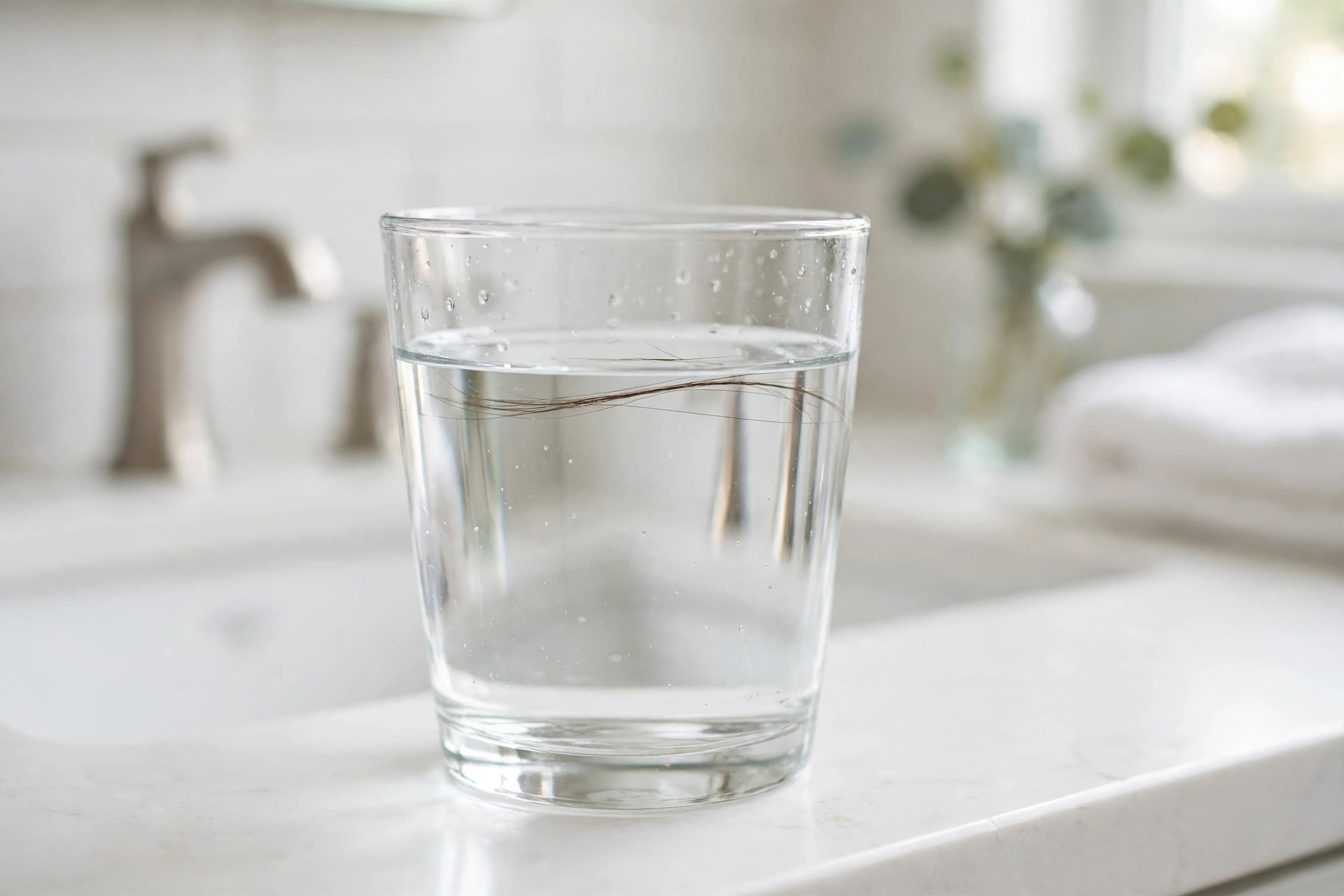
Test 1: The Float Test (Water Glass Test)
This is the most famous hair porosity test because it needs only a glass of water.
How to do it
- Fill a clear glass with room temperature water.
- Drop in two or three clean, dry strands.
- Wait two to four minutes and watch what happens.
What it suggests
- Floats on top: likely low porosity
- Sinks slowly to the middle: likely medium porosity
- Sinks quickly to the bottom: likely high porosity
Accuracy warning: Dermatologists and stylists often say the float test can be misleading. Leftover oil, water temperature, surface tension, and the strand’s weight can all change the result. Use it as a starting point, never as your only answer.
Test 2: The Slip and Slide Test (Strand Feel Test)
This hair porosity test needs no water at all.
- Take one clean, dry strand and hold it firmly near the tip.
- Slide two fingers from the tip up toward the root.
- Notice how it feels.
- Smooth and glides easily: likely low porosity (the cuticle is flat)
- Slight resistance or a few bumps: likely medium porosity
- Rough, bumpy, or snaggy: likely high porosity (the cuticle is raised)
The slip test is useful because it checks the physical cuticle. However, heat damage or bleaching can make hair feel rough even if it started with low porosity, so it works best alongside other tests.
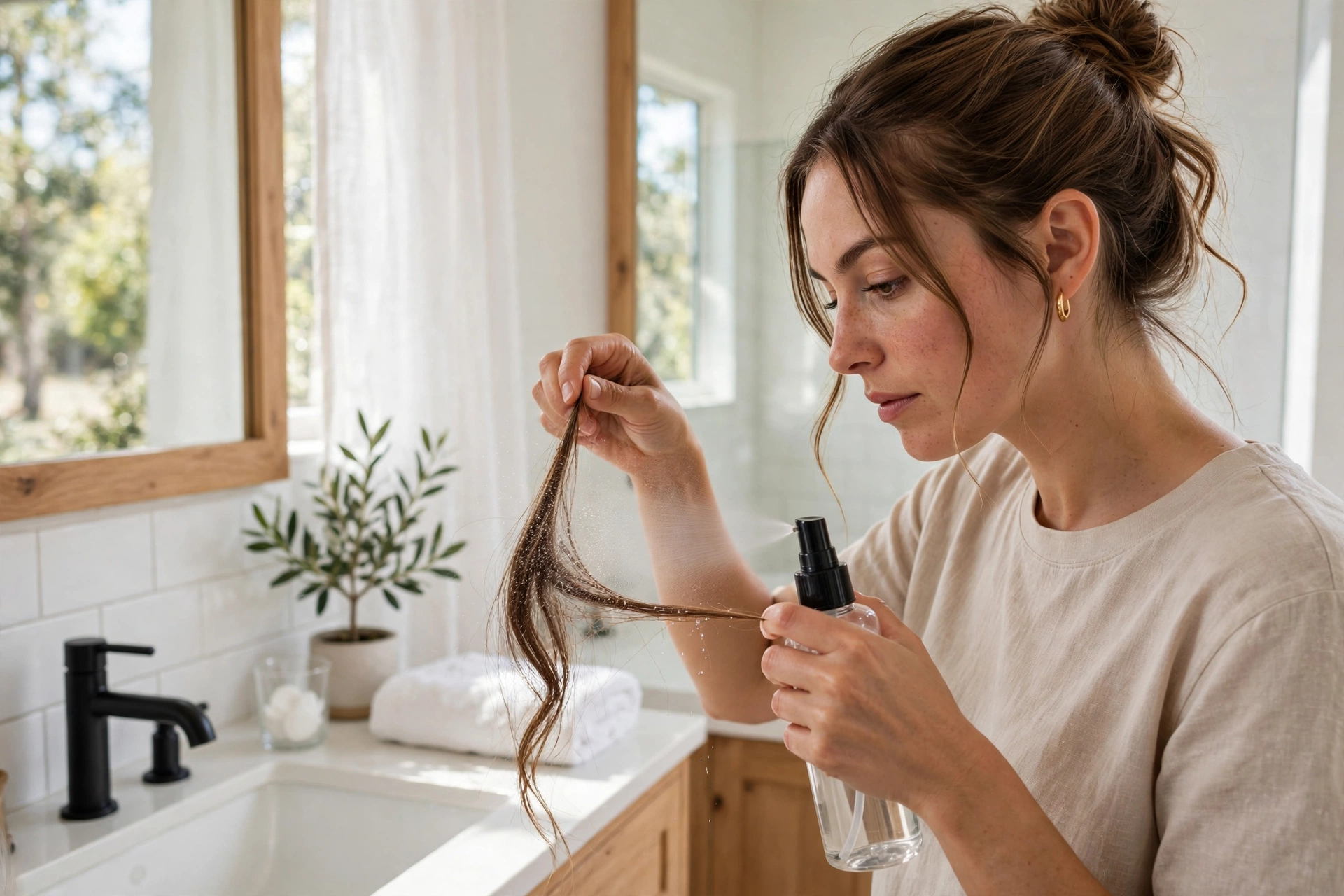
Test 3: The Spray Bottle Test
This hair porosity test is a favorite for curly and coily hair because it shows how hair responds to water on the surface.
- Spray a small section of clean, dry hair with water.
- Watch for about a minute without touching it.
- Water beads up and sits on top: likely low porosity
- Water absorbs gradually: likely medium porosity
- Water soaks in almost instantly: likely high porosity
This test also helps with mixed porosity. Try it on the front, sides, crown, and nape, and note any differences. A second hair porosity test on the same sections can confirm any mixed results.
Test 4: The Product Absorption Test
You can learn a lot from a hair porosity test simply by watching how products behave.
- Products sit on top and take a long time to absorb: likely low porosity
- Products absorb at a steady pace and last: likely medium porosity
- Products absorb quickly but hair feels dry again within hours: likely high porosity
For example, if your curl cream always feels greasy or leaves a white film, your hair may be low porosity. If your hair soaks up conditioner and still feels dry by evening, it may be high porosity.
Test 5: The Drying Time Test
After washing, let your hair air dry without a hair dryer or heavy products. Then note how long it takes. That drying time is the key result of this hair porosity test.
- Takes a very long time to dry: likely low porosity
- Dries in a moderate time: likely medium porosity
- Dries unusually fast: likely high porosity
Remember that thickness, length, and density affect drying time too. Thick hair will take longer than fine hair even if the porosity is the same.
How to Read Your Results
| Feature | Low porosity | Medium porosity | High porosity |
|---|---|---|---|
| Cuticle | Tight, flat | Slightly open | Raised or gapped |
| Water absorption | Slow | Balanced | Very fast |
| Moisture retention | Hard to get in, holds well | Good | Poor, escapes quickly |
| Drying time | Long | Moderate | Short |
| Common problem | Product buildup, greasy feel | Few problems | Frizz, dryness, tangles |
If your results point to two different levels, you may have mixed porosity. That is very common, especially with color-treated or long hair, where the ends are older and more damaged than the roots. If you have mixed porosity, a hair porosity test on the roots alone will miss the drier ends.
Care Tips for Low Porosity Hair
- Use lightweight, water-based products and avoid heavy butters.
- Apply products to damp or warm hair so they absorb better.
- Use gentle heat, such as a warm towel or steamer, when deep conditioning.
- Clarify regularly to prevent buildup.
- Choose light oils like grapeseed or argan in small amounts.
Read our full guide to low porosity hair for routines and product ideas.
Care Tips for Medium Porosity Hair
- Keep a balanced routine with regular conditioning.
- Protect hair from excessive heat and chemical treatments.
- Use a deep conditioner every one to two weeks.
- Watch for changes, since color and heat can shift porosity over time.
Care Tips for High Porosity Hair
- Use richer creams and butters to help seal in moisture.
- Layer leave-in conditioner, oil, and a cream to lock in hydration.
- Use protein treatments sparingly to help strengthen weak spots, but do not overdo it.
- Rinse with cool water to help the cuticle lie flatter.
- Use heat protectant and limit bleaching, flat irons, and hot tools.
If you have curls, our guides to the best curl creams and a curly hair routine can help you build a routine that suits your level.
What Changes Hair Porosity?
Genetics sets your starting point, but porosity can change over time. Common causes include:
- Bleaching, perms, and relaxers
- Frequent heat styling
- Sun, chlorine, and salt water exposure
- Rough brushing and friction
- Hard water and heavy buildup
This is why your porosity can be different at the ends than at the roots. Protecting your hair from damage is the best way to keep porosity from rising. Our look at AI hair analysis also explains why photo scans cannot replace hands-on tests like these. A quick hair porosity test after a color or bleach appointment shows whether the treatment changed your level.
Common Hair Porosity Test Mistakes
- Testing dirty or oily hair. Buildup changes how strands behave in water.
- Using only the float test. It is the least reliable on its own.
- Testing one strand. One hair may not represent your whole head.
- Ignoring damage. Heat or color can mask your natural porosity.
- Assuming it never changes. Retest every few months, especially after coloring.
Frequently Asked Questions
How do I test my hair porosity at home?
Wash with clarifying shampoo, then try the float test, slip test, and spray bottle test on clean, dry hair. Using two or three methods gives a more reliable answer than relying on one. In other words, treat each hair porosity test as one clue, not the final verdict.
Is the hair porosity float test accurate?
It is a useful starting point but not fully accurate. Product residue, water temperature, and strand weight can all change the result, so combine it with other tests.
Can hair porosity change?
Yes. Heat styling, bleaching, sun exposure, and rough handling can raise porosity over time, even if your hair was low porosity at birth.
Which hair porosity is best?
Medium porosity is often called ideal because it absorbs and holds moisture well. But low and high porosity hair can look wonderful with the right routine.
Can I have different porosity on different parts of my head?
Yes. Mixed porosity is common, with healthy roots and more porous ends. Treat each area according to its needs.
How often should I test my hair porosity?
Retest every three to six months, or after a major change such as coloring, perming, or heavy heat styling.
Does hair porosity affect hair growth?
Porosity does not control how fast hair grows, but it affects how moisturized and breakage-prone your hair is, which changes how long it can get.
Final Thoughts
A hair porosity test is one of the easiest and cheapest ways to understand your hair. Use two or three methods, test on clean strands from different areas, and then match your products and routine to your results. Low porosity hair needs lightweight products and gentle heat, while high porosity hair needs richer sealing and protection. Once you know your level from a hair porosity test, choosing products becomes much simpler.

Want to go deeper? Explore our guides on 3B hair, rosemary water for hair growth, and the rest of the Hair Curex library for practical, honest hair care advice.
2 thoughts on “Hair Porosity Test: 5 Easy At-Home Methods to Find Your Hair Porosity (2026)”