

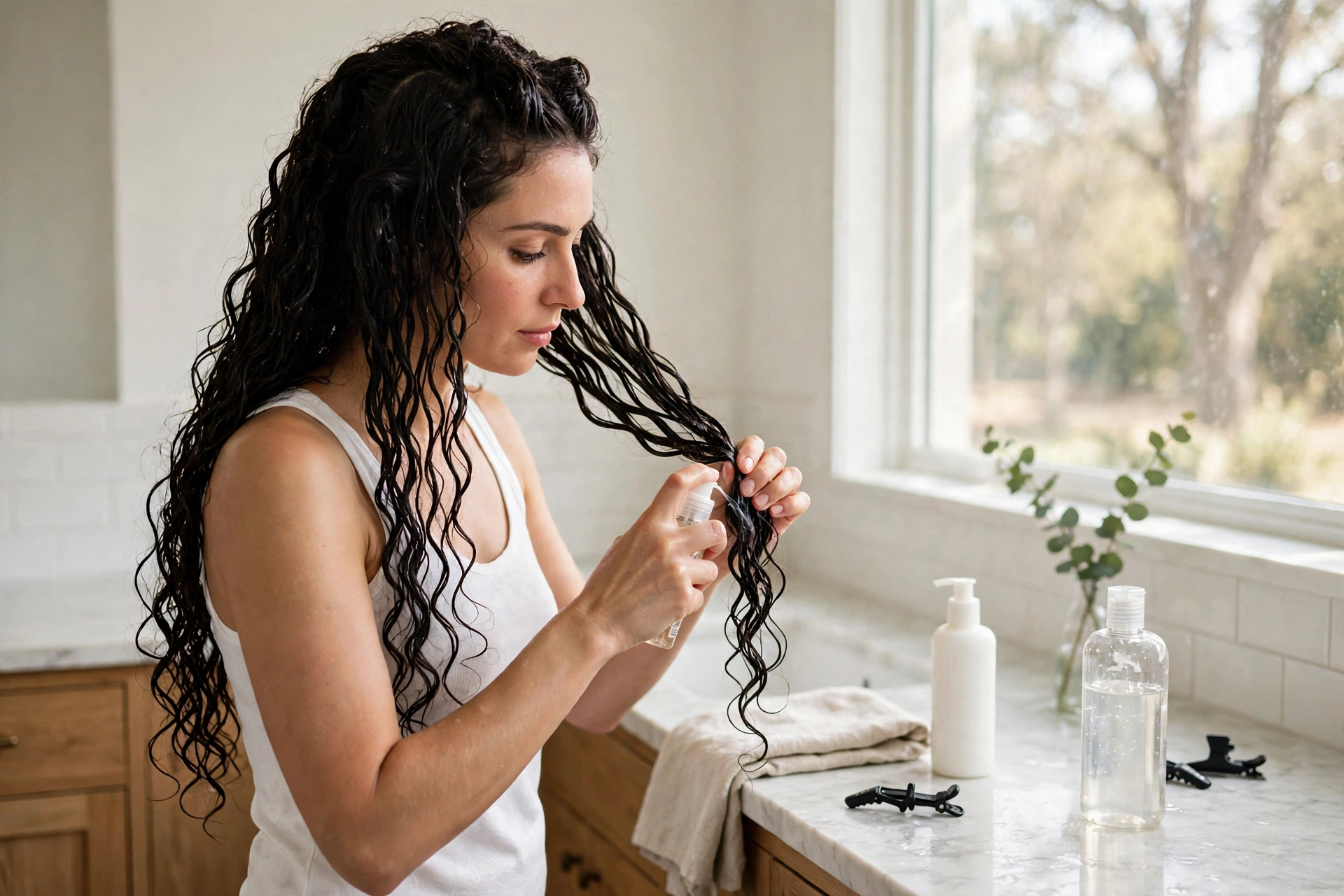
Quick answer: The standard curly hair product order is leave-in conditioner first, then curl cream, then gel or mousse, and finally a light oil to seal — applied to soaking wet hair, thinnest product to thickest. That sequence matters because each layer has a different job: the leave-in hydrates, the cream softens and defines, the gel or mousse holds the curl pattern, and the oil locks moisture in and smooths frizz. Get the order wrong and even good products can leave curls limp, greasy, crunchy, or frizzy.
If you have followed a curly routine step by step and still ended up with undefined, puffy curls, the products may not be the problem — the order often is. Curly hair is naturally drier than straight hair because scalp oils struggle to travel down each bend and twist. Layering replaces that moisture, shapes the curl, and protects it until your next wash day. This guide covers the standard curly hair product order, why it works, how to adjust it for porosity and curl type, and the mistakes that undo a good routine.
The Standard Curly Hair Product Order, Step by Step
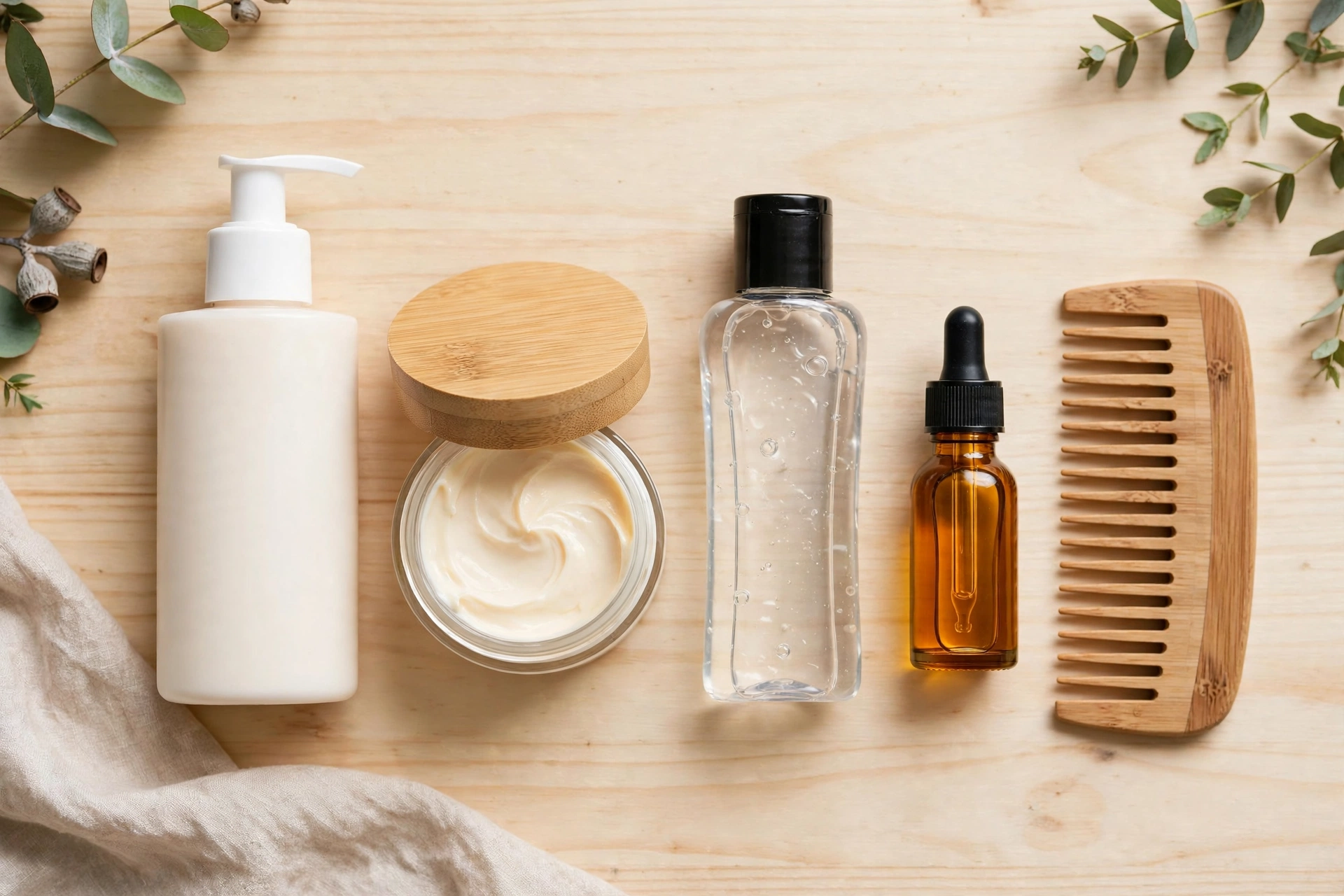
Think of layering as building from water to hold. You start with the lightest, most water-based product and finish with the heaviest, most sealing product. Here is the curly hair product order most curl types can start with:
- Leave-in conditioner. Apply to soaking wet hair right after rinsing out conditioner. This moisture base detangles and softens, giving later products hydrated hair to grip.
- Curl cream. Smooth or rake through in sections. Cream adds softness, clumping, and definition, especially for hair that feels dry without it.
- Gel or mousse. Gel gives stronger hold and longer-lasting definition; mousse gives lighter, bouncier volume. Scrunch it in to encourage your curl pattern.
- Oil (a small amount). Finish with a few drops smoothed over the surface or scrunched in. Oil seals moisture and reduces frizz; it goes last because oil repels water, so water-based products struggle to get in if oil goes first.
That four-step sequence is the default, but you do not need all four every time. Fine, wavy hair may only need a leave-in and a mousse; thick, coily hair may need all four, plus a butter on the ends. The order stays the same; only the layers and amounts change. If you are still building your basic routine, our guide to a curly hair routine walks through wash day from shampoo to drying.
Why Does Product Order Matter So Much?
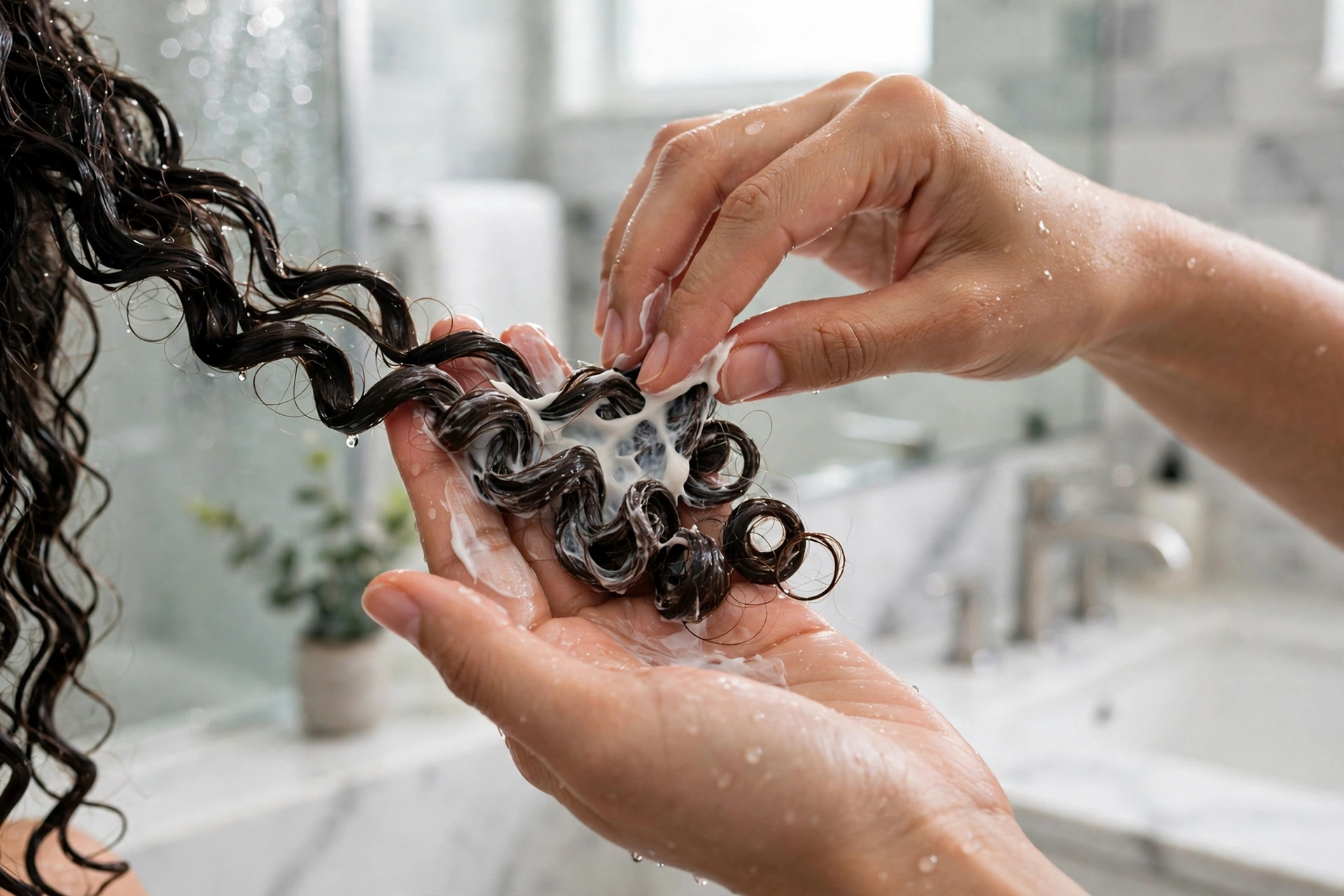
The curly hair product order matters for absorption, hold, and buildup. First, absorption: hair takes in water-based products best when wet and before any oil creates a barrier. A leave-in on dripping wet hair spreads evenly; the same leave-in over heavy oil mostly sits on top, which is why hair can feel greasy and dry at once.
Second, hold. Gel forms a light cast around each curl clump as it dries. Cream over gel breaks that cast before it sets; gel over cream lets the cream moisturize underneath while gel locks the pattern on top. In short: moisturize first, define second, hold third, seal last.
Third, buildup. Heavy products layered in the wrong order pile up on the surface instead of absorbing, weighing curls down and dulling shine. Layering lightest to heaviest gives each product a better chance to work. Dermatologists note the same principle for curly hair: because it is more prone to dryness and breakage, consistent moisture and gentle handling matter more than piling on products. The American Academy of Dermatology’s curly hair tips recommend conditioning all of your curly hair, not just the ends, and applying oil or leave-in after washing.
LOC vs. LCO: Two Ways to Remember the Order
You may have seen the abbreviations LOC and LCO in curly hair communities. They describe the same idea with one swap, and the difference is worth understanding:
- LOC — Liquid, Oil, Cream. Liquid first, then oil to seal, then cream for softness. This suits low-porosity hair that resists absorbing products.
- LCO — Liquid, Cream, Oil. Liquid first, then cream, then oil last to seal. This suits high-porosity hair, which absorbs moisture quickly but loses it just as fast.
Neither method is universally better. If curls feel soft on wash day but dry by day two, try LCO and seal with oil. If hair feels coated or takes forever to dry, try LOC with a lighter oil, or add oil only on refresh days. Judge any change over two or three wash days, since humidity and drying method also affect the result.
Adjusting the Order by Porosity and Curl Type
Porosity — how easily hair absorbs and holds water — changes which layers you need most. Low-porosity hair has a tightly closed cuticle, so products sit on the surface; high-porosity hair soaks up water fast but dries out fast too. If you do not know yours, see our hair porosity test guide first.
Curl type matters too, but less than porosity and density. Loose waves (2A–2C) need lighter layers; classic curls (3A–3C) often suit the full leave-in, cream, and gel sequence; tight coils (4A–4C) usually need the most moisture and sealing. Our curl type chart can help if you are between types — most people have two or three patterns on one head.
| Hair type / porosity | Recommended layering order | What to skip or lighten |
|---|---|---|
| Fine, wavy (2A–2B), low porosity | Leave-in (light) → mousse → tiny amount of oil on ends only | Heavy creams and butters; they flatten waves fast |
| Wavy to curly (2C–3A), normal porosity | Leave-in → cream → gel or mousse → light oil | Extra sealing layers on wash day; save oil for refresh days if hair feels weighed down |
| Curly (3B–3C), high porosity | Leave-in → cream → gel → oil to seal | Skipping the seal — high-porosity curls lose moisture quickly without it |
| Coily (4A–4C), high porosity or thick density | Leave-in → cream or butter → gel → oil | Very light, watery products alone; they rarely provide enough lasting moisture |
| Fine, curly, low porosity | Leave-in (light) → small amount of cream → gel | Oil on wash day; use a drop or two only on dry ends later |
Use the table as a starting point, not a rulebook. In humid weather, a stronger gel and lighter cream often hold up better; in dry winter air, a richer cream and sealing oil matter more. Change one variable at a time so you can tell what actually helped.
Fine vs. Thick Hair: Same Order, Different Amounts
Fine and thick hair follow the same curly hair product order, but amounts and textures are almost opposite. Fine hair gets weighed down easily, so choose lightweight leave-ins, a pea- to dime-sized amount of cream per section, and mousse instead of heavy gel, applied mainly from mid-length to ends to protect root volume.
Thick hair usually needs more product. Work in smaller sections so every strand gets coated, use a richer cream, and do not fear gel. Under-applying is the common mistake: the top looks defined while underneath layers stay dry and frizzy.
Thick hair layered with cream, gel, and oil takes longer to dry — that is normal. Do not add more product to speed things up, and do not touch curls while they dry.
Wash-Day Order vs. Refresh-Day Order
Wash day uses the full sequence. Refresh days are different: the goal is to revive what is already there, not rebuild it, and to avoid adding buildup.
On a refresh day, mist lightly — just damp, not soaking — apply a very small amount of leave-in or refresh spray, scrunch to reactivate curls, and add a drop or two of oil only where you see frizz. Skip gel on most refresh days; fresh gel over yesterday’s gel creates a stiff, flaky layer. Re-wet and re-style only sections that have truly lost their pattern.

Whatever your wash frequency, keep the same curly hair product order logic: moisture first, definition second, hold third, seal last. Co-washing — washing with conditioner instead of shampoo — is a popular middle ground for very dry, curly hair, and refresh days simply use smaller amounts of fewer layers.
How Much Product Should You Use?
Amount is where many routines go wrong, even when the curly hair product order is right. Too little means frizz; too much means limp, sticky, or crunchy curls. These starting amounts are for medium-length hair — adjust up for long or thick hair, down for short or fine hair:
- Leave-in conditioner: a nickel-sized amount per section, smoothed through soaking wet hair.
- Curl cream: a dime-sized to nickel-sized amount per section, raked or smoothed through.
- Gel: a quarter-sized amount for the whole head for medium hold, more for strong hold; scrunch, do not rake, so you do not break up clumps.
- Mousse: a golf-ball-sized amount for the whole head, scrunched in for volume.
- Oil: two to four drops total, warmed between your palms and smoothed over the surface or scrunched in. More is rarely better.
After styling, hair should feel slippery and coated, not sticky or white with product. White residue usually means too much cream or gel, or products that do not mix well. If a combination pills or flakes, swap one product — some formulas simply do not layer well. When in doubt, use less and add more next wash day.
How Drying Interacts With Layering
Layering and drying work together. Gel must dry fully to form its cast, which holds definition. Diffusing on high heat or touching hair while it dries breaks the cast early and invites frizz. Diffuse on low or medium heat, hover without touching at first, and only scrunch once hair is about 80 percent dry. When fully dry, scrunch out the crunch to reveal soft, defined curls.

Air drying also works, especially for looser patterns, but it takes longer. Avoid putting hair up while wet or leaning on wet curls, which flattens one side. A microfiber towel or cotton T-shirt removes excess water without the friction of a regular towel. The American Academy of Dermatology’s general hair care tips likewise recommend wrapping hair gently rather than rubbing it dry, and using low or medium heat when you diffuse.
Common Layering Mistakes to Avoid
- Oil before leave-in. Oil seals, so anything applied after it has a harder time getting in. Always moisturize first, seal last.
- Cream over gel. Cream breaks up the gel cast before it sets. Gel goes over cream, not under it.
- Styling on damp instead of wet hair. Most curl products are designed to work on soaking wet hair, when curl clumps are already formed. Styling on half-dry hair often means more frizz and less definition.
- Using every product every day. Layering does not mean using all your products at once, every time. Refresh days need far less.
- Skipping sections. The underneath and back sections are easy to miss, and they are usually the first to frizz. Work in sections, even if it takes longer.
- Mixing incompatible products. If a combination flakes, pills, or leaves white residue, change one product rather than adding more of both.
- Touching curls while they dry. Every touch breaks up clumps and creates frizz. Style, then leave your hair alone until it is dry.
If a routine suddenly stops working, check the basics before buying new products: soaking wet hair, an unchanged curly hair product order, and usual amounts. One of those usually explains the bad hair day. For product choices, see our guide to the best curl creams and match formula weight to porosity and density.
Frequently Asked Questions
What is the correct curly hair product order?
Leave-in conditioner, then curl cream, then gel or mousse, then a light oil to seal — on soaking wet hair, thinnest to thickest.
Should oil go before or after gel?
After gel. Oil seals moisture at the end; oil before gel can block gel from gripping evenly, weakening hold.
Do I need both cream and gel?
Not always. Thick, dry, or high-porosity curls usually benefit from both; fine or wavy hair often does well with just a leave-in and mousse or light gel.
What is the difference between LOC and LCO?
LOC is liquid, oil, then cream; LCO is liquid, cream, then oil. LCO suits high-porosity hair needing a final seal; LOC suits low-porosity hair. Try each for a few wash days.
Can I layer products on dry hair?
Refresh on damp hair, but style fully on soaking wet hair, when clumps are formed and products spread evenly. Styling dry hair usually creates frizz, and gel rarely forms a proper cast on dry hair.
How do I know if I am using too much product?
Limp curls, stickiness, white residue, flaking, and very slow drying. Halve each amount for one wash day and see if definition improves.
Does the order change for refresh days?
Yes. Mist lightly, add a little leave-in or refresh spray, scrunch, and finish with a drop or two of oil on frizzy areas. Skip gel to avoid buildup.
Final Thoughts
A good curly hair product order is not complicated, but it is specific: leave-in first, cream second, gel or mousse third, oil last — on soaking wet hair, in sections, with amounts matched to your hair’s thickness and porosity. Once that sequence becomes habit, you can stop guessing and start adjusting with purpose: lighter layers for fine waves, richer layers and a real seal for thick coils, and a much simpler routine on refresh days.

Give any change to your curly hair product order two or three wash days, change one thing at a time, and keep the layers that leave curls defined, soft, and frizz-free until the next wash. That lasting result — not how hair looks for an hour after styling — is the real test.