


The best haircuts for men are not the ones trending on social media — they are the ones that fit your hair type. A cut that looks sharp on straight hair can fall flat on curls, and a style built for thick waves can turn into a daily battle on fine, straight hair. The difference between a haircut you love and one you fight every morning usually comes down to one thing: whether the cut works with your natural texture instead of against it.
This guide covers the best haircuts for men with straight, wavy and curly hair, how to pick the right one for your face shape, exactly what to tell your barber, and how to style each cut at home.
Quick answer: The best haircuts for men depend on hair type. Straight hair suits classic cuts with structure — side parts, slick backs, crew cuts and textured crops with a taper. Wavy hair suits textured crops, quiffs and medium-length flow cuts that let the natural wave show. Curly hair suits a curly top with a low taper fade, a short afro or a mid-length curly cut with layers. Tell your barber your hair type, show a photo, and ask how much length to keep on top for your texture.
How to Find Your Hair Type First
Before choosing a cut, work out which hair type you actually have. Wash your hair, let it air-dry without product, and look at how it falls:
- Straight hair (type 1): dries flat with no bend or wave. It is usually shiny, can look oily faster, and holds a part well but resists volume.
- Wavy hair (type 2): dries with a gentle S-shaped bend. It has natural movement, can frizz in humidity, and sits between straight and curly.
- Curly hair (type 3): dries in visible curls or ringlets. It needs more moisture, shrinks when it dries, and looks best with cuts that respect the curl pattern rather than thinning it out.
Density matters too. Fine hair needs shorter, layered cuts that create the illusion of fullness. Thick hair can carry longer styles and heavier texture. If you are unsure, ask your barber at your next visit — a good barber will tell you your type in seconds and suggest cuts that suit it.
Haircuts for Men at a Glance
| Hair type | Best cuts | Avoid | Styling effort |
|---|---|---|---|
| Straight | Side part, slick back, crew cut, textured crop, buzz cut | Heavy layers that go limp; long styles with no structure | Low to medium — needs product for hold and volume |
| Wavy | Textured crop, quiff, medium flow, fringe, modern mullet | Blunt cuts that hide the wave; very short cuts that remove texture | Low — the wave does most of the work |
| Curly | Curly top with low taper fade, short afro, mid-length layers, taper with curls | Thinning shears on the curls; high fades that expose the curl pattern awkwardly | Medium — needs curl cream and a good drying routine |
Best Haircuts for Men with Straight Hair
Straight hair is the easiest to cut and the hardest to make interesting. It lies flat, shows every uneven line, and can look limp without product. The trick is to add texture and structure through the cut itself.

Classic side part. The most reliable of all haircuts for men with straight hair. Short on the sides with a clean taper, longer on top, combed to one side. It suits almost every face shape, looks right in an office and at a wedding, and needs only a comb and a little pomade. Ask for a low taper and 2–3 inches on top.
Textured crop. Short sides with a choppy, textured top, worn forward. The texture is cut in with point-cutting, so straight hair gains movement it would never have on its own. It is one of the lowest-maintenance cuts for straight hair — a dab of matte clay and it is done.
Slick back. Longer on top (4–5 inches), swept back with pomade. Works best on medium-to-thick straight hair. It looks polished and confident, but it needs daily styling and regular trims to keep the shape.
Crew cut. Short all over, slightly longer on top. The no-fuss option: it dries itself, needs no product, and suits men who want a clean look with zero morning effort. It also flatters a strong jawline — see our guide to haircuts for square face for how a crew cut balances angular features.
Buzz cut. The shortest option. It works on straight hair of any thickness and is the easiest cut to maintain at home with clippers. It does, however, show the shape of your head, so try it with a #2 or #3 guard first rather than going straight to a #1.
Best Haircuts for Men with Wavy Hair
Wavy hair is the most forgiving texture for haircuts for men — the natural bend adds volume and movement that straight hair has to fake with product. The goal is a cut that lets the wave do its thing.

Textured crop. The same cut as for straight hair, but on wavy hair it looks even better: the wave creates natural texture on top while faded sides keep it tidy. Ask your barber to cut with the wave, not against it, and keep enough length on top for the bend to show — usually 2–3 inches.
Quiff. Longer on top, swept up and back, with short sides. Wavy hair holds a quiff naturally, where straight hair needs heavy product to keep it up. A matte clay or sea-salt spray is enough to set it.
Medium-length flow. Hair grown to ear or collar length, layered to let the wave fall naturally. It suits men who want a relaxed, surfer look and are willing to grow it out. It needs a trim every 6–8 weeks to stop the ends looking straggly, and a leave-in conditioner to control frizz.
Fringe cut. A textured fringe worn forward, with short faded sides. It works well on wavy hair because the fringe has natural movement instead of lying flat on the forehead. It also suits rounder faces — our guide to haircuts for round face explains how a fringe adds angles.
Modern mullet. Short on top and sides, longer at the back, with texture throughout. It has come back strongly and suits wavy hair better than any other texture, because the wave gives the back length natural shape instead of a flat curtain.
Best Haircuts for Men with Curly Hair
Curly hair needs a different approach: the cut has to respect the curl pattern. Cutting curls wet and straight is the classic mistake — hair shrinks as it dries, so a cut that looks right wet can end up far shorter than planned. A good barber cuts curly hair dry, or at least accounts for shrinkage.
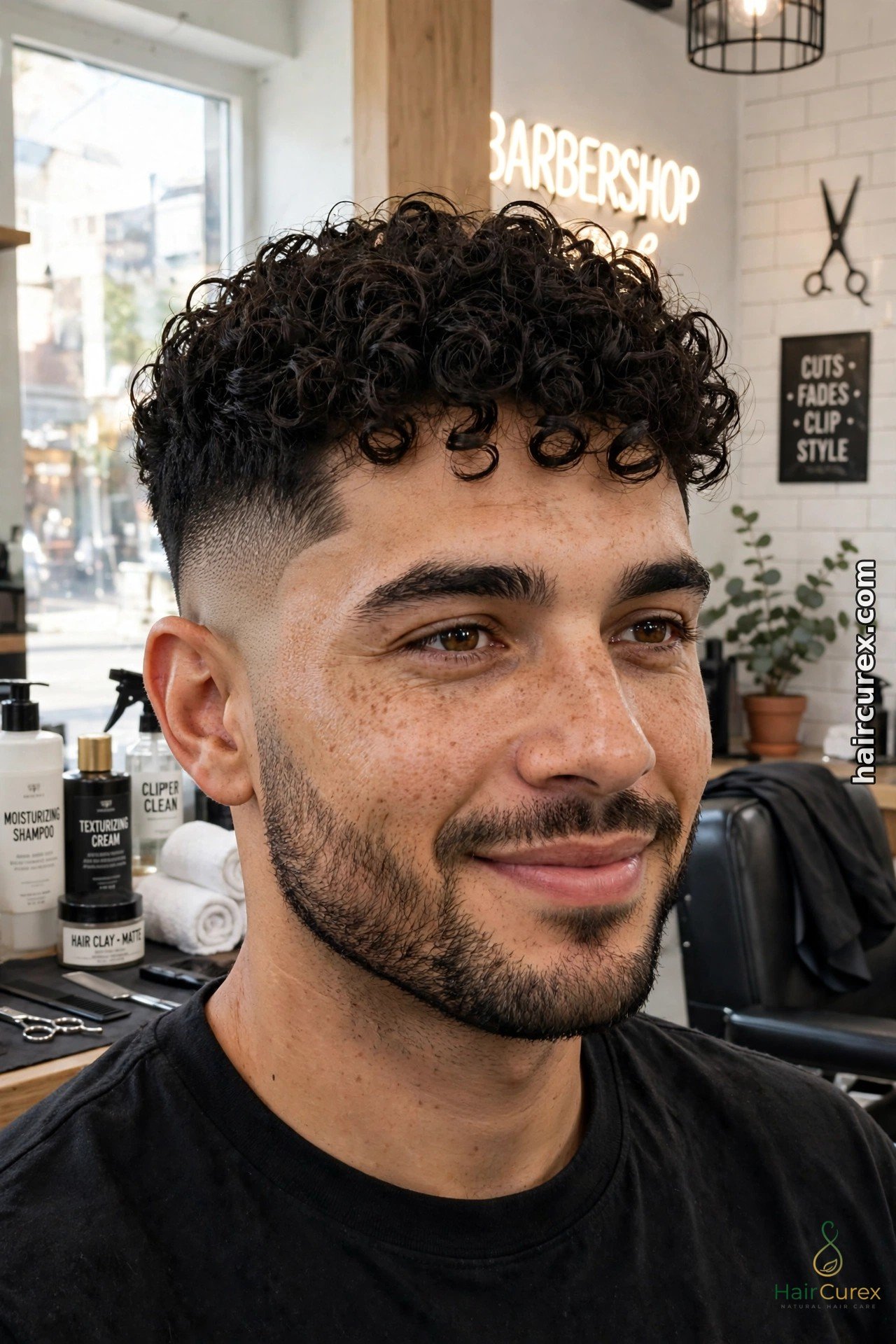
Curly top with a low taper fade. The most popular of all haircuts for men with curly hair right now. The curls stay long on top, the sides taper down gradually, and the contrast makes the curls the star. Our guide to the low taper fade for curly hair explains exactly what to ask for and how the fade should blend into the curls.
Short afro. Curls kept short and even all over, shaped into a rounded silhouette. It is clean, low-maintenance, and shows off the curl pattern. Keep it moisturized with a leave-in conditioner — dry curls frizz and lose definition.
Mid-length curly cut with layers. Curls grown to 3–5 inches with layers cut in to remove weight and stop the hair forming a triangle shape. Layers let the curls spring up instead of being pulled down by their own weight. This is the best option if you want visible curls without a fade.
Taper with curls. Similar to the low taper fade but with a more gradual taper and slightly longer sides. It is a softer, more conservative version — good for workplaces where a sharp fade feels too bold.
Curly fringe. Curls worn forward over the forehead with short sides. It works on tighter curls and suits men who want a youthful, textured look. Ask for the fringe to be cut dry, curl by curl, so the length lands where you expect.
How to Choose by Face Shape
Hair type narrows the options; face shape picks the winner. These are the broad rules:
- Oval face: the most flexible shape — almost every cut works. Our guide to haircuts for oval face covers the styles that flatter it most.
- Square face: strong jawline — soften it with texture on top and avoid very sharp, boxy lines. See haircuts for square face.
- Round face: add height on top and keep the sides short to lengthen the face. See haircuts for round face.
- Long face: avoid too much height on top; a fringe or a side part adds width and balance.
- Heart-shaped face: keep volume on the sides and avoid heavy height on top, which emphasizes a wider forehead.
If you are torn between two cuts, try a virtual preview first — an AI beard and hairstyle try-on lets you see a style on your own photo before you commit to the chair.
What to Tell Your Barber
Most bad haircuts for men come from a vague brief. Walk in with a plan:

- Name your hair type. “I have wavy hair that gets frizzy” tells your barber more than “just a trim.”
- Show a photo. Bring two or three photos of the cut you want, from the front and the side. A photo beats a hundred words of description.
- Say the numbers. Know your guard lengths: a #2 on the sides is short, a #4 is medium. Say “taper, not skin fade” if you want a gradual blend.
- Say how much length to keep on top. Inches, not “a bit off.” “Keep 3 inches on top, textured” is a clear instruction.
- Say how you style it. If you never use product, say so — your barber should cut a style that works without it.
- Ask what they recommend. A good barber will tell you if the photo you brought will not work with your hair type, and suggest the closest cut that will.
After the cut, ask how often to come back. Most short cuts need a trim every 3–4 weeks; medium and curly cuts last 5–6 weeks.
How to Style Your Haircut at Home
A good cut should look decent with minimal effort, but the right products make it look its best:
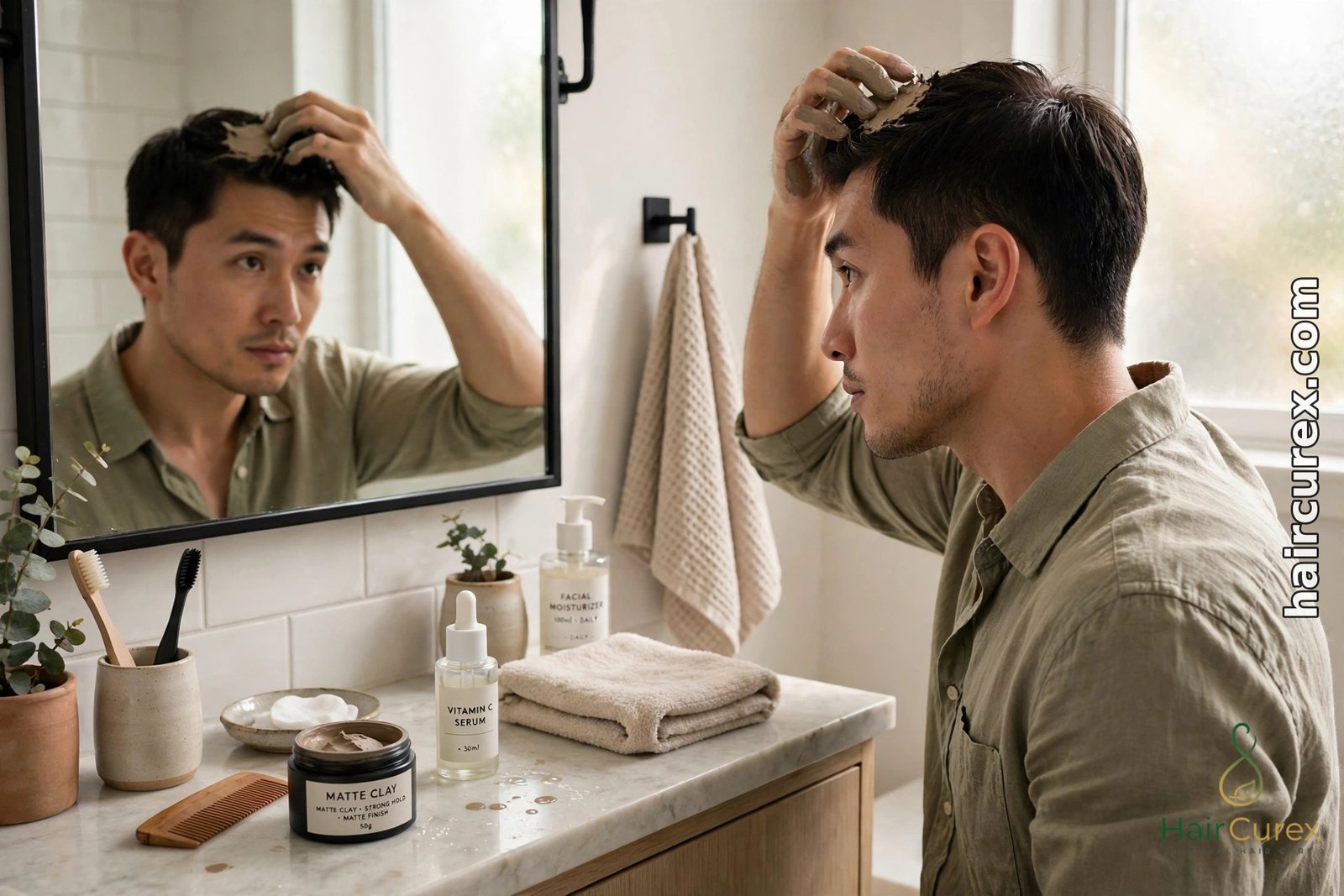
- Straight hair: matte clay or a light pomade for hold without shine. Blow-dry upward for volume, then work product through with your fingers.
- Wavy hair: sea-salt spray on damp hair, then air-dry or diffuse on low heat. A little curl cream defines the wave without weighing it down.
- Curly hair: leave-in conditioner, then curl cream, scrunched in while the hair is damp. Let it air-dry or use a diffuser — never brush dry curls, which turns them into frizz.
General habits help every hair type: wash 2–3 times a week rather than daily, use lukewarm water, and keep heat styling below 180°C (350°F) with a heat protectant. The American Academy of Dermatology’s healthy-hair tips are a good starting point for daily habits that keep any cut looking sharp, and if you ever color your hair, the U.S. Food and Drug Administration’s hair dye guidance covers the safety basics.
5 Mistakes to Avoid with Men’s Haircuts
- Copying a celebrity cut without checking your hair type. A style that looks great on thick wavy hair can look completely different on fine straight hair.
- Asking for thinning shears on curly hair. Thinning curly hair creates frizz and uneven curl patterns. Layers are the right tool, not thinning.
- Going too short on the sides for your face shape. A high skin fade on a long face makes it look longer; a low taper is usually safer.
- Skipping trims. A cut loses its shape after 3–4 weeks. Regular trims keep the style looking intentional instead of grown-out.
- Using the wrong product. Heavy pomade on fine straight hair makes it greasy and flat; gel on curly hair makes it crunchy. Match the product to the texture.
The best haircuts for men are the ones that fit your hair, not the ones on the trending page. Start with your hair type — straight, wavy or curly — pick a cut from the guide above, and walk into the barber with a photo and a clear brief. A cut that works with your texture needs less product, less morning effort and fewer bad hair days, and it grows out gracefully between visits. That is what a good haircut really is: not a style you have to fight, but one that does the work for you.
Frequently Asked Questions
What is the best haircut for men with straight hair?
The best haircuts for men with straight hair are the classic side part, the textured crop and the crew cut. These cuts add structure and texture that straight hair lacks naturally, and they need only a little matte clay or pomade to hold their shape.
What is the best haircut for men with wavy hair?
The best haircuts for men with wavy hair are the textured crop, the quiff and a medium-length flow cut. Wavy hair holds volume and movement on its own, so these cuts let the natural wave show with very little styling — usually just sea-salt spray or curl cream.
What is the best haircut for men with curly hair?
The best haircuts for men with curly hair are a curly top with a low taper fade, a short afro or a mid-length cut with layers. The key is cutting the curls dry or accounting for shrinkage, and avoiding thinning shears, which create frizz.
How do I ask my barber for a haircut?
Tell your barber your hair type, show a photo of the cut you want, state the guard numbers for the sides and the length in inches for the top, and say how you style your hair at home. Ask what they recommend if the photo will not work with your texture.
How often should men get a haircut?
Most short haircuts for men need a trim every 3–4 weeks to keep their shape. Medium-length and curly cuts last 5–6 weeks between trims. Fades grow out fastest and usually need the most frequent visits.
What haircut suits a round face for men?
Haircuts for men with a round face should add height on top and keep the sides short — a quiff, a textured crop with volume, or a side part with a taper all lengthen the face. Avoid cuts that add width at the sides.