

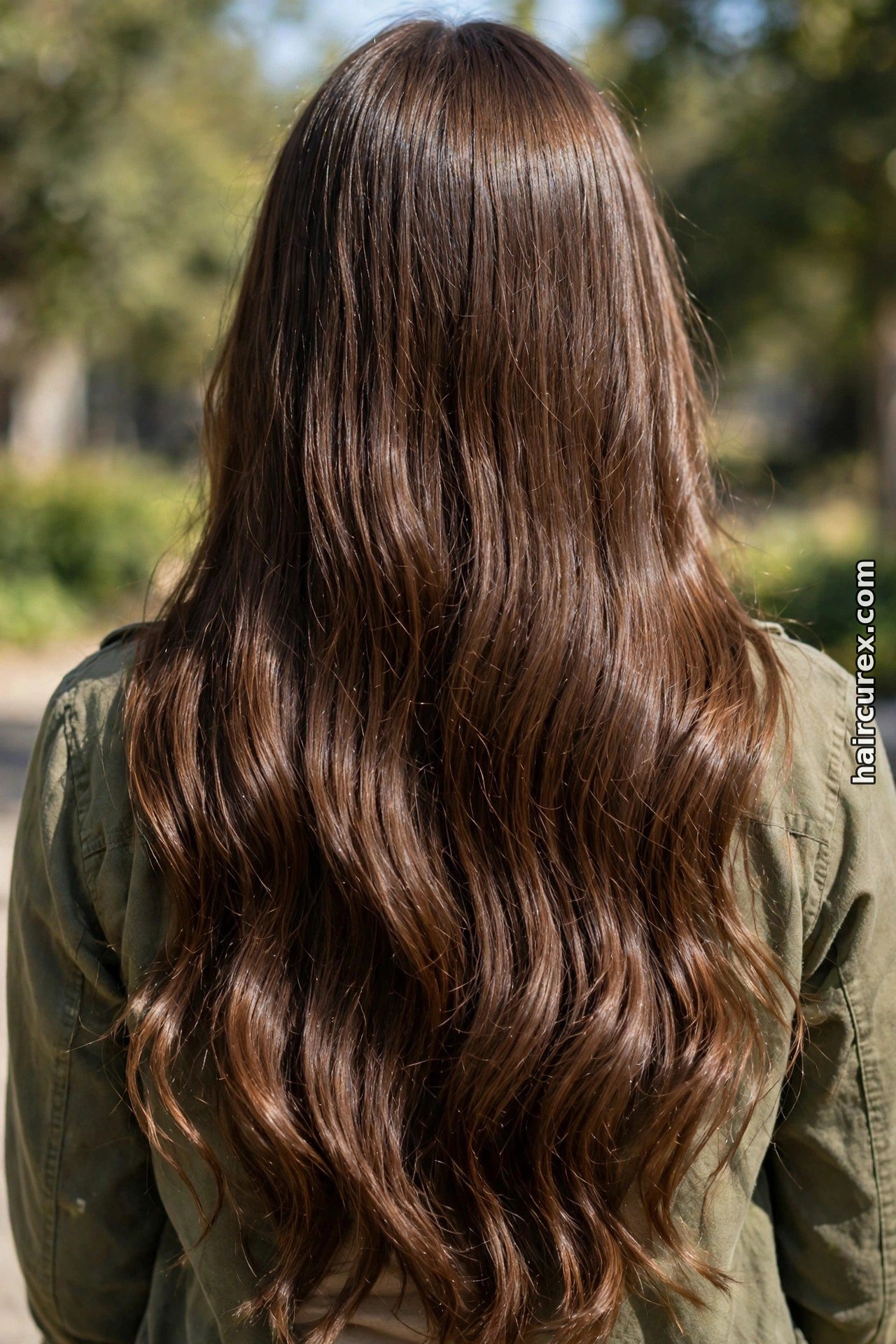
Quick answer: So, how long does it take to grow hair? On average, scalp hair grows about half an inch (1.25 cm) per month, or roughly 6 inches per year. That means growing from a chin-length bob to shoulder length takes around 8 months, shoulder to waist takes about 2 years, and a pixie cut needs roughly 2 to 3 years to reach the shoulders. Your real timeline depends on how much you trim, how much breakage you lose along the way, and your own biology — but the math below gives you an honest estimate for every goal length.
Growing your hair out is a test of patience, mostly because progress is too slow to see day to day. By month three you start wondering whether your hair has stopped growing altogether. It almost certainly hasn’t — it grows steadily, just slowly. Once you understand the rate, the growth cycle, and the difference between growth and kept length, the whole process becomes much easier to plan.
This guide gives you real numbers: the average growth rate, a timeline table for common goal lengths, what speeds growth up or slows it down, and how trims fit in. No miracle claims, no “grow 3 inches in a month” promises — just the biology, the math, and a routine that protects the length you grow.
How Long Does It Take to Grow Hair? The Average Rate
The figure dermatologists cite most often is about half an inch per month. The American Academy of Dermatology (AAD) puts average scalp hair growth at roughly half an inch (1.25 cm) a month, which works out to about 6 inches a year. Cleveland Clinic gives a similar range of 4 to 6 inches per year, noting that hair grows in cycles and that about 80% of your hair is actively growing at any given time (see Cleveland Clinic’s guide to how fast hair grows).
That average hides a lot of individual variation. Some people grow closer to a full inch a month; others grow nearer a quarter inch. Age, genetics, hormones, and overall health all shift the rate, and growth usually slows gradually with age. None of this means something is wrong with you — it means your personal rate sits somewhere inside a normal range, and the only way to know it is to measure over a few months.
It also helps to separate two ideas that get confused constantly: how fast hair grows from the root, and how much length you actually keep. Your roots may be producing half an inch a month while your ends break off at nearly the same rate. The result looks like hair that “won’t grow,” when in fact it is growing — it just isn’t being retained. Most of the advice in this guide is really about that second half of the equation.
The Hair Growth Cycle in Plain Words
Every hair on your head runs through the same three-phase cycle, but not at the same time. That staggered timing is why you shed every day without going bald: while some hairs rest and fall out, most are busy growing.
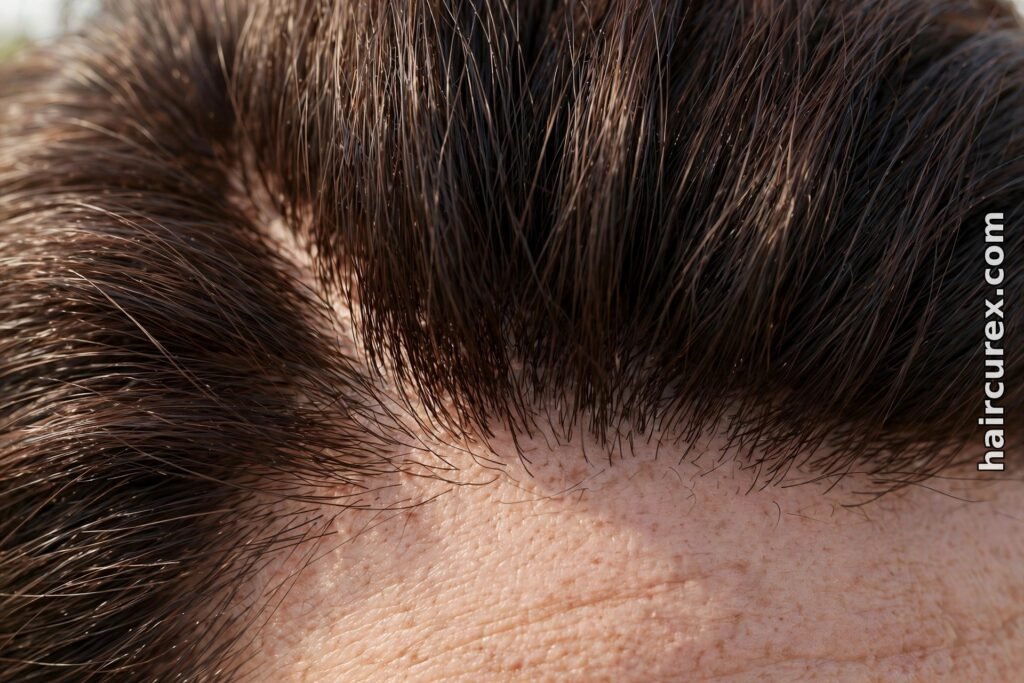
Anagen: the growth phase (2 to 7 years)
This is the active phase, and it is by far the longest. A single scalp hair can stay in anagen for anywhere from 2 to 7 years, growing about half an inch a month the whole time. The length of your anagen phase is mostly set by genetics, and it is the main reason some people can grow waist-length hair while others seem to stall at shoulder length. Roughly 80 to 90% of your scalp hairs are in anagen at any moment.
Catagen: the transition phase (2 to 3 weeks)
A short reset: growth stops, the follicle shrinks, and the strand detaches from its blood supply. Only a small percentage of hairs are in this phase at once.
Telogen: the resting and shedding phase (around 3 months)
In telogen the hair rests in the follicle, then sheds — this is the hair you find in the shower drain and on your brush. Losing 50 to 100 hairs a day is normal. After shedding, the follicle starts a new anagen phase and the cycle begins again. When a shock like illness, major stress, childbirth, or crash dieting pushes many follicles into telogen at once, the extra shedding shows up 2 to 3 months later, a condition called telogen effluvium. It usually settles on its own within 6 to 9 months.
Hair Growth Timeline Table: Starting Length to Goal Length
The table below uses the average rate of half an inch per month. The “with regular trims” column assumes a small maintenance trim of about half an inch every 3 months, which is the standard advice for keeping ends healthy during a grow-out.
| Starting Length | Goal Length | Inches to Gain | At Average Rate (No Trims) | With Regular Trims |
|---|---|---|---|---|
| Pixie cut | Chin-length bob | ~6 inches | ~12 months | ~14 months |
| Chin length | Shoulder length | ~4 inches | ~8 months | ~10 months |
| Shoulder length | Armpit length | ~4 inches | ~8 months | ~10 months |
| Armpit length | Mid-back | ~4 inches | ~8 months | ~10 months |
| Mid-back | Waist length | ~4 inches | ~8 months | ~10 months |
| Shoulder length | Waist length | ~12 inches | ~24 months | ~30 months |
| Pixie cut | Shoulder length | ~10 inches | ~20 months | ~24 months |
Two things stand out. First, the awkward in-between stages last months, not weeks — the grow-out from chin to shoulder is where most people give up and cut it all off again. Second, trims add time, but not nearly as much as people fear: a careful half-inch trim four times a year costs about 2 inches of gross growth a year, and it buys you ends that do not split upward and break off in larger chunks.
Want your own exact number instead of a table average? Try our free hair growth calculator — enter your current length, your goal length, and your growth rate, and it estimates your timeline, trims included.
What Speeds Growth Up — and What Slows It Down
Let’s be honest about the limits first: no shampoo, oil, vitamin, or scalp treatment has been shown to make healthy follicles grow dramatically faster than your biology allows. What the evidence does support is removing the things that slow growth or cause loss, and giving your body what it needs to maintain its normal rate.
- Enough protein. Hair is made mostly of keratin, a protein. A diet short on protein is one of the most common, fixable reasons growth stalls.
- Correcting a real deficiency. Low iron (ferritin), low vitamin D, and thyroid problems are all linked to shedding and slower regrowth. Get bloodwork done before buying supplements — extra vitamins only help when you are actually deficient. Our guide to hair growth vitamins explains which ones have real evidence behind them.
- A calm, healthy scalp. An itchy, flaky, inflamed scalp is a poor environment for growth — treating dandruff or irritation is a growth step, not just a comfort step.
- Gentle handling. Less breakage means more kept length, which is the only part of the equation you fully control.

Factors that slow you down
- Crash diets and major stress. A sharp calorie cut or a serious illness can push follicles into the resting phase, with the shedding wave arriving months later.
- Heat and chemical damage. Frequent high-heat styling and repeated bleaching weaken the shaft, so ends snap before they reach your goal length.
- Tight, constant tension. Wearing the same tight ponytail or braids every day can damage follicles over time (traction alopecia). Rotate your styles.
- Heavy shedding you ignore. If you are losing far more than 100 hairs a day for weeks, something is driving it. Our guide on how to stop hair fall walks through the checks worth doing first.
- Hormones and genetics. Pattern thinning and post-pregnancy shedding are driven by hormones, not by anything you did wrong, and need a different approach than a grow-out routine.
One more honest note: scalp massage and oils can support a healthy scalp and reduce breakage — best hair growth oils for hair fall covers which ones have evidence and how to use them safely — but treat them as support players, not growth accelerators.
Do Trims Help or Hurt? The Net-Length Math
Trims feel like the enemy of a grow-out, but the math says otherwise. Here is the simple version:
Net length gained = growth from the roots − length lost to trims − length lost to breakage.
At the average rate, your roots produce about 6 inches a year. Trim half an inch every 3 months and you give back 2 inches, leaving 4 inches of net growth — provided breakage stays near zero. Skip trims entirely and split ends travel up the shaft, forcing you to eventually cut off 2 or 3 inches at once, or silently snapping off in ragged pieces. Many people who “never trim” end the year with less length than careful trimmers, not more.
The practical rule for a grow-out: a dusting trim (a quarter to half an inch) every 10 to 12 weeks, and tell your stylist you are growing it out. If your ends are already badly split, one slightly bigger clean-up cut at the start saves you months of slow damage later.

How to Track Your Progress (So You Don’t Quit at Month Three)
The hardest part of growing hair out is that daily mirrors lie. You will not see half an inch. Measure instead:
- Monthly tape check. Once a month, measure from a fixed point — your hairline at the forehead, over the top of your head, down to the longest ends. Write the number down.
- Progress photos. Same spot, same lighting, same angle, every 8 to 12 weeks. Photos show change that mirrors hide.
- The milestone method. Pick body landmarks — chin, shoulder, armpit, mid-back, waist — and celebrate reaching each one.
- Watch breakage, not just growth. If you see lots of short broken pieces on your clothes, your routine needs a gentler touch before your timeline means anything.

A Simple Routine That Protects the Length You Grow
You do not need a complicated regimen. The routine below covers the basics that actually move the needle on kept length:
- Wash gently. Shampoo the scalp, let the suds rinse through the lengths, and condition from mid-length to ends. Lukewarm water, not hot.
- Detangle wet hair with care. Hair is weakest when wet. Use a wide-tooth comb, start at the ends, and work upward.
- Limit heat. Air-dry when you can, keep tools on low or medium heat, and always use a heat protectant.
- Protect it overnight. A satin or silk pillowcase, or a loose braid, cuts friction that quietly snaps ends while you sleep.
- Eat for growth. Adequate protein and iron, plus a varied diet — the flat lay above is a good shopping list, not a supplement ad.
- Be patient at the awkward stage. The chin-to-shoulder months are the worst, and the months most people quit. Headbands, clips, and a shaping cut from a stylist who understands grow-outs get you through.

Common Mistakes That Add Months to Your Timeline
- Measuring every week and deciding nothing is happening. Growth is a monthly event, not a daily one.
- Skipping trims for a year and then losing 3 inches to split ends in one salon visit.
- Chasing “fast growth” products instead of fixing the actual cause — low iron, heavy shedding, or heat damage.
- Cutting it all off during the awkward stage and restarting the clock. Almost every grow-out has an ugly month or two; it passes.
When to See a Dermatologist Instead of Waiting
Most slow growth is normal biology. But book an appointment if you notice sudden patchy bald spots, a rapidly widening part, scalp pain or scaling, shedding far above 100 hairs a day for more than a couple of months, or hair loss paired with fatigue, weight changes, or irregular periods. Those patterns can point to thyroid issues, iron deficiency, or scarring conditions where early treatment protects follicles that home care cannot. The American Academy of Dermatology recommends partnering with a board-certified dermatologist for exactly these situations.
Growing your hair out is a long game, but it is a predictable one. At about half an inch a month, every goal length has a real date attached to it — and with gentle handling, regular small trims, and a healthy scalp, most of that growth is yours to keep. Ready to put a date on your goal? Use our free Hair Growth Calculator to estimate exactly how many months your grow-out will take.
Frequently Asked Questions
How long does it take to grow hair 12 inches?
At the average rate of half an inch per month, growing 12 inches takes about 24 months with no trims, or roughly 30 months with regular maintenance trims — for most people, the journey from shoulder length to waist length.
Can hair grow faster than half an inch a month?
Yes, for some people. Growth rates vary by genetics, age, and health, and some people grow closer to an inch a month. But no product has been proven to push a healthy follicle far beyond its natural rate — be skeptical of anything promising inches in weeks.
Does cutting your hair make it grow faster?
No. Hair grows from the follicle at the scalp, not from the ends, so cutting cannot change the growth rate. Trims help you keep length by removing split ends before they break further up the shaft, which is why careful trimmers often end up with longer hair than people who never trim.
Why does my hair stop growing at shoulder length?
It usually hasn’t stopped growing. Either your anagen (growth) phase is naturally shorter, so strands shed around that length, or breakage is removing length as fast as your roots add it. Gentler handling and regular trims usually reveal growth that was being lost.
How long does it take to grow hair from a pixie cut to a bob?
Growing from a pixie (around 2 to 4 inches) to a chin-length bob (around 10 inches) means gaining roughly 6 inches: about 12 months at the average rate, or around 14 months with regular trims. The first few months are the most awkward — clips and styling products help.
Does hair grow faster in summer?
Slightly, for many people. Warmer weather and increased blood circulation are thought to nudge growth a little higher in summer months, but the difference is small — a matter of fractions of an inch, not a dramatic speed-up.
How can I tell if my hair is actually growing?
Measure monthly from a fixed point with a tape measure, and take progress photos every 8 to 12 weeks in the same lighting. Daily mirror checks won’t show half an inch of growth, but a written log will.