

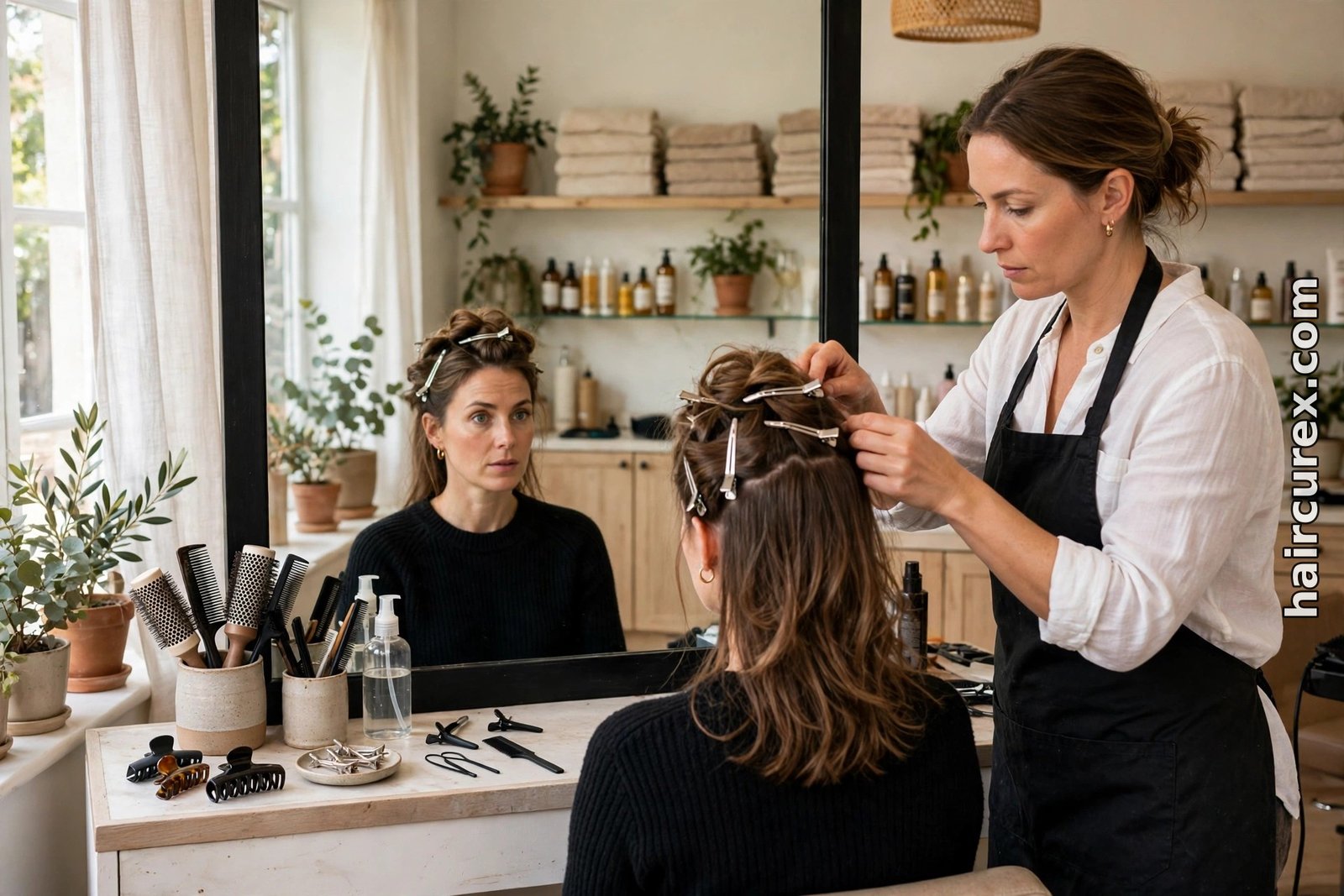
Quick answer: Which hairstyle suits me? The best cut for you is the one that balances your face shape, works with your natural hair type, and fits the time you are honestly willing to spend styling each morning. Start by measuring your face, then pick a cut family that flatters that shape, and finally adjust it for your texture and routine. Get those three things right and almost any style you love can be adapted to suit you.
Choosing a haircut can feel like a gamble. You bring a photo to the salon, the cut looks perfect on someone else, and the mirror tells a different story. The problem is rarely the cut itself. It is the mismatch: a style designed for a different face shape, texture, or lifestyle. This guide turns the decision into a simple process you can follow at home before you sit in the chair.
Which Hairstyle Suits Me? Start With Your Face Shape
Face shape is the starting point because it decides what a cut needs to do. A good haircut creates balance: it softens sharp angles, adds definition where features are soft, adds width where a face is long, or adds length where a face is wide. Stylists often describe the goal as nudging the overall outline toward an oval, since that balanced shape suits the widest range of styles.
There are six common face shapes: oval, round, square, heart, diamond, and rectangular (also called oblong). Most people fall clearly into one of them, and plenty are a blend of two, which just means borrowing ideas from both.

How to Identify Your Face Shape With Simple Measurements
You need a flexible measuring tape, the kind used for sewing, or a piece of string and a ruler. Pull your hair fully back so nothing hides your hairline or jaw, and stand in front of a mirror in good light. Write down four numbers:
- Forehead width: Measure across your forehead at its widest point, usually from hairline to hairline above the eyebrows. Keep the tape flat rather than bending it around the curve.
- Cheekbone width: Feel for the most prominent point of each cheekbone, just below the outer corner of your eyes, and measure straight across.
- Jaw width: Measure from the tip of your chin to just below your ear where the jaw angles upward, then double that number.
- Face length: Measure from the center of your hairline straight down to the tip of your chin.
Now compare the numbers. Length clearly greater than cheekbone width, with a forehead slightly wider than the jaw, points to oval. Length and width nearly equal with soft, rounded angles points to round; the same proportions with a strong, angular jaw points to square. A forehead that is the widest measurement with a narrow, pointed chin points to heart-shaped. Cheekbones as the widest measurement with a narrow forehead and chin points to diamond. A face much longer than wide, with all three widths similar, points to rectangular.
If you do not have a tape measure, the photo method works well too. Take a straight-on photo with your hair pulled back, then trace the outline of your face on the screen or a printout. Professional stylists use the same logic, as explained in mindbodygreen’s face-shape guide, which notes that the goal is either adding definition or softening hard angles.
Face Shape × Best Styles: The Quick Table
Use this table as your shortlist. Each row names cut families that flatter that shape and the effect they create, so you can walk into the salon with a direction rather than a single photo.
| Face Shape | Best Cut Families | What They Do |
|---|---|---|
| Oval | Almost anything: blunt bob, long layers, pixie, shag | Balanced proportions need no correction, so choose by texture and lifestyle |
| Round | Long layered lob, pixie with height on top, side-swept bangs | Add length and angles, drawing the eye downward |
| Square | Soft long layers, wavy lob, side-swept fringe, textured pixie | Soften a strong jawline and angular features |
| Heart | Chin-length bob, lob with volume at the jaw, side-swept bangs | Add width near the jaw to balance a wider forehead |
| Diamond | Medium-to-long layers, deep side part, textured waves | Soften prominent cheekbones and balance a narrow chin |
| Rectangular | Blunt bob, curtain bangs, shoulder-length waves | Add width and break up length so the face looks less long |
What Works for Each Face Shape
Oval faces
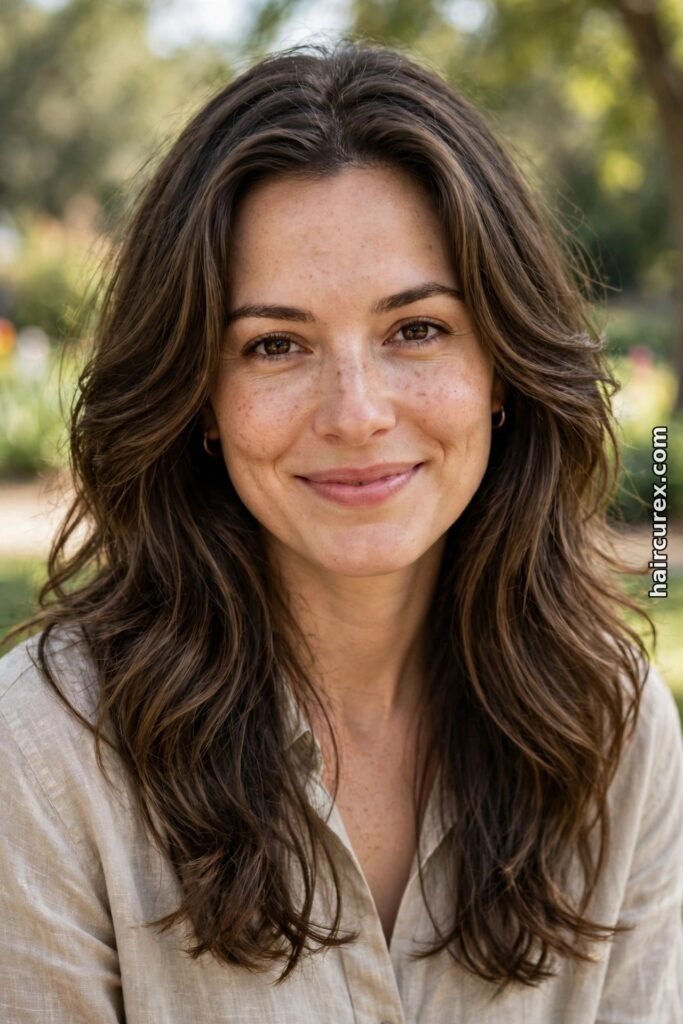
Oval is the most flexible shape, so your decision shifts to hair type and lifestyle. Long layers show off waves, a blunt bob looks sharp on straight hair, and a pixie works if you like short styles. The one thing to watch is adding too much height on top, which can stretch an already longer face.
Round faces
Round faces benefit from length and angles. A lob that falls below the chin, long layers that start below the cheekbones, or a pixie with volume on top all make the face look longer. Side-swept bangs help more than blunt, straight-across bangs, which can widen the face.
Square faces
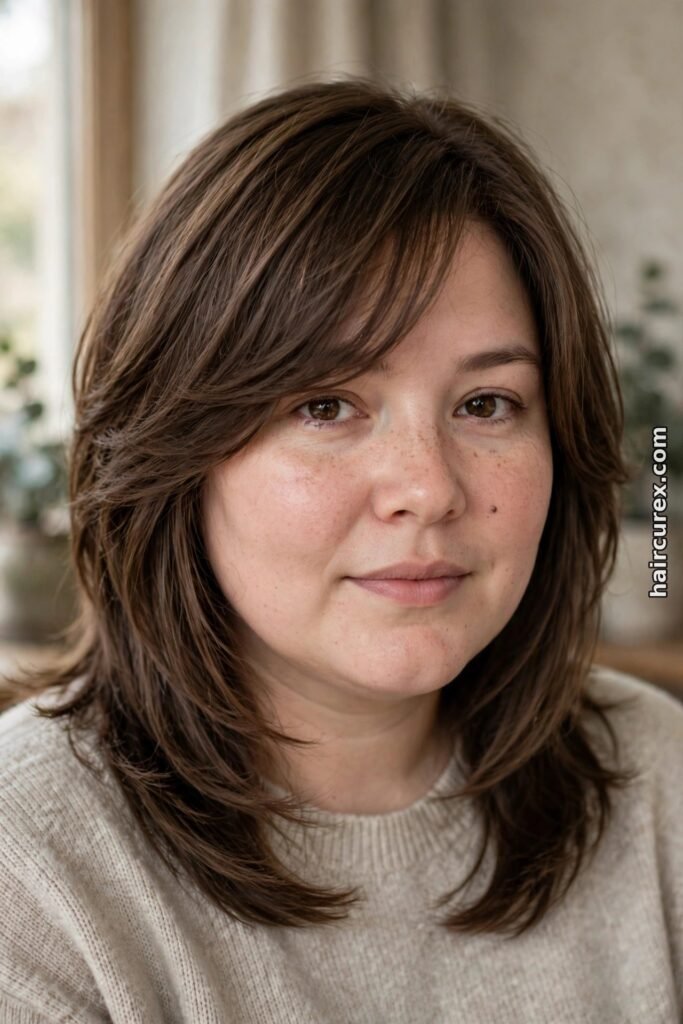
Square faces have a strong jaw and fairly equal widths, so softness is the goal. Long, airy layers, waves, and face-framing pieces that start at the cheekbones all take the edge off angular features. Side-swept bangs work better than blunt bangs, and a textured pixie with softness on top beats a severe, boxy crop.
Heart-shaped faces
Heart faces are widest at the forehead and narrow at the chin, so the cut should add fullness lower down. A chin-length bob, a lob with volume near the jaw, or long layers with a side part all rebalance the shape. Heavy, full bangs can make the forehead look wider, so keep fringes light and swept to the side.
Diamond and rectangular faces
Diamond faces have wide cheekbones with a narrow forehead and chin. Medium-to-long layers, a deep side part, and soft waves add width where it is missing and soften the angles. Rectangular faces are long with similar widths throughout, so the aim is width: blunt bobs, curtain bangs, and shoulder-length waves with volume at the sides all shorten the appearance of the face.
How Your Hair Type Changes the Choice
Face shape picks the direction, but hair type decides whether the cut behaves. The same lob looks different on straight, wavy, curly, and coily hair, and a cut that ignores texture will fight you every morning. Healthy hair also holds a cut better: the American Academy of Dermatology advises choosing products made for your hair type, applying shampoo mainly to the scalp, and protecting hair from excessive heat, as set out in the AAD’s hair care tips from dermatologists.
Straight hair (type 1) shows every line clearly, so blunt cuts and sleek bobs look precise and polished. The trade-off is that straight hair can fall flat, so ask for subtle internal layers if you want movement. Heavy layering can make fine straight hair look thin, so keep layers long and minimal if your hair is fine.
Wavy hair (type 2) is the most flexible texture. Layers encourage the natural bend instead of fighting it, which is why shags, lobs, and layered cuts suit waves so well. Wavy hair dislikes heavy products that drag the pattern down, so light mousses and gels usually hold the shape better than thick creams.
Curly hair (type 3) shrinks as it dries, sometimes dramatically, so the shape must be judged dry, not wet. Layered cuts remove bulk and stop the dreaded triangle shape, but layers should be cut with the curl pattern in mind. If you are not sure of your pattern, our curl type chart walks through types 2A to 4C. A good example of a texture-first cut is the wolf cut for curly hair, where short crown layers create volume and tapered ends keep the shape light.

Coily hair (type 4) has the most shrinkage and the most fragile bends, so length decisions matter more than style names. Keep crown layers longer than you think you need, choose a stylist who cuts coily hair in its natural dry state, and favor shapes that protect the ends, such as tapered cuts and layered shapes with soft edges. Density matters too: fine hair of any texture usually suits fewer, longer layers, while thick hair can handle more layering to remove weight.
Be Honest About Your Daily Styling Time
This is the step most people skip, and it decides whether you love the cut in week three. As a rough guide: under 5 minutes a day suits cuts that air-dry well, like a blunt bob, textured crop, or wash-and-go layers; 5 to 15 minutes covers most medium cuts, including lobs, long layers, and shags; 15 to 30 minutes allows precision styles such as sleek bobs, blowout layers, and curtain bangs that need daily shaping.
Also count the maintenance, not just the morning routine: short cuts typically need a reshape every 4 to 6 weeks, while medium and long styles can often go 8 to 12 weeks. If you know you will stretch appointments, pick a cut that grows out gracefully, like long layers or a shag, rather than a precise pixie or blunt bob that loses its shape fast. If you are still torn between two options, take the free quiz and answer five quick questions about your face shape, hair type, and routine to get matched with styles that fit all three.
Common Mistakes That Ruin a Good Cut
- Copying a photo without checking the texture. A cut on straight hair will not behave the same on curly hair. Bring photos of people with your hair type.
- Choosing by trend instead of by shape. A trending cut can still be adapted to your face, but the layer placement, length, and fringe need adjusting.
- Ignoring shrinkage. Curly and wavy hair sits shorter dry than wet. Agree on the finished dry length before the first snip, especially for bangs.
- Forgetting the grow-out. A cut that looks great on day one but awkward by week five is a bad cut for your life. Ask how it will look in six weeks.
- Over-layering fine hair. Too many short layers can make fine hair look thinner at the ends. Fewer, longer layers usually look fuller.
- Getting a high-maintenance cut on a low-maintenance schedule. If you will not style it daily, do not buy a style that needs daily styling.

What to Tell Your Stylist
Walk in with three things: your face shape, your hair type, and your styling time. Be specific about the decisions that matter: where the shortest layer should sit, whether you want a fringe and how much upkeep you will give it, and what length you want when the hair is dry. Ask the stylist to check the shape dry before you leave, and ask how the cut will grow out. For a broader set of styles to show your stylist, browse our hair cuts guide and pick the versions that match your shape and texture.
Frequently Asked Questions
How do I know which hairstyle suits me?
Measure your face shape, identify your hair type, and be honest about your daily styling time. The cut that suits you balances your face shape, works with your natural texture, and fits your routine. A short quiz that weighs all three can narrow the options fast.
What is the easiest way to find my face shape?
Pull your hair back and measure four things with a flexible tape: forehead width, cheekbone width, jaw width, and face length. Compare the numbers using the guide above. If you have no tape, trace your face outline from a straight-on photo and match it to the six shapes.
Can I get a hairstyle I love even if it does not suit my face shape?
Yes. Face-shape guidance is about adjustments, not bans. Almost any style can be adapted: change the layer placement, the length, or the fringe, and the same cut can flatter a different shape. Tell your stylist what you love and ask for their version of it.
Does hair type matter more than face shape?
Neither matters more on its own. Face shape decides the outline the cut should create, and hair type decides whether that outline holds up in real life. A cut that suits your shape but fights your texture will disappoint you every morning, so weigh both equally.
What haircut suits me if I have no time to style my hair?
Choose a cut that air-dries well and holds its shape: a blunt bob, a textured crop, a wash-and-go layered cut, or a short pixie if your texture supports it. Avoid fringes that need daily heat styling and precise bobs that lose their line quickly.
How often should I get my haircut to keep the shape?
Short cuts usually need reshaping every 4 to 6 weeks, while medium and long styles can go 8 to 12 weeks. Layered and shaggy cuts grow out more gracefully than blunt precision cuts, so they are more forgiving if you stretch appointments.
Should I cut my curly hair wet or dry?
The final shape should always be judged dry, because curls shrink and sit differently when dry. Many curl specialists cut fully dry or cut wet and then refine dry. Bangs in particular should be trimmed dry and left longer than the target length.
Your Next Step
You now have the method: measure your face, shortlist cut families from the table, filter them by your hair type, and check them against your real styling time. If you want the shortcut, try the free hairstyle finder quiz and get three styles picked for your face shape, hair type, and routine in under two minutes. Then book the appointment with confidence, and bring this guide with you.