

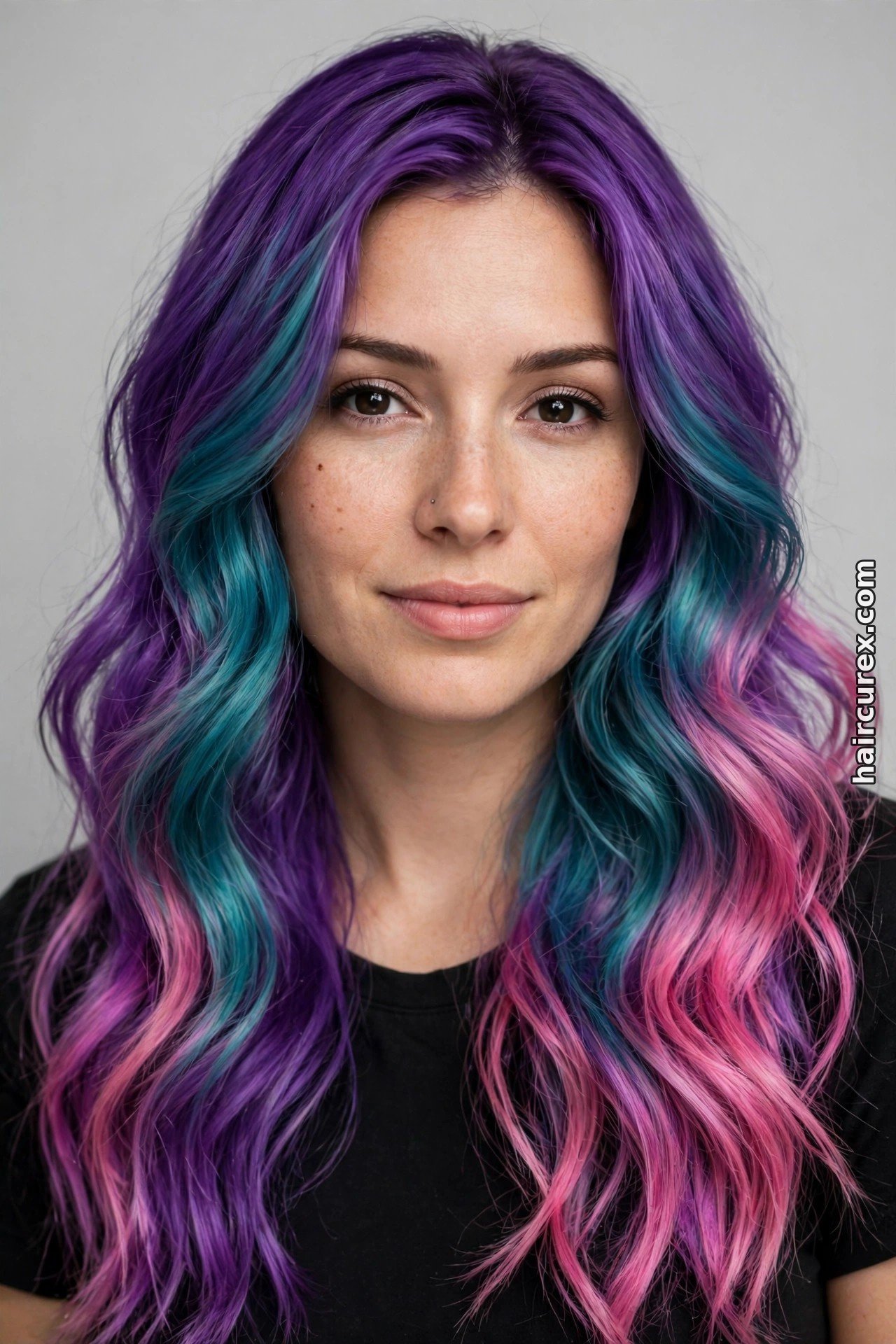
Quick answer: This arctic fox color chart matches every major Arctic Fox shade to the starting hair color it needs for a true-to-swatch result. The short version: Arctic Fox is a direct, semi-permanent dye, which means it deposits color on top of your hair rather than lifting it lighter. Pastels and light brights need a level 10 platinum base, most vivid shades need level 8 or lighter, deep pigmented shades can show on light brown hair, and on dark unbleached hair you will mostly see a tint in sunlight rather than a vivid color.
Picking a shade from a swatch photo is the easy part. Getting it to show up on your hair is where most people go wrong, and the reason is almost always the base color underneath. A dye that looks electric pink on a platinum model can look like a faint rose tint on medium brown hair, and a true blue can turn greenish on yellow-toned blonde. That is not a fault in the dye: the pigment you apply mixes with the pigment already in your hair.
This arctic fox color chart guide covers the full range shade by shade, explains the 1-to-10 hair level scale, and tells you honestly what each color will do on dark, medium, light, and pre-lightened hair, plus mixing, fading, and care. If you are still deciding whether this brand suits you, start with our Arctic Fox hair dye guide.
How Direct Dye Works (And Why Base Color Matters So Much)
Arctic Fox dyes are semi-permanent, direct dyes. Unlike permanent color, they do not use developer to lift your natural pigment, and they cannot make hair lighter than it already is. They coat the hair shaft with pigment that gradually washes out over several weeks. Without bleach or developer in the dye itself, the coloring step is gentler than permanent color — but your starting color sets a hard limit on the result.
Think of watercolor on colored paper: on white paper every color looks true, on yellow paper blue shifts toward green, and on dark paper only the darkest paints show. Bleached, near-white hair is the white paper; yellow-toned blonde adds warmth to everything over it; dark hair hides lighter pigments almost completely.
Porosity and previous color also change the result. Bleached hair grabs pigment faster and sometimes unevenly, and faded color underneath will blend with a new shade. A strand test on a small hidden section is the only reliable way to see how your hair will react before committing to your whole head.
The Hair Level Scale, Explained Simply
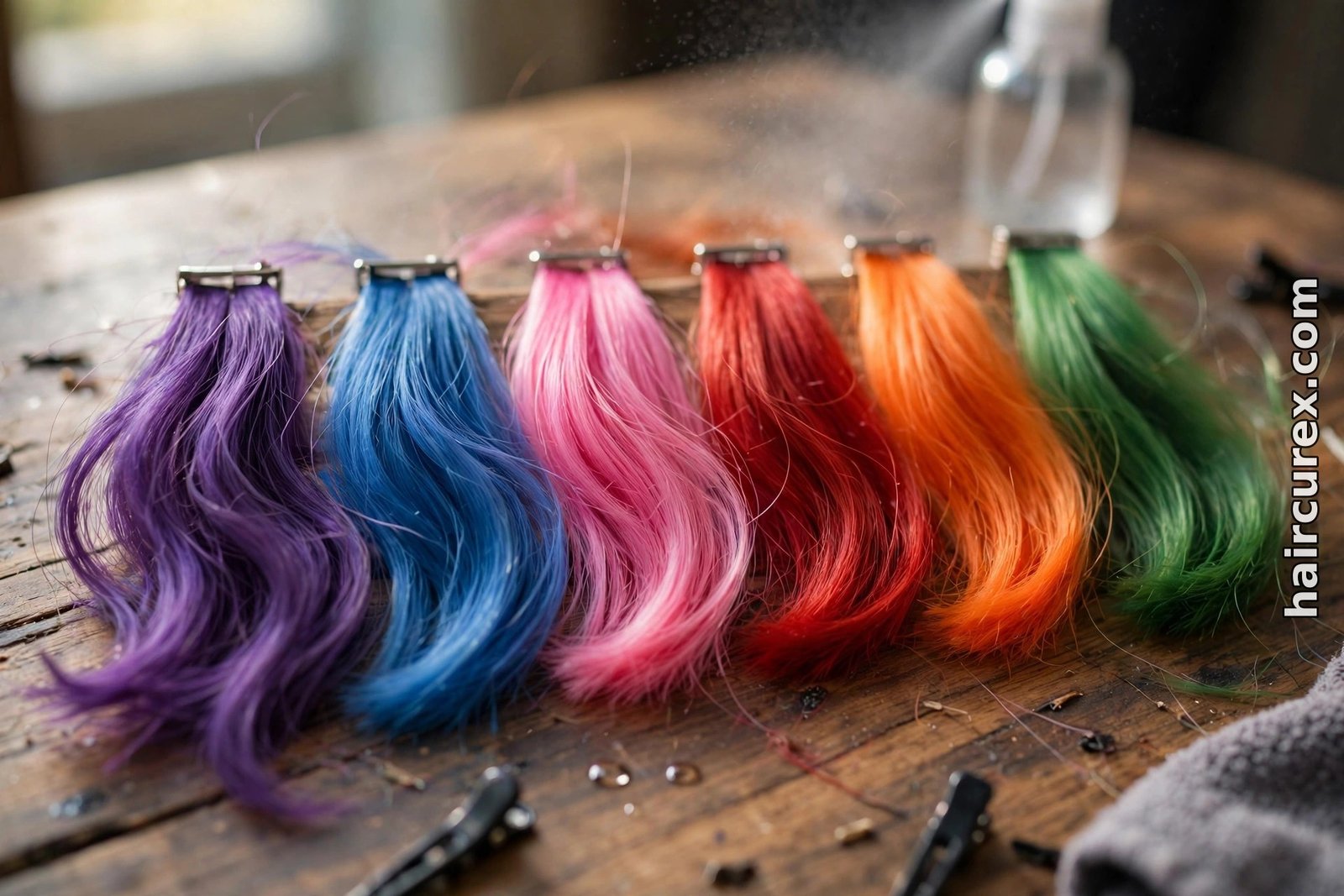
Hair colorists describe lightness on a scale from 1 to 10: level 1 is black, levels 2 to 5 run through dark brown to medium brown, level 6 is light brown, level 7 is dark blonde, level 8 is medium blonde, level 9 is light blonde, and level 10 is platinum or near-white blonde. Nearly every shade recommendation is written in levels, so learn this scale before you shop.
Here is the practical translation in this arctic fox color chart:
- Levels 1–4 (black to dark brown): A subtle tint in sunlight only; no shade looks like the swatch.
- Levels 5–6 (medium to light brown): Deep shades such as Purple AF, Wrath, and Aquamarine give a rich tint; brights and pastels look muted.
- Level 7 (dark blonde): Deep and vivid shades show properly, usually a shade or two darker than the swatch.
- Level 8 (medium blonde): The sweet spot for most vivids, though yellow tones can shift blues toward green.
- Level 9 (light blonde): Almost every shade works; watch yellow warmth affecting cool tones.
- Level 10 (platinum): The only base where pastels and silvers show true, and the base for custom pastels mixed with Arctic Mist.
If unsure of your level, compare your hair in natural daylight, not bathroom lighting, which makes hair look warmer and lighter. Porosity matters too: our hair porosity test guide explains a simple at-home check.
The Arctic Fox Color Chart: Shade-by-Shade Guide
“Best base” in the arctic fox color chart below means the starting level that gives the closest match to the swatch; “On darker hair” tells you what realistically happens if you skip lightening. Lineups change over time, so check the current shade description before buying, and treat this chart as a planning tool, not a guarantee.
| Shade | What it looks like | Best base | On darker hair | Fade note |
|---|---|---|---|---|
| Purple AF (formerly Purple Rain) | Deep, true purple | Level 7 or lighter; vivid on 8+ | Rich purple tint on light brown; subtle on dark hair | Fades within the purple family |
| Violet Dream | Floral purple with magenta undertones | Level 7 or lighter | Deep warm tint; covers brassiness well | Fades toward pink |
| Periwinkle | Soft pastel blue-lavender | Level 10 platinum only | Will not show on unbleached hair | Fades fast; refresh often |
| Poseidon | Vibrant medium true blue | Cool-toned level 8 or lighter | Dark tint at best on brown hair | Fades within the blue family |
| Aquamarine | Highly pigmented blue with teal undertones | Level 7 or lighter; vivid on 8+ | Deep teal tint on unbleached hair | Fades toward teal-green |
| Blue Jean Baby | Dark midnight blue | Level 7 or lighter | Visible dark blue tint on brown hair | Fades to softer blue |
| Transylvania | Blue-based black | Any level; shows best on level 6+ | Dark, inky shine even on dark hair | Fades to dark blue-grey tones |
| Iris Green | True grassy green | Level 8 or lighter | Muted dark tint on brown hair | Fades to softer green |
| Phantom Green | Deep, dark green | Level 6–7 or lighter | Dark green tint on brown hair | Fades within the green family |
| Neverland | Pastel mint green | Level 10 platinum only | Will not show on unbleached hair | Fades fast |
| Virgin Pink | Vibrant hot pink | Level 7 or lighter; vivid on 8+ | Deep magenta tint on light brown | Fades to lighter pink |
| Electric Paradise | UV-reactive electric pink | Level 8 or lighter | Muted pink tint on brown hair | Fades to softer pink |
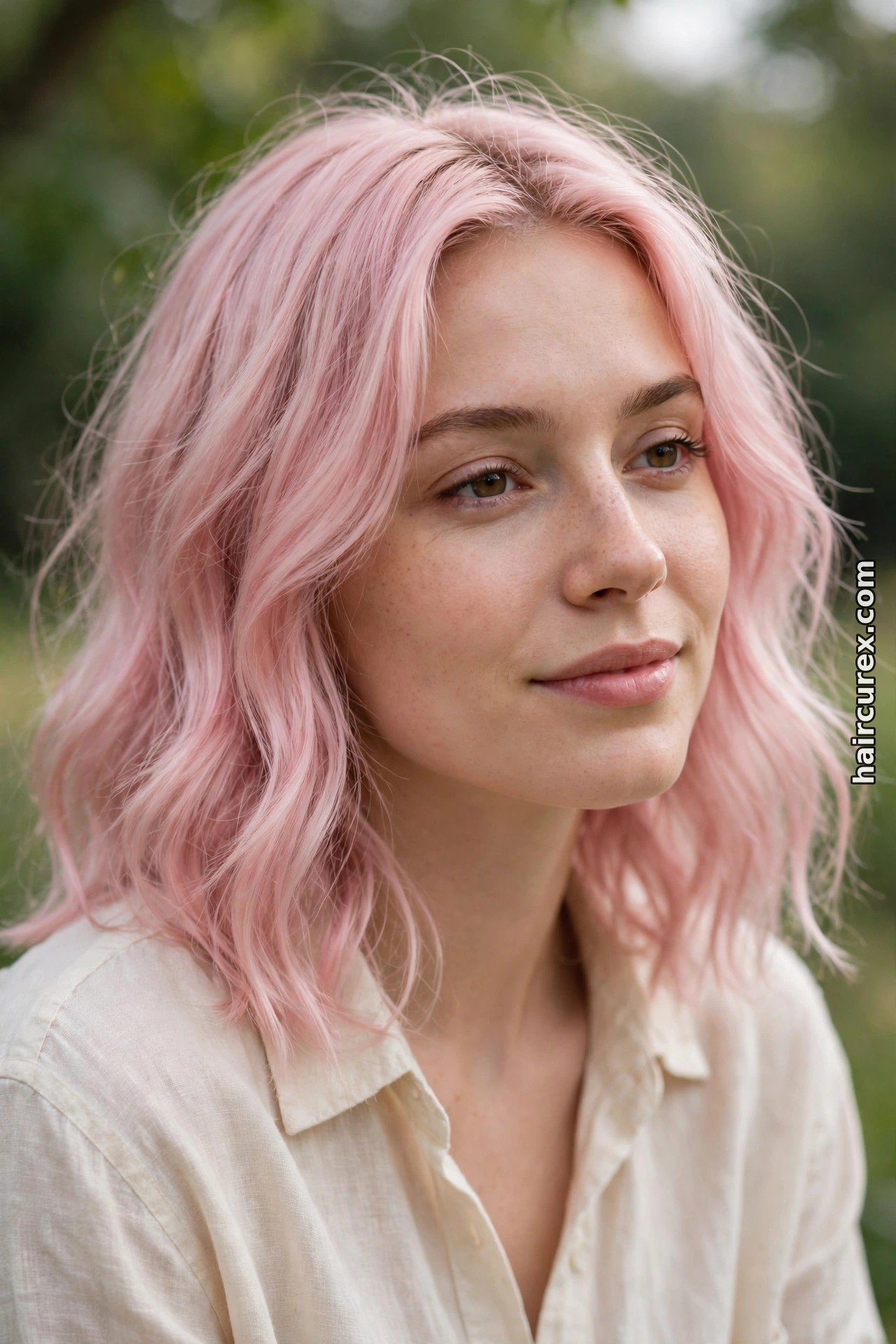
| Frosé | Pastel baby pink, ready from the bottle | Level 10 platinum only | Will not show on unbleached hair | Fades fast; very wash-sensitive |
| Wrath | Deep red with berry undertones | Level 7 or lighter | Dimensional dark red tint on brown hair | Becomes pinker as it fades |
| Poison | Brightest, truest red, slight orange undertone | Level 8 or lighter | Dark subtle tint on darker hair | Fades to a lighter version of itself, not pink |
| Sunset Orange | Fiery deep red-orange | Level 7 or lighter | Warm copper tint on brown hair | Fades to softer orange |
| Ginger Flare | Bright copper ginger | Level 7 or lighter | Enhances natural red hair beautifully | Fades to softer copper |
| Cosmic Sunshine | True sunny yellow | Level 9 or lighter for true yellow | Barely visible on brown hair | Fades to pale yellow |
| Neon Moon | Electric UV-reactive yellow | Level 9 or lighter | Muted on brown hair | Fades to softer yellow |
| Porange | Pink-orange, UV-reactive | Level 9 or lighter | Warm tint only on brown hair | Fades to peachy tones |
| Sterling | Metallic silver-grey | Level 10 platinum only | Will not show on unbleached hair | Fades to soft grey |
| Arctic Mist | Diluter, not a color | Mixing base for any shade | No effect alone | Lightens any shade toward pastel |
A few patterns in this arctic fox color chart are worth memorizing. Pigment depth beats lightness: the darker and more saturated the dye, the lower the base it can work on, which is why Purple AF, Wrath, and Aquamarine suit unbleached hair while Frosé, Periwinkle, and Sterling are platinum-only. Warm bases shift cool colors — yellow plus blue equals green — so cool-toned, properly lightened hair matters for Poseidon and other true blues. Reds and pinks are the most forgiving family on warm or brassy hair, because their undertones already lean warm.
Best Shades for Unbleached Hair
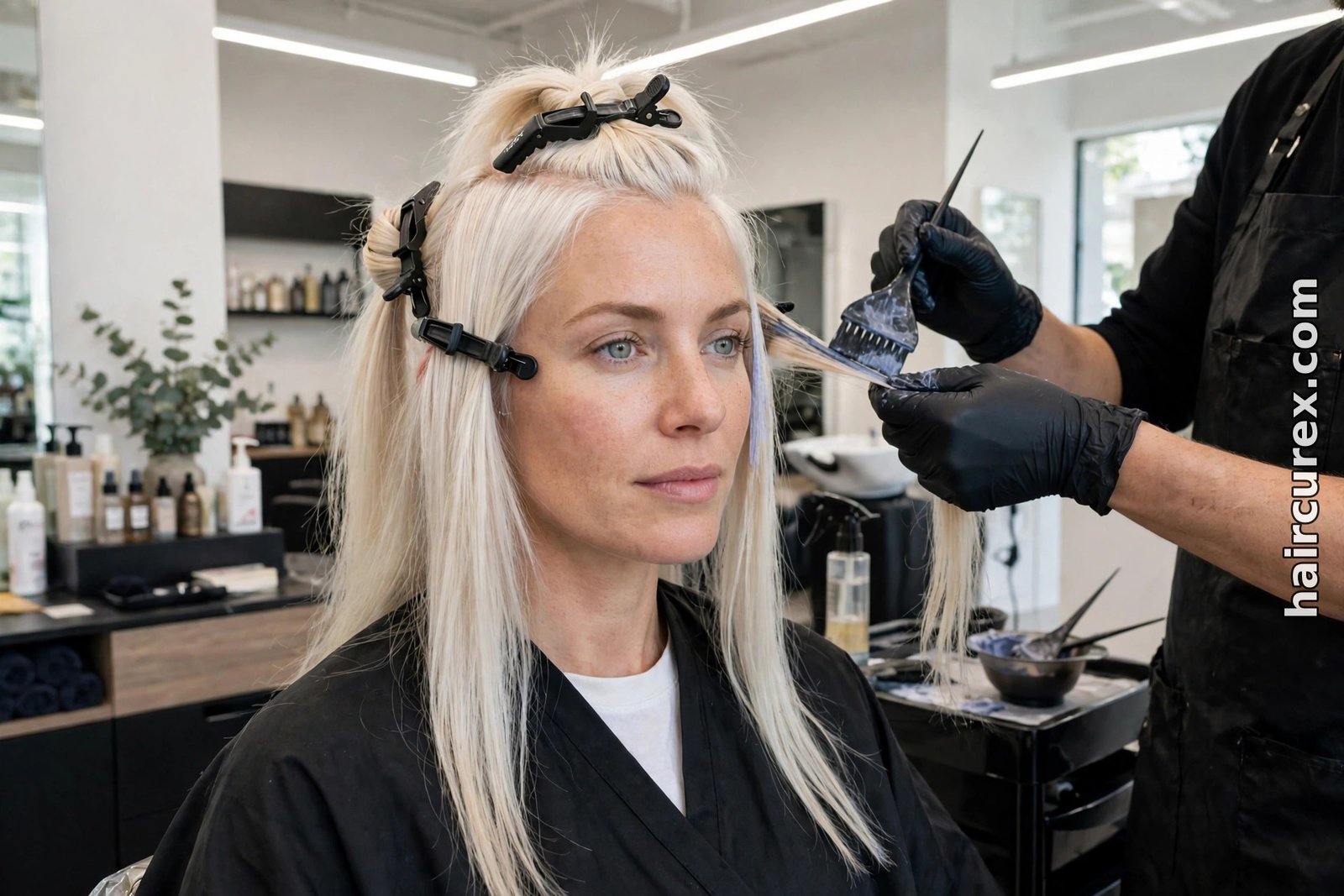
Using the arctic fox color chart above, if you do not want to bleach, choose from the deep end and set expectations honestly. On light brown hair (levels 5–6), Purple AF gives a visible purple tint, Wrath a berry-red tint, Aquamarine a deep teal tint, and Virgin Pink a magenta tint. On dark brown or black hair, even these read as a subtle sheen in sunlight; Transylvania is the exception, adding inky blue-black depth.
What will not work without lightening: pastels, silvers, true yellows, and light blues. Leaving dye on longer will not force a pastel to show on dark hair, because the dye cannot lift your natural pigment out of the way. For more ideas that work without bleach, browse our hair color ideas guide.
Best Shades for Pre-Lightened and Platinum Hair
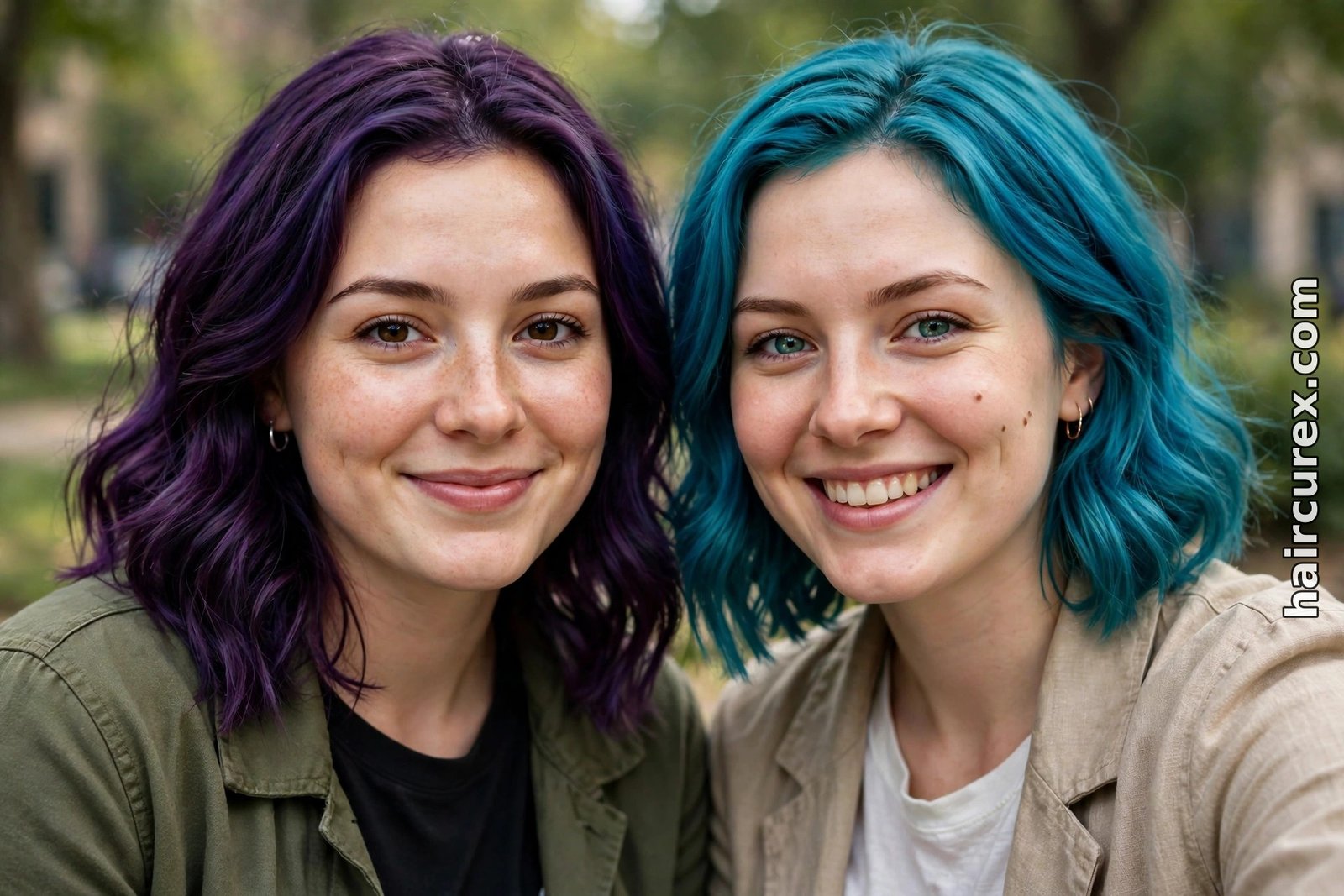
According to the arctic fox color chart, at level 8 most vivids open up: Poseidon, Electric Paradise, Poison, Iris Green, and Sunset Orange show close to their swatches. At level 9, yellows such as Cosmic Sunshine and Neon Moon read as true yellow instead of muddy gold. At level 10, pastels, metallics, and custom shades diluted with Arctic Mist become possible.
Platinum hair has one catch: it is porous and grabs color eagerly, so uneven application shows more and blue or green staining can linger. Saturate each section fully, work the dye through with gloved hands, and process for the full recommended time. If you are going blonde to prepare for fantasy color, our blonde hair guide covers tone and brassiness.
Mixing, Diluting, and Custom Shades
One strength this arctic fox color chart cannot show on its own is mixing. Arctic Mist is a diluter, not a dye: on its own it does nothing, but mixed with a vivid shade it creates a pastel version of it. The paler the result, the more diluter you use — and the lighter your base must be. Dilution changes the dye’s intensity, not your hair’s starting color.
Brand-recommended mixes include adding a little Purple AF to a blue to cancel yellow warmth, mixing Purple AF with Wrath for burgundy, and Purple AF with Poseidon for deep indigo. Mix in a non-metallic bowl, note your ratio for repeat use, and always strand-test a mix, since mixed colors can fade unevenly.
How Long Each Shade Family Lasts and How It Fades
Longevity is the one thing no arctic fox color chart can promise exactly. Darker, more pigmented shades last longer, while pastels fade fastest. Most users report vivids lasting roughly 4 to 8 weeks with careful washing, while pastels may visibly fade within 1 to 3 weeks. Hot water, frequent washing, clarifying shampoos, chlorine, and sun all speed fading.
Fading happens within the shade’s own color family: Poison fades to a lighter red rather than turning pink, while Wrath and Violet Dream drift pinker. Blues and greens are the exception, as their pigments cling to porous hair and can leave a lingering tint. Plan your next shade with the fade in mind, not just the fresh result.
To slow fading, wash less often with cool or lukewarm water and sulfate-free, color-safe shampoo, and avoid clarifying shampoos unless needed. Our hair washing guide explains how wash frequency and water temperature affect color and scalp health. Rinsing after swimming also helps, since chlorine strips fantasy color fast.
Step-by-Step: Using This Arctic Fox Color Chart to Pick Your Shade
- Find your level. Check in daylight; if roots and lengths differ, judge by the lengths.
- Decide whether you will lighten. If no, shortlist only deep shades. If yes, be realistic about sessions needed, and consider a professional for dark-to-platinum jumps.
- Shortlist two or three shades. Use the table, then read each shade’s recommended base.
- Strand test. Apply to a hidden section, process fully, rinse, and dry before judging — wet hair looks darker.
- Check the fade. Make sure you like the faded version, not just the fresh one — you will live with it for weeks.
- Plan maintenance. Pastels need frequent refreshes; otherwise pick a deeper shade in the same family.
Safety, Patch Tests, and Bleach Warnings
Arctic Fox markets its dye as vegan and free of peroxide, ammonia, and PPD, which appeals to people wanting gentler color. That does not remove the need for caution: any hair product can irritate sensitive skin, and bleaching, which many shades require, is far harsher than the dye itself. With a sensitive scalp, eczema, psoriasis, or a history of reactions, seek professional advice before lightening.
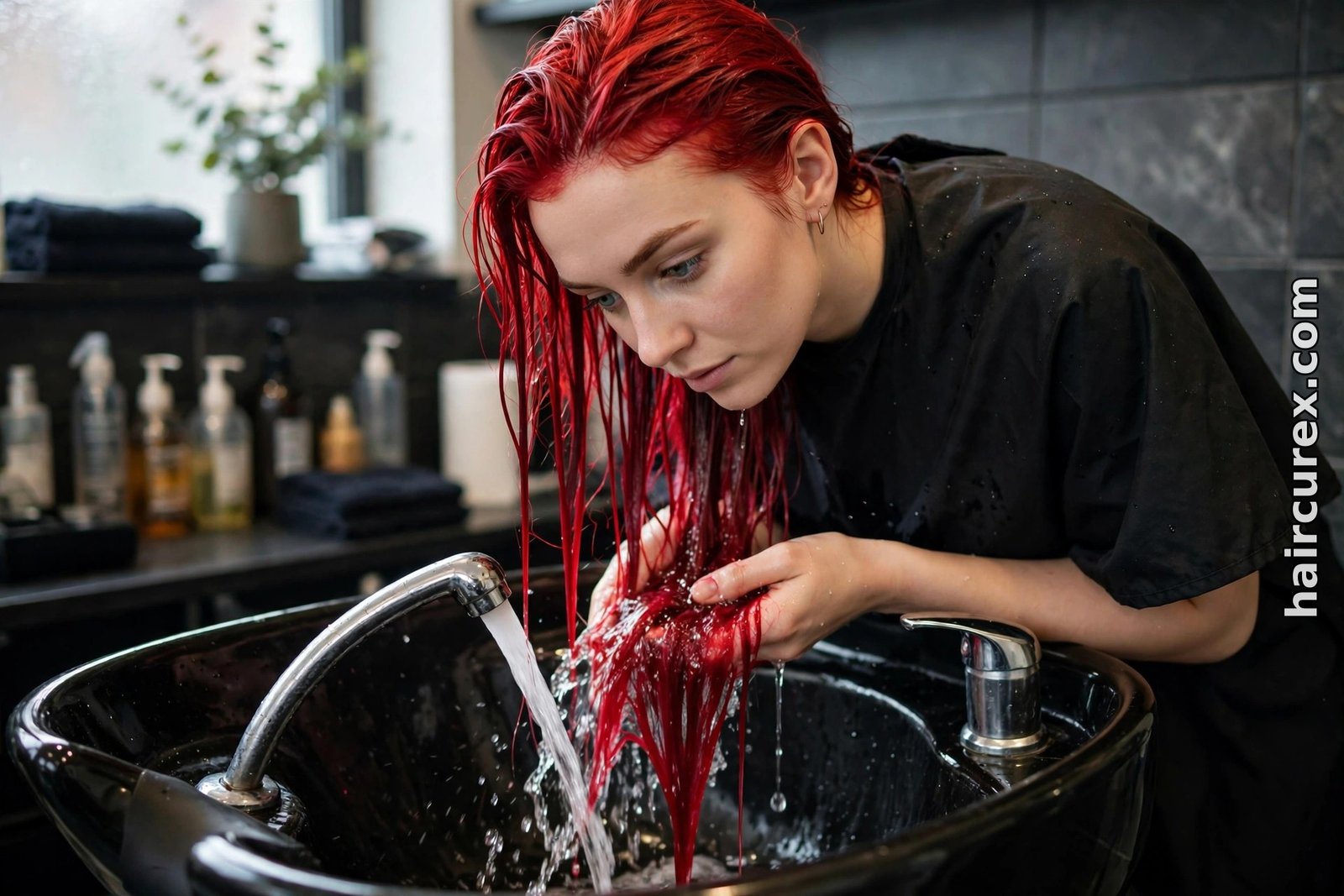
Patch-test any new hair color product before full application, following the pack instructions, and do not use it if the test area becomes red, itchy, swollen, or blistered. Test first even with a familiar brand, never leave dye on longer than recommended, wear gloves, and rinse thoroughly. Delayed reactions can appear days later, so watch the test area over time. Swelling of the face or lips, breathing difficulty, or a widespread rash after coloring needs urgent medical help.
Bleach deserves its own warning: going from dark hair to platinum in one session can cause serious breakage, and repeated bleaching without recovery time weakens hair further. If your hair is already damaged, fine, or heavily processed, talk to a stylist first and space out sessions with conditioning care in between. No dye, shampoo, or oil can regrow hair or reverse severe chemical damage.
Common Mistakes This Arctic Fox Color Chart Helps You Avoid
- Applying pastel to yellow blonde. Pastels need a near-white base; on yellow blonde they look dingy.
- Putting blue over warm blonde. Yellow plus blue makes green; tone cooler first or add a touch of purple.
- Skipping saturation. Patchy application causes uneven results; work in small sections and saturate fully.
- Using hot water and clarifying shampoo. Both strip direct dye fast; cool water and gentle washing extend color.
- Expecting one bottle to cover very long, thick hair. Buy an extra bottle rather than stretching a thin, uneven layer.
- Switching color families without fading first. Old pigment mixes with new; plan the transition or the result turns muddy.
Quick-Reference: Which Base for Which Result
If you only remember one section of this arctic fox color chart guide, make it this one. For a tint without bleach, choose Purple AF, Wrath, Aquamarine, Virgin Pink, or Transylvania. For vivid, true-to-swatch color, lighten to level 8 and choose Poseidon, Poison, Electric Paradise, Iris Green, or Sunset Orange. For true yellows, aim for level 9; for pastels and silver, level 10 platinum is non-negotiable.
Finally, a shade chart is a starting point, not a promise: two people at the same level can differ by porosity, previous color, and texture. The strand test turns a chart into a personal answer.
Frequently Asked Questions
Do I need to bleach my hair before using Arctic Fox?
It depends on the shade. Deep shades like Purple AF, Wrath, and Aquamarine can show as a tint on unbleached light brown hair, but pastels, silvers, yellows, and light blues need pre-lightened hair, usually level 8 to 10, to look true to the swatch. Arctic Fox dye itself does not lighten hair.
What is the best Arctic Fox shade for dark hair without bleach?
Purple AF, Wrath, Aquamarine, and Virgin Pink are the most reliable choices for unbleached hair, giving a visible tint on light brown hair and a subtle sheen on darker hair. Transylvania can add blue-black depth to dark hair. Vivid pastels and light brights will not show without lightening.
What hair level do I need for pastel Arctic Fox shades?
Pastel shades such as Frosé, Periwinkle, Neverland, and Sterling need level 10 platinum, near-white hair. On any darker or yellow-toned base they will look muted, dingy, or barely visible, even when mixed correctly with Arctic Mist diluter.
Why did my blue Arctic Fox dye turn green?
Blue dye over yellow-toned blonde hair mixes to green, because yellow and blue make green. To avoid this, lighten to a cool-toned level 8 or lighter, tone out yellow warmth first, or add a small amount of Purple AF to counteract the yellow.
How long does Arctic Fox hair dye last?
Vivid shades typically last around 4 to 8 weeks with cool-water washing and infrequent shampooing, while pastels often fade noticeably within 1 to 3 weeks. Hot water, frequent washing, clarifying shampoo, chlorine, and sun all shorten wear time.
Can I mix Arctic Fox shades together?
Yes. Shades in the range are designed to mix, and Arctic Mist diluter turns any vivid shade into a pastel version of itself. Mix in a non-metallic bowl, note your ratio for future use, and strand-test every mix, since mixed shades can fade unevenly.
Is Arctic Fox safe for damaged or sensitive hair?
The dye itself is gentler than permanent color because it contains no developer, but bleaching to reach lighter bases can damage hair significantly. Patch-test any new product first, follow the pack instructions, avoid leaving dye on longer than recommended, and seek medical help promptly for swelling, breathing difficulty, or a widespread rash.
Sources: Arctic Fox’s own hair-levels and original-shade guides, plus health guidance on hair dye reactions. External links: Arctic Fox hair levels guide, Arctic Fox original shades guide, NHS Wales hair dye reactions advice.