

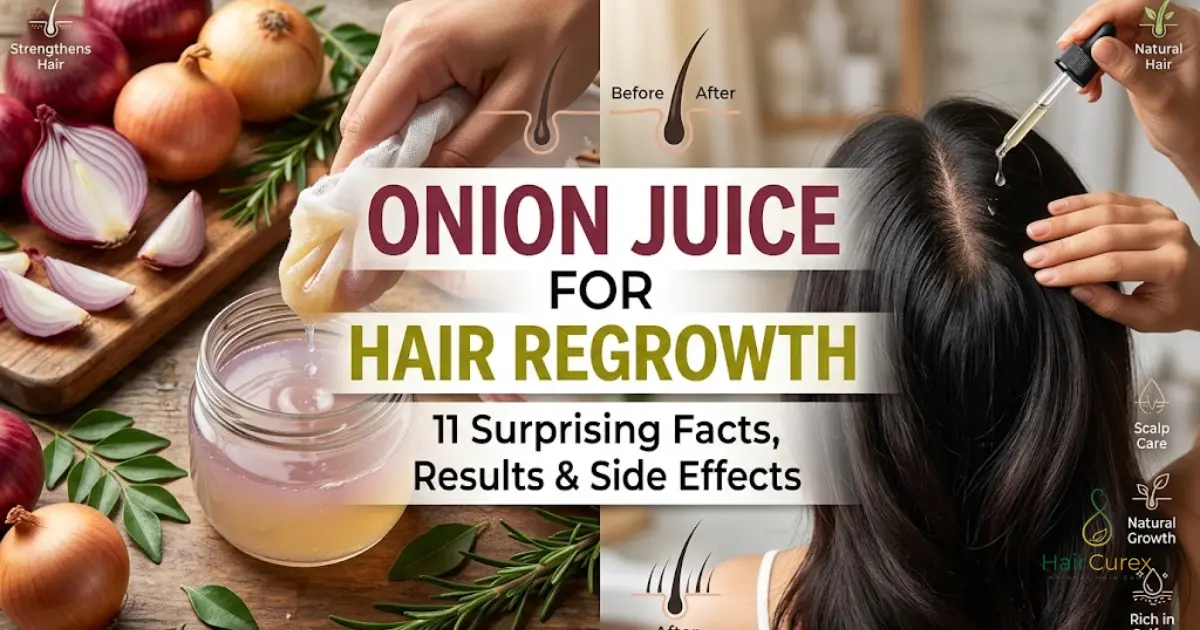
Onion juice for hair regrowth is a natural remedy. It comes from crushed or blended onions. People use it to help hair grow back. If you’ve spent any time scrolling through hair care forums or watching late-night infomercials, you’ve probably stumbled across onion juice as a miracle cure for thinning hair. It smells strange, it’s messy, and yet millions of people swear by it. So what’s actually going on here? Is this just another kitchen-cabinet myth, or is there real science behind rubbing raw onion juice into your scalp? Let’s dig into the facts, the research, and the honest results you can expect, along with the side effects nobody talks about at the dinner table.
In short, onion juice may help some people regrow hair, especially for alopecia areata and inflammation-related shedding. In a small 2002 study, 86.9% of the onion juice group saw regrowth, compared with 13.3% for the placebo group. It is not a proven cure for genetic hair loss, and it can cause scalp irritation, so patch testing first is important.
Hair loss affects people differently. Some notice a receding hairline. Others see their part getting wider by the month. And for many, it’s simply more strands left behind on the pillow than there used to be. Naturally, people go searching for solutions that don’t come with a prescription pad attached. Onion juice fits that bill perfectly: cheap, accessible, and rooted in generations of folk remedies passed down through households across Asia, the Middle East, and beyond. But folk wisdom and modern dermatology don’t always agree, so we’re going to walk through eleven facts that separate the hype from the evidence.
Fact 1: Can Onion Juice Support Keratin Production and Hair Strength?
Your hair is made almost entirely of a protein called keratin. Weak keratin production often shows up as brittle strands, excessive breakage, and hair that just won’t grow past a certain length no matter what you do. This is where onion enters the conversation. Onions carry a remarkably high sulfur content, and sulfur happens to be one of the building blocks your body uses to manufacture keratin in the first place. The theory goes that applying crude onion juice directly to the scalp delivers a concentrated dose of sulfur compounds right where hair follicles are working hardest.
Does this actually translate into stronger strands? Some trichologists believe topical sulfur exposure may support the amino acids involved in keratin synthesis, though the skin doesn’t absorb everything you put on it equally well. Think of it this way: eating a multivitamin doesn’t guarantee every nutrient reaches exactly where you want it. The same logic applies here. There’s a plausible biological mechanism, but plausible isn’t the same as proven. Still, many users report their hair feels noticeably thicker and less prone to snapping after a few weeks of consistent application, which lines up with what we’d expect if sulfur really is reinforcing the protein structure of each strand.
Fact 2: What Clinical Studies Say About Onion Juice for Hair Regrowth

Here’s where things get genuinely interesting. Back in 2002, a study published in the Journal of Dermatology took a serious look at onion juice as a treatment for alopecia areata, an autoimmune condition that causes patchy hair loss. Researchers split participants into two groups: one applied raw onion juice twice daily, and the other used tap water as a placebo. The results? A striking 86.9% of participants in the onion juice group experienced visible hair regrowth, compared to just 13.3% in the placebo group.
That’s a huge gap, and it’s the single most-cited piece of evidence anyone brings up when discussing onion juice for hair growth. But before you get too excited, it’s worth noting a few limitations. The study was small, it focused specifically on alopecia areata rather than general thinning or androgenetic alopecia, and it hasn’t been widely replicated at scale since. As one dermatology researcher put it, “Promising early results don’t always survive the scrutiny of larger, controlled trials.” That doesn’t mean the study is worthless, far from it, but it does mean we should treat onion juice as a supported home remedy rather than a clinically proven cure for every type of hair loss.
| Study Detail | Onion Juice Group | Placebo (Water) Group |
|---|---|---|
| Participants | 23 | 15 |
| Regrowth Observed | 86.9% | 13.3% |
| Condition Studied | Alopecia Areata | Alopecia Areata |
| Application Frequency | Twice daily | Twice daily |
Fact 3: How Long Does Onion Juice Take to Show Hair Growth Results?
Patience matters more than people expect when it comes to any natural treatment, and the onion juice hair regrowth timeline is no exception. Hair doesn’t grow in a straight line. It cycles through three phases: anagen (active growth), catagen (transition), and telogen (resting and shedding). A single follicle might spend two to six years in the anagen phase before resting, which means visible changes from any treatment, onion juice included, typically take time to show up.
Most users who stick with a consistent routine start noticing subtle improvements around the four to six week mark, usually in the form of reduced shedding rather than dramatic new growth. Real, visible density changes tend to appear closer to the three-month mark, and some people report their best results after six months of steady use. If you’re expecting overnight transformation, you’ll be disappointed. But if you think of this the way you’d think of building muscle at the gym, slow, incremental, and dependent on consistency, the timeline starts to make a lot more sense. Skipping applications or giving up after two weeks simply doesn’t give your follicles enough time to respond.
Fact 4: Can Onion Juice Improve Blood Circulation Around Hair Follicles?
Healthy hair growth depends heavily on blood circulation to hair follicles. Follicles need a steady supply of oxygen and nutrients to stay active, and when circulation slackens, hair can become thinner, weaker, and more prone to falling out prematurely. This is one area where onion juice may genuinely earn its reputation, though perhaps not for the reason most people assume.
When you massage onion juice into your scalp, you’re doing two things simultaneously: delivering sulfur compounds to the skin, and physically stimulating blood flow through the massage motion itself. Some researchers suspect the massage component deserves just as much credit as the onion juice itself. That said, certain compounds in onions, including quercetin, have mild anti-inflammatory and vasodilating properties, which could support circulation on a chemical level too. So whether it’s the rubbing, the juice, or a combination of both, plenty of anecdotal reports point to a warm, tingling sensation on the scalp shortly after application, a sign that blood vessels near the surface are responding.
Fact 5: How Onion Juice May Help Fight Scalp Bacteria and Inflammation

A surprising number of hair loss cases trace back not to genetics but to scalp infections and chronic inflammation. Conditions like folliculitis, seborrheic dermatitis, and even stubborn dandruff can trigger what’s known as inflammatory hair shedding, where the immune response around irritated follicles interferes with normal growth cycles. This is one area where onions genuinely shine, because they contain natural antibacterial and antifungal compounds, including allicin, the same sulfur compound responsible for garlic’s pungent reputation.
By reducing the microbial load on the scalp, onion juice may calm the kind of low-grade inflammation that quietly sabotages hair growth over months or years. A trichologist consultation often reveals that patients dealing with mystery hair thinning actually have an underlying scalp condition rather than classic pattern baldness, which is exactly why addressing bacterial overgrowth matters so much. Cleaner, calmer scalp skin generally means follicles can focus on doing their job instead of fighting off irritation.
Fact 6: Can Onion Juice Help With Premature Graying?
This claim shows up constantly in online forums, and it deserves a closer, more skeptical look. The theory centers around an enzyme called catalase enzyme, which helps break down hydrogen peroxide naturally produced in hair follicles. When catalase activity declines with age, hydrogen peroxide builds up and effectively bleaches hair from the inside out, a leading theory behind premature graying. Onions do contain catalase, and some proponents argue that topical application could replenish depleted enzyme levels in the scalp.
Here’s the honest truth, though: there’s no solid clinical evidence confirming that topical onion juice restores catalase activity in a meaningful way. Enzymes are large molecules, and getting them to penetrate skin and actually function inside hair follicles is a tall order. This particular claim is far weaker than the regrowth data from Fact 2. If reversing gray hair is your main goal, treat this one as an interesting theory rather than a proven outcome, and manage your expectations accordingly.
Fact 7: Onion Juice Can Cause Scalp Irritation, Dryness and Contact Dermatitis
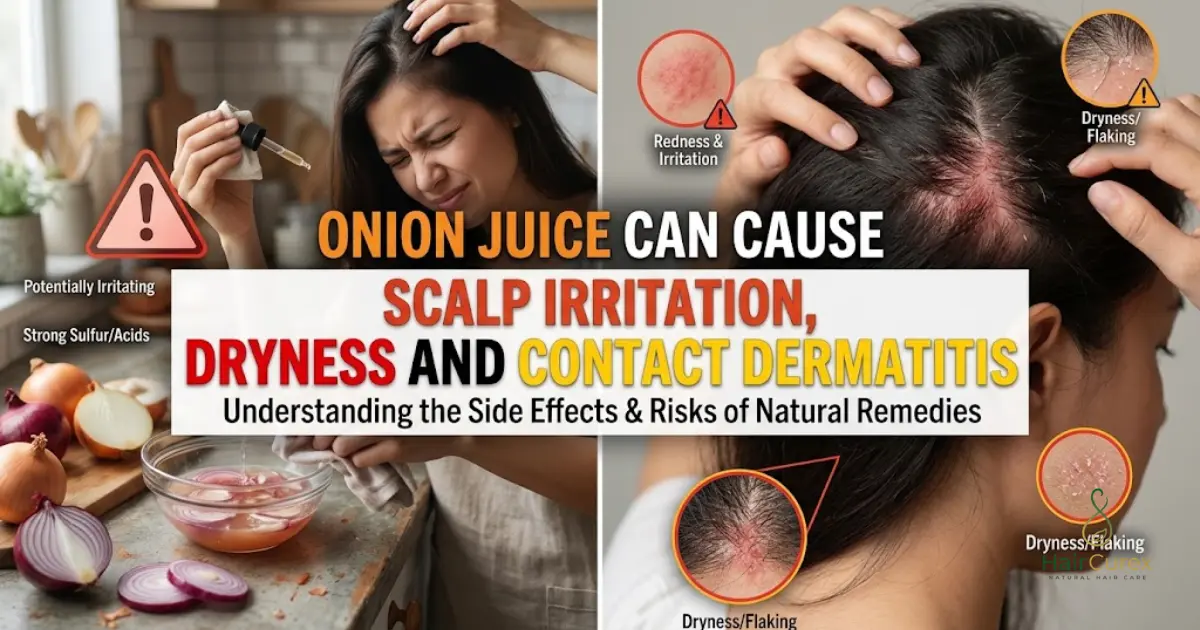
Every remedy has a flip side, and onion juice is far from gentle. Its high sulfur content, the very thing responsible for potential benefits, can also cause real problems for sensitive skin. Contact dermatitis is one of the most commonly reported reactions, showing up as redness, itching, small bumps, or a burning sensation shortly after application. People with eczema, psoriasis, or generally reactive skin face a higher risk here.
Scalp irritation isn’t the only concern either. Onion juice can strip natural oils from the scalp, leading to extreme scalp dryness if used too frequently or left on for too long. One user described her early experience bluntly: “It felt like my scalp was on fire for the first ten minutes, and I almost gave up right there.” That reaction, while uncomfortable, isn’t unusual, and it’s exactly why dermatologists recommend a patch test on the inner forearm 24 hours before applying anything to the scalp. If redness, swelling, or intense itching shows up, that’s your body telling you to stop. Diluting onion juice with water or aloe vera gel can also reduce irritation without eliminating the potential benefits entirely.
Fact 8: Why Does Onion Smell Stay in Your Hair and How Can You Remove It?
Let’s address the elephant in the room. Onion juice smells strong, and that smell has a frustrating tendency to linger long after you think you’ve washed it out. The culprit is a group of sulfur compounds that bond to hair proteins and skin oils, making them surprisingly resistant to a single shampoo rinse. This is genuinely the number one complaint that stops people from sticking with the routine long enough to see results.
Fortunately, there are practical ways to remove onion smell from hair without giving up on the treatment altogether. Rinsing with diluted lemon juice after washing helps neutralize sulfur odors thanks to its acidic properties. An apple cider vinegar rinse works similarly, and it has the added bonus of leaving hair shinier. Washing with a sulfate free shampoo twice, rather than once, tends to lift more residue without over-stripping the scalp. Adding a few drops of a fragrant essential oil like lavender or peppermint directly into the onion juice before application can also mask the smell from the start rather than fighting it afterward. With the right routine, most people find the odor becomes a minor inconvenience rather than a dealbreaker.
Fact 9: Can Onion Juice Reverse Genetic Male Pattern Hair Loss?
This is probably the most important fact on this entire list, because it sets realistic expectations. Genetic male pattern baldness, medically known as androgenetic alopecia, is driven primarily by a hormone called dihydrotestosterone, or DHT. Over time, DHT causes miniaturized hair follicles, meaning follicles physically shrink and produce progressively thinner, shorter hairs until they eventually stop producing hair altogether.
Onion juice does not address DHT sensitivity at the follicular level. It has no known hormonal mechanism, which means it cannot reverse or halt genetic pattern baldness the way clinically proven treatments like minoxidil or finasteride can. This distinction matters enormously. Onion juice may support scalp health, reduce shedding caused by inflammation, and improve the condition of existing hair, but it isn’t a substitute for treatments specifically designed to block DHT. Think of onion juice as supportive care for your scalp environment, not a hormonal intervention. If your hair loss follows the classic pattern of a receding hairline or thinning crown that runs in your family, pairing onion juice with medically proven treatments, under the guidance of a dermatologist, gives you a far more realistic shot at meaningful results.
Fact 10: Can You Mix Onion Juice With Rosemary Oil or Other Ingredients?
One of the best-kept secrets to making onion juice more tolerable, and possibly more effective, is combining it with other natural ingredients. Rosemary oil for hair has become particularly popular in recent years, with some small studies suggesting it may be comparable to low-dose minoxidil for stimulating growth. Mixing a few drops of rosemary oil into your onion juice blend not only masks some of the smell but may also add its own circulation-boosting properties to the mix.
Carrier oils for hair growth, such as coconut oil, castor oil, or jojoba oil, serve a different purpose entirely. Rather than adding active ingredients, they help buffer the intensity of raw onion juice, reducing the risk of irritation while locking in moisture that onion juice alone tends to strip away. Aloe vera gel is another excellent addition, known for its soothing and hydrating properties. A simple starter blend might include two tablespoons of onion juice, one teaspoon of castor oil, and three to four drops of rosemary essential oil, mixed thoroughly before application. Always patch test any new combination, since adding ingredients means adding new variables your skin hasn’t been exposed to before.

Fact 11: How Often Should You Apply Onion Juice for Hair Regrowth?
Consistency beats intensity when it comes to any hair treatment, and onion juice is no exception. Many people assume more frequent application means faster results, but overdoing it often backfires by causing irritation before benefits have a chance to show. Most dermatological guidance, echoing the original 2002 study, points toward twice daily application as the upper limit for short bursts, though a more sustainable long-term routine for most people looks like two to three applications per week.
Leaving onion juice on for twenty to thirty minutes before rinsing thoroughly tends to strike the right balance between absorption and irritation risk. Overuse doesn’t accelerate the onion juice hair regrowth timeline, it just increases the odds of scalp dryness and dermatitis showing up before you’ve given the treatment a fair chance. Building this into an existing hair care routine, alongside gentle natural home treatments like scalp massage or a nourishing hair mask once a week, tends to produce better long-term outcomes than treating onion juice as an isolated miracle fix. Tracking progress with monthly photos, taken in the same lighting and angle, gives you an honest record of whether hair density and volume are actually improving over time, rather than relying on memory alone.
Frequently Asked Questions
Does onion juice really work for hair regrowth?
Evidence suggests it can help with certain conditions, particularly alopecia areata and inflammation-related shedding, though it isn’t a proven cure for genetic hair loss.
Can I leave onion juice in my hair overnight?
This isn’t generally recommended. Extended exposure raises the risk of scalp irritation and dryness without adding extra benefit compared to a 20-30 minute application.
Is onion juice safe for color-treated hair?
It’s typically safe, though the sulfur compounds may slightly affect color vibrancy over time. A patch test on a small section is a smart precaution.
Can women use onion juice for hair regrowth too?
Absolutely. The original clinical study included both male and female participants, and the mechanism isn’t gender-specific.
How do I make onion juice at home?
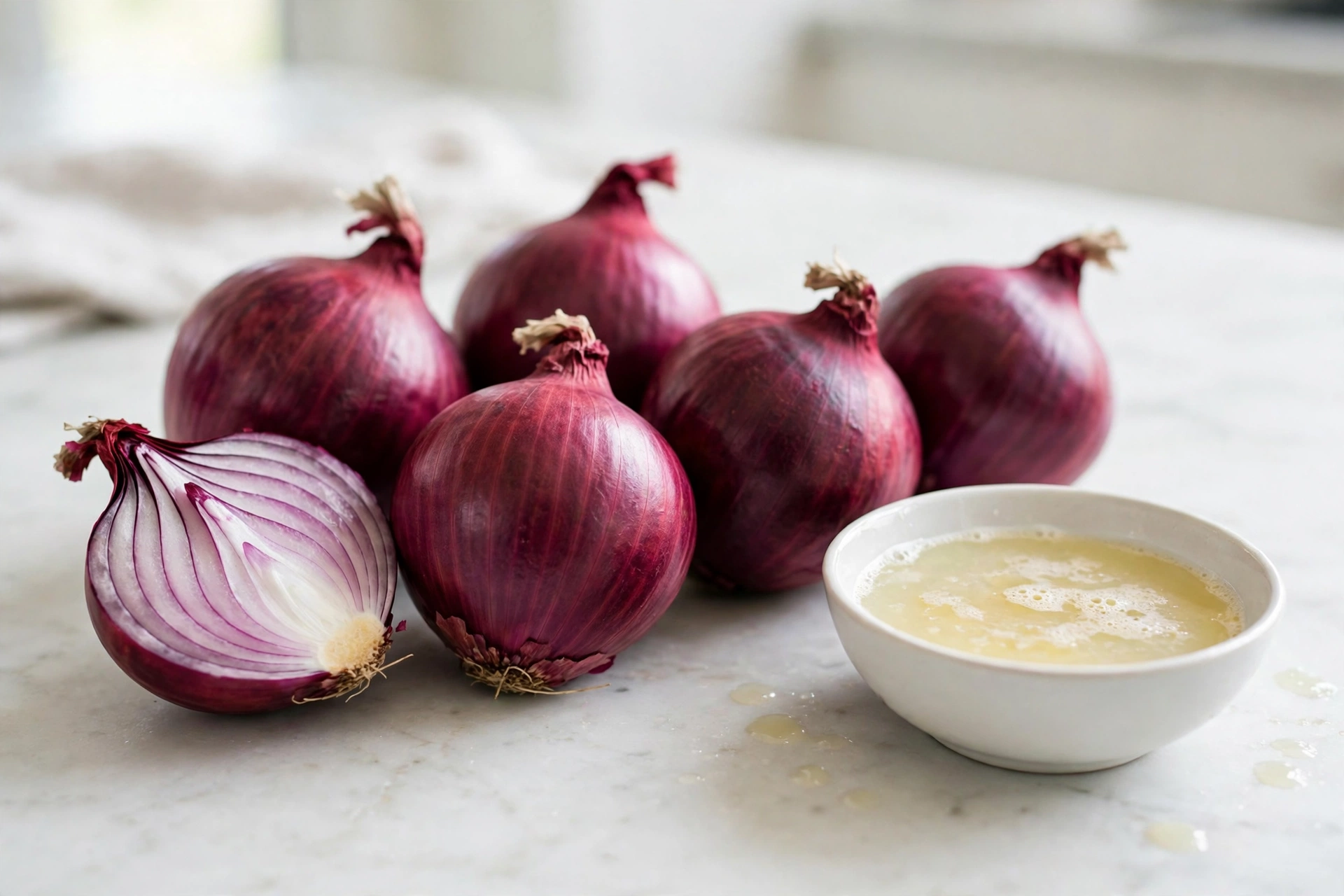
Blend one to two onions until smooth, then strain the pulp through a cheesecloth or fine sieve to collect the liquid for direct scalp application.
Conclusion
So where does that leave us? Onion juice isn’t a miracle cure, but it isn’t nonsense either. The evidence points toward genuine benefits for conditions like alopecia areata, scalp inflammation, and possibly circulation, while falling short as a solution for genetic pattern baldness on its own. Like most natural remedies, it works best as part of a broader routine rather than a standalone fix, paired thoughtfully with carrier oils for hair growth, gentle scalp care, and realistic expectations about timing.
If you’re dealing with persistent or worsening hair loss, a trichologist consultation remains the smartest first step before building an entire routine around any home remedy. But if your scalp is healthy and you’re simply looking for an affordable, low-risk way to support thicker, stronger strands, there’s little harm in giving onion juice a fair three-month trial. Patch test first, stay consistent, and keep your expectations grounded in what the research actually shows rather than what internet hype promises. Your hair, and your patience, will thank you for it.