


A virtual hair consultation is an online session — sometimes with a real stylist on video, sometimes with an AI hair advisor, sometimes both — that helps you narrow down a cut, color or routine before you book a salon appointment. It can show you styles previewed on your own photo, flag questions about your hair type and upkeep, and give you a shortlist to discuss with a stylist. What it cannot do is feel your hair, test its condition, or guarantee a salon result: density, porosity, chemical history, cowlicks and daily styling habits are invisible to a photo, so treat a virtual consultation as preparation for the real consultation, not a replacement for it.
What a Virtual Hair Consultation Actually Is
There are three kinds of virtual hair consultation, and they are often sold under the same name, so check which one you are getting. First, a video consultation with a real stylist: you talk live, show your hair on camera, and get advice from a person who can ask follow-up questions. Second, an AI advisor: you answer questions and upload photos, and software returns style suggestions and previews.
Third, a hybrid: an AI preview plus a human review, where a stylist checks the AI’s suggestions before they reach you. The hybrid is usually the most useful, because it pairs the AI’s speed with a professional’s judgment, but it is also the one most often exaggerated in marketing — “checked by a stylist” can mean a careful review or a five-second glance, so ask what the human actually does.
All three share one honest purpose: they turn a vague wish — “something different” — into a specific, discussable plan. A useful session ends with a shortlist of two or three directions, a note of what to keep and what to change, and a list of questions for the salon. If a tool ends with a single dramatic makeover image and a “book now” button, it has given you an advertisement, not a consultation.
How a Virtual Hair Consultation Works
Most virtual consultations follow the same sequence. You start with your goals and history: what bothers you on an ordinary morning, what you want to change, what you want to keep, how much time you spend styling, and what has been done to your hair before — color, bleach, relaxers, heat damage, extensions. Good tools ask about history in detail, because history decides what is possible now; a tool that never asks about previous color is not ready to advise on color at all.
Next comes photos. Expect to be asked for front, side and back views in natural light, hair down and unstyled, plus a close view of any area of concern. Some tools add a face-shape scan, measuring proportions to suggest styles that suit your face shape. Then comes the preview: styles rendered on your photo, or a written plan with product and routine suggestions. Finally, the good ones end with next steps: a shortlist to take to a stylist, a note on maintenance, and an honest statement about what still needs an in-person check. A five-step consultation workflow guide walks through this sequence in detail.

What AI Hair Advisors Can Do Well
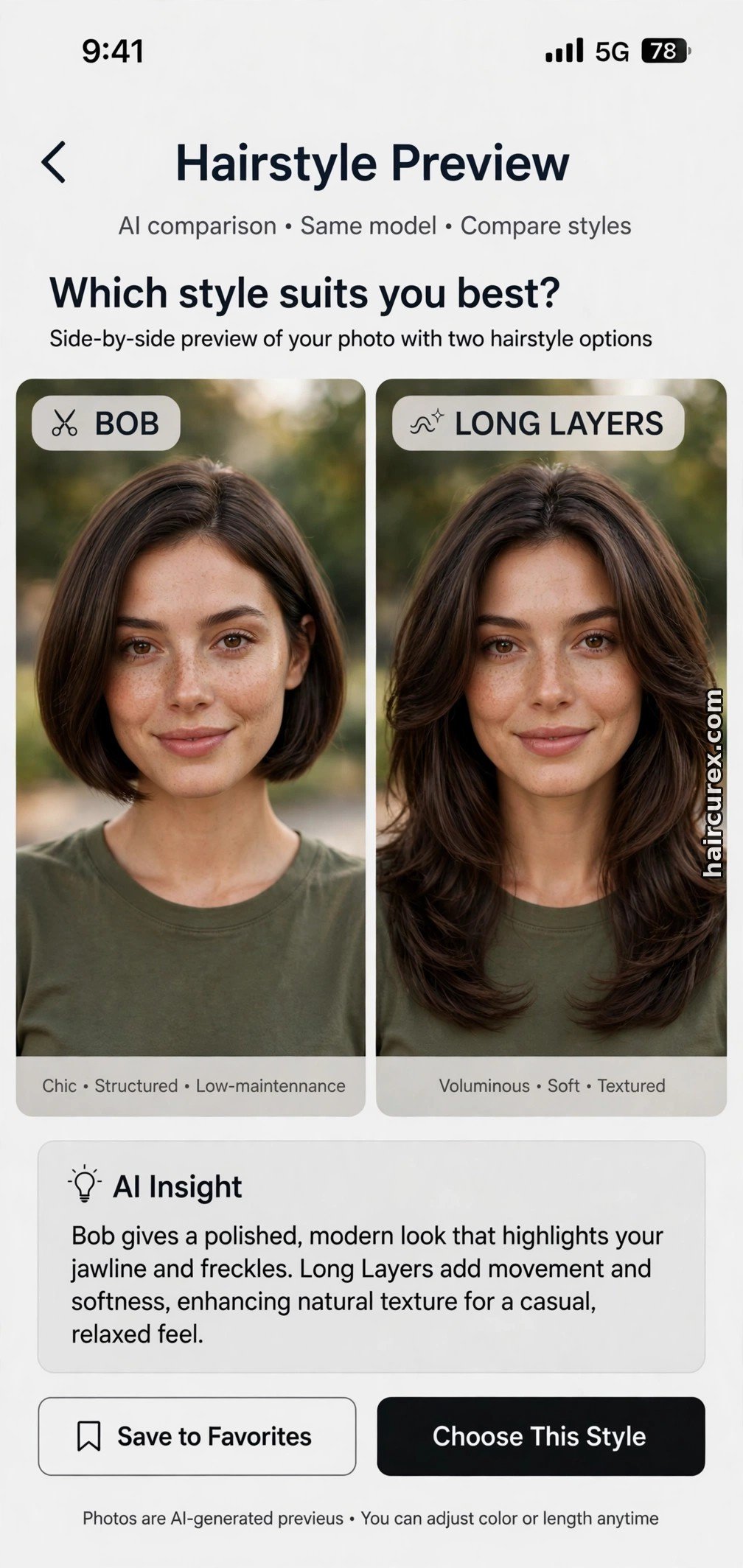
AI advisors are genuinely good at four things. First, objective face-shape measurement: they replace “I guess I have a round face” with measurements of your actual proportions, and they apply styling principles consistently — vertical lines for round faces, softened edges for square faces, width for oblong faces. Second, instant visual previews: seeing a bob or a fringe on your own face, rather than on a model, makes a decision concrete in a way words cannot.
Third, pressure-free exploration: there is no appointment clock and no social pressure, so you can compare options over days, change your mind, and walk away without awkwardness. Fourth, communication: a preview gives you and your stylist the same picture to point at, which cuts through the confusion when words like “caramel,” “long layers” or “curtain bangs” mean different things to different people.
Used that way, an AI advisor does not replace a consultation — it improves the one you eventually have. Clients arrive with clearer preferences, stylists spend less time guessing what “shorter, but not too short” means, and both sides can discuss a visible shortlist instead of negotiating over vague descriptions. A guide asking whether AI can replace a hairstylist reaches the same conclusion: AI is a useful preview tool, not a replacement for a stylist.
Virtual Hair Consultation: What AI Cannot Judge
This is the section that matters most, so read it before acting on any AI recommendation. A photo cannot tell an advisor what your hair feels like: its density, strand thickness, porosity, elasticity, weight, or how it behaves in humidity. It cannot see chemical history hiding under surface shine, breakage in the lengths, grey coverage needs, curl shrinkage, cowlicks, or natural growth patterns. It cannot know your routine — whether you air-dry, how often you heat-style, how often you will return for trims — unless you tell it, and even then it cannot verify it.
That is why previews mislead in predictable ways. An app can place platinum blonde over dark hair instantly; a real stylist must work out whether that result is possible, how many sessions it will take, and whether your hair can tolerate the lightening.
An app can show airy curtain bangs on hair with a strong cowlick, or a full, voluminous cut on hair that lacks the density shown in the image, and it usually shows a styled salon finish rather than how the cut looks air-dried at home on a rushed morning. A salon guide to AI hairstyle apps makes the same point plainly: previews are simulations, not predictions of your exact salon result, and recommendations should come from a professional consultation, not an automated diagnosis.
AI also cannot do the human parts of a consultation: sense hesitation, notice that a request follows a breakup or a health change, know when to pause a dramatic change, or adapt in real time when the hair in the chair surprises everyone. Those are not soft extras; they are often the difference between a cut you love and a cut you regret.
Virtual Hair Consultation vs an In-Person Consultation
| Question | Virtual consultation (AI or video) | In-person consultation |
|---|---|---|
| Can it preview styles on my photo? | Yes, quickly, many options | Yes, with references and the stylist’s eye |
| Can it feel my hair’s texture and density? | No, it reads pixels only | Yes, hands-on assessment |
| Can it judge color history and damage? | Only what you report | Yes, plus strand tests and close inspection |
| Can it set a realistic plan and price? | Rough direction only | Yes, sessions, maintenance and cost |
| Can it adapt during the service? | No | Yes, in real time |
| Can it diagnose hair loss or scalp problems? | No, never use a style app for this | A stylist can refer you; a dermatologist diagnoses |
| Best use | Shortlist and preparation | Final decisions and the service itself |
The table is the whole argument in one place: use the virtual step to arrive prepared, and the in-person step to decide. Neither step is wasted, and neither step substitutes for the other.
How to Get a Useful Virtual Consultation
Start with one question, not a whole makeover. “Should I try a fringe, and how long?” or “Which is better for me, a bob or long layers?” gives the tool — and later your stylist — something specific to answer. Trying every look at once produces a gallery you cannot compare, because too many things change between images.
Use one good portrait for every preview, in daylight, hair down, no filter, no beauty mode. If you change the photo between previews, you are comparing photos, not styles. Keep the shortlist small: two or three finalists, and for each one, write down what you like about it — the length, the fringe, the face framing, the color depth — in your own words. That note is what your stylist actually needs, because it tells them which part of the image matters to you.
Before the session, write down your hair history honestly: every color, bleach, relaxer, perm and treatment in the last two years, plus your routine — how you dry, how often you style, how often you will return to the salon, and your budget. A consultation built on incomplete history gives advice for someone else’s hair. And check the price before you start: some “free” consultations end with a paid report, a product bundle, or a subscription, and a genuinely free first step should not need your card details.
Questions to Ask Before You Book
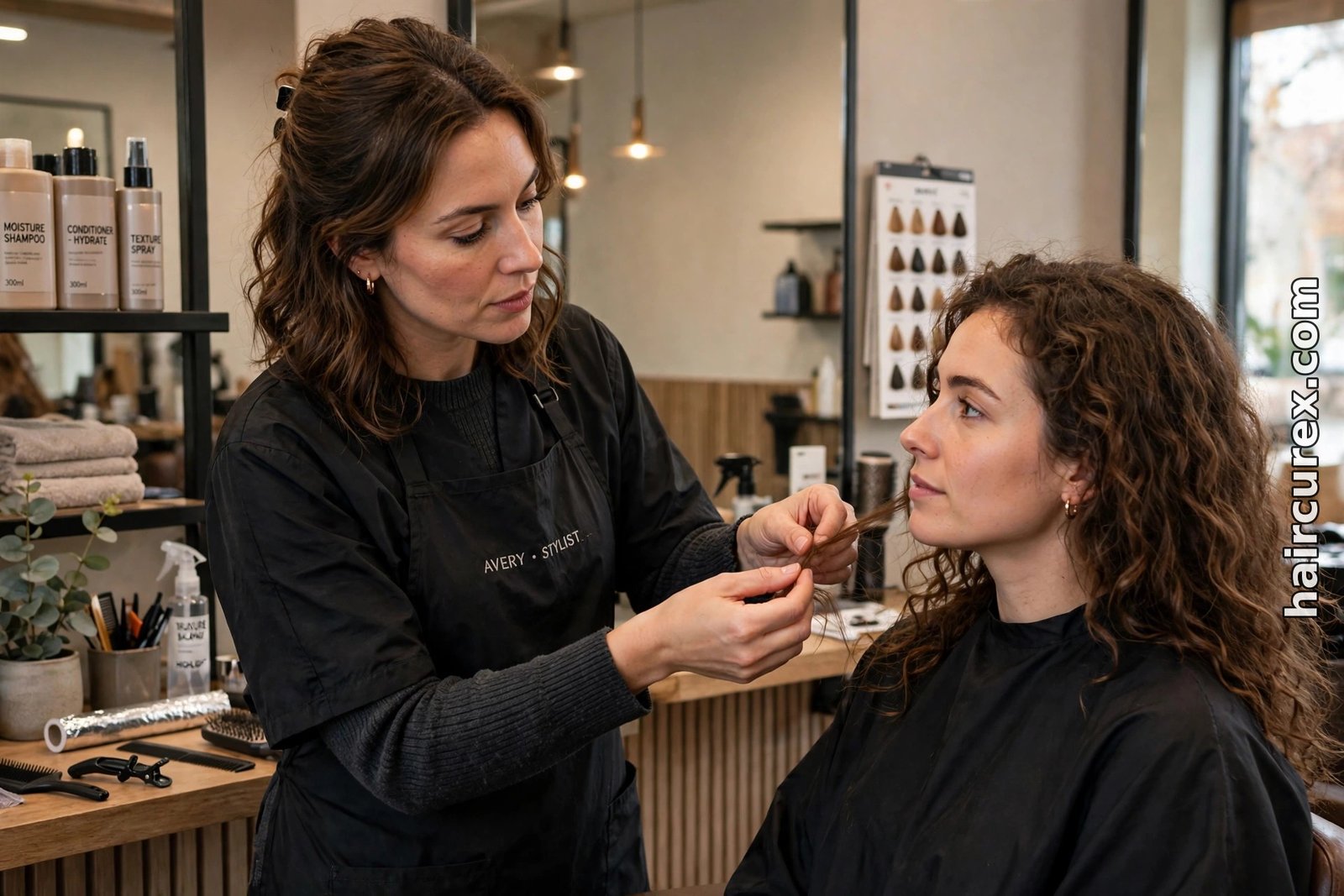
Whether your virtual consultation was with an AI advisor or a real stylist on video, take these questions to the salon: Can my hair actually reach this shade or length, and how many sessions will it take? How will this style grow out, and how often will I need trims? How much daily styling does the preview’s finish require, and what will it look like air-dried? What happens if my hair’s texture or growth pattern fights the shape — what is the fallback version? And what maintenance, products and cost should I expect in the first three months?
If the salon cannot answer those, or waves them away with “the picture will be fine,” that is useful information too. A good stylist welcomes the questions, because they turn a picture into a plan. Our guide to the best free AI hairstyle changer apps covers preview tools in detail, and our general AI hairstyle changer guide explains how photo-based tools differ from live filters.
If you are also deciding a color, our AI hair color quiz guide can shortlist shades for your skin tone first, and our free hairstyle finder quiz can narrow the shape before you spend more time on previews. For a closer look at your hair’s condition, our AI hair analysis guide explains what a photo-based analysis can assess.
Privacy: What Happens to Your Photos?
A virtual consultation needs your face and your hair, which makes its privacy terms worth reading before you upload anything. Check how long the company stores your photos, whether uploads are used to train its models, whether your data can be shared with third parties, and whether you can delete your photos and account. Prefer tools with easy deletion and a clear policy, and avoid tools with no policy or no deletion option.
Decline permissions the tool does not need: it needs photos you choose to upload, not your contacts, location history or whole photo library. Never upload photos of children or anyone else without their permission, and avoid uploading photos that show private documents or addresses in the background. Delete uploads once you have saved what you need, and if a tool’s privacy terms are unclear, use a different tool or stick to ordinary reference photos — the consultation is not worth an unclear data bargain.

When to Skip the AI Step and See a Person First
Some situations should go straight to a professional, without waiting for an AI opinion. Sudden or patchy hair loss, pain, sores, crusting or bleeding on the scalp, persistent redness or scaling, or hair loss alongside other symptoms such as fatigue or weight change should go to a dermatologist, not a style app — a consumer hairstyle app should never be used to diagnose hair or scalp problems. Major color corrections, hair that is already damaged or breaking, and extensions or chemical services also need in-person assessment first, because the AI cannot judge what your hair can safely tolerate.
The same applies emotionally: if you are making a big change after a major life event and feel unsure, a stylist’s conversation is worth more than a hundred previews. AI is good at showing you options; it is bad at telling you whether now is the right time for a dramatic change. That judgment is human, and it is part of what a consultation is for.
Is a Virtual Hair Consultation Worth It?
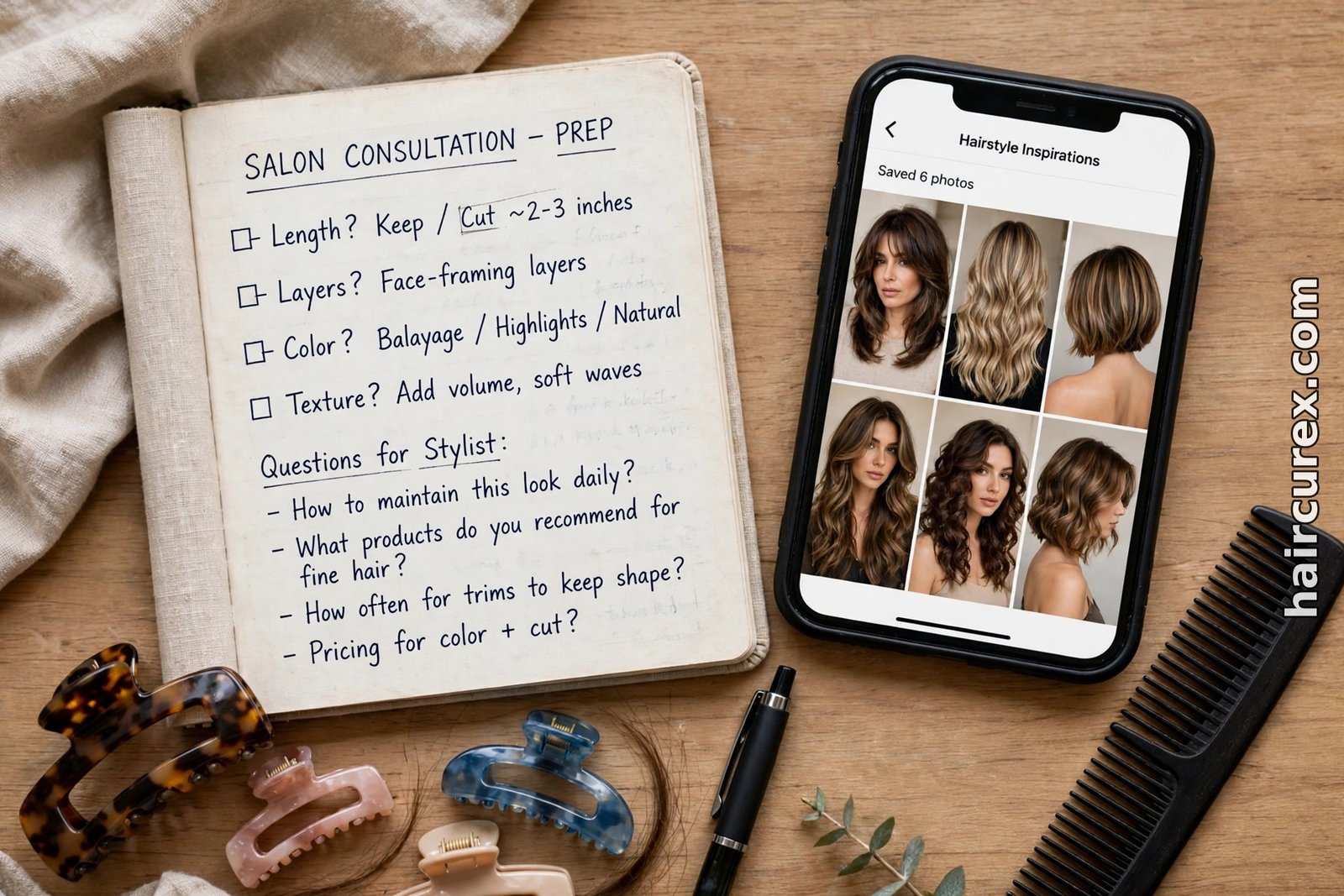
Yes, as preparation — and that is a strong yes, not a grudging one. A good virtual consultation saves salon time, sharpens your questions, prevents the most common misunderstandings, and lets you explore without pressure. It is at its best when it ends with a shortlist, a note of what you liked, and a set of questions for a stylist, rather than with a single image you expect the salon to reproduce exactly.
It is not worth it as a replacement for the salon, a diagnosis, or a guarantee. The preview shows a direction; the stylist decides the plan, the sessions, and the price; your hair, in real light, has the final say. Used in that order — virtual first, human second — a
A virtual hair consultation works best as a first step, not a final verdict. A virtual hair consultation is one of the cheapest, lowest-risk ways to walk into a salon knowing what you want and why.
Frequently Asked Questions About Virtual Hair Consultation
Q: What is a virtual hair consultation?
A: A virtual hair consultation is an online session — with a real stylist on video, an AI hair advisor, or both — that helps you narrow down a cut, color or routine before a salon appointment, usually with style previews on your own photo and a shortlist to discuss with a stylist.
Q: Can an AI hair advisor replace a hairstylist?
A: No. An AI advisor can measure face shape, preview styles and shortlist ideas, but it cannot feel your hair, judge its condition or history, or adapt during a service. Stylists assess your actual hair and turn a preview into a realistic, safe plan.
Q: What can a virtual hair consultation not judge?
A: It cannot judge hair density, strand thickness, porosity, elasticity, chemical history, breakage, curl shrinkage, cowlicks, growth patterns, or how your hair behaves in humidity or air-dried at home. Those need an in-person assessment.
Q: How should I prepare photos for a virtual consultation?
A: Take front, side and back views in natural daylight, hair down and unstyled, with no filter or beauty mode, plus a close view of any area of concern. Use the same portrait for every preview so you compare styles, not photos.
Q: Should I bring AI previews to my salon appointment?
A: Yes. Bring two or three previews, say what you liked about each, and share your full color and chemical history, routine, and budget. Treat previews as a starting point for conversation, not as an exact result to reproduce.
Q: Is it safe to upload my photos to an AI hair advisor?
A: It depends on the provider. Check how long photos are stored, whether uploads train its models, and whether you can delete them. Prefer tools with a clear privacy policy and deletion option, decline unneeded permissions, and delete uploads once you have what you need.