


Does Arctic Fox dye stain? Yes, like almost every semi-permanent dye, Arctic Fox can stain your skin, nails, towels, pillowcases and bathroom surfaces, especially in the first few days after coloring. The good news is that most skin stains fade within a day or two and come off quickly with soap and water, micellar water or rubbing alcohol, while the color on your hair typically lasts 4 to 8 weeks on pre-lightened hair and 2 to 4 weeks on unbleached hair. Staining is heaviest with the darkest, most pigmented shades, deep blues, purples and reds, and lightest with pastels. With a barrier cream on your hairline, gloves, old towels and a thorough rinse, you can keep staining to a minimum, and this guide covers exactly how to prevent it, how long each shade family lasts, and how to remove stains from skin, hair, clothes and surfaces.
Does Arctic Fox Dye Stain Skin?
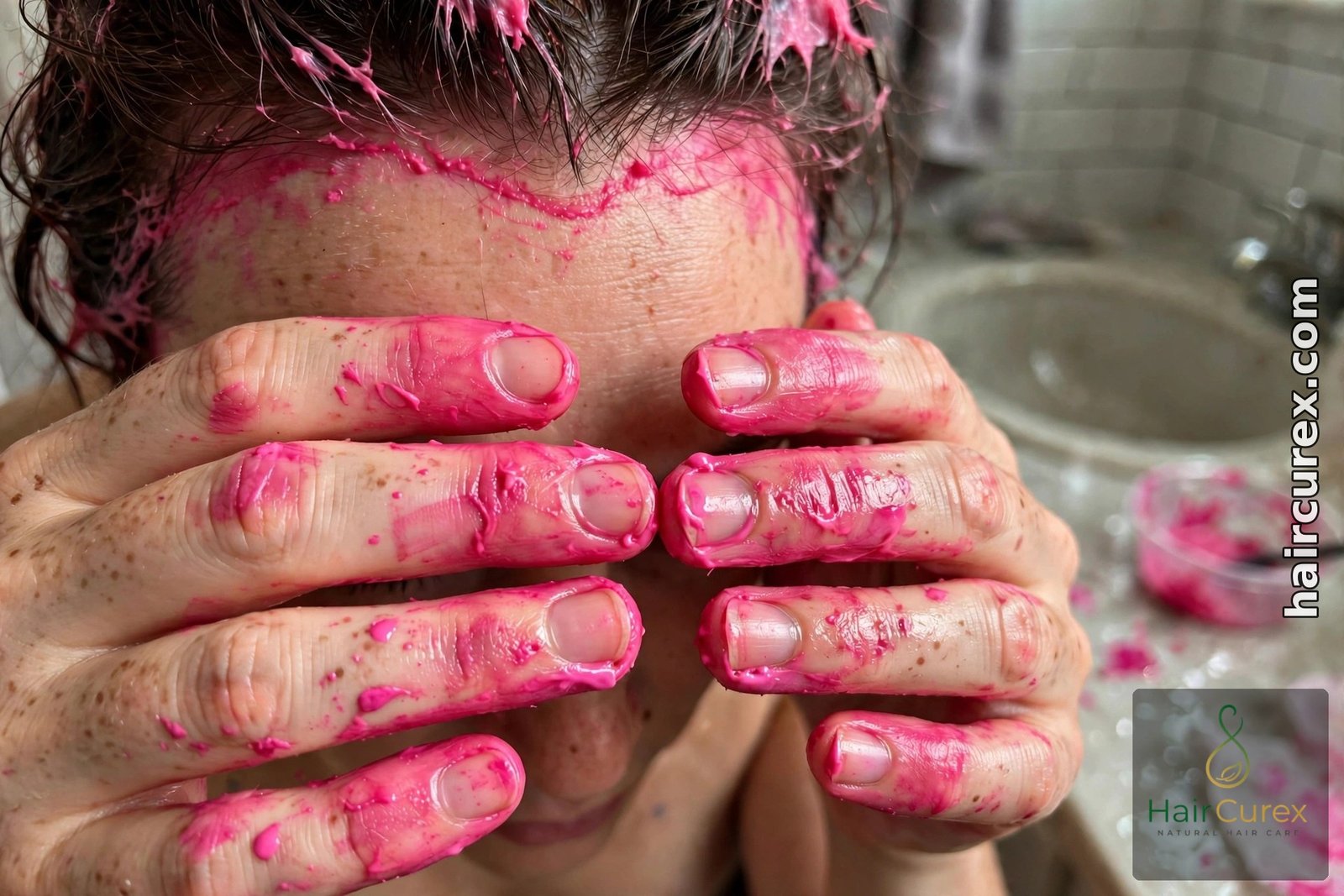
Yes, Arctic Fox can stain skin, but the stain is usually temporary and superficial. Semi-permanent dyes work by depositing pigment on the outside of the hair shaft rather than opening the cuticle and changing the hair from within, and that same surface pigment clings to skin just as easily. You are most likely to see color on your forehead and hairline, your ears, the back of your neck, and your hands and nails, anywhere dye sits on skin during application or rinsing. The stain looks alarming, especially with shades like Wrath, Purple AF or Aquamarine, but it sits on the top layer of skin and fades as skin cells shed.
How long a skin stain lasts depends on three things: how dark the shade is, how long the dye sat on your skin, and how often you wash that area. A light smear wiped off immediately may vanish with one wash. A dark shade left on the hairline through a 30-minute processing time can leave a faint tint for one to three days. Hands stain more stubbornly than the face because dye gets under nails and into cuticles, which is why gloves matter more than any removal trick. If you have dry or rough skin, pigment catches in tiny cracks and looks darker, so moisturized skin actually stains less visibly.
It is worth separating staining from irritation. Arctic Fox is formulated without ammonia, peroxide and PPD, the ingredient behind many permanent-dye allergic reactions, and it contains added conditioner, so it is gentler than permanent color. But gentler does not mean impossible to react to, always do a patch test before a full application, especially if you have sensitive skin or a history of dye reactions. If skin becomes itchy, red, swollen or painful, wash the dye off and do not reapply; see a dermatologist if the reaction persists. The American Academy of Dermatology also offers healthy hair tips for caring for color-treated hair. A stain is cosmetic. A reaction is not, and the two should never be confused.
Does Arctic Fox Dye Stain Hair Permanently?
This is the question behind the question, and it needs an honest answer: Arctic Fox is semi-permanent, so it is designed to fade, but on very light, bleached or porous hair some shades can linger far longer than expected. The brand itself notes that its colors wash out over time, yet blues and greens in particular are famous for hanging on, a blue can fade to a soft teal or greenish tint that survives for months on platinum hair, and that faded tint is not a stain in the same sense as a skin stain. It is leftover pigment still sitting in porous hair, and it will not shampoo out in a week.
Why does this happen? Bleached hair is porous, like a sponge with open pores, and pigment settles into those pores. The lighter and more damaged the hair, the deeper the pigment sits and the slower it washes out. Darker shades carry more pigment, so they linger longer than pastels. Warm shades, pinks, reds, oranges, tend to fade out more cleanly, while cool shades, blues, greens, purples, often fade into a different hue before they disappear. That is normal for the whole category of direct dyes, not a flaw unique to Arctic Fox, and it is why the brand recommends a strand test first: a small hidden section tells you how a shade behaves on your hair before you commit your whole head.
If a faded tint bothers you, you have options that do not involve bleach. Washing with a clarifying shampoo, doing a gentle vitamin C treatment, or using a color remover made for semi-permanent dye can all lift leftover pigment gradually. Do not reach for bleach to remove a tint unless you are prepared for the damage and the unpredictable color that can follow, bleaching over faded blue, for example, can push it greener before it lifts. Our guide to Arctic Fox hair dye covers application and shade behavior in full, and the Arctic Fox color chart helps you predict how each shade family fades.
How Long Does Arctic Fox Dye Last?
On pre-lightened hair, Arctic Fox typically lasts 4 to 8 weeks. On unbleached hair, expect closer to 2 to 4 weeks, and only as a tint on light brown hair, the dye does not lighten hair, so on dark hair most shades show little or nothing. Pastels fade fastest, often noticeably within 1 to 3 weeks, because they carry less pigment. Vivid shades last longest, and blues and greens can outlast the 8-week window on porous hair, fading gradually rather than disappearing suddenly.
Six factors decide where you land in that range. First, your starting level: the lighter and more evenly lightened your hair, the longer and truer the color. Second, porosity: damaged, high-porosity hair grabs color fast but also releases it fast, while healthy hair holds it more evenly. Third, wash frequency: every wash removes a little pigment, so daily washing fades color roughly twice as fast as washing twice a week. Fourth, water temperature: hot water opens the cuticle and strips color; cool or lukewarm water keeps it longer. Fifth, shampoo choice: clarifying and sulfate-heavy shampoos fade color fastest, while gentle, sulfate-free formulas preserve it. Sixth, sun, chlorine and salt water: all three strip semi-permanent color, with chlorinated pools being the harshest of all, a single long swim can visibly fade a fresh color.
| Shade family | Typical wear on bleached hair | How it fades |
|---|---|---|
| Vivid pinks and reds | 4 to 8 weeks | Fade lighter within the same color family |
| Purples | 4 to 8 weeks | Fade to lavender, then silvery tones |
| Blues | 6 to 10+ weeks | Often fade toward teal or green and linger longest |
| Greens | 6 to 10+ weeks | Fade to mint or yellow-green and linger |
| Pastels | 1 to 3 weeks | Fade quickly and evenly to a soft wash of color |
| Dark shades on unbleached hair | 2 to 4 weeks | Show as a tint that fades to a subtle sheen |

The practical takeaway is that how long does it last is really how long does it look good. Most people find the first two to three weeks are the vivid peak, the next few weeks are a softer version of the same color, and the tail end is a pastel or tinted version that still looks intentional, provided the fade stays in the same color family. When a blue turns green, that is the exception to watch for, and it happens when blue pigment fades over yellow-toned blonde hair underneath. Toning yellow out before coloring, or adding a drop of purple to the blue, prevents most of that shift.
How to Prevent Arctic Fox Dye From Staining
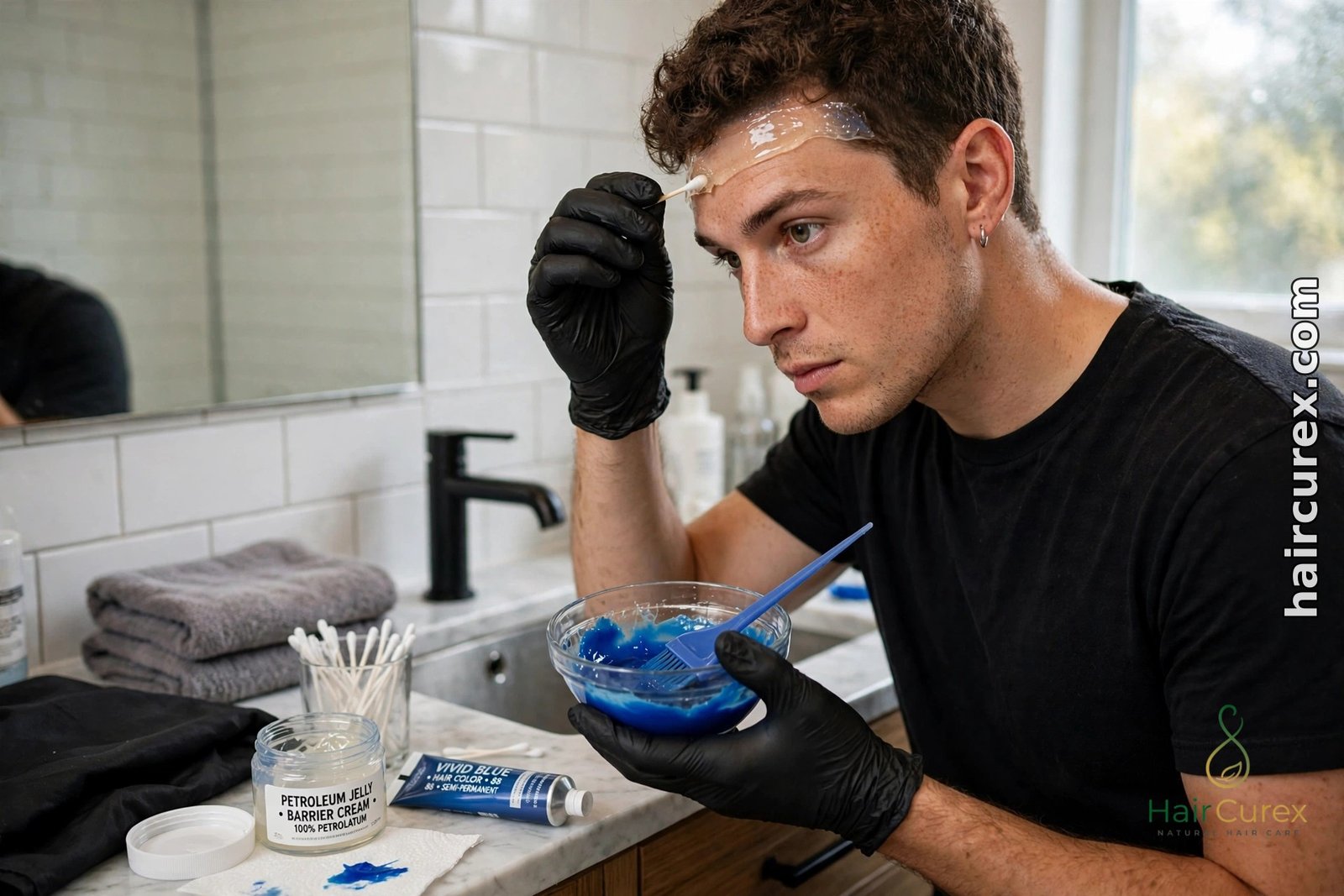
Prevention is far easier than removal, and it takes about five minutes. Start with a barrier: smooth a thin layer of petroleum jelly or coconut oil along your hairline, over your ears and around the back of your neck. The brand’s own instructions suggest coconut oil or petroleum jelly for exactly this purpose. Keep the barrier off the hair itself, dye cannot color hair coated in petroleum jelly, so a smear onto your roots leaves a pale patch. Wear gloves from the first squeeze of the bottle to the final rinse, and keep them on while rinsing, because rinse water is deeply colored and stains hands fast.
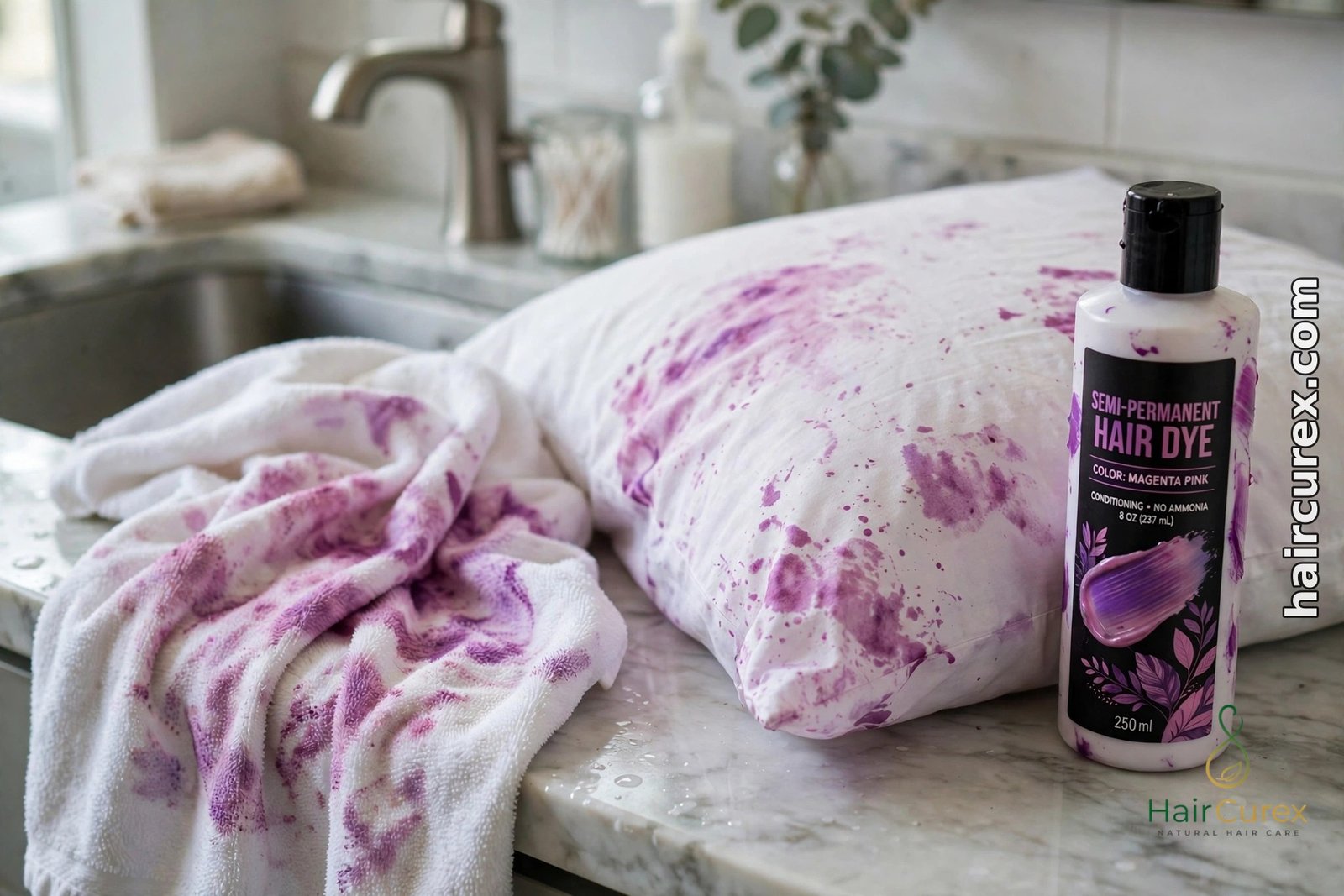
Dress for the job: wear an old dark T-shirt you do not mind staining, drape an old dark towel over your shoulders, and use old dark towels for drying. Light towels and pillowcases are the most common casualties, so sleep on a dark pillowcase or a towel over your pillow for the first few nights, and make sure your hair is fully dry before bed, wet, freshly dyed hair transfers color to fabric far more than dry hair does. Protect the bathroom too: rinse in a stainless steel sink if you have one, since some shades can tint white porcelain and grout, and wipe splashes off surfaces immediately rather than leaving them to dry. A quick wipe now beats scrubbing later.
One more prevention step people skip: rinse thoroughly, and rinse with cool water. Leftover dye sitting on the hair surface is what bleeds onto towels, collars and pillowcases in the first days. Rinse until the water runs mostly clear, then rinse a little more. It feels wasteful, but it is the single biggest difference between a color that stains everything it touches for a week and one that behaves after day one. Our hair washing guide explains the cool-water, scalp-first technique that also protects color-treated hair generally.
How to Remove Arctic Fox Dye From Skin
Act fast and start gentle. For fresh stains, soap and warm water with a washcloth often does the job, rub gently in circles rather than scrubbing hard, which irritates skin without removing more pigment. If that leaves a tint, micellar water or an oil-free makeup remover on a cotton pad is the next step, and it is the kindest option for the face. For stubborn stains on hands or the hairline, rubbing alcohol on a cotton pad dissolves direct-dye pigment effectively; the brand itself suggests rubbing alcohol or a salon color remover for stained skin. Use it only on unbroken skin, keep it away from eyes, and moisturize afterward, because alcohol dries skin out.
What not to do matters too. Do not use nail polish remover on your face or on irritated skin, it is far harsher than rubbing alcohol and can burn. Do not scrub with baking soda paste or harsh exfoliants on the face; you will irritate the skin and still have a tint. Do not bleach your skin, ever. If a stain survives all gentle methods, time is the safest remover: skin sheds continuously, so even a dark hairline tint is usually gone within a few days. Cover it with concealer in the meantime rather than attacking it.
For nails and cuticles, soak hands in warm soapy water, then rub with micellar water or rubbing alcohol and a soft nail brush. Pigment under nails is the slowest to go because it is trapped, but it grows out with the nail and fades with repeated washing. Next time, double-glove: two thin pairs of gloves protect better than one, and taping glove cuffs at the wrist stops dye running down your forearms during rinsing.

How to Remove Arctic Fox Dye From Clothes, Towels and Surfaces
Clothes and towels stained during coloring should be treated before they go through a hot dryer, because heat sets dye stains. Rinse the stained area under cold water first, then work in liquid laundry detergent or a stain remover and let it sit for 15 to 30 minutes before washing on a cold cycle. Oxygen bleach (sodium percarbonate) is safe for most colored fabrics and helps with dye transfer; chlorine bleach is not a universal fix, it can damage fabric and, on some colors, set a stain rather than lift it, so check the care label first. White towels stained pink or purple often come clean with oxygen bleach and a cold wash, but a towel stained during the first rinse may never return to bright white, which is why old dark towels are the real solution.
For bathroom surfaces, wipe fresh splashes immediately with a damp cloth and an all-purpose cleaner. Dried dye on porcelain, tile or a bathtub usually lifts with a baking soda paste left for 10 to 15 minutes and then scrubbed gently, or with a dedicated bathroom cleaner. On grout, which is porous, dye can leave a faint tint even after cleaning, sealing grout helps for next time. On countertops, avoid acetone-based removers on plastic or laminate surfaces, which can dull or melt the finish; test any remover in a hidden spot first. For stained pillowcases and sheets, the same cold-water, oxygen-bleach approach applies, and sleeping on dark bedding for the first few nights after coloring avoids the problem entirely.
How to Fade or Remove Arctic Fox Dye From Hair
Sometimes the goal is not removal from skin but from hair, a shade that came out too dark, a blue that turned green, or a color you are simply done with. Start with the gentlest method: wash with a clarifying shampoo a few times over a week. Clarifying shampoo opens the cuticle slightly and each wash lifts a little pigment; our guide to the best detox shampoo explains when a clarifying wash is the right tool and when it is overkill. Follow every clarifying wash with a deep conditioner, because the same process that lifts color also dries hair.
The next step up is a vitamin C treatment: crush vitamin C tablets into a paste with a clarifying shampoo or a little water, apply to damp hair, cover for 30 to 60 minutes, then rinse. It lifts direct dye gradually and is far kinder than bleach, though it can take two or three applications and it dries hair, so condition well afterward. Dedicated semi-permanent color removers work similarly and are formulated for the job. If none of that shifts a stubborn blue or green tint, a professional color correction is the honest recommendation, a stylist can tone or neutralize the leftover pigment without the damage and unpredictability of at-home bleach. Do not bleach over faded fashion color at home unless you accept that the result may be patchy, green, or both.
When you are ready for your next color, remember that leftover tint changes the new result: blue residue plus yellow dye makes green, and pink residue warms up any cool shade layered over it. Either fade the old color as far as it will go first, or choose a new shade that works with what is left rather than fighting it. Checking the Arctic Fox color chart before you buy saves the most common disappointment, a shade that looks one way in the bottle and another over your current base.
Does Arctic Fox Dye Stain? Final Verdict
Does Arctic Fox dye stain? Yes, but it stains in the manageable, temporary way that all direct dyes do, not in the permanent way people fear. Skin stains last days, not weeks. Towel and pillowcase stains are preventable with dark fabrics and a thorough rinse. The color on your hair lasts 4 to 8 weeks on bleached hair and fades gradually, with blues and greens lingering longest and sometimes shifting hue as they go. None of that is a reason to avoid the dye, it is a reason to color with a plan: barrier cream, gloves, old towels, a cool rinse until the water runs clear, and dark bedding for the first few nights. Learn more at the Arctic Fox official site.
If you are choosing a shade, pick with fading in mind, not just day-one vibrancy. A pastel will be gone in weeks; a vivid blue may still be tinting your hair two months later. If you are coloring for the first time, do the strand test and the patch test, protect your hairline, and keep your expectations honest: semi-permanent color is a commitment of weeks, not days, and its fade is part of the look. Done that way, Arctic Fox gives you vivid color without permanent-dye damage, and staining stays a five-minute cleanup, not a week-long regret.
Frequently Asked Questions About Arctic Fox Dye Staining
Q: Does Arctic Fox dye stain skin? A: Yes, it can stain skin around the hairline, ears, neck and hands, especially darker shades. Most skin stains fade within one to three days and come off with soap and water, micellar water or rubbing alcohol.
Q: How long does Arctic Fox dye last? A: Typically 4 to 8 weeks on pre-lightened hair and 2 to 4 weeks on unbleached hair. Pastels fade fastest at 1 to 3 weeks, while blues and greens can linger beyond 8 weeks on porous hair.
Q: Does Arctic Fox stain clothes and pillowcases? A: Yes, especially in the first few days and while hair is wet. Use old dark towels, sleep on a dark pillowcase until hair is fully dry, and rinse until the water runs clear to minimize transfer.
Q: How do I remove Arctic Fox dye from my skin? A: Start with soap and warm water, then micellar water or makeup remover. For stubborn stains, rubbing alcohol on a cotton pad works well on unbroken skin. Avoid nail polish remover on the face and never bleach skin.
Q: Will Arctic Fox wash out completely? A: On most hair it fades out over weeks, but on very light or porous hair, blues and greens can leave a lingering tint for months. Clarifying shampoo, vitamin C treatments or a professional color correction can help remove leftover pigment.
Q: How can I stop Arctic Fox dye from staining my bathroom? A: Apply petroleum jelly or coconut oil around your hairline, wear gloves, rinse in a stainless steel sink if possible, wipe splashes immediately, and rinse with cool water until it runs mostly clear.