


The wolf cut is one of the most searched hairstyles for curly hair right now, and for good reason. It combines the choppy layers of a shag with the tapered silhouette of a mullet, which means volume where curly hair wants it (the crown) and less bulk where it does not (the ends). If your curls feel heavy, flat on top, or triangle-shaped, a well-cut wolf cut for curly hair can fix the shape without taking away your length.
Quick answer: Yes, the wolf cut works very well on curly hair. The heavy layering removes weight, encourages curl definition, and grows out softly. It suits type 2 waves through type 4 coils, but the layer placement has to be adjusted for your curl pattern, and it should always be planned around how your hair looks dry, not wet.
What Is a Wolf Cut for Curly Hair?
A wolf cut is a hybrid of two cuts: the 1970s shag and the mullet. The top and crown are cut into short, choppy layers that create height and movement, while the back and sides keep more length with wispy, tapered ends. The fringe is usually a curtain bang or a short, textured fringe that blends into the face-framing layers.
On straight hair the result looks edgy and piecey. On curly hair the same structure does something different: the short crown layers let curls spring up instead of being dragged down, and the lighter ends stop the bottom of the hair from puffing out into a triangle.
Why the Wolf Cut Works So Well for Curly Hair
- It removes bulk in the right places. Curly hair gets heavy at the mid-lengths and ends. Wolf cut layers lift that weight off.
- It adds crown volume. If your roots dry flat while the ends expand, the short top layers rebalance the shape.
- It is low-maintenance day to day. The cut is meant to look a little undone, so it does not need perfect styling to look right.
- It grows out gracefully. Because the layers are soft and blended, you can usually go 10 to 12 weeks between reshapes instead of 6 to 8.
Wolf Cut by Curl Type: What Changes?
Type 2 (Wavy)
On wavy hair the wolf cut reads closest to the classic version: visible choppy layers, a clear mullet-like taper, and lots of movement. Ask for layers that start higher, because waves lose shape faster than curls. Our 2B hair guide explains how to keep the wave pattern defined between washes.
Type 3 (Curly)
This is the sweet spot. 3A to 3C curls have enough spring to show off the layered crown and enough length retention to keep the tapered back. If you are not sure where you fall, the routine in our 3B hair guide is a good styling baseline for this cut.
Type 4 (Coily)
The wolf cut works on coily hair too, but shrinkage changes the math. Hair that looks long when wet or stretched can sit several inches shorter when dry, so the crown layers must be left longer than they would be on looser curls. A stylist who cuts coily hair dry, in its natural state, will judge the shape far better than one who cuts it wet and stretched.

Short vs Long Curly Wolf Cut
Short wolf cut: A short wolf cut for curly hair sits around the jaw to the shoulders, with the mullet tail mostly removed. It gives the strongest, edgiest shape and the fastest styling routine. It is a great reset if your ends are damaged.
Long wolf cut: The layers start at the crown but the length is kept past the shoulders. The effect is softer and closer to a layered shag. This is the safer first step if you are nervous, because a long wolf cut can be trimmed into a regular layered cut if you do not love it.
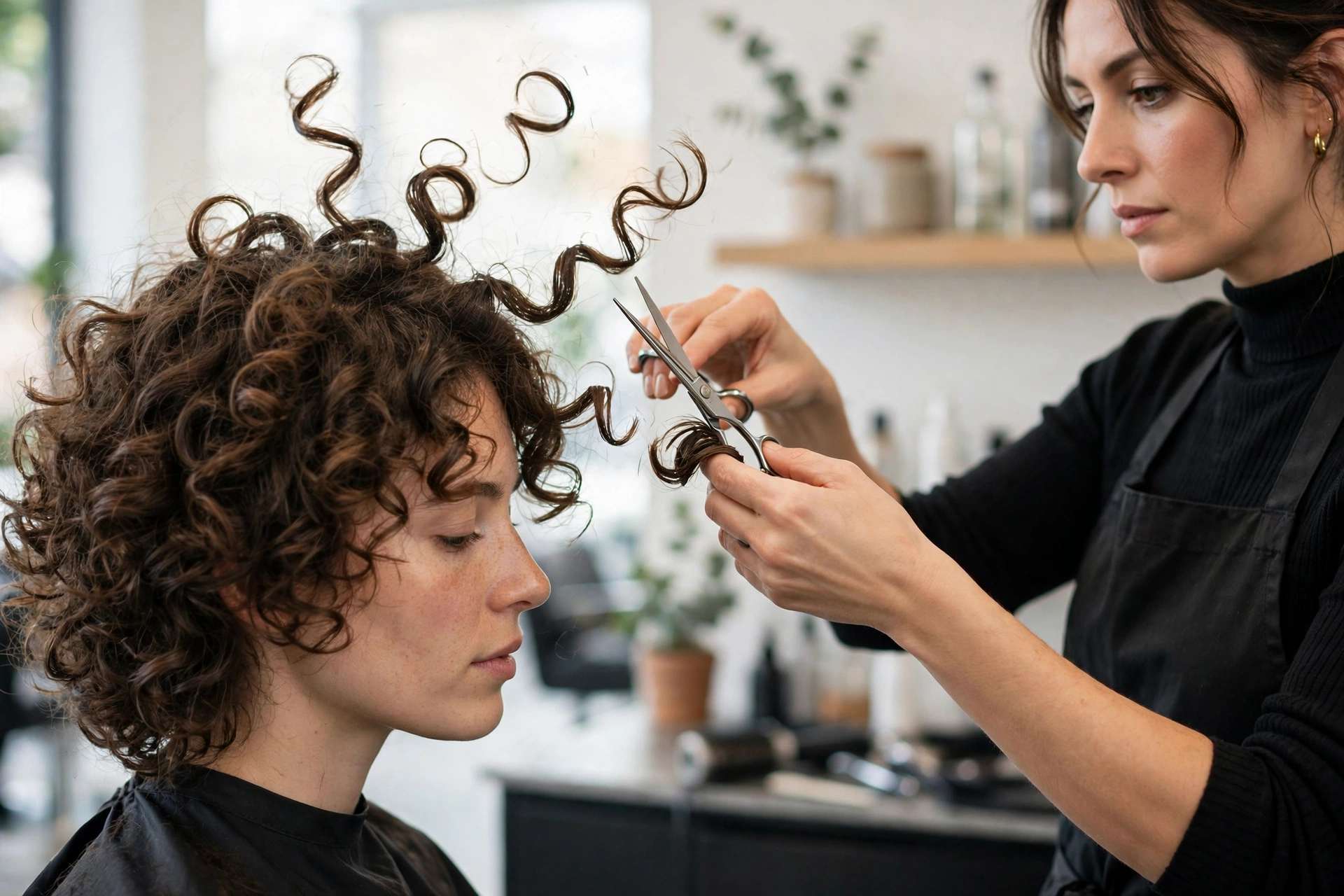
With Bangs or Without?
Curtain bangs are the classic fringe for a wolf cut for curly hair and they flatter most face shapes, but on curly hair they come with homework: fringe curls shrink, so they must be cut longer than you think, and they usually need a quick refresh with water and a dab of gel each morning. If you do not want daily fringe maintenance, ask for long face-framing layers instead. You keep the shape around the face with none of the bang upkeep. Face-framing pieces are also easy to pin back with hair clips on non-wash days.
Wolf Cut vs Shag vs Mullet: What Is the Difference?
- Shag: Layers all over with a fringe, but the length stays fairly even. Softer and less tapered than a wolf cut.
- Mullet: A dramatic difference between the short front and sides and the long back. The wolf cut borrows this idea but blends it much more.
- Wolf cut: Short, heavy crown layers plus a softly tapered, longer back. Think of it as the middle ground between the two.

What to Ask Your Stylist For
- Bring photos of a wolf cut for curly hair on hair that matches your curl type, not straight-hair versions.
- Ask for the shape to be checked dry. Curly hair should be cut or at least finished and assessed in its natural, dry state.
- Ask for layers that start at the crown, with weight removed from the mid-lengths rather than the ends thinned out. Over-thinned curly ends turn stringy and frizzy.
- Agree on the fringe length while your hair is dry, and ask them to cut bangs longer than the target. You can always take more off.
- Ask how much length will come off the back. The classic wolf cut keeps the back long; make sure you and your stylist mean the same thing by “long.”
For more ideas to bring to the appointment, browse our hair cuts guide and the fluffy hair breakdown, which covers a similar volume-first shape.

How to Style a Curly Wolf Cut
The wolf cut for curly hair does most of the work. Your job is definition at the crown and moisture at the ends.
- Wash and condition as usual, following a routine like our curly hair routine.
- Apply a leave-in or curl cream to soaking-wet hair, raking it through so the short crown layers get product too. The picks in our best curl creams guide work well here.
- Add mousse at the roots for lift. A light mousse, like the ones in our best mousses for curly hair roundup, keeps the top layers bouncy instead of weighed down.
- Scrunch and dry. Diffuse on low heat, flipping your head to encourage crown volume, or air-dry and scrunch out the cast once fully dry.
- Refresh on day two and three with a water spray and a small amount of gel on the fringe and crown only.
Maintenance: Trims, Growth and Frizz
Plan a reshape every 10 to 12 weeks. The crown layers grow down into the mid-lengths over time, and once they do, the triangle shape creeps back. Between cuts, the two most common wolf cut complaints are a flat crown (usually too much heavy product at the roots) and frizzy ends (usually ends that were over-thinned, or hair that needs a deep-conditioning session). Sleeping with your hair in a loose pineapple and using a satin pillowcase keeps the layers from matting overnight.
Who Should Skip the Wolf Cut?
A wolf cut for curly hair is not for everyone. If you wear your hair straightened most days, the choppy layers will look uneven when straight, and the cut will fight you. If your hair is very fine and low-density, heavy layering can make the ends look thin; a softer shag with fewer layers is usually better. And if you are growing out heat or bleach damage, fix the health of the ends first with a simpler cut, then layer once the hair can hold the shape.

Frequently Asked Questions
Can you get a wolf cut with curly hair?
Yes. The wolf cut is one of the best layered cuts for curly hair because the short crown layers remove weight, add volume at the roots, and stop the ends from puffing into a triangle shape. It works on wavy, curly, and coily hair, with the layer lengths adjusted for shrinkage.
Is a wolf cut good for curly hair that is thick?
Yes, thick curly hair benefits the most, because the cut is designed to remove bulk. Ask your stylist to take weight out of the mid-lengths and crown rather than thinning the ends, which can make thick curls look frizzy.
How often does a wolf cut for curly hair need trimming?
Every 10 to 12 weeks is typical. The shape grows out softly, but once the crown layers grow into the mid-lengths, the volume balance is lost and the hair starts to look triangular again.
What is the difference between a wolf cut and a shag for curly hair?
A shag has layers throughout with a fairly even length, while a wolf cut has much shorter, heavier layers on top and a longer, tapered back borrowed from the mullet. The wolf cut gives more crown volume and a more dramatic silhouette.
Should a curly wolf cut be cut wet or dry?
The final shape should be judged dry. Many curly specialists cut fully dry or cut wet and then refine dry, because curls shrink and sit differently when dry. Bangs in particular should always be trimmed dry and left longer than the target length.
Does a wolf cut work on short curly hair?
Yes. A short wolf cut sits around jaw to shoulder length, keeps the choppy crown layers, and drops most of the long back. It is the boldest version and the quickest to style, and it is a practical reset if your ends are damaged.
How do I stop my wolf cut from going flat on top?
Use lighter products at the roots, apply mousse rather than creams to the crown, and diffuse with your head flipped over. A clarifying wash every few weeks also helps if buildup is weighing the top layers down.
Final Thoughts
The wolf cut for curly hair earns its popularity honestly: it gives curls shape, crown volume, and an easy grow-out, all in one cut. The key decisions are your layer height, your fringe, and how much back length to keep, and all three should be made looking at your hair dry. Bring photos of curly wolf cuts, not straight ones, and the cut in the mirror should match the one you asked for.