

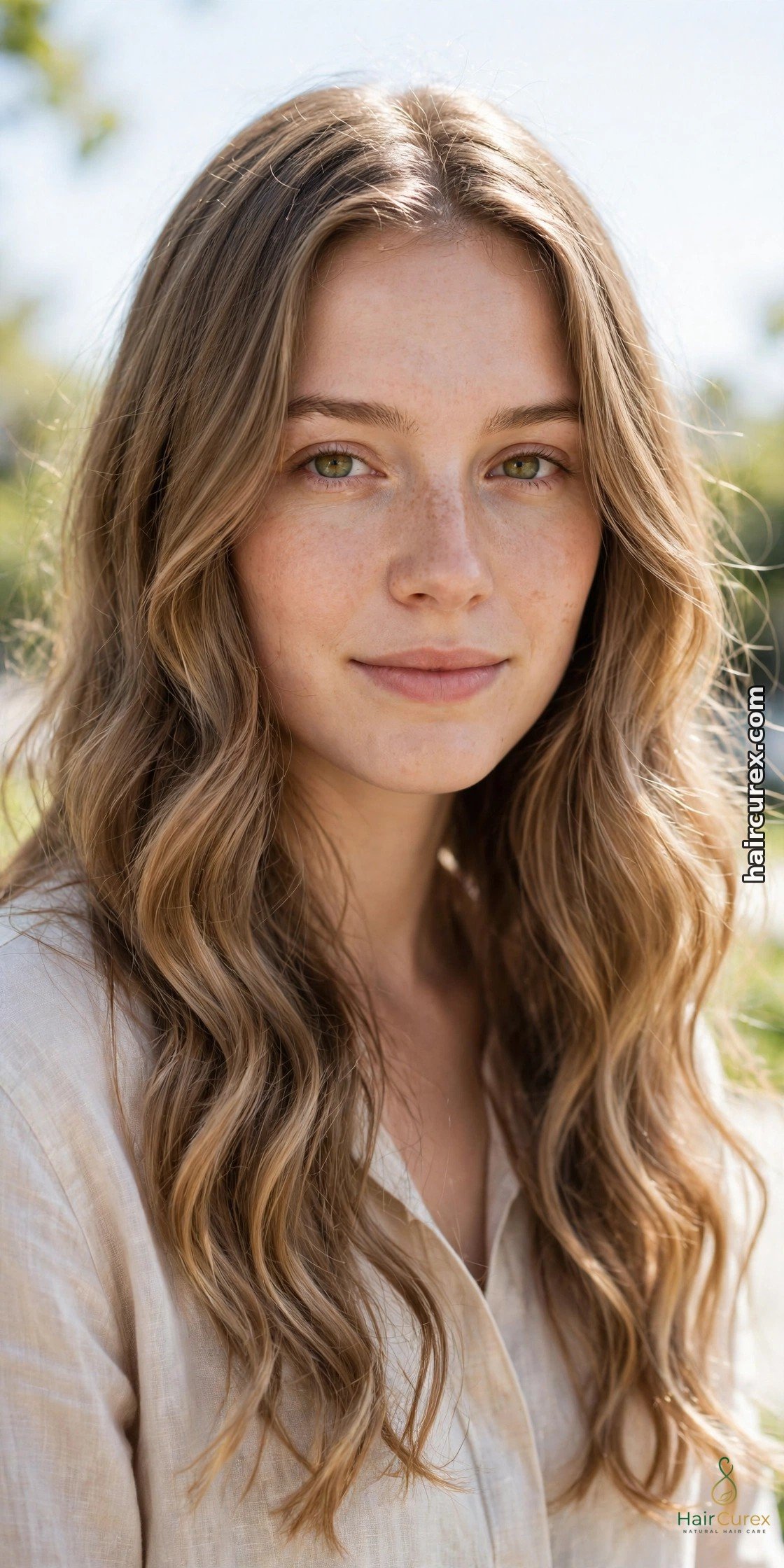
2A hair is the loosest wavy hair type: fine, almost-straight hair that lies fairly flat at the roots and falls into soft, stretched-out S-shaped waves from the mid-lengths down. It is the first step on the wavy side of the Andre Walker hair typing system, sitting between straight hair (type 1) and the more defined waves of 2B. Because the strands are usually fine, 2A hair is easily weighed down by heavy creams, oils and butters, so the secret to bringing out its wave is doing less, not more: wash with a gentle, lightweight shampoo, condition only the lengths, style soaking-wet hair with a light mousse or foam, and let it air-dry without touching it. This guide explains how to tell if you have 2A hair, how it differs from 2B and 2C, the exact wash-day routine that works, the products and cuts that suit it, and the mistakes that flatten it.
2A Hair: What It Actually Looks Like
2A hair is easy to miss, because on a lazy day it can look almost straight. The roots lie flat against the head, the wave starts around eye or ear level, and the ends bend into a loose, tousled S-shape rather than forming a curl. It is often described as "beachy waves that have fallen a bit" — there is body and movement, but the pattern is gentle rather than defined. The strands themselves are usually fine, which is why 2A hair can look thin and limp when it is overloaded, and why it straightens so easily with a blow dryer or flat iron. Curlsmith’s type 2 hair guide describes 2A as a very loose, tousled texture that is quite straight at the roots while the lengths form gentle waves, and notes that because scalp oils travel easily down the loose wave, 2A is less prone to dryness than the curlier types.
That fine texture is both the advantage and the challenge of 2A hair. On the plus side, it is the most versatile of the wavy types: it can be worn straight, wavy or loosely curled with minimal effort, and it rarely needs the heavy moisture that curlier hair depends on. On the minus side, it loses its wave fast. A heavy conditioner, a rich cream or a few drops too many of oil can pull the pattern straight out, and humidity can either puff it into frizz or flatten it completely, depending on the day. Mindbodygreen’s full guide to 2A hair makes the same point from the other direction: picking the right lightweight products matters precisely because 2A hair is fine, and heavier ingredients such as pure shea butter or coconut oil, which suit curlier types, can weigh it down.
How to Tell If You Have 2A Hair
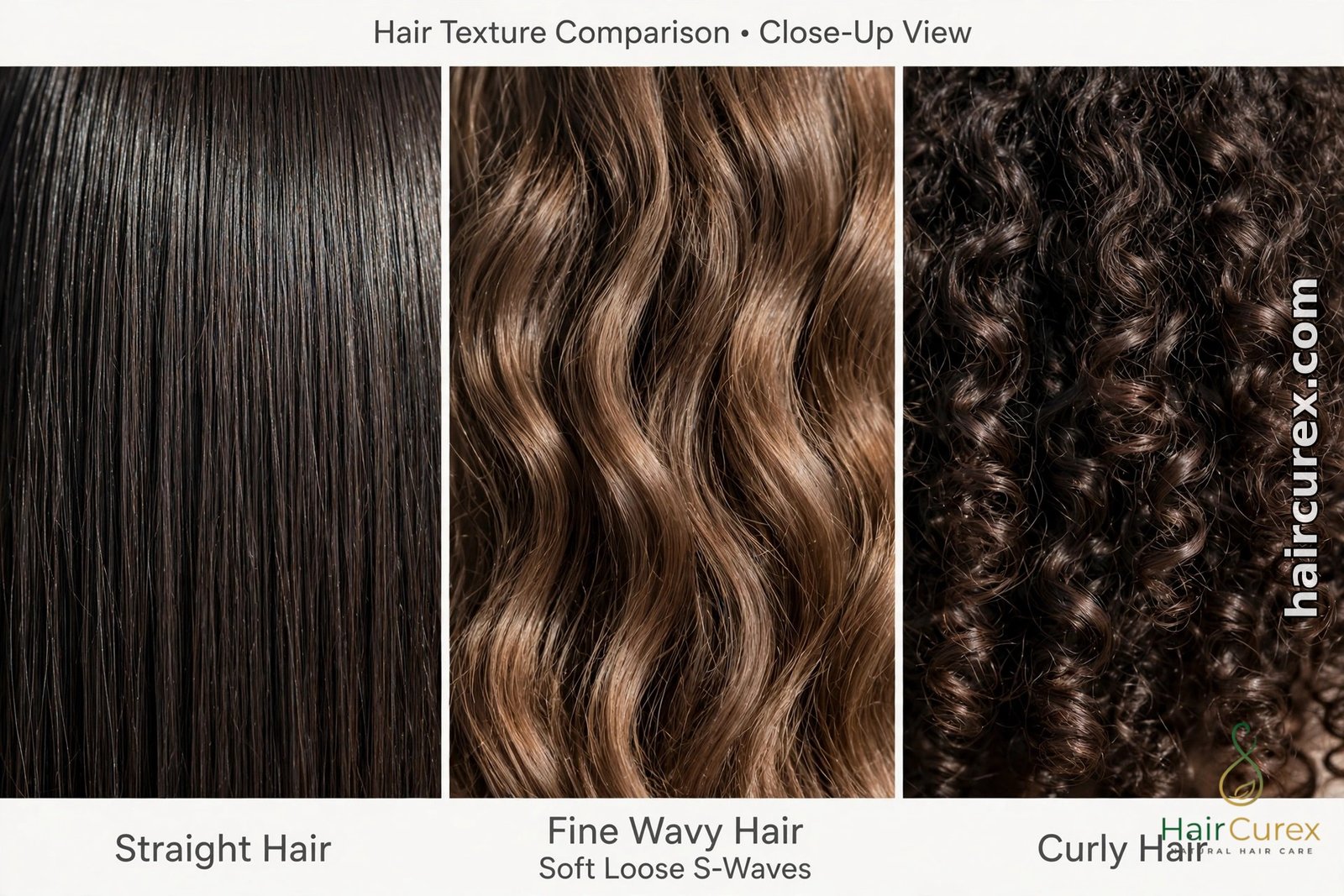
The most reliable test costs nothing and takes one wash. Wash your hair with your usual shampoo and conditioner, use no styling products at all, and let it air-dry completely without touching it, brushing it or tying it up. Then look at the shape of the strands. Straight hair (type 1) dries with no bend at all. 2A hair dries mostly straight at the roots with a soft S-bend through the mid-lengths and ends. If the wave starts higher up and holds a clear, repeated S-shape, you are probably 2B; if the waves are deeper, start near the scalp and sometimes form loose spirals, you are closer to 2C. Our curl type chart walks through the same air-dry test for all twelve types, from 1A to 4C, if you want to compare the full range.
A few other signs point to 2A. Your hair often looks straight when it is soaking wet and only finds its wave as it dries. The wave is uneven — some sections bend more than others, and one side may look straighter than the other. It goes flat at the roots easily and can look limp by the end of the day, especially if you used a heavy product. And it is usually easy to manage: a comb runs through it, it rarely tangles badly, and it responds quickly to heat styling in either direction. Keep in mind that the typing system is only a shorthand. Most people have more than one pattern on their head — the underneath layers are often straighter, the top layers wavier — so go by the pattern that shows up most, not by a single strand.
2A vs 2B vs 2C: The Wavy Family at a Glance
| Type | Wave pattern | Where the wave starts | Strand texture | Biggest challenge | Best styler |
|---|---|---|---|---|---|
| 2A | Loose, stretched-out S-wave, almost straight | Mid-lengths to ends, flat roots | Fine, easily weighed down | Goes flat and limp; loses definition fast | Lightweight mousse or foam |
| 2B | Clear, defined S-waves | Mid-lengths, more body at the roots | Fine to medium | Frizz and uneven definition | Light gel or mousse |
| 2C | Deep waves, some loose spirals | Near the roots | Medium to coarse | Frizz, tangles, dryness | Light-to-medium gel or curl cream |
The table shows why 2A care is its own thing. 2B and 2C hair can take more product and more moisture; 2A cannot. What works for a 2C head — a rich curl cream, a leave-in, an oil — will usually flatten a 2A head into stringy, slightly greasy-looking strands. That is also why our 2B hair guide and our 2C hair guide each have their own routines: the three types share a family, but the weight of product they can carry is completely different. If you have tried wavy-hair routines before and they left your hair limp, the routine was probably written for a curlier type than yours.
The 2A Hair Wash-Day Routine, Step by Step
The 2A wash day is short, and that is the point. Every extra step is another chance to weigh the wave down, so the routine below is deliberately light.
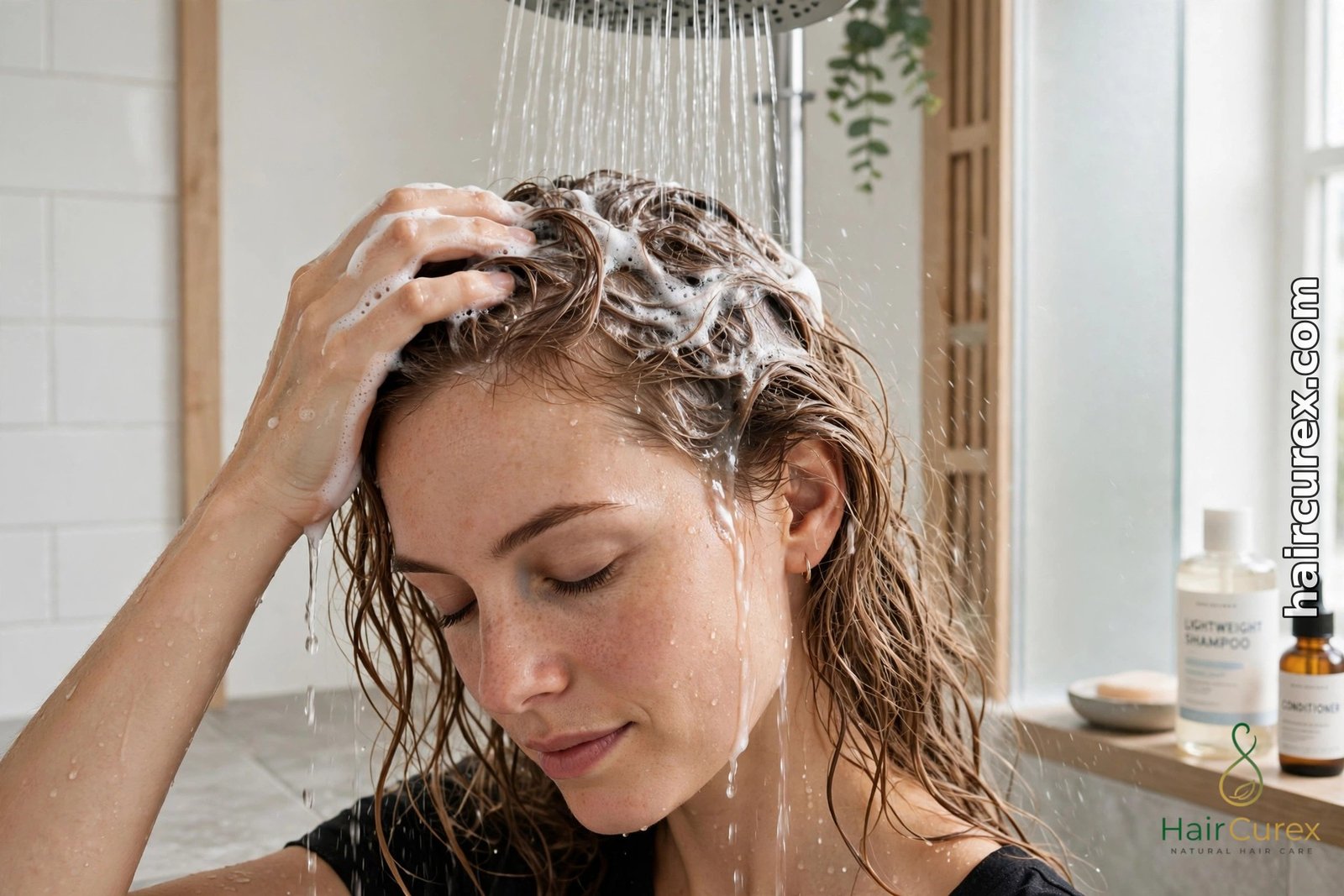
Step one is cleansing. Because 2A hair is fine and the wave is loose, scalp oil travels down the strand more easily than it does on curlier hair, so many 2A heads wash every two to three days rather than daily. Focus the shampoo on the scalp, where the oil and buildup actually sit, and let the lather rinse through the lengths instead of scrubbing them. A gentle shampoo is enough for most wash days; add a clarifying shampoo roughly once a month, or whenever the waves start looking limp and dull, to clear away product buildup. Washing too often strips the oils that keep the hair smooth, which is why daily washing usually makes 2A hair frizzier, not cleaner.
Step two is conditioning, and where you put it matters more than which one you buy. Apply conditioner from the ears down only — never on the roots, because root conditioner is the fastest way to flat, limp waves. Use a light, rinse-out conditioner rather than a heavy mask, and rinse most of it out; some fine waves do best with it rinsed out completely. Save deep-conditioning masks for once every couple of weeks, and even then use a light formula and keep it off the roots. If your hair still feels coated after drying, you used too much.
Step three is styling, and it has to happen on soaking-wet hair, not damp hair. Do not wait for the hair to half-dry: on dripping-wet hair, scrunch or smooth in a single light styler — a mousse or foam for most 2A heads, or a light liquid gel if you want longer hold or humidity resistance. Start with less than you think you need, about a golf-ball of mousse or a coin-sized amount of gel, and add more only if the wave still falls out. Do not layer three products; one light styler does the job, and a second one usually costs you the volume you were trying to keep.
Step 4 — Dry Without Flattening the Wave
How you dry 2A hair decides whether the wave survives the day. Air-drying is the best option: let the hair dry completely without touching it, because every time you run your fingers through damp waves you break up the clumps that are forming and create frizz. If you must use a dryer, use a diffuser on low heat and low speed, cupping sections of hair upward into the diffuser bowl rather than blasting the airflow down the strand, which straightens the wave out. Mindbodygreen’s 2A guide warns that 2A hair becomes mainly straight when heat-dried, and recommends air-drying for the wavy look, with a curling iron on air-dried hair giving the best results if you want more definition.
Two drying habits flatten 2A hair more than anything else. The first is rough towel-drying: a terry-cloth towel creates friction that ruffles the cuticle and breaks the wave. Blot gently with a microfiber towel or an old cotton T-shirt instead, pressing the water out rather than rubbing. The second is brushing dry hair, which separates the soft wave into a frizzy halo. Detangle only when the hair is wet and conditioned, with your fingers or a wide-tooth comb, working from the ends upward. Our how to get rid of frizzy hair guide covers the same low-friction drying method in detail, including the plopping technique, which uses a T-shirt to hold waves in shape while they dry — it works well for 2A, but keep the plop short, around 10 to 15 minutes, because a long plop can flatten fine waves at the roots.
The Best Products for 2A Hair
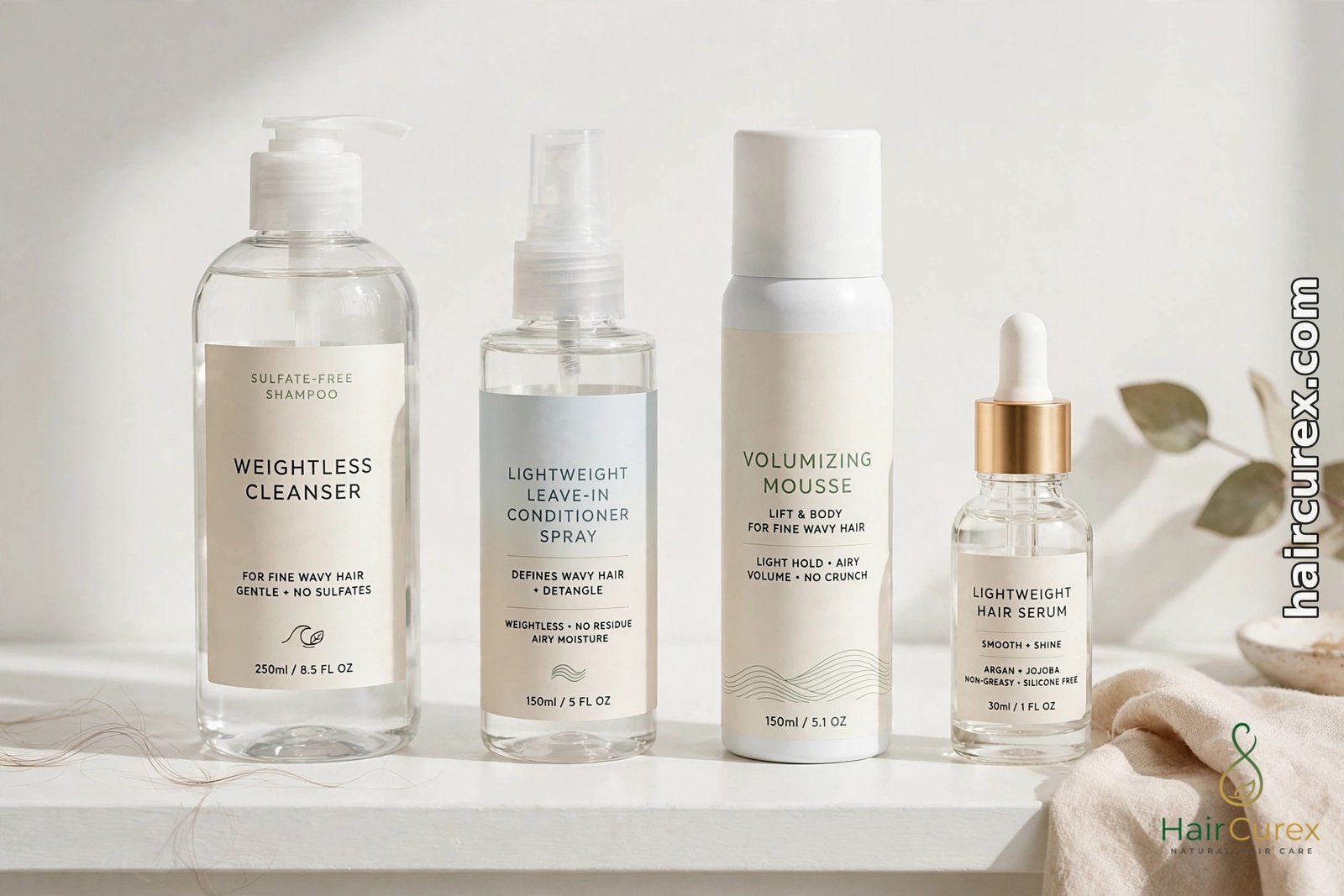
The product rule for 2A hair is simple: light, liquid and little. Heavy creams, butters and thick oils are the enemy; foams, sprays and light gels are the friends. A good 2A shelf holds a gentle shampoo, a light rinse-out conditioner, one mousse or foam, and optionally a light leave-in spray or a sea-salt spray for texture. That is the whole kit — anything more is usually weighing the hair down for no benefit.
For wash day, choose a shampoo labelled gentle or sulfate-free if your scalp tolerates it, and a conditioner that rinses clean rather than one that promises deep repair. For styling, a volumising mousse is the classic 2A choice: it adds body at the roots, where 2A hair needs it most, without coating the lengths. A light liquid gel gives stronger hold and better humidity resistance, and it works well scrunched in on soaking-wet hair; once the hair is fully dry, scrunch out the slight crunch with your hands and the softness underneath is the result. A leave-in conditioner should be a spray or a light milk, used in a small amount on the lengths only — never a thick cream. And if you want extra texture, a sea-salt spray on damp hair adds grit and hold, but use it sparingly, because salt dries the hair out if it becomes a daily habit.
Choosing Between Mousse, Gel and Curl Cream
This is where most 2A heads go wrong, because the three stylers behave very differently on fine hair. Mousse is the safest default: light, airy, adds volume at the roots and defines the wave without weight. Gel gives the strongest hold and the best frizz control in humidity, but it must be a light liquid gel, applied to soaking-wet hair in a small amount, or it will make fine hair stiff and stringy. Curl cream is the one to be careful with: most curl creams are made for curlier, drier hair, and even a small amount can flatten a 2A wave and leave it looking greasy. Our curl cream vs gel for wavy hair guide compares the two directly, and our best curl cream for wavy hair guide lists eight creams that are light enough for wavy hair — if you do use a cream, pick one from that list and use half the amount you think you need.
5 Mistakes That Flatten 2A Hair
First, using too much product, or products that are too heavy. This is the number-one 2A mistake, and it shows up as limp, slightly greasy hair by midday. Fix it by cutting back to one light styler and using less of it. Second, conditioning the roots. Conditioner on the roots kills volume at the exact place 2A hair is already flat. Third, brushing dry hair or touching it while it dries, which breaks the wave apart into frizz. Fourth, heat-drying without a diffuser, or flat-ironing the wave away every day — heat styling is fine occasionally, but daily high heat damages fine hair fast and trains the wave out of it. Fifth, skipping trims. 2A hair is naturally fine, so split, straggly ends make it look thinner and pull the wave straight; a trim every 10 to 12 weeks keeps the ends healthy and the shape bouncy. Shoulder length or a little longer is the sweet spot for most 2A heads, because very long hair pulls the loose wave straight under its own weight, while layers that are too short can make fine hair look thinner.
The Best Haircuts for 2A Hair
The right cut does half the work of styling 2A hair. Long layers are the classic choice: they remove weight from the lengths so the wave can spring up, without removing the length that shows the pattern off. A shag or a wolf cut works well for the same reason — the layers are built in, the ends are textured, and the style looks good with minimal styling, which suits a hair type that does best with little product. Blunt, one-length cuts can also work, because they make fine hair look thicker, but they can pull the wave out if the hair is long, so they suit shoulder-length 2A hair better than very long hair. What to avoid: heavy, blunt bangs that fall flat, and over-thinning, which removes the little body fine hair has. Ask your stylist for long layers with soft, textured ends, and mention that you wear your natural wave — a stylist who cuts for the wave will leave the shape in, rather than cutting it out.
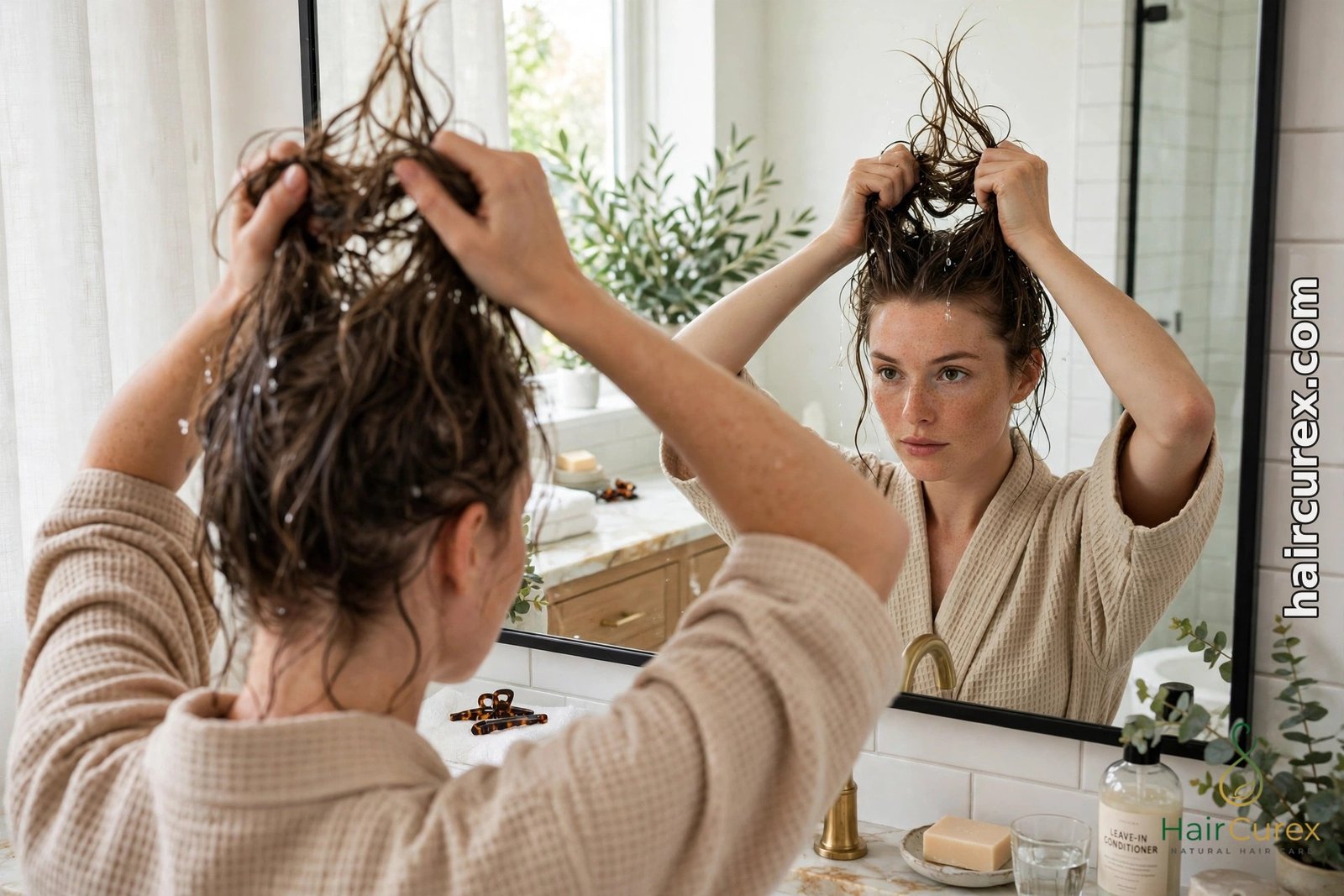
Refreshing Second-Day 2A Waves
2A hair rarely holds its wave overnight, because the pattern is loose and the pillow flattens it. The fix is a quick refresh, not a full rewash. In the morning, mist the lengths lightly with water — just enough to dampen them, not soak them — then smooth a pea-sized amount of mousse or a light leave-in spray over the top with your hands, scrunch gently upward, and let it air-dry for ten minutes. Sleeping on a silk or satin pillowcase helps, because cotton creates friction that breaks the wave up overnight, and a loose, high ponytail (a "pineapple") keeps the lengths from being crushed while you sleep. If the roots are oily, a little dry shampoo at the roots before you refresh will lift them back up; apply it, wait a minute, then massage it in with your fingertips. If refresh days keep getting flatter, the problem is usually the wash-day base rather than the refresh — too much product on wash day, or a shampoo that leaves buildup behind.

When to See a Professional
2A hair itself is a cosmetic matter, but some changes deserve a professional look. See a dermatologist if you notice sudden, patchy hair loss, itching, flaking, redness or soreness on the scalp, because those are scalp or medical issues that no wave routine will fix. The same applies if shedding suddenly increases, or if your hair starts breaking off in short pieces all over. A stylist experienced with wavy hair is worth finding too: The American Academy of Dermatology’s curly hair tips recommend a stylist who knows your hair type, because they can cut for the wave and give you advice that holds between visits. If your hair has changed texture suddenly — for example, it went from wavy to straight, or much frizzier — mention it to a dermatologist as well, since sudden texture changes can have medical causes.
The Bottom Line on 2A Hair
2A hair is fine, almost-straight hair with a soft wave that starts at the mid-lengths, and it looks its best when you work with it lightly. Wash every two to three days with a gentle shampoo, condition only the lengths, style soaking-wet hair with a single light mousse or foam, and let it air-dry untouched. Keep products light and few, detangle only when wet, trim every 10 to 12 weeks, and refresh second-day waves with a water mist and a little mousse instead of rewashing. The wave will never be as defined as 2B or 2C, and that is fine — 2A’s strength is its softness and versatility, and the goal is to bring out the wave you have, not to force a pattern that is not there. Give the light routine two to three weeks before judging it, because fine hair needs time to recover from heavy products, and the wave usually gets stronger as the buildup clears.
Frequently Asked Questions About 2A Hair
How do I know if I have 2A hair?
Wash your hair, use no styling products, and let it air-dry completely without touching it. If the roots dry fairly straight and the mid-lengths and ends fall into a soft, loose S-shaped wave, you most likely have 2A hair. If the wave is clearer and starts higher up, you are probably 2B; if it forms deeper waves near the scalp, you are closer to 2C.
Is 2A hair wavy or straight?
It is wavy — the loosest wavy type. 2A hair sits on the wavy side of the Andre Walker typing system, between straight type 1 and the more defined waves of 2B. It can look almost straight, especially when it is wet or weighed down with heavy products, but the soft S-bend through the lengths is a wave, just a gentle one.
What products are best for 2A hair?
Lightweight products: a gentle shampoo, a light rinse-out conditioner used on the lengths only, and a single light styler such as a volumising mousse, foam or light liquid gel. Avoid heavy curl creams, butters and thick oils, which flatten the wave and make fine hair look greasy.
How often should I wash 2A hair?
Most people with 2A hair wash every two to three days, because scalp oil travels easily down the loose wave and the hair can look oily at the roots. Oily scalps may need more frequent washing and drier lengths may want less. Add a clarifying shampoo about once a month to clear product buildup.
Can 2A hair hold a curl?
It can hold a soft curl, but not as long as curlier types. Air-dried 2A hair takes a curling iron well, and a light mousse or gel helps the wave last through the day. Heat-drying with a blow dryer usually straightens it out, so air-dry first if you want to keep the wave.
Why does my 2A hair go flat?
The usual causes are too much product, products that are too heavy, conditioner applied to the roots, brushing dry hair, and heat-drying without a diffuser. Very long hair also pulls the loose wave straight under its own weight. Cut back to one light styler, keep conditioner off the roots, and try long layers to remove weight from the lengths.