

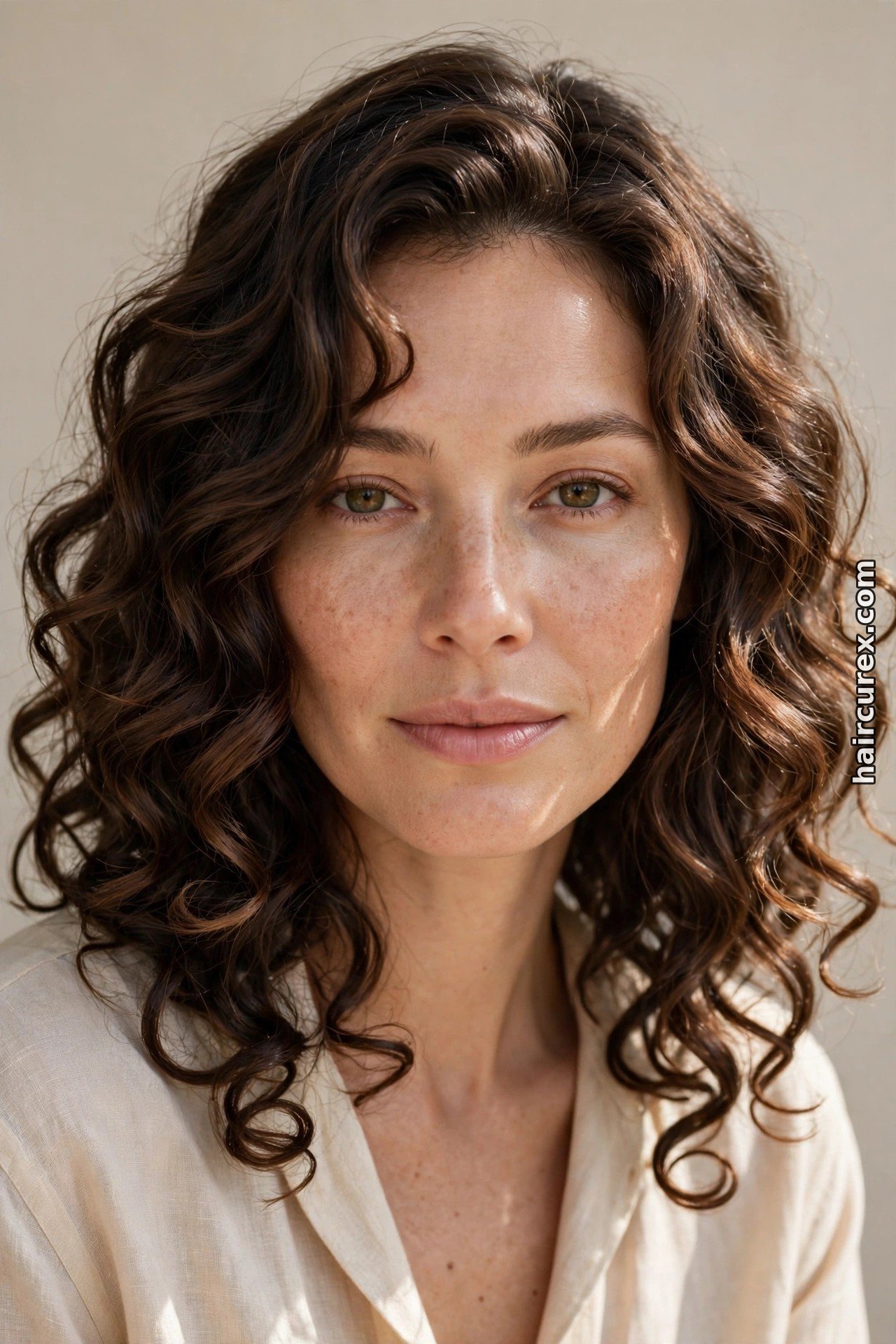
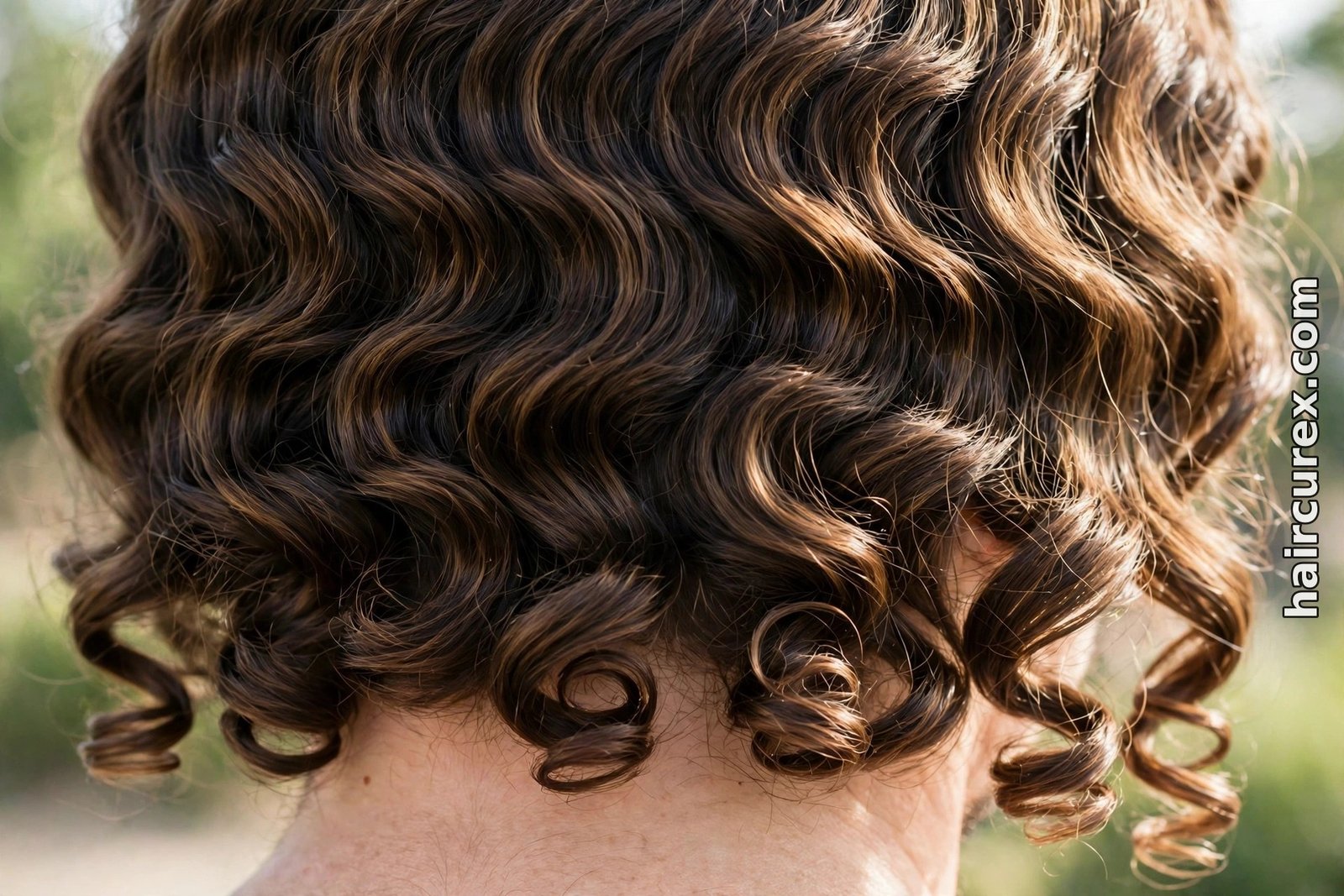
Quick answer: 2C hair is wavy hair with a strong curl tendency — it sits right on the border between wavy and curly. If you have ever argued with your own mirror about whether your hair is wavy or curly, 2C hair is probably why. It is the most curl-like of the wavy types: waves that start at the roots, hold a clear S-shape, and sometimes twist into loose spirals at the ends.
This guide explains exactly what 2C hair looks like, how to tell it apart from 2B and 3A hair, and a wash-day routine that keeps it defined without weighing it down.
What Is 2C Hair?
2C hair is the waviest subcategory of type 2 hair in the Andre Walker hair typing system, which groups hair from straight (type 1) to coily (type 4). The defining features of 2C hair are:
- Waves that start at the roots. Unlike 2B waves, which often begin halfway down the strand, 2C waves form close to the scalp, giving the roots lift and volume.
- Defined S-shaped waves with some spirals. The wave pattern is strong and consistent, and a few strands — usually around the face and at the ends — curl into loose spirals.
- Thickness and frizz. 2C hair is often coarse or thick, and its raised cuticle makes it prone to frizz in humidity.
- A tendency to fall flat. Despite the strong wave, 2C hair is heavy enough that the pattern can stretch out and go limp, especially if products are too heavy or the hair is too long.
So is 2C hair wavy or curly? Technically it is classified as wavy, but it behaves like a hybrid. Many people with 2C hair use curly-hair techniques — scrunching, diffusing and gel — because wavy-hair routines alone do not always hold the pattern.
2C Hair vs 2B Hair vs 3A Hair
The borders between hair types are where most confusion lives, so here is a direct comparison:
| Feature | 2B Hair | 2C Hair | 3A Hair |
|---|---|---|---|
| Wave/curl shape | S-waves from mid-lengths | S-waves from the roots, some spirals | Loose, springy spirals throughout |
| Volume at roots | Flatter at the crown | Noticeable root volume | Full volume from the roots |
| Frizz level | Moderate | High, especially in humidity | High |
| Best styling approach | Light mousse or sea-salt spray | Curl cream plus light gel, scrunch and diffuse | Curl cream and gel, full curly routine |
| Biggest risk | Waves falling out | Frizz plus flat roots from heavy products | Shrinkage and dryness |
A simple test: wash your hair, let it air-dry with no product, and look at the pattern. If the waves start at the roots and hold a clear S-shape, you are likely 2C. If they start lower and are looser, you are likely 2B, and if spirals run throughout, you are likely 3A. Our guide to 3C hair and the wider curl-type family can help you place yourself further along the scale.
How to Care for 2C Hair: The Wash-Day Routine
2C hair needs moisture without weight, and definition without crunch. The routine below balances both.
1. Cleanse gently, and clarify regularly
Use a sulfate-free shampoo most washes, and clarify once every 2–4 weeks to remove buildup from styling products. Buildup is one of the fastest ways to flatten 2C waves, because it coats the strand and weighs the pattern down.
2. Condition for slip, not heaviness
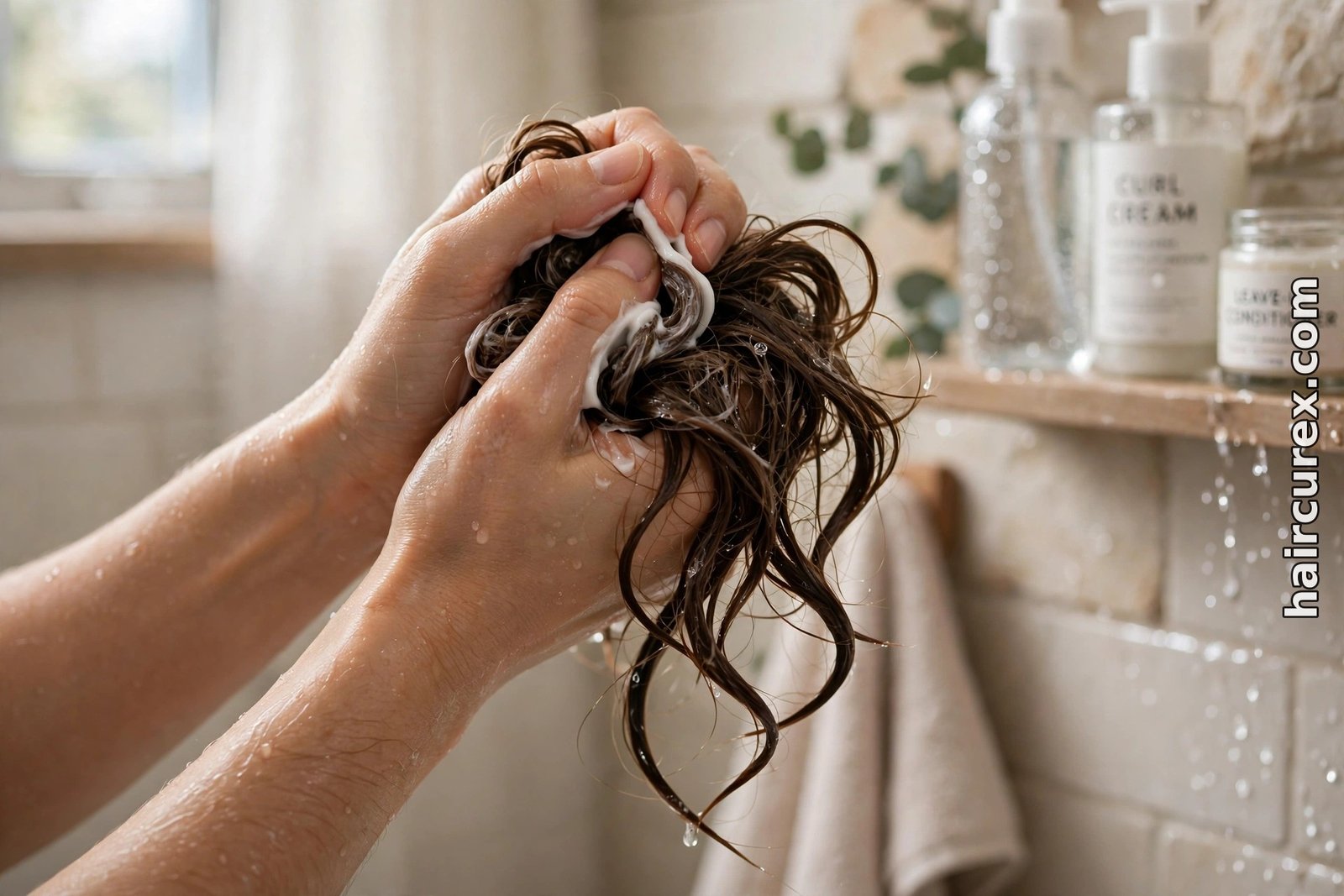
Apply conditioner from the mid-lengths to the ends, detangle with fingers or a wide-tooth comb while the conditioner is in, then rinse out most of it. Leaving a heavy conditioner coating on 2C hair is one of the easiest ways to lose the wave at your roots, so a light leave-in conditioner on soaking-wet hair works better than a thick mask every wash.
3. Style on soaking-wet hair
This is the single most important 2C habit. Apply your stylers while the hair is still dripping wet, before any towel touches it. Water helps the waves clump into defined sections; styling on damp or dry hair breaks those clumps apart and creates frizz. Rake a lightweight curl cream through, then scrunch in a light gel to lock the pattern in place.
Choosing between cream and gel matters for this hair type — our comparison of curl cream vs gel for wavy hair explains when each one earns its place, and the short version for 2C is: cream for softness, gel for hold, and often both together.
4. Dry without disturbing the pattern
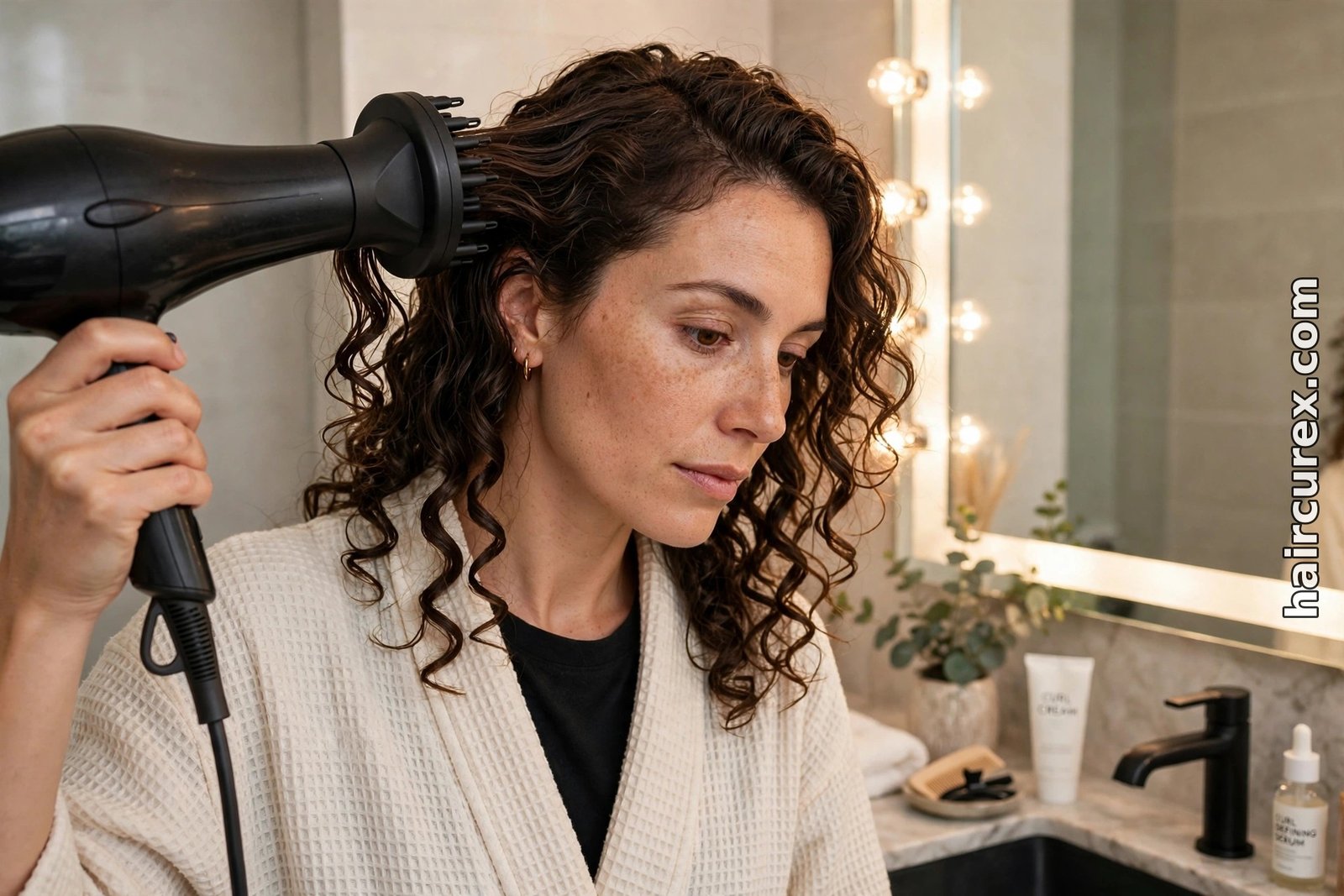
Swap a regular towel for a microfiber towel or an old cotton T-shirt and scrunch gently instead of rubbing. Then either air-dry untouched or diffuse on low heat and low speed. Hover-diffuse first to set the outer layer, then cup sections into the diffuser bowl to encourage the waves upward. Our guide to drying curly and wavy hair without frizz walks through the diffuser settings in detail.
5. Do not touch it while it dries
Once the gel cast forms, leave it alone until the hair is fully dry, then scrunch out the crunch. Touching wet waves separates the clumps and guarantees frizz. Patience here is worth more than any product.
The Best Products for 2C Hair
Product weight is the deciding factor for 2C hair. Look for:
- Lightweight curl cream — defines waves without flattening them. A good starting point is the type of formula covered in our guide to the best curl cream for wavy hair.
- Light-hold gel or mousse — gives the wave pattern something to hold onto through the day and in humidity.
- Leave-in conditioner (light) — a small amount on wet hair for slip and moisture, not a thick cream.
- Microfiber towel or cotton T-shirt — reduces friction frizz during drying.
- Silk or satin pillowcase — cuts overnight friction so waves survive to day two.
Skip heavy butters, thick oils, and heavy masks as daily products. They are not “bad” — they are simply too much weight for a wave pattern that needs lift. Save them for occasional deep treatments, applied to the ends only.

2C Hair Styling Guide: Cuts, Styling and Refresh Days
Haircuts that suit 2C hair
Layers are 2C hair’s best friend. Long, one-length cuts let the weight of the hair pull the waves straight, while layers remove bulk and let the wave pattern spring up. Ask for long layers that start around the chin or cheekbones, and avoid blunt cuts if your waves tend to triangle out at the ends. Shorter styles — a shaggy bob or a layered lob — often make 2C waves look dramatically more defined, simply because there is less weight pulling them down.
Styling without heat
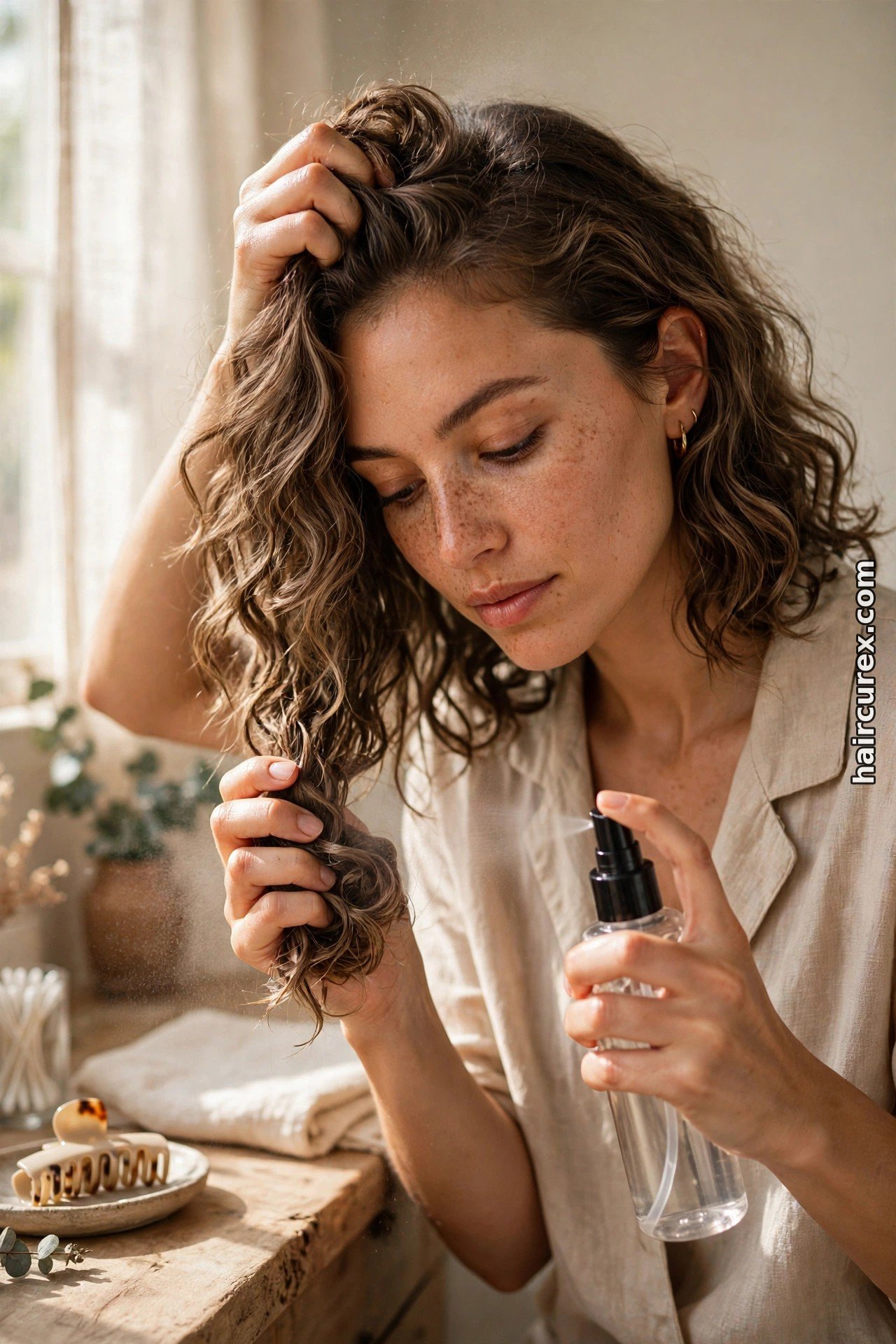
On non-wash days, scrunching is your main tool. Lightly mist the hair with water, smooth a pea-sized amount of curl cream over the frizzy sections, scrunch upward, and let it dry untouched. For extra definition on special occasions, try plopping: wrapping wet, styled hair in a T-shirt for 15–20 minutes before diffusing. Our guide to plopping curly hair explains the technique step by step.
Refreshing 2C hair on day 2 and 3
Second-day 2C hair usually needs water and a little product, not a full rewash. Mist until damp, scrunch in a tiny amount of leave-in or diluted gel, and let it dry. Sleeping with hair loosely piled on top of the head (a “pineapple”) or in a loose braid preserves the wave overnight. The full refresh routine is covered in our guide to refreshing curls on day 2 and 3, and the same principles apply to 2C waves.
Common 2C Hair Mistakes to Avoid
- Brushing dry hair. A brush turns defined waves into a triangle of frizz. Detangle only when wet, with conditioner in.
- Using heavy products. Butters and thick oils flatten the wave and make roots greasy while ends stay dry.
- Styling on damp instead of wet hair. The clumps form in water; once the hair starts drying, the pattern is already set.
- Over-washing. Daily shampooing strips moisture and increases frizz. Most 2C hair does best washed 2–3 times a week.
- Skipping gel. Cream alone often is not enough hold for 2C waves in humidity; a light gel makes the difference between definition that lasts and waves that fall out by lunch.
- Layering products in the wrong order. The order matters: leave-in, then cream, then gel, lightest to heaviest hold. Our curly hair product order guide explains the layering logic.
When to See a Professional
Most 2C hair problems are routine problems, but see a dermatologist or trichologist if you notice sudden, patchy hair loss, a sore or inflamed scalp, or shedding that does not settle after a few weeks. The American Academy of Dermatology’s hair loss guidance is a reliable starting point for understanding when hair changes need medical attention.
Frequently Asked Questions About 2C Hair
Is 2C hair wavy or curly?
2C hair is officially classified as wavy, but it sits on the border with curly hair. Its S-shaped waves start at the roots and a few strands form loose spirals, so it behaves like a wavy-curly hybrid.
How do I know if I have 2C hair?
Wash your hair, apply no product, and let it air-dry. If the waves begin at the roots, hold a clear S-shape, and a few ends spiral, you likely have 2C hair. Waves that start lower and are looser point to 2B, while spirals throughout point to 3A.
Should I use gel or curl cream for 2C hair?
Most 2C hair benefits from both: curl cream for softness and definition, then a light gel over it for hold, especially in humidity.
How often should I wash 2C hair?
Two to three times a week suits most people with 2C hair. Wash less and buildup flattens the waves; wash more and you strip the moisture that keeps them defined.
Can 2C hair become curly?
2C hair will not change its type, but the right routine can reveal more curl than you knew was there. Scrunching, diffusing and a light gel can bring out spirals that brushing and heavy products had hidden.
What haircut is best for 2C hair?
Long layers are the safest choice: they remove weight so waves spring up instead of being pulled straight, and they prevent the triangle shape that one-length cuts can create.
Sources and further reading: the Andre Walker hair typing system is described on Wikipedia’s Andre Walker Hair Typing System page.