

How to get rid of frizzy hair comes down to one idea: give dry hair moisture, then keep that moisture in. Frizz happens when the outer layer of the hair, the cuticle, lifts and lets humidity in, so each strand swells and sticks out instead of lying flat. The fix is a routine, not a single product: wash less often with a gentle, sulfate-free shampoo, condition every time you wash, apply a leave-in conditioner or serum to damp hair, dry gently without rough towel-rubbing, protect the hair from humidity when you style, and reduce friction overnight. Most people see a real difference within two to three weeks of following the full routine, and the steps below work for straight, wavy and curly hair — you only adjust the weight of the products to your hair type.
How to Get Rid of Frizzy Hair: The Routine in 60 Seconds
If you only have a minute, here is the whole routine. Wash your hair two to three times a week with lukewarm water and a gentle shampoo, focusing the shampoo on your scalp. Condition from the mid-lengths to the ends every wash, and add a weekly deep-conditioning mask if your hair is dry or damaged. While your hair is still damp, work in a pea-sized amount of leave-in conditioner, then a drop or two of serum or oil to seal the cuticle. Blot — never rub — with a microfiber towel or an old cotton T-shirt, and let your hair air-dry or diffuse on low heat. On humid days, add a light anti-humidity serum or cream before you go out. At night, sleep on a silk or satin pillowcase, or loosely braid your hair. That is the routine in full. The rest of this guide explains why each step works, which products suit which hair type, and the mistakes that undo all of it.
What Causes Frizz in the First Place
Frizz is not a hair type — it is a symptom of dryness and a raised cuticle. A healthy hair strand is covered in overlapping cuticle scales that lie flat, like shingles on a roof, keeping moisture in and humidity out. When hair becomes dry or damaged, those scales lift and separate, and the strand behaves like a sponge: it loses its own moisture and absorbs moisture from the air, swelling and bending in every direction. That is why frizz gets worse in humidity even though humidity is wet — dry hair is reaching for the water in the air. Healthline’s guide to what causes frizzy hair explains the same mechanism: a damaged cuticle lets moisture escape the shaft while moisture from the air enters it, which is what makes hair swell and change shape.
Several everyday habits raise the cuticle. Washing too often strips away the scalp’s natural oils that keep the cuticle smooth. Hot water has a similar effect, stressing both hair and scalp. Harsh products — strong sulfates, drying alcohols in styling gels, bleach and high-ammonia colour — overstrip the hair’s natural oils and roughen the surface. Heat styling without protection dries the hair further, and rough towel-drying and brushing dry hair ruffle the cuticle through friction. Curly and wavy hair frizzes more easily than straight hair for a structural reason: the scalp’s oils travel slowly around each bend, so the lengths are naturally drier and the individual hairs do not bond into defined clumps. Knowing the cause matters because it tells you the fix is not “more styling” but “less damage, more moisture, and a smoother cuticle.”
Step 1 — Wash Less, and Wash Gently
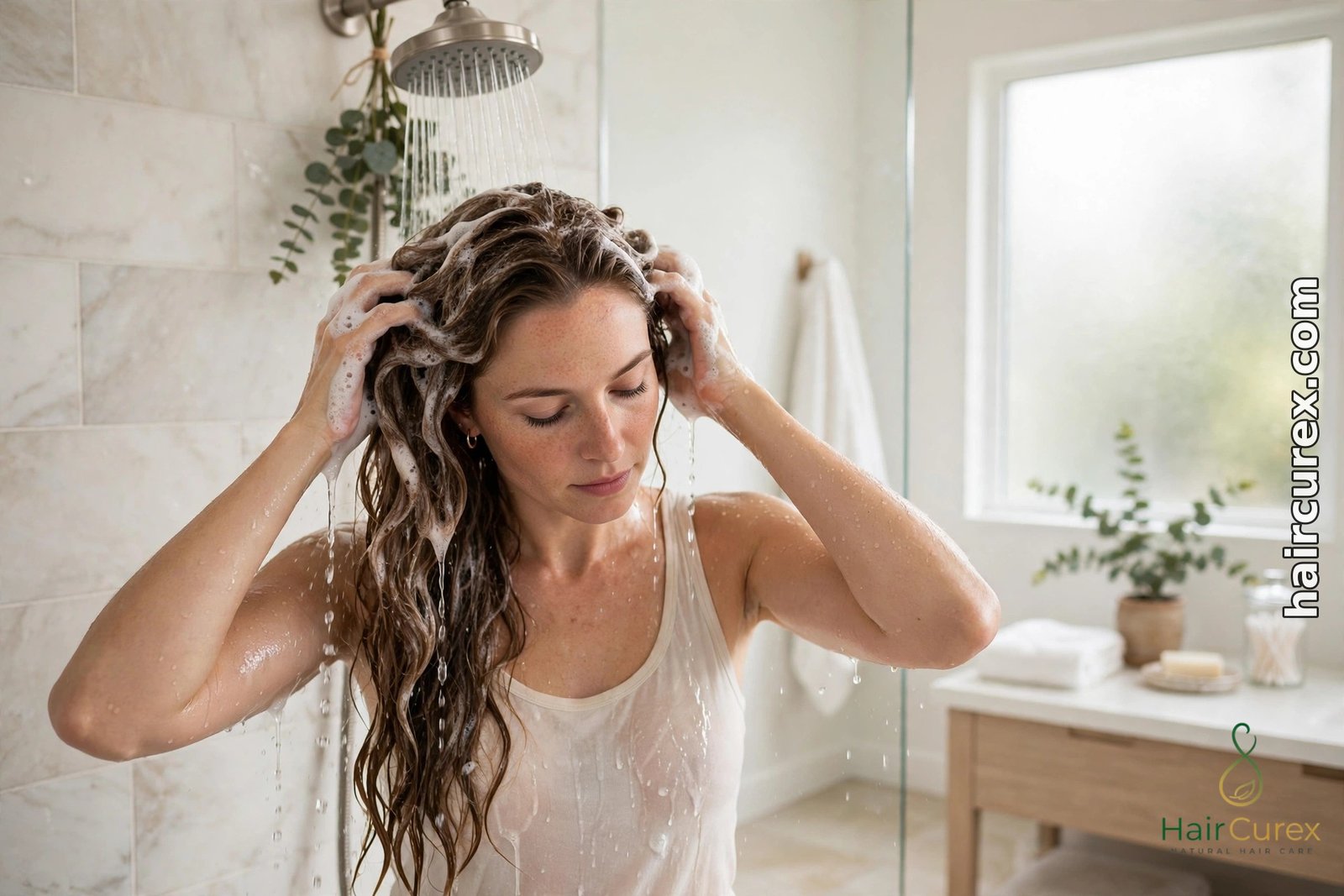
The fastest frizz win is usually at the sink. Shampoo exists to clean the scalp, not to scrub the lengths, and every wash removes some of the natural oils that keep the cuticle lying flat. Most people with dry or frizz-prone hair do best washing two to three times a week rather than daily; if your scalp gets oily quickly, you can rinse with water or use a gentle shampoo only on the scalp between full washes. Use lukewarm water, not hot, because hot water lifts the cuticle and stresses the scalp. A gentle shampoo guide can help you pick a formula that cleans without stripping — look for “sulfate-free” or “for dry or frizzy hair” on the label, and be wary of shampoos that leave your hair feeling squeaky-clean, because that squeak usually means the oils are gone.
How you wash matters as much as what you wash with. Massage the shampoo into the scalp with your fingertips, and let the suds run down the lengths as you rinse instead of piling the hair on top of your head and scrubbing it. Never brush or roughly towel-dry soaking wet hair right after washing — wet hair is at its most fragile, and rough handling breaks the cuticle and creates the frizz you are trying to remove. If your hair is very dry, a co-wash (washing with conditioner only) once a week can be an alternative, but keep a regular shampoo in rotation so buildup does not accumulate on the scalp.
Step 2 — Condition Every Time, and Add a Weekly Mask
Conditioner is not optional for frizz-prone hair; it is the step that puts moisture back and smooths the cuticle after shampooing. Apply conditioner from the mid-lengths to the ends, where the hair is oldest and driest, and use a generous amount — if your hair still feels rough after rinsing, you used too little. Leave it in for two to three minutes so it has time to work, then rinse with cool or lukewarm water, which helps the cuticle lie flat again. People with fine hair should keep conditioner off the roots, where it flattens volume, while people with thick or curly hair can condition the full length.
Once a week, add a deep-conditioning mask or hair mask for 20 to 30 minutes. Masks deliver a larger dose of moisturising ingredients than a daily conditioner and are especially useful for dry, damaged or colour-treated hair that frizzes no matter what you do on wash day. Our coconut oil for hair guide covers one of the most popular mask ingredients: a small amount of coconut oil, used as a pre-wash treatment for about 15 minutes, can add moisture and reduce protein loss, though it suits some hair types better than others and should always be washed out thoroughly. If you prefer a ready-made mask, choose one labelled for dry or damaged hair and use it weekly, not daily — over-conditioning can leave hair limp and weighed down, which looks almost as untidy as frizz.
Step 3 — Seal Damp Hair With a Leave-In and a Serum
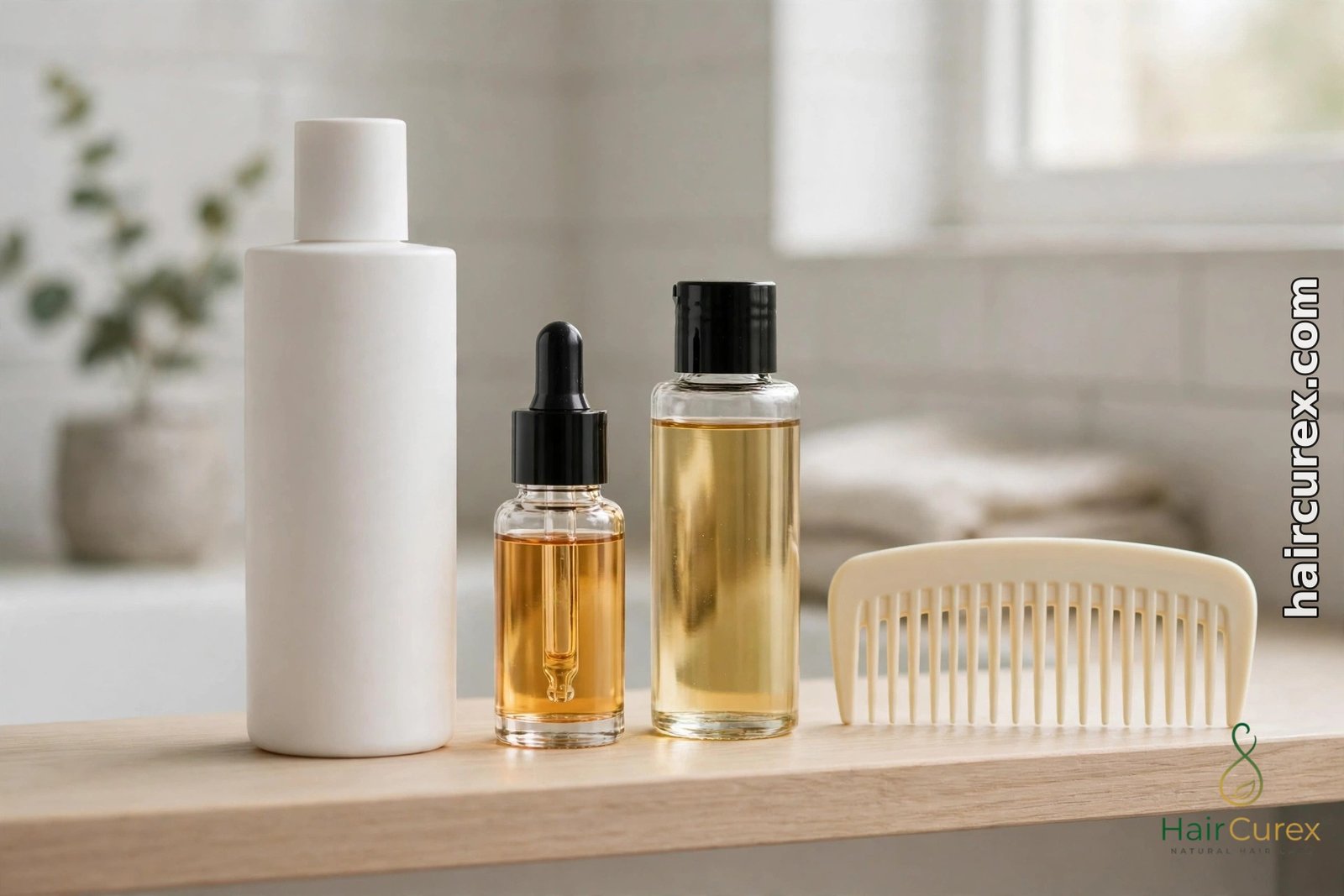
The most important frizz step happens in the two minutes after washing, while the hair is still damp. A leave-in conditioner adds a light layer of moisture and slip that stays on the hair all day, and a serum or oil on top seals the cuticle so humidity cannot get in. Our best leave-in conditioners for curly hair guide compares nine leave-ins by curl type and porosity, but the principle is the same for all hair types: apply to damp hair, in sections, starting with less product than you think you need. A pea-sized amount per section is enough for fine hair; thick or coarse hair may need a coin-sized amount per section. Rake it through with your fingers, then scrunch gently to encourage the hair to clump into its natural pattern.
Serums are usually silicone-based, and that is exactly why they work against frizz: they coat the strand and slow the exchange of moisture with the air. Apply one or two drops to damp hair, focusing on the mid-lengths and ends, and add a second drop on dry hair later in the day only if flyaways appear. Hair oils — argan, jojoba or a few drops of coconut oil — do a similar sealing job and suit hair that feels dry rather than just frizzy. The common mistake is using too much: an overloaded strand looks greasy, not smooth. If your hair feels coated after drying, use half as much next time, and remember that a leave-in and a serum are a pair — the leave-in moisturises, the serum seals — so you rarely need a third heavy product on top.
Step 4 — Dry Without Creating Frizz
How you dry your hair can undo everything you did in the shower. Rough towel-drying is one of the biggest frizz triggers, because a terry-cloth towel creates friction that ruffles the cuticle. Instead, blot your hair gently with a microfiber towel or an old cotton T-shirt, pressing the water out rather than rubbing it. If you use a hair dryer, keep it on low or medium heat, hold it at least 15 centimetres from your hair, and point the airflow down the hair shaft, from roots to ends, so the cuticle is pushed flat instead of blown open. A diffuser attachment spreads the airflow and is the gentlest option for wavy and curly hair. Our how to dry curly and wavy hair without frizz guide walks through the full drying method, including plopping, which uses a T-shirt to hold curls in shape while they dry.
Air-drying is the gentlest option of all, but it has one rule: do not touch your hair while it dries. Every time you run your fingers through damp hair, you break up the clumps that are forming and create new frizz. Let the hair dry undisturbed, and if it feels slightly crunchy from a styling product, wait until it is fully dry, then scrunch the crunch out gently with your hands — the softness underneath is the result you were after. Brushing is another friction trap: never brush dry curly or wavy hair, because it separates the curls into a frizzy halo. Detangle with your fingers or a wide-tooth comb while the hair is wet and conditioned, starting at the ends and working upward.

The Complete Frizz-Control Routine at a Glance
| Step | What to do | Best for | How often |
|---|---|---|---|
| Wash | Lukewarm water, gentle sulfate-free shampoo on the scalp only | All frizz-prone hair | 2–3 times a week |
| Condition | Conditioner mid-lengths to ends, rinse cool | All hair types | Every wash |
| Weekly mask | Deep-conditioning mask or oil treatment for 20–30 minutes | Dry, damaged or colour-treated hair | Once a week |
| Leave-in | Pea-sized amount per section on damp hair | All hair types | Every wash day |
| Serum or oil | 1–2 drops to seal the cuticle, mid-lengths to ends | Humidity-prone and dry hair | Every wash day, plus a drop on dry hair if needed |
| Gentle drying | Blot with microfiber towel or T-shirt, low heat, diffuser | All hair types | Every wash day |
| Humidity protection | Anti-humidity serum or cream before going out; hat or scarf in rain | Humid climates | As needed |
| Overnight | Silk or satin pillowcase, or a loose braid | All frizz-prone hair | Every night |
Step 5 — Protect Your Hair From Humidity and the Weather
You cannot control the weather, but you can control how much of it reaches your hair. On humid or rainy days, add a light anti-humidity serum or cream as the final step of your styling routine — it forms a barrier that slows the moisture exchange that causes swelling. A hat or scarf also helps, because covering the hair physically limits how much humid air it absorbs, and it protects the hair from the sun, which dries the cuticle further. Healthline’s frizzy hair home remedies guide makes the same point: you cannot stay inside every time it rains, but a hat, a scarf and a leave-in serum together keep most humidity out.
Swimming needs its own protection, because chlorine and salt water both strip moisture and roughen the cuticle. Wet your hair with clean water before you get in — saturated hair absorbs less pool or sea water — and wear a swim cap if you swim regularly. Rinse immediately afterwards with fresh water, then condition. In winter, the enemy flips: cold air outside and heated air inside both dry the hair out, so the same routine applies, with a little extra leave-in or oil on the ends and a hat outdoors to stop the cold wind from whipping the cuticle open. Frizz that appears only in one season is usually a weather problem, not a product problem, and a seasonal tweak to the sealing step is normally enough.

Step 6 — Protect Your Hair Overnight
A surprising amount of frizz is made while you sleep. A cotton pillowcase creates friction as you turn your head, ruffling the cuticle and breaking up curl clumps, so by morning the hair looks frizzy even if it dried perfectly the night before. A silk or satin pillowcase lets the hair slide instead of catching, which reduces both frizz and breakage, and a silk or satin bonnet or scarf does the same job if you prefer to keep your usual pillowcase. The American Academy of Dermatology’s curly hair advice recommends the same approach: a loose pineapple ponytail or a loose braid before bed preserves curls and reduces the friction that makes hair frizzy and easier to break.
The overnight routine is simple. Before bed, loosely braid your hair or gather it into a high, loose ponytail — tight styles pull and break the hair, so loose is the point. If the ends feel dry, smooth a single drop of oil over them before braiding. In the morning, take the braid out, shake the hair gently at the roots, and refresh any frizzy sections by misting them lightly with water and smoothing a tiny amount of leave-in over the top, then letting it air-dry. A full rewash is rarely needed, and skipping it saves the hair another round of shampoo stripping. If your refresh days keep getting frizzier, the problem is usually the wash-day base rather than the overnight step — too little leave-in on wash day, or a shampoo that strips too much. Our high-porosity hair guide explains how porosity changes what your hair absorbs overnight and why some hair types lose moisture faster while you sleep.

5 Mistakes That Make Frizz Worse
First, overwashing. Shampooing every day strips the natural oils that keep the cuticle smooth, and even a gentle shampoo removes oils if it is used too often. Second, hot water and high heat. Very hot showers and the highest dryer setting both lift and damage the cuticle, and heat protectant helps but does not cancel out daily high-heat styling. Third, drying alcohols and harsh sulfates in your products. Styling gels with drying alcohol and shampoos with strong sulfates dry the hair out and leave the cuticle open — check the label, and prefer products that say moisturising or for frizzy hair. Our hair ingredients to avoid guide explains which alcohols dry the hair and which ones actually condition it. Fourth, brushing dry hair. A brush through dry waves or curls separates the pattern into frizz; detangle only when the hair is wet and conditioned. Fifth, skipping the sealing step. Moisturising without sealing is like watering a plant in a cracked pot — the moisture escapes, and the first humid day brings the frizz straight back. A leave-in plus a serum, applied to damp hair, is what makes the rest of the routine hold.
Home Remedies Worth Trying — and Their Limits
A few home remedies can help, used honestly and with realistic expectations. Apple cider vinegar, diluted — about one-third of a cup mixed into a quart of warm water, left on for one to three minutes and rinsed with cool water once or twice a week — may help the cuticle lie flatter because it is mildly acidic, close to hair’s natural pH of 4.5 to 5.5, and it can remove product residue. The evidence is largely anecdotal, so treat it as a rinse that may help shine and smoothness, not as a cure. Coconut oil, used as a 15-minute pre-wash treatment or a tiny amount left in after washing, can add moisture and reduce protein loss, and it suits thick or dry hair better than fine hair, which it can weigh down. Argan oil, a few drops on wet hair before styling, is a lighter sealing option that many people use between washes. An avocado and coconut oil mask, left on for 20 to 30 minutes once or twice a week, adds moisture that can soften frizz over time. What none of these do is repair split ends or change your hair type — if a remedy promises that, it is overselling. Use remedies as extras on top of the core routine, patch-test anything new behind your ear first, and stop using it if your scalp itches or your hair feels worse rather than better.
When to See a Dermatologist
Frizz alone is a cosmetic problem, but some hair changes deserve a professional look. See a dermatologist if you have itching, flaking, redness, soreness or hair loss in patches, because those are scalp or medical issues that no frizz product will fix. The same applies if shedding suddenly increases, if your hair is breaking off in short pieces all over, or if a new product causes itching, redness or swelling — stop the product, rinse it out, and do not push through a reaction. A dermatologist can also help if your hair has changed texture suddenly, or if frizz comes with thinning that does not match your usual pattern. Patch-testing a new product on your inner forearm or behind your ear for 24 to 48 hours before a full application catches most reactions early and costs nothing.
The Bottom Line on How to Get Rid of Frizzy Hair
How to get rid of frizzy hair is not a mystery product — it is a routine that protects the cuticle at every step. Wash less often and gently, condition every time, seal damp hair with a leave-in and a serum, dry without friction, guard against humidity, and sleep on silk or in a loose braid. Match the weight of your products to your hair: fine hair needs light sprays and milks, while thick or curly hair can take richer creams and oils. Give the full routine two to three weeks before judging it, because the cuticle needs time to recover and the products need consistent use to show their effect. Frizz will never disappear completely — a humid day will always test the routine — but with moisture in and a sealed cuticle, most days will be smooth ones, and the frizzy days will be the exception instead of the rule.
Frequently Asked Questions About How to Get Rid of Frizzy Hair
How can I get rid of frizzy hair fast?
The fastest visible improvement comes from applying a leave-in conditioner and a drop of serum to damp hair, then letting it dry without touching it. That smooths the cuticle for the day, but lasting frizz control takes two to three weeks of the full routine — gentle washing, conditioning, sealing and low-friction drying.
Does frizzy hair mean my hair is damaged?
Not always. Frizz means the cuticle is raised and the hair is dry, which can come from damage, but also from naturally curly or wavy hair, humidity, or overwashing. Damage is one cause among several, and the routine in this guide helps all of them by adding moisture and sealing the cuticle.
Should I wash frizzy hair every day?
No, washing every day usually makes frizz worse, because shampoo strips the natural oils that keep the cuticle smooth. Most frizz-prone hair does best washed two to three times a week with a gentle, sulfate-free shampoo, with water-only rinses in between if the scalp feels oily.
Is serum or oil better for frizzy hair?
Both seal the cuticle, and many people use both: a silicone serum gives the strongest humidity barrier and shine, while a light oil such as argan adds moisture and suits hair that feels dry. Fine hair usually does better with a serum or a single drop of oil; thick or coarse hair can take more oil. Use one or two drops on damp hair either way.
Can I get rid of frizzy hair permanently?
No product or routine removes frizz permanently, because frizz is the hair’s response to dryness and humidity, and both keep happening. What a good routine does is reduce frizz most days and make the bad days milder. Claims of a permanent cure should be treated with scepticism.
Why is my hair frizzy even after I use conditioner?
Usually because the moisture is not being sealed in, or the drying step is undoing the conditioning. Make sure you apply a leave-in and a serum to damp hair, blot rather than rub with your towel, and do not touch or brush the hair while it dries. If that does not help, your shampoo may be too stripping, or you may need a weekly deep-conditioning mask.