
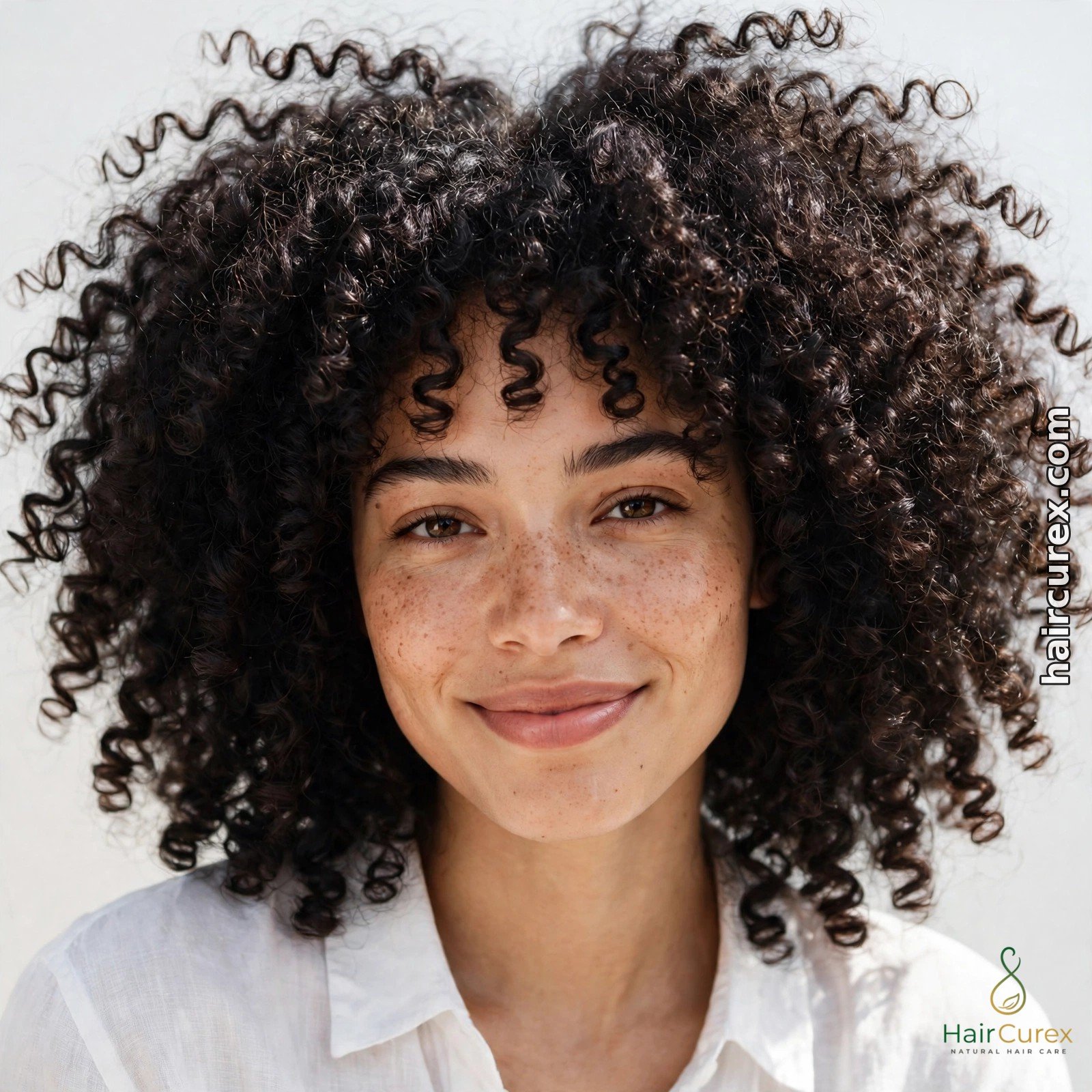
Hair shrinkage is the way curly and coily hair looks shorter when it dries than it does when it is wet or stretched. It happens because each strand is a spiral: when water leaves the hair, the hydrogen bonds inside the strand reform and pull it back into its tight curl shape, so the visible length contracts. Depending on curl type, shrinkage can hide anywhere from about 20% to 75% of your hair’s true length, and tighter curls shrink more — 4C coils can lose up to three-quarters of their stretched length.
Here is the important part: shrinkage is not a flaw or a sign of damage. It is a sign of healthy, elastic hair that springs back into shape. You cannot eliminate it, and you should not try to, but you can reduce it with the right washing, drying and styling methods — and this guide explains exactly how, method by method, so you can choose how much length to show on any given day.
Hair Shrinkage: What It Is and Why It Happens
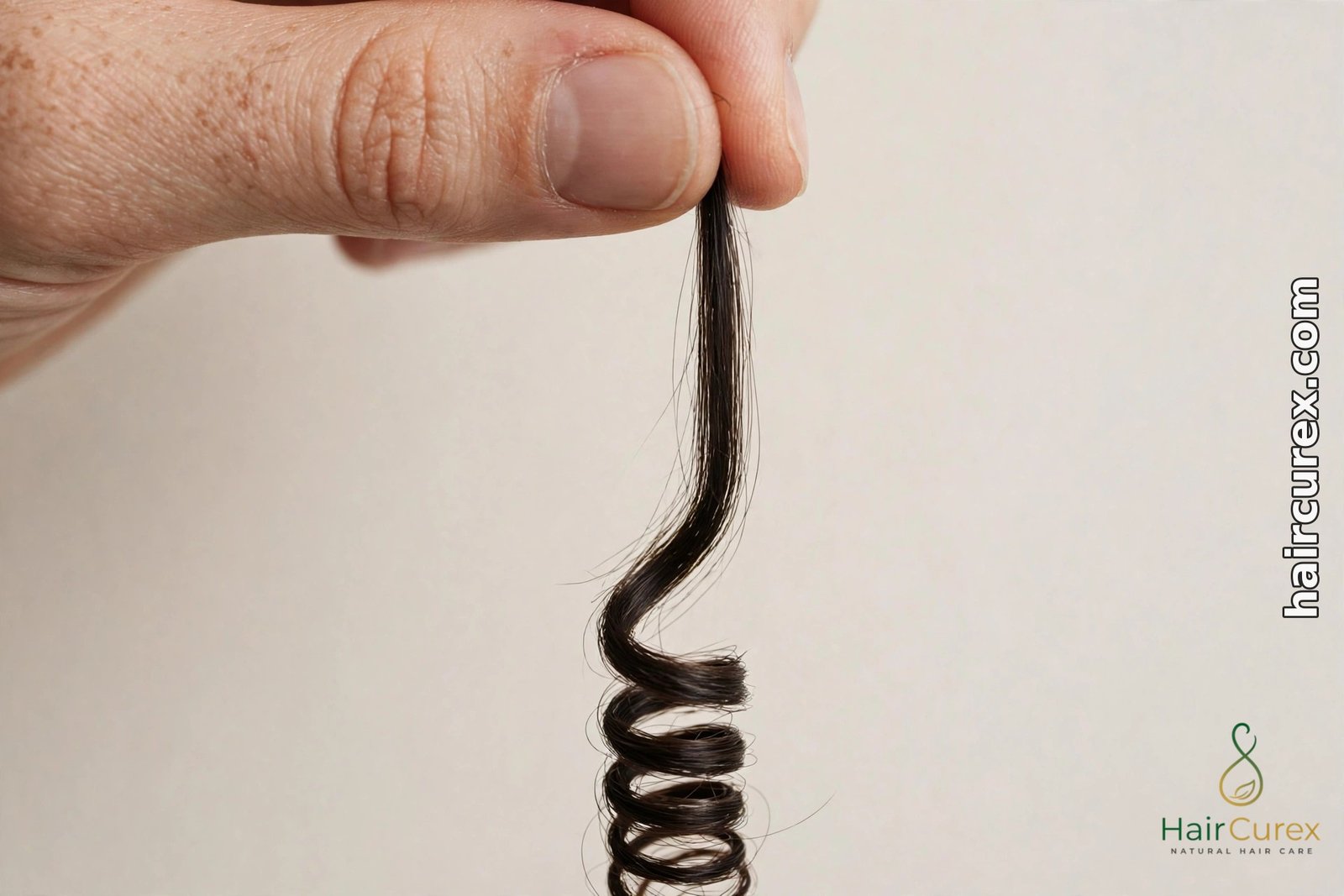
Every curly-haired person has had the same experience: in the shower, your hair hangs long and heavy, reaching your shoulders or beyond, and an hour later it has sprung up to half that length. That is hair shrinkage in action, and it is one of the most misunderstood things about curly hair. The cause is built into the shape of the strand itself. A straight hair is a straight rod, so its length is always visible. A curly hair is a coil, and a coil only shows its full length when it is pulled straight.
When your hair is wet, water breaks the temporary hydrogen bonds inside the hair shaft, the strand swells and is weighed down, and the curl stretches out — so you see your true length. As the water evaporates, those hydrogen bonds reform and pull the strand back into its natural curl, and the visible length contracts. The process is fully reversible: wet the hair again and the length returns, because hydrogen bonds break and reform easily with water.
How much hair shrinks depends on three things. The first is curl pattern: the tighter the curl, the more shrinkage. The second is porosity. Our high-porosity hair guide explains that porous hair absorbs water quickly and loses it quickly, which means it swells more when wet and contracts more as it dries — so high-porosity curls often show more dramatic shrinkage. Low-porosity hair, with a tightly closed cuticle, absorbs less water and tends to hold its length better.
The third factor is moisture level: well-hydrated, healthy curls spring back more strongly than dry, damaged ones. That is why shrinkage is actually a good sign. L’Oréal’s Hair.com guide to hair shrinkage makes the same point: if your hair does not spring up at all when it dries, it may be a sign of damage from heat styling, colour or hard water, because healthy curls have the elasticity to coil back. In other words, shrinkage proves your curls are alive and working the way they should.
How Much Hair Shrinkage Is Normal?
Hair shrinkage is not one number — it is a range, and where you fall in it depends mostly on your curl type. Wavy 2A and 2B hair may shrink only 10 to 20%, loose 3A and 3B curls around 30 to 50%, and tight 4A, 4B and 4C coils commonly shrink 50 to 75%, with some 4C hair shrinking as much as 90% in extreme cases.
Longer hair shrinks more noticeably in absolute terms simply because there is more length to lose — a 10-inch coil that shrinks 50% loses five inches of visible length, while a 4-inch coil loses two. Measuring your own shrinkage is simple: when your hair is wet and combed straight, measure one strand from root to tip, then let it dry naturally and measure the same strand again.
The difference, divided by the wet length, is your shrinkage percentage. Doing this once tells you what is normal for your hair, which matters because it stops you from chasing a problem that is not a problem — and it gives you a baseline so you can tell whether a new stretching method is actually working.
How Much Shrinkage to Expect by Curl Type
| Curl type | Typical shrinkage | What it looks like |
|---|---|---|
| 2A–2B wavy | 10–25% | Gentle waves that sit close to their wet length. |
| 3A–3B curly | 25–50% | Defined curls that spring up noticeably as they dry. |
| 3C curly | 40–60% | Tight corkscrew curls with clear length loss. |
| 4A coily | 50–70% | Small, springy coils that hide about half their length. |
| 4B coily | 60–75% | Tight Z-pattern coils with major visible length loss. |
| 4C coily | 65–90% | The tightest coils; the most shrinkage of any curl type. |
Why Shrinkage Is a Sign of Healthy Hair
It is easy to treat hair shrinkage as the enemy, but it is worth pausing on what it actually tells you about your hair. Shrinkage happens because your hair has elasticity — the ability to stretch and return to its original shape without breaking. Elasticity is one of the clearest signs of healthy hair: when you pull a wet strand, healthy hair stretches a little and springs back; damaged hair either snaps or stays stretched out. The curl expert interviewed by Hair.com puts it plainly: shrinkage is a perfectly healthy and natural property of wavy to coily hair, and hair that does not spring up at all when it dries may be damaged.
That flips the usual thinking on its head. The goal is not to “fix” shrinkage — it is to work with it, keeping your curls healthy and elastic while choosing when to stretch them for length and when to let them spring free. The methods below are all about that choice, and none of them ask you to fight your hair’s nature or damage it for the sake of looking longer.
Method 1 — Twist-Outs and Braid-Outs
The most popular way to reduce shrinkage is also one of the gentlest: stretch the hair while it dries, then let it go. After washing and conditioning, apply a leave-in conditioner and a curl cream to damp hair, divide it into sections, and twist or braid each section. Let the hair dry completely — overnight is ideal — and then unravel each twist or braid carefully, separating the curls gently with your fingers. The hair dries in an elongated shape, so you keep much more of your length, and you still get defined, bouncy curls rather than straight hair.
Smaller twists give more definition and less stretch; larger twists give more length and looser waves, so you can tune the result by changing the section size. A braid-out usually stretches slightly more than a twist-out because the braid pattern holds the hair flatter as it dries. The one rule is patience: if you unravel the twists while the hair is still damp inside, the curls will shrink back up as they finish drying.
Wait until the hair is fully dry, even if that means leaving the twists in overnight, and the length will hold for two or three days with a little refreshing in the morning. Only Curls’ guide to reducing curly hair shrinkage walks through the same twist-out and braid-out approach step by step.
Method 2 — Banding and Heat-Free Stretching
Banding is the simplest heat-free way to reduce hair shrinkage, and it works on every curl type. After washing, section your damp hair and wrap small elastic bands or mini scrunchies along the length of each section, from root to tip, spacing them a few centimetres apart. The bands gently hold the hair stretched as it dries, and when you remove them you get elongated curls with far less shrinkage. Use soft, fabric-covered bands rather than tight rubber ones, and do not pull them too tight — the goal is a gentle hold, not tension on the scalp.
African threading is a similar traditional technique that wraps thread around sections of hair to stretch them, and it works on the same principle. Another heat-free option is simply letting your hair dry in a loose, low ponytail or a couple of loose braids: the weight of the hair itself pulls the curls longer as they dry. These methods cost nothing, cause no heat damage, and are the safest place to start if you have never tried stretching your hair before.
They are also the best option for children and for hair that is recovering from damage, because they add no stress at all to the strand.
Method 3 — Use Heavier Products to Weigh Curls Down
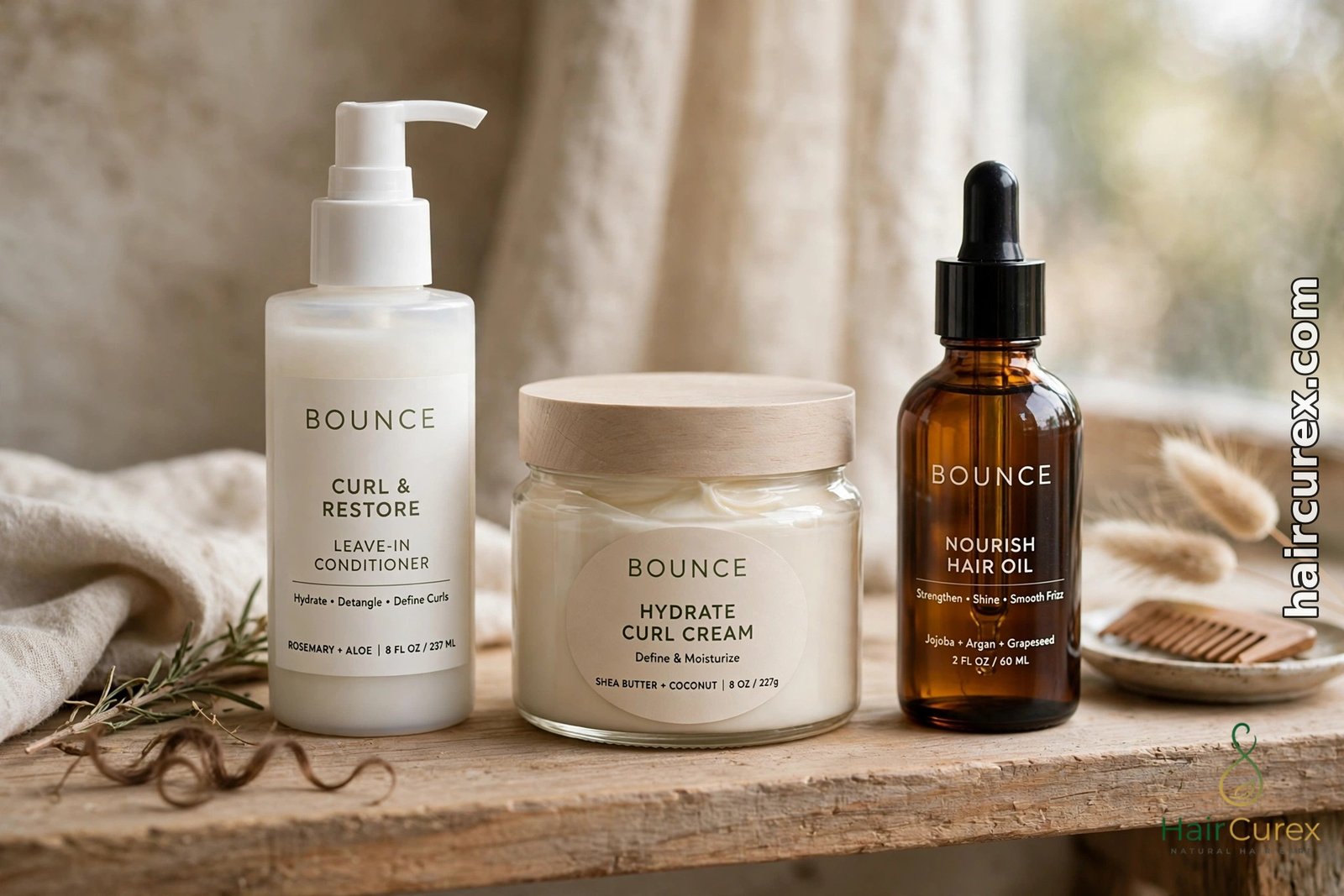
Products play a smaller role than technique — one curl expert estimates that reducing hair shrinkage is about 80% styling and 20% product choice — but the right products still help, because weight is one of the few things that keeps a curl stretched while it dries. A strong-hold gel or a thick, creamy leave-in adds weight to the strand and holds the curl in an elongated shape as it sets. Our best leave-in conditioners for curly hair guide compares nine leave-ins by curl type and porosity, and the same principle applies to all of them: apply generously to soaking-wet hair, in sections, so the product coats every strand before it starts to dry.
Curl-elongating creams and lotions are made specifically for this job, and heavier oils such as castor oil or avocado oil add weight as well as sealing in moisture. The trade-off is real, though: too much heavy product leaves hair greasy and limp, and product buildup can actually make the curl pattern tighter and the hair look shorter. Start with the amount the product label suggests, add a little more only if the shrinkage is still strong, and clarify your hair regularly so buildup never accumulates.
Fine or wavy hair needs a light hand — a light gel or a single drop of oil — while thick, coily hair can take richer creams and butters without looking overloaded.
Method 4 — Diffuse With Tension for Stretched Curls
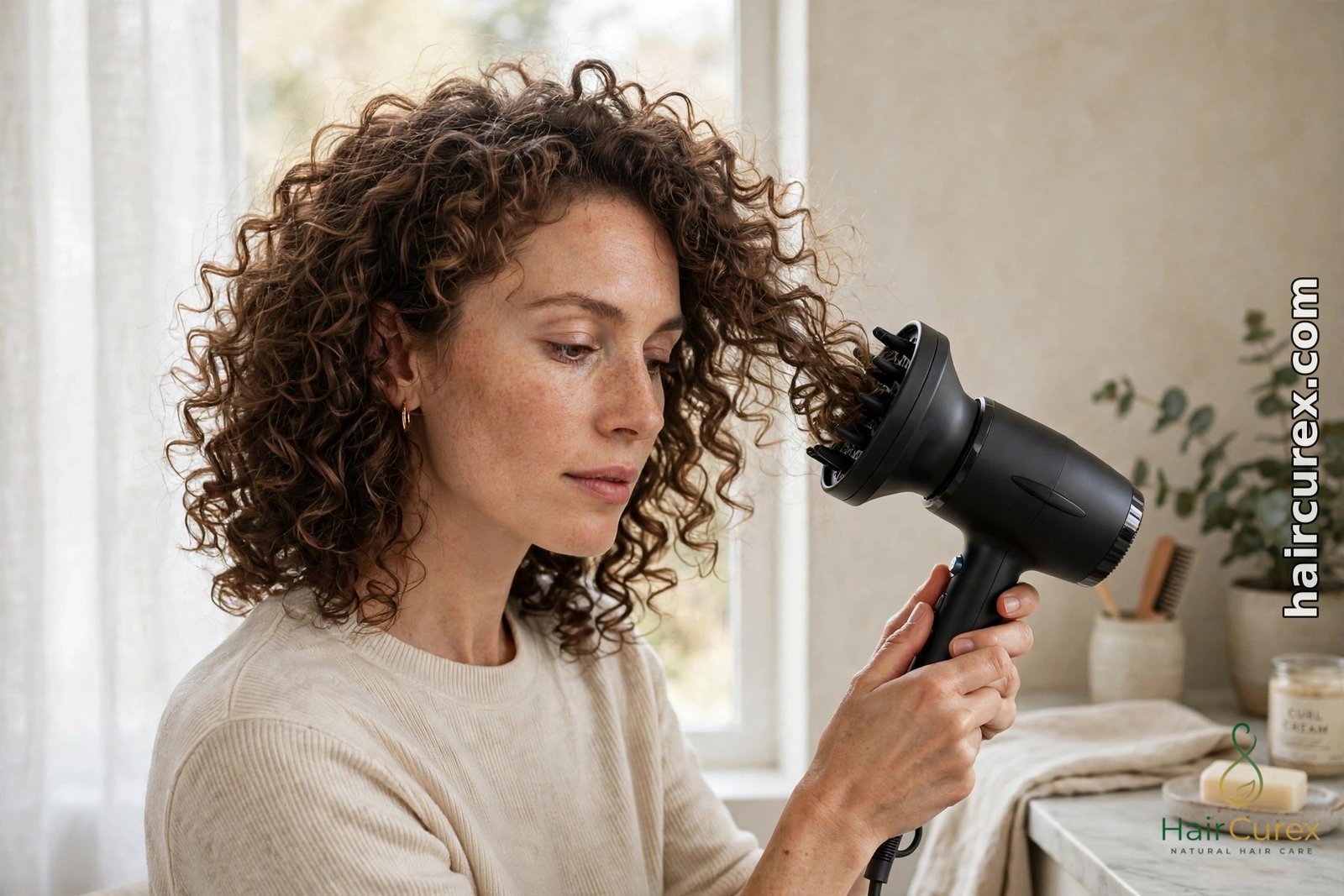
How you dry your hair changes how much it shrinks, and a diffuser used with gentle tension is the fastest way to keep length. A diffuser spreads the airflow so it dries the hair without blowing the curls apart, and if you hold each section gently stretched while you diffuse it, the curl sets in that elongated shape. Work in sections, use low or medium heat, and hold the diffuser a few centimetres from the hair rather than pressing it against the scalp.
Our how to dry curly and wavy hair without frizz guide walks through the full drying method, including plopping, which uses a T-shirt to hold curls in shape while they dry — plopping gives great definition but less stretch, so choose diffusing with tension when length is the priority. One important warning: high heat is the enemy here. Frequent high-heat drying damages the curl pattern itself, and damaged curls lose their elasticity — which ironically means they shrink less but look worse, because they have lost the spring that makes curls healthy.
Keep the heat low, use a heat protectant, and treat diffusing as an occasional length-day tool rather than an everyday habit.
Method 5 — Deep Condition to Improve Elasticity
Deep conditioning does not directly stretch your hair, but it improves the elasticity that makes shrinkage healthy rather than damaging — and healthy, well-moisturised curls are easier to stretch and hold their stretched shape better. A weekly deep-conditioning mask or a hot-oil treatment replenishes moisture and improves the hair’s ability to stretch and spring back without breaking, which is exactly what you need when you are asking the hair to hold an elongated shape.
Our coconut oil for hair guide covers one of the most popular deep-conditioning ingredients: a small amount of coconut oil, used as a pre-wash treatment for about 15 minutes, can add moisture and reduce protein loss, though it suits some hair types better than others and should always be washed out thoroughly. The American Academy of Dermatology’s curly hair tips recommend the same foundations — gentle washing, thorough conditioning and minimal friction — because they protect the cuticle and keep curls elastic.
If your hair feels rough, tangles easily or snaps when you stretch a strand, that is a sign it needs moisture before it needs stretching: deep-condition first, and try the stretching methods again once the hair feels soft and springy.
Method 6 — Stretch While You Sleep
Overnight stretching is the easiest method of all, because it works while you do nothing. Before bed, loosely braid your damp or dry hair, or gather it into a few loose twists, and let it dry or set overnight. In the morning, unravel the braids and you have elongated, defined curls with much less shrinkage than air-drying loose. A silk or satin pillowcase or bonnet helps here too: it reduces friction, so the stretched shape survives the night instead of being ruffled back into tight coils.
If your hair is already dry, you can lightly mist it with water, smooth a little leave-in over the top, and then braid it — the dampness reactivates the hydrogen bonds, the braid holds the stretched shape, and the hair dries in that shape overnight. This is the same principle as a twist-out, just done on a sleep schedule, and it is the method most people stick with long-term because it adds no extra time to the day at all.
Method 7 — The Occasional Blow-Out (With Honest Limits)
Sometimes you want your full length on display, and a blow-out with a brush or a silk press is the most dramatic way to get it. It works by using heat to temporarily break the hydrogen bonds and set the hair straight, so the shrinkage disappears entirely for a few days.
It is also the method with the most risk, so honesty matters here. Heat is the one thing that can permanently change your curl pattern: repeated high-heat styling damages the hair’s structure, and damaged curls lose their elasticity and their ability to spring back — the very quality shrinkage proves you have. If you choose a blow-out, use a heat protectant every time, keep the temperature as low as you can, use the lowest effective pass count, and treat it as an occasional style, not a weekly routine.
A gentle shampoo can help you pick a wash-day formula that cleans without stripping, because hair that has been heat-styled needs gentle care afterwards to recover its moisture. And if your curls do not spring back after a blow-out, that is a warning sign: give the hair a break from heat, deep-condition weekly, and let the elasticity recover before you heat-style again.
5 Mistakes That Make Shrinkage Worse
First, fighting hair shrinkage with daily high heat. It gives you length today and damages the curl pattern that makes your hair healthy, so the trade is a bad one. Second, skipping conditioner. Dry hair has poor elasticity, so it does not stretch well and does not hold a stretched shape — moisturise first, stretch second. Third, unravelling twist-outs while the hair is still damp inside. The curls will shrink back up as they finish drying, and you will have wasted the overnight effort.
Fourth, using too much heavy product. Buildup weighs the hair down at first, but it also makes the curl pattern tighter and the hair look shorter, and it leaves the hair dull and coated. Fifth, measuring your hair’s health by its dry length. Dry length is the wrong ruler for curly hair — wet, stretched length is your true length, and shrinkage is the proof that your curls are elastic and healthy. Judging curly hair by straight-hair standards is the mistake underneath all the others, and it is the one this guide is really trying to fix.
When to See a Dermatologist
Hair shrinkage itself never needs a doctor — it is normal and healthy. But some hair changes do deserve a professional look. See a dermatologist if you have itching, flaking, redness, soreness or hair loss in patches, because those are scalp or medical issues that no styling method will fix.
The same applies if shedding suddenly increases, if your hair is breaking off in short pieces all over, or if a new product causes itching, redness or swelling — stop the product, rinse it out, and do not push through a reaction. A dermatologist can also help if your hair has suddenly lost its curl pattern or its elasticity, or if shrinkage is joined by thinning that does not match your usual pattern. Patch-testing a new product on your inner forearm or behind your ear for 24 to 48 hours before a full application catches most reactions early and costs nothing.
The Bottom Line on Hair Shrinkage
Hair shrinkage is not a problem to solve — it is a property of healthy, elastic curls, and it proves your hair is doing what curly hair is supposed to do. Your wet, stretched length is your true length, and the difference between that and your dry length is simply your curl pattern doing its job.
When you want more of that length to show, you have real options that do not damage your hair: twist-outs and braid-outs, banding and other heat-free stretching, heavier products used wisely, diffusing with gentle tension, deep conditioning for elasticity, overnight braids, and the occasional careful blow-out. Use them when you want length, and let your curls spring free when you do not — both are good hair days, because both start from the same healthy, elastic curls. Measure your hair wet, judge it by its health rather than its dry length, and let shrinkage be what it is: a sign your curls are alive.
Frequently Asked Questions About Hair Shrinkage
What causes hair shrinkage?
Hair shrinkage is caused by the spiral shape of curly and coily hair. When hair is wet, water breaks the hydrogen bonds inside the strand and the curl stretches out. As it dries, those bonds reform and pull the strand back into its tight curl shape, so the hair looks shorter. Tighter curls shrink more than looser ones.
Is hair shrinkage a sign of healthy hair?
Yes — shrinkage is usually a sign of healthy, elastic hair. It shows your curls can stretch and spring back into shape without breaking. If your hair does not spring up at all when it dries, it can be a sign of damage from heat styling, colour or hard water.
How much does curly hair shrink?
It depends on curl type. Wavy hair shrinks about 10–25%, loose curls 25–50%, and tight coils 50–75% or more, with some 4C hair shrinking up to 90% of its stretched length. Porosity and moisture level also affect how much your hair shrinks.
How can I reduce hair shrinkage without heat?
The best heat-free methods are twist-outs and braid-outs, banding with soft elastic bands, African threading, and drying your hair in loose braids or a low ponytail. Heavier leave-in conditioners and curl creams add weight that helps hold the stretched shape while the hair dries.
Does shrinkage mean my hair is not growing?
No. Shrinkage hides growth — it does not stop it. Your hair grows at the same rate whether it shrinks or not; the length is simply coiled up instead of hanging straight. Measure your hair wet and stretched to track real growth, not dry length.
Can I stop hair shrinkage permanently?
No, and you should not try. Shrinkage is a natural property of curly and coily hair, and only heat or chemical straightening removes it — both of which damage the curl pattern and elasticity. The safe goal is to reduce shrinkage when you want more length, using the stretching methods in this guide.