

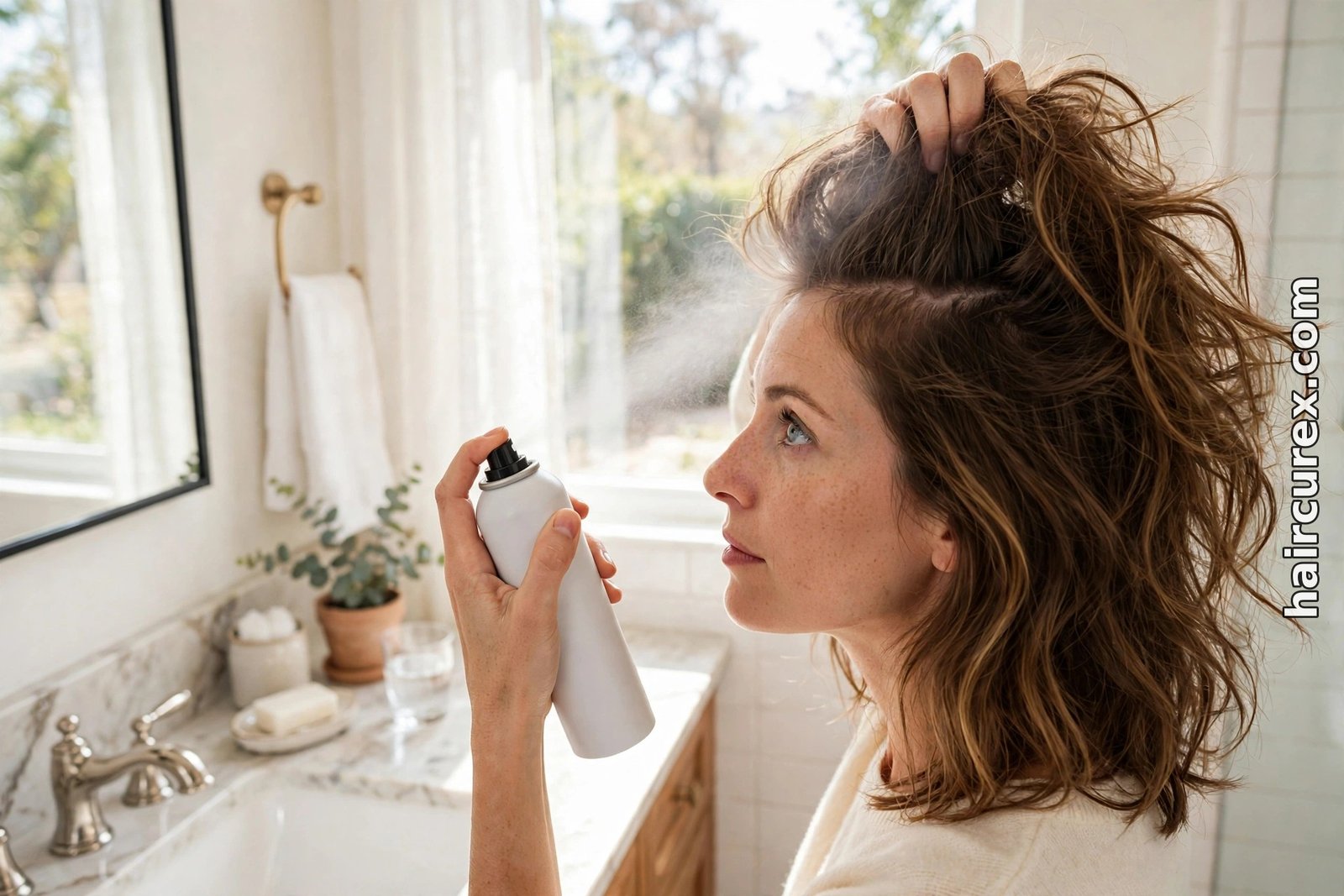
Dry shampoo is a powder or aerosol spray that soaks up excess oil at your hair roots so greasy hair looks and feels fresher — but it does not actually clean your hair. Unlike a regular shampoo, which lifts oil, sweat, dead skin and product residue off your scalp and rinses them away, dry shampoo leaves all of that where it is and adds a layer of absorbent powder on top. Used occasionally, it is a genuinely useful shortcut: one or two days of fresher-looking roots between washes, extra volume at the crown, and a rescue on days when washing is not possible. Used every day as a replacement for washing, it backfires — buildup irritates the scalp, dulls the hair and can lead to breakage and shedding. This guide explains how dry shampoo works, the right way to apply it, how often each hair type can safely use it, and the warning signs that mean it is time for a real wash.
Dry Shampoo: How It Works
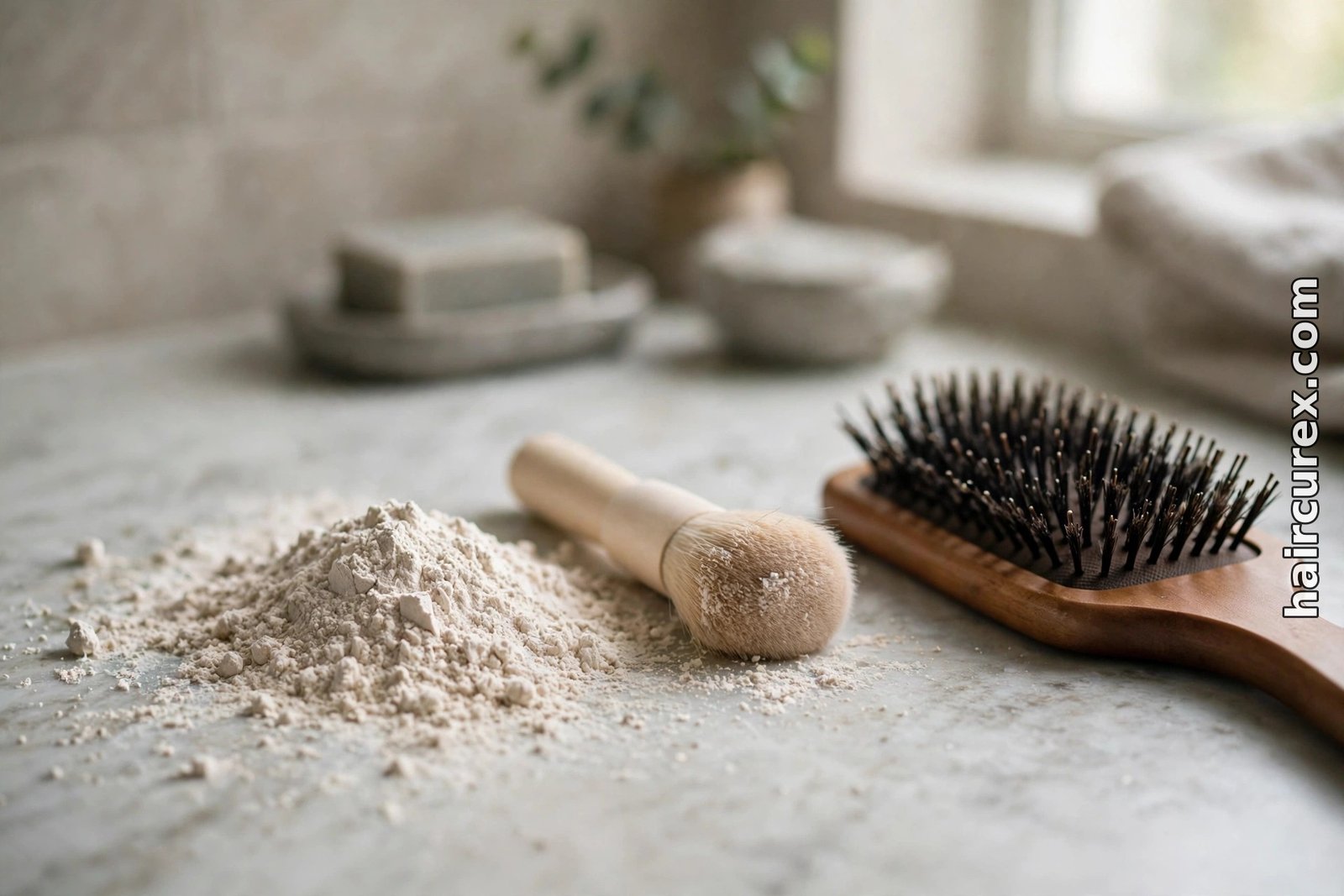
Dry shampoo works by absorption, not cleaning. Its active ingredients are fine absorbent particles — usually starches such as rice starch or corn starch, silica, or clay — carried either in an alcohol-based aerosol spray or as a loose or pressed powder. When you spray or sprinkle it onto oily roots, those particles soak up sebum, the natural oil your scalp produces, and coat the hair shaft so light scatters differently and the hair looks less greasy and feels less limp. Many formulas also add a light fragrance, which is why freshly sprayed hair smells clean even though nothing has actually been washed away.
That distinction matters more than any marketing claim. Dermatologist Wilma Bergfeld of Cleveland Clinic puts it plainly: the alcohol or starch in the product soaks up excess oil and grease, giving hair a cleaner, fresher appearance, but dry shampoo does not actually clean your hair — for that, you need wet shampoo and water. The oil is still on your scalp, now mixed with powder. Sweat, dead skin cells, pollution and old styling products are still there too. A wet wash removes them; a dry shampoo only hides them for a day.
Dry shampoo also adds texture, which is why many people love it even on clean hair. The same powder that absorbs oil roughens the hair surface slightly, giving fine or slippery hair grip and lift at the roots. That is a real benefit, and it is also the reason overuse shows up so visibly: layer upon layer of powder makes hair feel gritty, look dull and lose its shine, because the coating that once created volume is now just buildup.
Spray, Powder or Foam: Which Type Suits You?
Aerosol sprays are the most popular type and the easiest to apply evenly. They distribute a fine mist over a wide area, dry quickly and work well for most hair types, but they are also the easiest to over-apply — a long, close spray dumps far more product than your roots need. They also contain propellants and alcohol, which can dry out already-dry hair, and aerosol cans must be kept away from heat sources such as straighteners and open flames.
Loose and pressed powders give you the most control. You tap a small amount exactly where the oil is, massage it in and brush out the excess, which makes them a good choice for dark hair (tinted powders avoid the white cast), sensitive scalps that react to aerosol propellants, and anyone who wants to use less product overall. The trade-off is mess and a learning curve: too much powder leaves visible white residue, especially on dark hair, and uneven application leaves patchy spots.
Foam and liquid dry shampoos are a newer middle ground. Applied like a mousse to the roots and massaged in, they feel less powdery and can suit curly or textured hair, where a powder can sit visibly on coils and disrupt curl pattern. Whatever the format, the active job is identical — absorb oil at the roots — so choose by your hair type and how much control you want, not by which format claims to “clean” better. None of them cleans.
How to Apply Dry Shampoo the Right Way
Good technique is the difference between refreshed roots and a chalky, gritty mess, and most mistakes come from spraying too much, too close, or in the wrong places.
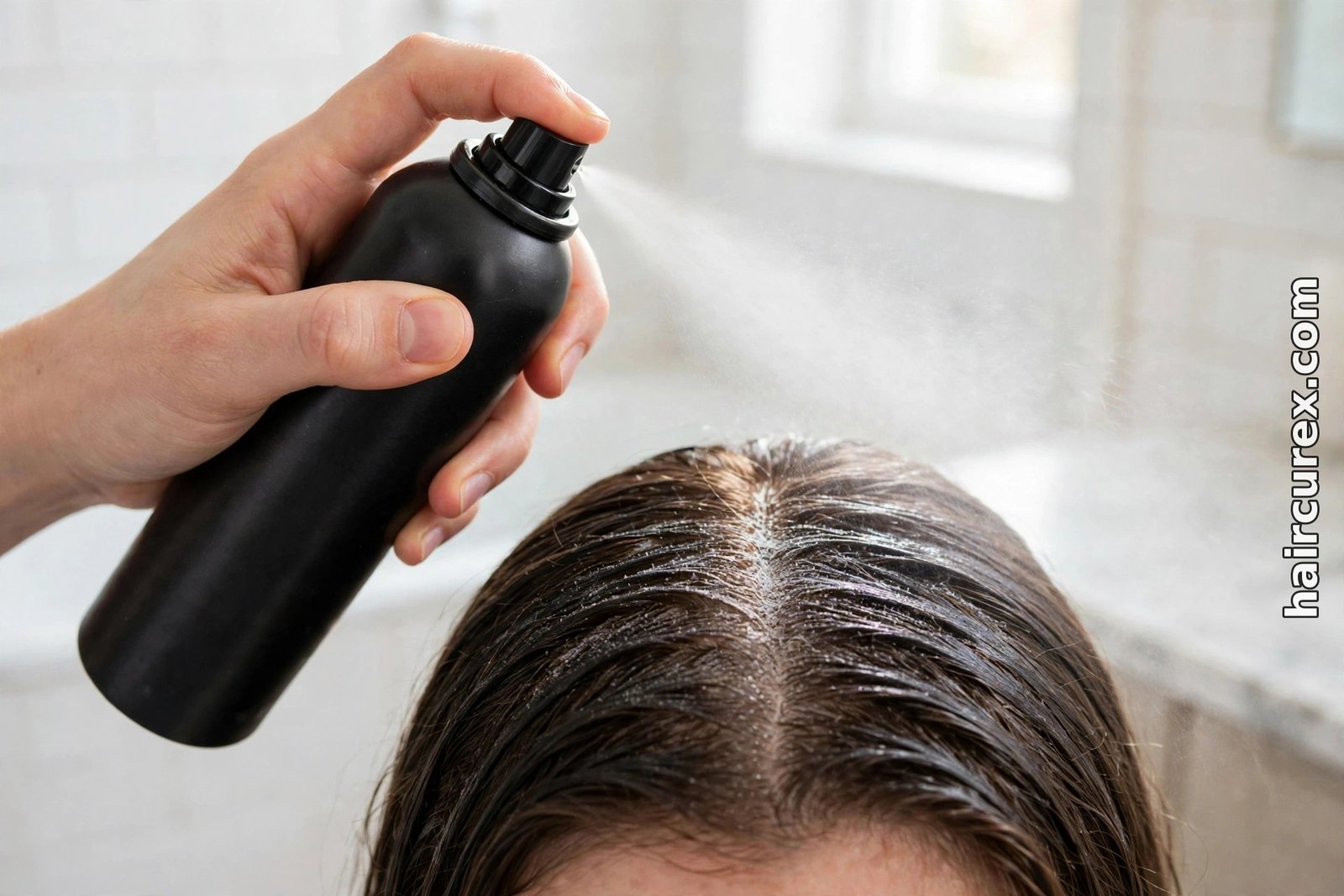
Start with dry hair — dry shampoo on damp hair clumps and goes patchy. Section the hair at the oiliest areas, usually the crown, the parting and the hairline, and apply only there. Hold an aerosol can at least six inches from your scalp and use short bursts, not a continuous spray; with powder, tap a small amount onto the roots, not the lengths. Spraying the ends is a common error: the ends are rarely oily, and powder there only adds dryness and dullness.
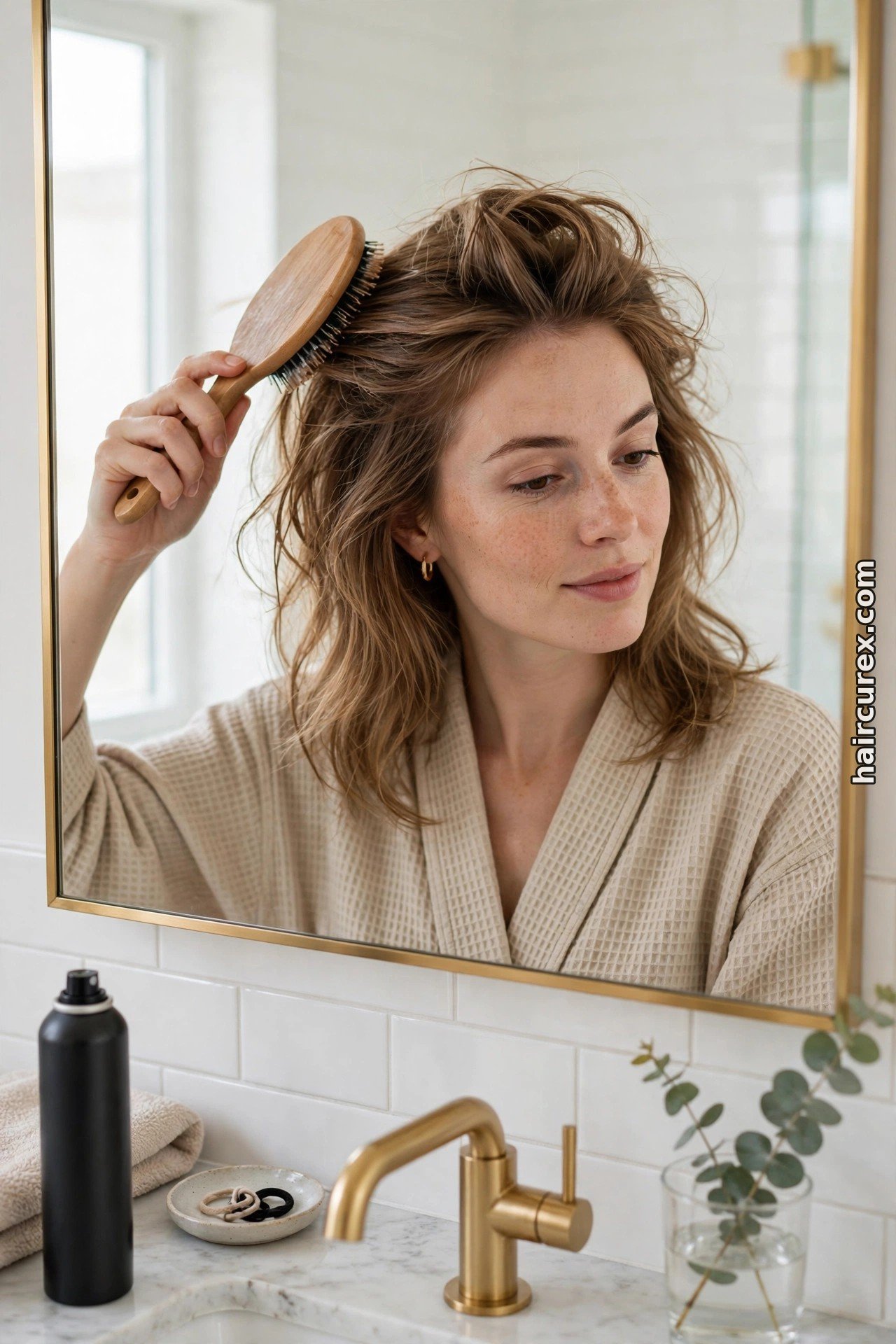
Wait before you touch it. Leave the product for one to two minutes, or the time stated on the label, so the particles have time to absorb the oil. Then massage your scalp with your fingertips to distribute it down to the roots, and brush or comb through gently so the oil and excess particles leave with the brush. If white residue is still visible, especially on dark hair, brush again rather than adding more product — and a tinted formula matched to your hair color prevents the white cast in the first place.
Two practical rules complete the routine. First, less is more: you can always add a second light pass, but you cannot easily remove an overloaded one without washing. Second, never use dry shampoo as a styling product on freshly washed hair in large amounts and then keep layering it day after day; that is exactly how buildup starts. For a full wash-day routine to alternate with dry shampoo days, see our hair washing guide.
How Often Can You Use Dry Shampoo?
The honest answer depends on your scalp and hair type, but the general rule dermatologists give is simple: one or two days between real washes, not several days in a row, and never as a permanent replacement for washing. Cleveland Clinic’s dermatology guidance is explicit on this point — you should not use dry shampoo for several days in a row, and your hair and scalp need to be washed and rinsed intermittently to stay clean.
For most people, that translates to a practical rhythm: wash day, then one dry shampoo day, then wash again — or at most two dry shampoo days in a row before a proper wash. Oily, straight hair produces sebum fastest and may need the dry shampoo day sooner, but it also accumulates buildup fastest, so the wash should not be pushed further. Dry, curly or coily hair produces less visible oil and often goes longer between washes anyway; a light dry shampoo at the roots on a non-wash day can refresh the crown without disturbing curls, but powder buildup on textured hair is harder to brush out, so use less and wash thoroughly on wash day.
People with sensitive, flaky or dandruff-prone scalps should be the most cautious. A scalp that is already irritated reacts fastest to trapped residue, and dry shampoo can worsen flaking and itching. If you have a diagnosed scalp condition, check with your dermatologist before making dry shampoo a habit, and keep the interval between real washes short. The same caution applies after color or chemical services: a gentle wet wash protects both color and scalp better than days of powder, and our guide to gentle shampoo explains how to choose a mild cleanser for wash days.
| Hair type | Dry shampoo rhythm | Watch out for |
|---|---|---|
| Oily, straight hair | 1 dry shampoo day between washes, then wash | Buildup arrives fastest; do not stretch to 3+ days. |
| Fine hair | Light spray at the crown for volume, 1 day between washes | Over-spraying weighs fine hair down and leaves residue. |
| Dry, wavy hair | Occasional root refresh, 1-2 days between washes | Alcohol sprays can dry the lengths further; keep product off the ends. |
| Curly or coily hair | Light powder or foam at the roots only, on non-wash days | Powder is hard to brush out of coils and can dull curl definition. |
| Sensitive or flaky scalp | Use sparingly, shortest gap to a real wash | Residue worsens itching and flaking fastest. |
| Color-treated hair | Root refresh only, then a gentle wash | Heavy buildup dulls color; wash with a mild shampoo. |
Is Dry Shampoo Bad for Your Hair?
Occasional dry shampoo is not bad for your hair. Daily, heavy or multi-day reliance on it is where the problems start, and they arrive in a predictable sequence.
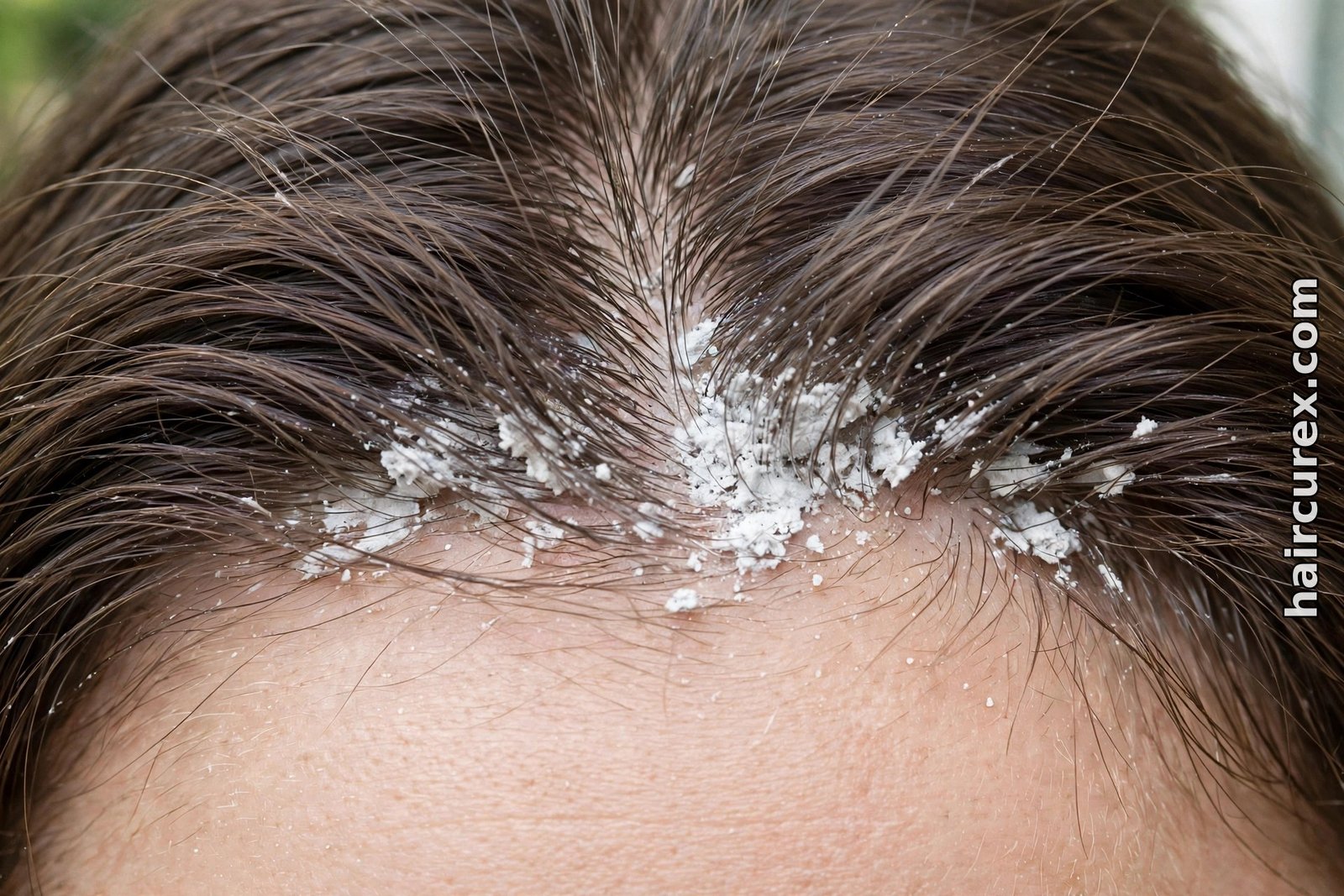
First comes buildup. Oil, powder, sweat and dead skin accumulate on the scalp, and the scalp’s pores can clog, leading to itching, pimples along the hairline and flaking that looks like dandruff. Second comes breakage: alcohol in many sprays dries the hair shaft, and dry, fragile hair tangles, cracks and fractures more easily, especially when you brush aggressively to remove powder. Third, an unhealthy, inflamed scalp supports weaker hair growth over time — studies link scalp inflammation to reduced hair growth, which is why dermatologists insist that washing matters rather than treating dry shampoo as harmless. None of this means a single can of dry shampoo causes hair loss; it means that replacing washing with powder for weeks creates the scalp conditions under which shedding and breakage increase, and the American Academy of Dermatology warns that product left on the scalp can lead to breakage and shedding.
Two further risks deserve a mention. Aerosol dry shampoos were recalled in the United States in 2021 and 2022 after benzene, a known carcinogen, was found in some propellants; recalls covered specific batches, not all dry shampoo, but they are a reason to buy from reputable brands, check recall notices, and prefer non-aerosol powder if the issue worries you. And aerosol products are flammable: never spray near an open flame or use a hot styling tool immediately after spraying. Neither risk makes occasional use dangerous, but both reward choosing products carefully and using less of them.
The reassuring side of the ledger is real too. Dry shampoo does not damage the hair follicle directly, it does not cause permanent hair loss on its own, and it is safe for all hair types when used occasionally. The question is never “is dry shampoo bad?” in the abstract — it is “how many days in a row am I skipping a real wash?” Keep that number low and dry shampoo stays a helpful tool.
Dry Shampoo vs Real Shampoo vs Clarifying Shampoo
These three do different jobs, and confusing them is the root of most dry shampoo problems.
| Product | What it actually does | Best for | Limit |
|---|---|---|---|
| Dry shampoo | Absorbs surface oil, adds texture and volume | 1-2 days of fresher roots between washes, travel, post-workout refresh | Does not clean; leaves oil, sweat and residue on the scalp. |
| Regular shampoo | Lifts oil, sweat, skin cells and product off the scalp and rinses them away | Everyday washing | Needs water and time; daily washing can dry some hair types. |
| Clarifying shampoo | Deep-cleans stubborn buildup, silicones, chlorine and hard-water minerals | Occasional reset after heavy buildup | Too harsh for frequent use; can strip color and moisture. |
The right combination for most people is regular shampoo as the foundation, dry shampoo as the bridge between washes, and a clarifying wash every few weeks or whenever hair feels coated, heavy or dull despite normal washing. If you have been relying on dry shampoo for days, a clarifying wash is the fastest way back to a clean scalp — our guide to the best detox shampoo explains when a deeper cleanse is genuinely needed and when it is overkill. If your regular wash leaves your hair feeling stripped, the answer is a gentler everyday shampoo, not more dry shampoo; our gentle shampoo guide covers what makes a formula truly mild.
Mistakes That Make Dry Shampoo Backfire
The most common mistake is using it every day. What starts as a time-saver becomes a scalp problem within a week: itching, dullness, flaking and hair that feels coated no matter how much you brush. If you are reaching for the can daily, the fix is not a better can — it is a wash-day routine that fits your life, even if that means washing more often with a gentle formula.
The second mistake is spraying too close and too much. A can held two inches from the scalp dumps a concentrated patch of powder that brushes out poorly and shows as white residue. Six inches, short bursts, roots only — that distance rule alone prevents most white-cast complaints.
The third mistake is skipping the brush-out. Dry shampoo needs the massage-and-brush step to work: brushing removes the oil-laden particles, distributes what remains, and reveals whether you actually need more. Skipping it leaves the powder sitting visibly on the surface and the oil underneath untouched.
The fourth mistake is applying it to the lengths and ends. Only the roots are oily; powder on the ends adds dryness, frizz and a dull finish, and on curly hair it disrupts curl pattern. Keep it at the roots, and if the ends feel dry, a pea-sized amount of conditioner or oil on the tips — not more dry shampoo — is the fix.
The fifth mistake is ignoring warning signs. Persistent itching, redness, soreness, pimples on the scalp, flaking that does not clear after a proper wash, or shedding that suddenly increases are not problems to spray over. Wash thoroughly, give the scalp a few wash days to settle, and see a dermatologist if symptoms persist beyond a couple of weeks or worsen — the same rule our best shampoo for hair fall guide applies to any sudden change in shedding.
When Dry Shampoo Is Actually the Right Choice
Dry shampoo earns its place in several real situations. After a workout, when there is no time to wash before work or an event, it buys you a presentable day. While traveling or camping without reliable showers, it keeps roots presentable for a day or two. When illness or injury makes showering difficult, it is a dignified stopgap. For fine hair that falls flat by midday, a light root spray adds volume even on clean hair. And in winter, when cold air and indoor heating dry hair out, stretching the gap between washes by a day with a light root refresh can protect moisture — our winter hair care routine covers the seasonal adjustments in full.
What all of these have in common is that dry shampoo is a bridge, not a destination. It works best when the next wash is already planned, not postponed indefinitely. The healthiest way to think about it is as a tool in a washing routine, alongside a regular shampoo for wash days and an occasional clarifying wash for buildup — not as a replacement for any of them.
Dry Shampoo for Special Situations
For dark hair, choose a tinted powder or spray matched to your hair color, apply lightly, and brush thoroughly — white residue is the single biggest complaint on dark hair and it is entirely avoidable. For blonde or light hair, untinted formulas work fine, but over-application still shows as a dull, matte coating, so use the same light hand.
For curly and coily hair, use a foam or light powder at the roots only, and refresh curls with water or a curl refresher rather than powder through the lengths. Powder through curls breaks up curl clumps and leaves a visible cast that is difficult to brush out without frizz. Our curly hair routine guide walks through the full wash-day sequence for textured hair.
For oily scalps, dry shampoo can feel like a miracle on day one and a problem by day three. Resist the temptation to keep spraying: the oil is still there, and each layer makes the eventual wash harder. Wash with a regular shampoo applied to the scalp, let the rinse carry it through the lengths, and use dry shampoo only as the bridge to that wash.
For sensitive scalps, patch-test a new dry shampoo the way you would a new skin product, choose fragrance-free or lightly scented formulas, and stop at the first sign of stinging, redness or worsening itch. No convenience product is worth an irritated scalp, and a gentle wet wash is always the safer fallback.
So, Should You Use Dry Shampoo?
Yes — occasionally, lightly, and always with a real wash coming next. Dry shampoo is a genuinely useful product: it rescues greasy roots, adds volume to fine hair, and gets you through days when washing is not possible. It is not a shampoo in any meaningful cleaning sense, and pretending otherwise is how a helpful shortcut turns into an irritated scalp, dull hair and extra shedding.
The rule that keeps it safe is easy to remember: one or two days, roots only, light application, brush it out, then wash. If you follow that, dry shampoo stays what it should be — a bridge between washes, not a replacement for them. And on wash day, give your scalp the thorough cleanse it has been waiting for: warm water, shampoo worked into the scalp with your fingertips, a complete rinse, and conditioner on the mid-lengths and ends. Your hair will look better on the dry shampoo days too, because it starts each one from a truly clean scalp.

Frequently Asked Questions About Dry Shampoo
Does dry shampoo actually clean your hair?
No. Dry shampoo absorbs oil at the roots so hair looks and feels fresher, but it does not remove oil, sweat, dead skin or product residue. Only a wet shampoo and water truly clean your hair and scalp.
How often can I use dry shampoo?
For most people, one or two days between real washes is safe. Do not use it for several days in a row or as a permanent replacement for washing, because buildup irritates the scalp and can lead to breakage and shedding.
Is dry shampoo bad for your hair?
Occasional use is safe for all hair types. Problems come from daily or multi-day reliance: buildup, scalp irritation, dullness, dryness from alcohol-based sprays, and breakage from brushing out heavy residue.
Can dry shampoo cause hair loss?
Dry shampoo does not directly damage hair follicles or cause permanent hair loss on its own. However, long-term buildup and scalp inflammation can weaken hair and increase shedding and breakage, which is why regular washing matters.
How do I avoid white residue from dry shampoo?
Apply lightly and only to the roots, hold aerosol cans at least six inches from your scalp, wait a minute or two, then massage and brush thoroughly. On dark hair, use a tinted formula matched to your hair color.
Is dry shampoo better than washing for fine or oily hair?
No. Dry shampoo adds volume and buys a day of fresher-looking roots, but it cannot replace washing. Oily hair in particular accumulates buildup fastest, so the wash should not be pushed further than a day or two.