

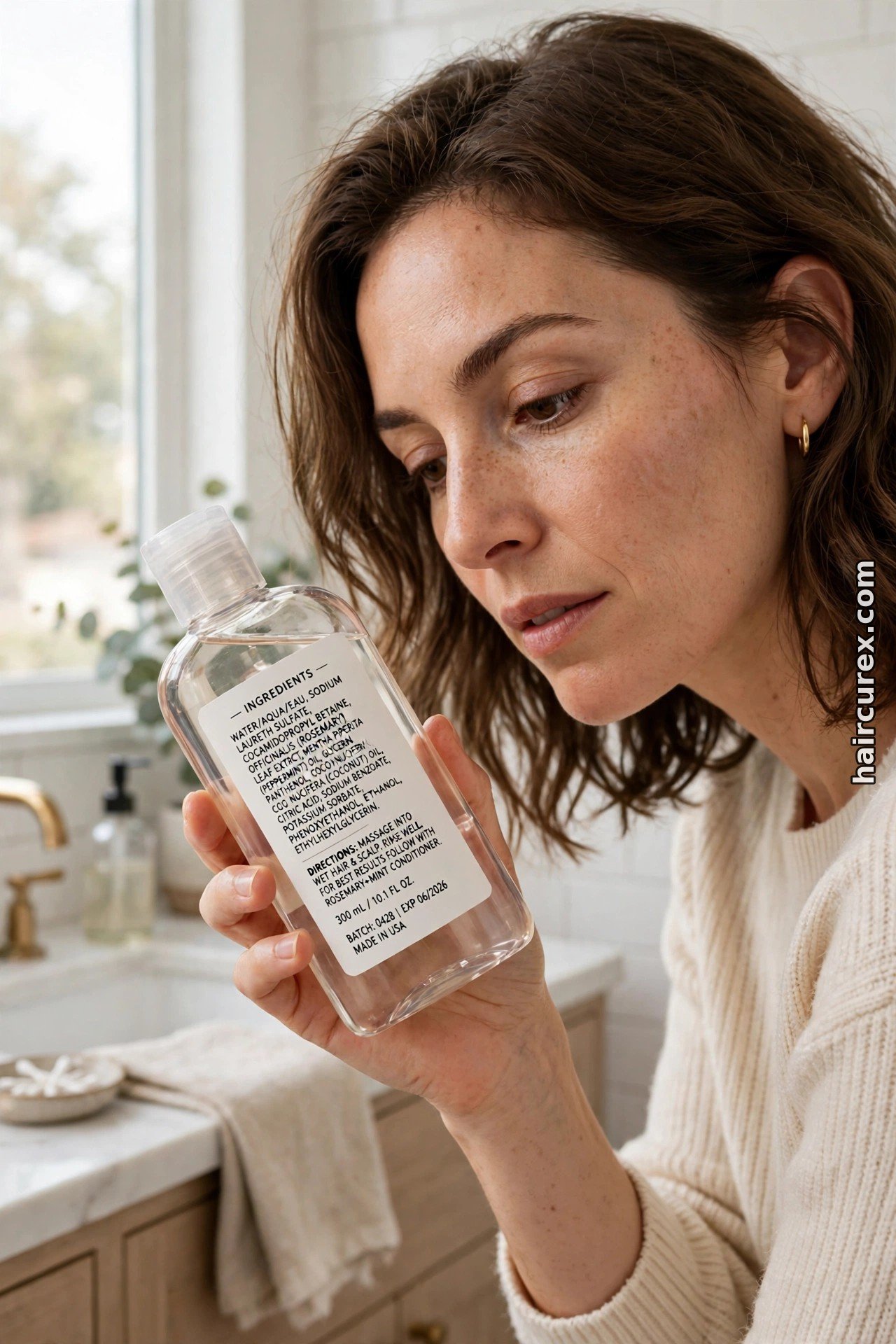
Hair ingredients to avoid are not a single blacklist — they depend on your scalp, your hair type, and whether a product stays on your hair or rinses off. The short list worth checking on every label is this: skip formaldehyde-releasing preservatives and hair-smoothing products that release formaldehyde, be cautious with strong fragrances and known allergens if your scalp is sensitive, and go gentler on harsh sulfates if your hair is dry, curly, color-treated, or already fragile. Parabens, phthalates, and silicones sit in a different, debated category: they are widely used, regulated, and not proven to damage hair the way headlines suggest, but many people reasonably choose to avoid them or use them less. This guide gives you the label names to look for, separates proven problems from debated ones, and ends with a 60-second checklist you can use in any store aisle.
Hair Ingredients to Avoid: How to Read a Label in 60 Seconds
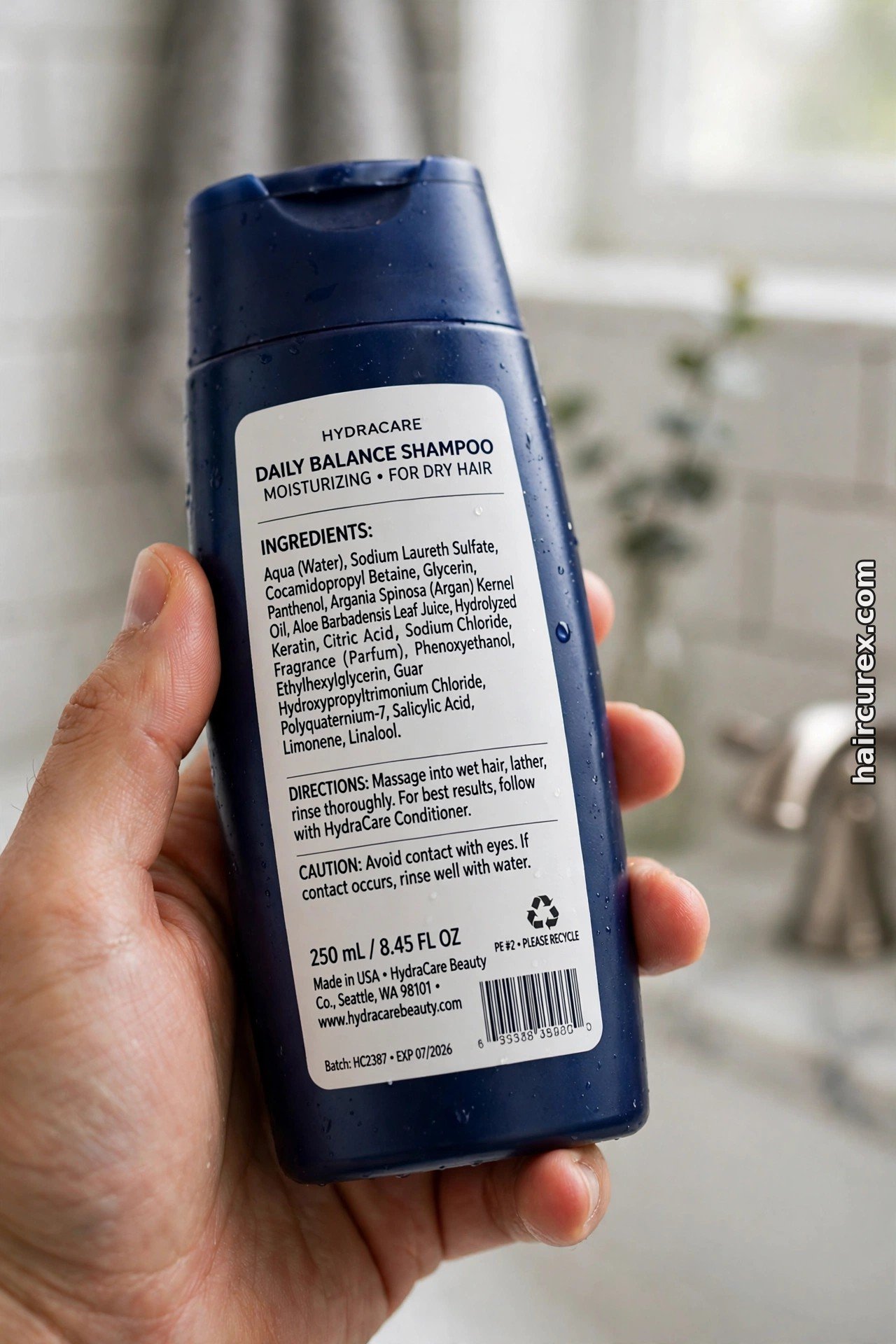
Ingredient lists follow one rule that makes label reading much easier: ingredients are listed in descending order of amount, so the first five or so ingredients make up most of the product. A harsh cleanser near the top of a shampoo matters far more than a preservative near the bottom. Leave-in products deserve extra attention, because they stay on your hair and scalp for hours, while a rinse-out shampoo is on your scalp for only a minute or two.
Start at the top for cleansers and alcohols, scan the middle for silicones and oils if buildup is your problem, and check the end of the list for preservatives and fragrance. Fragrance can appear as a single word — “fragrance” or “parfum” — even when it contains many scent chemicals, which is why sensitive scalps often react to a product whose full ingredient list looks otherwise gentle. If a brand does not list its full ingredients, or hides them behind “proprietary blend,” treat that as a reason to choose a more transparent product rather than a reason to panic.
One more label habit saves more hair than any single ingredient ban: patch-test new leave-in products. Apply a small amount behind your ear or on your inner forearm, wait 24 to 48 hours, and only then use it widely. A product that irritates one person can be perfectly fine for another, and no label list replaces that personal test.
The Label List at a Glance
Use this table as your shopping reference. “Evidence” means how firmly the concern is established, not how scary the ingredient sounds.
| Ingredient group | Label names to look for | Who should be most careful | Evidence |
|---|---|---|---|
| Formaldehyde releasers | DMDM hydantoin, imidazolidinyl urea, diazolidinyl urea, quaternium-15, sodium hydroxymethylglycinate | Everyone, especially people with sensitive skin or eczema; avoid hair-smoothing treatments that release formaldehyde | Proven irritant and carcinogen at high exposure; formaldehyde-releasing products are the strongest avoid on this list. |
| Strong sulfates | Sodium lauryl sulfate (SLS), sodium laureth sulfate (SLES), ammonium lauryl sulfate | Dry, curly, coily, color-treated or damaged hair; sensitive scalps | Proven to strip natural oils and irritate; not proven to cause permanent hair loss. |
| Drying alcohols | Alcohol denat., ethanol, isopropyl alcohol (in leave-ins and sprays) | Dry, curly and damaged hair | Proven drying in leave-in products; fatty alcohols like cetyl and stearyl alcohol are different and are conditioning, not drying. |
| Fragrance and allergens | Fragrance, parfum, linalool, limonene, methylisothiazolinone (MI) | Sensitive, itchy or eczema-prone scalps | Proven common cause of contact allergy; fragrance is the single most frequent cosmetic allergen group. |
| Parabens | Methylparaben, propylparaben, butylparaben, ethylparaben | People who prefer to avoid them; sensitive scalps may react | Debated: widely studied, allowed at low levels, hormone concerns are not established at cosmetic doses. |
| Phthalates | Dibutyl phthalate, diethyl phthalate, often hidden inside “fragrance” | People who prefer to avoid them | Debated: exposure from hair products is low; evidence of hair damage is not established. |
| Silicones | Dimethicone, cyclopentasiloxane, amodimethicone | Fine hair prone to buildup; curly hair following a low-buildup routine | Debated as harm: they coat and can build up, but do not damage the hair shaft itself. |
| Heavy waxes and mineral oil | Petrolatum, mineral oil, lanolin (in large amounts on fine hair) | Fine, low-porosity hair; scalps prone to clogged follicles | Buildup and heaviness, not damage; fine in small amounts for very dry or coarse hair. |
Formaldehyde Releasers: The One Firm Avoid
If there is one group to avoid without hesitation, it is formaldehyde and the preservatives that release it slowly in the bottle: DMDM hydantoin, imidazolidinyl urea, diazolidinyl urea, quaternium-15, and sodium hydroxymethylglycinate. Formaldehyde is a known human carcinogen and a strong skin and eye irritant, and it is also a well-documented cause of allergic contact dermatitis. The risk is highest in hair-smoothing and straightening treatments that release formaldehyde gas when heated — the U.S. Food and Drug Administration (FDA) lists hair-smoothing products that release formaldehyde among its cosmetic safety topics, and such treatments deserve a hard pass, especially in poorly ventilated salons.
In ordinary shampoos and conditioners, the amounts are much smaller, and regulators permit low levels. That does not make the concern imaginary: people with eczema or a formaldehyde allergy can react even to small amounts, and there is no benefit to you in choosing a formaldehyde-releasing preservative when plenty of products use other preservation systems. If you see one of these names on a label and you have a sensitive scalp, choose another product. If you do not have a sensitive scalp, it is still a reasonable, low-cost preference — not a health emergency.
Sulfates: Harsh for Some Hair, Fine for Others
Sulfates are detergents — the ingredients that make shampoo foam and lift oil and dirt. Sodium lauryl sulfate (SLS) is the strongest common one; sodium laureth sulfate (SLES) is gentler but still a strong cleanser. They are not poisons, and they do not cause permanent hair loss. What they reliably do, especially SLS, is strip natural oils from hair and scalp. For oily, straight, uncolored hair washed frequently, that may be exactly what you want, and a sulfate shampoo can be perfectly fine.
The problem starts when the hair cannot afford to lose that oil. Dry, curly, coily, bleached, color-treated, or already damaged hair becomes drier, frizzier, and more breakage-prone when washed with a strong sulfate shampoo, and color fades faster because the cuticle is repeatedly roughened. Sensitive scalps can also sting, itch, or flake more. If that describes your hair, switch to a gentler cleanser — look for sodium cocoyl isethionate, cocamidopropyl betaine, or decyl glucoside near the top of the list — and keep a sulfate shampoo only for the occasional deep cleanse when buildup is heavy. Our gentle shampoo guide explains what makes a formula truly mild, and when a stronger wash is actually the right tool.
Drying Alcohols vs. Fatty Alcohols: Do Not Confuse Them
Alcohol on a label is not one thing. Short-chain alcohols — alcohol denat., ethanol, and isopropyl alcohol — evaporate quickly and can dry hair out, particularly in leave-in sprays, gels, and styling products that sit on the hair. On dry or curly hair, regular use can mean more frizz, brittleness, and split ends, which is why many curl routines avoid them.
Fatty alcohols are the opposite: cetyl alcohol, stearyl alcohol, and cetearyl alcohol are waxy, conditioning ingredients derived from fats, and they make conditioners feel thick and slippery. They do not dry hair; they soften it. Rejecting a conditioner because it contains “alcohol” without checking which kind is one of the most common label-reading mistakes. The rule is simple: avoid short-chain alcohols high on the list in leave-in products if your hair is dry, and welcome fatty alcohols in conditioners.
Fragrance and Allergens: The Hidden Irritant
Fragrance deserves more attention than it usually gets, because it is the most common cause of cosmetic allergy and the hardest to pin down. A label may list only the word “fragrance” or “parfum,” which can stand for dozens of scent chemicals, and two products with the same word can contain entirely different allergens. If your scalp itches, flakes, or breaks out after new products, fragrance is the first suspect — even more than sulfates or parabens.
Individual fragrance allergens such as linalool and limonene are sometimes listed separately, and preservatives such as methylisothiazolinone (MI) are also well-known sensitizers, especially in leave-in products. The practical fix is unglamorous but effective: choose fragrance-free (not merely “unscented,” which can still contain masking fragrance) products for your scalp, patch-test anything new, and stop a product at the first sign of itching or redness rather than pushing through it. A dermatologist can patch-test you for specific allergens if reactions keep happening, which beats guessing through product after product.
Parabens and Phthalates: Debated, Not Proven Hair Damage
Parabens — methylparaben, propylparaben, butylparaben, and ethylparaben — are preservatives that stop bacteria and mold growing in your products. They have been studied for decades, and regulators in the United States and Europe permit them at low levels. Concerns about hormone disruption come mainly from laboratory and animal studies at doses far above cosmetic use; at the small amounts in hair products, harm to human health or to hair growth has not been established. Sensitive scalps can occasionally react to them, and some people prefer paraben-free products as a precaution — both positions are reasonable.
Phthalates, such as dibutyl phthalate and diethyl phthalate, are used as solvents and to make fragrance last longer, and they are often hidden inside the single word “fragrance” on a label. The same pattern applies: they are widely debated, exposure from a rinse-out hair product is low, and there is no established evidence that they damage hair or cause hair loss. If avoiding them matters to you, choose fragrance-free products and brands that state “phthalate-free” — but do not let a phthalate-free claim distract you from the proven irritants higher on this list. For the regulator’s own overview of parabens, phthalates, fragrance, and other cosmetic ingredients, see the FDA’s cosmetic ingredients pages.
Silicones, Oils, and Waxes: Buildup, Not Damage
Silicones such as dimethicone and amodimethicone coat the hair shaft, smoothing frizz and adding shine. They do not damage hair, and they do not block growth — hair grows from the follicle under the skin, not through the coated shaft. Their real drawback is buildup: silicone layers accumulate, especially the non-water-soluble kinds, leaving fine hair limp and heavy and making curly hair lose definition. That buildup is also why some curl routines avoid silicones entirely.
The fix is not fear but washing strategy. If you use silicones, wash with a shampoo strong enough to remove them occasionally — a gentle sulfate-free shampoo may not remove heavy dimethicone — or choose water-soluble silicones and lighter formulas. Our guide to detox shampoo explains when a deeper clarifying wash is genuinely needed and when it is overkill. Heavy oils, petrolatum, and mineral oil follow the same logic: they seal in moisture beautifully on very dry or coarse hair, but on fine or low-porosity hair they sit on the surface, weigh hair down, and can contribute to scalp buildup. Match the weight of the product to the weight of your hair, and buildup stops being a problem.
Ingredients to Avoid by Hair Type
The same ingredient can be a non-issue for one person and a real problem for another, so use your hair type as the filter.
For curly and coily hair, the priority list is strong sulfates, drying alcohols in leave-ins, and heavy silicone and wax buildup that kills curl definition. Gentle cleansers, fatty-alcohol conditioners, and lighter styling products usually serve curls better, and our curly hair routine guide walks through the full wash-day sequence for textured hair.
For color-treated hair, strong sulfates are the main enemy because they fade color fastest, followed by drying alcohols and very hot water. A gentle, color-safe shampoo and conditioner on the mid-lengths and ends protect both color and condition, and skipping harsh clarifying washes except when buildup is real keeps color alive longer.
For sensitive, itchy, or eczema-prone scalps, fragrance and preservative allergens come first, then formaldehyde releasers, then strong cleansers. Fragrance-free, simply formulated products and patch-testing matter more here than any “free-from” marketing claim. For fine or oily hair, heavy silicones, oils, and waxes are the practical avoid — not because they damage hair, but because they flatten it and speed up the greasy look. Light, rinse-out formulas and shampoo applied to the scalp, with conditioner kept off the roots, suit fine hair best, as our hair washing guide explains.
For hair that is shedding or thinning, no ingredient on this list is proven to cause permanent hair loss by itself. What worsens shedding is a chronically irritated, inflamed scalp and breakage from dry, fragile hair — so the most useful step is removing the irritant, washing regularly, and handling hair gently, rather than hunting for a single “hair loss ingredient.” Our best shampoo for hair fall guide applies the same rule to sudden changes in shedding, and persistent or patchy loss deserves a dermatologist, not a new shampoo.
The 60-Second Label Checklist Before You Buy
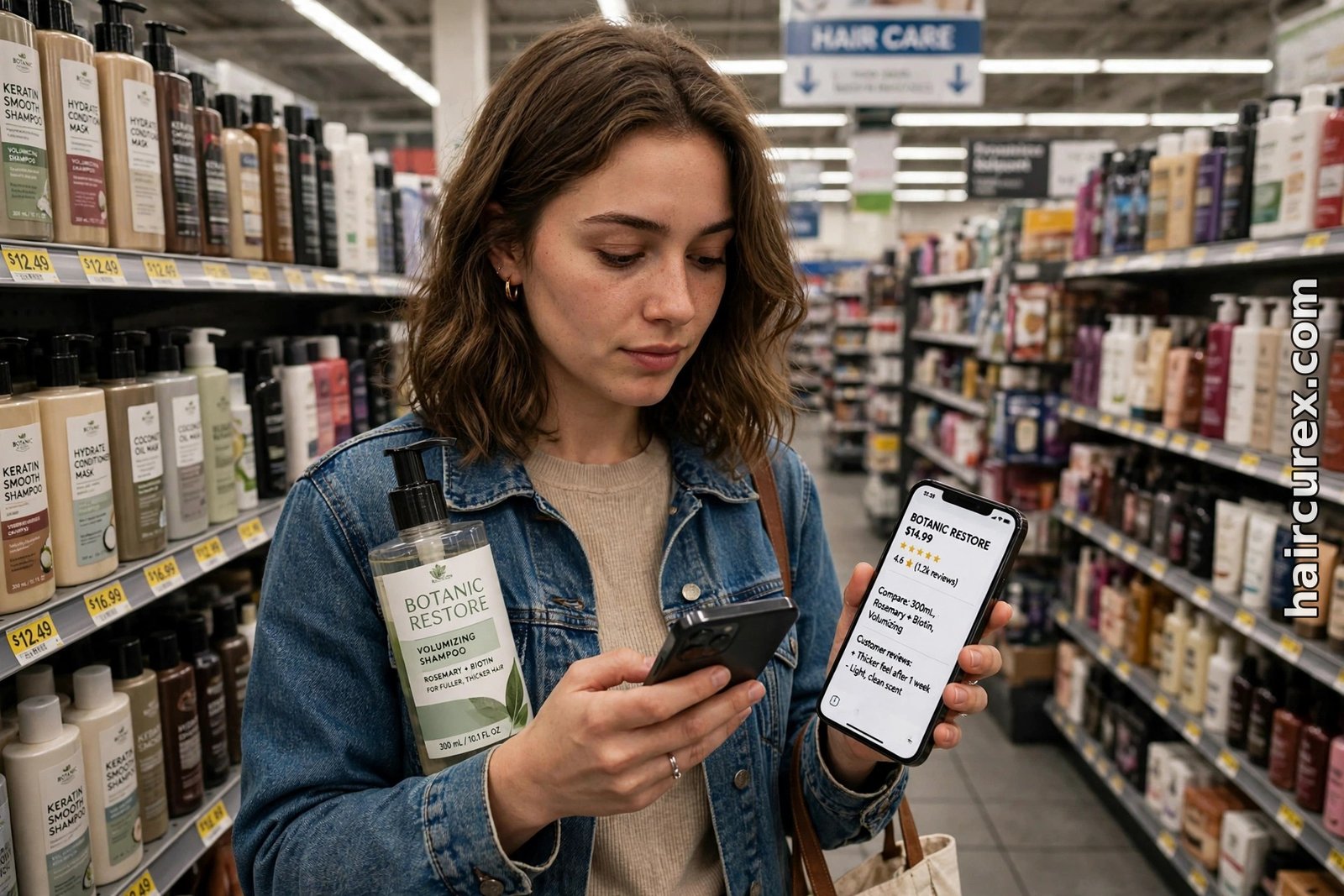
Take this list to the store, and a label check becomes a habit rather than a research project. First, check the top five ingredients: is the cleanser gentle or harsh for your hair type? Second, scan for formaldehyde releasers and skip them if your scalp is sensitive — or as a simple preference. Third, look for fragrance: if your scalp reacts easily, choose fragrance-free. Fourth, check leave-ins more strictly than rinse-outs, since they stay on your hair. Fifth, ignore the front of the bottle: “natural,” “clean,” and “sulfate-free” are marketing terms, not safety guarantees, and a “natural” product can still contain strong allergens.
Finally, judge a product by your hair after two to four weeks, not by its claims. Less frizz, less itching, softer ends, and color that lasts longer are real results; a longer ingredient blacklist is not. Keep products that pass that test, drop the ones that do not, and revisit the checklist only when you change hair type, color, or scalp condition. For a complete routine to build around your chosen products, see our hair care routine for beginners.
When to See a Dermatologist
Most ingredient problems resolve within a couple of weeks of stopping the product and returning to a gentle wash. See a dermatologist sooner if you have persistent redness, swelling, blistering, or soreness; flaking or itching that does not clear after a proper wash; patchy hair loss, a sore or tender scalp, or shedding that suddenly increases and stays increased. Bring the products you used, with their ingredient lists, to the appointment — that list is often the fastest route to identifying the culprit, and patch testing can confirm it. No article, including this one, replaces that advice for an individual scalp condition. See dermatologist guidance for healthy hair habits if you are unsure when to seek care.
Frequently Asked Questions About Hair Ingredients to Avoid
What are the worst hair ingredients to avoid?
Formaldehyde-releasing preservatives and hair-smoothing treatments that release formaldehyde are the firmest avoid, followed by strong fragrances and allergens for sensitive scalps, and harsh sulfates for dry, curly, or color-treated hair. Parabens, phthalates, and silicones are debated rather than proven hair damage.
Are sulfates actually bad for your hair?
Sulfates are strong cleansers that strip natural oils, which can dry out and irritate dry, curly, color-treated, or damaged hair, but they do not cause permanent hair loss. For oily, straight, uncolored hair they are often fine, and a gentler cleanser is the better choice when dryness or fading is the problem.
Should I avoid parabens in hair products?
You can choose paraben-free products if you prefer, but harm to hair or health at cosmetic doses has not been established, and regulators permit parabens at low levels. Sensitive scalps can occasionally react, so patch-testing and fragrance-free formulas matter more than any single preservative ban.
Are silicones bad for curly hair?
Silicones do not damage hair, but they can build up and weigh curls down, reducing definition, especially the non-water-soluble kinds. If you use them, wash occasionally with a shampoo strong enough to remove them, or choose lighter, water-soluble formulas.
What does fragrance-free mean on a hair product label?
Fragrance-free should mean no fragrance chemicals were added, while “unscented” products can still contain masking fragrance to hide other smells. If your scalp is sensitive, choose fragrance-free and patch-test new products before full use.
How do I read a hair product ingredient label?
Ingredients are listed in descending order of amount, so check the first five for cleansers, scan leave-in products more strictly than rinse-outs, look for formaldehyde releasers and fragrance if your scalp is sensitive, and remember that fatty alcohols like cetyl alcohol condition hair while short-chain alcohols dry it.