

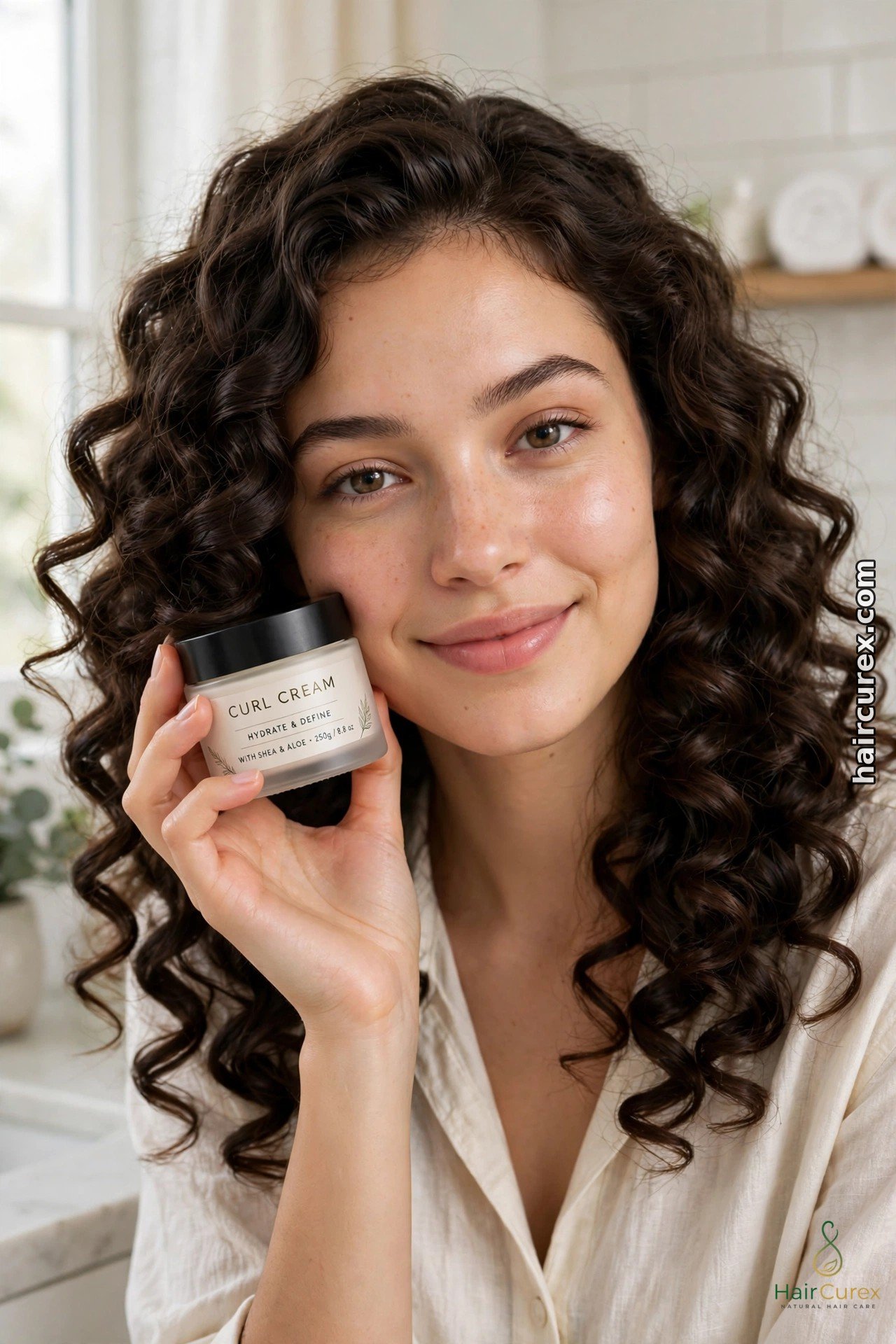
Walk into any beauty aisle and the curly hair shelf looks endless: shampoos, conditioners, leave-ins, creams, gels, mousses, oils and sprays, every bottle promising defined, frizz-free curls. The truth is simpler than the shelf suggests. The best curly hair products are not the most expensive ones, and they are not the ones with the prettiest packaging. They are the ones that match your curl type, your hair’s porosity, and the routine you will actually follow. Buy the wrong formula and even a good product will leave your curls limp, crunchy or frizzy — and the product, not the mismatch, gets the blame.
This guide cuts through the noise. It explains how to choose each product in a curly routine, what to check on the label before you pay, how much to use, and the mistakes that waste good products. No brand hype, no miracle claims — just the practical detail that decides whether a product works for your curls or sits half-used in the shower.
Quick answer: Choose curly hair products by curl type and porosity, not by brand. Fine, wavy hair needs lightweight leave-ins and light-hold gel; thick, tight curls need richer creams and stronger hold. Pick a sulfate-free shampoo, a moisturising conditioner, one leave-in, and one styler (gel or mousse) to start — four products are enough. Apply stylers to soaking-wet hair, use less than you think you need, and give any new product two to three wash days before judging it.
How to Choose the Best Curly Hair Products
Choosing well starts with knowing what your hair actually needs, because two people with “curly hair” can need opposite products. A person with fine 2C waves and a person with dense 4A coils both have curls, but the first needs feather-light formulas that will not weigh the waves down, while the second needs rich creams and butters to keep the coils moisturised. The label on the bottle cannot tell you which one you are — only your hair can.
Three things decide the choice: curl type, porosity, and density. Curl type is the shape of your curl, from loose waves to tight coils. Porosity is how easily your hair absorbs and loses moisture — low-porosity hair repels water and product, high-porosity hair soaks it up and dries out fast.
Density is how much hair you have, which decides how much product you need. You do not need a laboratory test for any of this: wash your hair, let it air-dry with no product, and look at the shape it takes. That shape is your curl type. Drop a clean strand in a glass of water and watch whether it floats (low porosity) or sinks quickly (high porosity). Count whether your ponytail feels thin, medium or thick — that is your density.
Once you know those three things, the product shelf gets much smaller. You stop buying what worked for someone else’s curls and start buying what your hair asks for. The sections below walk through each product category in the order you use them, so you can build a routine that fits — and stop paying for bottles you will never finish.
Know Your Curl Type First
Curl type is usually described with a number and a letter: 2 for wavy, 3 for curly, 4 for coily, with A, B and C marking how tight the pattern gets within each group. You do not need to memorise the whole chart, but knowing roughly where you sit changes every product choice you make. Our guide to curly hair types explains the full system with pictures, but the short version is in the table below.
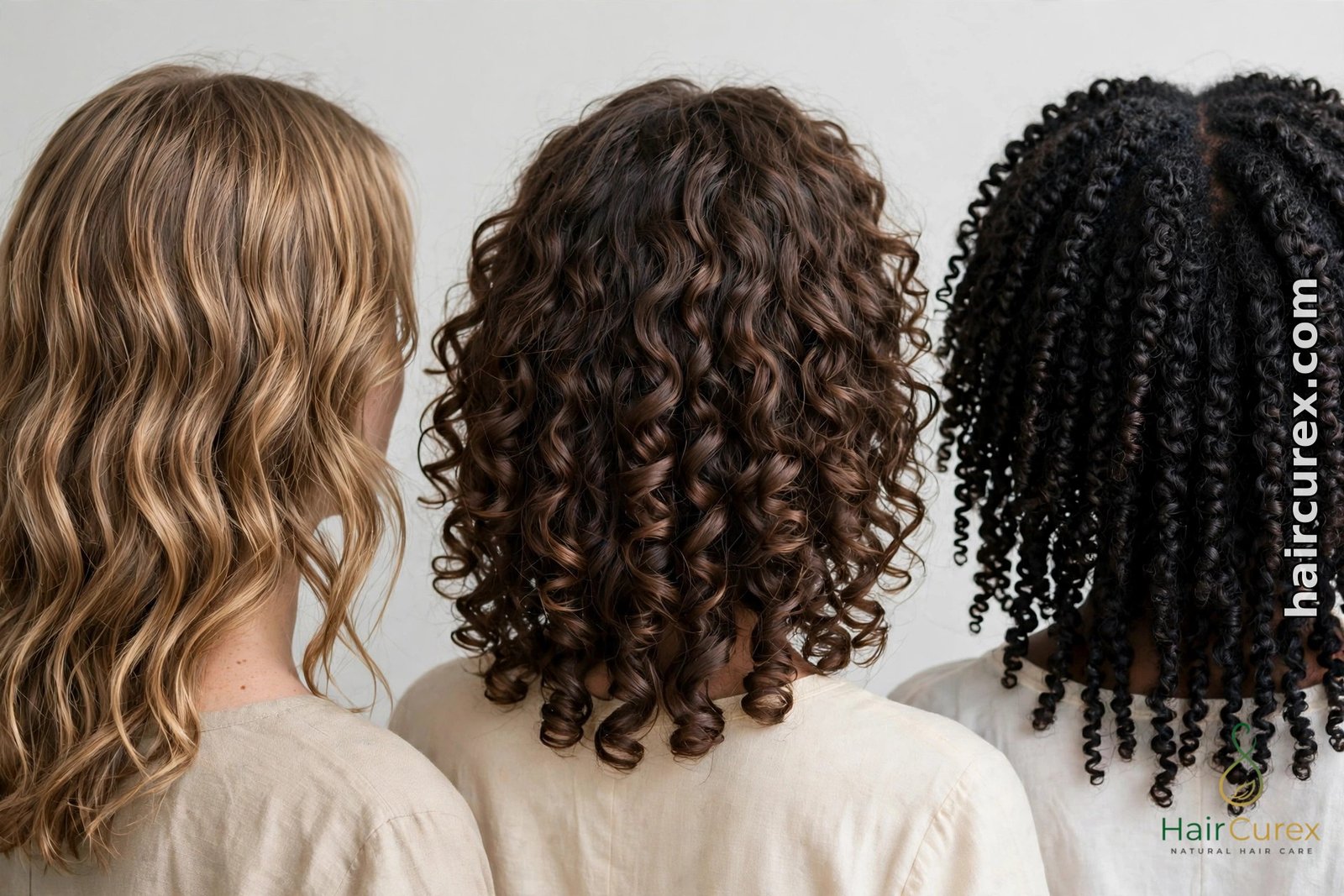
| Curl type | What it looks like | What it usually needs |
|---|---|---|
| 2A–2C wavy | Loose S-shaped waves, straighter at the roots | Lightweight leave-in, light-hold gel or mousse, minimal cream |
| 3A–3B curly | Defined springy ringlets and corkscrews | Moisturising shampoo, leave-in conditioner, cream or medium-hold gel |
| 3C–4A curly-coily | Tight corkscrews and small coils | Rich leave-in, curl cream, stronger-hold gel, sealing oil |
| 4B–4C coily | Tight zig-zag coils, lots of shrinkage | Heavy creams and butters, deep conditioning, gentle handling |
Most people have more than one curl type on their head — looser at the front, tighter at the back, or straighter underneath. That is normal. Buy for the type that covers most of your hair, and adjust the amount of product section by section rather than buying a different product for every patch. A single good cream can serve the whole head if you use a little more where the curls are tighter and a little less where they are looser.
Porosity matters just as much as curl type, and it is the thing most shoppers skip. Low-porosity hair has a tightly closed cuticle, so water beads on it and heavy creams sit on top instead of soaking in — light, water-based products work better, and heat (like a warm towel) helps products absorb. High-porosity hair has a raised or damaged cuticle, so it drinks up moisture and loses it just as fast — richer creams, leave-ins and a light oil to seal the ends help it hold onto hydration. If your hair takes forever to get fully wet in the shower, it is probably low porosity. If it gets wet instantly and dries in minutes, it is probably high porosity.
Shampoo and Conditioner: The Foundation
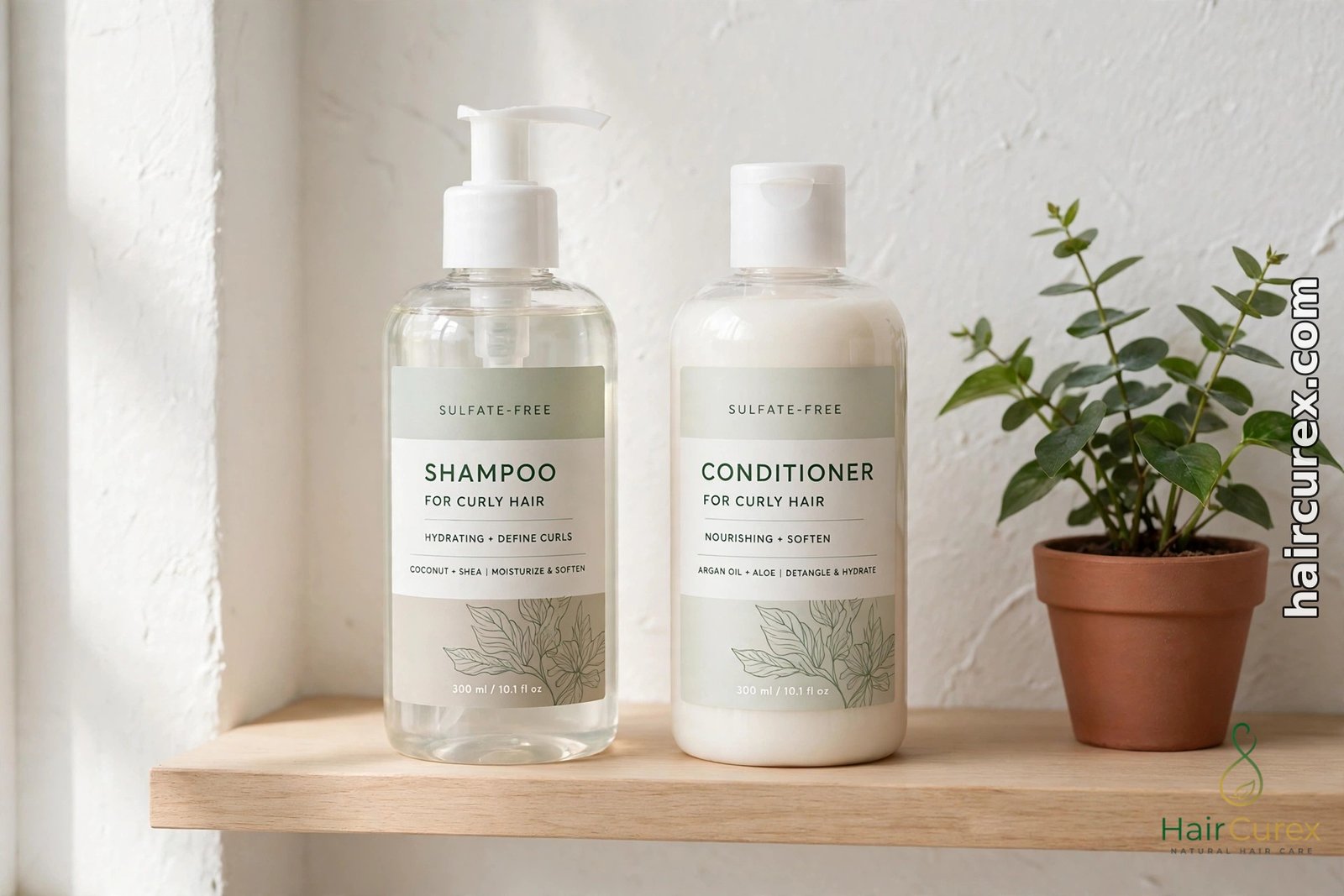
Every curly routine starts in the shower, and shampoo is where most people go wrong first. Curly hair is naturally drier than straight hair, because the oils from the scalp have to travel around every bend of the curl to reach the ends — and they rarely make it. A harsh shampoo strips away what little oil is there, leaving the curls dry, rough and frizzy before you have even started styling.
That is why sulfate-free shampoo is the standard recommendation for curly hair. Sulfates are strong cleansers that create a big lather and remove oil very effectively — too effectively for curls. A sulfate-free formula cleans the scalp without stripping it, so the hair keeps more of its natural moisture. Our guide to the best shampoo for curly hair compares the formulas worth considering, but the principle is simple: if the shampoo leaves your hair feeling squeaky and straw-like, it is too harsh for your curls, whatever the label promises.
Conditioner does the heavy lifting after shampoo. Curly hair almost always needs more conditioner than straight hair, because the ends are the oldest and driest part of every strand. Apply conditioner from the mid-lengths to the ends, where the dryness lives, and use much less near the roots, where it can weigh the curls down and make the scalp greasy. Leave it in for two to three minutes so it has time to work — rinsing it out after ten seconds wastes most of what you paid for.
A deep conditioner or hair mask once a week is worth adding for most curl types, especially if your hair is coloured, heat-damaged or high porosity. It is the same idea as regular conditioner, just richer and left on longer — ten to twenty minutes under a shower cap or warm towel. You do not need a separate product for every wash day; one good deep conditioner used weekly does more than five mediocre ones used daily.
How often should you shampoo at all? Most curly hair does best washed two to three times a week, not daily. Daily washing strips moisture and forces you to restyle from scratch every morning. On non-wash days, a refresh with a little water and leave-in is usually enough to wake the curls back up. If your scalp gets oily or itchy between washes, a co-wash — washing with conditioner only — or a gentle low-poo cleanser can bridge the gap without a full shampoo.
Leave-In Conditioner and Curl Cream
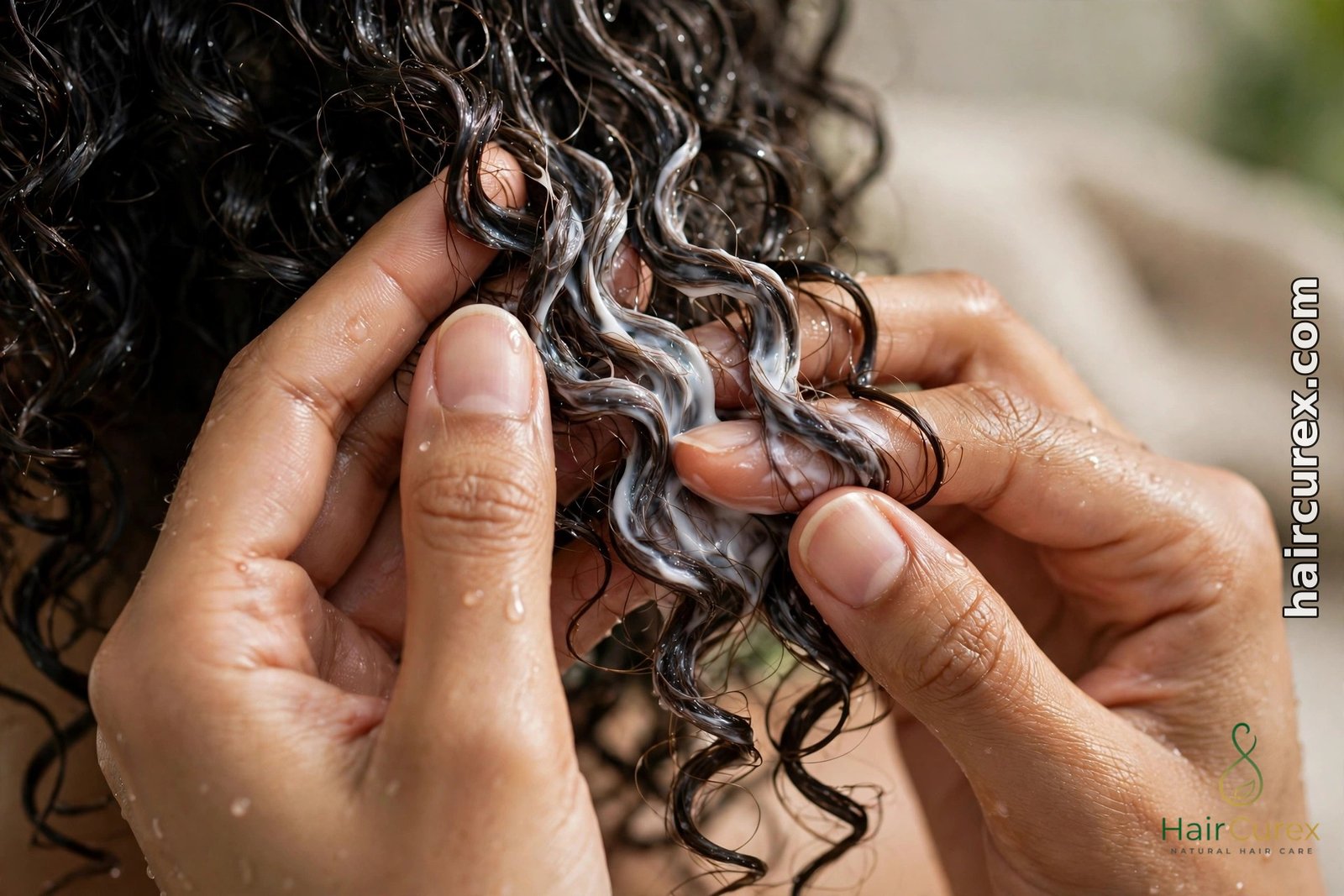
Leave-in conditioner is the single most useful product in a curly routine, and the one most beginners skip. It is a light conditioner you do not rinse out, and it does three jobs at once: it adds moisture back after washing, it detangles so you can work through knots without breakage, and it gives the styler that follows something to grip onto. Applied to soaking-wet hair, it forms the base layer that everything else builds on.
Curl cream is the next layer, and it is the product that most directly shapes how your curls look. Creams add definition and softness, taming frizz without the hard cast a gel leaves. They suit medium and thick curls best, and they are the product to reach for when your hair feels dry or rough after washing. Fine or wavy hair should use cream sparingly — a pea-sized amount, emulsified between the palms and smoothed over the lengths — because too much cream is the fastest way to weigh waves down into limp, greasy-looking strands.
The order matters: leave-in first, then cream, then styler. Each layer should be applied to wet hair, because water is what carries the product evenly through the curls and helps them clump into defined groups. The technique stylists recommend is simple: smooth the product over the hair in sections, then scrunch upward toward the scalp to encourage the curl pattern. Raking the product through with your fingers works for detangling, but scrunching is what builds definition. Work in sections — four is enough for most heads — rather than trying to coat everything at once, and you will use less product and get a more even result.
One warning: more product is not more definition. The most common beginner mistake is loading on cream and leave-in until the hair looks coated, then wondering why the curls are stringy and dull. Start with less than you think you need. You can always add a little more to a dry section; you cannot take excess product out without washing and starting again.
Styling Products: Gel, Mousse and Cream
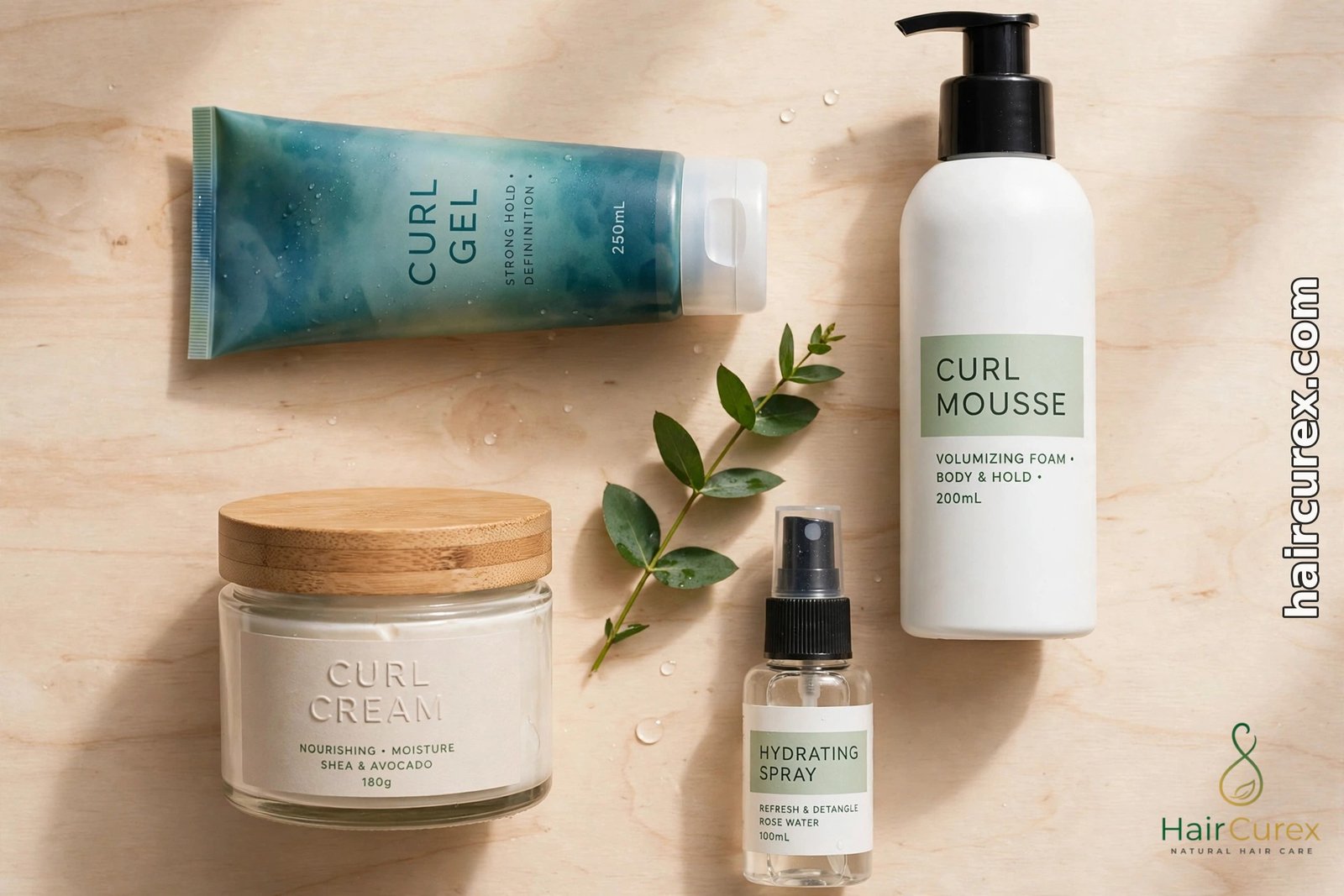
The styler is the product that holds the curl shape while the hair dries, and it is where the choice between gel, mousse and cream actually matters. They do the same job — hold — in different ways, and the right one depends on your curl type and the finish you want.
| Styler | Hold | Finish | Best for |
|---|---|---|---|
| Gel | Medium to strong | Defined, shiny, can dry with a hard cast that softens when scrunched | Most curl types; the most reliable hold for wash day |
| Mousse | Light to medium | Soft, bouncy, lots of volume | Fine and wavy hair; anyone who wants lift at the roots |
| Curl cream | Light | Soft, touchable, natural | Thick or dry curls; frizz control without stiffness |
Gel is the workhorse. A good gel gives the strongest, longest-lasting definition, and the dreaded “crunch” people complain about is actually the hold working — a hard cast that forms as the gel dries and then breaks apart into soft, defined curls when you scrunch it out with your hands once the hair is completely dry. Our list of the best curl gels for curly hair covers the formulas that do this well. If you have only ever tried one styler and it disappointed you, gel is the one worth trying properly before you give up on styling products altogether.
Mousse is the lighter option and the best friend of fine and wavy hair. It adds volume and a soft hold without the weight of a cream or the cast of a gel, and it is the easiest styler to apply — a palmful worked through damp hair, scrunched upward, and left to dry. The best mousses for curly hair are the ones that hold without leaving the hair sticky or stiff. Mousse alone rarely gives all-day definition for tight curls, but layered over a leave-in it is often all wavy hair needs.
Curl cream sits between the two: more moisture than mousse, less hold than gel. It is the best choice when your main problem is dryness and frizz rather than hold — the curls already have a shape, they just need softening and smoothing. Many people with thick curls use cream and gel together, cream first for moisture and softness, gel on top for hold. That layering, cream under gel, is the combination behind most of the defined wash-day results you see in photos.
A hair oil is not a styler, but it is the useful finishing step. A drop or two of a light oil smoothed over the ends once the hair is dry adds shine, seals in the moisture from the leave-in, and helps break up any remaining gel cast. Use it last, after the hair is fully dry — oil on wet hair mostly sits on the surface and can block the styler underneath from doing its job.
What to Check on the Label Before You Buy
The front of the bottle is advertising; the back is the product. Two minutes reading the ingredient list saves more money than any sale, because it tells you what you are actually buying.
First, check the cleansers in a shampoo. Sodium lauryl sulfate and sodium laureth sulfate are the strong sulfates to avoid if your curls run dry; gentler cleansers like cocamidopropyl betaine or decyl glucoside clean without the same stripping effect. You do not need to memorise the chemistry — just look for “sulfate-free” on the front and then confirm there is no sulfate hiding in the first few ingredients on the back.
Second, look for the moisturisers. Glycerin, shea butter, coconut oil, aloe vera and panthenol are the ingredients that actually hydrate curly hair, and they should appear reasonably high in the list — ingredients are listed in order of amount, so anything in the last few lines is present in tiny quantities no matter how loudly the front label advertises it. A product that shouts “with argan oil” but lists it second from last is selling you the word, not the oil.
Third, watch the alcohols. Not all alcohols are bad — fatty alcohols like cetyl alcohol and stearyl alcohol are actually moisturisers that make conditioner feel creamy. The drying ones to watch for are denatured alcohol, ethanol and isopropyl alcohol high on the list, especially in gels and sprays used daily. A gel with drying alcohol near the top will make dry curls drier over time, whatever its hold promises.
Finally, remember that cosmetics labelling is regulated, and the ingredient list is the most reliable guide to what is in the bottle. The U.S. Food and Drug Administration explains how cosmetics are labelled, so a quick check of its guidance makes label-reading much easier the second time around. And for the basics of gentle hair care — less heat, careful detangling, protecting the hair from damage — the American Academy of Dermatology’s healthy hair tips are a solid, no-nonsense reference worth bookmarking.
Fragrance and “natural” claims deserve a sceptical eye too. A strong fragrance is the most common cause of scalp irritation from hair products, so if your scalp itches after a new product, fragrance is the first suspect. And “natural” on a label is a marketing word, not a guarantee — a plant-based gel can still be drying, and a synthetic conditioner can still be gentle. Judge the ingredient list, not the adjectives.
Putting It Together: A Simple Wash-Day Routine
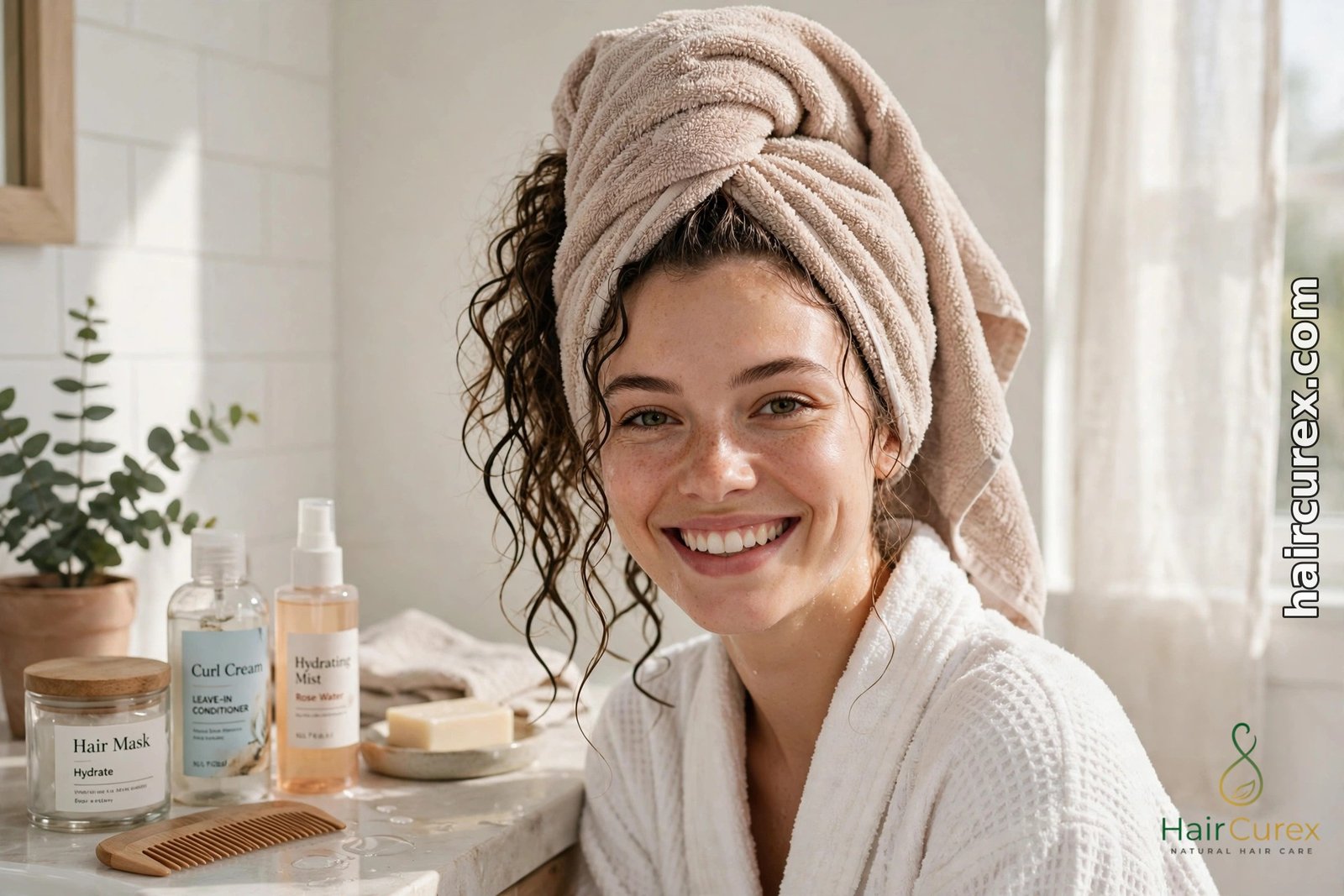
A good routine is a short routine you will actually repeat. Four products — shampoo, conditioner, leave-in and one styler — are enough to start, and you can add a deep conditioner weekly and a cream later if your hair asks for it. Here is the whole wash day in order.
First, wet the hair fully and shampoo the scalp, not the lengths. Massage with your fingertips, not your nails, and let the suds run down the lengths as you rinse — that is enough cleaning for the ends, which are the driest part. Second, apply conditioner from mid-length to ends, leave it for two to three minutes, and detangle gently with your fingers or a wide-tooth comb while it is in. Rinse with cool water if you can stand it; it helps the cuticle lie flat and adds shine.
Third, while the hair is still soaking wet, smooth in a leave-in conditioner, then your cream if you use one, then your styler. Work in sections and scrunch upward to encourage the curl pattern. Do not towel-dry first — the water in the hair is part of how the products spread evenly. Fourth, dry without disturbing the curls. Air-drying is the gentlest option; if you use a diffuser, use low heat and low speed, and do not touch the hair until it is completely dry. Touching wet curls breaks the cast before it sets and is the single biggest cause of frizz on wash day.
Once the hair is fully dry, scrunch out any gel cast with your hands — or with a drop of oil on your palms — and the curls will soften into their final shape. That is the whole routine. It takes about twenty minutes of active work, most of it in the shower, and it is the same routine whether you use four products or eight. The extra products only earn their place if they fix a specific problem the basic four do not.
Mistakes That Waste Good Products
Even the right products fail when the routine around them is wrong, and these are the mistakes that waste the most money. The first is buying a full routine at once. Ten new products used together tell you nothing — if the result is bad, you do not know which product caused it, and if it is good, you do not know which one deserves the credit. Add one product at a time and give it two or three wash days before you judge it. Hair needs a few washes to adjust, and a single bad wash day can be the weather, not the product.
The second is applying products to damp or dry hair. Stylers are designed for soaking-wet hair; on damp hair they distribute unevenly, clump in patches and leave some sections coated and others bare. If your hair has started to dry before you apply the styler, re-wet it with a spray bottle first. It takes thirty seconds and changes the result completely.
The third is touching the hair while it dries. Every touch breaks the curl clumps apart and invites frizz, which is why the advice is always the same: apply, scrunch, then hands off until it is dry. If frizz is your main complaint, this one change — not a new product — is the most likely fix. Our guide on how to get rid of frizzy hair covers the other causes, from rough towels to humidity, in more detail.
The fourth is using too much. Curly hair needs product, but it needs the right amount, and the right amount is almost always less than the first squeeze suggests. A good rule is to start with half of what you think you need, see how the hair dries, and add more next wash day if the definition was not there. Overloaded hair looks stringy, feels coated and takes forever to dry — and no amount of extra product fixes it, because the product is the problem.
The fifth is chasing every new launch. The curly hair world moves fast, and every month brings a product that promises to replace everything you own. Most of them are a small variation on a formula you already have. A routine that works is worth more than a shelf of novelties, and the money saved is better spent on the one product in your routine that is genuinely running low.
Frequently Asked Questions
What are the best curly hair products for beginners?
Start with four: a sulfate-free shampoo, a moisturising conditioner, a leave-in conditioner and one styler — a medium-hold gel for most curl types, or a mousse for fine and wavy hair. That is a complete routine. Add a curl cream later only if your hair still feels dry after the leave-in, and a deep conditioner once a week if your hair is damaged or high porosity.
Do curly hair products really need to be sulfate-free?
For most curly hair, yes. Sulfates are strong cleansers that strip the natural oils curly hair already struggles to keep, leaving the curls dry and frizzy. A sulfate-free shampoo cleans the scalp without that stripping effect. If your hair is fine and wavy and gets greasy quickly, a gentle sulfate shampoo used occasionally is not a disaster — but a sulfate-free formula should be your everyday default.
How much product should I use on curly hair?
Less than you think. A coin-sized amount of shampoo, a generous palmful of conditioner for the lengths, a pea- to grape-sized amount of leave-in depending on thickness, and a similar amount of styler per section. Start small and add more next wash day if the definition was missing — excess product is the most common reason curls look stringy and dull.
Can I use regular shampoo on curly hair?
You can, but most regular shampoos are formulated for straight hair and are too harsh for curls, especially if they contain sulfates and leave the hair feeling squeaky clean. That squeaky feeling is the natural oils being stripped away. A sulfate-free shampoo made for curly or dry hair is a better daily choice, and the difference usually shows within two or three washes.
How often should I wash curly hair?
Two to three times a week suits most curly hair. Daily washing strips moisture and forces a full restyle every morning, while washing too rarely lets product build up and weighs the curls down. On non-wash days, refresh with a little water and leave-in conditioner instead of a full wash.