


The best shampoo for curly hair is not the most expensive bottle on the shelf, and it is not the one with the prettiest packaging. It is the one whose formula matches what curly hair actually needs: gentle cleansing that does not strip away natural oils, enough moisture to keep curls soft and defined, and no heavy buildup that weighs the curl pattern down.
Curly hair is naturally drier than straight hair, because the oils from your scalp have a harder time travelling down the twists and turns of each strand. That single fact explains why so many people with curls end up with frizz, dryness and limp curls — and why the shampoo you choose matters more for curly hair than for almost any other hair type. This guide explains exactly what to look for on the label, which ingredients help and which ones to avoid, how to match a shampoo to your curl type, and how to wash so your curls come out defined instead of frizzy.
Quick answer: The best shampoo for curly hair is a sulfate-free, moisturizing shampoo made for curly or dry hair, with gentle cleansers and hydrating ingredients like glycerin, shea butter or coconut oil, and without drying sulfates or heavy silicones. Wash 2–3 times a week (less for tight curls, more for fine waves), massage the shampoo into your scalp only, rinse thoroughly, and always follow with conditioner. If your scalp is oily or you use a lot of styling products, use a clarifying shampoo once every 1–2 weeks — and never judge a sulfate-free shampoo by its foam, because less lather does not mean less clean.
Why Curly Hair Needs a Different Shampoo
Curly hair and straight hair do not behave the same way, so they should not be washed the same way. Each bend in a curly strand is a weak point where the hair cuticle lifts slightly, letting moisture escape. The same bends also slow down the natural oils (sebum) that travel from the scalp along the hair shaft, so the ends of curly hair are almost always drier than the roots. A shampoo designed for straight, oily hair is usually built to remove oil aggressively — exactly the wrong job for curls, which need that oil.
A good curly-hair shampoo does three things at once. First, it cleans the scalp and removes sweat, dirt and product residue without stripping the hair’s natural moisture. Second, it leaves behind light conditioning agents that help curls clump into defined patterns instead of separating into frizz. Third, it rinses clean, so it does not leave a coating that builds up over weeks and makes curls look dull and heavy. If your current shampoo leaves your hair feeling squeaky-clean and straw-like, it is almost certainly too harsh for your curls. Healthy curly hair after washing should feel clean but soft and slippery, never stiff or tangled.
Your curl pattern also changes what you need. Loose waves (types 2A–2B) get weighed down easily, so they need a lighter formula. Classic curls (3A–3C) need a balance of moisture and definition. Tight coils (4A–4C) are the driest of all and need the richest, most moisturizing formulas. If you are not sure where you fall, our guide to curly hair types explains the 2A to 4C system and how to care for each type.
Best Shampoo for Curly Hair: What to Look For on the Label
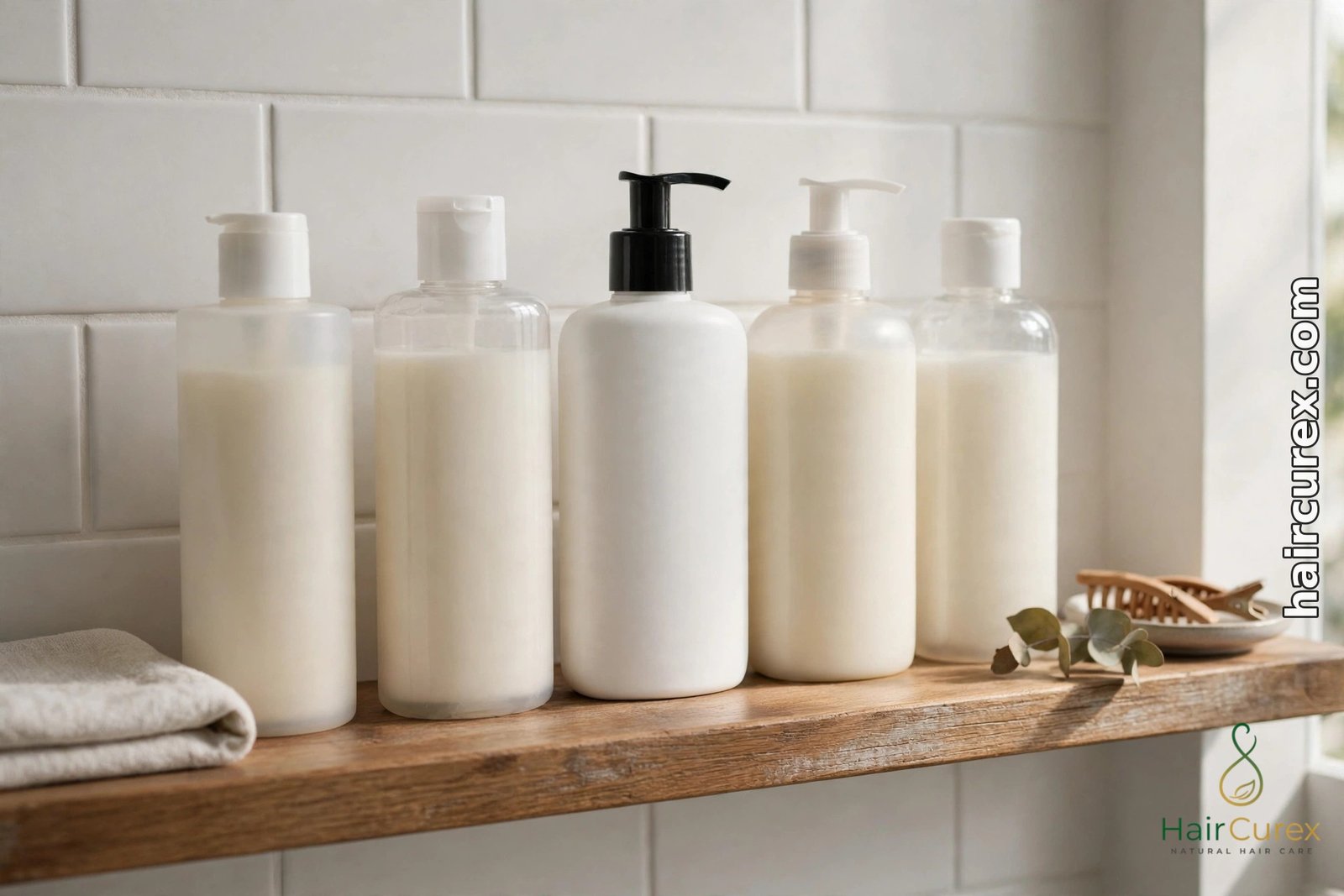
Shopping for curly-hair shampoo gets much easier once you know what the label is telling you. Look for these things, in this order:
- “Sulfate-free” on the front of the bottle. Sulfates such as sodium lauryl sulfate (SLS) and sodium laureth sulfate (SLES) are strong detergents that create the big, foamy lather most people associate with “clean.” They are also the ingredients most likely to strip curly hair of the oils it needs. A sulfate-free shampoo uses gentler cleansers — look for names like cocamidopropyl betaine, sodium cocoyl isethionate or decyl glucoside in the ingredients list. It will foam less, and that is normal. Less foam does not mean less clean; give it a week before you judge it.
- Moisturizing ingredients near the top of the list. Ingredients are listed in order of concentration, so the first five or six matter most. For curly hair, good signs include glycerin, aloe vera, shea butter, coconut oil, argan oil, jojoba oil and avocado oil. These draw moisture into the hair or help seal it in. If the first ingredients are only water and strong sulfates, the bottle is a clarifying shampoo in disguise, not a daily curly-hair shampoo.
- The right weight for your curl type. Fine, wavy hair needs a lightweight, volumizing formula — heavy butters will flatten it. Thick or coily hair needs a richer, creamier shampoo with butters and oils. If a shampoo makes your curls look limp after one wash, it is probably too heavy for your hair; if your hair still feels dry and rough, the formula is too light.
- A pH-balanced, color-safe claim if you dye your hair. Hair’s natural pH is slightly acidic, around 4.5–5.5, and shampoos in that range keep the cuticle lying flat, which means shinier, less frizzy curls. If your hair is color-treated, a color-safe sulfate-free shampoo also slows fading noticeably.
- No misleading “for all hair types” promise. A shampoo that claims to suit every hair type is usually a compromise. Curly hair does better with a formula made specifically for curly, dry or damaged hair — the label should say so.
Price is a poor guide. There are excellent sulfate-free curly shampoos at drugstore prices and overpriced ones that are no better. Judge the bottle by its ingredients and by how your hair feels after two weeks of use, not by the price tag or the brand name.
Ingredients That Matter: What to Look For and What to Avoid
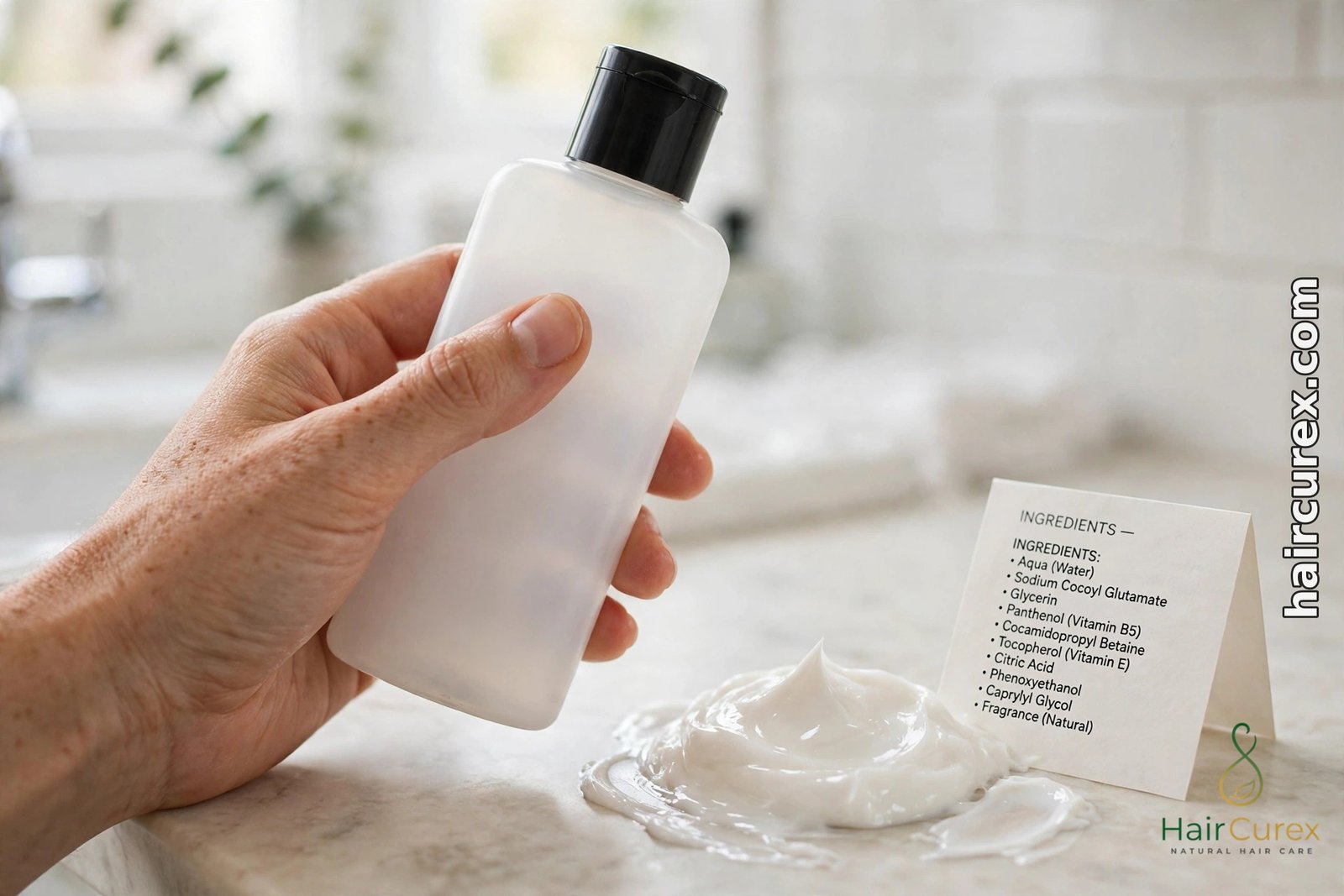
The table below sums up the ingredients that help curly hair and the ones that usually cause problems. You do not need to memorize it — keep it open on your phone the next time you shop.
| Ingredient | What it does | Verdict for curly hair |
|---|---|---|
| Glycerin | Draws moisture from the air into the hair | Look for it — a proven humectant |
| Shea butter | Rich moisturizer that softens and seals | Great for thick, dry or coily curls; can weigh down fine waves |
| Coconut oil | Penetrates the hair shaft and reduces protein loss | Good in moderate amounts; too much can build up |
| Argan / jojoba oil | Lightweight oils that add shine without heaviness | Good for most curl types, including fine curls |
| Aloe vera | Soothes the scalp and adds light moisture | Good, especially for sensitive or itchy scalps |
| Sodium lauryl sulfate (SLS) | Strong detergent, heavy foam | Avoid for regular use — strips natural oils |
| Sodium laureth sulfate (SLES) | Strong detergent, slightly gentler than SLS | Avoid for regular use on curly hair |
| Drying alcohols (alcohol denat., ethanol) | Evaporate quickly and dry the hair out | Avoid; note that fatty alcohols like cetyl alcohol are different and fine |
| Non-soluble silicones (dimethicone) | Coat the hair for instant shine, then build up | Avoid unless you clarify regularly — buildup blocks moisture |
| Mineral oil / waxes | Heavy coating agents | Avoid — they sit on the hair and weigh curls down |
| Protein (keratin, wheat protein) | Strengthens the hair shaft | Helpful in small amounts; too much makes hair stiff and brittle |
One ingredient deserves a special note: protein. Curly hair that is damaged or very stretchy and limp often needs protein, but healthy curly hair can become dry and brittle if it gets too much. If a shampoo leaves your curls feeling stiff or straw-like, try a protein-free moisturizing shampoo for a few weeks and see if the softness returns. The American Academy of Dermatology’s healthy hair tips are a useful second opinion on gentle washing and handling if your hair is fragile or breaking.
How to Choose by Curl Type
The best shampoo for curly hair is not the same bottle for every curl pattern — the right formula depends on how tight your curls are. Use the table as a starting point, then adjust for your hair’s thickness and porosity — how easily your hair absorbs and holds water.
| Curl type | What it looks like | Best shampoo profile | Wash frequency |
|---|---|---|---|
| 2A–2B (wavy) | Loose S-shaped waves, easily weighed down | Lightweight, sulfate-free, volumizing; avoid heavy butters | 3–4 times a week |
| 2C–3A (loose curls) | Defined waves to loose, springy curls | Balanced moisture; light oils like argan or jojoba | 2–3 times a week |
| 3B–3C (classic curls) | Springy ringlets, prone to frizz | Moisturizing sulfate-free with glycerin and light butters | 2–3 times a week |
| 4A–4B (coily) | Tight coils, very dry, fragile | Rich, creamy, deeply moisturizing; shea butter and oils welcome | 1–2 times a week |
| 4C (tight coils) | Very tight zigzag pattern, driest of all | Richest moisturizing formulas; consider co-washing between shampoos | Once a week, with co-wash in between |
Porosity matters too. Low-porosity hair (the cuticle lies flat and water beads on it) gets weighed down by heavy butters, so lighter formulas with glycerin and honey work better. High-porosity hair (damaged, color-treated or very dry, soaks up water fast and loses it fast) needs richer formulas with butters and oils to seal moisture in. If you are not sure about your porosity, put a clean strand of shed hair in a glass of water: if it floats after a few minutes, it is likely low porosity; if it sinks quickly, it is likely high porosity.
If your scalp is oily but your ends are dry — a common combination — you do not need an oily-hair shampoo for your whole head. Wash the scalp with your regular curly shampoo, focus the lather there, and let the rinse carry the rest down the lengths. If oil is a real problem, our guide to the best shampoo for oily hair explains how to handle an oily scalp without drying out the lengths. And if shedding is your main worry rather than dryness, see our guide to the best shampoo for hair fall — the priorities are different, and a hair-fall shampoo is not automatically a good curly-hair shampoo.
How to Wash Curly Hair the Right Way

The shampoo you buy only does its job if you use it properly. Washing curly hair well is a short routine, and doing it right makes a visible difference in definition and frizz.
Step 1: Wet your hair completely. Lukewarm water, not hot — hot water lifts the cuticle and increases frizz. Let the water run through your hair for a full minute so every strand is soaked.
Step 2: Use less shampoo than you think. A coin-sized amount is usually enough for shoulder-length hair. Curly hair does not need a mountain of lather, and extra product just means extra rinsing.
Step 3: Massage the scalp, not the lengths. Work the shampoo into your scalp with your fingertips in small circles. The scalp is where oil, sweat and buildup live, and it is the only part that needs scrubbing. Let the lather run down the lengths as you rinse — that is enough cleaning for the ends, which are the driest part.
Step 4: Rinse thoroughly. Leftover shampoo is one of the most common causes of dull, itchy curls. Rinse for at least 30–60 seconds longer than you think you need to, until the water runs clear and your hair feels clean but not squeaky.
Step 5: Condition every time. Shampoo opens the cuticle; conditioner closes it. Apply conditioner from mid-length to ends, leave it in for 2–3 minutes, then rinse with cool water. Never skip conditioner after shampooing curly hair — it is not optional.
Step 6: Dry gently. Scrunch out water with a microfiber towel or an old cotton T-shirt instead of a rough bath towel, which roughs up the cuticle and creates frizz. Avoid rubbing. If you use a diffuser, use low heat and low speed.
Many people with curly hair follow the Curly Girl Method, which builds a whole routine around gentle, sulfate-free cleansing, silicone-free conditioning and careful styling. It is not the only way to care for curls, but its core rule — no harsh sulfates, no heavy silicones — is the same rule this guide recommends, and Healthline’s guide to taking care of curly hair explains the same principles from a dermatology-informed angle.
How Often Should You Wash Curly Hair?
There is no single right answer, because it depends on your curl type, your scalp and your lifestyle. As a starting point: wavy hair (2A–2B) usually does well washed 3–4 times a week; classic curls (3A–3C) 2–3 times; coily hair (4A–4C) once or twice a week, sometimes with a co-wash — washing with conditioner only — in between. Whatever your wash frequency, the best shampoo for curly hair is the one you can use consistently without dryness or buildup.
Two signs tell you to wash more often: your scalp itches, or your roots look flat and greasy. Two signs tell you to wash less often: your ends feel dry and straw-like, or your curls lose definition the day after washing. Between washes, a little water misted onto your curls in the morning can refresh the pattern without a full wash. If you work out or sweat heavily, a quick rinse with water — or a co-wash — is usually enough; you do not need a full shampoo every time you sweat.
One exception: if you use a lot of styling products, or if your water is hard (high in minerals), use a clarifying shampoo once every 1–2 weeks. Clarifying shampoos are stronger by design — they remove buildup that a gentle shampoo cannot — so use them only occasionally, always follow with a deep conditioner, and do not use them as your daily shampoo. If you use a lot of leave-in products like hair custard, a clarifying wash is what keeps them from building up and dulling your curls.
5 Mistakes to Avoid with Curly Hair Shampoo

- Choosing by scent or packaging. A nice smell tells you nothing about the formula. Turn the bottle around and read the ingredients first — sulfates in the first three ingredients is a no, whatever the front label promises.
- Using a shampoo made for straight, oily hair. These formulas are designed to remove maximum oil. On curls they remove the moisture your hair cannot afford to lose, and the result is frizz, tangles and breakage.
- Scrubbing the lengths. Your ends are the oldest, driest part of your hair. Scrubbing them with shampoo roughs up the cuticle and causes frizz and split ends. Shampoo the scalp; let the rinse clean the lengths.
- Skipping conditioner — or using a 2-in-1. Two-in-one shampoo-conditioners are a compromise that serves neither job well, and for curly hair they almost always leave the hair under-conditioned. Use a separate conditioner every time you shampoo.
- Switching shampoos every week. A new shampoo needs about two weeks to show its real effect, because your hair is still adjusting and old buildup is still clearing. If you switch constantly, you never learn what actually works. Pick one sulfate-free shampoo, use it for two weeks, and judge it on how your curls look and feel — not on how much it foams.
When to See a Professional
Even the best shampoo for curly hair can only solve dryness, frizz and buildup — it cannot fix everything. See a dermatologist or a curl-specialist stylist if you notice sudden or patchy hair loss, a scalp that stays itchy, flaky or sore despite gentle washing, bald spots, or hair that breaks off in large amounts. Those can be signs of a scalp condition or a medical issue that no shampoo will fix. A stylist who specializes in curly cuts can also help if your curl pattern looks uneven or your hair will not hold a shape no matter what products you use — sometimes the cut is the problem, not the shampoo.
The Bottom Line
The best shampoo for curly hair is a sulfate-free, moisturizing formula matched to your curl type — light for waves, richer for coils — used the right way: scalp only, lukewarm water, thorough rinse, conditioner every time. Read the ingredients before you buy, give a new shampoo two weeks before you judge it, and clarify once every week or two if you use styling products. Do that consistently, and most curls get softer, more defined and far less frizzy within a month — no miracle product required, just the right bottle and the right routine.
Frequently Asked Questions
What is the best shampoo for curly hair?
The best shampoo for curly hair is a sulfate-free, moisturizing shampoo made for curly or dry hair, with gentle cleansers and hydrating ingredients like glycerin, shea butter or coconut oil. Choose a lightweight formula for waves and a richer one for tight coils, and avoid strong sulfates and heavy silicones.
Should curly hair use sulfate-free shampoo?
Yes, in most cases. Sulfates are strong detergents that strip curly hair of the natural oils it already struggles to keep. A sulfate-free shampoo cleans gently without that stripped, dry feeling, which means less frizz and better curl definition over time.
How often should you wash curly hair?
Wavy hair usually does well washed 3–4 times a week, classic curls 2–3 times a week, and coily hair once or twice a week, sometimes with a co-wash in between. Wash more often if your scalp itches or your roots look greasy, and less often if your ends feel dry.
Can I use regular shampoo on curly hair?
You can, but it is usually a poor choice. Regular shampoos made for straight or oily hair are often too harsh for curls and leave them dry, frizzy and tangled. A shampoo made for curly or dry hair with a sulfate-free formula is a better fit.
Why does my curly hair feel dry after shampooing?
The most common reasons are a shampoo with strong sulfates, washing too often, water that is too hot, or skipping conditioner. Switch to a sulfate-free moisturizing shampoo, wash less often, use lukewarm water, and condition every time you shampoo.
What ingredients should I avoid in shampoo for curly hair?
Avoid strong sulfates (sodium lauryl sulfate and sodium laureth sulfate), drying alcohols, heavy non-soluble silicones like dimethicone, mineral oil and waxes. These either strip moisture or build up on the hair and block moisture from getting in.