


Quick answer: The best products for coily hair are gentle, moisture-rich formulas used in the right order: a sulfate-free cleanser or co-wash, a thick deep conditioner, a hydrating leave-in, a curl cream for softness, a gel for definition, and a light oil or butter to seal moisture in. Coily hair does not need dozens of products. It needs consistent moisture, gentle handling, and formulas that support the tight curl pattern instead of fighting it.
Coily hair, classified as type 4A, 4B, or 4C, has springy coils that shrink dramatically when dry. That tight pattern is also why it often feels dry, tangles easily, and breaks more readily than looser curls. The right routine can make wash day easier, keep coils defined for days, and reduce breakage.
Why Coily Hair Needs Different Products
Every bend in a coil is a point where the strand is weaker and more vulnerable to friction. Natural scalp oils also struggle to travel down a tightly coiled strand, which is why the ends are usually driest. Dermatologists from the American Academy of Dermatology note that curly and tightly coiled hair is more prone to breakage and dryness, and that a moisturizing routine makes a real difference. Their curly hair tips from dermatologists set out the same principles used here: wash only when needed, condition the full length, and detangle while wet.
A peer-reviewed review of textured hair biology agrees. Afro-textured hair has high curvature, an elliptical cross-section, and a curved follicle shape, making it less resistant to mechanical stress and more prone to breakage — not because it is intrinsically weak, but because its structure creates vulnerable points. The wrong products make this worse: harsh cleansers strip moisture, heavy waxes block it, and drying alcohols leave coils stiff. Every product here has one job: add moisture, reduce friction, and protect the coil while it dries.
Three issues shape nearly every product decision: moisture retention, because coily hair loses water quickly; shrinkage, because a coil that measures three inches stretched may spring back to half that length dry; and breakage, because tight coils tangle and detangling dry hair snaps strands fast. Keep hair wet, slippery, and protected while you work with it.
Best Products for Coily Hair: What to Look For
Think in steps, not individual jars: one good product for each job — cleansing, deep conditioning, leave-in moisture, styling, and sealing. A product that does its own job well beats a “miracle” product claiming to do everything. Check the first five ingredients: water should usually top moisturizing products, and you should recognize a few conditioning agents, such as glycerin, cetyl alcohol, or shea butter. If harsh sulfates or drying alcohols come first, it will likely strip more moisture than it adds.
Know your own hair before copying someone else’s routine. Our curl type chart explains the differences between 4A, 4B, and 4C patterns, and our guide to 4A hair is a useful starting point for defined S-pattern coils. Fine, low-density hair needs lighter creams and gels, while thick, high-density hair can handle richer butters. Porosity, covered below, matters just as much as curl type.
What Is the Right Wash-Day Order for Coily Hair?
The order you apply products matters as much as the products themselves. Water opens the routine, conditioner provides slip, and styling products lock in the shape while hair is still damp:
- Pre-detangle (optional). Apply light oil or conditioner to damp hair and finger-detangle in sections before showering.
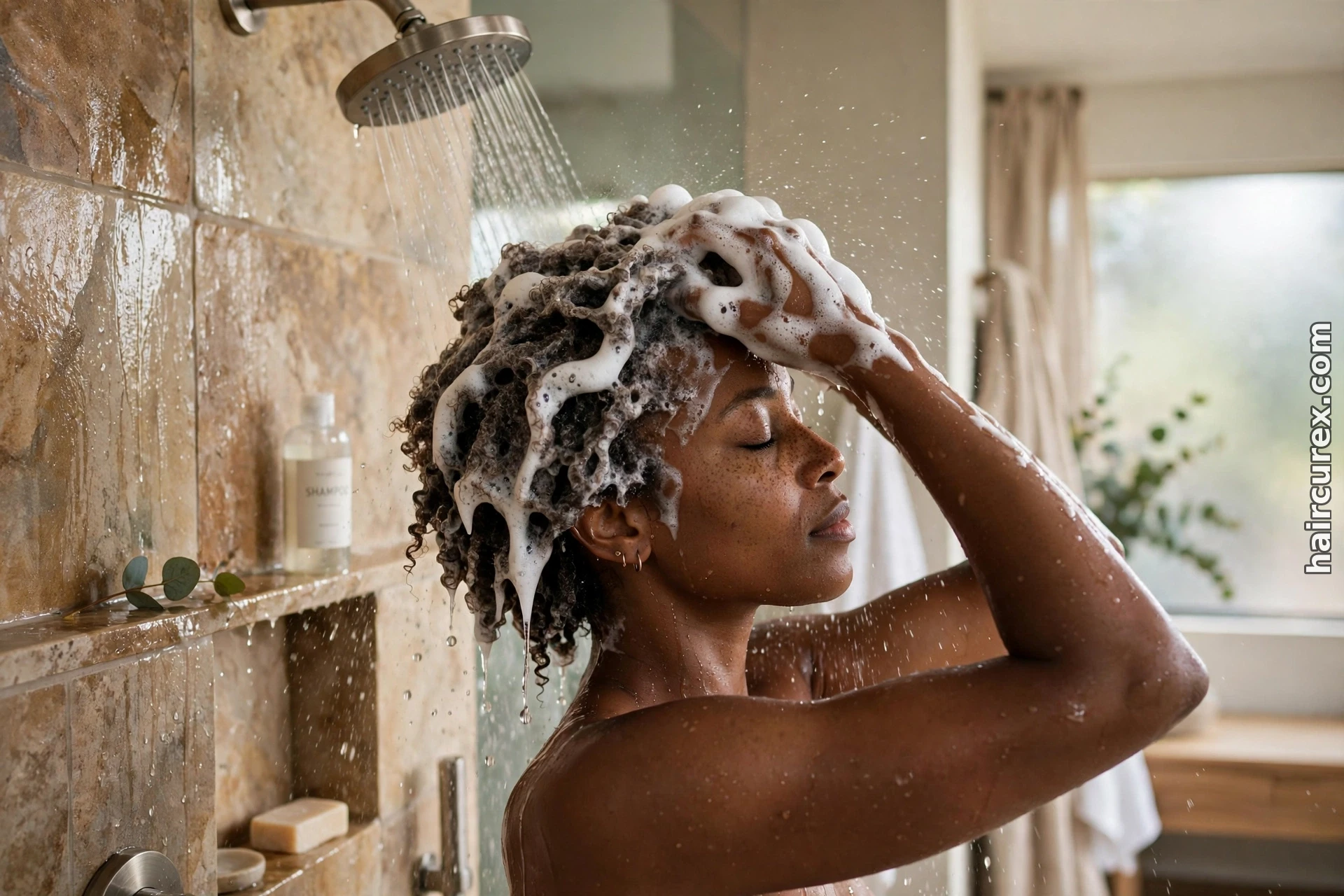
- Cleanse. Massage a sulfate-free shampoo into the scalp, or use a co-wash between shampoo days. Rinse thoroughly.
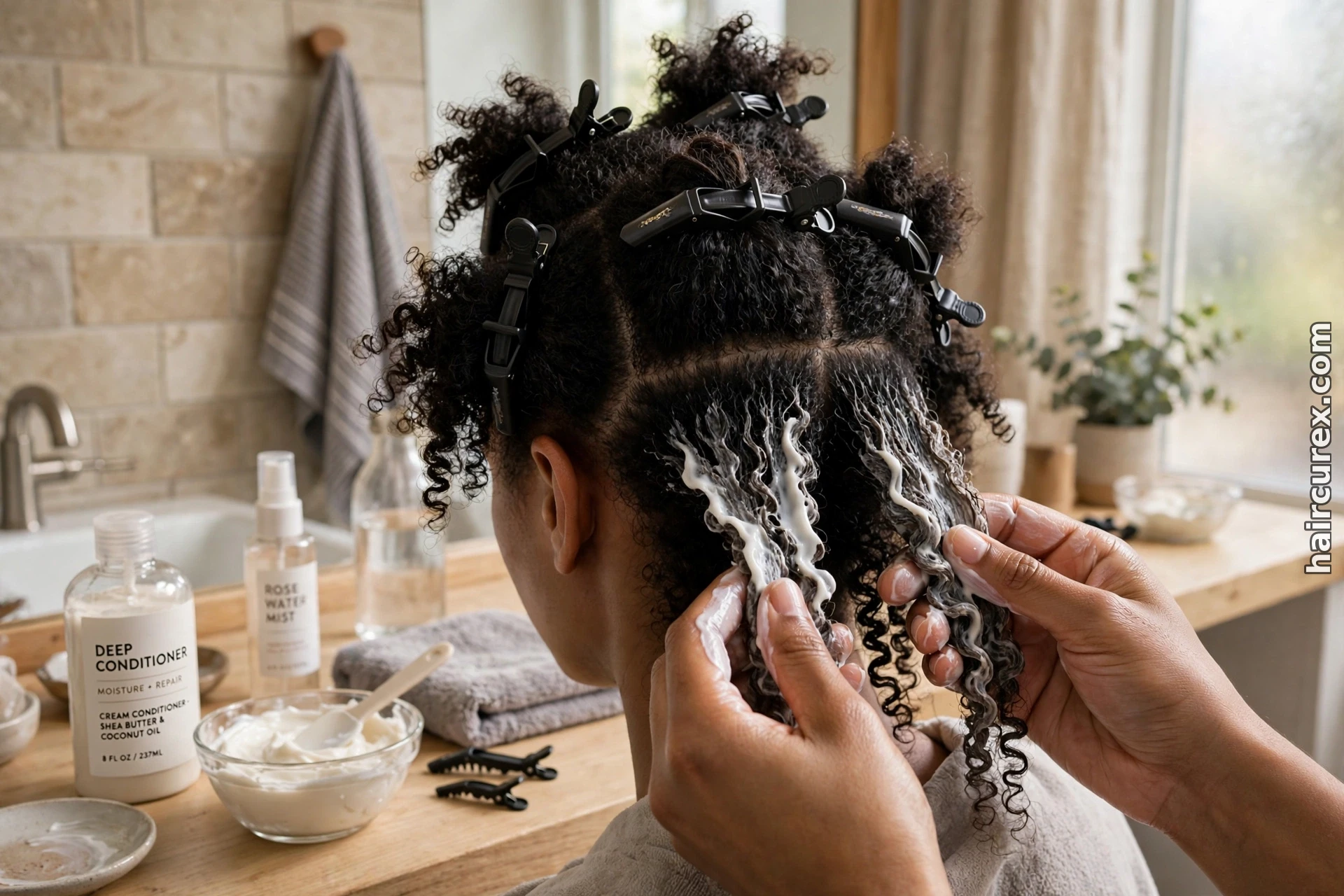
- Deep condition. Apply a thick conditioner from mid-length to ends, detangle while it is in, and leave it on for 15 to 30 minutes, with gentle heat if you have time.
- Leave-in. On soaking wet hair, apply a leave-in in sections before styling.
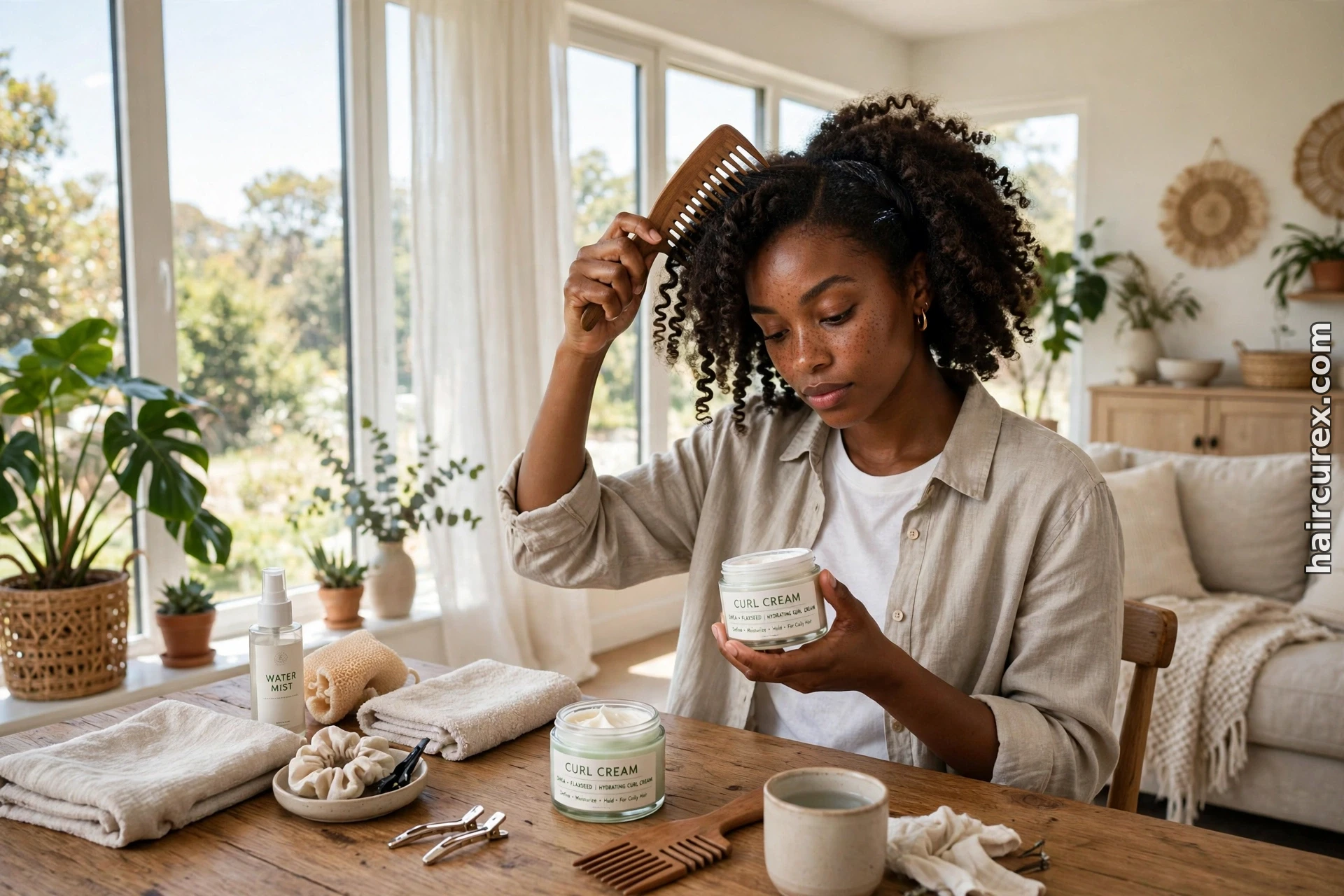
- Cream, then gel. Smooth curl cream through each section for softness, then layer gel for definition and hold.
- Seal. Finish with a small amount of oil or butter on the ends to slow moisture loss.
- Dry gently. Air-dry, diffuse on low heat, or use a hooded dryer. Avoid rough towel-drying, which creates frizz and tangles.
If you prefer to skip shampoo on some wash days, co-washing can refresh coily hair more gently between full washes. It does not replace clarifying, though: a clarifying shampoo every few weeks removes buildup so moisturizing products can reach the hair again.
Which Product Types Work Best at Each Step?
Gentle cleansers and co-washes
Look for sulfate-free shampoos labelled moisturizing or hydrating, or formulated for curly and coily hair. A good cleanser leaves the scalp clean and hair soft, not squeaky or straw-like. If your scalp is flaky, apply medicated shampoo only to the scalp and follow with a moisturizing product on the lengths. Creamy co-washes suit very dry hair between shampoo days, but not if you have buildup or an itchy scalp.
Deep conditioners and hair masks
Deep conditioner is arguably the most important product for coily hair. Look for rich formulas with fatty alcohols such as cetyl or stearyl alcohol, butters like shea or mango, and humectants like glycerin, honey, or aloe. Protein can help if hair feels mushy when wet, but use it only every few weeks. A good deep conditioner should make detangling noticeably easier.
Leave-in conditioners
A leave-in bridges washing and styling: it adds moisture, improves slip, and helps styling products spread evenly. Choose a creamy leave-in for thick or high-porosity hair and a lighter spray or milk for fine hair, applied to soaking wet hair in sections.
Curl creams, gels, and sealing oils
Curl creams soften, define, and reduce frizz without the crunch of gel alone, making them ideal for twist-outs, braid-outs, and wash-and-gos. Our roundup of the best curl creams explains how to match cream weight to your curl pattern and density: thicker creams suit 4B and 4C coils, lighter creams suit finer coils. Gel then provides hold for several days; scrunch out its crunchy cast gently once hair is fully dry. Finally, oil seals in existing moisture, so it works best last, not first. Light oils such as jojoba suit fine hair, while castor oil and shea butter suit thick, high-porosity hair.
| Routine step | Best product type | What to look for | Who it suits best |
|---|---|---|---|
| Cleanse | Sulfate-free shampoo or co-wash | Gentle cleansers, glycerin, aloe | All coily hair |
| Deep condition | Deep conditioner | Shea butter, fatty alcohols, humectants | All coily hair, weekly |
| Leave-in | Leave-in or milk | Water-based, detangling slip | All coily hair, on wet hair |
| Style | Curl cream | Soft definition, frizz control | Twist-outs, wash-and-gos |
| Hold | Gel or custard | Flexible hold, no drying alcohols | Long-lasting definition |
| Seal | Oil or butter | Small amount on the ends | Dry or high-porosity hair |
Ingredients to Look For — and to Avoid
Labels beat marketing claims. Look for humectants such as glycerin, honey, aloe vera, and panthenol; softening butters and oils such as shea butter and coconut, olive, or avocado oil; fatty alcohols such as cetyl and stearyl alcohol, which condition rather than dry; and hydrolyzed proteins such as keratin, which can temporarily strengthen damaged strands. Water-soluble silicones rinse out easily, while heavier ones build up.
Be cautious with harsh sulfates such as sodium lauryl sulfate; short-chain drying alcohols such as denatured alcohol high on the ingredient list; and heavy waxes or mineral oil in large amounts, which coat hair and block moisture. None of these ruin hair in one use, but repeated use over weeks dries it and makes breakage more likely. If a product consistently leaves hair dry, stiff, or coated, trust that feedback over the label.
How Do Porosity and Density Change Your Choices?
Porosity is how easily hair absorbs and loses water. Low-porosity hair has a tightly closed cuticle, so water beads up and heavy products sit on top. Choose lighter leave-ins, apply products to very wet, warm hair, and use gentle heat with deep conditioner. High-porosity hair, often heat- or chemically damaged, absorbs water fast but loses it just as fast, so it needs richer creams, gel to hold moisture in, an oil seal, and occasional protein.
Density matters too. Fine, low-density hair gets weighed down easily, so lighter creams and foams beat thick butters. High-density or coarse hair can absorb richer formulas and may need more product per section. Start with less than you think you need and give a new product at least two or three wash days before judging it.
Budget vs. Salon Products: Do You Need to Spend More?
You do not need salon prices to care for coily hair well. Many affordable products use the same core moisturizing ingredients — glycerin, fatty alcohols, shea butter, and plant oils — as expensive ones. Higher prices usually buy a more refined texture or fragrance, or a more concentrated formula. Spend a little more on deep conditioner and leave-in, which stay on the hair longest, and save on cleansers.
Build from our broader curly hair routine guide, then adjust product weights for your coil tightness. Coily hair often needs a little more conditioner, detangling patience, and sealing oil than looser curls.
Common Mistakes That Undo Good Products
Even the best products cannot compensate for damaging habits: detangling dry hair, which snaps coils at their weakest points; skipping deep conditioner, which removes the slip needed for safe detangling; using heat without a protectant; and piling on heavy products without ever clarifying, which leaves hair coated and unable to absorb moisture. Tight styles worn for weeks without a break can also stress the hairline.
Another mistake is changing products too quickly. If you switch your whole routine every week, you will never know which product helped and which caused the problem. Change one product at a time, use it for at least three wash days, and judge it on wet feel, detangling ease, and day-two and day-three results. And do not confuse shrinkage with a lack of growth: it is a sign of healthy elasticity, and length checks on stretched hair give a truer picture than comparing shrunken coils.
How to Build a Simple Starter Kit
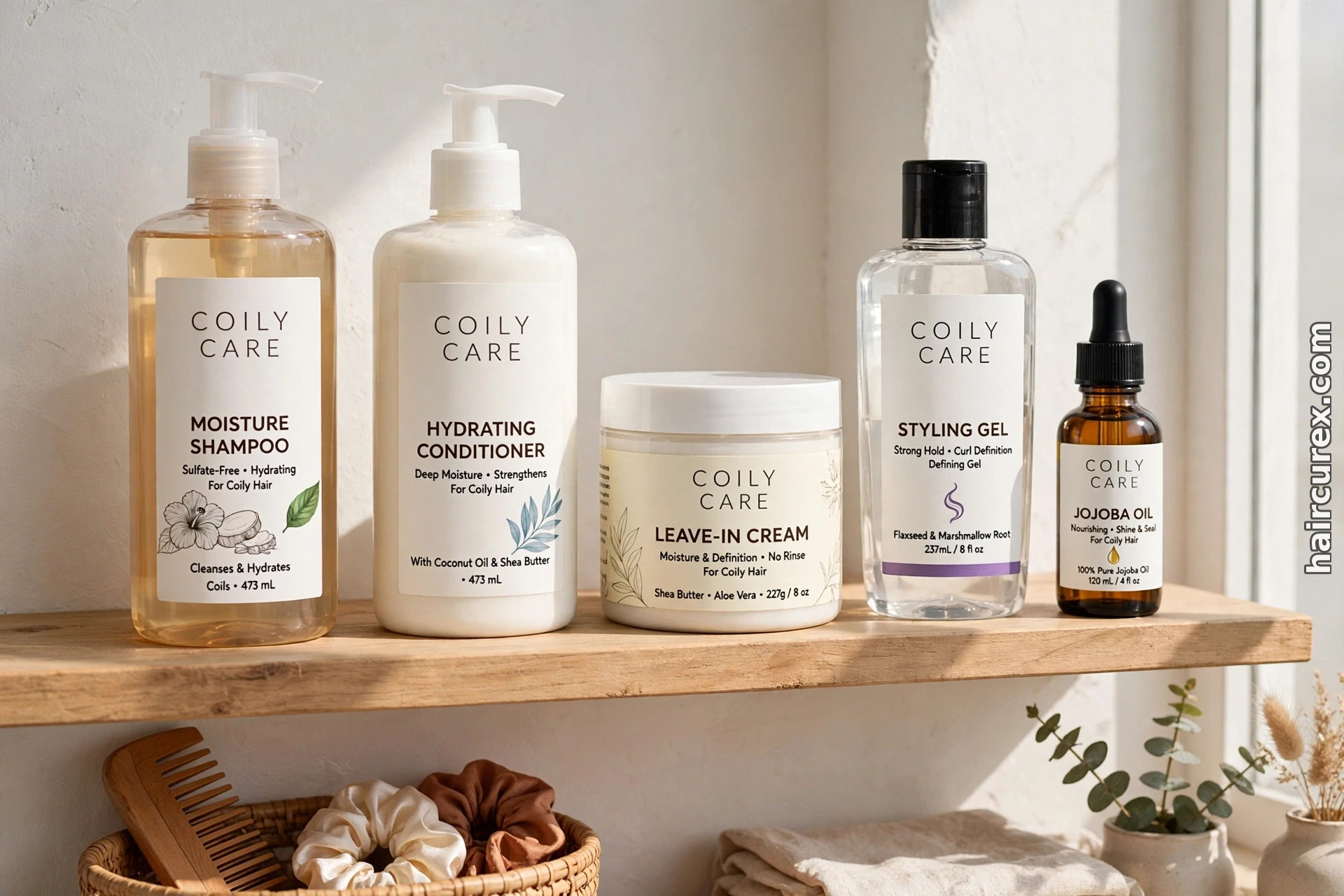
Starting from scratch, you need only six products: a sulfate-free shampoo, a clarifying shampoo, a deep conditioner, a leave-in, a curl cream or gel, and one sealing oil. Add a wide-tooth comb, a microfiber towel or T-shirt, sectioning clips, and a satin bonnet or pillowcase. Wash in sections if hair is thick, detangle only when wet, and style on soaking wet hair.

Frequently Asked Questions
What are the best products for coily hair for daily moisture?
A water-based leave-in on damp hair, sealed with a small amount of oil, is the most reliable daily moisturizer for coily hair. A light spray of water and a little leave-in can revive coils between wash days.
Should coily hair be washed with shampoo or co-washed?
Both have a place. Shampoo cleans the scalp and removes buildup, while co-washing is gentler and adds moisture between shampoos. Most people with coily hair do well with a sulfate-free shampoo every one to two weeks and a co-wash in between. An itchy, flaky, or coated scalp means it is time for a proper shampoo and possibly a clarifying wash.
How often should I deep condition coily hair?
Once a week is a good starting point, especially for dry, tangled, or high-porosity hair. Leave it on for 15 to 30 minutes and detangle while it is in. If hair feels soft and detangles easily, every two weeks may be enough.
What ingredients should I avoid for coily hair?
Be cautious with harsh sulfates, short-chain drying alcohols high on the list, and heavy waxes or mineral oil that build up and block moisture. Silicones are a personal choice: water-soluble ones rinse out easily, heavier ones need clarifying. Judge a product by how hair feels after several uses, not by one ingredient.
Why does my coily hair shrink so much after styling?
Shrinkage happens because healthy coily hair springs back into its tight pattern as it dries. It is normal and signals good elasticity. Stretch styles such as twist-outs, braid-outs, or banding show more length without straightening. Avoid pulling hair taut or using high heat just to fight it.
Can I use the same products for 4A, 4B, and 4C hair?
Yes, the product types are the same, but weights and amounts differ. 4A coils often do well with lighter creams and gels, while denser, drier 4B and 4C hair often needs richer creams, more conditioner, and a sealing butter or oil.
How long does it take to see results from new coily hair products?
Softness and easier detangling can improve within two or three wash days, but real changes in breakage and length retention take eight to twelve weeks of consistent care. Breakage reduction shows up as retained length over months, not overnight.
Final Thoughts
The best products for coily hair are not the most expensive or talked-about ones. They are the gentle cleanser that cleans without stripping, the deep conditioner that makes detangling easy, the leave-in that keeps coils soft, and the cream, gel, and oil combination that holds definition without crunch or buildup. Build the routine step by step, choose for your porosity and density, handle hair gently while wet, and give each change time to work.
To sum up, the best products for coily hair work best as a simple, consistent routine rather than a shelf full of jars. If your coils are dry, tangled, or frizzy, the best products for coily hair are a gentle cleanser, a rich deep conditioner, and a hydrating leave-in. With the right routine, the best products for coily hair keep coils soft, defined, and easier to detangle.
Before you buy, remember that the best products for coily hair are the ones that match your porosity and density. Give the best products for coily hair two or three wash days before judging them, and change only one product at a time. That way you will know which of the best products for coily hair actually helped.
For most routines, the best products for coily hair are easiest to use on soaking wet hair, when the best products for coily hair can lock in moisture before styling. Start with a small amount, build up slowly, and let the best products for coily hair keep your coils soft between wash days.