

Walk down the curly hair aisle and you will see a wall of products promising definition, bounce, and frizz control. Many of them are curl enhancers, but the label covers a lot of different formulas, and picking the wrong one is the fastest way to weighed-down waves or crunchy, stiff curls. The good news is that once you understand what these products actually do, choosing one gets much simpler.
Quick answer: Curl enhancers are styling products that encourage your natural curl pattern, add moisture or hold, and reduce frizz. They come as creams, sprays, gels, and custards, and the best one for you depends on your curl type, porosity, and how much hold you want. Light sprays suit loose waves, creams suit most curls, and gels and custards suit tighter patterns that need stronger definition.
What Are Curl Enhancers?
Curl enhancers are leave-in styling products designed to work with your natural texture rather than fight it. Instead of straightening or forcing a shape, they coat each strand with moisture, light hold, or both, so curls clump together into defined groups instead of separating into frizz. Most contain a mix of humectants (ingredients that attract water, like glycerin), emollients (softening ingredients like shea butter or oils), and film-forming polymers that give light to medium hold.
That last point matters. A curl enhancer is not a single product category in the way shampoo is. It is a job description. A curl cream, a curl spray, a gel, and a custard can all be curl enhancers, because they all aim to enhance the pattern you already have. The difference is in texture, weight, and hold, which is why one person’s holy grail can be another person’s flop.
It is also worth setting expectations honestly. No styling product can change your curl type, repair damage, or create curls where there are none. What a good curl enhancer can do is help the pattern you have look its best: more consistent clumps, less frizz, softer movement, and a style that lasts a day or two longer.
How Curl Enhancers Differ From Curl Cream, Gel, and Mousse
This is where the shopping gets confusing, because curl enhancers overlap with several familiar categories. Think of it this way: curl cream, gel, and mousse are product formats, while “curl enhancer” describes what the product is meant to do. Many products are both.
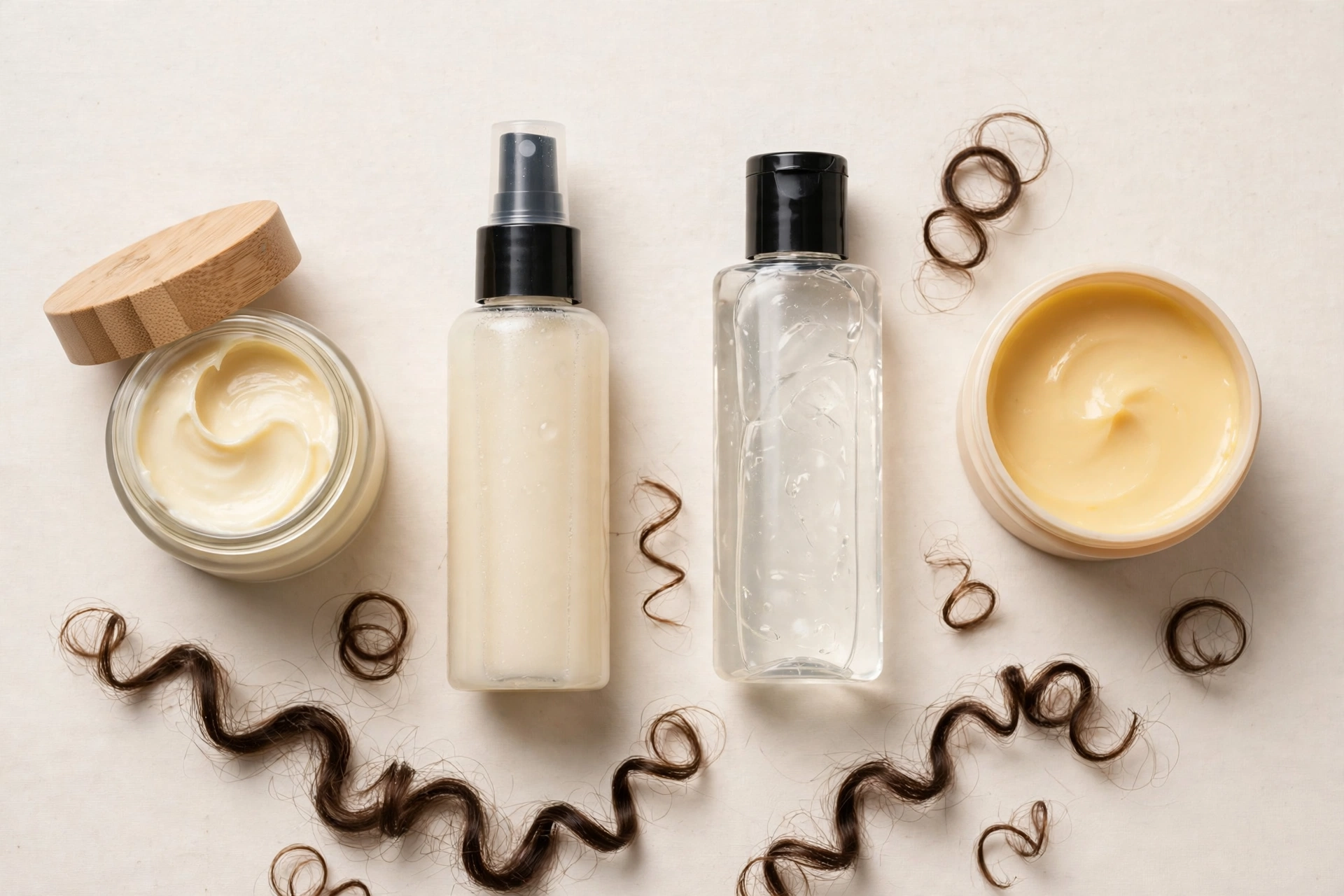
Curl cream is usually the softest, most moisturizing format. It smooths the cuticle, encourages clumping, and gives light, flexible hold. It rarely leaves a cast and is the easiest format to use, which makes it a good starting point for most curl types. Our best curl creams guide compares options by weight and finish if you want to start there.
Gel gives the strongest hold of the group. It forms a light cast around curls as it dries, locking in definition and fighting humidity. Once dry, you scrunch out the crunch to reveal soft, defined curls. Gels suit tighter curls and humid climates, but heavy gels can weigh down fine waves.
Mousse is the lightest format. It adds volume and light definition without weight, which is why it suits fine, wavy, and low-density hair. It gives less frizz control than gel, so it often works best layered under a gel or used on refresh days. See our best mousses for curly hair for options that add lift without stiffness.
Sprays are the lightest enhancers of all. They mist over damp or dry hair to reactivate curls, add a little moisture, and tame flyaways. They are ideal for refreshing second-day curls and for waves that collapse under heavier products.
Custards sit between creams and gels: thicker than a cream, softer than a gel, with medium hold and a smooth, defined finish. They are popular with type 3 and 4 hair because they give definition without the full crunch of a gel.
The practical takeaway: do not shop by the word “enhancer” alone. Shop by format, weight, and hold, and match those to your hair.
Types of Curl Enhancers Compared
Use this table as a starting filter, then adjust based on your density and porosity. Fine hair usually needs to move one step lighter than the table suggests; thick, dense hair can often move one step heavier.
| Enhancer type | Best for curl types | Hold | Finish | Watch out for |
|---|---|---|---|---|
| Spray | 2A–2C, fine 3A | Light | Natural, airy | Too little hold in humidity |
| Cream | 2C–3C, most types | Light–medium | Soft, touchable | Buildup if over-applied |
| Mousse | 2A–3A, fine hair | Light–medium | Voluminous, bouncy | Dryness from alcohol-based formulas |
| Gel | 2C–4C, humid climates | Medium–strong | Defined, shiny | Crunch if not scrunched out |
| Custard | 3A–4C | Medium | Defined, smooth | Weight on fine or low-density hair |
Key Ingredients to Look For (and Avoid)
You do not need a chemistry degree to read a curl product label, but a few ingredients tell you most of what you need to know.
Look for these
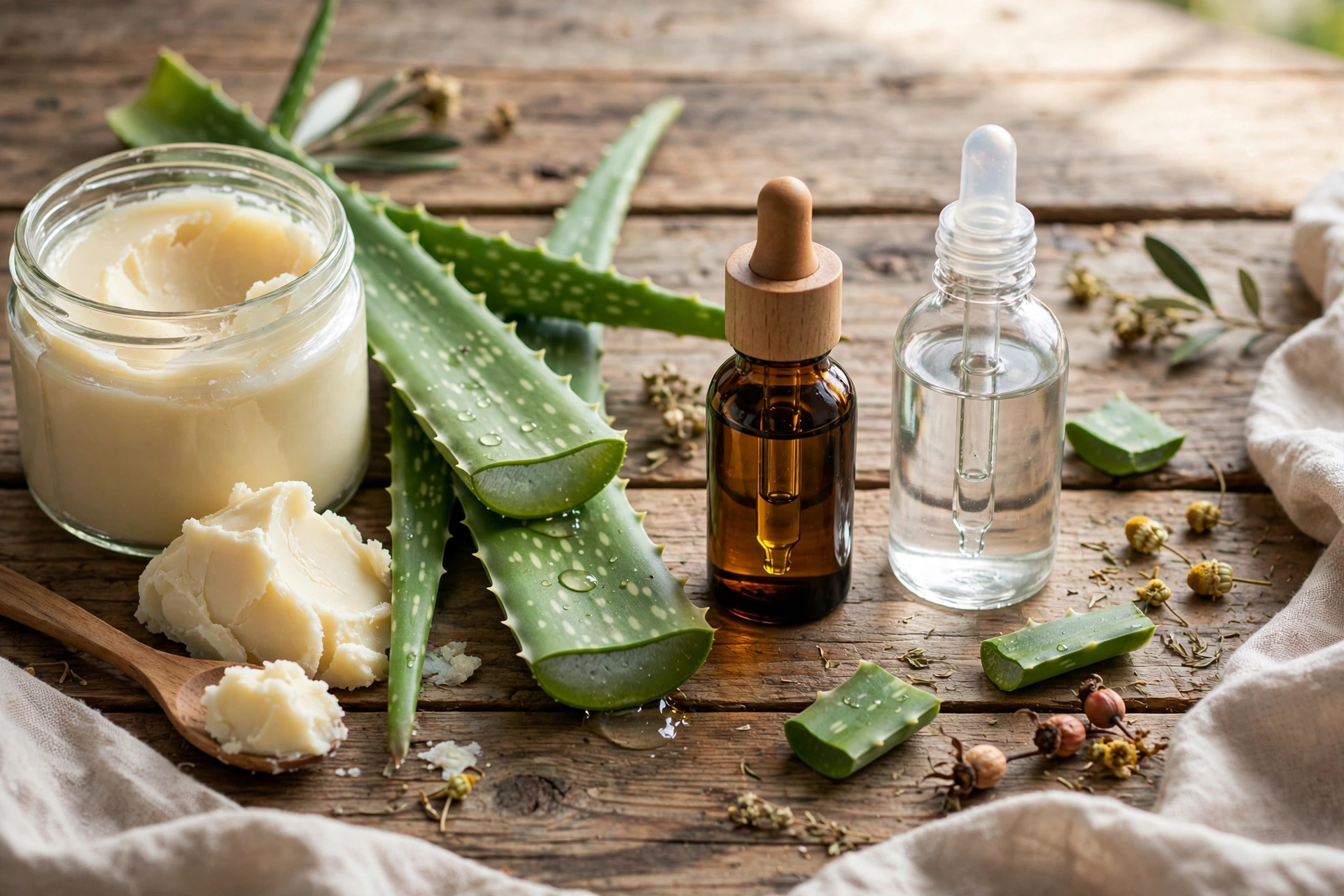
- Humectants like glycerin, panthenol, and aloe vera. These draw water into the hair and keep curls soft and flexible. They work best in moderate humidity; in very dry air they can pull moisture out of the hair instead, so pair them with a sealing product if you live in a dry climate.
- Emollients like shea butter, argan oil, and jojoba oil. These smooth the cuticle and reduce friction between strands, which means less frizz and easier detangling. Lighter oils suit waves; richer butters suit coils.
- Fatty alcohols like cetyl and stearyl alcohol. Despite the name, these are conditioning alcohols that soften hair. They are not the same as drying alcohols.
- Film-formers like PVP and polyquaternium-10. These create the light hold that keeps curl clumps together as hair dries.
- Hydrolyzed proteins (wheat, silk, keratin). In small amounts these temporarily patch weak spots in the cuticle and add structure, which helps curls hold their shape.
Use with caution
- Drying alcohols (alcohol denat, ethanol, isopropyl alcohol) high on the ingredient list. These evaporate quickly and can leave curls dry and frizzy, especially in mousses and sprays.
- Heavy silicones and waxes in large amounts. These can build up, weigh down waves, and block moisture unless you clarify regularly. Water-soluble silicones are less of a concern.
- Very heavy butters and oils on fine hair. Shea butter is excellent for coils but can flatten fine waves in a single use.
If your hair feels coated, dull, or limp after a few weeks with a new product, buildup is the usual suspect. A clarifying wash resets things, as explained in our detox shampoo guide.
Best Curl Enhancers by Curl Type
Your curl pattern is the first filter. If you are unsure of your type, our curl type chart walks you through identifying it on clean, product-free, air-dried hair.
Type 2A–2C: Wavy hair
Waves need the lightest touch. A spray or a light mousse usually gives the best balance of definition and volume, and a small amount of light gel scrunched through the ends can add staying power without flattening the roots. Avoid heavy creams and custards, which pull waves straight. Apply products with your head flipped upside down for root lift, and avoid touching your hair while it dries.
Type 3A–3C: Curly hair
True curls are the most versatile group. A cream plus a gel is the classic combination: the cream provides moisture and softness, the gel locks in definition. Custards also work well here, especially for 3B and 3C hair that wants definition without a hard cast. If your curls lose definition by midday, you probably need more hold, not more product weight.
Type 4A–4C: Coily hair
Coils need the most moisture and the most hold. Rich creams, custards, and gels, often layered over a leave-in conditioner, give the definition and longevity this hair type needs. Work in small sections so every strand gets coated, and expect to use more product than someone with waves. Shrinkage is normal and healthy; a good enhancer defines the coil rather than stretching it out.

Best Curl Enhancers by Porosity
Porosity, how easily your hair absorbs and holds water, often matters as much as curl type. Low porosity hair has a tightly closed cuticle that resists moisture, so light, water-based enhancers work best and heavy butters tend to sit on top and look greasy. High porosity hair absorbs quickly and loses moisture just as fast, so richer creams and custards, sometimes sealed with a light oil, hold up better. If products seem to vanish from your hair within hours, or sit on it without absorbing, take our hair porosity test before buying another product. The curly hair routine guide also shows where an enhancer fits into a full wash-day sequence.
A simple rule of thumb: low porosity, go lighter and use less; high porosity, go richer and layer. Medium porosity hair, the most common, can usually use any format and should choose based on curl type and climate.
How to Apply Curl Enhancers: Raking, Scrunching, and Amounts
Technique matters as much as the product. The same cream can give defined ringlets or a frizzy halo depending on how it goes on.
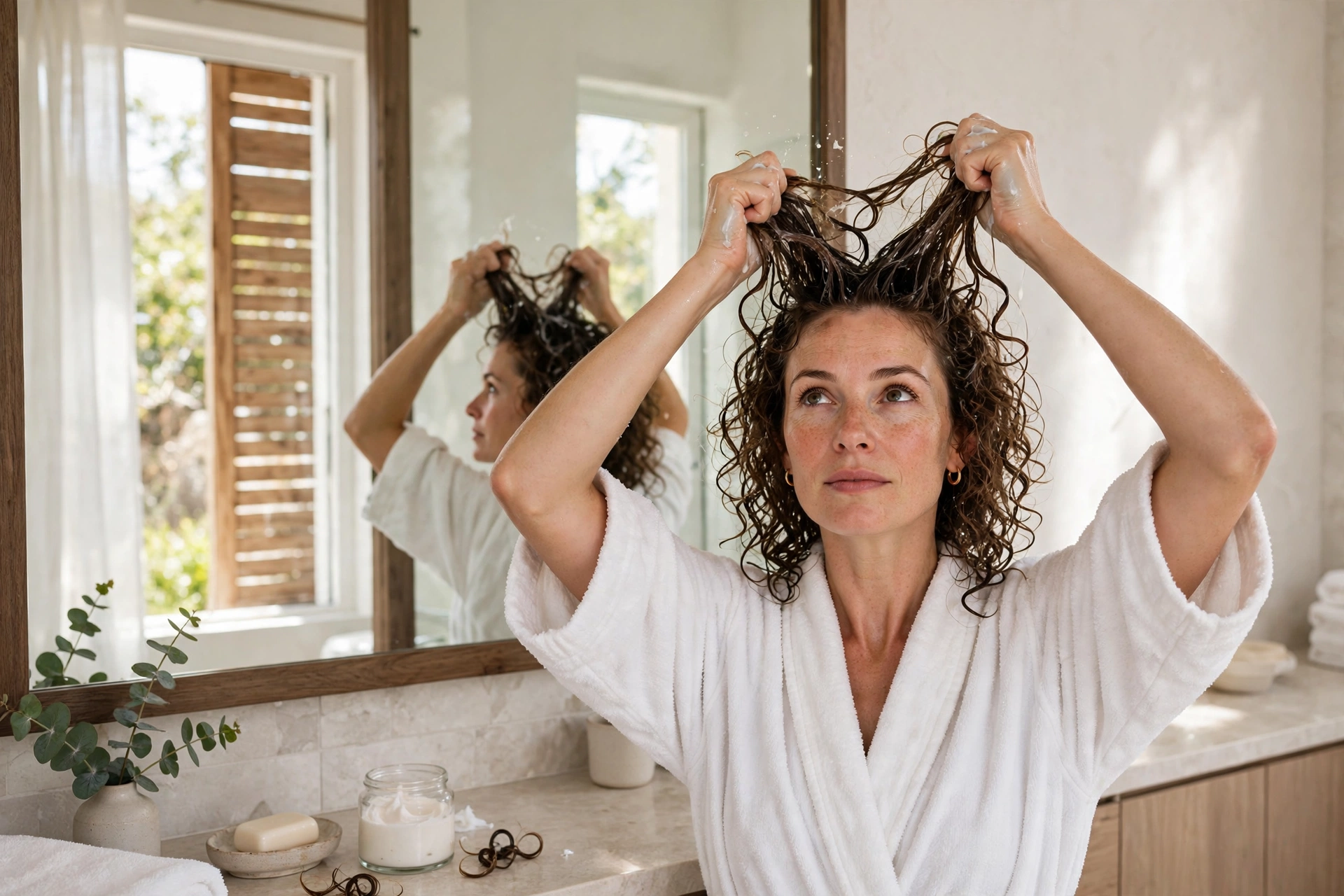
- Start on soaking wet hair. Most enhancers work best when hair is dripping wet, because water helps distribute the product evenly and encourages clumping. Apply right after your shower, before your hair starts to dry.
- Work in sections. Divide hair into four to six sections. This is optional for waves but almost essential for type 3 and 4 hair, where a single handful of product never reaches every strand.
- Rake, then scrunch. Rake the product through each section with your fingers to distribute it, then scrunch upward toward the scalp to encourage the curl shape. Raking alone can stretch curls out; scrunching alone can miss the inner layers. The combination gives even coverage and definition.
- Use less than you think, then add more. Start with a coin-sized amount for short hair, a golf-ball-sized amount for medium hair, and adjust from there. Too much product is the most common beginner mistake: it causes buildup, stringy curls, and long drying times. You can always add a little more to a section that looks under-coated.
- Do not touch it while it dries. Every touch breaks up forming clumps and invites frizz. Let hair air-dry or diffuse on low heat, and only scrunch out the gel cast once hair is completely dry.
For refresh days, mist hair lightly with water, smooth a pea-sized amount of cream or a few sprays of enhancer over the frizziest sections, scrunch, and leave it alone. Full reapplication is rarely needed.
Layering Curl Enhancers With Other Products
Layering is where good routines become great ones, but order matters. The general rule is lightest to heaviest, and water-based before oil-based, so each layer can actually reach the hair.
A reliable wash-day sequence is: leave-in conditioner first, then curl cream or custard, then gel for hold. Mousse can replace the cream if you want volume, or go under the gel for fine hair that needs lift plus hold. Oil goes last, in a tiny amount, to seal and add shine, never first, because oil blocks water-based products from absorbing.
Keep combinations simple. Two styling products plus a leave-in is plenty for most people. Three or four stylers layered together often cause buildup, flaking, and weighed-down curls, and make it impossible to tell which product is actually working. When you try a new enhancer, test it alone for two or three wash days before deciding it needs a partner product.
One more layering caution: some product combinations pill or flake, usually when a gel meets a heavy cream with incompatible polymers. If you see white flakes, the pair does not work together, no matter how good each product is alone.
Common Curl Enhancer Mistakes
- Applying to dry hair. Most enhancers need wet hair to distribute evenly and form clumps. Dry application usually means frizz and patchy definition.
- Using far too much product. More product does not mean more definition. It usually means buildup, limp curls, and a longer drying time.
- Brushing curls after applying product. A brush breaks up clumps. Detangle before styling, then use fingers only.
- Skipping the gel cast scrunch. If you use gel and never scrunch out the crunch, your curls will feel stiff all day. Wait until hair is fully dry, then scrunch gently with bare hands or a drop of oil.
- Judging a product after one use. Humidity, hair cleanliness, and application technique all change results. Give a new enhancer at least three wash days before deciding.
- Copying someone else’s routine exactly. Curl type, porosity, density, and climate all change what works. Use other people’s routines as starting points, not prescriptions.
Dermatologists also note that curly hair is more prone to dryness and breakage than straight hair, and recommend moisturizing products, gentle detangling, and washing only as often as needed, advice echoed in the American Academy of Dermatology’s curly hair tips. A good curl enhancer supports that approach, but it cannot replace a gentle routine.

Frequently Asked Questions
What do curl enhancers actually do?
Curl enhancers encourage your natural curl pattern by adding moisture, helping strands clump into defined curl groups, and providing light to medium hold that reduces frizz. They do not create curls or change your curl type; they help the pattern you already have look more defined and last longer.
Are curl enhancers the same as curl cream?
Not exactly. Curl cream is one type of curl enhancer. The term “curl enhancer” covers any product designed to enhance natural texture, including creams, sprays, gels, mousses, and custards. When you shop, focus on the format and hold level rather than the word on the front of the bottle.
Can I use a curl enhancer on wavy hair?
Yes, but choose a light formula. Sprays and light mousses usually work best for waves, because heavy creams and custards can pull the wave pattern straight. Apply with your head upside down for volume, and use a small amount.
Should I use a curl enhancer on wet or dry hair?
Wet hair, in almost all cases. Applying to soaking wet hair distributes the product evenly and helps curls clump as they dry. Sprays are the exception: they can be used on dry hair to refresh second-day curls.
Can I layer a curl enhancer with gel?
Yes, and it is one of the most effective combinations. Apply a cream or custard first for moisture and softness, then a gel over it for hold and frizz control. Once hair is fully dry, scrunch out the gel cast for soft, defined curls.
Why does my curl enhancer make my hair crunchy or sticky?
Crunch usually means a gel cast that has not been scrunched out yet, or simply too much product. Wait until hair is completely dry, then scrunch gently. Stickiness usually means too much product or a formula that is too heavy for your hair type; try a smaller amount or a lighter format.
How often should I use a curl enhancer?
Use it on wash days as part of your styling routine, and use a spray or a tiny amount of cream to refresh between washes. There is no need to reapply a full amount daily; overuse leads to buildup, which dulls curls and can require a clarifying wash to fix.
Final Thoughts
The best curl enhancer is not the most expensive one or the one with the most reviews. It is the one whose format, weight, and hold match your curl type, porosity, and climate, applied to wet hair in the right amount and left alone to dry. Start light, learn your hair’s response over a few wash days, and adjust one variable at a time. When you find the combination that gives you soft, defined curls that last past day one, you have found your routine, and no new launch is likely to beat it.