

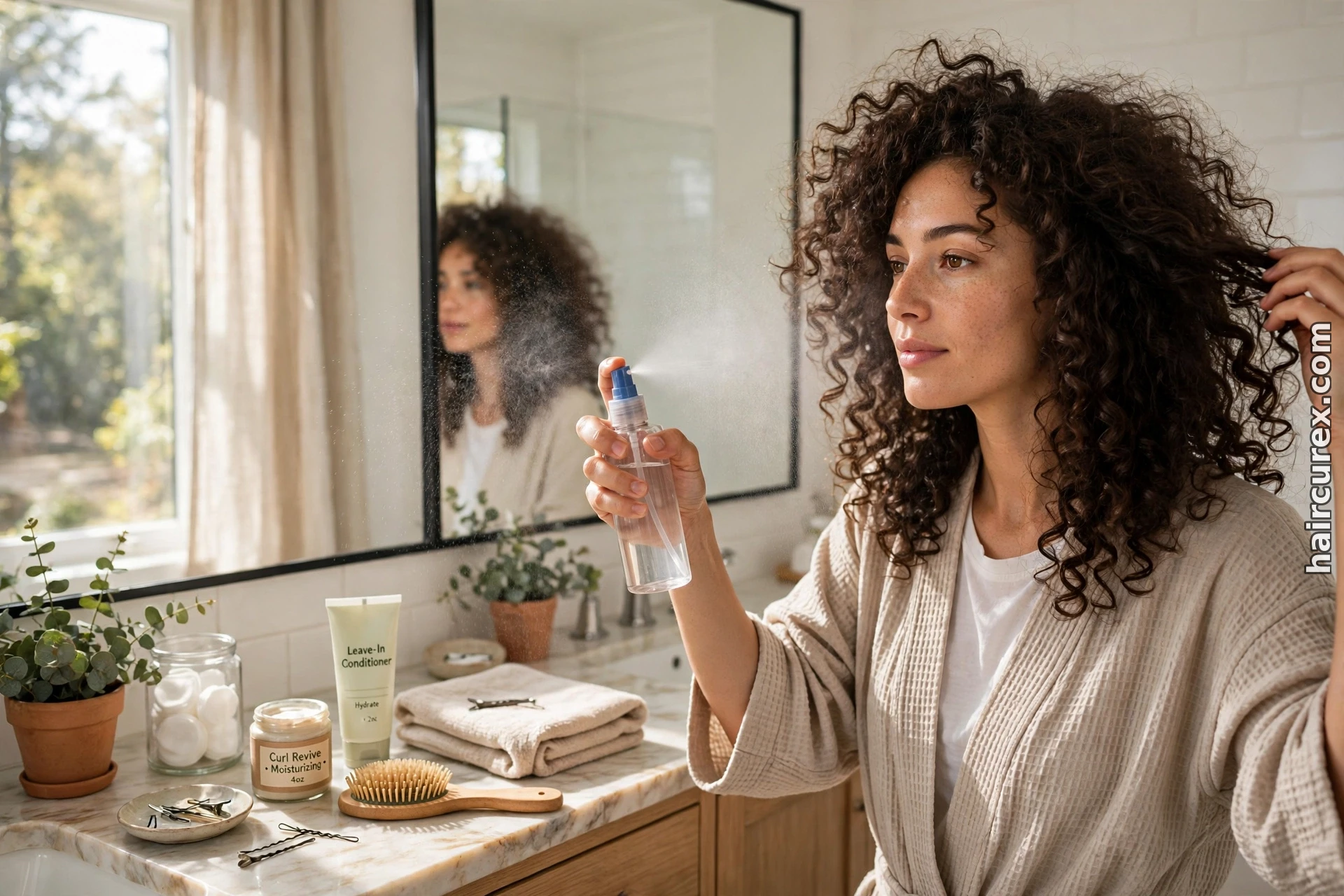
Quick answer: To learn how to refresh curls on day 2, mist your curls lightly until damp, not dripping, scrunch or finger-coil the sections that have lost shape, add only a tiny amount of product where water alone was not enough, and then leave your hair alone while it dries. The routine takes about five to ten minutes and can stretch a good wash day into day two and, with a little more care, day three.
If wash-day curls looked bouncy yesterday and flat or fuzzy this morning, nothing has gone wrong. Water evaporates overnight, curl clumps separate as you sleep, and pillow friction roughs up the hair’s outer layer. A refresh restores a little moisture, rebuilds those clumps, and smooths the surface. It needs no full wash, heat styling, or pile of new product.
Why Do Curls Lose Their Shape Overnight?
Curls hold their shape partly because they hold water and styling product. As moisture leaves, the curl loosens and the cuticle, the shingled outer layer of each hair, lifts slightly. That roughness reads as frizz. Sleep and friction then pull clumps apart, so definition drops.
That is why brushing dry second-day curls makes things worse: it breaks up the remaining clumps. A refresh works the other way. A little water softens the old product cast, your fingers rebuild the clumps, and hair dries closer to wash day. It can only revive a decent wash day, so start with our curly hair routine first.
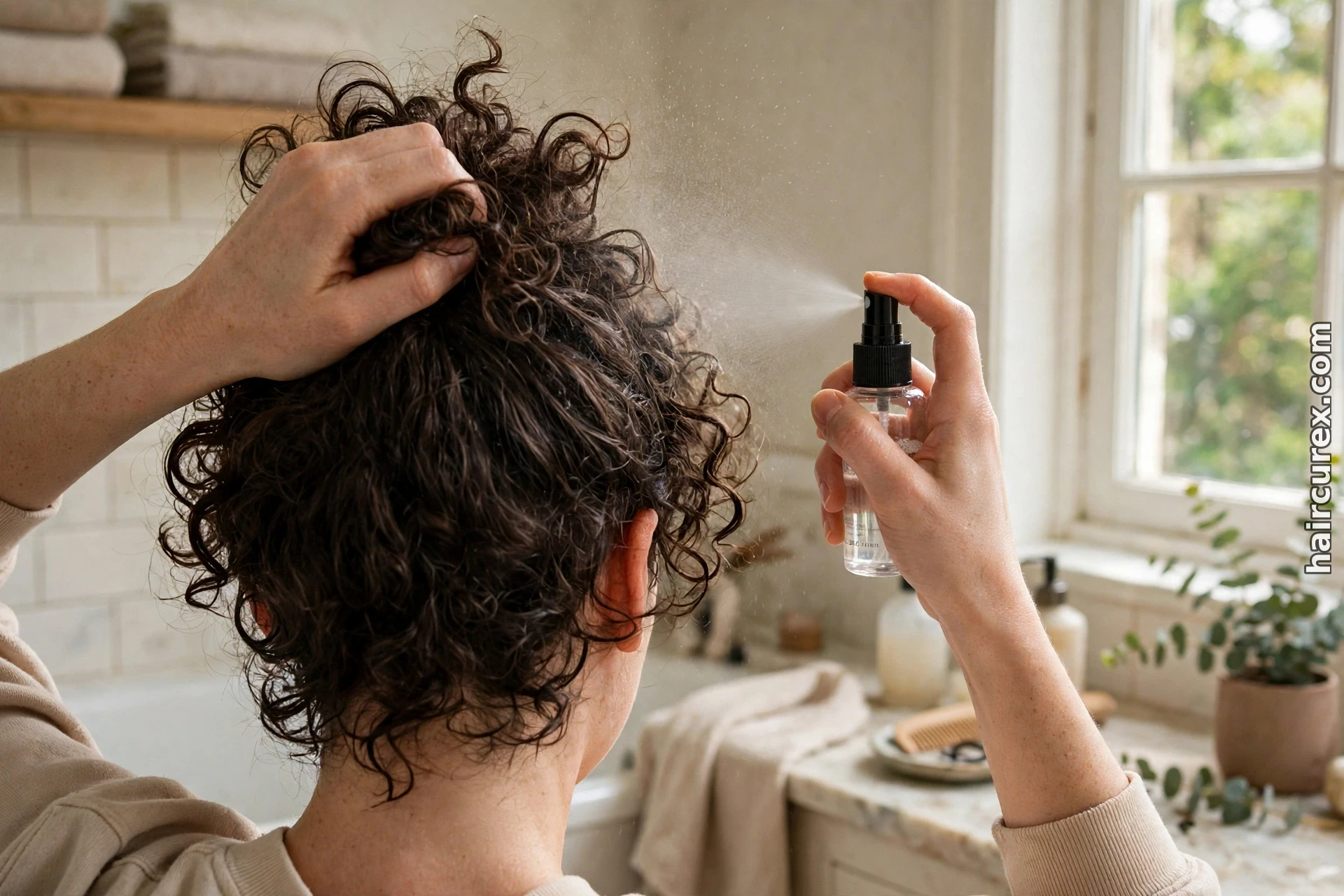
How to refresh curls on day 2: the 5-minute morning routine
Do this in good light, and resist fixing every strand. Aim for a good overall shape, not perfection.
- Assess before you mist. Shake hair out and check it from front and sides. Leave good sections alone; only the canopy, face-framing pieces, and flattened sections need work.
- Mist lightly, section by section. Hold a spray bottle six inches away and mist one section at a time until slightly damp, not wet. Work in three to five sections, never soaking the whole head.
- Scrunch to reactivate. Cup each damp section, scrunch upward, and release. This wakes up yesterday’s product and helps the curl spring back into its clump.
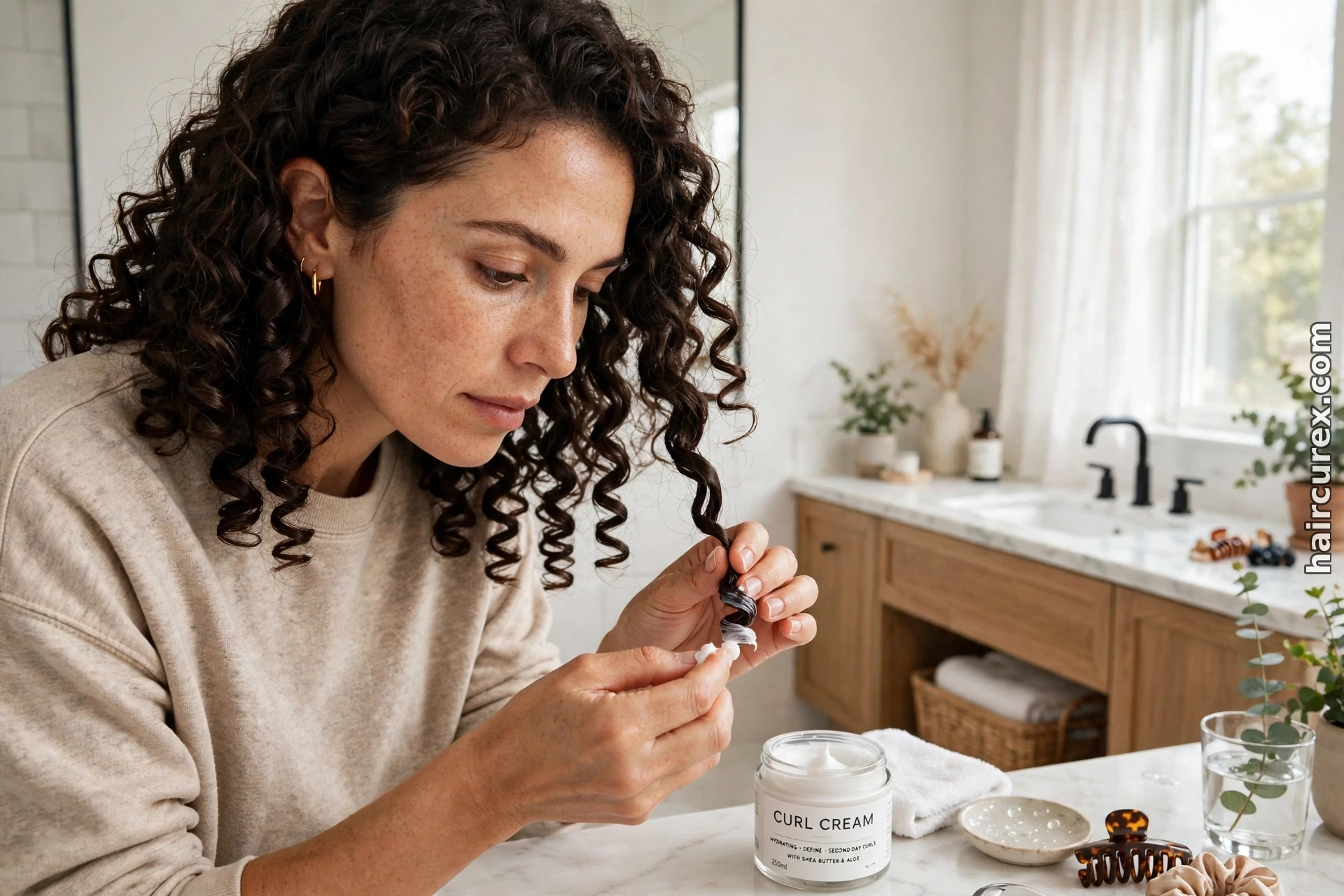
- Finger-coil only stubborn pieces. Wrap a stretched or frizzy damp curl around your finger, hold briefly, and let it fall. Usually only a few pieces, around the face and crown, need this.
- Add product sparingly, if at all. Many sections recover with water alone. If ends feel dry or the canopy looks fuzzy once damp, smooth a pea-sized amount of leave-in or cream over just those areas, away from roots.
- Dry hands-off. Air-dry, or diffuse on low for a few minutes. Do not touch damp curls while they dry; that creates frizz fast.
- Break the cast only when fully dry. If a gel cast formed, scrunch it out gently with dry hands, or a drop of oil on your palms, once hair is completely dry.
If it takes twenty minutes, you are rewetting too much hair or reapplying too much product. A refresh is a touch-up, not a second wash day.
Day 2 vs Day 3: What Changes?
On day two, you are reviving a mostly intact style. On day three, more moisture has gone, more clumps have separated, and oil and buildup have accumulated. The routine stays the same, but the emphasis shifts.
| Step | Day 2 refresh | Day 3 refresh |
|---|---|---|
| Water | Light mist on sections that need it | A little more mist, especially on dry ends; still not soaking |
| Product | Often none, or a pea-sized amount on dry ends | Small amount of leave-in or cream on mid-lengths and ends; a touch of gel on the canopy if needed |
| Reshaping | Scrunching is usually enough | More finger-coiling, especially at the crown and face |
| Roots | Shake out and lift gently with fingers | Dry shampoo if needed, or root clips for lift while drying |
| Drying time | 5 to 10 minutes | 10 to 15 minutes, or a short diffuse on low |
| Realistic result | Close to wash day, slightly softer | Good, lived-in curls; looser and more voluminous |
On day three, curls are usually bigger and softer, suiting a half-up style or side part. Forcing a tight wash-day pattern means too much water and product, and a dull finish.

Should You Mist, Steam, or Just Use Water?
Water is the active ingredient in most refreshes, because most curl products reactivate when dampened. The question is how you deliver it.
Misting with plain water
Plain water in a fine-mist bottle is the simplest, most reliable option. It reactivates yesterday’s product without adding ingredients, so buildup stays low. If hair still feels dry after misting, add a little product, not more water.
Misting with a water and leave-in mix
A mix of mostly water with a little leave-in suits dry, coarse, or high-porosity curls. Keep it light, about four parts water to one part leave-in, and shake before use. A creamy mix weighs down fine hair. Check our guide to the right order for curly hair products so the refresh layer sits correctly.
Steam refreshers
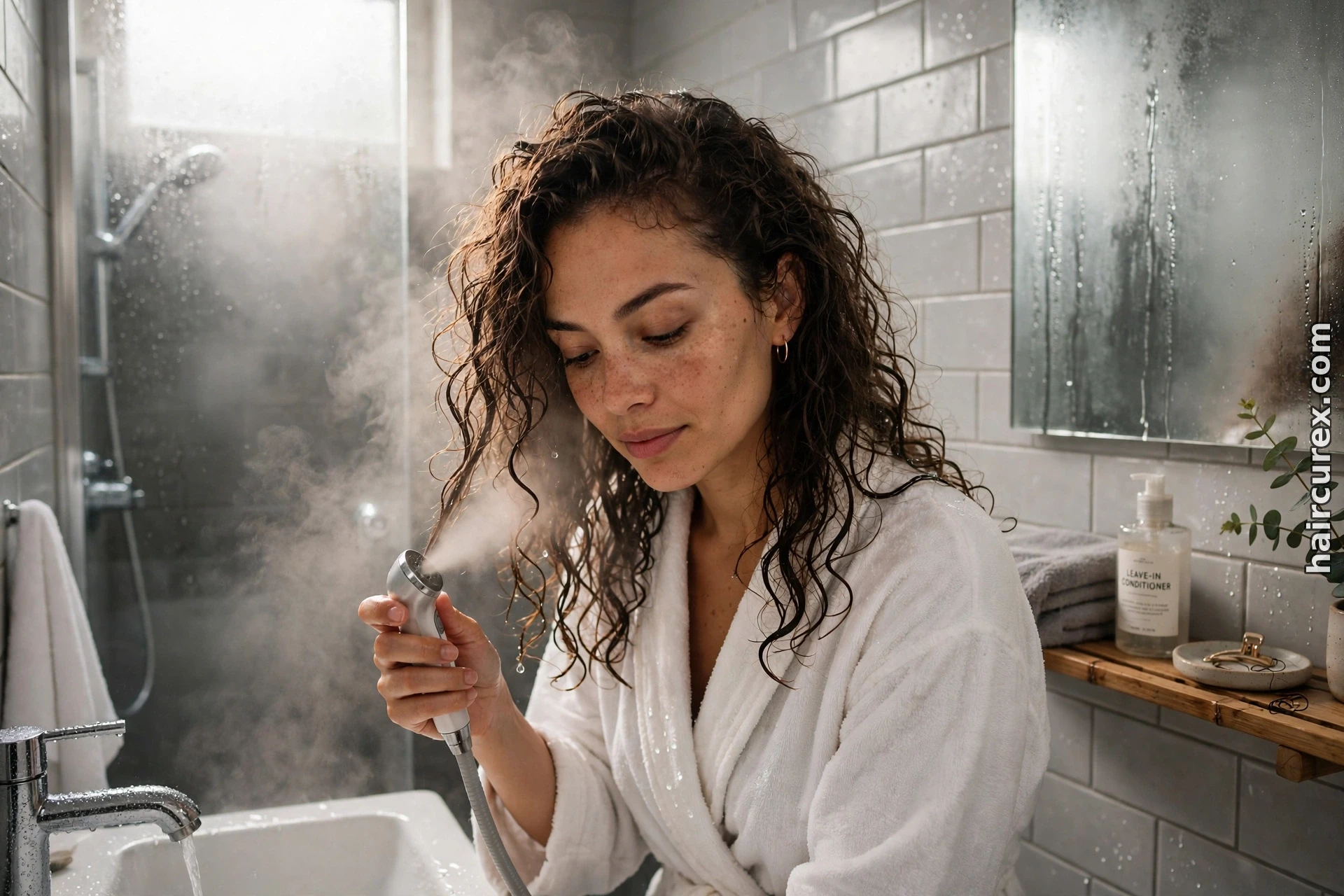
A handheld steamer, or a few minutes in a steamy bathroom, softens curls without soaking them. Steam helps tight coils and thick hair, where surface mist may not penetrate. The drawback is control: it reaches everywhere and can relax the pattern if overdone. Use short passes and let hair cool before judging.
Ready-made refresh sprays and dry shampoo
Refresh sprays are a convenient water and leave-in mix, often with light hold. Avoid heavy oils or silicones for daily use, as they build up fast. As OBIA’s guide to refreshing curls on day two explains, a good refresh puts a little water back, reshapes, and lets hair dry, without rewetting the whole head. Dry shampoo is different: it absorbs root oil and adds lift, but does not reshape curls.
How Much Product Should You Reapply?
Less than you think, and less than on wash day. This is the most common refresh mistake: fresh product on dry, product-laden hair creates buildup and weighs curls down.
- Fine or wavy hair: water alone, or a very light cream on the ends only. Skip heavy creams and oils on refresh days.
- Medium curly hair: a pea-sized amount of leave-in or curl cream on the driest sections; a tiny amount of gel on the canopy only if frizz persists after drying.
- Thick or coily hair: roughly a coin-sized amount of leave-in or cream, spread across mid-lengths and ends, section by section.
- Low-porosity hair: keep layers thin and water-based. Heavy creams tend to sit on the surface and look greasy.
- High-porosity hair: you may need cream plus a light oil on the very ends, because this hair type loses moisture fastest.
Apply product to damp hair, never dry hair, and smooth it over a clump rather than raking through it. A good curl cream is more forgiving than strong gel on refresh days, as it adds softness without a hard cast. After misting and scrunching, wait a minute before adding anything; often the curl recovers alone.
How to Fix Frizz and Flat Roots
Frizz and flat roots are different problems and need different fixes. Treating them the same way, usually by adding more product everywhere, tends to make both worse.
For frizz on the canopy and ends
Mist the frizzy section lightly, smooth it between your palms, and scrunch. If hairs still stick out once dry, smooth a tiny amount of cream or a drop of oil over the surface with flat palms. Do not rake or repeatedly re-scrunch dry curls. For more, see our guide on how to dry curly and wavy hair without frizz.
For flat roots
Roots go flat because you slept on them. The fix is lift, not more scalp product. Flip your head upside down and shake roots gently, or use root clips at the crown while hair dries. Dry shampoo also helps by absorbing oil. Avoid piling cream or gel on roots: it weighs them down and makes hair look oily faster.
Night Protection: How to Make Tomorrow’s Refresh Easier
The best day-two refresh starts the night before. Before bed, you control the two things that damage curls overnight: friction and compression. The American Academy of Dermatology notes that a loose pineapple or braid before sleeping can preserve curls and reduce pillow friction, which otherwise makes hair frizzy and easier to break. See its curly hair tips from dermatologists.
- The pineapple: gather hair loosely on top of your head with a silk scrunchie. This keeps curls off the pillow and preserves root volume. It works best for medium to long hair.
- A loose braid or twists: two or three loose braids reduce tangling and friction. Keep them loose, or you will wake up with stretched roots and dents.
- A satin or silk bonnet, scarf, or pillowcase: smooth fabrics create far less friction than cotton. A bonnet holds the style in place; a satin pillowcase is a good fallback if you dislike bonnets.
- Medusa clipping: for shorter curls, small smooth clips holding sections loosely on top of the head can protect the pattern without a ponytail.
Keep any method loose. A tight pineapple or braid stretches the pattern, flattens roots, and can break hair at the hairline over time. If you wake with a flat patch, mist and finger-coil that section first.
When Should You Just Wash Instead?
Refreshing is not meant to postpone washing indefinitely; it works best for one or two days after wash day. Wash instead when your scalp feels itchy or oily, hair feels coated even after misting, curls no longer spring back, or sweat, rain, or humidity has genuinely soiled the hair.
Most curl types do well with a wash once or twice a week and refreshes in between. If curls consistently collapse by day two, the issue is likely wash-day moisture or styling, not your refresh.
Mistakes to Avoid When Refreshing Curls
- Soaking the whole head. Dripping wet hair turns a refresh into a rewash.
- Brushing dry curls. This breaks clumps and creates frizz. Detangle only on wash day, on wet, conditioned hair.
- Adding product before water. Product on dry hair builds up. Mist first, assess, then add a little where needed.
- Touching curls while they dry. Every touch separates a clump that has not set yet. Hands off until fully dry.
- Using heat to fix a refresh. Heat adds damage and defeats a low-manipulation routine. Finger-coil a stubborn section damp, or pin it back.
- Refreshing all day. Repeated misting keeps hair damp and encourages frizz. Do one morning refresh, then leave it alone.
- Ignoring your curl type. Loose waves need a lighter hand than tight coils, and fine hair is weighed down far faster than coarse hair. Our curl type chart can help you match the refresh to your hair.

Frequently Asked Questions
Can I refresh curls without water?
Not well. Curls lose shape as they lose water, so a refresh needs moisture back to reactivate yesterday’s products. A light mist is enough. A dry product alone adds root texture, but will not rebuild clumps.
How long should a day 2 refresh take?
About five to ten minutes for most people; day three takes roughly ten to fifteen. If it regularly takes twenty minutes, you are using too much water or product.
Should I use gel or cream on refresh days?
Cream adds softness and moisture and is more forgiving on dry ends. Gel adds hold and frizz control on the canopy, especially in humidity, but can feel crunchy if overused. Many people use a tiny amount of cream on the ends and, only if needed, a touch of gel on the canopy.
Why do my curls look good wet but frizzy once dry?
Usually the hair was touched while drying, or dried without enough hold. Wet curls look smoother because water weighs strands together. Let hair dry untouched; if frizz persists, add a very light gel layer next time and let it set before scrunching out the cast.
Can I refresh curls every day?
Yes, if the refresh is light and water-based and does not build up. But if you refresh daily and curls still feel dry by midday, the problem is usually upstream: your wash day may need deeper conditioning or a richer leave-in.
Does sleeping in a bonnet really help?
Yes, for most curl types. A satin or silk bonnet, scarf, or pillowcase reduces friction overnight, a main cause of morning frizz and broken clumps. It will not preserve a style perfectly, but it usually means fewer sections to fix and a faster, lighter refresh.
What should I do if only the front pieces look bad?
Fix only those pieces. Mist the face-framing sections, finger-coil them back into shape, and leave the rest alone. The front is what people see most, and spot-fixing it takes two minutes, while rewetting the whole head can disturb sections that were fine.
Final Thoughts
A good refresh is a small routine: a light mist, a scrunch, a few finger-coils, then hands off while it dries. Resist soaking or piling on product. Protect curls at night, and day two, and often day three, will need less work. When refreshing stops helping, wash and start again.
To sum up, learning how to refresh curls on day 2 is simpler than it looks: mist lightly, scrunch, and let curls dry untouched. Once you know how to refresh curls on day 2, the same light touch works the next morning, and knowing how to refresh curls on day 2 also helps you spot when a wash is a better choice than another refresh.