

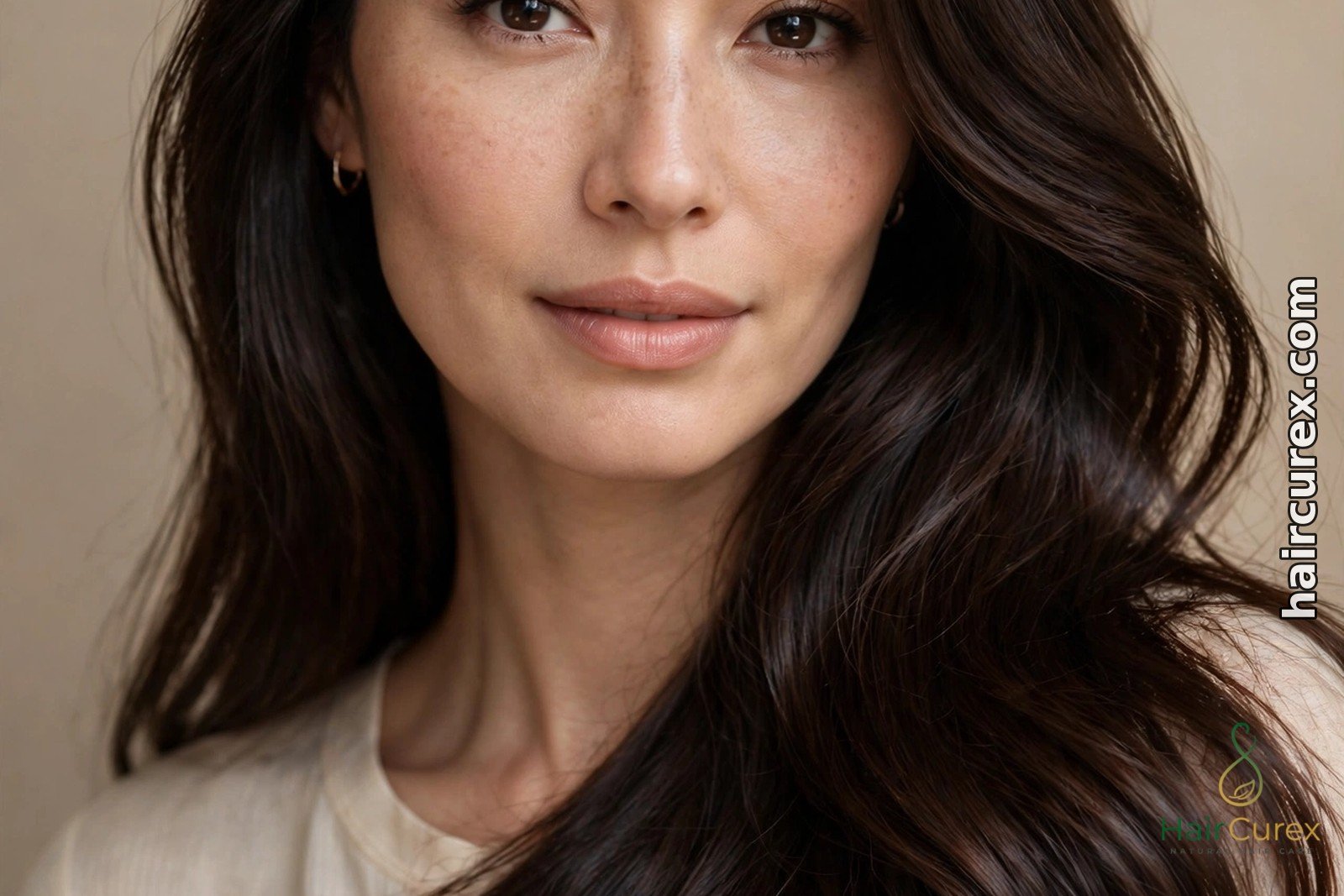
Quick answer: Dark brown hair is the richest shade in the brown family — deep, glossy and close to black, but with warm brown tones that show in sunlight. It suits almost every skin tone: espresso and cool dark browns flatter cool and fair skin, chocolate and chestnut suit warm and medium skin, and mahogany suits dark skin beautifully. You can get it at home with a permanent dye if your hair is already brown, or in a salon if your hair is blonde, grey or previously dyed black. To keep it from going brassy, wash 2–3 times a week in cool water with a sulfate-free, colour-safe shampoo, use a blue or purple toning product every 1–2 weeks, and protect it from sun and heat.
Dark brown hair is the colour most people picture when they think of brunette hair — deep, shiny and quietly expensive-looking. It is darker than medium brown and lighter than black, which gives it the best of both: the depth and drama of black hair, with the warmth and dimension that black hair often lacks. In daylight it shows rich brown tones; indoors it can look almost black, which is why it photographs so well and why it suits so many people. It is also one of the most forgiving colours to maintain: unlike blonde or red, dark brown fades slowly, grows out softly, and rarely needs emergency colour correction. The catch is that “dark brown” is not one colour — pick the wrong undertone and it can wash you out or pull orange as it fades. This guide covers every dark brown shade, who each one suits, how to get it at home or in a salon, and exactly how to keep dark brown hair from going brassy.
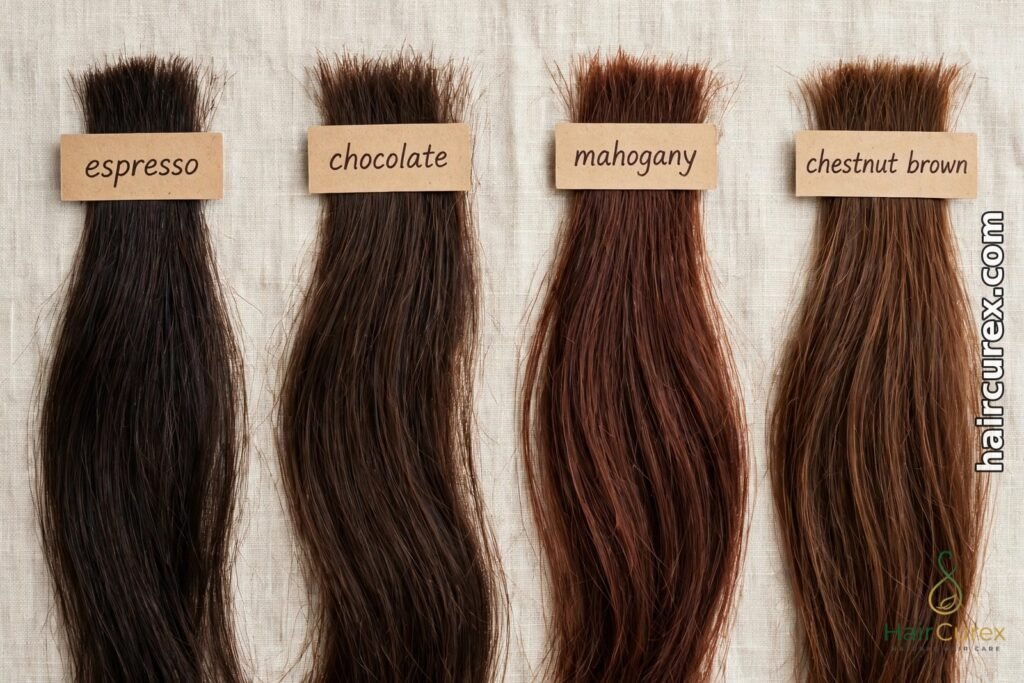
Dark Brown Hair Shades at a Glance
Dark brown hair covers a whole family of shades, and the undertone matters more than the depth. A cool dark brown looks almost black with a grey-blue cast; a warm dark brown glows copper or gold in sunlight. These are the main families:
| Shade | What it looks like | Best for | Upkeep |
|---|---|---|---|
| Espresso | The darkest brown — almost black, with a cool, coffee-like depth | Cool and fair skin; a sleek, polished look | Low — holds its depth well |
| Chocolate brown | Rich, warm medium-dark brown with a sweet, glossy finish | Warm and medium skin; the most popular dark brown | Low — fades slowly and evenly |
| Mahogany | Dark brown with a deep red-wine glow | Dark skin and warm undertones; adds warmth to the face | Medium — the red tones fade first |
| Chestnut | Warm dark brown with golden-red highlights in sunlight | Warm skin tones; a softer, sunlit dark brown | Medium — can turn brassy without toning |
| Ash dark brown | Cool dark brown with a muted, smoky finish | Cool undertones; tames redness in the skin | Medium — needs toning to stay cool |
| Dark brown balayage | Dark brown base with lighter brown ribbons through the lengths | Anyone wanting dimension without a full colour change | Low — roots need no touch-up |
If you are going dark brown for the first time, chocolate brown is the safest starting point: it is warm enough to look natural on almost everyone, it does not need lightening, and it fades gracefully instead of going patchy. Espresso is the best choice if you want the darkest possible brown without committing to black — it looks striking on fair skin and needs almost no maintenance. Mahogany is the shade to pick if you want warmth and a hint of red without going fully red. Our full guide to chocolate brown hair covers that shade in depth, including how it looks on different skin tones and how to keep it glossy, while our guide to ash brown hair covers the cool-toned side of the family if you want a smoky, muted finish instead of warmth.
Who Does Dark Brown Hair Suit?
Match the shade to your skin’s undertone, not just your eye colour. Look at the veins on your wrist in daylight: greenish veins usually mean warm undertones, bluish veins mean cool undertones. Warm undertones suit chocolate, chestnut and mahogany dark browns. Cool undertones suit espresso and ash dark browns. If you cannot tell, chocolate brown sits in the middle and works on almost everyone — it is the shade colourists reach for when they want a safe, flattering dark brown.
Fair skin. Dark brown hair is one of the best colours for fair skin because the contrast makes both the hair and the complexion look richer — think of the classic Snow White effect. Espresso and ash dark brown are the strongest picks here, and they look striking with blue or green eyes. The one shade to be careful with is the warmest chestnut on very fair skin, because it can pull orange against a pale face. If you want a lighter brown instead, honey brown hair is the warmer, golden alternative, while bronde hair blends brown and blonde for a softer, sun-kissed finish.
Medium skin. Almost every dark brown shade works on medium skin. Chocolate brown is the most flattering all-rounder, and chestnut adds a warm glow that suits olive skin well. If your skin has olive undertones, lean toward chocolate or mahogany rather than ash dark brown, because ash tones can make olive skin look grey or washed out.
Dark skin. Dark brown hair looks superb on dark skin — the depth of the colour picks up the warmth in the complexion instead of fighting it. Mahogany and chocolate brown are the strongest choices, and they show up beautifully on dark brown or black hair without needing any lightening. Espresso also works well if you want a deeper, cooler look. Avoid shades that are too close to your natural hair colour or the change will be invisible indoors; you want enough contrast for the colour to read in normal light.
Hair type and length. Dark brown hair flatters straight, wavy and curly hair alike, but it behaves differently on each. On straight hair the colour looks sleek and uniform, so uneven application shows more — take your time with sections. On wavy and curly hair the different tones catch the light in layers, which makes the colour look more dimensional and hides fading better. On very fine hair, choose a shade with warmth like chocolate or chestnut: very dark, cool shades can make fine hair look thinner at the roots as the colour grows out. On long hair, a dark brown balayage spreads lighter brown ribbons through the lengths and makes grow-out far less obvious.
Dark Brown Hair on Black Hair: Do You Need to Lighten First?
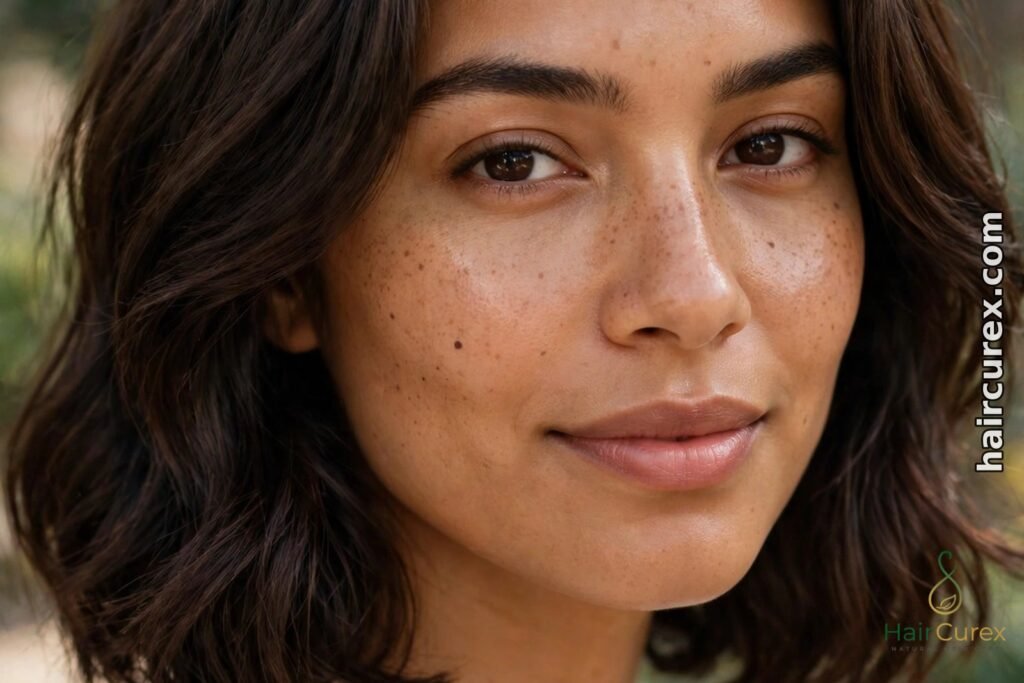
This is the question that decides most dark brown hair results, and the honest answer is: usually not. Dark brown is close enough to black that a dark brown dye deposits visible brown pigment over a black base — the result is a rich brown that is obvious in sunlight and subtle indoors. That is exactly why dark brown is one of the easiest colours to get on naturally black hair, and why it is the best first colour change for people with black hair who want a change without damage.
There are two exceptions. First, if your hair has been dyed black before, especially with black hair dye, the old colour can block the brown almost completely. Permanent black dye builds up in the hair shaft, and a dark brown dye over the top may barely show. In that case a colourist may need a gentle colour-removal step before the brown will take. Second, if you want a warm chestnut or mahogany that reads clearly warm indoors as well as outdoors, you may need a gentle lift of one level first — without it, the warmth can stay hidden under the dark base.
A strand test answers this for your own hair in ten minutes: dye a small hidden section, wait the full processing time, and check the result in daylight. It tells you the true colour on your hair and whether your hair can handle the dye. A strand test is also the simplest way to check for an allergic reaction — apply a small amount of dye behind your ear or on your inner elbow 48 hours before the full application, as the U.S. Food and Drug Administration advises on its hair dyes safety page.
How to Dye Your Hair Dark Brown at Home
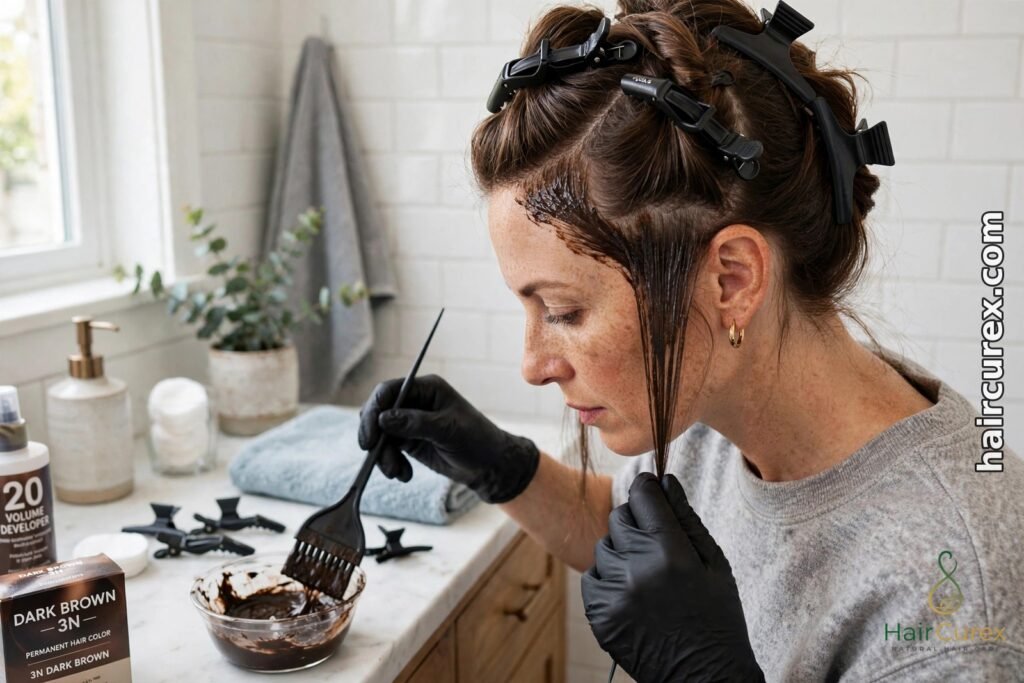
Dyeing dark brown hair at home is one of the easiest home colour jobs there is, because the shade is close to most people’s natural colour and small mistakes are hard to see. Work in a room with good light, wear old clothes and gloves, and protect your hairline with petroleum jelly so the dye does not stain your skin.
1. Choose the right dye type. Permanent dye gives the longest-lasting dark brown and is the best choice if you want the colour to stay for 6 to 8 weeks. Semi-permanent dye washes out over 4 to 6 weeks and is gentler on the hair, which makes it a good first try if you are not sure about the shade. A semi-permanent gloss is also a good way to refresh faded dark brown between full dye sessions without more damage. For a shade that is much darker than your current colour, a permanent dye gives the most even result.
2. Prepare your hair. Do not wash your hair for 24 to 48 hours before dyeing — the natural oils protect your scalp, and dye grips slightly dirty hair better than squeaky-clean hair. Detangle fully and divide the hair into four sections with clips. If your hair is very light blonde, do a filler first: a warm, coppery semi-permanent colour applied before the dark brown stops the final result from going greenish or muddy, because light hair lacks the warm pigment that dark brown needs to look right.
3. Apply in sections. Start at the roots at the back of the head and work forward, then pull the dye through the lengths. Use a tint brush rather than your hands for even coverage, and check the back with a mirror — the back is where most home dye jobs go patchy. Leave the dye on for the full time on the box; rinsing early is the most common reason a dark brown comes out too light or uneven, and leaving it on too long on already-dyed ends makes them darker than the roots.
4. Rinse cool and condition. Rinse with cool water until it runs mostly clear, then use the conditioner that came in the box. Do not shampoo for 48 to 72 hours after dyeing — the colour needs that time to settle into the hair shaft. The first wash should be with a sulfate-free, colour-safe shampoo in cool water.
The most common at-home mistakes are easy to avoid: skipping the strand test, applying dye to soaking wet hair (which dilutes the colour), overlapping dye onto already-coloured ends every time (which builds up too dark), and washing with hot water the next day. If the result comes out darker than expected, do not panic — dark brown lightens a little with the first few washes and the true colour usually shows after the third wash.
How to Keep Dark Brown Hair From Going Brassy
Dark brown hair does not fade as fast as red or blonde, but it has its own enemy: brassiness. As dark brown fades, the underlying warm pigment shows through and the colour can turn orange or coppery, especially on hair that was lightened before it was dyed dark. These habits keep it rich and cool:
1. Wash less, and wash cool. Wash 2 to 3 times a week at most, in the coolest water you can stand. Hot water opens the hair cuticle and lets the pigment escape; cool water keeps the cuticle closed. On non-wash days, dry shampoo keeps the roots fresh without touching the colour.
2. Use a sulfate-free, colour-safe shampoo. Sulfates strip colour faster than anything else in a normal routine. A sulfate-free shampoo made for coloured hair is the single most effective product change you can make, and it costs no more than a regular shampoo.
3. Tone with blue or purple every 1 to 2 weeks. A blue toning shampoo or conditioner cancels orange tones; a purple one cancels yellow tones. For dark brown hair going brassy, blue is usually the right choice, because brassiness in dark brown shows as orange, not yellow. Use it once every 1 to 2 weeks instead of your normal shampoo — using it too often can leave a dull, grey cast.
4. Wait 48 to 72 hours before the first wash. The dye needs time to settle after application. Washing too soon washes out a surprising amount of the fresh colour, and the loss is permanent — that pigment does not come back.
5. Protect it from sun and heat. UV light breaks down hair pigment and pushes dark brown toward orange, so wear a hat in strong sun or use a UV-protecting hair spray. Heat styling is the other big fade factor: keep hot tools under 180°C (350°F), always use a heat protectant, and let the hair air-dry when you can.
6. Go easy on swimming. Chlorine strips colour and can push dark brown toward a greenish or brassy tone. Wet your hair with clean water before getting in a pool — soaked hair absorbs less chlorinated water — and rinse it out immediately afterwards. A swim cap is the safest option if you swim regularly.
7. Deep-condition weekly. Healthy hair holds colour better than damaged hair. A weekly deep-conditioning mask keeps the cuticle smooth so the pigment stays locked in, and it keeps dark brown looking glossy instead of dull. The American Academy of Dermatology’s healthy hair tips cover the same gentle-washing and conditioning basics that matter most for coloured hair.
Even with perfect care, dark brown hair needs a refresh every 6 to 8 weeks — a root touch-up for permanent colour, or a semi-permanent gloss over the lengths to bring the richness back. A colour gloss between full dye sessions is cheaper than a full re-dye and keeps the colour looking fresh without more damage.
Salon or At Home?
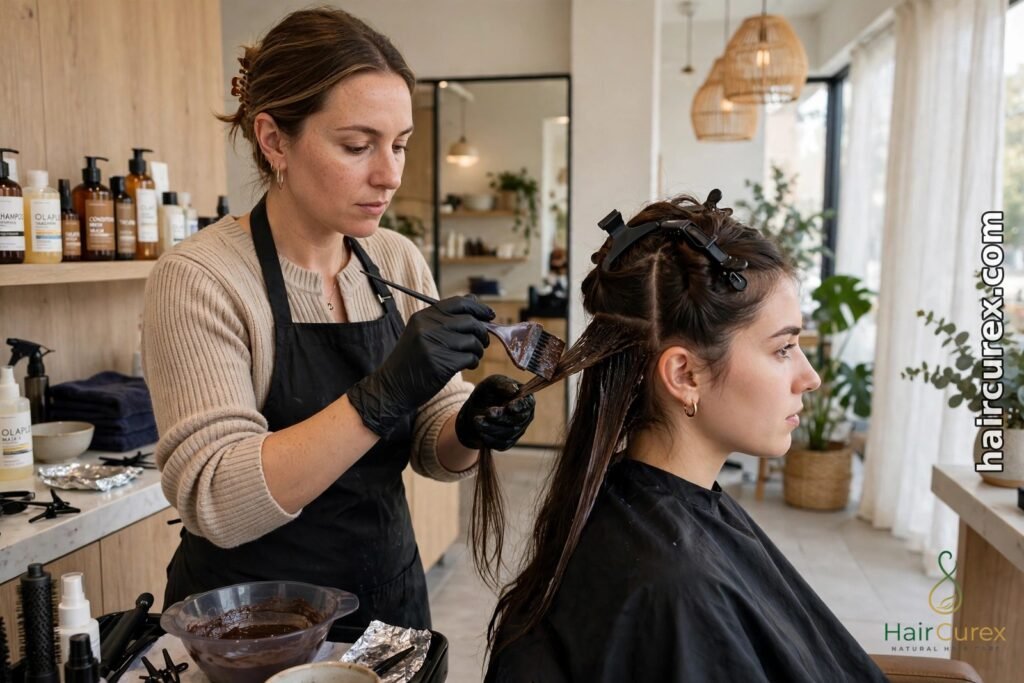
At home is fine for chocolate, espresso and mahogany dark browns on hair that is already brown or dark, because these shades are close to your starting colour and small mistakes are hard to see. A box dye, a strand test and careful sectioning are usually enough, and the cost is a fraction of a salon visit — typically $10 to $25 for the dye itself.
A salon is the better choice in four situations: your hair is blonde or light and needs a filler before going dark (going dark from blonde without one is the most common cause of muddy or greenish results), your hair has been dyed black before, you want a balayage or dimensional colour (which needs freehand painting skill), or your hair is already damaged from previous bleaching. A salon dark brown typically costs $60 to $150 depending on the service and your area, and a balayage costs more. Ask the colourist to show you the exact shade swatch before they start, ask whether your hair needs a filler or a lift, and ask what maintenance schedule they recommend — a good colourist will tell you honestly whether your hair can go dark brown in one visit.
Dark Brown Hair FAQs
What is dark brown hair?
Dark brown hair is the deepest shade in the brown family — rich, glossy and close to black, but with warm brown tones that show in sunlight. The family includes espresso, chocolate brown, mahogany, chestnut and ash dark brown, and it reads as a deep brown in daylight and almost black indoors.
Does dark brown hair suit fair skin?
Yes — dark brown hair is one of the best colours for fair skin because the contrast makes both the hair and the complexion look richer. Espresso and ash dark brown are the strongest picks for fair skin, and they look striking with blue or green eyes. Avoid the warmest chestnut on very fair skin, as it can pull orange against a pale face.
Do you need to bleach your hair for dark brown?
No — dark brown is one of the easiest colours to get without lightening. It shows up well on dark brown and black hair because it is close to the starting colour. The exceptions are hair previously dyed black, which may need a gentle colour-removal step, and very light blonde hair, which needs a warm filler first so the dark brown does not turn muddy or greenish.
How long does dark brown hair last?
Permanent dark brown lasts 6 to 8 weeks before it needs a refresh, depending on the shade and how often you wash. Espresso and chocolate brown hold their depth longest, while mahogany and chestnut fade faster because their warm and red tones wash out first. A blue toning product every 1 to 2 weeks and a semi-permanent gloss between dye sessions stretch the colour significantly.
How do I stop dark brown hair going brassy?
Wash 2 to 3 times a week in cool water with a sulfate-free, colour-safe shampoo, wait 48 to 72 hours before the first wash after dyeing, and use a blue toning shampoo or conditioner every 1 to 2 weeks to cancel orange tones. Protect the hair from sun, heat and chlorine, which all push dark brown toward brassiness.
Is dark brown hair the same as black hair?
No. Dark brown hair is a shade lighter than black, with warm brown tones that show in sunlight. Black hair has no visible brown in any light and looks flatter and harsher against most skin tones. Dark brown is also more forgiving: it grows out softer, fades more gracefully, and is easier to lighten later if you change your mind.