


Quick answer: Bronde is a blend of brown and blonde that sits between the two colours — darker than blonde, lighter and warmer than brown, with soft dimension instead of a flat single shade. It suits most skin tones because the colourist can shift it warm or cool, it works best on a brown or dark blonde base, and it is one of the lowest-maintenance colour choices because it grows out with a soft root line. Expect a salon bronde service to take two to three hours, and keep it looking fresh with sulfate-free shampoo, a purple shampoo every second or third wash, and a gloss refresh every six to eight weeks.
Bronde hair is the colour for people who cannot decide between brown and blonde — and the honest answer is that you do not have to. Bronde hair takes the depth of brown and the brightness of blonde and blends them into one soft, lived-in colour. It has become one of the most requested salon colours of the last few years, and for good reason: it looks natural in every light, it suits almost everyone, and it grows out gracefully instead of leaving a harsh root line. This guide explains exactly what bronde hair is, how it differs from balayage, brown and blonde, who it suits, how to get it at the salon or at home, and how to stop it fading.
Bronde Hair: What It Is
Bronde hair is a hair colour that blends brown (brunette) and blonde into a single multi-dimensional shade. The name is a straightforward combination of the two words — “br” from brown and “onde” from blonde — and the colour itself works the same way: a brown base lifted with blonde highlights, or a blonde base deepened with brown lowlights, until the two meet in the middle. The result is not a flat colour. It is a mix of tones, usually two to four shades apart, that gives the hair depth and movement.
What makes bronde hair different from simply having highlights is the balance. In a typical bronde colour, the brown and blonde are close enough in depth that neither one dominates. The blonde pieces are usually only a few shades lighter than the brown base, so the blend looks soft and sun-kissed rather than striped. Most bronde hair uses a technique where the lighter pieces are painted or foiled through the mid-lengths and ends, with the darkest colour kept near the roots. That root depth is what makes bronde hair so wearable — the colour looks like it grew that way.
Bronde hair is not one single shade. It is a family of shades, and a good colourist will adjust it to your starting colour and skin tone. Honey bronde leans warm and golden, with caramel and honey tones over a medium brown base. Ash bronde leans cool, with beige and mushroom tones over a dark blonde or light brown base. Caramel bronde is the warmest version, with rich toffee pieces through a deep brown base. Mushroom bronde is the coolest, with ashy taupe tones that suit people who find warm colours too orange on them. The version that suits you depends on your base colour and your undertones, which we cover below.
One thing bronde is not: it is not a single-process dye job. You cannot get real bronde hair from one box of dye, because the dimension comes from layering two or more tones. It is also not the same as ombre, where the colour changes clearly from dark roots to light ends. Bronde hair keeps the light and dark woven through the whole head, so the colour looks the same from every angle and the grow-out stays soft.
Bronde Hair vs Balayage, Brown and Blonde
The most common confusion around bronde hair is that people mix it up with balayage, brown and blonde — and the confusion is understandable, because bronde hair often uses balayage as its application technique. The difference is that balayage is a technique, while bronde is a colour. Balayage means the colourist paints the lightener onto the hair by hand, in sweeping strokes, instead of using foils. You can have a blonde balayage, a caramel balayage or a bronde balayage. Bronde hair is the colour result: brown and blonde blended together. A bronde balayage is simply bronde hair applied with the balayage technique, and it is one of the most popular ways to get the look.

Against plain brown hair, bronde hair is lighter, warmer and more dimensional. Brown hair can look flat in indoor light, especially a single-process dark brown. Bronde hair adds lighter pieces that catch the light and give the hair movement, without committing you to being blonde. Against blonde hair, bronde hair is darker, softer and far lower maintenance. Full blonde needs root touch-ups every four to six weeks and regular toning to stop it going yellow. Bronde hair keeps a darker root, so the grow-out is soft and the appointments can stretch to eight to twelve weeks apart.
| Colour | What it looks like | Maintenance | Best for |
|---|---|---|---|
| Bronde hair | Brown and blonde blended, soft dimension, dark root | Low — gloss every 6–8 weeks, salon visit every 8–12 weeks | Anyone who wants lighter hair without going fully blonde |
| Balayage | Hand-painted lighter pieces, usually on any base colour | Low — same soft grow-out as bronde | Anyone who wants a sun-kissed, natural finish (a technique, not a colour) |
| Brown hair | One depth, rich and glossy, little dimension | Very low — roots only show when grey appears | People who want depth and shine with minimal upkeep |
| Blonde hair | Light all over, brightest and boldest | High — roots every 4–6 weeks, regular toning | People ready for the upkeep that light hair demands |
| Dirty blonde hair | Dark blonde with brown undertones, close cousin of bronde | Low — similar soft grow-out | Natural dark blondes who want a little more brightness |
If you are torn between brown and blonde, bronde hair is usually the safer first step. Going fully blonde from a dark base is a big commitment in both money and upkeep, and it can be hard to reverse without growing the colour out. Bronde hair lets you test lighter hair while keeping your depth, and if you love the lighter pieces you can always go blonder next time. If you are already blonde and tired of the upkeep, bronde hair is the easiest way back toward your natural colour without a harsh line. Our guide to blonde hair shades, ideas and highlights covers the full blonde range if you want to compare the two properly.
Who Does Bronde Hair Suit?
Bronde hair suits almost everyone, which is rare for a hair colour — but the shade has to be matched to your skin tone. The rule is simple: warm skin suits warm bronde, and cool skin suits cool bronde. Warm skin has golden, peachy or yellow undertones, and the veins on the inside of your wrist look greenish. Cool skin has pink, red or blue undertones, and the veins look bluish. If you cannot tell, you are probably neutral, which means both warm and cool bronde will suit you.
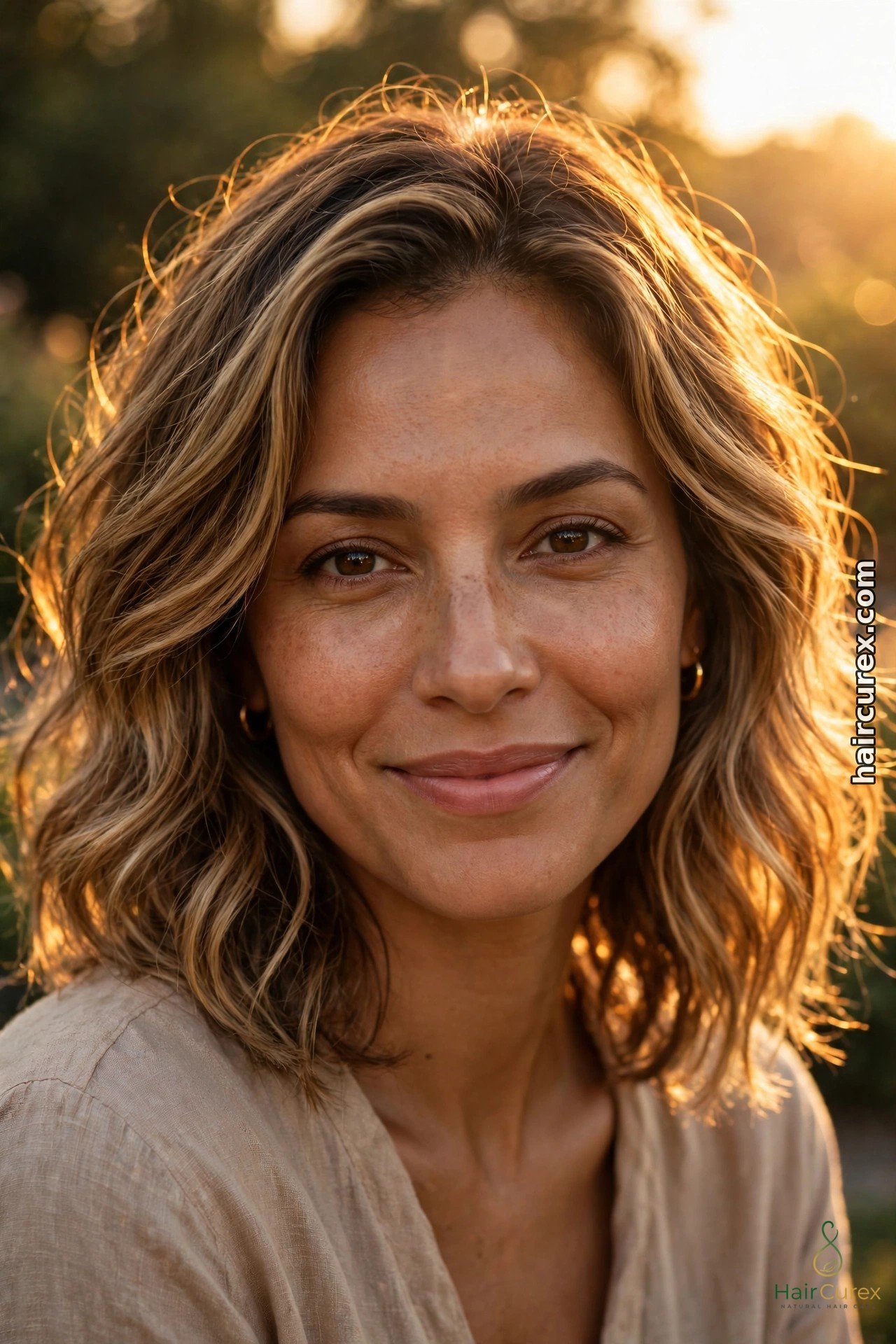
Warm skin tones look best in warm bronde hair: honey bronde, caramel bronde and golden bronde. The warm tones in the hair pick up the warmth in the skin, so the whole look glows instead of clashing. Cool skin tones look best in cool bronde hair: ash bronde, mushroom bronde and beige bronde. The cool tones balance the pink in the skin instead of fighting it, and they stop the hair looking orange — the most common complaint when a cool-toned person gets a warm colour.
Eye colour is a useful second check. Brown eyes and hazel eyes pair beautifully with warm bronde, because the golden tones bring out the flecks in the eyes. Blue and green eyes pair beautifully with cool bronde, because the ashy tones make the eye colour stand out. Grey eyes work with either, which is another reason neutral-toned people have the easiest choice. None of this is a hard rule — a good colourist will look at your skin, eyes and natural hair colour together before choosing the shade.
| Your skin tone | Best bronde hair shades | Shades to be careful with |
|---|---|---|
| Warm (golden, peachy undertones) | Honey bronde, caramel bronde, golden bronde | Ash bronde can look grey or dull against warm skin |
| Cool (pink, rosy undertones) | Ash bronde, mushroom bronde, beige bronde | Very warm caramel can pull orange on cool skin |
| Neutral (hard to tell) | Almost any bronde shade — honey and beige are safe starts | Very extreme warm or cool shades can tip the balance |
| Deep skin tones | Rich caramel bronde, toffee bronde, bronze bronde | Pale ash bronde can wash out deeper skin |
| Fair skin | Soft honey bronde, beige bronde | Very dark bronde can be too heavy against very fair skin |
Base colour matters just as much as skin tone. Bronde hair works best on a natural brown or dark blonde base, because the colourist only needs to lift the hair a few levels to reach the blonde pieces. That means less bleach, less damage and a more natural result. If your hair is very dark brown or black, bronde hair is still possible, but the lighter pieces will need more lifting, which takes longer and costs more, and the result will usually be a deeper, richer bronde rather than a light one. If your hair is already light blonde, bronde hair means adding darker lowlights, which is a quicker and gentler service. If you are unsure which bronde shade fits your base, our AI hair colour quiz can help narrow down shades for your skin tone, and bringing reference photos to your consultation will help your colourist see exactly what you want.
Bronde Hair for Brunettes
Brunettes are the best candidates for bronde hair. If your natural colour is medium brown or dark brown, your colourist can lift selected pieces two to three levels and you are there. The brown base stays as the depth, the lifted pieces become the blonde, and the blend looks like your hair naturally lightened in the sun. Brunettes also get the lowest maintenance version of bronde hair, because the dark root already matches your natural colour — the grow-out is nearly invisible.
For brunettes, the most flattering bronde hair styles keep the lightest pieces around the face. Face-framing highlights — sometimes called a money piece — brighten the whole face without lightening the entire head. The lighter pieces through the ends add movement when the hair moves, and the darker pieces underneath keep the colour grounded. If you have long hair, the effect is even stronger, because the length shows off the blend. If you have short hair, ask for the lightest pieces near the front and the crown, where the light hits first.
Dark brown hair needs a little more patience. Lifting very dark hair to a blonde tone takes more than one session if the hair has been coloured before, because old colour and build-up lift unevenly. A good colourist will tell you honestly if your bronde hair will take one session or two, and will usually aim for a deeper bronde on the first visit and lighten further on the second. That is the safe way to do it — pushing dark hair too light in one session is how bronde hair turns brassy or damaged. Our guide to chocolate brown hair shades and colour ideas is a good starting point if you want to see how deep brown tones can look before you add the blonde.
How to Get Bronde Hair at the Salon
Getting bronde hair at the salon starts with a consultation, and it is the most important part of the appointment. Bring two or three reference photos of bronde hair you like, and be honest about your hair history — previous colour, bleach, keratin treatments and how often you heat-style. The colourist needs that history to choose the right lightener and to judge how many levels your hair can safely lift in one session. A consultation also sets the price: a full bronde service typically costs more than a root touch-up, because it involves foiling or painting, toning and a gloss.

At the appointment, the colourist will usually start by applying lightener to the pieces that will become blonde, either in foils or painted freehand in the balayage technique. Foils give a brighter, more defined blonde; balayage gives a softer, more diffused blend. Many colourists use both — foils through the back for brightness, balayage around the face for softness. After the lightener has processed, the hair is rinsed and toned. Toning is what turns the lifted hair from yellow into bronde: the toner deposits the exact shade of brown-blonde you agreed on, and it also evens out any patchiness. A gloss or glaze is often applied last to seal the colour and add shine.
A full bronde service usually takes two to three hours, depending on your hair length and thickness. If your hair is very long, very thick or very dark, allow three to four hours. The appointment is not a quick one, so plan for it. After the service, ask the colourist what they used — the toner shade and the gloss — because that information makes your next appointment much easier, especially if you see a different colourist next time.
As for cost, a bronde service in the U.S. typically ranges from about $150 to $350, depending on the salon, the city and how much hair you have. That is a typical range, not a quote — prices vary widely, and high-end salons in big cities charge more. A partial bronde, with lighter pieces only around the face and through the top layer, typically costs less than a full head. Ask for the price at the consultation so there are no surprises at the till. L’Oréal Paris has a useful overview of the colour and what to ask for at the salon: L’Oréal Paris bronde hair colour guide.
Can You Do Bronde Hair at Home?
You can do a version of bronde at home, but you should know the limits before you start. The safest at-home route is a bronde box dye or a highlighting kit designed for your base colour, used on hair that has never been coloured or bleached. Box dyes that promise bronde are really a single brown-blonde shade — they will not give you the dimension of a salon bronde, but they can give you a softer, lighter brown with warm tones, which is a reasonable first step if your hair is already close to the target shade.
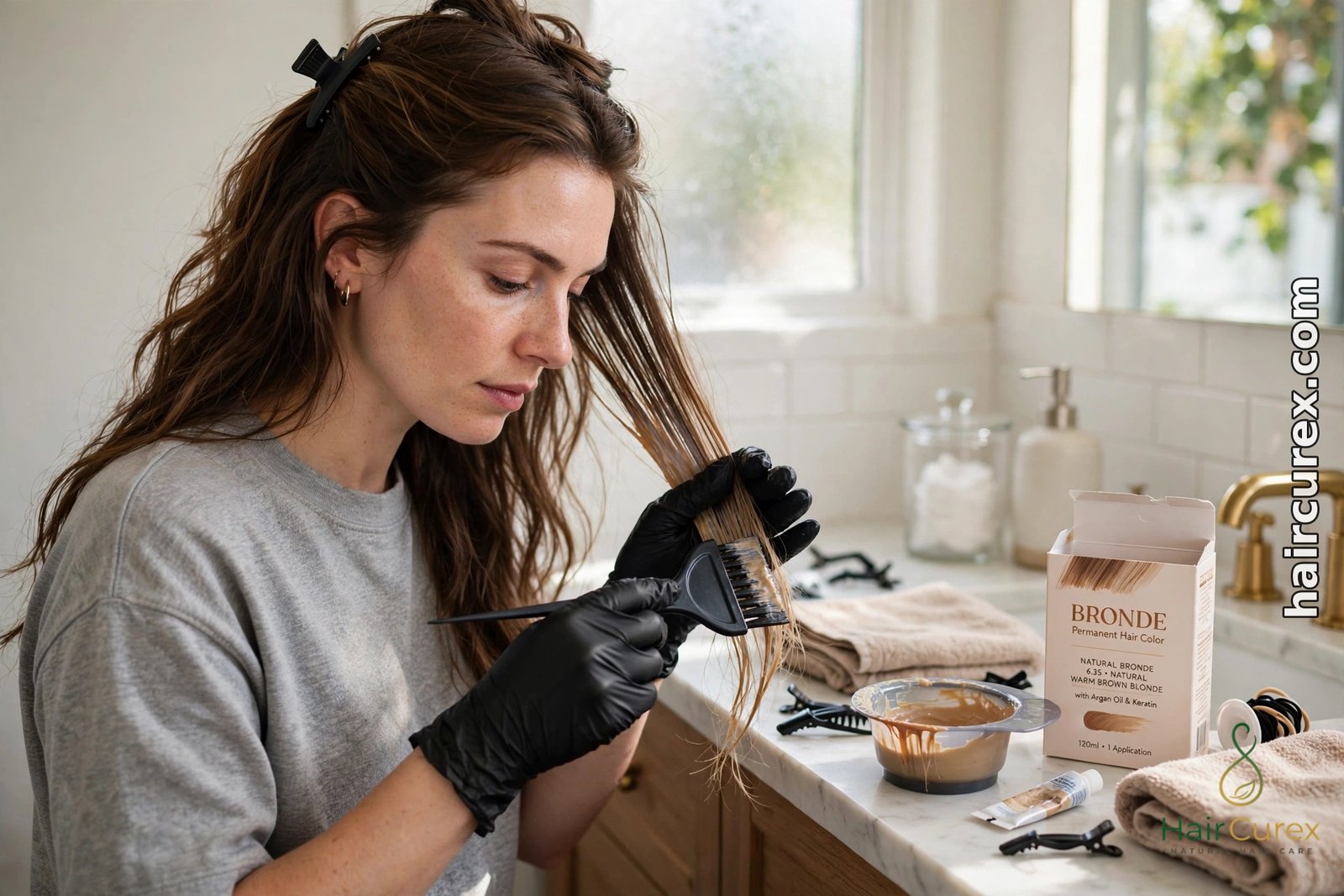
The harder at-home route is lightening your own hair with bleach and then toning it. This is where most DIY bronde goes wrong. Bleach lifts unevenly on hair that has old colour in it, it lifts faster on the ends than on the roots because of body heat, and it is easy to leave it on too long and end up with orange or damaged hair. If your hair is dark, previously coloured, or already damaged, do not bleach at home. The money you save on the salon visit is quickly lost on a colour correction, which costs more than the original service would have.
If you do try bronde at home, follow a few rules. Do a strand test first: colour one small hidden section and check the result before you commit the whole head. Do a patch test 48 hours before, as the box instructs, to check for an allergic reaction. Apply the colour to the mid-lengths and ends first and the roots last, because roots process faster. Do not overlap colour onto already-coloured ends unless the instructions say to. And have a toner ready — most at-home bronde kits need a toner or a purple shampoo afterwards to stop the result looking yellow. Our guide to honey blonde hair shades and how to get the look covers similar at-home considerations if you are comparing warm shades.
Bronde Hair Maintenance: How to Stop It Fading
Bronde hair is low maintenance, not no maintenance. The blonde pieces will fade and warm up over time, and the gloss will wear off after a few weeks. The good news is that the maintenance is simple and cheap compared with full blonde. The single most important habit is washing less often and washing gently. Colour fades fastest in hot water and harsh shampoo, so wash with lukewarm water and a sulfate-free shampoo made for colour-treated hair. Dry shampoo between washes helps stretch the time between washes, which keeps the colour in longer.

Purple shampoo is the best friend of bronde hair. The blonde pieces in bronde hair tend to turn yellow or brassy as they fade, and purple shampoo neutralises that yellow tone. Use it once every second or third wash — not every wash, because overuse can leave a grey or purple cast on the lighter pieces. Leave it on for two to three minutes before rinsing. If the brassiness is strong, a blue shampoo works on orange tones, but purple is the right choice for most bronde hair. Our guide to purple shampoo, how it works and how to use it explains the difference in detail.
A gloss refresh every six to eight weeks is what keeps bronde hair looking salon-fresh. A gloss is a semi-permanent colour that deposits tone without lifting, so it revives the bronde shade, adds shine and seals the cuticle — and it is much cheaper and quicker than a full colour service. Many salons offer a gloss as a standalone appointment that takes under an hour. Between glosses, a weekly hair mask keeps the lightened pieces soft, because lightened hair loses moisture faster than virgin hair. The American Academy of Dermatology’s healthy-hair guidance covers the same gentle-care basics that matter most for colour-treated hair: American Academy of Dermatology healthy hair tips.
Heat and sun are the two biggest fading culprits after washing. Heat styling without a protectant dries out the lightened pieces and dulls the tone, so use a heat protectant every time you use a dryer or iron. Sun lightens the blonde pieces further and can turn them brassy, so wear a hat or use a UV-protectant spray in strong sun, and rinse your hair with fresh water after swimming — chlorine and salt water both strip colour and dry the hair out. If you swim regularly, wet your hair with clean water before you get in the pool, because wet hair absorbs less chlorinated water.
Bronde Hair Mistakes to Avoid
The most common bronde mistake is going too light too fast. Bronde hair should look like a blend, not like blonde with a brown root. If the blonde pieces are too light or too many, the result stops being bronde and becomes blonde with dark roots, and the maintenance jumps with it. Ask your colourist to keep the blonde pieces within two to three levels of your base on the first visit. You can always go lighter next time.
The second mistake is skipping the toner. Lightener alone does not make bronde hair — it makes yellow hair. The toner is what creates the bronde shade, and without it the colour will look raw and brassy within a week. If your bronde looks yellow or orange after a salon visit, go back and ask for a toner adjustment rather than trying to fix it at home with box dye. Most salons will correct the tone free of charge within a week or two of the service.
The third mistake is choosing the wrong undertone for your skin. Warm bronde on cool skin can look orange, and cool bronde on warm skin can look grey and dull. This is why the consultation matters: a colourist who looks at your skin and your natural hair colour together will choose the right bronde family for you. And the fourth mistake is neglecting the aftercare. Bronde hair that is washed daily with a harsh shampoo and heat-styled without protectant will fade to a dull, brassy brown within a month. The colour is only as good as the care that follows it.
Bronde Hair FAQs
What is bronde hair?
Bronde hair is a blend of brown and blonde in one multi-dimensional colour. A brown base is lifted with blonde highlights, or a blonde base is deepened with brown lowlights, until the two meet in the middle. The result is darker than blonde, lighter and warmer than brown, with a soft dark root that grows out gracefully.
Is bronde hair the same as balayage?
No. Bronde is a colour and balayage is a technique. Balayage is the hand-painted method of applying lightener, while bronde is the brown-blonde colour result. A bronde balayage is bronde hair applied with the balayage technique, and it is one of the most popular ways to get the look.
Who does bronde hair suit?
Bronde hair suits most skin tones because the shade can be shifted warm or cool. Warm skin suits honey and caramel bronde; cool skin suits ash and mushroom bronde; neutral skin suits almost any bronde shade. It works best on a natural brown or dark blonde base, because the hair only needs to lift a few levels.
How long does bronde hair last?
Bronde hair lasts eight to twelve weeks between salon visits, because the dark root grows out softly. The gloss and tone fade sooner, after about six to eight weeks, so a gloss refresh in between keeps the colour looking fresh. Washing with sulfate-free shampoo and using purple shampoo slows the fading.
Can brunettes get bronde hair?
Yes — brunettes are the best candidates for bronde hair. A medium or dark brown base only needs to lift two to three levels for the blonde pieces, which means less bleach, less damage and a more natural result. The dark root also matches a brunette’s natural colour, so the grow-out is nearly invisible.
Can I do bronde hair at home?
You can try a bronde box dye on virgin hair that is already close to the target shade, but a true dimensional bronde needs a colourist. Bleaching at home is risky on dark, previously coloured or damaged hair, because it lifts unevenly and can turn orange. If you try it at home, do a strand test and a patch test first.
How do I stop bronde hair going brassy?
Use a purple shampoo once every second or third wash to neutralise yellow tones, wash with lukewarm water and sulfate-free shampoo, and get a gloss refresh every six to eight weeks. Heat protectant and sun protection also slow the brassiness, and a toner adjustment at the salon fixes it if it has already gone brassy.