


Ash brown hair is the cool-toned brunette that has quietly become one of the most requested salon colors — a smoky, muted brown with gray and silver undertones instead of the gold and red you find in warm browns. It looks modern, expensive and effortless in photos, which is exactly why so many people ask for it. But ash brown hair is also one of the easiest colors to get wrong: the same cool tones that make it look so polished can wash some skin tones out, turn brassy within weeks, or go muddy and greenish if the base color is not right. This guide covers the full ash brown shade family, who it genuinely suits, how to get it at home or in a salon, and the toning routine that keeps it cool instead of brassy.
Quick answer: Ash brown hair is a cool-toned brown hair color with smoky, grayish undertones and no warmth. It suits fair and medium skin with cool or neutral undertones best, and it works on dark hair only after a lift or lightening — dye cannot cool down very dark hair on its own. To keep it from going brassy, wash with purple shampoo once a week, use cool water and color-safe products, and refresh the toner every 4–6 weeks.
What Is Ash Brown Hair?
Ash brown hair is a brown hair color built on cool undertones — ash, smoke, slate and a hint of silver — rather than the gold, copper and red undertones found in warm browns like chocolate brown hair. In bright light it reads as a soft, muted brown with a silvery cast; indoors it looks like a deep, cool brunette. The “ash” in the name comes from the ashy, almost gray pigment used to cancel out warmth, the same principle behind purple shampoo and toners for blonde hair.
It is not one single shade. The ash brown family runs from dark ash brown, which is close to a cool espresso, through medium ash brown, the classic smoky brunette, to light ash brown and ash brown balayage, where the cool tones are painted through the mid-lengths and ends. What all of them share is the absence of warmth: there is no golden glow, no reddish tint, no caramel — and that is the whole point. If you love the look of a cool, muted, almost matte brown, ash is your family. If you want warmth and glow, one of the warmer brunette shades will suit you better.
Ash brown is also a color that depends on the starting point more than most. On naturally light or medium brown hair, ash tones take easily and look soft and natural. On dark brown or black hair, the ash pigment has nothing to work against — dye cannot lift the hair, so the result barely shows. That is why so many at-home attempts disappoint: the box promised ash, but the hair underneath was too dark for the ash to show.

Ash Brown Hair Shades: The Full Range
Before choosing a shade, see the whole family. These are the shades you will find on dye boxes and salon color charts, and each one suits different skin tones and starting colors.
| Shade | What it looks like | Best for | Maintenance |
|---|---|---|---|
| Dark ash brown | Deep cool brown, close to espresso with a smoky cast | Deep and medium skin; first-time ash users | Low — fades slowly, roots blend well |
| Medium ash brown | The classic smoky brunette, cool and muted | Fair and medium skin with cool undertones | Medium — needs toning to stay cool |
| Light ash brown | Lighter cool brown, soft and silvery in sunlight | Fair skin; people going lighter gradually | Medium to high — brassiness shows faster |
| Ash brown balayage | Dark base with hand-painted cool ash pieces | Most skin tones; low-commitment change | Low — grows out without a harsh line |
| Ash brown ombre | Dark roots fading into cool ash ends | Medium and long hair; dramatic looks | Medium — ends need regular toning |
| Mushroom brown | Ash brown with extra gray-beige tones | Fair skin; cool undertones; fashion-forward looks | High — the gray tones fade fastest |
| Smoky ash brown | Medium ash with a silver-gray cast | Fair skin; people who like the silver trend | High — needs purple shampoo weekly |
If you are choosing between two shades, go lighter rather than darker when in doubt — you can always go darker next time, but lifting a too-dark color requires bleach and extra damage. And remember that dye-box photos are a guide, not a guarantee: the same shade looks different on dark hair, light hair and previously colored hair, because the result depends on what is underneath.
Who Suits Ash Brown Hair Best?
Ash brown hair suits cool and neutral skin undertones best. The test is simple: look at the veins on the inside of your wrist in natural light. If they look blue or purple, you likely have cool undertones; if they look green, warm; if you cannot tell, neutral. Silver jewelry flattering you more than gold is another sign of cool undertones. If you are cool-toned, ash brown will look natural and harmonious against your skin. If you are warm-toned, ash brown can still work — but you need the right shade and some warmth left around the face, or it can make your skin look tired and gray.

Fair skin
Fair skin with cool undertones is the natural home of ash brown hair. Medium ash brown and light ash brown add definition without the harsh contrast that very dark colors create on pale skin, and the cool tones echo the pink and blue undertones in fair skin. Keep some softness around the face: face-framing pieces a shade lighter than the base stop the color looking flat, and a little dimension through the lengths keeps it from reading as one solid block. One caution — if your skin is very fair and flushes easily, a very dark ash brown can make redness more noticeable, so medium ash is usually the safer pick.
Medium and olive skin
Medium skin can wear ash brown well, but the shade matters. Medium ash brown and ash brown balayage are the best choices: the balayage keeps warmth at the roots and puts the cool tones through the ends, which flatters medium skin without washing it out. Olive skin, which has greenish undertones, needs care — a flat, very ashy brown can clash with green undertones and make the skin look sallow. If you have olive skin, choose a medium ash brown rather than a light or mushroom shade, and ask your colorist to keep a neutral, not overly gray, tone. If you are unsure, preview the shade with an AI hair color quiz on your own photo before committing.
Deep skin
Deep skin and ash brown can be striking, but the shade needs depth. Dark ash brown is the best choice: its richness creates a glossy, polished look, while lighter ash shades can look ashy and dull against deep skin. Dimension matters more than lightness here — a flat dark ash can look heavy, so ask for subtle cool lowlights or an ash balayage that is one or two shades lighter than the base. These touches catch the light and stop the color looking one-dimensional. Mushroom brown and very light ash shades are the hardest to pull off on deep skin and are best left to a colorist who can balance the tone.
How to Get Ash Brown Hair
You can get ash brown hair at home with a box dye or in a salon. The right choice depends on your starting color and how far you are going.

At home with box dye
Box dye works well if your hair is already light brown or medium brown and you are going the same depth or darker. Choose a shade labelled ash brown, and check the side-of-box chart for your starting color — the result swatch shows what each starting shade will produce. Always do a patch test 48 hours before coloring, as the U.S. Food and Drug Administration advises, and follow the instructions exactly, including the timing. Wear gloves throughout and never mix different dye formulas. If your hair is dark brown or black, a box dye alone will not give you visible ash tones: dye cannot lighten hair, so the ash pigment sits on top of dark hair and barely shows.
In a salon
Go to a salon if your hair is dark, previously bleached, or already colored with a very dark or very warm dye. A colorist can lift the hair one or two levels first, then apply the ash tone — the lift is what lets the cool pigment show. Light or bleached hair needs the opposite care: without a proper toner, ash can grab unevenly and turn greenish or muddy, especially on porous ends. A colorist can also match the shade precisely to your skin tone and add balayage or lowlights for dimension. Salon color costs more, but for a big change, a correction, or a first ash color, it is worth it. Our guide to semi-permanent vs permanent dye explains the trade-offs if you want to try the shade before committing to permanent color.
Going from dark hair to ash brown
If your hair is black or very dark brown, ash brown needs a gentle lift first. A colorist will lighten the hair one or two levels with bleach or a high-lift color, then apply the ash toner. Trying to force it with a box dye alone usually gives a result that looks black indoors and only shows a hint of brown in bright sunlight. The lift also means extra care afterwards: lightened hair is more porous, so it loses toner faster and needs the anti-brass routine below.
Going from blonde to ash brown
Blonde and light brown hair takes ash brown easily — sometimes too easily. Very porous blonde ends can grab the ash pigment and turn gray or slightly green, so a strand test is essential, and a semi-permanent ash dye is a good first step because it washes out over several weeks. If you are going from blonde to a dark ash brown, the colorist may add a warm “fill” first so the result does not turn muddy. Either way, expect the ash to fade faster on previously lightened hair, and plan on toning every few weeks.
Ash Brown Hair with Balayage and Highlights
Balayage is the easiest way to wear ash brown, because it puts the cool tones where they look best — through the mid-lengths and ends — while the roots stay natural. Ash brown balayage suits almost every skin tone, grows out without a harsh line, and needs far less maintenance than a full-head ash color. Ask for hand-painted pieces a shade or two lighter than your base, concentrated at the ends and around the face.
Face-framing ash pieces — two cooler strands around the face — are a low-commitment way to try the look, and they suit every skin tone because the rest of the hair keeps its natural warmth. For a bolder look, a smoky ash ombre fades dark roots into cool ash ends, though the ends will need regular toning to stay cool.
How to Stop Ash Brown Hair Going Brassy
Brassiness is the number-one problem with ash brown hair. Warmth creeps back as the cool toner fades, and the hair turns orange, yellow or brassy — usually within 3–4 weeks. A simple routine keeps it cool for much longer, and every step below is cheap and easy to do at home.
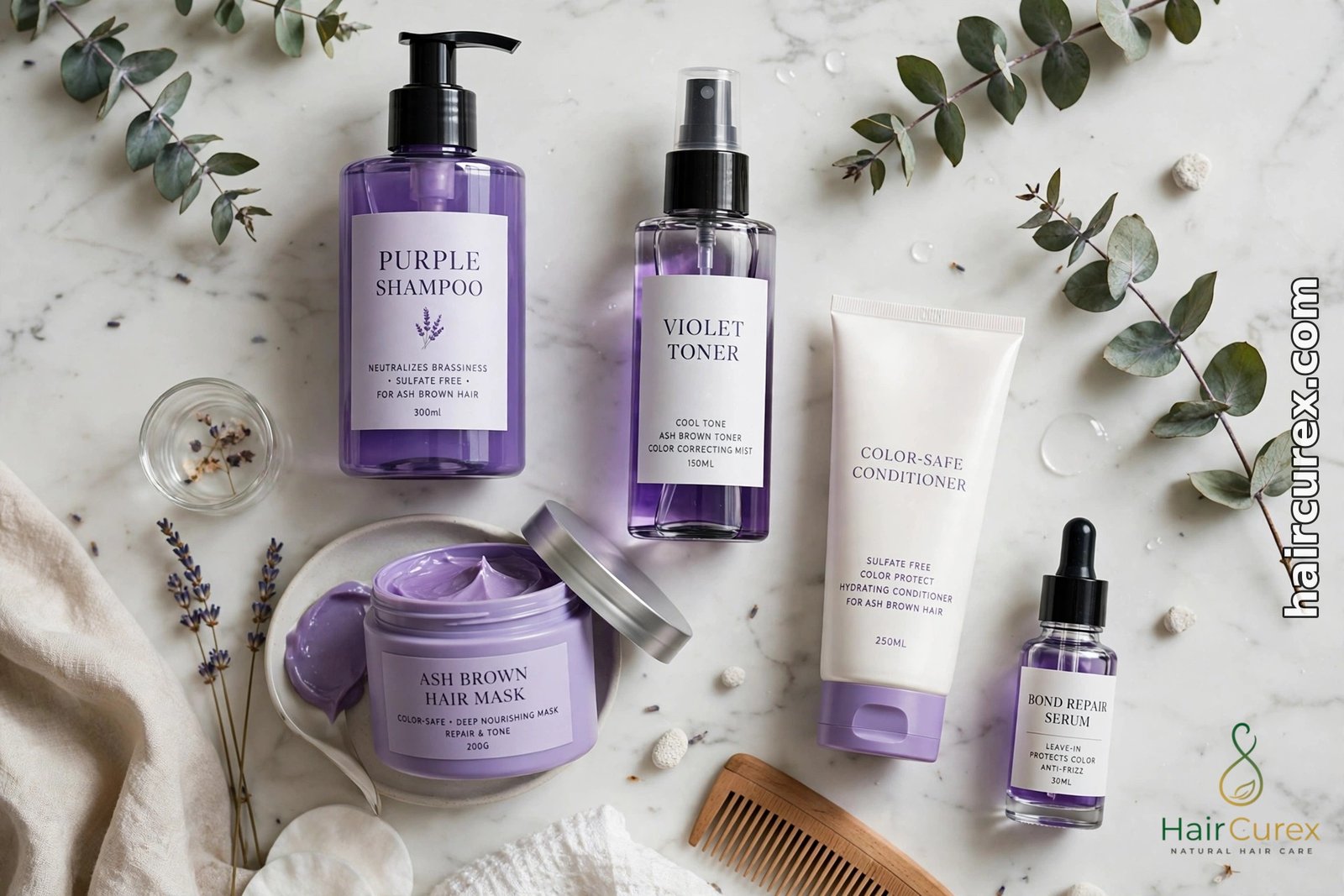
Use purple shampoo once a week. Purple shampoo is the core of anti-brass care: the purple pigment cancels yellow and orange tones, which is exactly what makes ash brown stay ash. Use it once a week, leave it on for 3–5 minutes, and follow with conditioner. Using it more often can leave a slight purple cast on very light hair, so once a week is the right balance for most people. Our purple shampoo guide explains which formulas suit brown hair and how long to leave them on.
Wash less, and wash cool. Shampoo two or three times a week instead of daily, and rinse with lukewarm or cool water. Hot water opens the hair cuticle and lets the toner escape faster — it is the quickest way to lose the cool tone. Dry shampoo between washes keeps the roots fresh without another wash cycle.
Use color-safe, sulfate-free shampoo. Sulfates strip toner and color, so choose a shampoo labelled color-safe or sulfate-free, and follow with a conditioner for color-treated hair. The American Academy of Dermatology’s healthy-hair tips are a good starting point for daily habits that keep colored hair strong.
Protect from sun and heat. UV light fades cool tones and brings out warmth, so wear a hat in strong sun or use a UV-protectant spray. Keep heat styling below 180°C (350°F) and always use a heat protectant, because heat opens the cuticle and lets toner wash out.
Refresh the toner every 4–6 weeks. A salon gloss or an at-home ash toner restores the cool tone and adds shine. This is cheaper and gentler than a full re-dye, and it is the step that separates ash brown that stays cool from ash brown that turns brassy by week four. If your hair was lightened to get the ash color, expect to tone more often — porous hair loses toner faster.
How to Make Ash Brown Hair Last
Beyond toning, a few habits decide how long the color looks good. Touch up roots every 6–8 weeks for permanent ash brown, though the grow-out is softer than with blonde or vivid colors — and balayage needs even less frequent visits. Avoid chlorinated pools or wear a swim cap, because chlorine strips toner and can turn ash tones greenish. Sleep on a silk or satin pillowcase to reduce friction and breakage on lightened hair. And when the color does start to warm up, tone it before it goes fully brassy — a toner applied early works in minutes, while correcting fully brassy hair takes a salon visit.

Ash brown hair also asks more of your hair’s condition than warm browns do, because getting there often involves lightening. A weekly deep-conditioning mask, a leave-in conditioner on the ends, and regular trims keep lightened hair from looking dry — and healthy hair holds toner better and reflects light better, the two things that make ash brown look expensive.
5 Mistakes to Avoid with Ash Brown Hair
- Picking a shade from the box photo alone. The photo shows the result on one starting color. Check the side-of-box chart for your own starting shade instead — and accept that dark hair needs a lift first.
- Skipping the patch test. Ash dyes contain PPD and other chemicals that can cause allergic reactions. A patch test 48 hours before is a safety step, not a formality.
- Going too ashy on warm skin. A very gray or mushroom ash on warm or olive skin can wash you out. Medium ash brown with a neutral tone is the safer choice.
- Skipping the toner. The dye alone is not the finish — the toner is what makes ash brown look ash. Without regular toning, the color turns brassy within weeks.
- Washing with hot water and harsh shampoo. Hot water and sulfate shampoo are the fastest way to lose the cool tone. Cool water, color-safe products and weekly purple shampoo keep it ash for weeks longer.
Ash brown hair earns its popularity: it is cool, smoky, modern and flattering on fair, medium and deep skin — as long as you pick the shade that matches your undertones, lift the hair first when your starting color is dark, and protect the cool tone with purple shampoo and regular toning. Start with the shade guide above, preview it on your own photo if you are unsure, and treat toning as part of the color rather than an optional extra. The result is a muted brunette that looks polished, grows out gracefully and turns heads for the right reasons.
Frequently Asked Questions
What skin tone does ash brown hair suit?
Ash brown hair suits fair and medium skin with cool or neutral undertones best, because the cool tones echo the skin’s undertones. It can also suit deep skin in a dark ash shade with dimension. Warm and olive skin can wear it too, but medium ash brown works better than very light or mushroom shades, which can wash warm skin out.
Is ash brown hair warm or cool?
Ash brown hair is a cool-toned brown with smoky, grayish undertones and no warmth. That is what separates it from warm browns like chocolate brown, which have golden and caramel undertones.
Does ash brown hair need bleach?
Not always. If your hair is already light or medium brown, ash brown can be applied directly. Dark brown or black hair needs a gentle lift first, because dye cannot lighten hair — without lifting, the ash tone barely shows. Very light or bleached hair may need a toner rather than a full dye.
Why does ash brown hair turn brassy?
Ash brown turns brassy because the cool toner fades faster than the underlying color, and warmth from sun, hot water and washing creeps back in. Purple shampoo once a week, cool water, color-safe shampoo and a toner refresh every 4–6 weeks keep it cool.
How long does ash brown hair last?
Permanent ash brown lasts 6–8 weeks before roots need a touch-up, but the cool tone itself needs refreshing every 4–6 weeks with a toner or gloss. Semi-permanent ash brown washes out over 4–6 weeks. Balayage grows out more gracefully and needs less frequent visits.
Will ash brown hair cover gray hair?
Yes, permanent ash brown dye covers gray hair well, and the cool tone blends gray regrowth more softly than warm shades do. Semi-permanent dye blends gray rather than fully covering it, so choose permanent dye if full gray coverage matters to you.