


Quick answer: Black hair dye gives the deepest, glossiest colour you can get from a box or a salon chair — but it is the hardest colour to undo. Permanent black dye soaks into the hair shaft and is near-impossible to remove without bleach or growing it out, so the two decisions that matter most are the shade (jet black, soft black, blue-black or off-black) and the patch test, done 48 hours before you dye. Pick soft black for a natural look and jet black for maximum drama — and never dye over already-dyed black hair expecting it to lift lighter later.
Black is the world’s most common natural hair colour, and one of the most popular dye choices — for covering grey, for a dramatic change, or simply for the shine only the darkest shade gives. It looks simple: one colour, one box, one result. In practice it is the least forgiving colour on the shelf. This guide covers the four black shades, who each one suits, how to apply black dye at home, how to keep warm tones from creeping in, and what to do when the result is not what you wanted.
Black Hair Dye Shades: Jet Black, Soft Black, Blue-Black and Off-Black
Not all black hair dye is the same black. The shade underneath decides whether the result looks natural, dramatic, cool or warm — and the wrong one is the most common reason people dislike their black dye job. The four shades below cover almost everything sold in stores and salons.

| Shade | What it looks like | Suits best | Upkeep | Risk of unwanted tones |
|---|---|---|---|---|
| Jet black | Darkest, most intense black with a mirror shine | Cool and olive skin tones; dramatic looks | High — roots show fast; fades in 4–6 weeks | Low — hides warmth, but can look flat on very fair skin |
| Soft black | Black with a little brown depth; most natural-looking | Almost everyone; safest first black | Medium — roots blend better; touch up every 6–8 weeks | Medium — can warm to brownish black as it fades |
| Blue-black | Black with a cool blue undertone; almost navy in bright light | Cool skin tones; edgy, fashion finish | High — blue tone fades first, within 3–4 weeks | Medium — warm tones show once the blue fades |
| Off-black | Very dark brown that reads as black indoors | Anyone nervous about full black | Low — fades gracefully, least obvious root line | High — most likely to reveal warm, reddish tones |
For a first black, soft black is the honest recommendation: it reads as black in most light, flatters warm and cool skin tones, and is slightly easier to lift than jet black. Jet black is the full statement — inky and high-shine — but it can wash out very fair skin. Blue-black is a fashion shade: striking in sunlight, but the blue fades first. Off-black is the compromise for anyone moving down from dark brown.
Hold the swatch next to your face in daylight: blue veins and silver jewellery mean a cool undertone, so jet black or blue-black will look natural. Green veins and gold jewellery mean a warm undertone, so soft black or off-black will flatter you more. If you cannot tell, you are probably neutral, and soft black is the safe pick. Natural colour matters too: dark brown hair takes any black evenly, while blonde or red hair grabs dye harder at the porous ends. If black feels too dark altogether, a deep warm colour gives a similar statement with an easier grow-out — our guide to red hair dye shades, application and fading covers copper through burgundy.
Who Should Dye Their Hair Black?
Black hair dye suits more people than most expect. People with naturally dark brown or black hair get the most natural result, because the dye only deepens what is already there and regrowth blends in for weeks. Medium brown hair also does well, especially with soft black, which adds depth and shine without a harsh root line.
Blondes and redheads should think twice before going permanent black: the change is dramatic, but going back to blonde means bleach, colour remover, or growing it out over many months. If you are blonde and curious, try a semi-permanent black first (next section) or a salon gloss that fades in 6 to 8 weeks. The same caution applies to heavy grey coverage: black covers grey completely, but the regrowth line is stark, so expect root touch-ups every three to four weeks. Very dark hair can emphasise fine lines and make fair skin look paler, which is why stylists often soften black with a soft-black shade on mature clients — but black also adds shine and makes hair look thicker, a real advantage for fine or thinning hair.
Permanent vs Semi-Permanent Black Hair Dye
Permanent black hair dye uses developer (hydrogen peroxide) to open the hair cuticle and deposit colour deep inside the hair shaft — which is why it covers grey completely and lasts until the hair grows out, and why it is so hard to remove. Semi-permanent black dye coats the outside of the hair without developer, so it fades over 4 to 12 washes and never lightens your natural colour.
For a first black, semi-permanent is the smarter test: you see the colour on your own hair for a few weeks, and if you hate it, it fades on its own, with less damage. The trade-off is coverage — it does not cover grey well. Demi-permanent sits between the two: low-volume developer, 6 to 8 weeks of wear, some grey coverage. Our guide to semi-permanent vs permanent hair dye compares all three types in detail. One warning applies to every type: black dye stains everything it touches — skin, towels, pillowcases, grout — so prepare properly, as the next section explains.
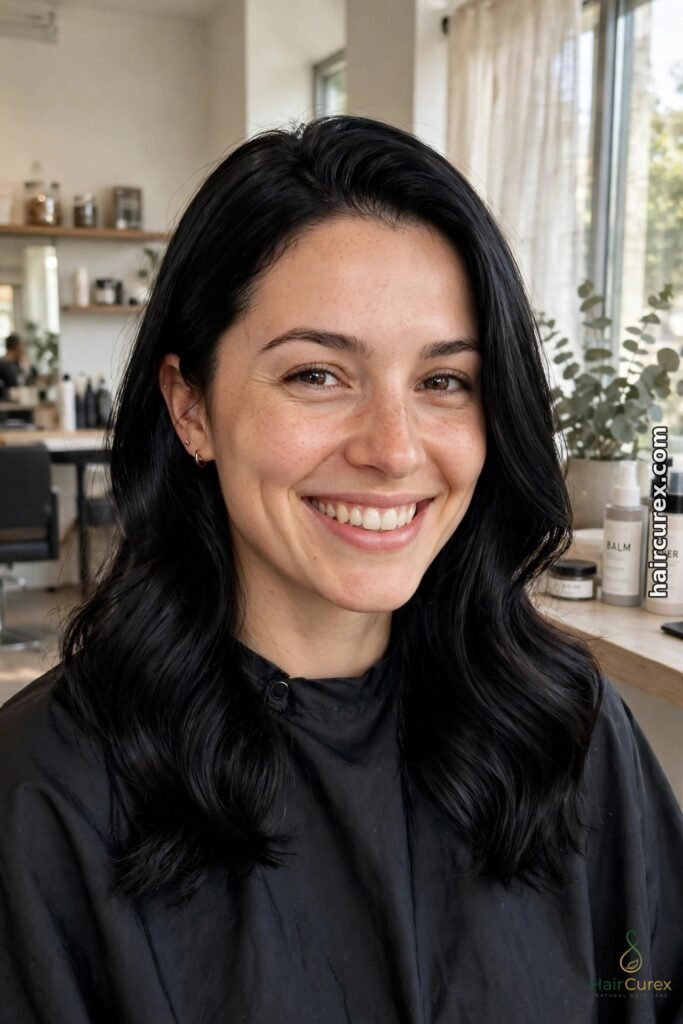
How to Apply Black Hair Dye at Home
Applying black hair dye at home is very doable, but the margin for error is smaller than with lighter colours because every missed patch shows. The whole process takes about an hour, most of it waiting. Start with dry, unwashed hair — natural oils protect your scalp slightly, and dye takes more evenly. Do not wash for 24 to 48 hours before dyeing, and skip conditioner that day.
Protect everything first: an old dark shirt, newspaper on the floor, and a thick line of petroleum jelly around your hairline, ears and neck to stop skin staining. Wear the gloves in the box and keep a second pair nearby. If dye gets on your skin, wipe it off at once with a damp cloth; for stains that have set, our guide to how to get hair dye off skin covers the safe methods that actually work.
Mix the dye exactly as directed — never add extra developer. Section your hair into four parts, start at the roots in thin sections from the front hairline backwards, and be generous: skimping causes patchy results. Pull the dye through the lengths, massage it in, and time it exactly as the box says — longer does not mean blacker, only drier. Rinse with lukewarm water until it runs clear, use the box conditioner, and do not shampoo for 48 hours. Buy two boxes if your hair is past shoulder length, and strand-test first if your hair is bleached or chemically straightened, because porous hair grabs black dye harder at the ends.

The Patch Test and PPD Allergy Warning
Read this before you open the box. Most permanent black hair dyes contain paraphenylenediamine (PPD), the chemical that gives the colour its depth — and the same chemical that causes most hair-dye allergic reactions, from an itchy scalp to facial swelling and, rarely, a serious reaction needing medical attention. The U.S. Food and Drug Administration’s hair dye safety page explains the PPD risk and why patch testing matters: FDA hair dyes safety information.
Do the patch test 48 hours before every dye session, even with a brand you have used before — allergies can develop at any time. Dab a coin-sized amount of mixed dye inside your elbow or behind your ear and leave it uncovered for 48 hours; any redness, itching, swelling or blistering means do not use the dye. If you have ever reacted to a dye, a black henna tattoo, or a PPD product, see a doctor or dermatologist first and consider a PPD-free formula. Strand-test at the same time: dye a small hidden section and check the true colour in daylight. Never dye a cut, irritated or sunburned scalp, and never use hair dye on eyebrows or eyelashes.
How to Avoid Unwanted Tones
Unwanted tones are the most common complaint about black hair dye, and they almost always have the same cause: as the dye fades, the warm pigment underneath — browns, reds and oranges — shows through. In sunlight, a dye job that looked perfect in week one can look warm or brassy by week four. This is normal, and manageable.
Shade choice is the first defence: jet black hides warmth longest, because it is so dark the undertones cannot show through until much colour has faded. Soft black and off-black, which contain brown, reveal warm tones sooner — the price of their natural look. Blue-black sits in the middle: its cool blue undertone cancels warmth while it lasts, then the warmth can appear quite suddenly.
Wash routine is the second defence: cool water, a sulfate-free colour-safe shampoo, and washing two to three times a week instead of daily. The sun also fades black dye, so wear a hat outdoors. If warmth has already appeared, a blue-toned shampoo once a week can cancel the orange and brassy tones — our guide to purple shampoo explains how toning shampoos work on dark hair. For a stronger fix, a salon gloss or toner re-cools the colour in about twenty minutes. What does not work is dyeing over the warmth with more black dye: the warmth returns as the new layer fades, and repeated full-head applications make hair flat and dull.

How to Make Black Hair Dye Last
Black dye fades fastest in the first two weeks, so that is when your routine matters most. Wait 48 hours before the first shampoo, use cool water and a sulfate-free colour-safe shampoo, and wash less often. Condition every time you wash and use a deep-conditioning mask weekly — black looks best when hair is healthy and shiny, because shine is what makes black look rich rather than flat.
Heat styling is the other big cause of fading: flat irons open the cuticle and let colour escape, so always use a heat protectant and keep temperatures low — below 180°C (350°F) for fine hair, below 200°C (390°F) for thick hair. Chlorine strips colour and can give black dye a greenish cast, so wet hair with clean water and apply leave-in conditioner before swimming. Touch up roots every four to six weeks, roots only — layering dye over already-dyed lengths dulls the shine. The American Academy of Dermatology’s healthy-hair guidance covers the basics that keep dyed hair in good condition: American Academy of Dermatology healthy hair tips.

What to Do When Black Hair Dye Goes Wrong
Patchiness usually means uneven application — missed sections at the back or nape — and the fix is a second application on the missed areas only, after a strand test. If the result is darker than you wanted, do not panic: black softens over the first few washes, and a clarifying shampoo used once or twice can lift a little surface colour.
Removing black dye is a bigger job. Colour removers lift some dye but rarely return black hair to its natural colour in one go, and the result is often an uneven warm brown that needs toning. Bleach is the only reliable way to lift it significantly, and the most damaging — so removal is best left to a salon, especially on long or damaged hair. Expect more than one visit if you have dyed black for years.
Black Hair Dye and Grey Hair
Black dye is one of the best options for covering grey, because it gives complete, opaque coverage where lighter colours look translucent — even stubborn, coarse grey hairs. The catch is the regrowth line: grey roots against black lengths are the most visible of any colour, so expect a touch-up every three to four weeks if your grey is dense.
If the root line bothers you, try grey blending: a stylist weaves in lowlights and soft black tones that let some grey show through, so regrowth is far less obvious and touch-ups stretch to eight weeks or more. Our guide to gray blending for dark hair explains how it works, what it costs, and how long it lasts. A root touch-up powder or spray between sessions hides the line for a day or two at a time. Whether you dye for grey coverage, a dramatic change, or just the shine, black hair dye rewards preparation and punishes rushing.
Black Hair Dye FAQs
Is black hair dye permanent?
Permanent black hair dye is near-permanent: it deposits colour deep inside the hair shaft and lasts until the hair grows out, fading only slightly. It cannot be washed out. Semi-permanent black dye coats the outside of the hair and fades over 4 to 12 washes. Removing permanent black dye usually needs a colour remover or bleach, often at a salon.
Which black hair dye shade is best for fair skin?
Soft black is usually the best black hair dye shade for fair skin, because its brown depth looks natural rather than harsh. Jet black can wash out very fair skin, so it suits deeper natural colouring and stronger brows better. With a cool undertone, jet black or blue-black can also work.
Does black hair dye damage your hair?
Permanent black hair dye can dry hair out, because the developer opens the cuticle, but it is not more damaging than any other permanent dye. The risk is higher on bleached or damaged hair. Deep-condition weekly, use heat protectant, and avoid overlapping dye on already-dyed lengths.
How do I stop black hair dye going reddish?
Black hair dye goes reddish as it fades because warm pigment underneath shows through. Slow it down with cool water, a sulfate-free colour-safe shampoo, less frequent washing, and sun protection. A blue-toned shampoo once a week cancels orange warmth, and a salon gloss can re-cool the colour.
Can I dye my hair black at home?
Yes — black hair dye is one of the easiest colours to apply at home, because it is a single, even shade. Patch-test 48 hours before dyeing, strand-test a hidden section, work in four sections from roots to ends, and time it exactly as the box says. Buy two boxes for hair past shoulder length, and do not shampoo for 48 hours after.
How long does black hair dye last?
Permanent black hair dye lasts until your hair grows out, though it softens and fades slightly over 4 to 8 weeks. Expect a root touch-up every 4 to 6 weeks — every 3 to 4 weeks with a lot of grey, because the regrowth line is very visible against black. Touch up roots only, to avoid colour build-up.