

Quick answer: Dry scalp with curly hair usually means the scalp is short of moisture, irritated by harsh products, or dealing with buildup, weather changes, or a skin condition such as dandruff. The fix is rarely to wash more or pile on heavy oil. Switch to a gentle, sulfate-free cleanser, cleanse the scalp properly on wash day, rinse thoroughly, moisturize lightly, and give a new routine two to three weeks before judging it. If flakes are thick, yellowish and greasy, or the scalp is red, sore, or spreading beyond the hairline, see a dermatologist instead of trying stronger home treatments.
Flakes on a dark sweater, an itch that returns an hour after washing, and curls that look dull no matter what you apply are familiar frustrations for curly-haired readers. The tricky part is that several problems look alike: simple dryness, dandruff, and seborrheic dermatitis can all flake and itch, but they respond to different care. Add the habits of curly hair — less frequent washing and richer styling products — and it is easy to treat the wrong problem and make it worse.
This guide separates those causes, explains why curly hair is especially prone to a dry scalp, and sets out a gentle routine that supports both scalp comfort and curl definition. It is general information only, not medical advice.
Dry Scalp With Curly Hair: Why Curls Are More Prone to It
Curly hair is not automatically unhealthy, but its shape changes how oil travels. Scalp oil moves easily down a straight strand, but on a curl it must travel around bends, so the lengths often stay dry while the scalp still collects product. That explains a common paradox: dry, frizzy curls above an itchy, flaky scalp.
Washing frequency adds to the problem. Many curly routines wash only once or twice a week to protect moisture, which is sensible for the lengths. But a week of leave-in conditioner, curl cream, gel, and refresher spray can leave residue on the scalp that traps dead skin and makes flakes more visible. Washing too aggressively on wash day — scrubbing hard, using very hot water, or clarifying every time — can strip the scalp and restart the cycle.
Weather matters too. Cold, dry winter air and indoor heating pull moisture from skin, while summer sweat, humidity, and swimming can irritate a sensitive scalp differently. Hard water, which contains higher levels of minerals such as calcium and magnesium, can leave a film on hair and scalp that makes both feel coated even after rinsing.
Is It Dry Scalp, Dandruff, or Seborrheic Dermatitis?
These three are often used interchangeably, but they are not the same, and telling them apart helps you choose the right next step.
Simple dry scalp
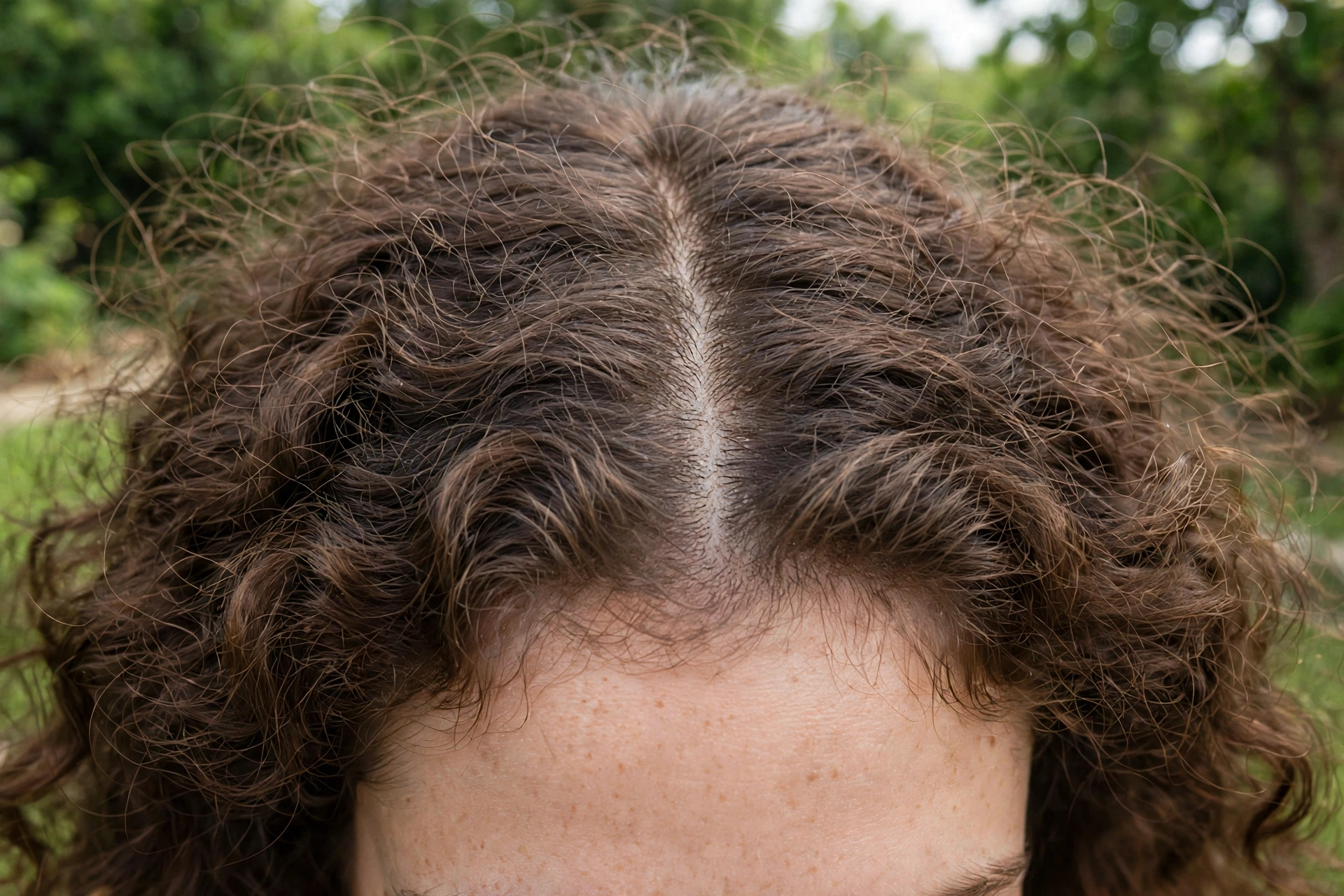
A truly dry scalp tends to produce small, white, dry flakes, and the skin elsewhere may also feel dry, especially in winter. The scalp may feel tight or mildly itchy, but there is usually little redness. Gentle, moisturizing care and a milder wash routine often help within a couple of weeks.
Dandruff
Dandruff is a common scalp condition in which small pieces of skin flake off, often with itching. According to the American Academy of Dermatology, dandruff is considered the mildest form of seborrheic dermatitis. It is linked to the skin’s response to a naturally occurring yeast called Malassezia, along with oil production and individual sensitivity — not to poor hygiene. Flakes do not mean your hair is dirty, and washing harder is not the answer.
Seborrheic dermatitis
Seborrheic dermatitis is a more inflammatory condition that can affect the scalp and other oil-rich areas, including the eyebrows, sides of the nose, behind the ears, and chest. Its scales are often thicker, yellowish, or greasy, and the skin underneath may look red or irritated. It can flare and settle over time and may need a medicated shampoo or prescription treatment. The American Academy of Dermatology’s overview of seborrheic dermatitis explains how it differs from simple dryness and when professional care is appropriate.
Other conditions that can look similar
Scalp psoriasis can produce thicker, well-defined patches of scale, sometimes past the hairline. Contact dermatitis can follow a new shampoo, dye, or styling product, and eczema can also affect the scalp. If flakes do not fit the simple-dryness pattern, or you notice spreading redness, sores, hair loss, or patches elsewhere, get it checked rather than guessing.
| Possible cause | Typical signs | What usually helps |
|---|---|---|
| Simple dry scalp | Small white dry flakes, tight feeling, little redness | Gentler cleanser, lukewarm water, light scalp moisture |
| Dandruff | White or greyish flakes, itching, mild or no redness | Antidandruff shampoo used as directed, thorough rinsing |
| Seborrheic dermatitis | Thicker, yellowish or greasy scales, redness, itching | Medicated shampoo, dermatologist advice, avoid heavy oils |
| Product buildup | Coated feeling, dull curls, itch after styling | Clarifying wash, lighter products, stylers on lengths only |
| Harsh shampoo or hard water | Dry curls, tight scalp, film rinsing never removes | Sulfate-free cleanser, occasional clarifying wash |
| Contact irritation | Itch or redness after a new product | Stop the suspect product, simplify, patch-test new products |
What Causes Dry Scalp on Curly Hair?
Weather and indoor air
Winter is the classic flare season: cold air outside and heated air inside both lower humidity. Hats and protective styles can help, but a tight hat worn all day can also trap sweat and heat, so balance protection with airflow.
Harsh shampoos and over-washing
Strong detergents, especially sulfates in a daily shampoo, can strip the scalp’s natural oils. Curly hair rarely needs that level of cleansing every wash. Skipping shampoo entirely for weeks while layering heavy products is not scalp care either — it is buildup waiting to happen. Aim for a cleanser strong enough to clean the scalp, gentle enough to use regularly.
Product buildup
Butters, heavy oils, waxes, and thick gels seal moisture into the lengths, but applied to the scalp they can clog follicles, trap flakes, and worsen dandruff. A good rule: styling products belong on the hair, especially the mid-lengths and ends, not massaged into the scalp. If you use a scalp oil, use a small amount and wash it out on your next wash day rather than layering more on top. You can read more about when a deeper cleanse is warranted in our guide to detox shampoo.
Hard water and skin conditions
Mineral deposits from hard water can leave a film that dulls curls and irritates the scalp; a periodic clarifying wash helps remove it. Age, hormones, stress, and certain medical conditions can also influence scalp health. Stress does not directly cause dandruff, but flare-ups often coincide with stressful periods or illness. Be skeptical of any product promising to cure a scalp condition with one ingredient — these conditions are usually managed, not cured overnight.

How to Build a Gentle Routine That Helps Both Scalp and Curls
The best routine is one you can repeat without dreading wash day. Think of it in four steps: cleanse the scalp, condition the lengths, dry gently, and refresh without reloading the scalp.
Step 1: Cleanse the scalp, not just the hair
Wet the hair thoroughly with lukewarm water — hot water dries skin. Apply a gentle, sulfate-free shampoo mainly to the scalp and massage with your fingertips, not your nails, for a minute or two. Let the lather run down the lengths as you rinse; the lengths rarely need direct scrubbing. Rinse thoroughly, because leftover shampoo is itself an irritant.
Many people with curly hair do well washing once or twice a week, with a clarifying wash every few weeks. If you exercise daily, you may need to cleanse more often — in that case, a mild cleanser or a co-washing routine on some days can clean without stripping. Regularity matters: a scalp cleansed on a predictable schedule flakes less than one swinging between neglect and aggressive scrubbing.
Step 2: Condition and dry gently
Apply conditioner from the mid-lengths to the ends, where curly hair needs it most, and rinse well. Leave-in conditioner and curl cream should follow the same rule: lengths and ends first, only a light touch near the roots if your style needs it. A simple curly hair routine built around this principle keeps definition without loading the scalp. For drying, squeeze water out gently with a microfiber towel or soft cotton T-shirt, then air-dry or diffuse on low heat rather than blasting the scalp.
Step 3: Refresh without reloading the scalp
Between washes, refresh curls with water, a light leave-in spray, or a small amount of refresher applied to the lengths — not a fresh layer of gel on the scalp. If your scalp itches, resist scratching hard, which can break the skin; a light massage with clean fingertips or a cool rinse after sweating is usually better.
| Routine step | Do this | How often |
|---|---|---|
| Scalp cleanse | Sulfate-free shampoo, fingertips massage, lukewarm water, thorough rinse | 1–2 times a week |
| Condition | Conditioner on mid-lengths and ends only | Every wash day |
| Clarify | Clarifying or detox shampoo to remove buildup | Every 2–4 weeks |
| Scalp moisture | Light oil or serum, small amount, washed out next wash day | 1–2 times a week at most |
| Refresh | Water or light spray on lengths, no heavy product on scalp | Between washes, as needed |
Scalp Oils and Treatments: What Helps, and What to Use With Care
Light oils for simple dryness
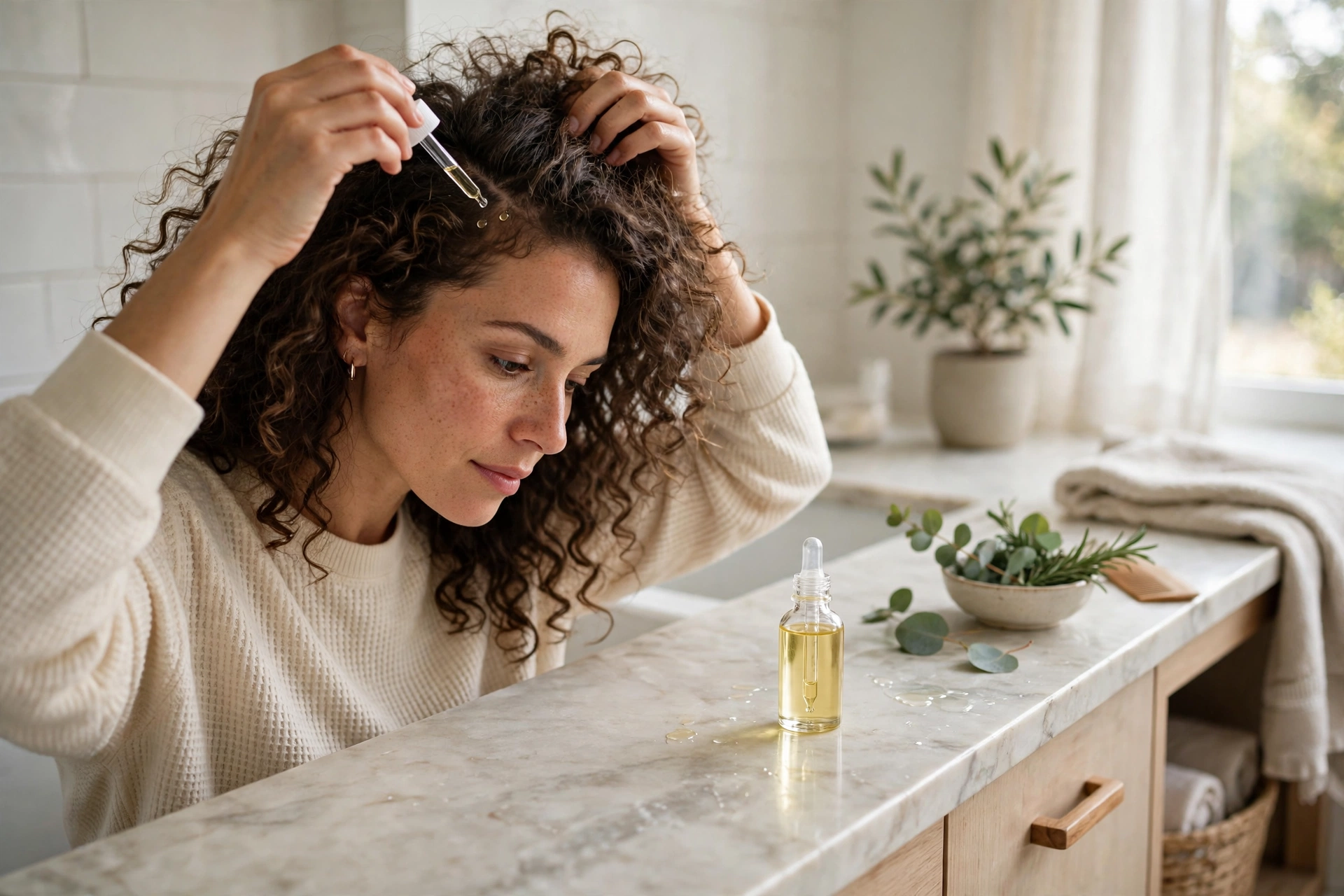
For a scalp that is simply dry — small white flakes, tightness, no significant redness — a few drops of a light oil such as jojoba or argan, massaged in and left for 20 to 30 minutes before washing, can ease tightness. Use a small amount: a scalp treatment should not leave your hair dripping.
Heavier oils need caution
Thick oils such as castor oil and heavy butters such as shea can seal moisture into the lengths, but on the scalp they are more likely to trap flakes and residue. If you have dandruff or seborrheic dermatitis, heavy oil can aggravate the condition, so skip the overnight oil soak until you know what you are dealing with. When in doubt, patch-test and keep the amount small.
Antidandruff shampoos
If your flakes look like dandruff, an over-the-counter antidandruff shampoo is a reasonable next step. Common active ingredients include zinc pyrithione, selenium sulfide, ketoconazole, and salicylic acid. They work differently — some reduce the yeast associated with dandruff, others help shed flakes — so if one does not help after several weeks of consistent use as directed, trying a different active ingredient is reasonable. Leave it on the scalp for the time stated on the label, often several minutes, before rinsing. The American Academy of Dermatology’s self-care guide for seborrheic dermatitis includes practical tips on medicated shampoos and when to seek care.
Scrubs, serums, and new products
A gentle scalp scrub or salicylic-acid shampoo can help lift flakes, but aggressive or frequent exfoliation can irritate the scalp and damage curls; once a week at most is plenty, and never use a scrub on broken or inflamed skin. Leave-on serums with soothing ingredients such as niacinamide, panthenol, or aloe suit people who find oils too heavy. Introduce one new product at a time so you can tell what actually helps, and stop anything that stings or worsens itching.
What to Avoid When Your Scalp Is Dry and Flaky
- Very hot water. It strips oils and worsens tightness; lukewarm is kinder to scalp and curls.
- Harsh daily clarifying. A clarifying shampoo has its place every few weeks, but daily use leaves the scalp stripped and reactive.
- Heavy product on the scalp. Butters, waxes, and thick gels belong on the lengths; layering them on the scalp traps flakes and residue.
- Scratching with nails. Scratching breaks the skin barrier and can turn mild irritation into soreness or infection.
- Skipping rinsing. Shampoo, conditioner, and treatment residue left on the scalp can itch on its own; rinse until the water runs clear.
- Switching everything at once. If you change shampoo, oil, and styling products in the same week, you will never know what helped — or what caused a reaction.
- Strong home remedies on irritated skin. Undiluted essential oils, vinegar soaks, and lemon juice can burn or sensitize an irritated scalp. Dilute properly and patch-test first.
Check the rest of your routine for hidden irritants too. Fragrance is a common trigger, so if your scalp flares after a new scented product, a fragrance-free cleanser is a sensible test. If flakes started soon after a new dye or chemical treatment, mention that timing to a dermatologist.
When to See a Dermatologist
Most simple dryness improves with a gentler routine within two to four weeks. Book an appointment sooner if you notice thick, yellowish, or greasy scales, redness spreading beyond the hairline, flakes that do not improve after several weeks of antidandruff shampoo, sores or swelling, noticeable shedding or thinning patches, or scalp symptoms appearing elsewhere on the body. A dermatologist can distinguish dandruff, seborrheic dermatitis, psoriasis, eczema, and contact dermatitis, and prescribe treatment matched to the actual condition.
Bring a list of the products you use and when the problem started — that history often matters more than any single product. If you are unsure which shampoo suits you overall, our guide to the best shampoo for hair fall explains how to read labels, and a hair porosity test can help you understand why your curls absorb — or resist — moisture.

Frequently Asked Questions
Is dry scalp with curly hair the same as dandruff?
Not always. Simple dry scalp produces small, dry, white flakes with little redness and often comes with dry skin elsewhere. Dandruff is a mild form of seborrheic dermatitis, linked to the skin’s response to a natural yeast and oil production, and it may need an antidandruff shampoo rather than just moisturizing care.
Should I wash curly hair more often if my scalp is dry?
Not necessarily. Washing more often with a harsh shampoo can dry the scalp further. What usually helps is washing the scalp properly and regularly — typically once or twice a week — with a gentle cleanser, rinsing thoroughly, and clarifying every few weeks to remove buildup.
Does oiling the scalp help dry scalp with curly hair?
It can help simple dryness, in small amounts, when washed out on the next wash day; light oils such as jojoba or argan are usually a better choice than heavy butters. But heavy oil can worsen dandruff and seborrheic dermatitis, so if flakes are greasy or yellowish, or the skin is red, skip heavy oil treatments.
Why does my scalp itch even right after washing?
Itching right after washing can mean residue was left behind, the water was too hot, the shampoo was too harsh, or the scalp is reacting to an ingredient. Try lukewarm water, a gentler fragrance-free cleanser, and a longer rinse. If itching persists with redness or sores, see a dermatologist.
Can product buildup cause a dry, flaky scalp?
Yes. Layers of leave-in conditioner, curl cream, gel, and oil left on the scalp for days can trap dead skin and residue, making flakes more visible and the scalp itchier. Keep styling products on the lengths, cleanse the scalp regularly, and clarify every two to four weeks.
Does hard water make curly hair scalp problems worse?
It can. Mineral deposits from hard water can leave a film on hair and scalp that makes curls feel coated and the scalp feel tight or itchy. A periodic clarifying wash helps remove that film, and a shower filter may help in very hard-water areas.
When should I stop home care and see a dermatologist?
See a dermatologist if flakes do not improve after several weeks of gentle, consistent care, if scales are thick, yellowish, or greasy, if redness spreads beyond the hairline, or if you notice sores, swelling, pain, or hair loss. Those signs suggest a condition needing diagnosis and possibly prescription treatment.
Final Thoughts
Dry scalp with curly hair is frustrating because it sits at the intersection of two needs: a scalp that wants gentle, regular cleansing, and curls that want moisture and minimal disturbance. The routines that work best respect both. Cleanse the scalp properly, keep heavy products on the lengths, rinse thoroughly, moisturize lightly, and give changes time to work. Learn to tell simple dryness from dandruff and seborrheic dermatitis, because the right treatment follows the right identification — and when the signs point beyond simple dryness, a dermatologist is the fastest route to real relief, not a last resort. With a calmer scalp underneath, your curls usually look better too: less frizz, more definition, and a routine you can actually stick to.
Note: This article is general information only and is not medical advice. If you have a persistent, worsening, or painful scalp condition, please consult a dermatologist or other qualified health professional.