

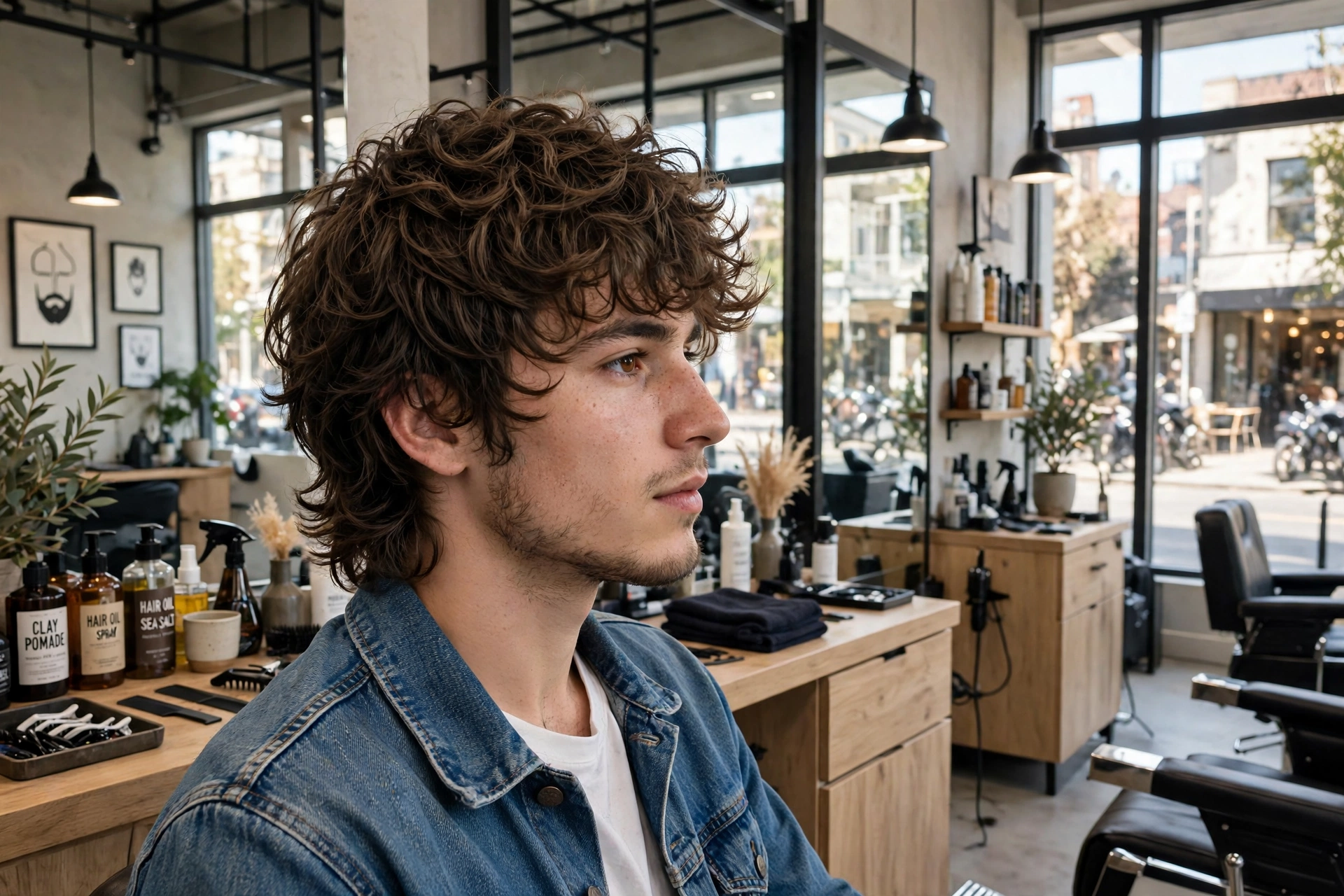
Quick answer: The wolf cut for men is a layered haircut that blends the volume of a shag with the longer back of a mullet, adapted for men with softer edges, a cleaner neckline, and layers that work with natural texture. It suits curly and wavy hair especially well, because layers remove bulk, create movement, and let curls and waves fall into shape without a stiff finish. For most men, the best version is medium length on top, with face-framing layers and a tapered, textured back.
What Is a Wolf Cut for Men?
A wolf cut for men takes choppy, feathered layers from the shag — volume at the crown and face-framing pieces around the forehead, temples, and jaw — and combines them with the mullet’s contrast: shorter layers on top and at the front, with more length left at the back. The result is full on top, narrower through the sides, and longer and tapered behind the ears and at the nape.
For men, the sides are usually kept a little tighter, sometimes with a soft taper or short undercut hidden under the top layers. The fringe, if there is one, tends to be shorter and easier to push aside, and the back is cleaned up just enough to look intentional — textured and wispy, not a sharp, disconnected tail. Celebrity hairstylist Dean Banowetz, speaking to Parade about the men’s wolf cut, describes it as a layered cut combining shag volume and texture with a slightly longer mullet back, producing a relaxed, lived-in style with plenty of movement. If a cut has no movement, layers, or crown shape, it is not really a wolf cut yet — it is just long hair.
How Does the Men’s Wolf Cut Differ From the Women’s Version?
Women’s wolf cuts often keep more overall length, softer and longer face-framing layers, and a fuller fringe worn straight across or parted in the middle. Men’s versions are typically shorter through the sides, more tapered at the neck, and styled with matte, lightweight products rather than high-shine finishes.
Daily wear differs too. Many men want a cut that still works with a hat or helmet and a short morning routine. A good men’s wolf cut should hold its shape with a quick scrunch or finger-comb after washing, a small amount of texture product, and air-drying or brief diffusing. The cut is widely described as gender-neutral, so treat this as an adaptation — tighter sides, a wearable fringe, and a comfortable neckline — rather than a strict rule.
Wolf Cut for Men by Hair Type
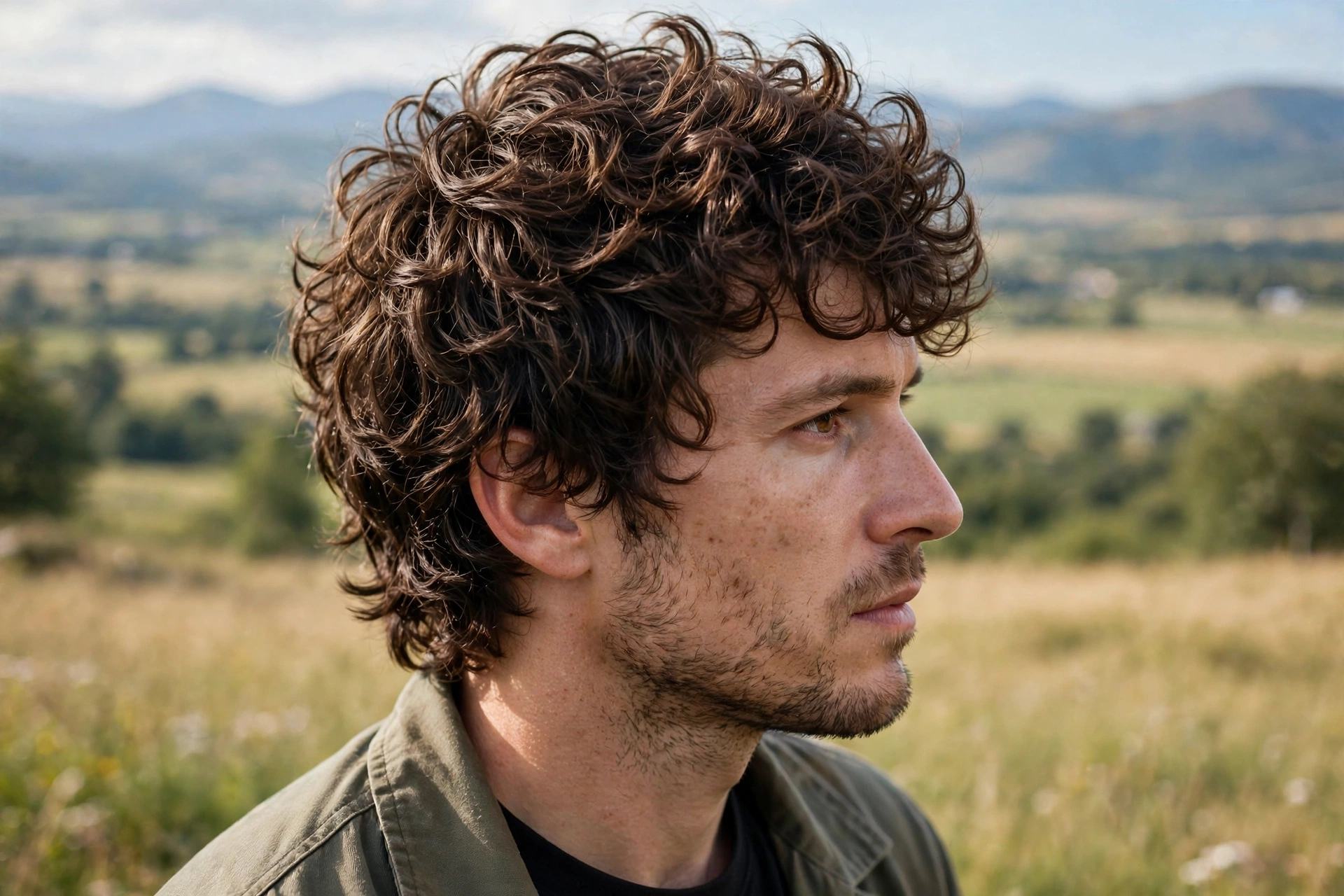
Curly hair
Curly hair is the natural home of the wolf cut. Layers help curls stack into a shape instead of forming one heavy triangle, removing weight from inside the cut so curls spring up at the crown and fall evenly around the face. If you follow a curly hair routine, this cut fits it well: wash, condition, apply curl cream or light gel, scrunch, and let it dry. For tighter curls, have the shape checked dry, because curls shrink as they dry, and ask for longer layers to start. See our guide to the wolf cut for curly hair for curl patterns and layer placement.
Wavy hair
Wavy hair may be the easiest texture for this cut. Waves give layers natural bend without the shrinkage or frizz care tighter curls need, and choppy ends enhance the wave pattern. A sea salt spray or light texture spray is usually enough. The main risk is over-thinning: heavy thinning can leave fine or medium wavy hair wispy at the ends, so ask for point-cutting for texture instead. See our guide to the wolf cut for wavy hair.
Straight hair
Straight hair can wear a wolf cut, but it needs more help. Without natural bend, the cut and styling must create movement: shorter, choppier crown layers for lift, plus a matte paste, clay, or texture spray to separate the ends. Very fine straight hair suits a shorter wolf cut better than a long one, because long, thin ends can look wispy rather than textured. Banowetz notes that very fine hair may struggle to achieve the same fullness as medium-to-thick hair.
Wolf Cut Variations by Hair Type and Length
Use this table as a starting point for your barber conversation, not a rigid rule. Density, growth patterns, and face shape should always override a general chart.
| Hair type | Best length | Layer approach | Styling effort |
|---|---|---|---|
| Curly (3A–3C) | Medium to long | Long, blended layers; cut dry where possible | Low to medium — scrunch, air-dry or diffuse |
| Wavy (2A–2C) | Short to long | Choppy, point-cut layers; avoid heavy thinning | Low — texture spray, finger-style |
| Straight, thick | Medium | Shorter crown layers; textured ends | Medium — matte paste or clay |
| Straight, fine | Short to medium | Strong crown layers; keep ends fuller | Medium — volumizing product, blow-dry lift |
| Coily (4A–4C) | Medium to long | Shaped, picked-out layers; regular trims | Medium — moisture-first, then shape |
If you are unsure of your curl pattern, our curl type chart explains the 2A to 4C system in plain terms.

Short, Medium, and Long Wolf Cuts for Men
Short wolf cut
A short wolf cut keeps the top at roughly 3 to 5 inches, with face-framing layers and a shorter, tapered back. It is the safest entry point from a fade or crop, keeping a familiar silhouette while adding texture, and it grows out more gracefully than a blunt short cut. The trade-off is less drama than the longer versions.
Medium wolf cut
Medium is the sweet spot for most men: the top is long enough to flop, flick, or part, the sides fall around the ears, and the back reaches the nape or just below it. This length shows the layering properly — crown volume, mid-length movement, and a tapered finish — without long-hair upkeep. It is also the most flexible: wear the fringe forward, sweep it aside, or push everything back. If you are unsure, start here.
Long wolf cut
A long wolf cut keeps several inches at the back, often to the shoulders, with shorter layers on top. It is the closest to the original shag-mullet blend and the most striking version, but it needs the most care: long layers tangle more, ends dry out faster, and the shape collapses without trims. It works best on medium-to-thick wavy or curly hair.
Wolf Cut for Men With or Without a Fringe
A textured fringe — choppy, eyebrow-length or slightly shorter, worn forward or swept aside — frames the face and makes the cut instantly recognizable. It suits larger foreheads or longer faces and pairs well with curls and waves that fall naturally forward.
Going without a fringe gives a cleaner, more grown-up version. Front layers swept back or parted in the middle open up the face and suit professional settings, glasses wearers, or anyone who dislikes hair on the forehead. A long curtain fringe is a good compromise: wear it forward casually, sweep it back when needed. If undecided, ask for the longer option first — a fringe can always be shortened, but growing one out takes weeks.

Which Face Shapes Suit the Wolf Cut for Men?
The wolf cut is forgiving, but layer placement should respect your face shape. Stylists generally call it flattering on most shapes, especially oval, heart, and square faces, where crown volume and back length balance proportions.
- Oval: Almost any version works; choose by texture and length preference.
- Round: Height at the crown and face-framing layers below the jaw; avoid width at cheek level.
- Square: Softer, feathered layers around the jaw soften a strong jawline.
- Heart-shaped: Width and texture around the jaw and chin balance a narrower chin.
- Long or oblong: A fringe and width through the sides help; avoid excess height on top.
- Diamond: Layers at cheekbone level and a soft fringe balance wider cheekbones.
These are guidelines, not rules. Density, cowlicks, and personal style matter just as much, so bring photos of people with a similar face shape and hair type.
What Should You Ask the Barber for a Wolf Cut?
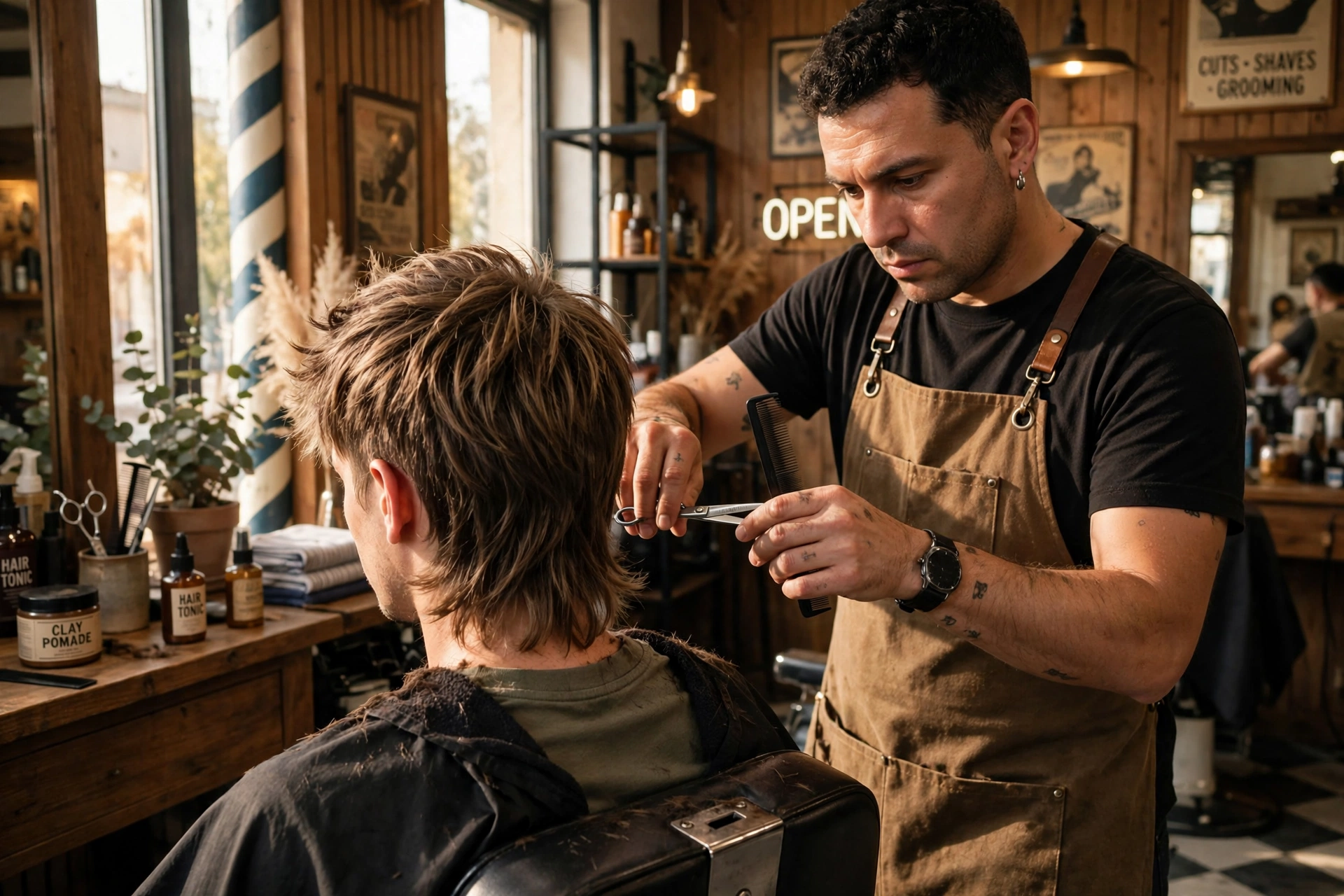
Saying only “wolf cut, please” is the most common reason men leave disappointed, because the style ranges from subtle layered shag to full mullet-inspired shape. Try this script, adjusted to your hair: “I would like a wolf cut with textured layers on top for volume, face-framing layers around my temples and jaw, and more length at the back. Keep the sides fairly tight but not faded to skin, and taper the neckline rather than cutting it blunt. For the front, I want [a choppy fringe / curtain layers / no fringe, just parted layers]. My hair is [curly / wavy / straight] and I style it by [air-drying / diffusing / blow-drying].”
Then add three points: show three photos — overall shape, front, and back length; agree on the shortest layer by asking, “Where will the shortest layer sit when my hair is dry?”; and confirm whether the sides will be scissor-cut, tapered, or undercut. Be honest about helmets, swimming, or outdoor work so the barber can fit the cut to your real life.
How Do You Style and Maintain a Wolf Cut for Men?
The wolf cut rewards a light touch. Heavy gels and strong waxes flatten layers and make hair look stiff. A simple routine works for most textures: wash, condition mid-lengths and ends, and while damp, apply a small amount of lightweight product — curl cream for curls, sea salt or texture spray for waves, matte paste or clay for straight hair. Scrunch curls and waves upward or finger-comb straight hair into place, air-dry or diffuse on low heat, and once dry, separate layers with your fingers, not a comb. Avoid brushing textured hair dry, which creates frizz.
Keep heat tools on the lowest effective setting with a heat protectant. Dermatologists’ guidance makes the same point consistently: less heat, less often, with protection, preserves the hair shaft better than daily high-heat styling — and split ends make choppy layers look ragged, not textured.
Trim every six to eight weeks, or about four weeks for short versions, since hair grows roughly half an inch per month. A trim is due when crown layers lie flat, the back loses its taper, or the fringe falls into your eyes. Other mistakes to avoid: over-thinning fine hair, cutting curly hair wet without a dry check, heavy products, skipping trims, and copying a photo without accounting for a different hair type. For a broader comparison, see our guide to hair cuts.
How Do You Grow Out a Wolf Cut for Men?
Growing out a wolf cut is easier than growing out a fade, because the cut already contains length variation. The awkward phase arrives when top layers catch up with the back and the silhouette looks like one uniform length. Manage it by trimming just the back and perimeter while the top grows, or by moving to a longer layered cut or shag as an intermediate style — both share the wolf cut’s layering, so the change looks deliberate. Sweep the front back and add crown texture in the meantime. Expect three to six months depending on starting length, with small trims to remove split ends along the way.

Wolf Cut vs Shag vs Mullet: What Is the Difference?
The shag has layers distributed fairly evenly, with a softer, feathered finish and less front-to-back contrast. The mullet has the strongest contrast: short on top and sides, long at the back, often with a sharp, disconnected change. The wolf cut sits between them: shag-style all-over layering and texture, plus a longer, tapered mullet back, but blended rather than disconnected and with choppier, more face-framing layers. If a shag feels too soft and a mullet too extreme, the wolf cut usually fits. Tell your barber: “shag texture with mullet length at the back, but blended, not disconnected.”
Frequently Asked Questions
Is the wolf cut for men good for curly hair?
Yes — curly hair is one of the best matches for the wolf cut for men. Layers remove bulk, help curls stack into a defined shape, and reduce the heavy triangle effect of one-length cuts. Ask for longer layers to start and a dry shape check, since curls shrink as they dry.
Does a wolf cut for men work on straight hair?
Yes, with the right layering and styling. Straight hair needs shorter crown layers for lift and a matte texture product to separate the ends. Very fine straight hair suits a shorter wolf cut better, because long, thin ends can look wispy.
How often should a men’s wolf cut be trimmed?
Every six to eight weeks is a good baseline, or every four weeks for short versions or a crisp silhouette. Trims preserve the layer placement and tapered back that make the cut look intentional rather than overgrown.
Can older men wear a wolf cut?
Yes. Older men often choose a softer version: gentler layering, less dramatic length contrast, and a side-swept or curtain front rather than a heavy fringe. The result can look modern without feeling like a costume.
Do I need a fringe with a wolf cut for men?
No. A textured fringe frames the face and makes the cut recognizable, while a no-fringe version with curtain layers or a middle part looks cleaner and suits work or glasses wearers. A longer curtain fringe is a good compromise.
Is the wolf cut for men high maintenance?
It is medium maintenance. It is not true wash-and-go — it needs a good layered cut, a little product, and regular trims — but daily styling is usually quick: scrunch or finger-comb, a small amount of texture product, and air-dry or diffuse.
What is the difference between a wolf cut and a mullet for men?
A mullet has sharp contrast between short front and sides and a long back, while a wolf cut blends shag-style layers throughout with a longer, tapered back. Its layers are more face-framing and its transition softer, making it easier to wear daily.
Final Thoughts
The wolf cut for men works best as a tailored layered cut, not a photo copied exactly. Start with your hair type, choose a length you can maintain, decide on a fringe you will enjoy living with, and give your barber clear photos plus a clear description of the shortest layer, the sides, and the back.
Done well, it gives curly and wavy hair a shape that makes sense, gives straight hair movement it would not otherwise have, and grows out more gracefully than most short cuts. Done poorly — over-thinned, cut without regard for texture, or left untrimmed for months — it just looks overgrown. If you are still deciding, a medium wolf cut with soft face-framing layers and a tapered back is the safest place to start.